1ADD A FOOTER
ROLE OF AGRICULTURE IN INDIAN ECONOMY
K. HARIPRASATH M.COM.,M.PHIL.,NET
N. HARIHARAN BCOM CS.,DTP.,DOA
Parvathy’s arts and science college, dindigul
3
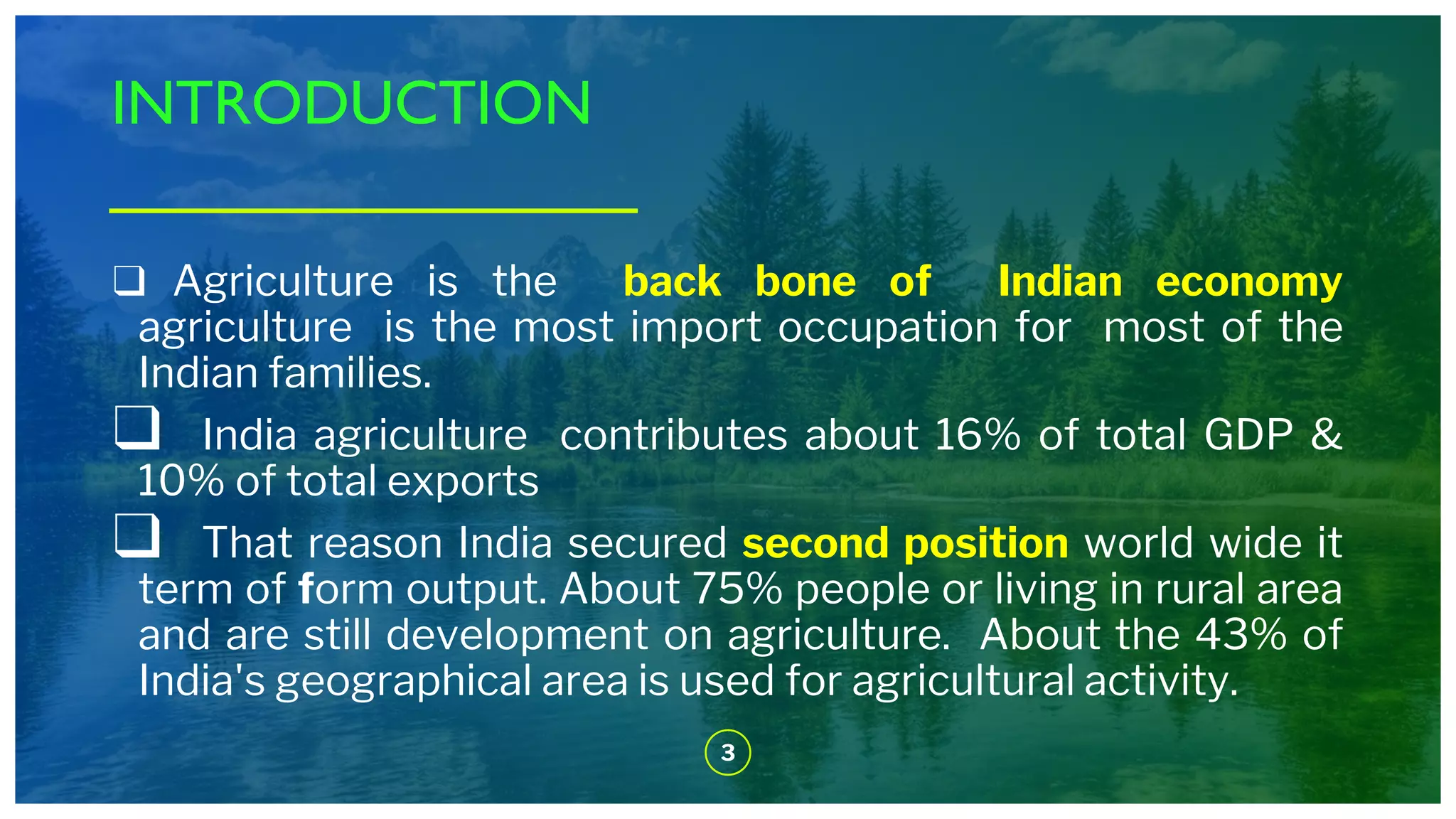
❑ Agriculture is the back bone of Indian economy
agriculture is the most import occupation for most of the
Indian families.
❑ India agriculture contributes about 16% of total GDP &
10% of total exports
❑ That reason India secured second position world wide it
term of form output. About 75% people or living in rural area
and are still development on agriculture. About the 43% of
India's geographical area is used for agricultural activity.
INTRODUCTION
4
❖ Total Geographical area 328 Million hectares
❖ Net area sown 142 million hectares
❖ Gross cropped area 190.8 million hectares
❖ Net irrigated Area 56.9 millions hectares
❖ Provide food more than 1 billion peoples
❖ Produces 51 major crops
❖ Contributes to 1/6th of the export earnings
AGRICULTURE IN INDIA
5
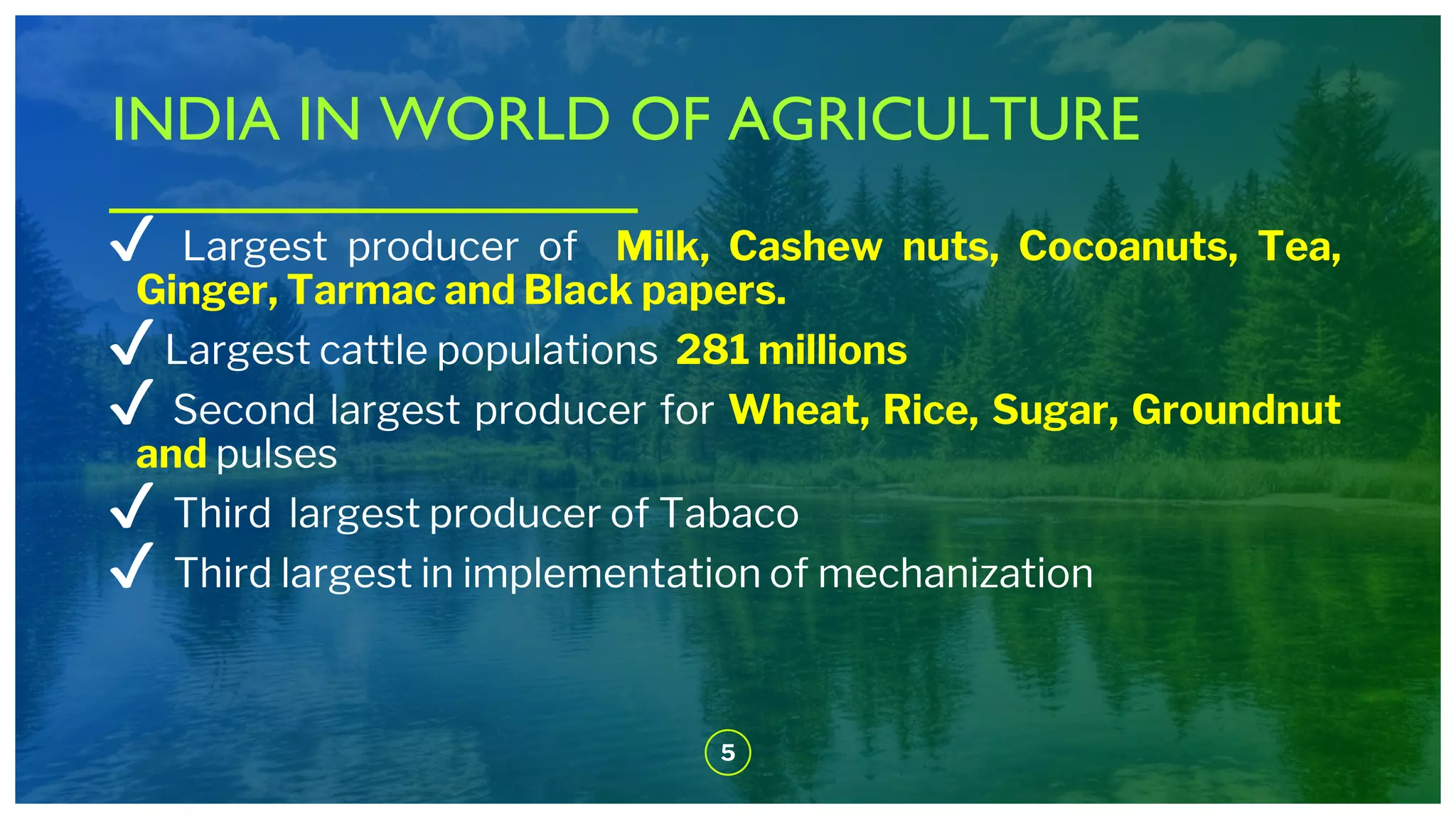
✔ Largest producer of Milk, Cashew nuts, Cocoanuts, Tea,
Ginger, Tarmac and Black papers.
✔Largest cattle populations 281 millions
✔ Second largest producer for Wheat, Rice, Sugar, Groundnut
and pulses
✔ Third largest producer of Tabaco
✔ Third largest in implementation of mechanization
INDIA IN WORLD OF AGRICULTURE
6
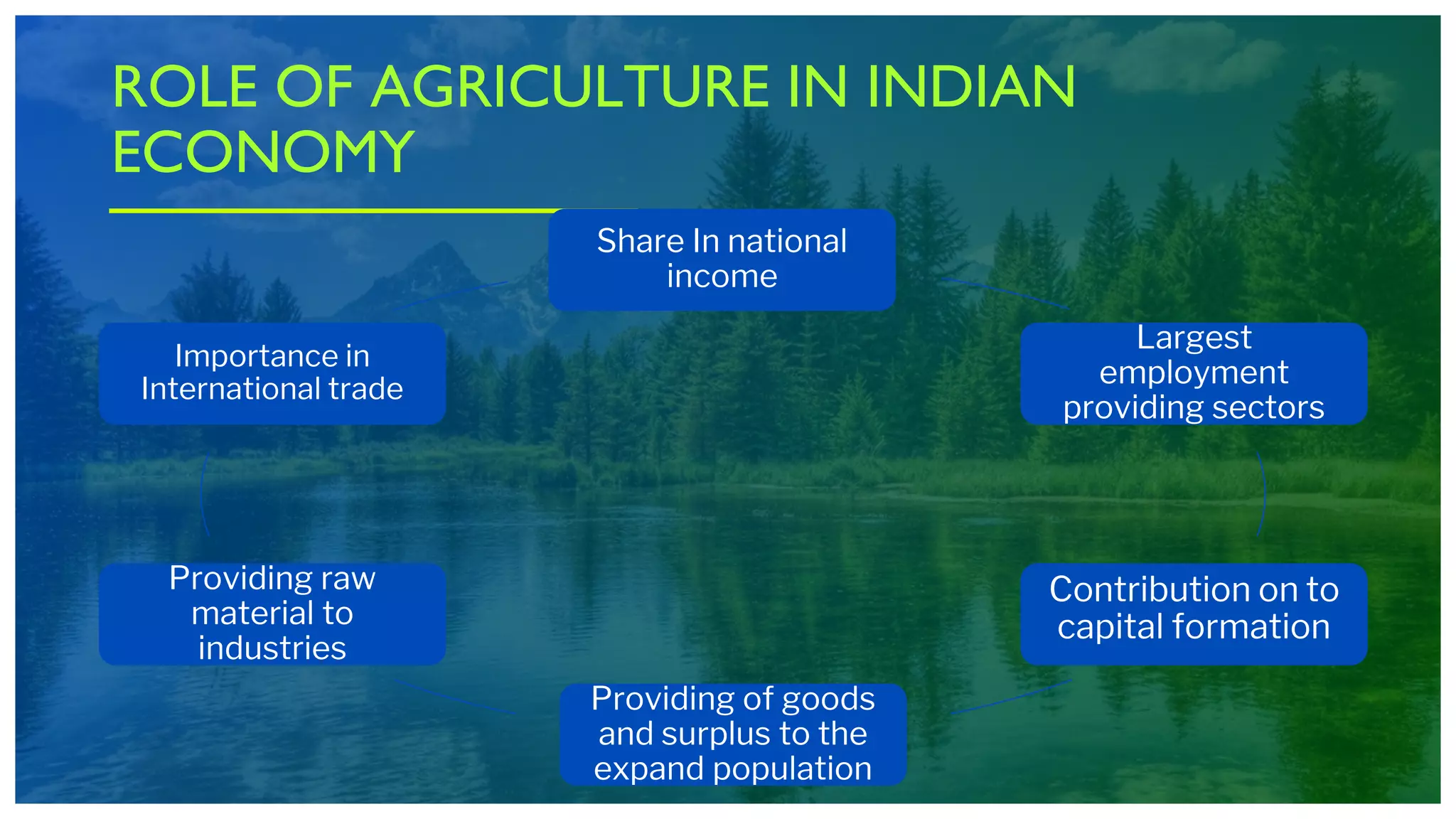
Share In national
income
Largest
employment
providing sectors
Contribution on to
capital formation
Providing of goods
and surplus to the
expand population
Providing raw
material to
industries
Importance in
International trade
ROLE OF AGRICULTURE IN INDIAN
ECONOMY
7
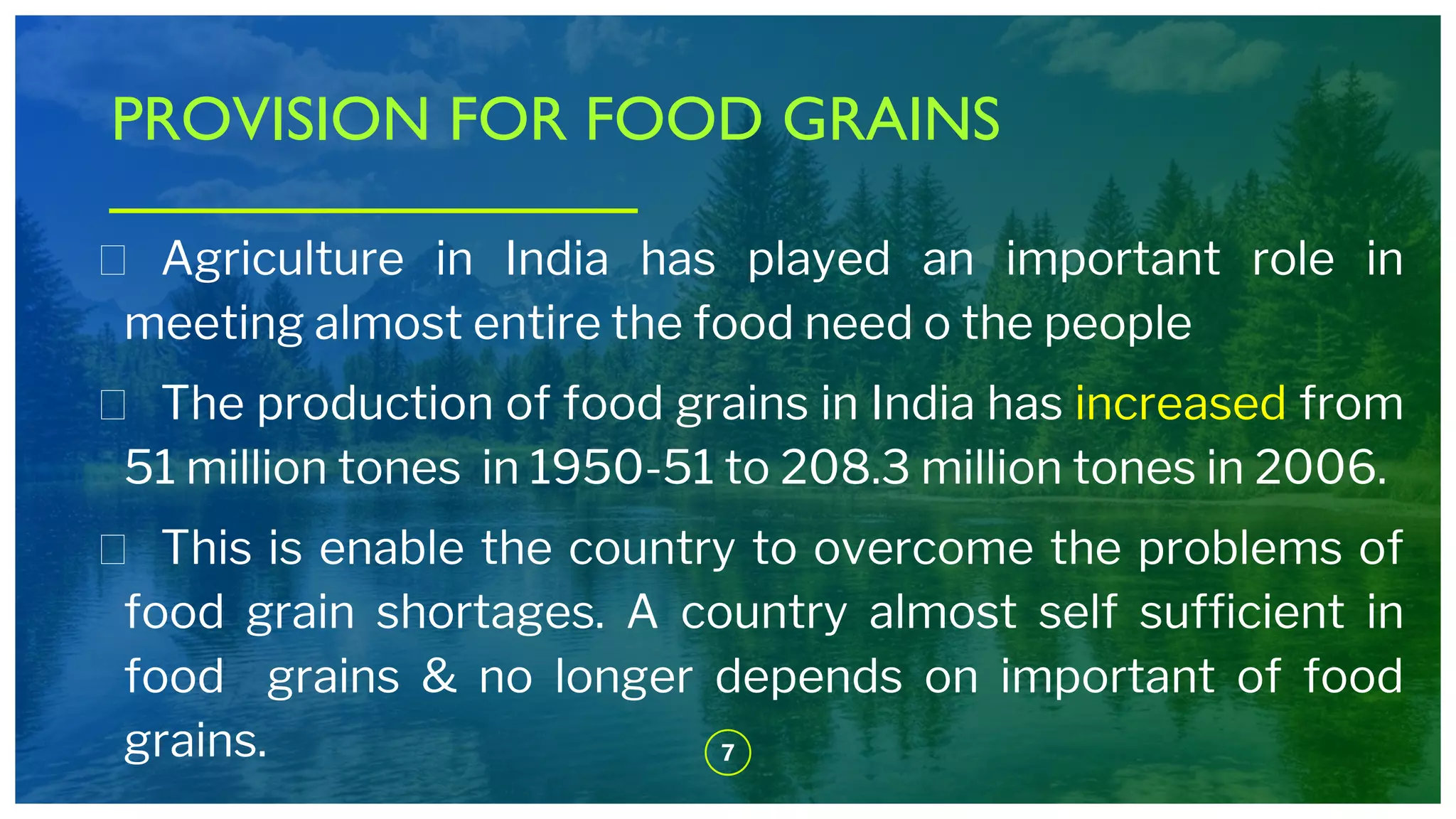
⮚ Agriculture in India has played an important role in
meeting almost entire the food need o the people
⮚ The production of food grains in India has increased from
51 million tones in 1950-51 to 208.3 million tones in 2006.
⮚ This is enable the country to overcome the problems of
food grain shortages. A country almost self sufficient in
food grains & no longer depends on important of food
grains.
PROVISION FOR FOOD GRAINS
8
Thought the direct contribution of industrial tax to
the central & state government is not significant ,
they get a significant part a their total revenue ,
irrigation changes, tax imposed on the commodities
purchase by the cultivators etc. Central government
also earn revenue from export duties.
SOURCE OF REVENUE FOR THE GOVERNMENT
9ADD A FOOTER
The term green Revolution refers to the renovation of
agriculture practices being I Mexico in the 1940.
Because of his success in producing more agriculture
products there revolution technologies spread
worldwide in the 1950 and 1960 significantly
increasing the amount of calories produced per acre of
agriculture.
GREEN REVOLUTION
10
The green revolution also hade some negative effect on
the environment the society . In addition the the
environment was negatively affected thought increased
pollution and erosion, more pressure on water systems and
higher rates of energy consumption.
Increase the agriculture production, Reduce the import
food and gains , Capitalizing farming , Prosperity farmers.
GREEN REVOLUTION EFFECTS
11
❖ An overall view the India has always bee benefited
by a Agriculture
❖ Thought the future of India is industrialization
contribution of agriculture wood always provide to be
vital of marketing India powerful & stable economy in
the future
CONCLUSION
12ADD A FOOTER

Role of agriculture in indian economy

  • 1.
  • 2.
    ROLE OF AGRICULTUREIN INDIAN ECONOMY K. HARIPRASATH M.COM.,M.PHIL.,NET N. HARIHARAN BCOM CS.,DTP.,DOA Parvathy’s arts and science college, dindigul
  • 3.
    3 ❑ Agriculture isthe back bone of Indian economy agriculture is the most import occupation for most of the Indian families. ❑ India agriculture contributes about 16% of total GDP & 10% of total exports ❑ That reason India secured second position world wide it term of form output. About 75% people or living in rural area and are still development on agriculture. About the 43% of India's geographical area is used for agricultural activity. INTRODUCTION
  • 4.
    4 ❖ Total Geographicalarea 328 Million hectares ❖ Net area sown 142 million hectares ❖ Gross cropped area 190.8 million hectares ❖ Net irrigated Area 56.9 millions hectares ❖ Provide food more than 1 billion peoples ❖ Produces 51 major crops ❖ Contributes to 1/6th of the export earnings AGRICULTURE IN INDIA
  • 5.
    5 ✔ Largest producerof Milk, Cashew nuts, Cocoanuts, Tea, Ginger, Tarmac and Black papers. ✔Largest cattle populations 281 millions ✔ Second largest producer for Wheat, Rice, Sugar, Groundnut and pulses ✔ Third largest producer of Tabaco ✔ Third largest in implementation of mechanization INDIA IN WORLD OF AGRICULTURE
  • 6.
    6 Share In national income Largest employment providingsectors Contribution on to capital formation Providing of goods and surplus to the expand population Providing raw material to industries Importance in International trade ROLE OF AGRICULTURE IN INDIAN ECONOMY
  • 7.
    7 ⮚ Agriculture inIndia has played an important role in meeting almost entire the food need o the people ⮚ The production of food grains in India has increased from 51 million tones in 1950-51 to 208.3 million tones in 2006. ⮚ This is enable the country to overcome the problems of food grain shortages. A country almost self sufficient in food grains & no longer depends on important of food grains. PROVISION FOR FOOD GRAINS
  • 8.
    8 Thought the directcontribution of industrial tax to the central & state government is not significant , they get a significant part a their total revenue , irrigation changes, tax imposed on the commodities purchase by the cultivators etc. Central government also earn revenue from export duties. SOURCE OF REVENUE FOR THE GOVERNMENT
  • 9.
    9ADD A FOOTER Theterm green Revolution refers to the renovation of agriculture practices being I Mexico in the 1940. Because of his success in producing more agriculture products there revolution technologies spread worldwide in the 1950 and 1960 significantly increasing the amount of calories produced per acre of agriculture. GREEN REVOLUTION
  • 10.
    10 The green revolutionalso hade some negative effect on the environment the society . In addition the the environment was negatively affected thought increased pollution and erosion, more pressure on water systems and higher rates of energy consumption. Increase the agriculture production, Reduce the import food and gains , Capitalizing farming , Prosperity farmers. GREEN REVOLUTION EFFECTS
  • 11.
    11 ❖ An overallview the India has always bee benefited by a Agriculture ❖ Thought the future of India is industrialization contribution of agriculture wood always provide to be vital of marketing India powerful & stable economy in the future CONCLUSION
  • 12.