Downloaded 11 times


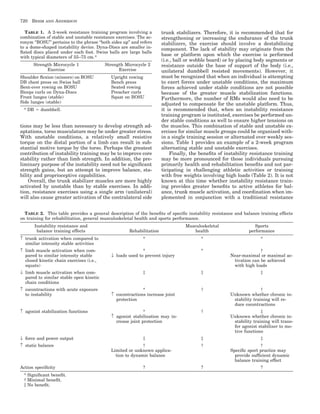


This document discusses instability resistance training and its role compared to traditional stable resistance training. It proposes that instability training places greater stress on the neuromuscular system, forcing greater adaptations. However, instability training may result in lower force output which could hinder strength gains. The document examines effects of instability training on muscle activation, coordination, and core/trunk strength while also looking at applications for sports, health and rehabilitation. Overall, the author concludes that both stable and unstable training should be incorporated for a balanced training program.


