Neo-classicism
(1750-1850)
Neo Classicism:
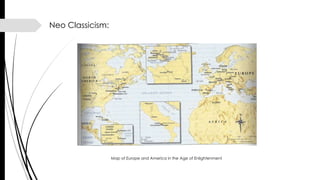
Map of Europe and America in the Age of Enlightenment
Neo Classicism:
• Neoclassicism is a revival of the styles and spirit of classic antiquity inspired directly
from the classical period.
• Neo-classical Art is a severe, unemotional form of art harkening back to the style of
ancient Greece and Rome.
• Its rigidity was a reaction to the overbred of Rococo style and the emotional
Baroque style. This art movement is often described as the opposed counterpart of
Romanticism.
• The rise of Neo-classical Art was part of a general revival of classical thought, which
was of some importance in the American and French revolutions.
• Painters applied sombre colours with occasional brilliant highlights, strengthened by
the strong light and dark tones. Here, quality of line and contour was a more
important consideration for the artists than colour, light and atmosphere.
Neo Classicism:
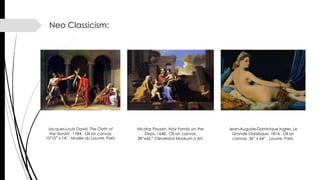
Jean-Auguste-Dominique Ingres, Le
Grande Odalisque, 1814. Oil on
canvas, 36” x 64”. Louvre, Paris.
Jacques-Louis David, The Oath of
the Horatii , 1784. Oil on canvas
10’10” x 14’. Musée du Louvre, Paris
Nicolas Poussin, Holy Family on the
Steps, 1648. Oil on canvas,
28”x44.” Cleveland Museum o Art.
Neo Classicism:
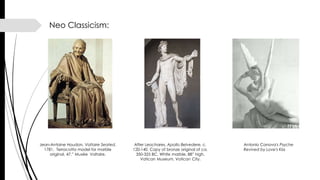
Jean-Antoine Houdon, Voltaire Seated,
1781. Terracotta model for marble
original, 47.” Musée Voltaire.
After Leochares, Apollo Belvedere, c.
120-140. Copy of bronze original of ca.
350-325 BC. White marble, 88” high.
Vatican Museum, Vatican City.
Antonio Canova's Psyche
Revived by Love's Kiss
Neo Classicism:
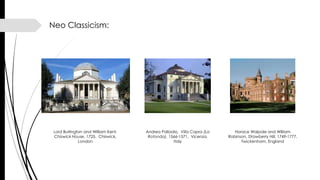
Lord Burlington and William Kent,
Chiswick House, 1725. Chiswick,
London
Andrea Palladio, Villa Capra (La
Rotonda), 1566-1571, Vicenza,
Italy
Horace Walpole and William
Robinson, Strawberry Hill, 1749-1777.
Twickenham, England
Neo Classicism:
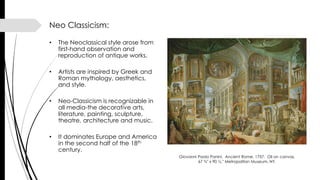
Giovanni Paolo Panini, Ancient Rome, 1757. Oil on canvas,
67 ¾" x 90 ½." Metropolitan Museum, NY.
• The Neoclassical style arose from
first-hand observation and
reproduction of antique works.
• Artists are inspired by Greek and
Roman mythology, aesthetics,
and style.
• Neo-Classicism is recognizable in
all media-the decorative arts,
literature, painting, sculpture,
theatre, architecture and music.
• It dominates Europe and America
in the second half of the 18th
century.

Neo classicism

  • 1.
  • 2.
    Neo Classicism: Map ofEurope and America in the Age of Enlightenment
  • 3.
    Neo Classicism: • Neoclassicismis a revival of the styles and spirit of classic antiquity inspired directly from the classical period. • Neo-classical Art is a severe, unemotional form of art harkening back to the style of ancient Greece and Rome. • Its rigidity was a reaction to the overbred of Rococo style and the emotional Baroque style. This art movement is often described as the opposed counterpart of Romanticism. • The rise of Neo-classical Art was part of a general revival of classical thought, which was of some importance in the American and French revolutions. • Painters applied sombre colours with occasional brilliant highlights, strengthened by the strong light and dark tones. Here, quality of line and contour was a more important consideration for the artists than colour, light and atmosphere.
  • 4.
    Neo Classicism: Jean-Auguste-Dominique Ingres,Le Grande Odalisque, 1814. Oil on canvas, 36” x 64”. Louvre, Paris. Jacques-Louis David, The Oath of the Horatii , 1784. Oil on canvas 10’10” x 14’. Musée du Louvre, Paris Nicolas Poussin, Holy Family on the Steps, 1648. Oil on canvas, 28”x44.” Cleveland Museum o Art.
  • 5.
    Neo Classicism: Jean-Antoine Houdon,Voltaire Seated, 1781. Terracotta model for marble original, 47.” Musée Voltaire. After Leochares, Apollo Belvedere, c. 120-140. Copy of bronze original of ca. 350-325 BC. White marble, 88” high. Vatican Museum, Vatican City. Antonio Canova's Psyche Revived by Love's Kiss
  • 6.
    Neo Classicism: Lord Burlingtonand William Kent, Chiswick House, 1725. Chiswick, London Andrea Palladio, Villa Capra (La Rotonda), 1566-1571, Vicenza, Italy Horace Walpole and William Robinson, Strawberry Hill, 1749-1777. Twickenham, England
  • 7.
    Neo Classicism: Giovanni PaoloPanini, Ancient Rome, 1757. Oil on canvas, 67 ¾" x 90 ½." Metropolitan Museum, NY. • The Neoclassical style arose from first-hand observation and reproduction of antique works. • Artists are inspired by Greek and Roman mythology, aesthetics, and style. • Neo-Classicism is recognizable in all media-the decorative arts, literature, painting, sculpture, theatre, architecture and music. • It dominates Europe and America in the second half of the 18th century.