ROCK ARTBY: MISS LOVE JOY L. AMARGO
WHAT IS A ROCK ART?
a form of landscape art, and
includes designs that have been
placed on boulder and cliff faces,
cave walls and ceilings, and on
the ground surface.
VARIOUS FORMS OF ROCK ART
• pictographs, which were painted or drawn onto
the panel (rock surface),
• petroglyphs, which were carved or engraved onto
the panel,
• earth figures such as earthforms, intaglios and
geoglyphs.
• Some archaeologists also consider pits and grooves
in the rock, known as cups, rings or cupules, as a
form of rock art
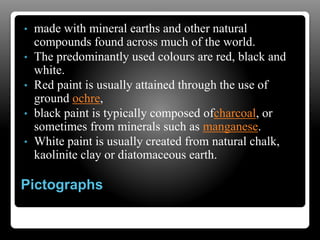
Pictographs
• made with mineral earths and other natural
compounds found across much of the world.
• The predominantly used colours are red, black and
white.
• Red paint is usually attained through the use of
ground ochre,
• black paint is typically composed ofcharcoal, or
sometimes from minerals such as manganese.
• White paint is usually created from natural chalk,
kaolinite clay or diatomaceous earth.
HOW PICTOGRAPHS WERE FORM?
 they would be ground and mixed with a liquid, such
as water, blood, urine, or egg yolk, and then applied
to the stone as paint using a brush, fingers, or a
stamp. Alternately, the pigment could have been
applied on dry, such as with a stick of charcoal.]
HAND PRINT AS ONE UNUSUAL FORM
OF PICTOGRAPH
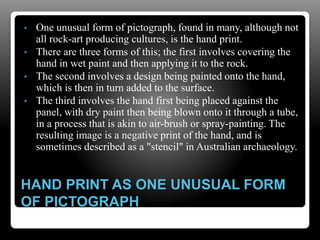
• One unusual form of pictograph, found in many, although not
all rock-art producing cultures, is the hand print.
• There are three forms of this; the first involves covering the
hand in wet paint and then applying it to the rock.
• The second involves a design being painted onto the hand,
which is then in turn added to the surface.
• The third involves the hand first being placed against the
panel, with dry paint then being blown onto it through a tube,
in a process that is akin to air-brush or spray-painting. The
resulting image is a negative print of the hand, and is
sometimes described as a "stencil" in Australian archaeology.
Petroglyphs
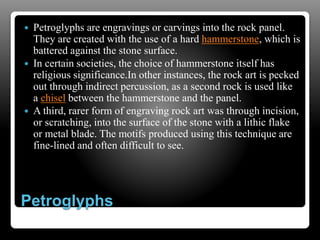
 Petroglyphs are engravings or carvings into the rock panel.
They are created with the use of a hard hammerstone, which is
battered against the stone surface.
 In certain societies, the choice of hammerstone itself has
religious significance.In other instances, the rock art is pecked
out through indirect percussion, as a second rock is used like
a chisel between the hammerstone and the panel.
 A third, rarer form of engraving rock art was through incision,
or scratching, into the surface of the stone with a lithic flake
or metal blade. The motifs produced using this technique are
fine-lined and often difficult to see.
Earth Figures
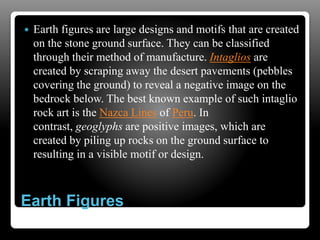
 Earth figures are large designs and motifs that are created
on the stone ground surface. They can be classified
through their method of manufacture. Intaglios are
created by scraping away the desert pavements (pebbles
covering the ground) to reveal a negative image on the
bedrock below. The best known example of such intaglio
rock art is the Nazca Lines of Peru. In
contrast, geoglyphs are positive images, which are
created by piling up rocks on the ground surface to
resulting in a visible motif or design.
Interpretation and Use
 to mark territory,
 to record historical events or stories
 or to help enact rituals.
 to depict real events
 apparently entirely abstract
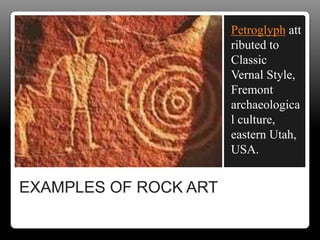
EXAMPLES OF ROCK ART
Petroglyph att
ributed to
Classic
Vernal Style,
Fremont
archaeologica
l culture,
eastern Utah,
USA.
EXAMPLES OF ROCK ART
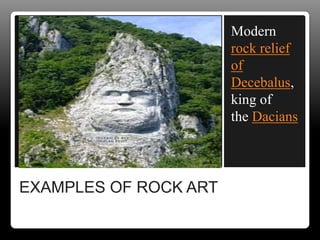
Modern
rock relief
of
Decebalus,
king of
the Dacians
EXAMPLES OF ROCK ART
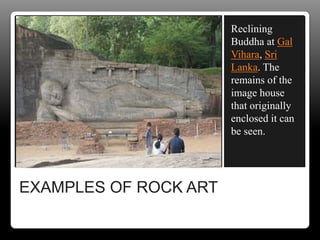
Reclining
Buddha at Gal
Vihara, Sri
Lanka. The
remains of the
image house
that originally
enclosed it can
be seen.
EXAMPLES OF ROCK ART
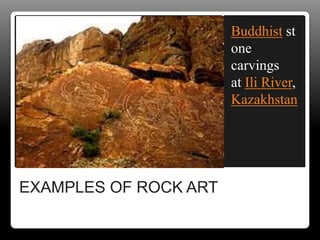
Buddhist st
one
carvings
at Ili River,
Kazakhstan
EXAMPLES OF ROCK ART
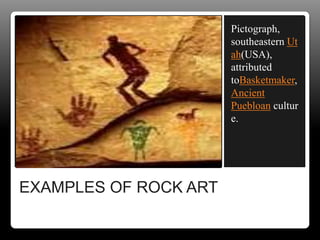
Pictograph,
southeastern Ut
ah(USA),
attributed
toBasketmaker,
Ancient
Puebloan cultur
e.
AFRICAN ROCK ART
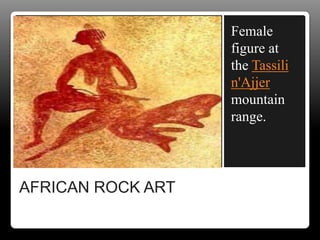
Female
figure at
the Tassili
n'Ajjer
mountain
range.
AFRICAN ROCK ART
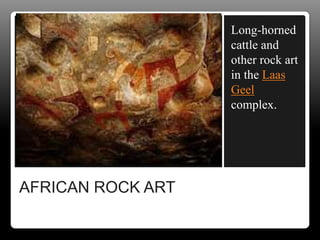
Long-horned
cattle and
other rock art
in the Laas
Geel
complex.
AFRICAN ROCK ART
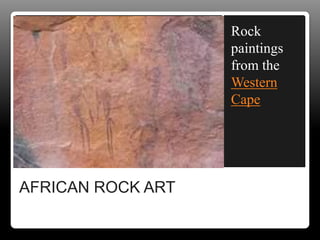
Rock
paintings
from the
Western
Cape
AMERICAN ROCK ART
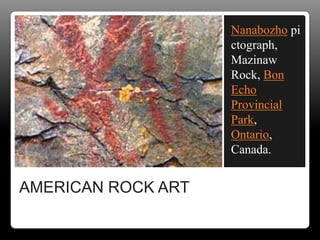
Nanabozho pi
ctograph,
Mazinaw
Rock, Bon
Echo
Provincial
Park,
Ontario,
Canada.
AMERICAN ROCK ART
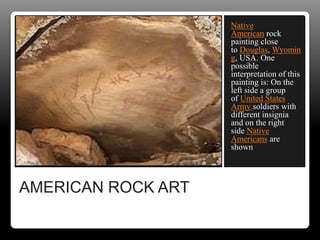
Native
American rock
painting close
to Douglas, Wyomin
g, USA. One
possible
interpretation of this
painting is: On the
left side a group
of United States
Army soldiers with
different insignia
and on the right
side Native
Americans are
shown
INDIAN ROCK ART
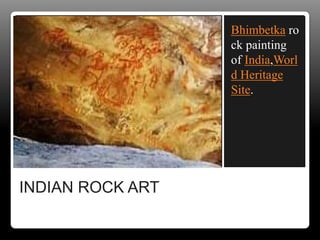
Bhimbetka ro
ck painting
of India,Worl
d Heritage
Site.
ASIAN ROCK ART
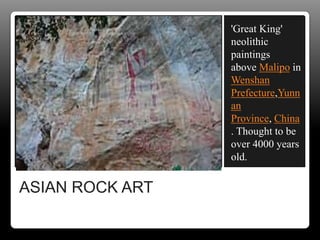
'Great King'
neolithic
paintings
above Malipo in
Wenshan
Prefecture,Yunn
an
Province, China
. Thought to be
over 4000 years
old.
AUSTRALIAN ART
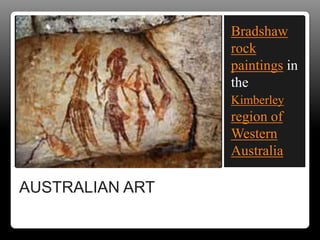
Bradshaw
rock
paintings in
the
Kimberley
region of
Western
Australia
AUSTRALIAN ART
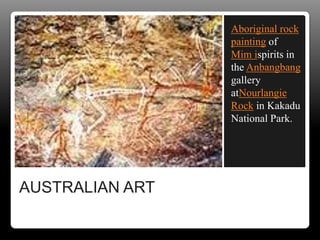
Aboriginal rock
painting of
Mim ispirits in
the Anbangbang
gallery
atNourlangie
Rock in Kakadu
National Park.
EUROPE’S OLDEST ROCK ART
 The oldest known example is the Chauvet Cave in
France, although others have been located,
including Lascaux in France, Alta Mira in Spain
and Creswell Crags in Britain.
AMERICA’S OLDEST ROCK ART
 The oldest reliably dated rock art in the Americas is
known as the "Horny Little Man." It
is petroglyph depicting a stick figure with an
oversized phallus and carved inLapa do Santo, a cave
in central-eastern Brazil
AUSTRALIA’S OLDEST ROCK ART
 The oldest firmly dated rock art painting in Australia
is a charcoal drawing on a rock fragment found
during the excavation of the Nawarla Gabarnmang
rock shelter in south western Arnhem Land in
the Northern Territory. Dated at 28,000 years, it is
one of the oldest known pieces of rock art on Earth
with a confirmed date.
 Nawarla Gabarnmang is considered to have one of
the most extensive collections of rock art in the
world and predates both Lascaux and Chauvet cave
art, the earliest known art in Europe by at least
10,000 years
AFRICA’S OLDEST ROCK ART
 The APOLLO 11 stones were thought t be the oldest
known artwork of any kind from the African
continent.
CAVE ART
CAVE ART
 painted drawings on cave walls or ceilings
INTERPRETATION AND USE
 .were not merely decorations of living areas since the
caves in which they have been found do not have signs of
ongoing habitation.
 They are also often located in areas of caves that are not
easily accessible.
 Some theories hold that cave paintings may have been a
way of communicating with others, while other theories
ascribe a religious or ceremonial purpose to them.
 The paintings are remarkably similar around the world,
with animals being common subjects that give the most
impressive images. Humans mainly appear as images of
hands, mostly hand stencils made by blowing pigment
on a hand held to the wall.
SUBJECT,THEMES AND PATTERNS
 The most common subjects in cave paintings are
large wild animals, such as bison,horses, aurochs,
and deer, and tracings of human hands as well as
abstract patterns, called finger flutings
OLDEST CAVE ART
 EL CASTILLO CAVE
 PREHISTORIC DOTS AND CRIMSON HAND
STENCILSON SPANISH CAVE WALLS.
 MADE BY THE NEANDERTHALS.
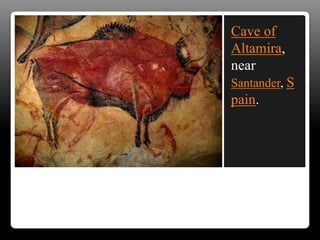
Cave of
Altamira,
near
Santander, S
pain.
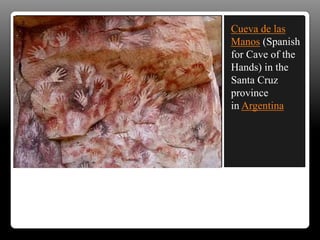
Cueva de las
Manos (Spanish
for Cave of the
Hands) in the
Santa Cruz
province
in Argentina
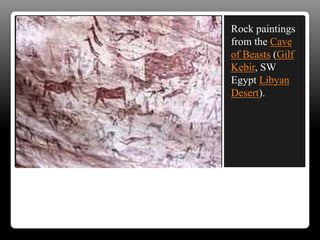
Rock paintings
from the Cave
of Beasts (Gilf
Kebir, SW
Egypt Libyan
Desert).
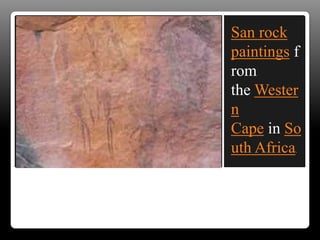
San rock
paintings f
rom
the Wester
n
Cape in So
uth Africa.
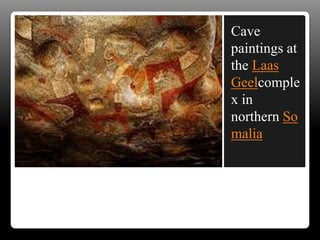
Cave
paintings at
the Laas
Geelcomple
x in
northern So
malia
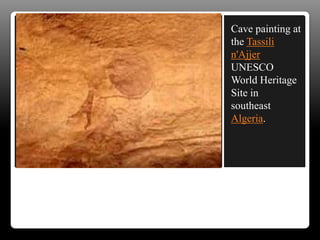
Cave painting at
the Tassili
n'Ajjer
UNESCO
World Heritage
Site in
southeast
Algeria.
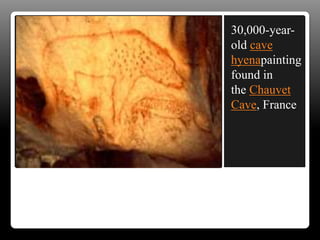
30,000-year-
old cave
hyenapainting
found in
the Chauvet
Cave, France
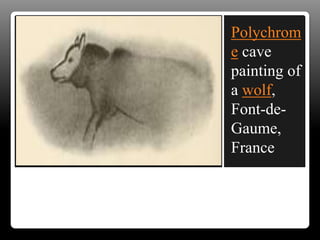
Polychrom
e cave
painting of
a wolf,
Font-de-
Gaume,
France
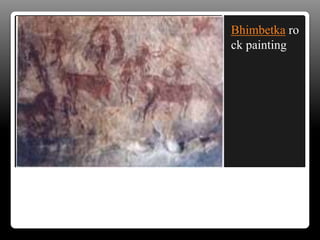
Bhimbetka ro
ck painting
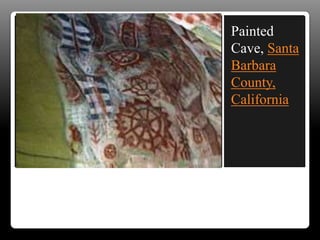
Painted
Cave, Santa
Barbara
County,
California
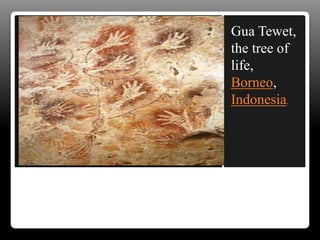
Gua Tewet,
the tree of
life,
Borneo,
Indonesia.
SHORT QUIZ
1. a form of landscape art, and includes designs that
have been placed on boulder and cliff faces, cave walls
and ceilings, and on the ground surface.
2-4 3 various forms of rock art
5-7 predominantly used colors in rock art
8.created by scraping away the desert pavements
(pebbles covering the ground) to reveal a negative
image on the bedrock below.
9-13 5 use and interpretations of rock art
14. painted drawings on cave walls or ceilings
15. made by blowing pigment on a hand
held to the wall.
16-18 three major themes and subject in
cave art
19-22 oldest rock art in America. Africa,
Australia and Europe
23-25 (3 points) oldest cave art, where we
can find it and who made it?
1.Rock art
2.Petroglyps
3.Pictographs
4.Earth figures
5.Black
6.Red
7.White
8.Intaglio
9.to mark territory,
10. to record
historical events
or stories
KEY ANSWER
11. or to help enact rituals.
12. to depict real events
13. apparently entirely
abstract
14. Cave art
15. Hand stencils
16.Large wild animals
17.Tracings of human
hands
18 abstract pattern
19.Chauvet cave
20. "Horny Little Man."
21. a charcoal drawing on
a rock fragment
22. APOLLO 11 stones
23-25 El Castillo Cave
Spain
Made by the Neanderthals.
LET’S BE
CREATIVE
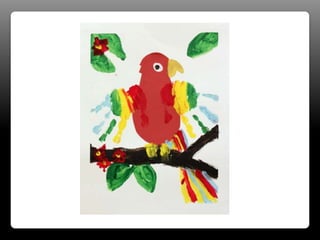
Based on the lesson we
discussed, ancient people used
handprints or hand stencils on
rocks and caves. Now, it’s your
turn to create your own
masterpiece by creating a
figure using your handprints.
Make your own. Avoid copying
ideas to others. Write a simple
caption to describe your
masterpiece. Use a watercolor and
put your artwork in a ¼ sheet of
cardboard
Deadline: AUGUST 12,2016
Rock art
Rock art
Rock art
Rock art
Rock art
Rock art

Rock art

  • 1.
    ROCK ARTBY: MISSLOVE JOY L. AMARGO
  • 2.
    WHAT IS AROCK ART? a form of landscape art, and includes designs that have been placed on boulder and cliff faces, cave walls and ceilings, and on the ground surface.
  • 3.
    VARIOUS FORMS OFROCK ART • pictographs, which were painted or drawn onto the panel (rock surface), • petroglyphs, which were carved or engraved onto the panel, • earth figures such as earthforms, intaglios and geoglyphs. • Some archaeologists also consider pits and grooves in the rock, known as cups, rings or cupules, as a form of rock art
  • 4.
    Pictographs • made withmineral earths and other natural compounds found across much of the world. • The predominantly used colours are red, black and white. • Red paint is usually attained through the use of ground ochre, • black paint is typically composed ofcharcoal, or sometimes from minerals such as manganese. • White paint is usually created from natural chalk, kaolinite clay or diatomaceous earth.
  • 5.
    HOW PICTOGRAPHS WEREFORM?  they would be ground and mixed with a liquid, such as water, blood, urine, or egg yolk, and then applied to the stone as paint using a brush, fingers, or a stamp. Alternately, the pigment could have been applied on dry, such as with a stick of charcoal.]
  • 6.
    HAND PRINT ASONE UNUSUAL FORM OF PICTOGRAPH • One unusual form of pictograph, found in many, although not all rock-art producing cultures, is the hand print. • There are three forms of this; the first involves covering the hand in wet paint and then applying it to the rock. • The second involves a design being painted onto the hand, which is then in turn added to the surface. • The third involves the hand first being placed against the panel, with dry paint then being blown onto it through a tube, in a process that is akin to air-brush or spray-painting. The resulting image is a negative print of the hand, and is sometimes described as a "stencil" in Australian archaeology.
  • 7.
    Petroglyphs  Petroglyphs areengravings or carvings into the rock panel. They are created with the use of a hard hammerstone, which is battered against the stone surface.  In certain societies, the choice of hammerstone itself has religious significance.In other instances, the rock art is pecked out through indirect percussion, as a second rock is used like a chisel between the hammerstone and the panel.  A third, rarer form of engraving rock art was through incision, or scratching, into the surface of the stone with a lithic flake or metal blade. The motifs produced using this technique are fine-lined and often difficult to see.
  • 8.
    Earth Figures  Earthfigures are large designs and motifs that are created on the stone ground surface. They can be classified through their method of manufacture. Intaglios are created by scraping away the desert pavements (pebbles covering the ground) to reveal a negative image on the bedrock below. The best known example of such intaglio rock art is the Nazca Lines of Peru. In contrast, geoglyphs are positive images, which are created by piling up rocks on the ground surface to resulting in a visible motif or design.
  • 9.
    Interpretation and Use to mark territory,  to record historical events or stories  or to help enact rituals.  to depict real events  apparently entirely abstract
  • 10.
    EXAMPLES OF ROCKART Petroglyph att ributed to Classic Vernal Style, Fremont archaeologica l culture, eastern Utah, USA.
  • 11.
    EXAMPLES OF ROCKART Modern rock relief of Decebalus, king of the Dacians
  • 12.
    EXAMPLES OF ROCKART Reclining Buddha at Gal Vihara, Sri Lanka. The remains of the image house that originally enclosed it can be seen.
  • 13.
    EXAMPLES OF ROCKART Buddhist st one carvings at Ili River, Kazakhstan
  • 14.
    EXAMPLES OF ROCKART Pictograph, southeastern Ut ah(USA), attributed toBasketmaker, Ancient Puebloan cultur e.
  • 15.
    AFRICAN ROCK ART Female figureat the Tassili n'Ajjer mountain range.
  • 16.
    AFRICAN ROCK ART Long-horned cattleand other rock art in the Laas Geel complex.
  • 17.
  • 18.
    AMERICAN ROCK ART Nanabozhopi ctograph, Mazinaw Rock, Bon Echo Provincial Park, Ontario, Canada.
  • 19.
    AMERICAN ROCK ART Native Americanrock painting close to Douglas, Wyomin g, USA. One possible interpretation of this painting is: On the left side a group of United States Army soldiers with different insignia and on the right side Native Americans are shown
  • 20.
    INDIAN ROCK ART Bhimbetkaro ck painting of India,Worl d Heritage Site.
  • 21.
    ASIAN ROCK ART 'GreatKing' neolithic paintings above Malipo in Wenshan Prefecture,Yunn an Province, China . Thought to be over 4000 years old.
  • 22.
  • 23.
    AUSTRALIAN ART Aboriginal rock paintingof Mim ispirits in the Anbangbang gallery atNourlangie Rock in Kakadu National Park.
  • 24.
    EUROPE’S OLDEST ROCKART  The oldest known example is the Chauvet Cave in France, although others have been located, including Lascaux in France, Alta Mira in Spain and Creswell Crags in Britain.
  • 25.
    AMERICA’S OLDEST ROCKART  The oldest reliably dated rock art in the Americas is known as the "Horny Little Man." It is petroglyph depicting a stick figure with an oversized phallus and carved inLapa do Santo, a cave in central-eastern Brazil
  • 26.
    AUSTRALIA’S OLDEST ROCKART  The oldest firmly dated rock art painting in Australia is a charcoal drawing on a rock fragment found during the excavation of the Nawarla Gabarnmang rock shelter in south western Arnhem Land in the Northern Territory. Dated at 28,000 years, it is one of the oldest known pieces of rock art on Earth with a confirmed date.
  • 27.
     Nawarla Gabarnmangis considered to have one of the most extensive collections of rock art in the world and predates both Lascaux and Chauvet cave art, the earliest known art in Europe by at least 10,000 years
  • 28.
    AFRICA’S OLDEST ROCKART  The APOLLO 11 stones were thought t be the oldest known artwork of any kind from the African continent.
  • 29.
  • 30.
    CAVE ART  painteddrawings on cave walls or ceilings
  • 31.
    INTERPRETATION AND USE .were not merely decorations of living areas since the caves in which they have been found do not have signs of ongoing habitation.  They are also often located in areas of caves that are not easily accessible.  Some theories hold that cave paintings may have been a way of communicating with others, while other theories ascribe a religious or ceremonial purpose to them.  The paintings are remarkably similar around the world, with animals being common subjects that give the most impressive images. Humans mainly appear as images of hands, mostly hand stencils made by blowing pigment on a hand held to the wall.
  • 32.
    SUBJECT,THEMES AND PATTERNS The most common subjects in cave paintings are large wild animals, such as bison,horses, aurochs, and deer, and tracings of human hands as well as abstract patterns, called finger flutings
  • 33.
    OLDEST CAVE ART EL CASTILLO CAVE  PREHISTORIC DOTS AND CRIMSON HAND STENCILSON SPANISH CAVE WALLS.  MADE BY THE NEANDERTHALS.
  • 34.
  • 35.
    Cueva de las Manos(Spanish for Cave of the Hands) in the Santa Cruz province in Argentina
  • 36.
    Rock paintings from theCave of Beasts (Gilf Kebir, SW Egypt Libyan Desert).
  • 37.
    San rock paintings f rom theWester n Cape in So uth Africa.
  • 38.
  • 39.
    Cave painting at theTassili n'Ajjer UNESCO World Heritage Site in southeast Algeria.
  • 40.
  • 41.
    Polychrom e cave painting of awolf, Font-de- Gaume, France
  • 42.
  • 43.
  • 44.
    Gua Tewet, the treeof life, Borneo, Indonesia.
  • 45.
    SHORT QUIZ 1. aform of landscape art, and includes designs that have been placed on boulder and cliff faces, cave walls and ceilings, and on the ground surface. 2-4 3 various forms of rock art 5-7 predominantly used colors in rock art 8.created by scraping away the desert pavements (pebbles covering the ground) to reveal a negative image on the bedrock below. 9-13 5 use and interpretations of rock art 14. painted drawings on cave walls or ceilings
  • 46.
    15. made byblowing pigment on a hand held to the wall. 16-18 three major themes and subject in cave art 19-22 oldest rock art in America. Africa, Australia and Europe 23-25 (3 points) oldest cave art, where we can find it and who made it?
  • 47.
    1.Rock art 2.Petroglyps 3.Pictographs 4.Earth figures 5.Black 6.Red 7.White 8.Intaglio 9.tomark territory, 10. to record historical events or stories KEY ANSWER
  • 48.
    11. or tohelp enact rituals. 12. to depict real events 13. apparently entirely abstract 14. Cave art 15. Hand stencils 16.Large wild animals 17.Tracings of human hands 18 abstract pattern 19.Chauvet cave 20. "Horny Little Man." 21. a charcoal drawing on a rock fragment 22. APOLLO 11 stones 23-25 El Castillo Cave Spain Made by the Neanderthals.
  • 49.
  • 50.
    Based on thelesson we discussed, ancient people used handprints or hand stencils on rocks and caves. Now, it’s your turn to create your own masterpiece by creating a figure using your handprints.
  • 51.
    Make your own.Avoid copying ideas to others. Write a simple caption to describe your masterpiece. Use a watercolor and put your artwork in a ¼ sheet of cardboard Deadline: AUGUST 12,2016