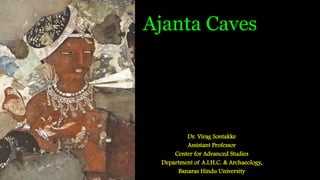
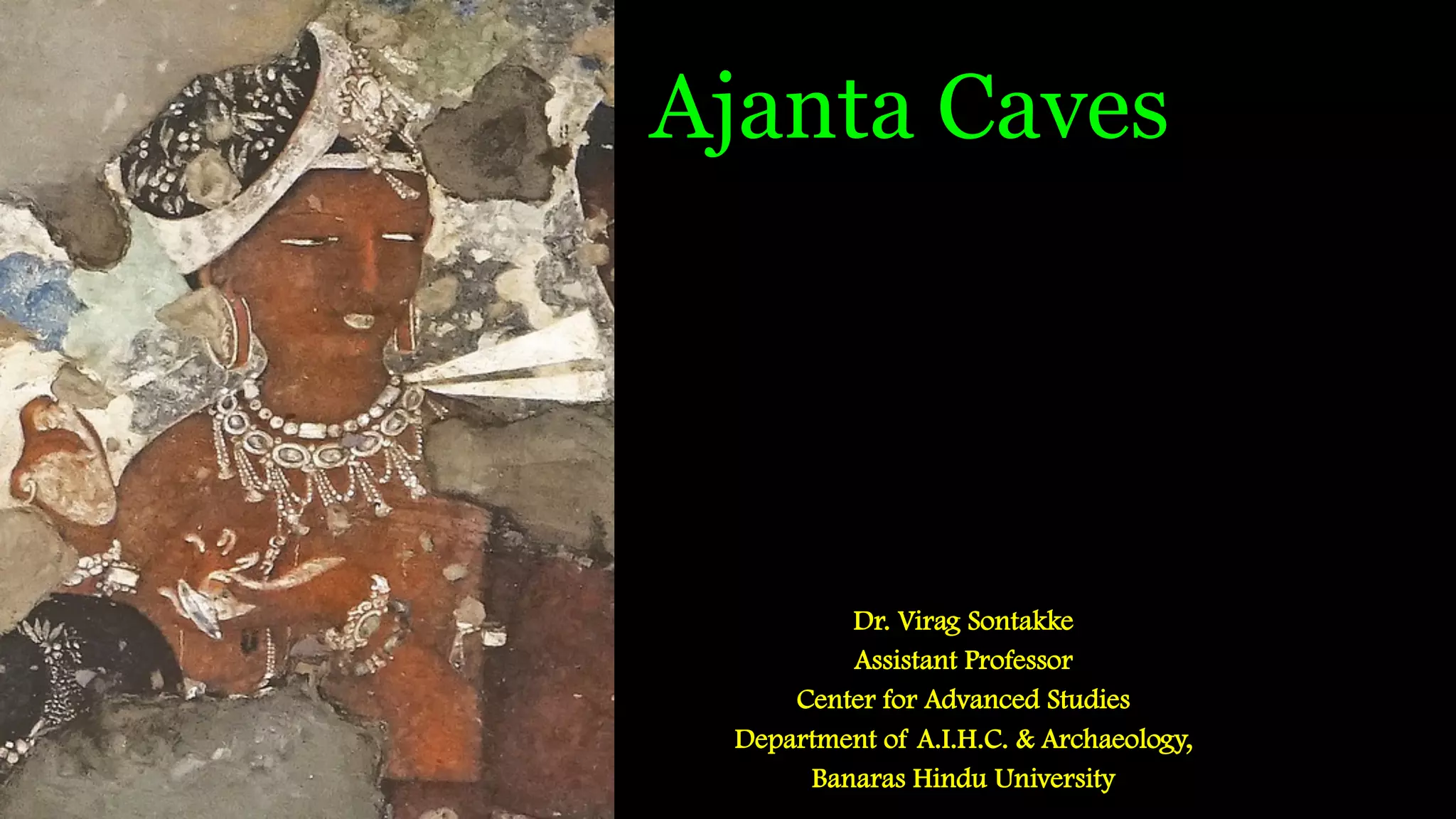
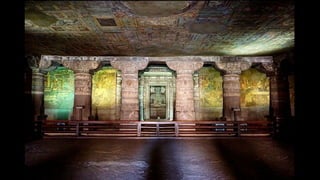
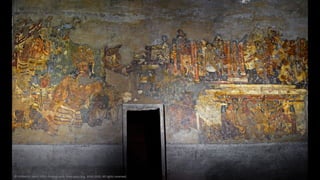
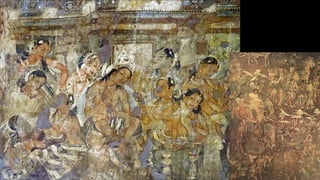
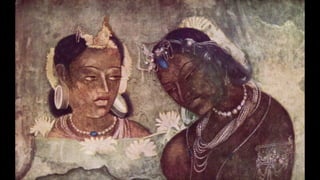


Ajanta Caves
Dr. Virag Sontakke
Assistant Professor
Center for Advanced Studies
Department of A.I.H.C. & Archaeology,
Banaras Hindu University
Introduction
• One of the unique Buddhist Rock–cut Architecture in the World
• Caves were carved out Rock was Basaltic (Igneous formation)
• Bears over 600 years of construction history
• Different dynastic patronage
• Individual, guilds donations
• Not only famous for architecture but also for their paintings
• Its current name is derived from a neighbouring village, the local
pronunciation of which is Ajintha.
• Ajita is the colloquial name of Maitreya Buddha.
• Declared as World Heritage Sites by UNESCO since 1983.
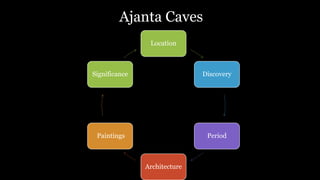
Ajanta Caves
Location
Discovery
Period
Architecture
Paintings
Significance
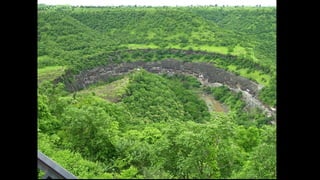
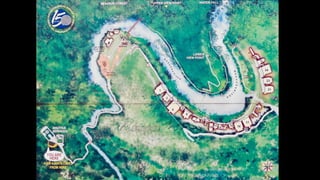
Location
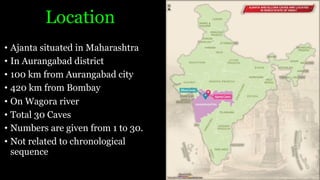
• Ajanta situated in Maharashtra
• In Aurangabad district
• 100 km from Aurangabad city
• 420 km from Bombay
• On Wagora river
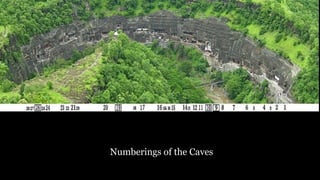
• Total 30 Caves
• Numbers are given from 1 to 30.
• Not related to chronological
sequence
Numberings of the Caves
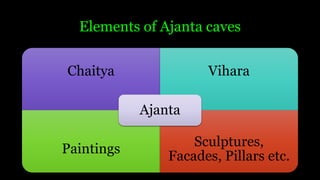
Elements of Ajanta caves
Chaitya Vihara
Paintings
Sculptures,
Facades, Pillars etc.
Ajanta
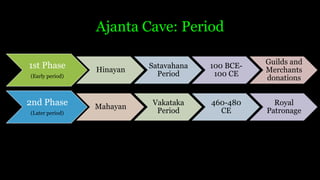
Ajanta Cave: Period
1st Phase
(Early period)
Hinayan
Satavahana
Period
100 BCE-
100 CE
Guilds and
Merchants
donations
2nd Phase
(Later period)
Mahayan
Vakataka
Period
460-480
CE
Royal
Patronage
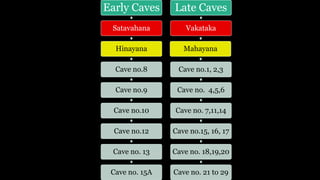
Early Caves
Satavahana
Hinayana
Cave no.8
Cave no.9
Cave no.10
Cave no.12
Cave no. 13
Cave no. 15A
Late Caves
Vakataka
Mahayana
Cave no.1, 2,3
Cave no. 4,5,6
Cave no. 7,11,14
Cave no.15, 16, 17
Cave no. 18,19,20
Cave no. 21 to 29
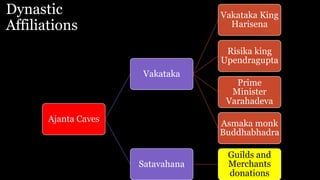
Dynastic
Affiliations
Ajanta Caves
Vakataka
Vakataka King
Harisena
Risika king
Upendragupta
Prime
Minister
Varahadeva
Asmaka monk
Buddhabhadra
Satavahana
Guilds and
Merchants
donations
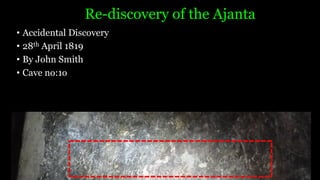
Re-discovery of the Ajanta
• Accidental Discovery
• 28th April 1819
• By John Smith
• Cave no:1o
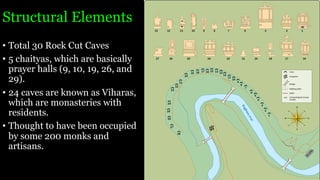
Structural Elements
• Total 30 Rock Cut Caves
• 5 chaityas, which are basically
prayer halls (9, 10, 19, 26, and
29).
• 24 caves are known as Viharas,
which are monasteries with
residents.
• Thought to have been occupied
by some 200 monks and
artisans.
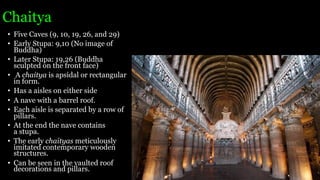
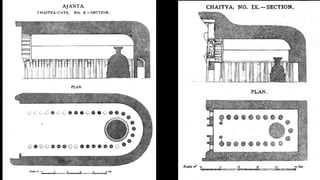
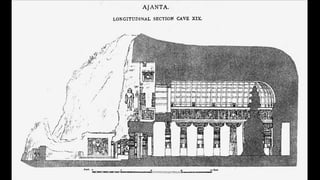
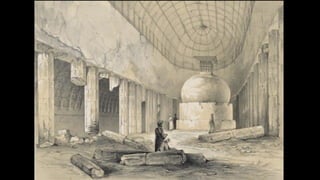
Chaitya
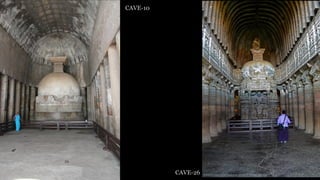
• Five Caves (9, 10, 19, 26, and 29)
• Early Stupa: 9,10 (No image of
Buddha)
• Later Stupa: 19,26 (Buddha
sculpted on the front face)
• A chaitya is apsidal or rectangular
in form.
• Has a aisles on either side
• A nave with a barrel roof.
• Each aisle is separated by a row of
pillars.
• At the end the nave contains
a stupa.
• The early chaityas meticulously
imitated contemporary wooden
structures.
• Can be seen in the vaulted roof
decorations and pillars.
CAVE-26
CAVE-10
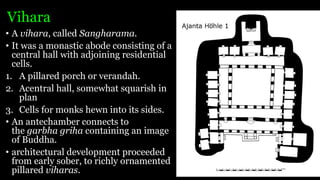
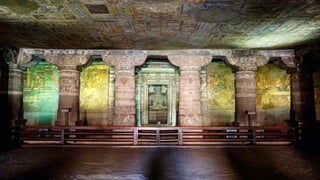
Vihara
• A vihara, called Sangharama.
• It was a monastic abode consisting of a
central hall with adjoining residential
cells.
1. A pillared porch or verandah.
2. Acentral hall, somewhat squarish in
plan
3. Cells for monks hewn into its sides.
• An antechamber connects to
the garbha griha containing an image
of Buddha.
• architectural development proceeded
from early sober, to richly ornamented
pillared viharas.
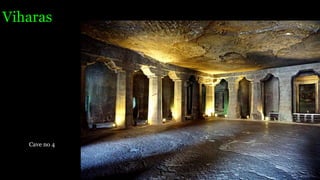
Viharas
Cave no 4
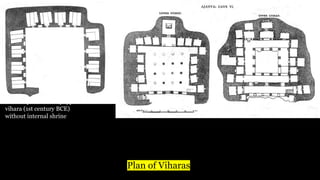
Cave 12 plan: an early type of
vihara (1st century BCE)
without internal shrine
Plan of Viharas
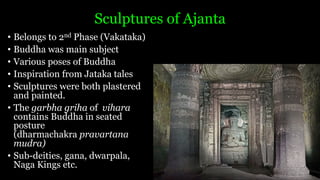
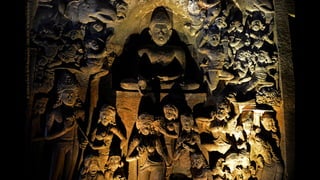
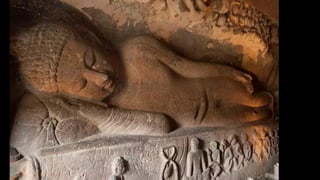
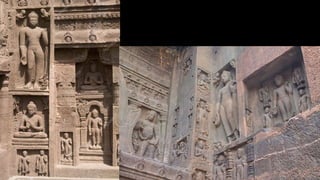
Sculptures of Ajanta
• Belongs to 2nd Phase (Vakataka)
• Buddha was main subject
• Various poses of Buddha
• Inspiration from Jataka tales
• Sculptures were both plastered
and painted.
• The garbha griha of vihara
contains Buddha in seated
posture
(dharmachakra pravartana
mudra)
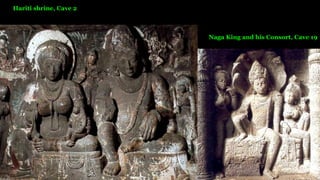
• Sub-deities, gana, dwarpala,
Naga Kings etc.
Hariti shrine, Cave 2
Naga King and his Consort, Cave 19
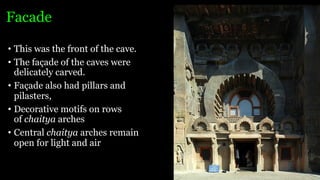
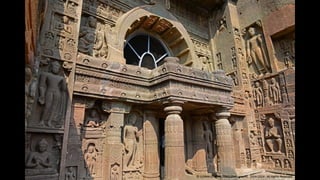
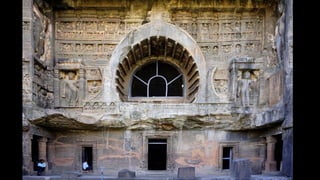
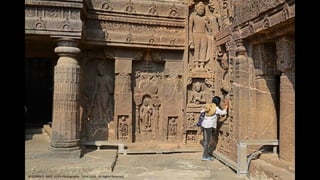
Facade
• This was the front of the cave.
• The façade of the caves were
delicately carved.
• Façade also had pillars and
pilasters,
• Decorative motifs on rows
of chaitya arches
• Central chaitya arches remain
open for light and air
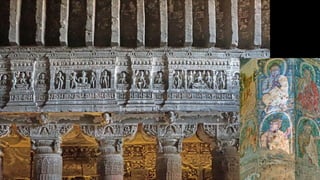
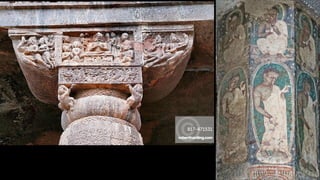
Pillars
• Initially pillars were just to support ceiling of the cave.
• Subsequently, pillars became more and more
decorative.
• Also contain designs or figures of Buddha
• Some pillars were carved with floral, geometric
designs
• Motifs like dwarf holding pillars or with musical
instrument.
• Painted pillars were found in four caves (Caves 2, 9,
10, 17 and 26).
• Base of the pillars were painted with yaksha, nagas,
and ganas.
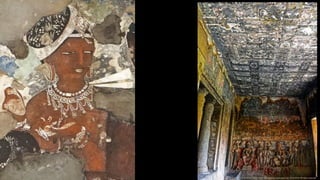
Paintings
• Currently paintings are intact in both the earlier and later phase
• Cave no 9 & 10 are belongs to Satavahana period
• Paintings of early caves represented only symbolically by the Bodhi
tree, paduka (wooden footwear), wheel etc.
• Later period paintings are survived in Cave no 1,2, 16 & 17
• Later caves depecting Buddha murals, including Kinnara, Vidyadhara,
and Gandharva etc.
• Painters were mastered in easy and fluent naturalistic style
• The paintings prominently narrate the Jataka stories.
• The narratives flow unrestricted from one cave wall to the next with effortless
flexibility.
• Artist had deep understanding of nature, gesture, life, expressions etc.
• Buddhist legends describing the previous births of the Buddha.
Painting Technique
• Technique known as fresco secco.
1. The rugged surface of the cave walls was made uneven
2. This black, pours surface provide a grip to the covering plaster
3. Plaster was made of ground ferruginous earth, rock grit, sand, vegetable
fibres, paddy husk, and other fibrous materials of organic origin.
4. A second layer of mud, ferruginous earth mixed with pulverised rock powder
or sand and fine vegetable fibre.
5. The surface was then treated with a thin coat of limewash over which
pigments were applied.
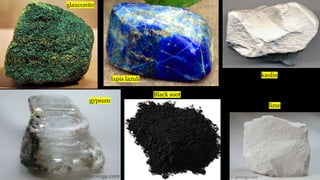
6. Except for the black which was obtained from kohl, all other pigments were
of mineral origin.
7. Terra verda or glauconite for green, lapis lazuli for blue, kaolin, gypsum or
lime were of frequent use.
glauconite
lapis lazuli
kaolin
gypsum
lime
Black soot
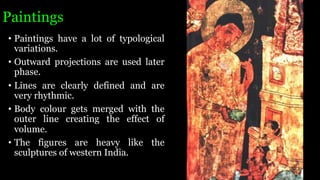
Paintings
• Paintings have a lot of typological
variations.
• Outward projections are used later
phase.
• Lines are clearly defined and are
very rhythmic.
• Body colour gets merged with the
outer line creating the effect of
volume.
• The figures are heavy like the
sculptures of western India.
Conclusion
• Ajanta caves are producing one of the finest surviving examples
of ancient Indian art.
• The art and architecture of Ajanta are universally regarded as
masterpieces of Buddhist Art in World.
• Ajanta became an important center for Buddhist religion and art under
the enlightened patronage of the Satavahana and Vakataka rulers.
• Ajanta Caves are adorned with wonderful paintings of the Jataka tales,
which gave socio-cultural-economic aspects of the society.
• Ajanta caves have an amazing blend of human and animal sculptures,
painting and beautiful sculpture.
• Overall, Ajanta is the pinnacle of Ancient Indian artistic tradition.
Any Questions

Ajanta caves

  • 1.
    Ajanta Caves Dr. ViragSontakke Assistant Professor Center for Advanced Studies Department of A.I.H.C. & Archaeology, Banaras Hindu University
  • 4.
    Introduction • One ofthe unique Buddhist Rock–cut Architecture in the World • Caves were carved out Rock was Basaltic (Igneous formation) • Bears over 600 years of construction history • Different dynastic patronage • Individual, guilds donations • Not only famous for architecture but also for their paintings • Its current name is derived from a neighbouring village, the local pronunciation of which is Ajintha. • Ajita is the colloquial name of Maitreya Buddha. • Declared as World Heritage Sites by UNESCO since 1983.
  • 5.
  • 6.
    Location • Ajanta situatedin Maharashtra • In Aurangabad district • 100 km from Aurangabad city • 420 km from Bombay • On Wagora river • Total 30 Caves • Numbers are given from 1 to 30. • Not related to chronological sequence
  • 7.
  • 9.
    Elements of Ajantacaves Chaitya Vihara Paintings Sculptures, Facades, Pillars etc. Ajanta
  • 10.
    Ajanta Cave: Period 1stPhase (Early period) Hinayan Satavahana Period 100 BCE- 100 CE Guilds and Merchants donations 2nd Phase (Later period) Mahayan Vakataka Period 460-480 CE Royal Patronage
  • 11.
    Early Caves Satavahana Hinayana Cave no.8 Caveno.9 Cave no.10 Cave no.12 Cave no. 13 Cave no. 15A Late Caves Vakataka Mahayana Cave no.1, 2,3 Cave no. 4,5,6 Cave no. 7,11,14 Cave no.15, 16, 17 Cave no. 18,19,20 Cave no. 21 to 29
  • 12.
    Dynastic Affiliations Ajanta Caves Vakataka Vakataka King Harisena Risikaking Upendragupta Prime Minister Varahadeva Asmaka monk Buddhabhadra Satavahana Guilds and Merchants donations
  • 13.
    Re-discovery of theAjanta • Accidental Discovery • 28th April 1819 • By John Smith • Cave no:1o
  • 14.
    Structural Elements • Total30 Rock Cut Caves • 5 chaityas, which are basically prayer halls (9, 10, 19, 26, and 29). • 24 caves are known as Viharas, which are monasteries with residents. • Thought to have been occupied by some 200 monks and artisans.
  • 15.
    Chaitya • Five Caves(9, 10, 19, 26, and 29) • Early Stupa: 9,10 (No image of Buddha) • Later Stupa: 19,26 (Buddha sculpted on the front face) • A chaitya is apsidal or rectangular in form. • Has a aisles on either side • A nave with a barrel roof. • Each aisle is separated by a row of pillars. • At the end the nave contains a stupa. • The early chaityas meticulously imitated contemporary wooden structures. • Can be seen in the vaulted roof decorations and pillars.
  • 17.
  • 20.
    Vihara • A vihara,called Sangharama. • It was a monastic abode consisting of a central hall with adjoining residential cells. 1. A pillared porch or verandah. 2. Acentral hall, somewhat squarish in plan 3. Cells for monks hewn into its sides. • An antechamber connects to the garbha griha containing an image of Buddha. • architectural development proceeded from early sober, to richly ornamented pillared viharas.
  • 22.
  • 23.
    Cave 12 plan:an early type of vihara (1st century BCE) without internal shrine Plan of Viharas
  • 24.
    Sculptures of Ajanta •Belongs to 2nd Phase (Vakataka) • Buddha was main subject • Various poses of Buddha • Inspiration from Jataka tales • Sculptures were both plastered and painted. • The garbha griha of vihara contains Buddha in seated posture (dharmachakra pravartana mudra) • Sub-deities, gana, dwarpala, Naga Kings etc.
  • 27.
    Hariti shrine, Cave2 Naga King and his Consort, Cave 19
  • 29.
    Facade • This wasthe front of the cave. • The façade of the caves were delicately carved. • Façade also had pillars and pilasters, • Decorative motifs on rows of chaitya arches • Central chaitya arches remain open for light and air
  • 33.
    Pillars • Initially pillarswere just to support ceiling of the cave. • Subsequently, pillars became more and more decorative. • Also contain designs or figures of Buddha • Some pillars were carved with floral, geometric designs • Motifs like dwarf holding pillars or with musical instrument. • Painted pillars were found in four caves (Caves 2, 9, 10, 17 and 26). • Base of the pillars were painted with yaksha, nagas, and ganas.
  • 36.
    Paintings • Currently paintingsare intact in both the earlier and later phase • Cave no 9 & 10 are belongs to Satavahana period • Paintings of early caves represented only symbolically by the Bodhi tree, paduka (wooden footwear), wheel etc. • Later period paintings are survived in Cave no 1,2, 16 & 17 • Later caves depecting Buddha murals, including Kinnara, Vidyadhara, and Gandharva etc. • Painters were mastered in easy and fluent naturalistic style • The paintings prominently narrate the Jataka stories. • The narratives flow unrestricted from one cave wall to the next with effortless flexibility. • Artist had deep understanding of nature, gesture, life, expressions etc. • Buddhist legends describing the previous births of the Buddha.
  • 38.
    Painting Technique • Techniqueknown as fresco secco. 1. The rugged surface of the cave walls was made uneven 2. This black, pours surface provide a grip to the covering plaster 3. Plaster was made of ground ferruginous earth, rock grit, sand, vegetable fibres, paddy husk, and other fibrous materials of organic origin. 4. A second layer of mud, ferruginous earth mixed with pulverised rock powder or sand and fine vegetable fibre. 5. The surface was then treated with a thin coat of limewash over which pigments were applied. 6. Except for the black which was obtained from kohl, all other pigments were of mineral origin. 7. Terra verda or glauconite for green, lapis lazuli for blue, kaolin, gypsum or lime were of frequent use.
  • 39.
  • 44.
    Paintings • Paintings havea lot of typological variations. • Outward projections are used later phase. • Lines are clearly defined and are very rhythmic. • Body colour gets merged with the outer line creating the effect of volume. • The figures are heavy like the sculptures of western India.
  • 49.
    Conclusion • Ajanta cavesare producing one of the finest surviving examples of ancient Indian art. • The art and architecture of Ajanta are universally regarded as masterpieces of Buddhist Art in World. • Ajanta became an important center for Buddhist religion and art under the enlightened patronage of the Satavahana and Vakataka rulers. • Ajanta Caves are adorned with wonderful paintings of the Jataka tales, which gave socio-cultural-economic aspects of the society. • Ajanta caves have an amazing blend of human and animal sculptures, painting and beautiful sculpture. • Overall, Ajanta is the pinnacle of Ancient Indian artistic tradition.
  • 50.