The Top 10 Questions Regarding Effective World Language Programs International Education Conference July 11, 2008 Deborah W. Robinson, Ph.D.  National Council of State Supervisors for Languages Shuhan Wang, Ph.D.  Chinese Language Initiatives Asia Society
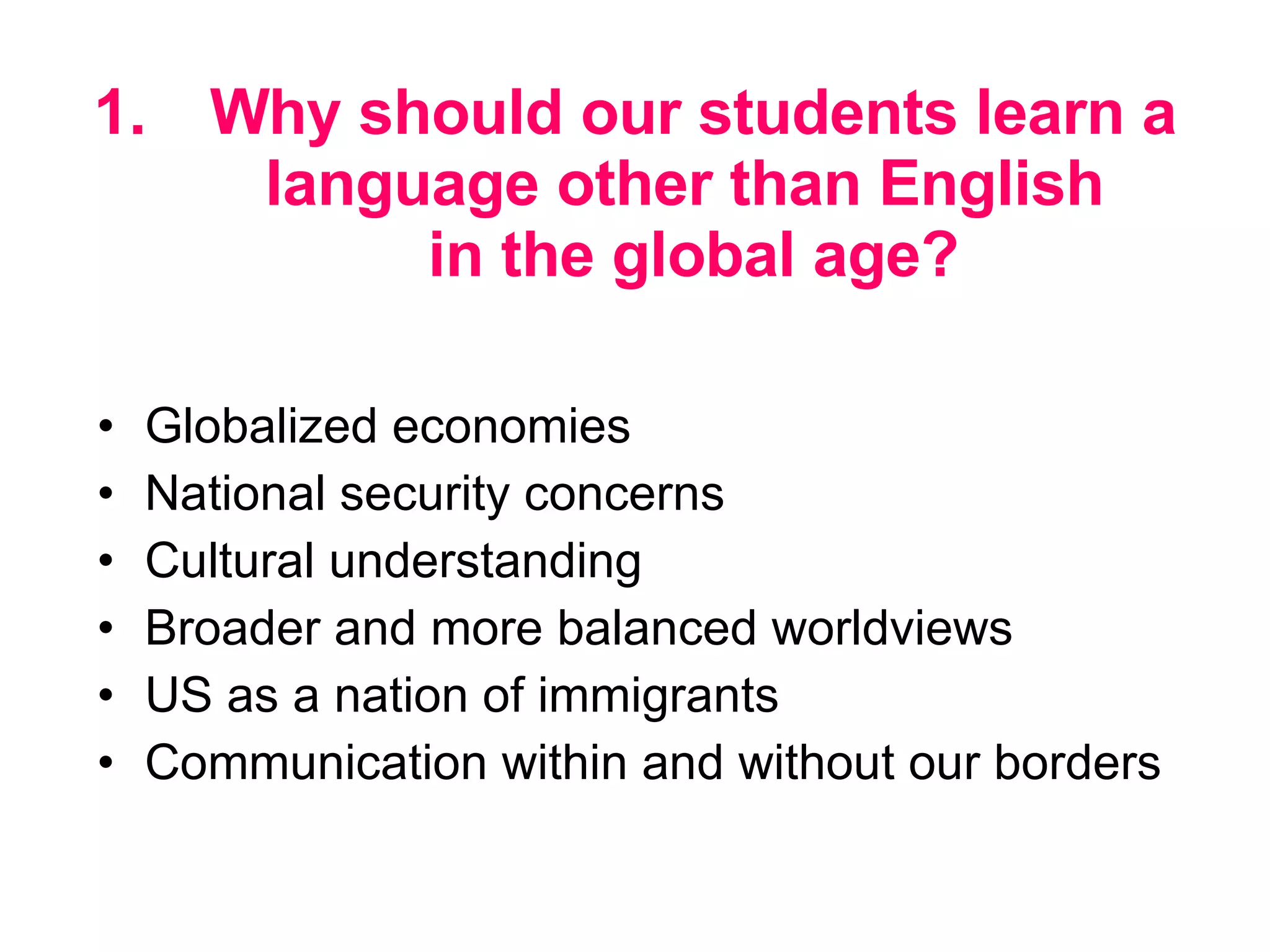
Why should our students learn a language other than English  in the global age? Globalized economies  National security concerns Cultural understanding Broader and more balanced worldviews US as a nation of immigrants Communication within and without our borders
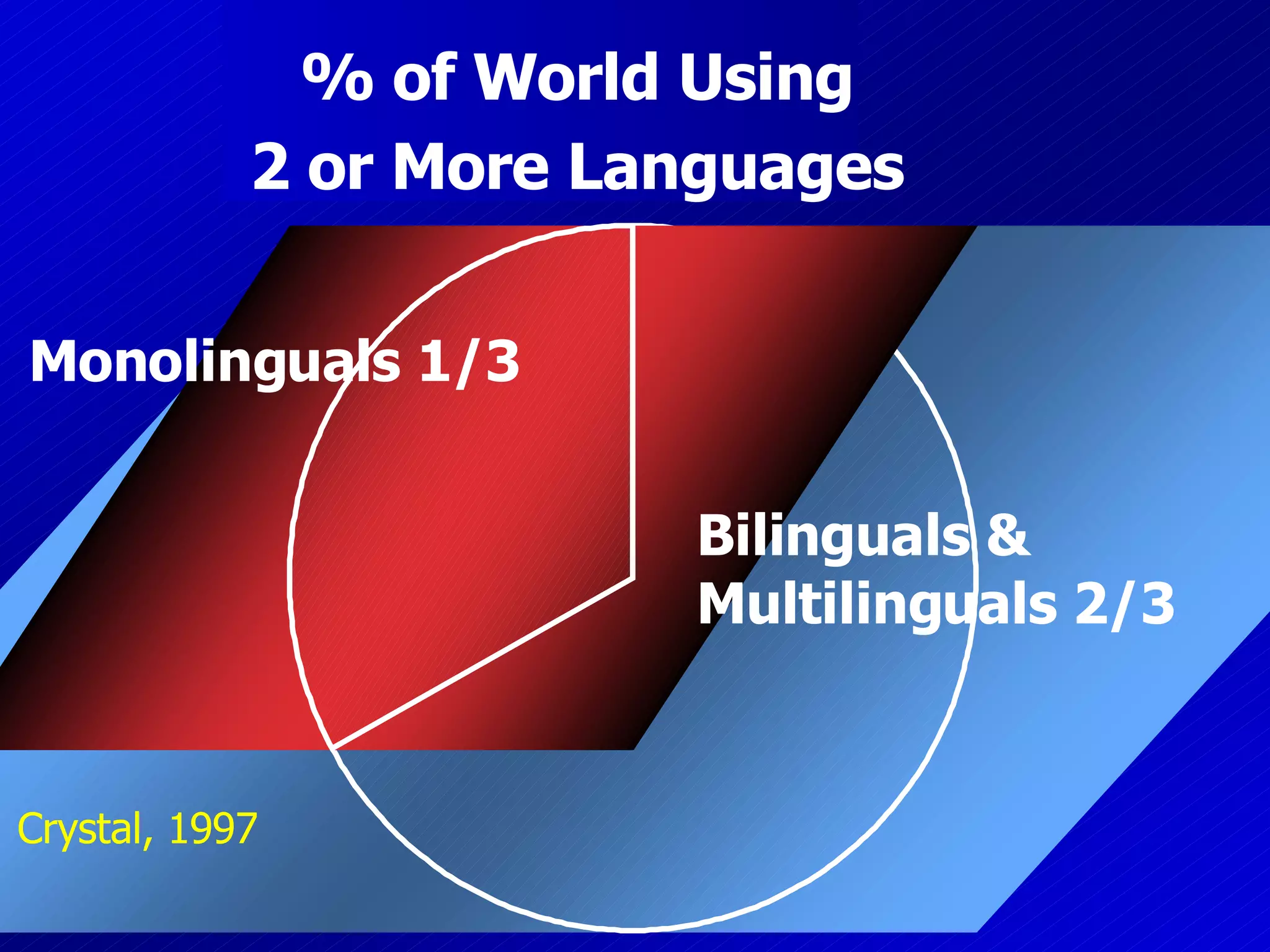
Monolinguals 1/3 Bilinguals & Multilinguals 2/3 Crystal, 1997 % of World Using 2 or More Languages
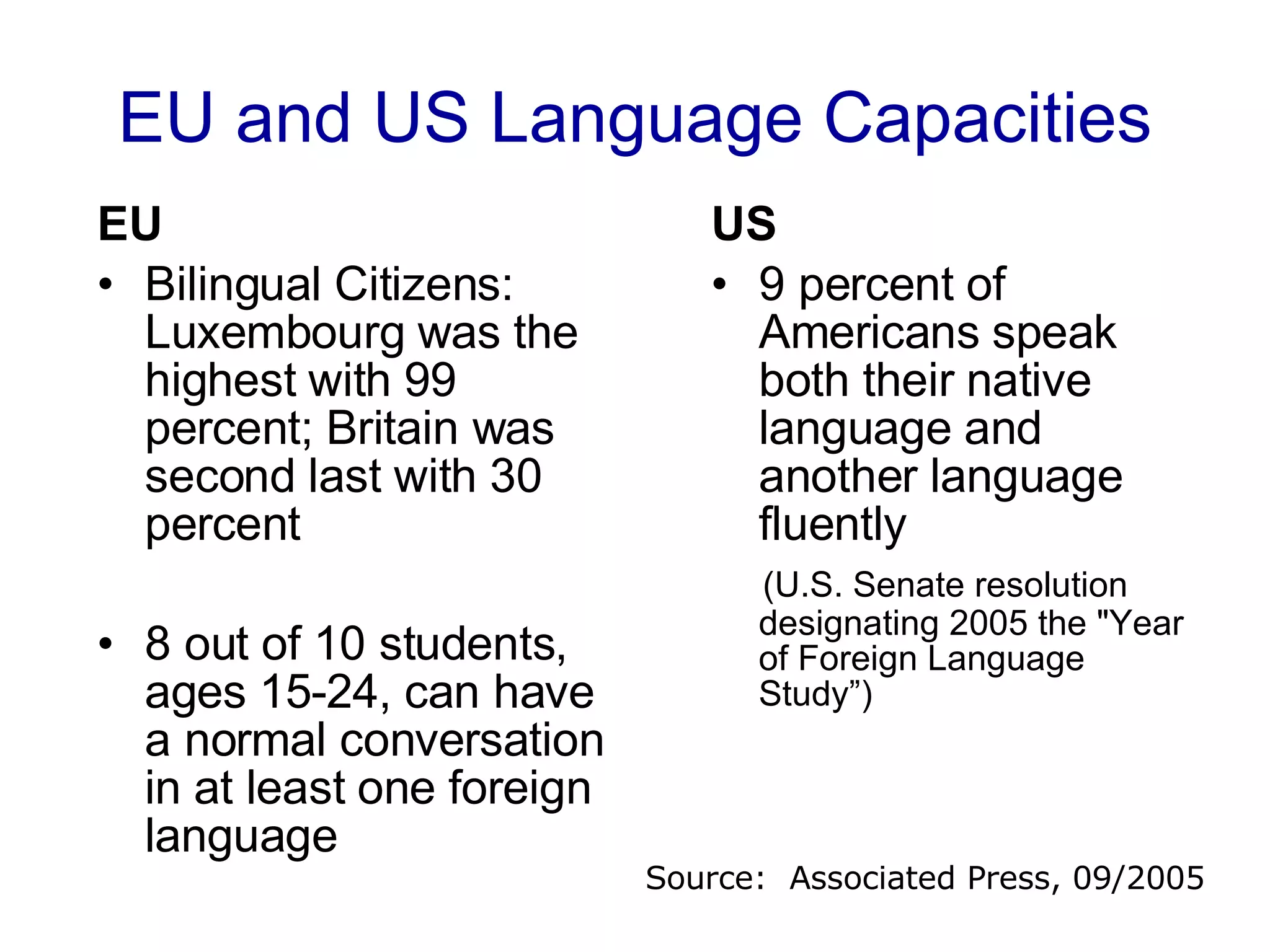
EU and US Language Capacities EU Bilingual Citizens:  Luxembourg was the highest with 99 percent; Britain was second last with 30 percent  8 out of 10 students, ages 15-24, can have a normal conversation in at least one foreign language US 9 percent of Americans speak both their native language and another language fluently (U.S. Senate resolution designating 2005 the "Year of Foreign Language Study”) Source:  Associated Press, 09/2005
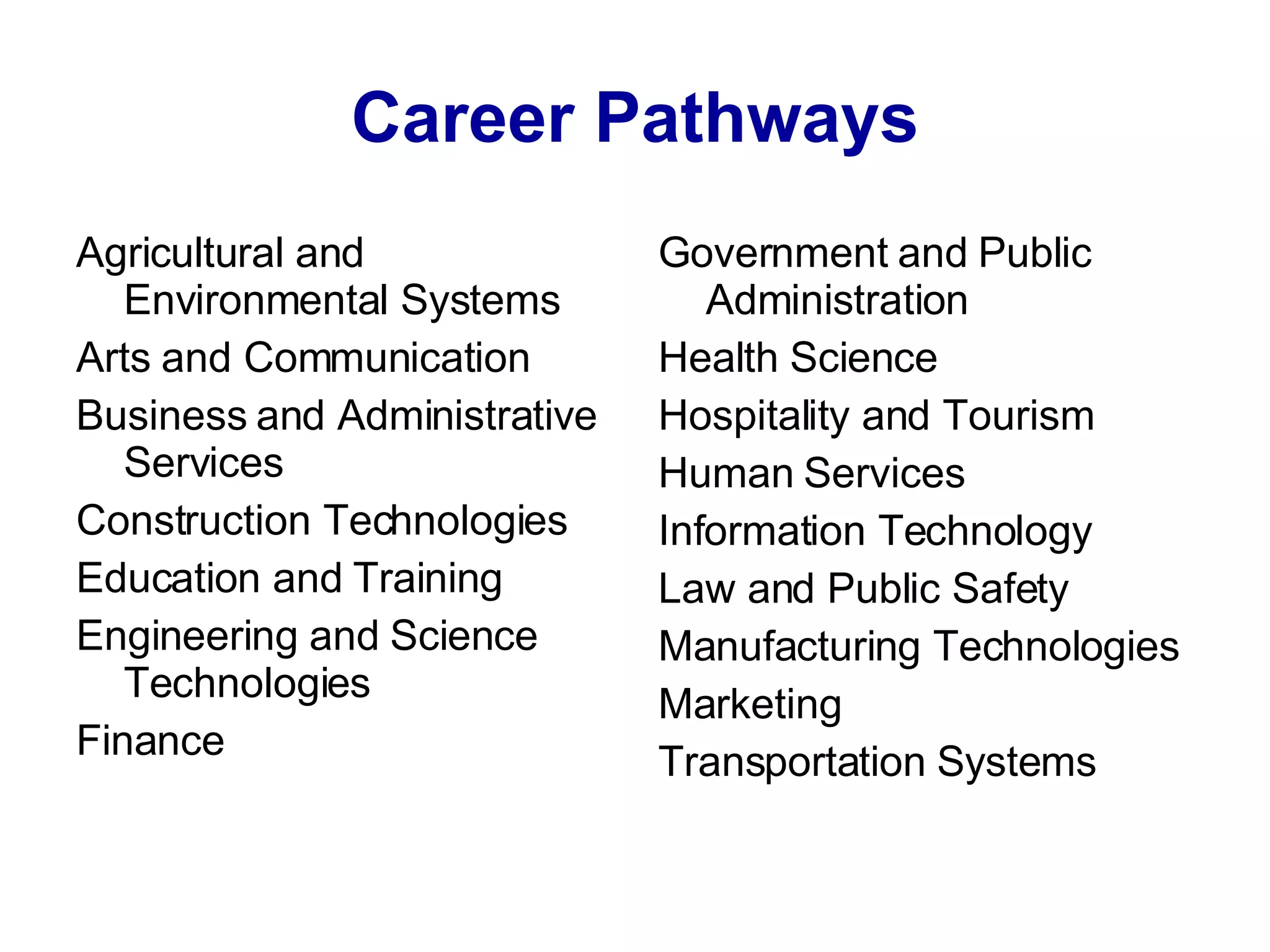
Career Pathways Agricultural and Environmental Systems Arts and Communication Business and Administrative Services Construction Technologies Education and Training Engineering and Science Technologies Finance Government and Public Administration  Health Science Hospitality and Tourism Human Services Information Technology Law and Public Safety Manufacturing Technologies Marketing Transportation Systems
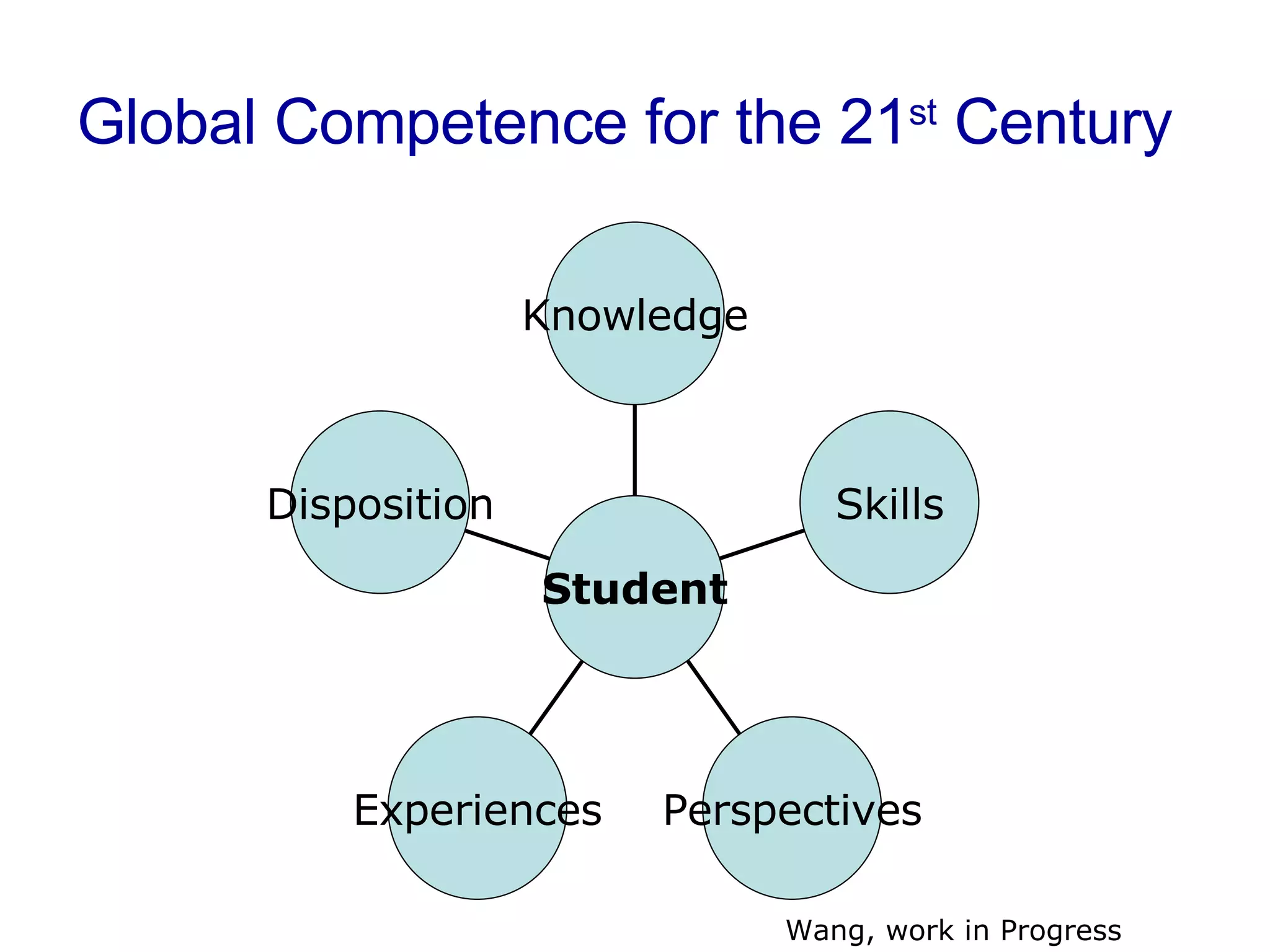
Global Competence for the 21 st  Century Wang, work in Progress Disposition Experiences Perspectives Skills Knowledge Student
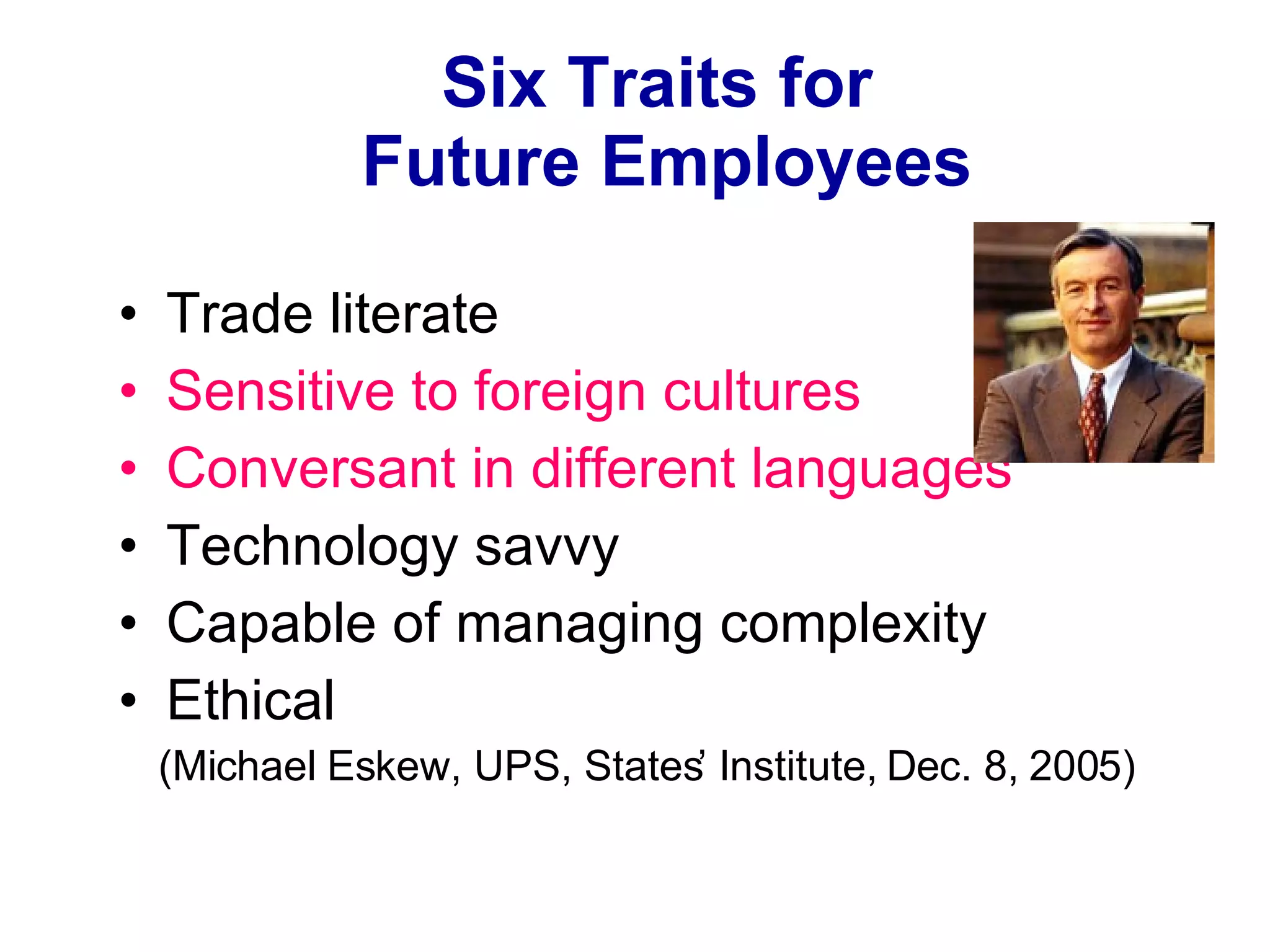
Six Traits for  Future Employees Trade literate Sensitive to foreign cultures Conversant in different languages Technology savvy Capable of managing complexity Ethical (Michael Eskew, UPS, States’ Institute, Dec. 8, 2005)
2. What will be the “hot languages” and why?  The  Flavor of the Month  Approach Won’t Work!   All languages are important and beneficial  Language learning enables students to learn  how to learn Students are not locked to one language only
Plan Strategically!   Local and state  demographic  factors:  Linguistic and cultural resources? Local and state  international trade  data: Economic development and job  distributions? National Security Language Initiative (NSLI) Arabic, Chinese, Hindi, Korean,  Persian (Farsi), Russian, and so on http:// www.ncela.gwu.edu /spotlight/NSLI
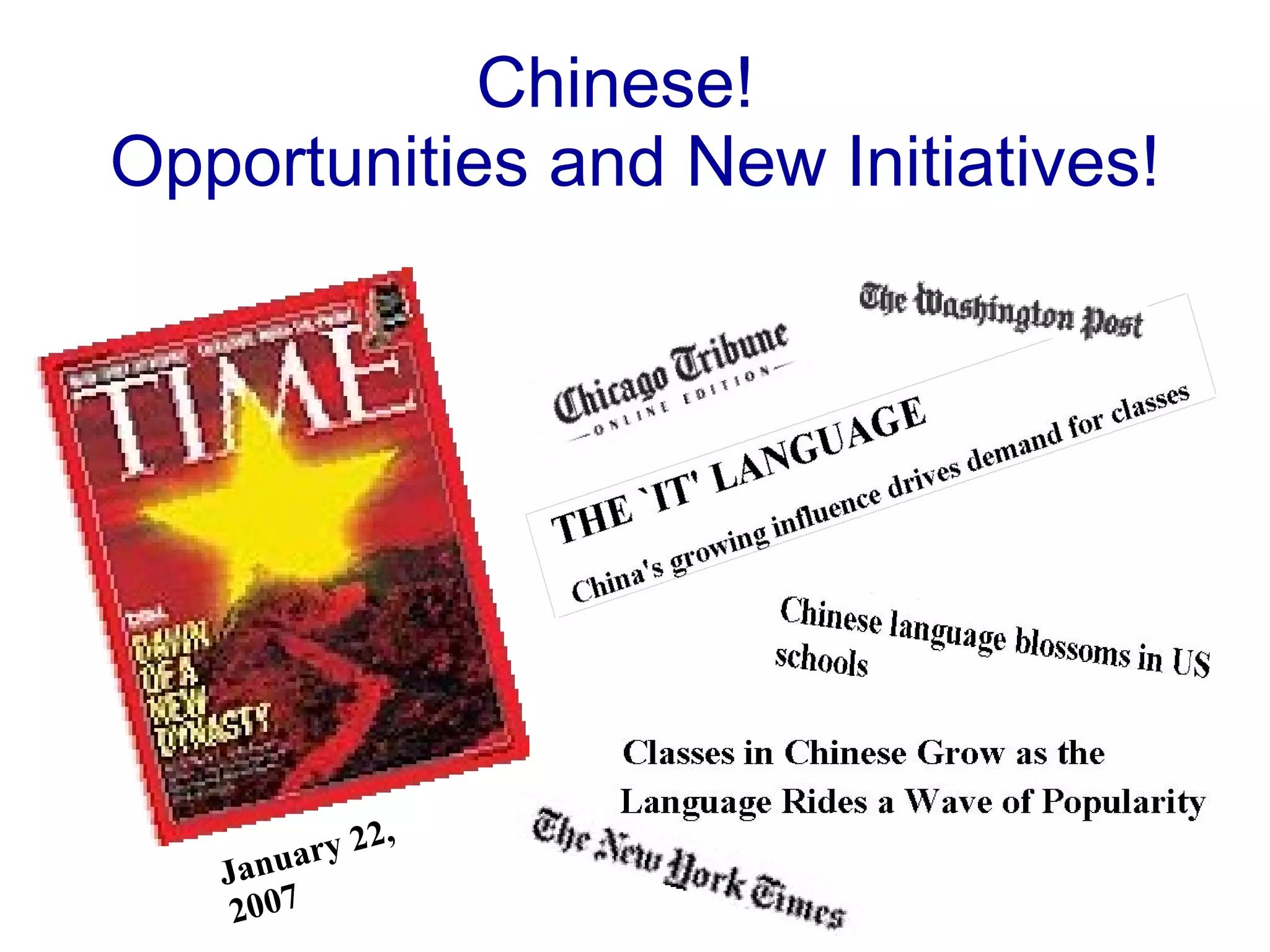
Chinese!  Opportunities and New Initiatives! January 22, 2007
Chinese as a World Language Economy: China as a New “Globalizer” International Affairs National Security Demographics in the US Human Security Number of Speakers Technology Development and Use Culture
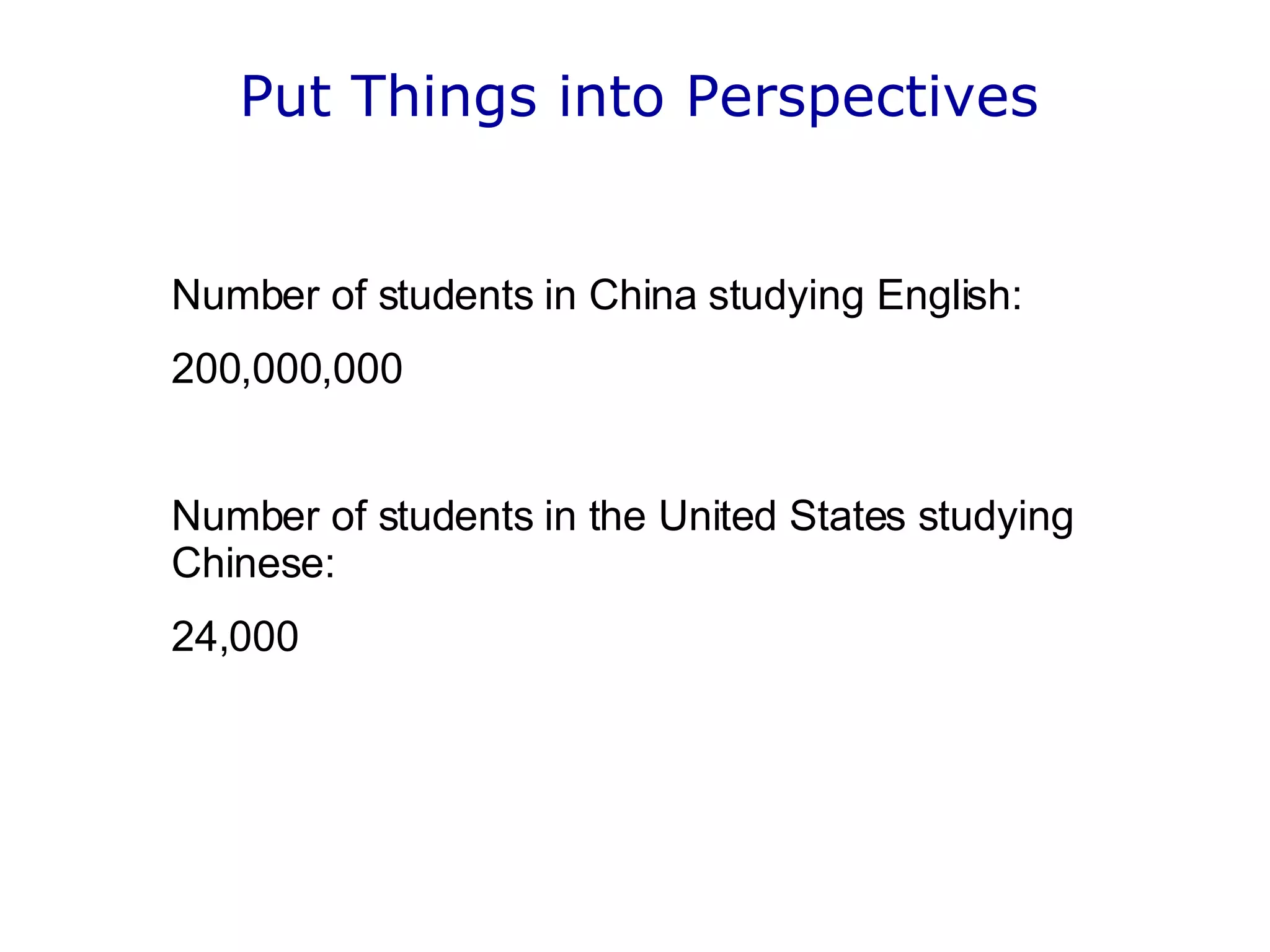
Put Things into Perspectives   Number of students in China studying English: 200,000,000 Number of students in the United States studying Chinese: 24,000
Consider the Local and Global Contexts in Determining Your Language Offerings   Think about your mission, purposes, and current offerings What linguistic and cultural resources exist in your community?  Language learning takes time More Choices; Longer Sequence
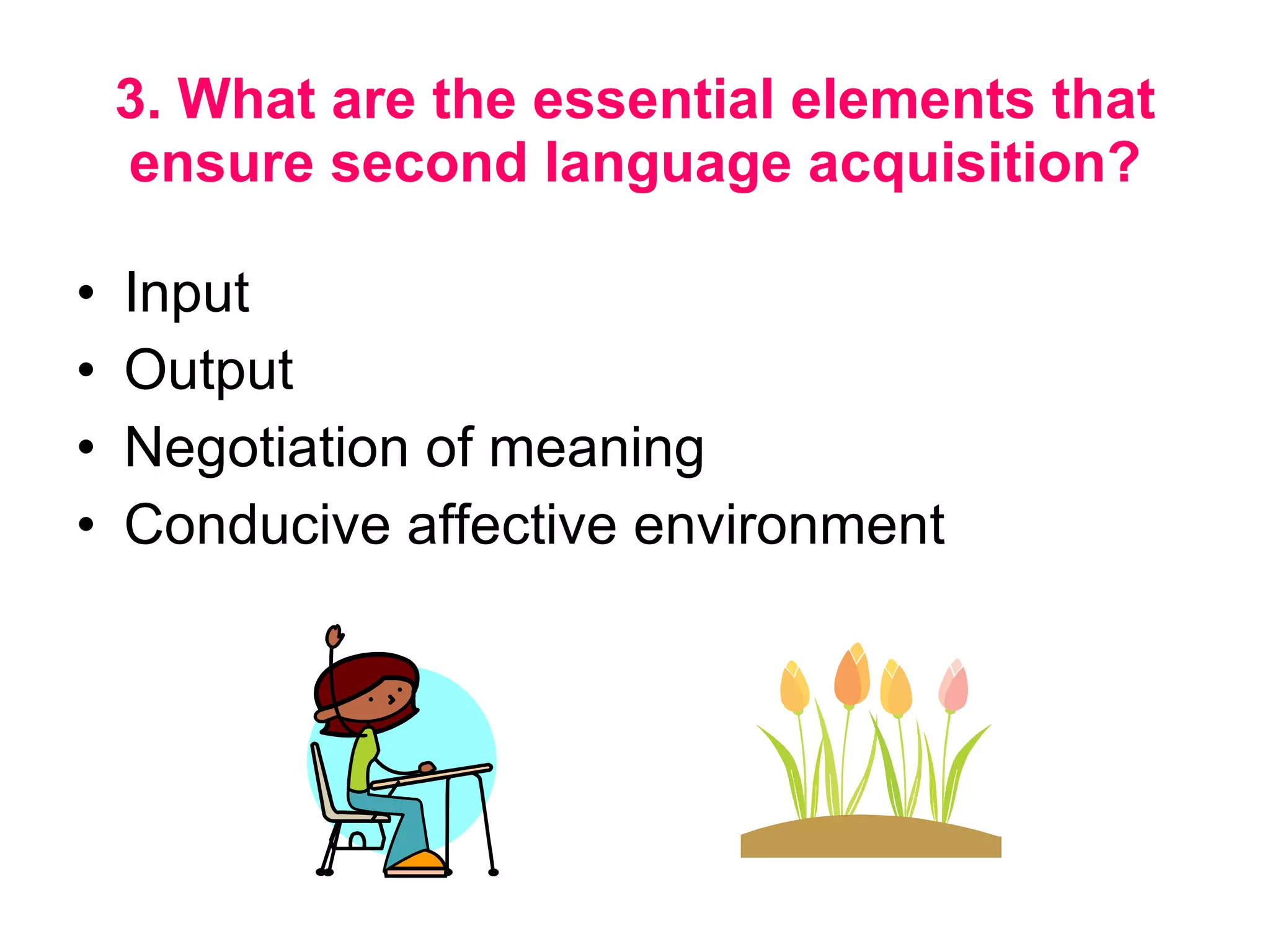
3. What are the essential elements that ensure second language acquisition? Input Output Negotiation of meaning Conducive affective environment
Key Features of Effective Programs Standards based Performance driven  Culture embedded Content related Thematically organized Real life application Multiple perspectives fostered
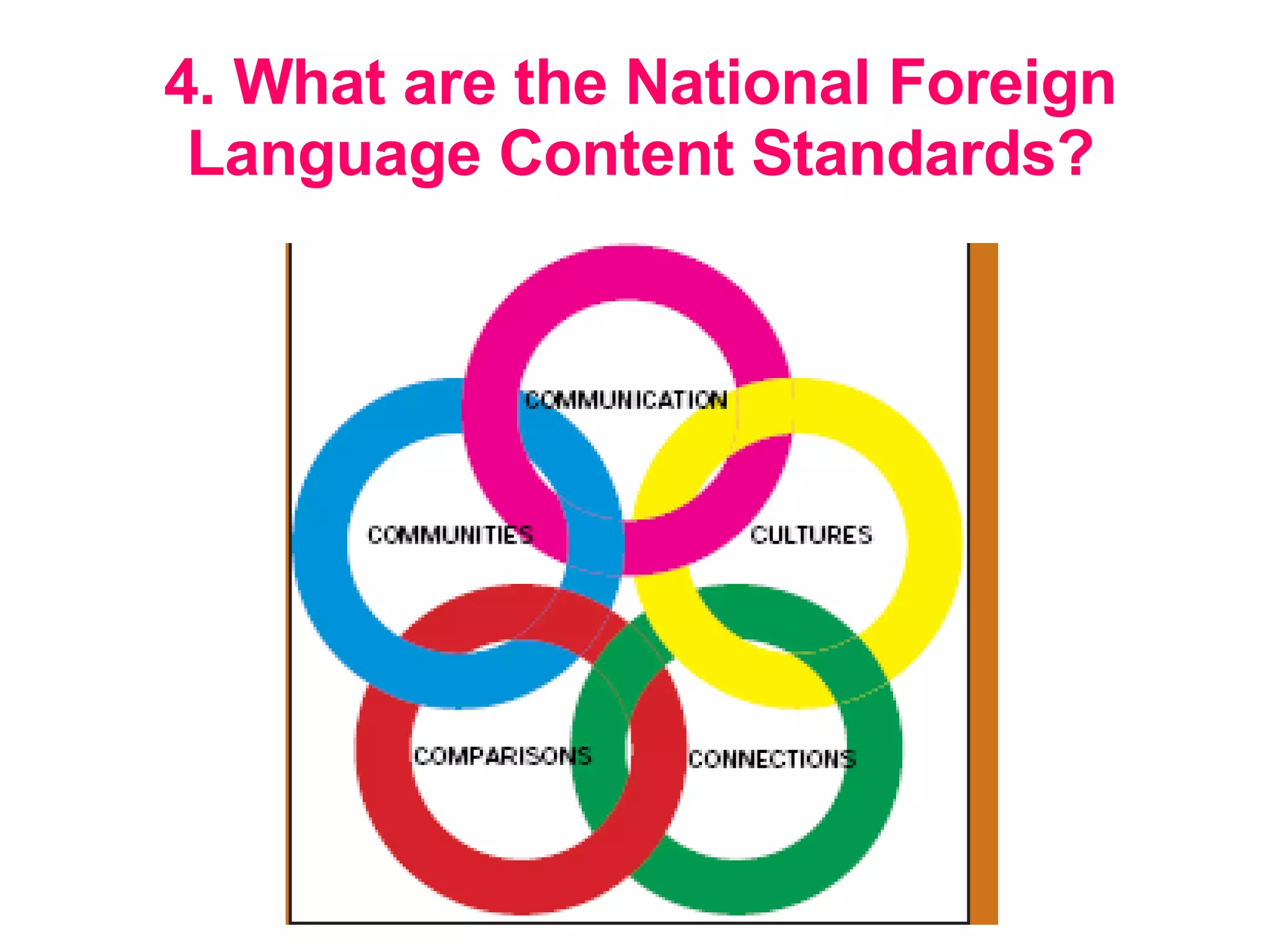
4. What are the National Foreign Language Content Standards?
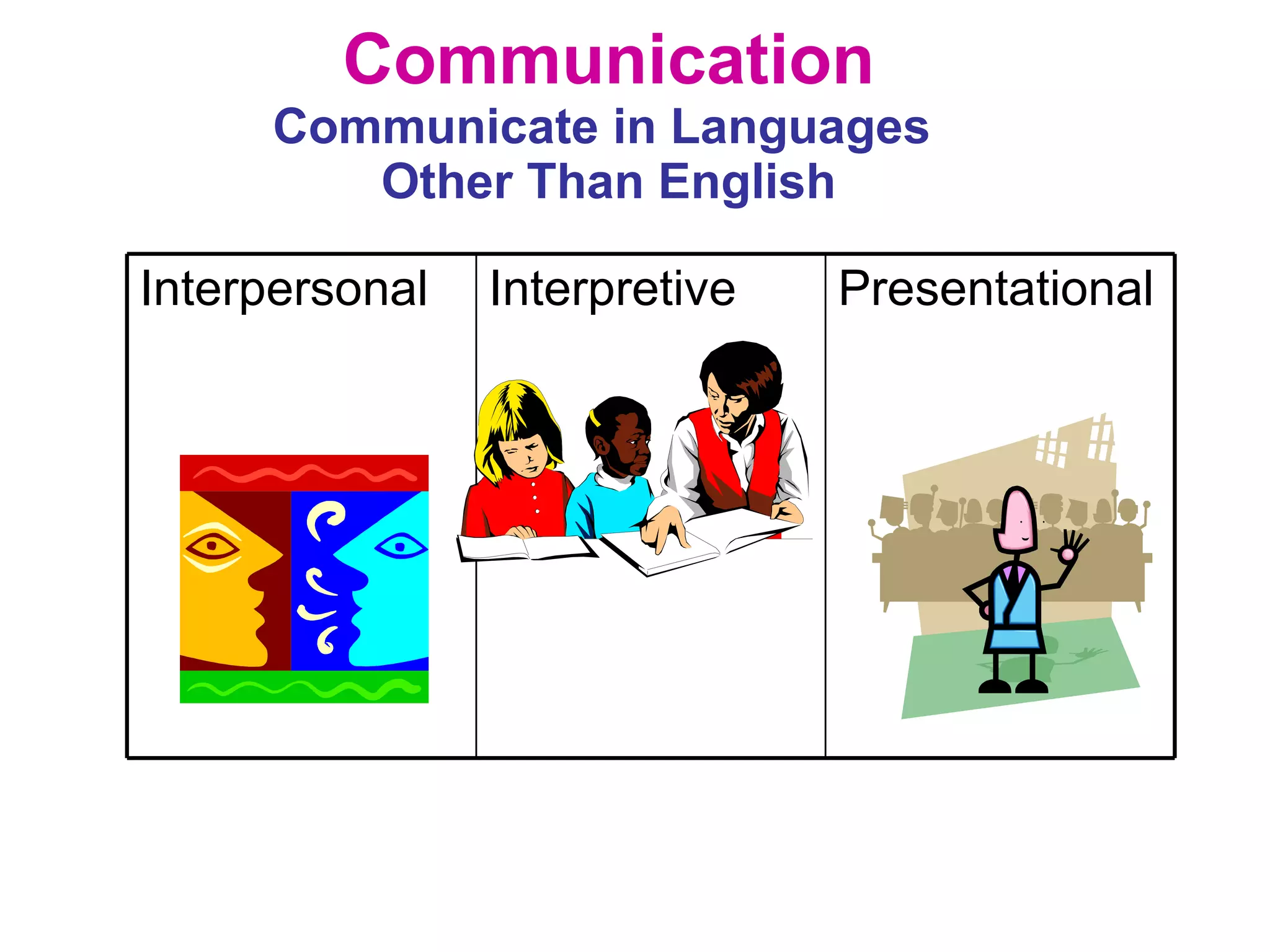
Communication Communicate in Languages  Other Than English Presentational Interpretive Interpersonal
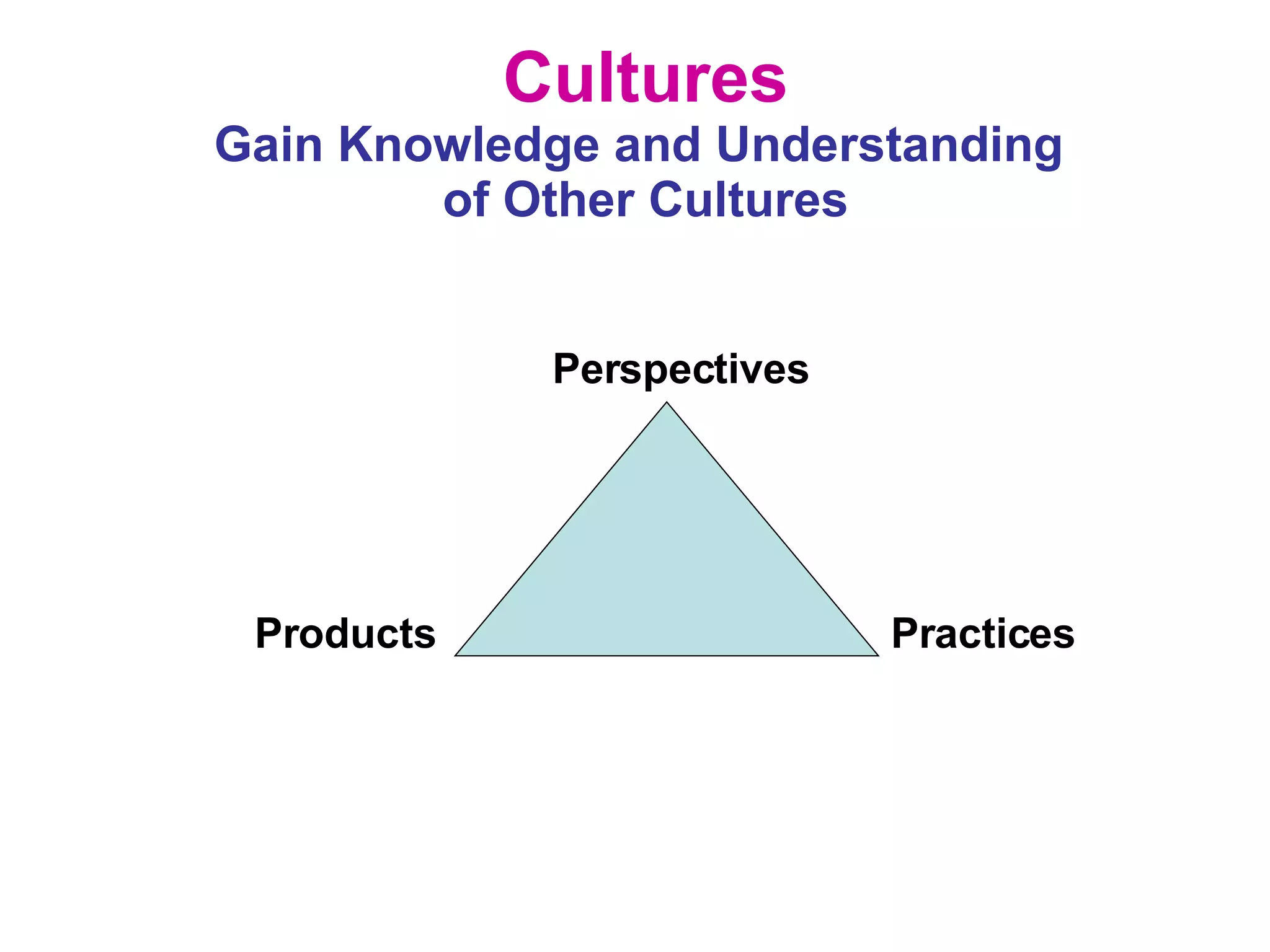
Cultures Gain Knowledge and Understanding  of Other Cultures Perspectives Products Practices
Connections Connect with Other Disciplines  and Acquire Information
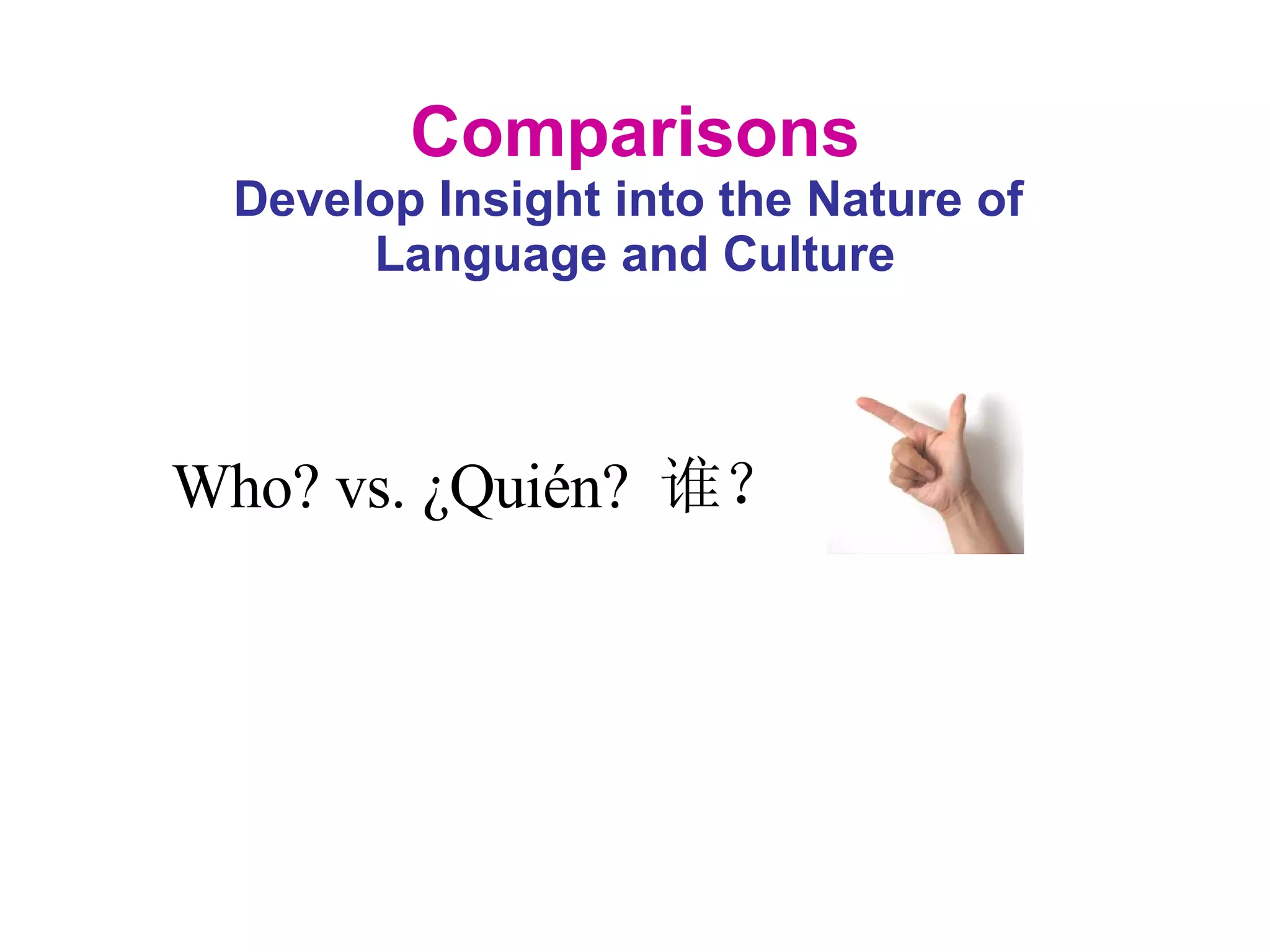
Comparisons Develop Insight into the Nature of  Language and Culture Who? vs. ¿Quién?   谁?
Communities Participate in Multilingual Communities at Home and Around the World
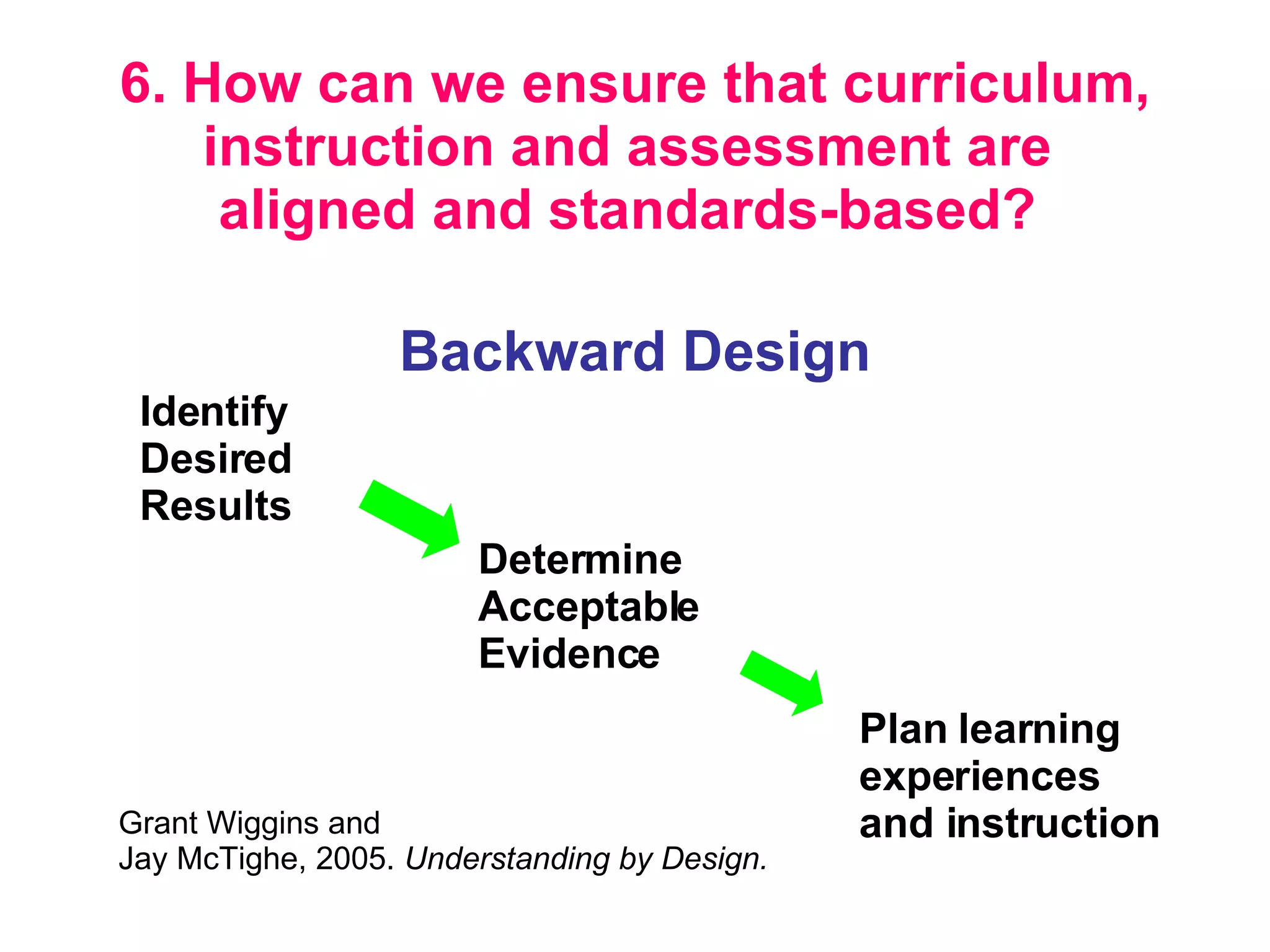
6. How can we ensure that curriculum, instruction and assessment are  aligned and standards-based?   Backward Design Plan learning experiences and instruction Determine Acceptable Evidence Identify Desired Results Grant Wiggins and  Jay McTighe, 2005.  Understanding by Design.
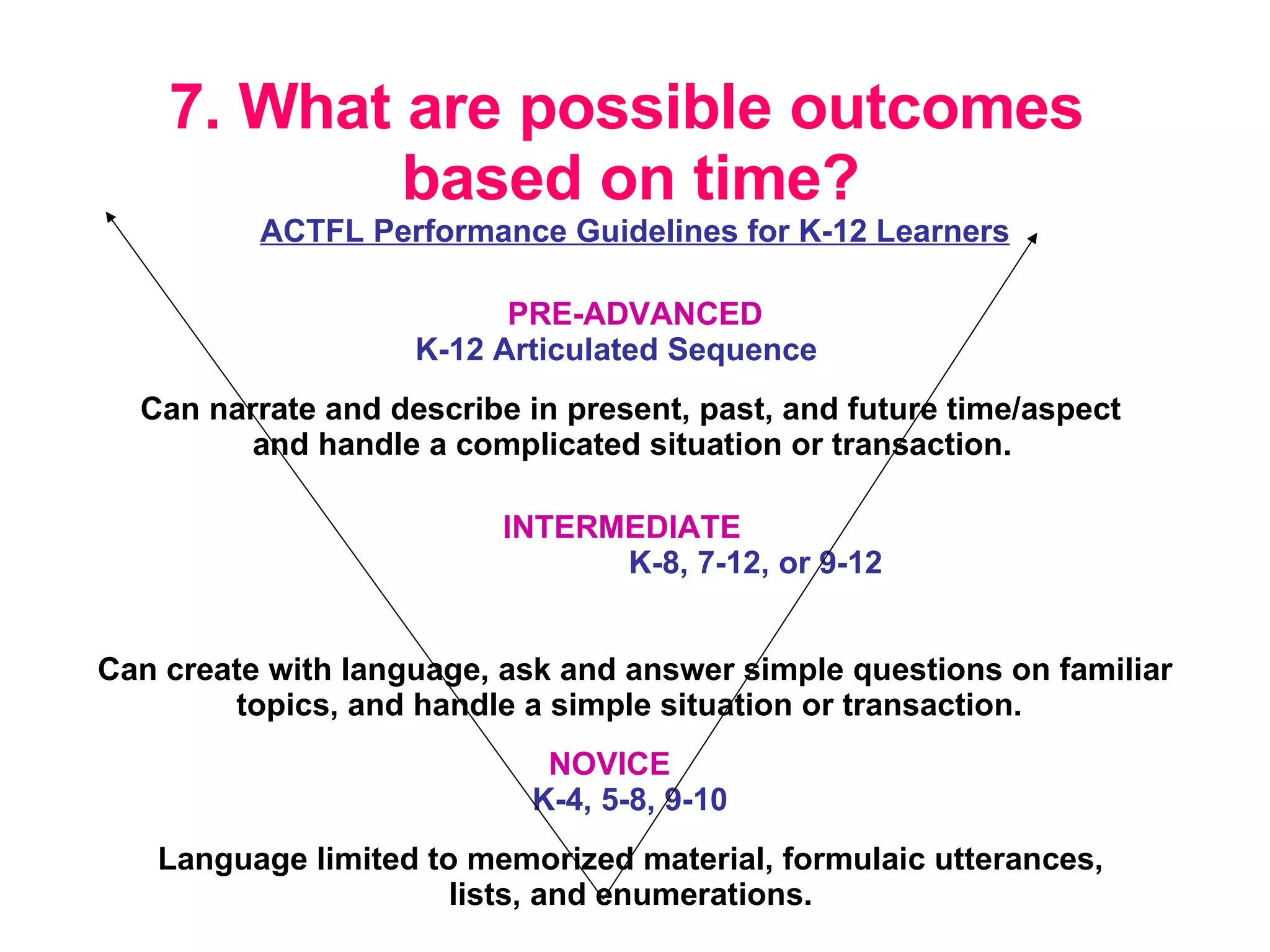
7. What  are possible outcomes  based on time?   ACTFL Performance Guidelines for K-12 Learners PRE-ADVANCED   K-12 Articulated Sequence Can narrate and describe in present, past, and future time/aspect  and handle a complicated situation or transaction.           INTERMEDIATE      K-8, 7-12, or 9-12     Can create with language, ask and answer simple questions on familiar topics, and handle a simple situation or transaction.     NOVICE     K-4, 5-8, 9-10       Language limited to memorized material, formulaic utterances,  lists, and enumerations.
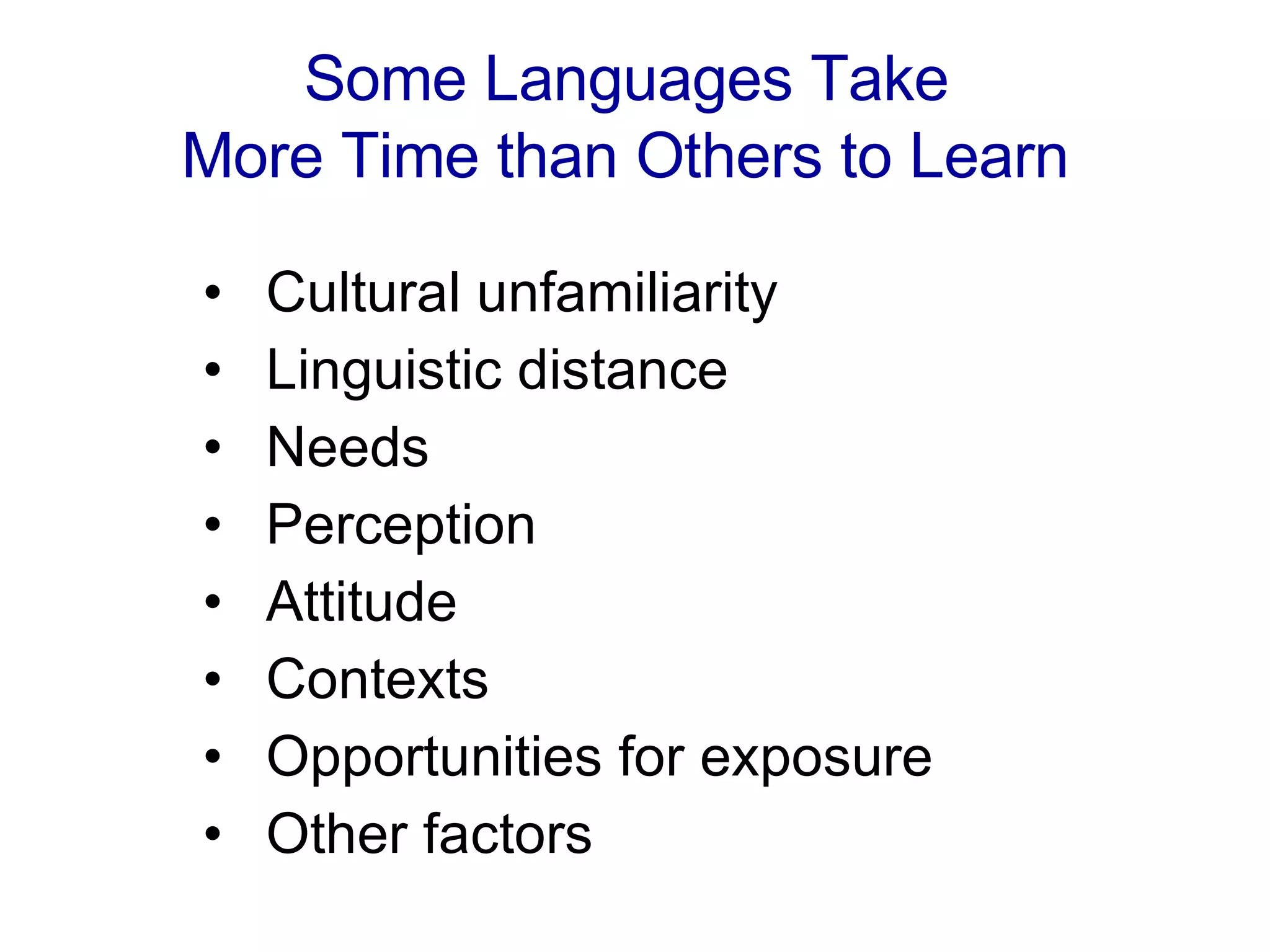
Some Languages Take  More Time than Others to Learn   Cultural unfamiliarity  Linguistic distance Needs  Perception  Attitude Contexts Opportunities for exposure  Other factors
Example  Interpersonal Communication Grade 4 :   Students share likes and dislikes with each other and the class. Grade 8 :  Students compare, contrast, and express opinions and preferences about the information gathered regarding events, experiences and other school subjects. Grade 12 :  Students exchange, support and discuss their opinions and individual perspectives with peers and/or speakers of the target language on a variety of topics dealing with contemporary and historical issues.
7. How do we measure student learning and establish learning outcomes that are articulated from elementary language learning through post-secondary education? What are the expected outcomes at the  next  level that your students are  supposed to know and demonstrate?  What is the road map for them?  What instruction and condition are  necessary to achieve these outcomes?
Beyond Paper and Pencil: Show Me What You Can Do with the Language! Classroom-Based Performance Assessments Standardized Tests: SAT, AP Standardized Assessments: SOPA, ELLOPA, SOPI, OPI, WPT Computerized Assessments: STAMP Student Self-Assessment: LinguaFolio
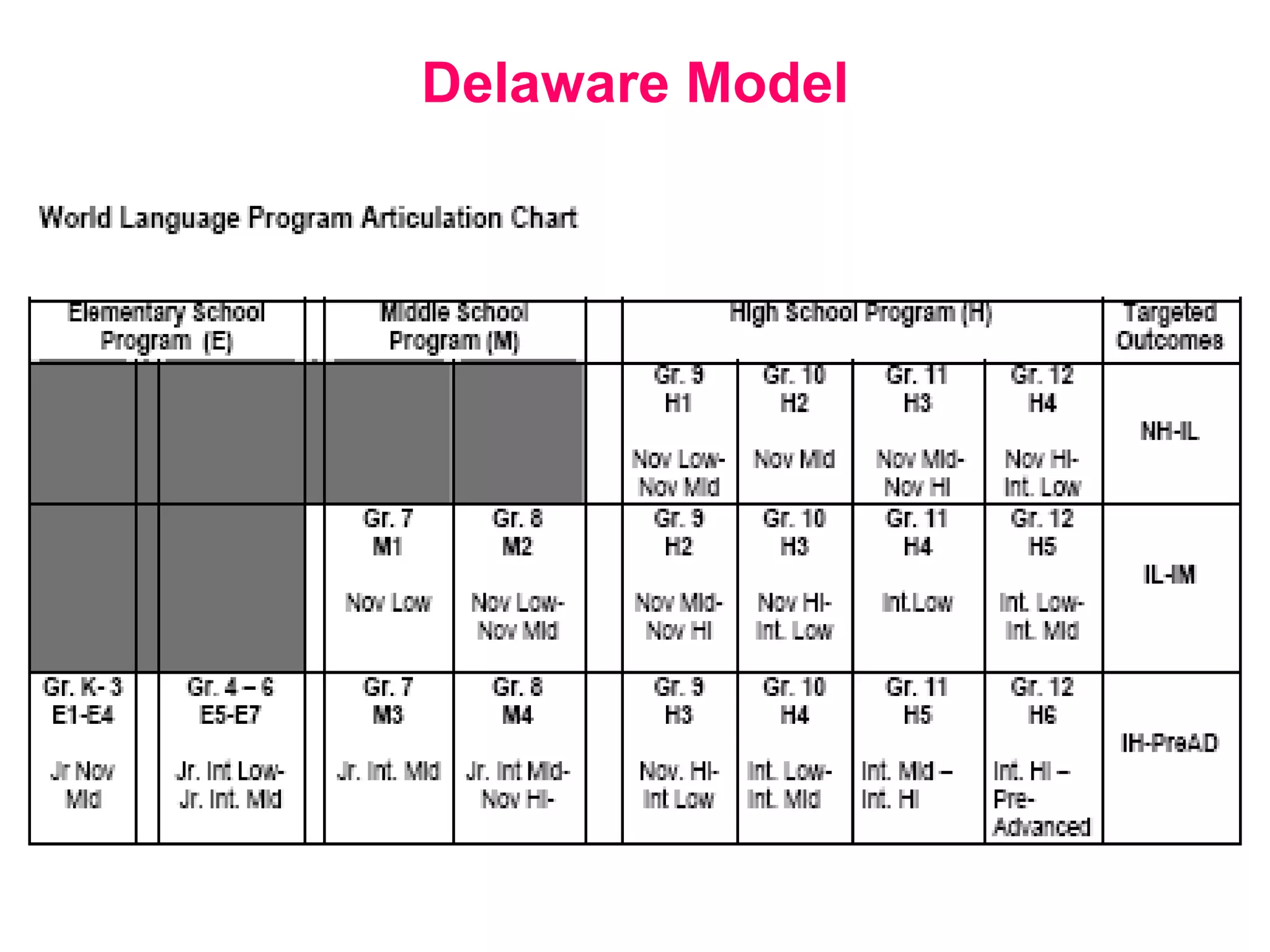
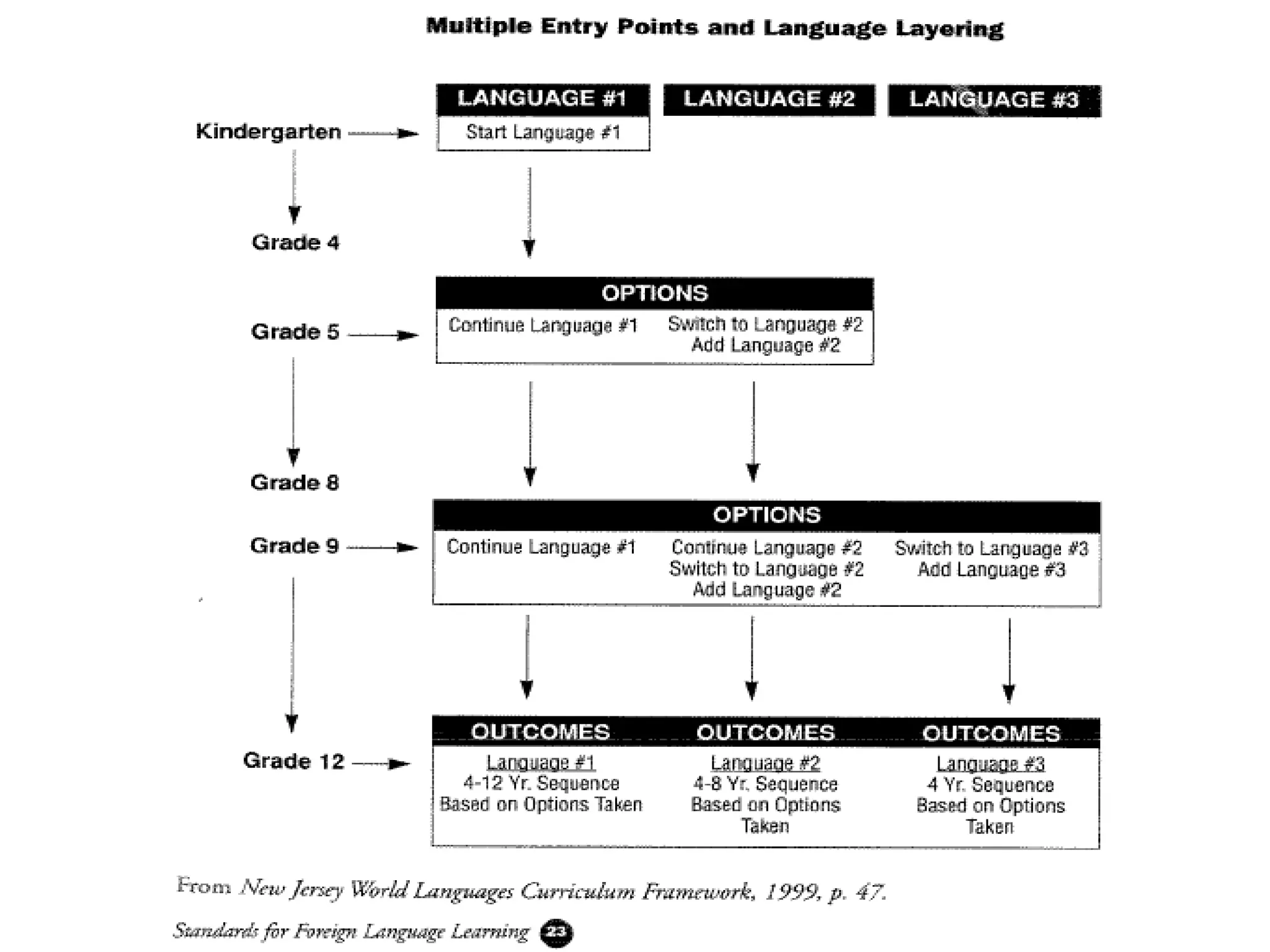
8. How do we offer flexibility to students while allowing them sufficient time to stay in one language to build language proficiency and literacy?   Two Models of Multiple Entry One Language Multiple Languages
Delaware Model
 
9. Where can I find qualified teachers?   Traditional Licensure Programs Alternative and Intensive Licensure Programs for Career Changers and Heritage Speakers Guest Teachers
  10. What resources are available? Funding Foreign Language Assistance Program (FLAP)  www.grants.ed.gov  Critical Language Flagship Programs  http://www.thelanguageflagship.org/funding_institutions.html STARTALK Critical Language Summer Programs for Teachers and Students  http://www.startalk@umd.edu   email:  [email_address]
Curricular Resources New Jersey   www.state.nj.us/education/aps/cccs/wl/frameworks/wlo/ . Ohio http://ims.ode.state.oh.us/ Grade 12, “Human Needs Know No Boundaries” National Council of State Supervisors for Languages http://www.ncssfl.org
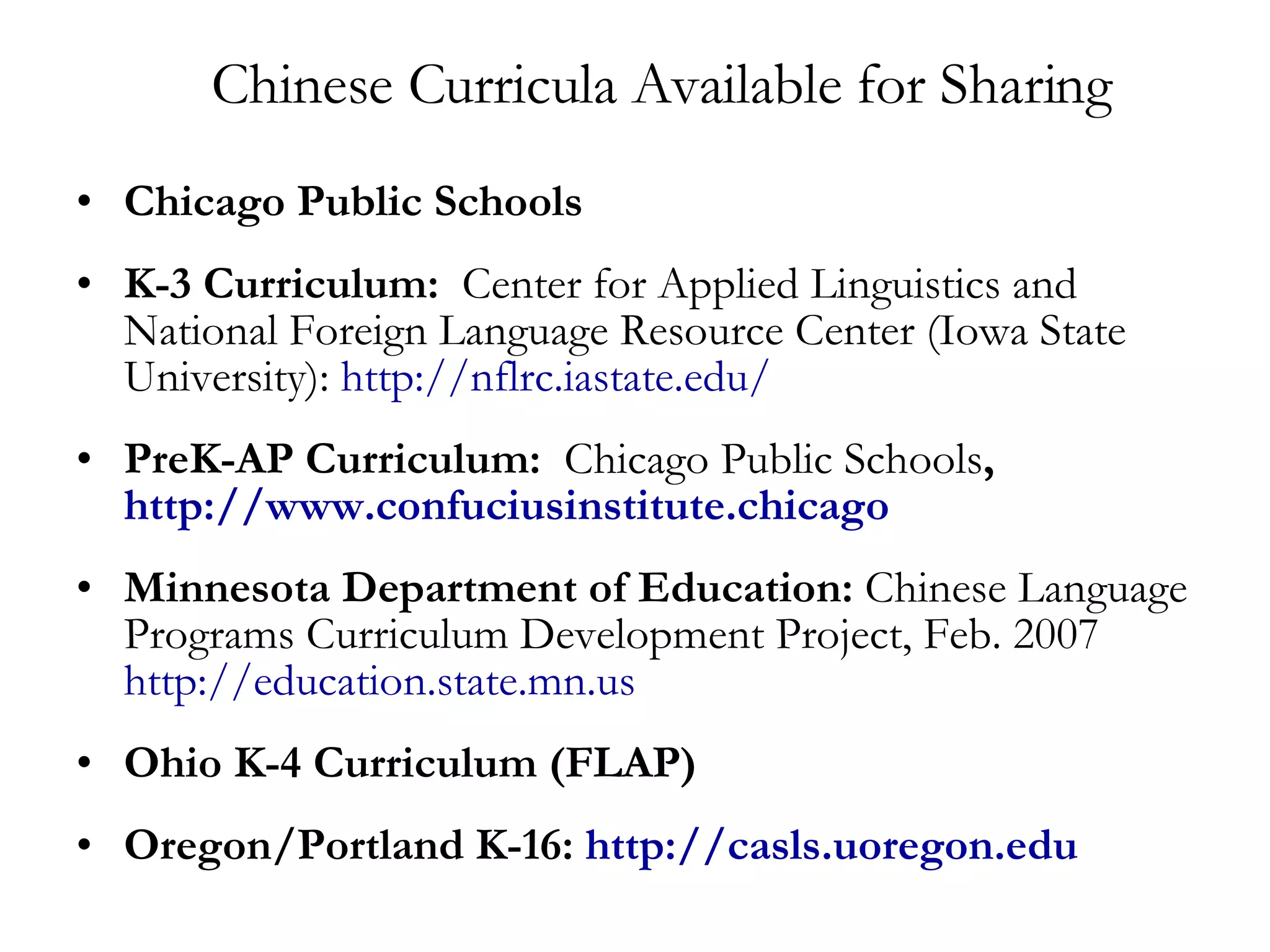
Chinese Curricula Available for Sharing Chicago Public Schools K-3 Curriculum:   Center for Applied Linguistics and National Foreign Language Resource Center (Iowa State University):  http:// nflrc.iastate.edu / PreK-AP Curriculum:  Chicago Public Schools ,  http://www.confuciusinstitute.chicago Minnesota Department of Education:  Chinese Language Programs Curriculum Development Project, Feb. 2007  http://education.state.mn.us Ohio K-4 Curriculum (FLAP) Oregon/Portland K-16:  http:// casls.uoregon.edu
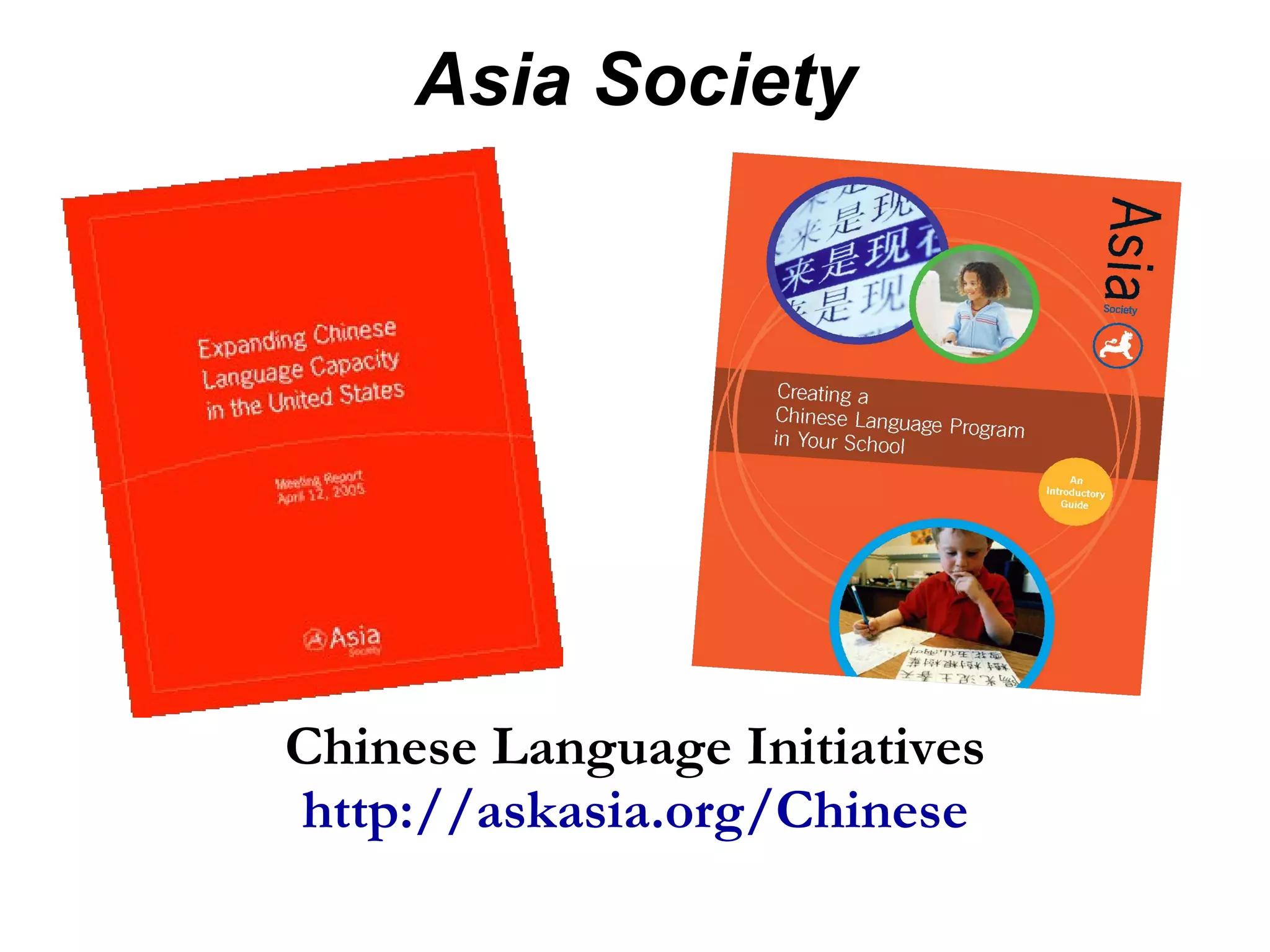
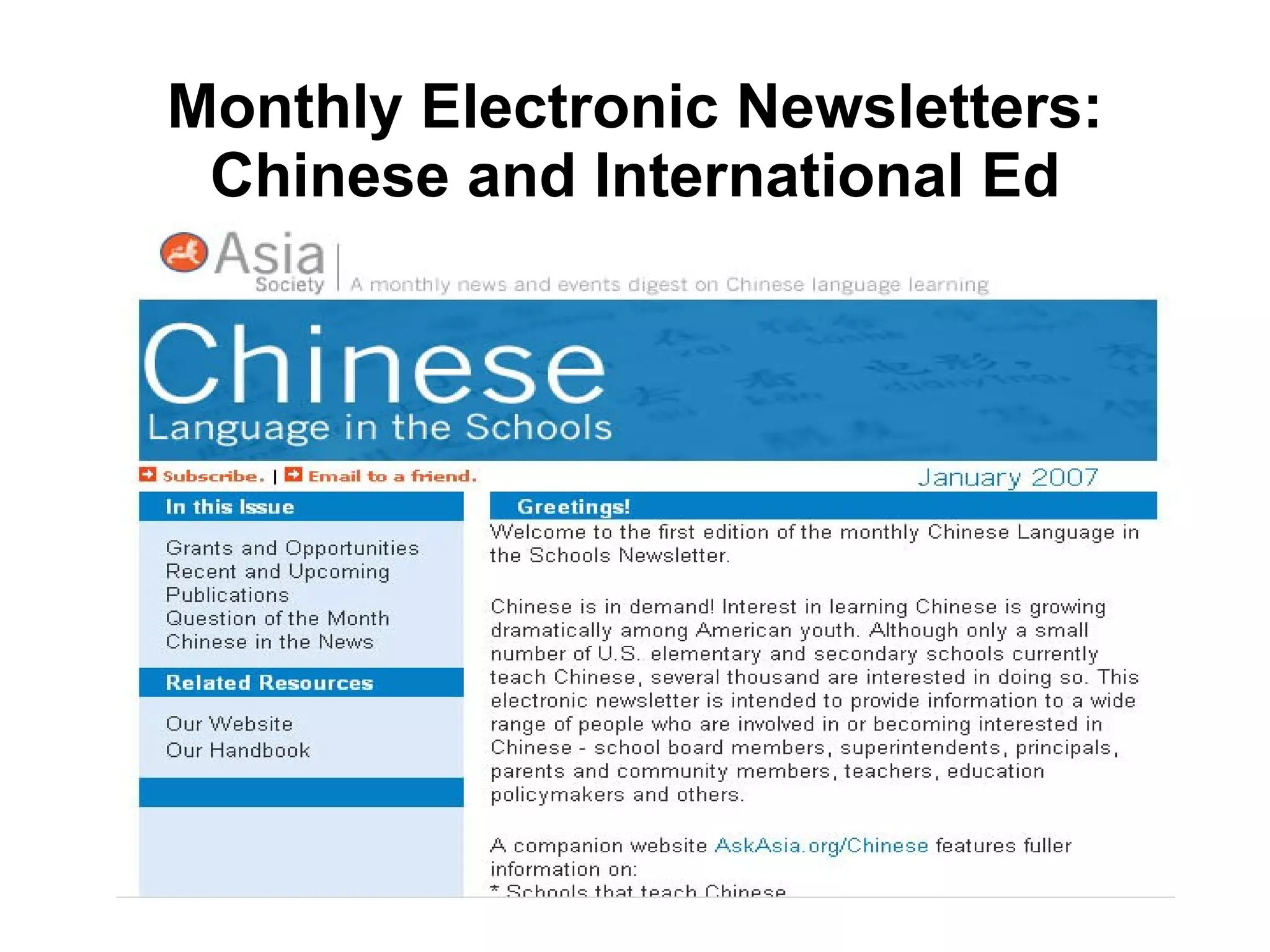
Asia Society Chinese Language Initiatives http://askasia.org/Chinese
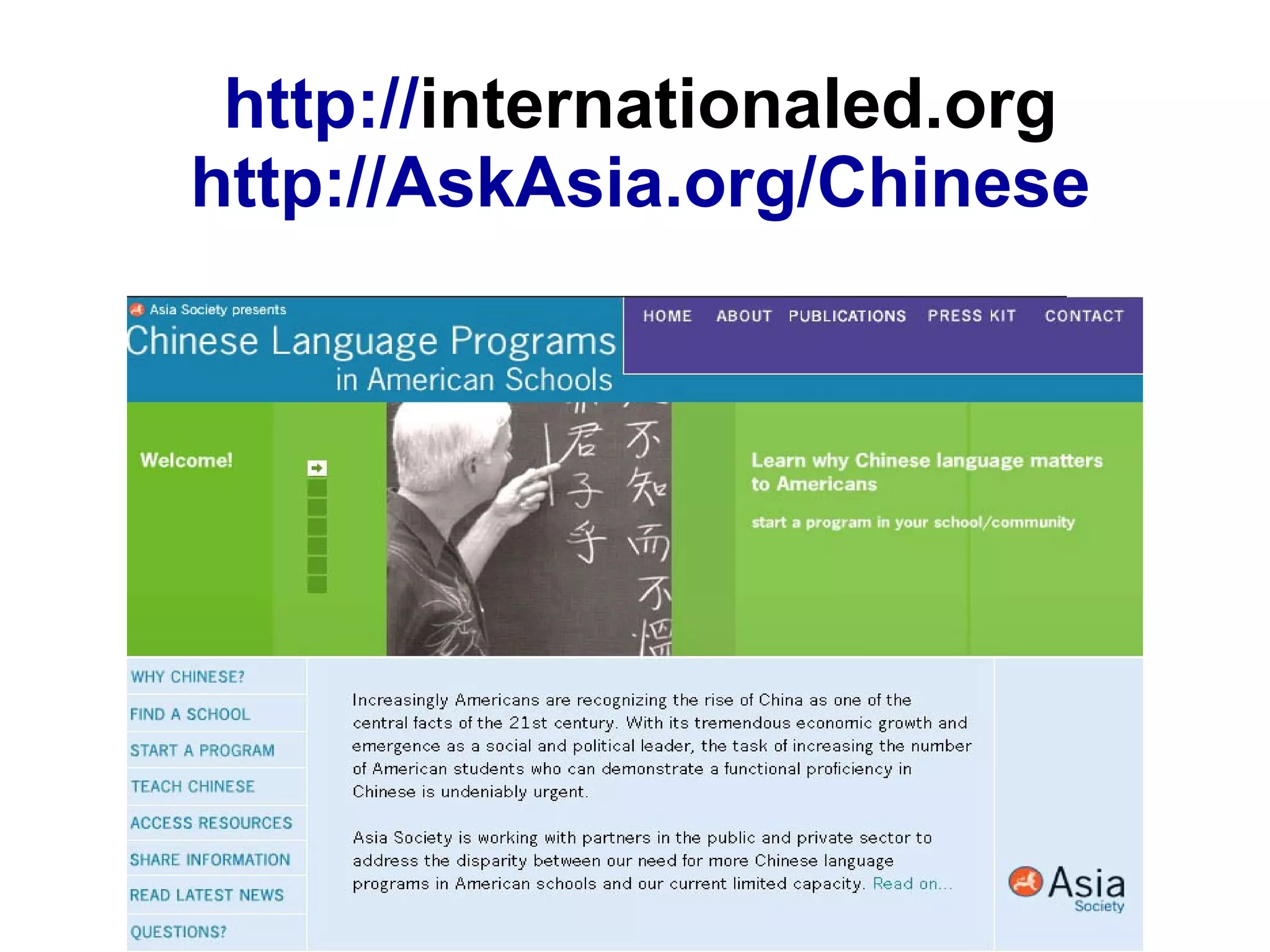
http:// internationaled.org http:// AskAsia.org /Chinese
Monthly Electronic Newsletters: Chinese and International Ed
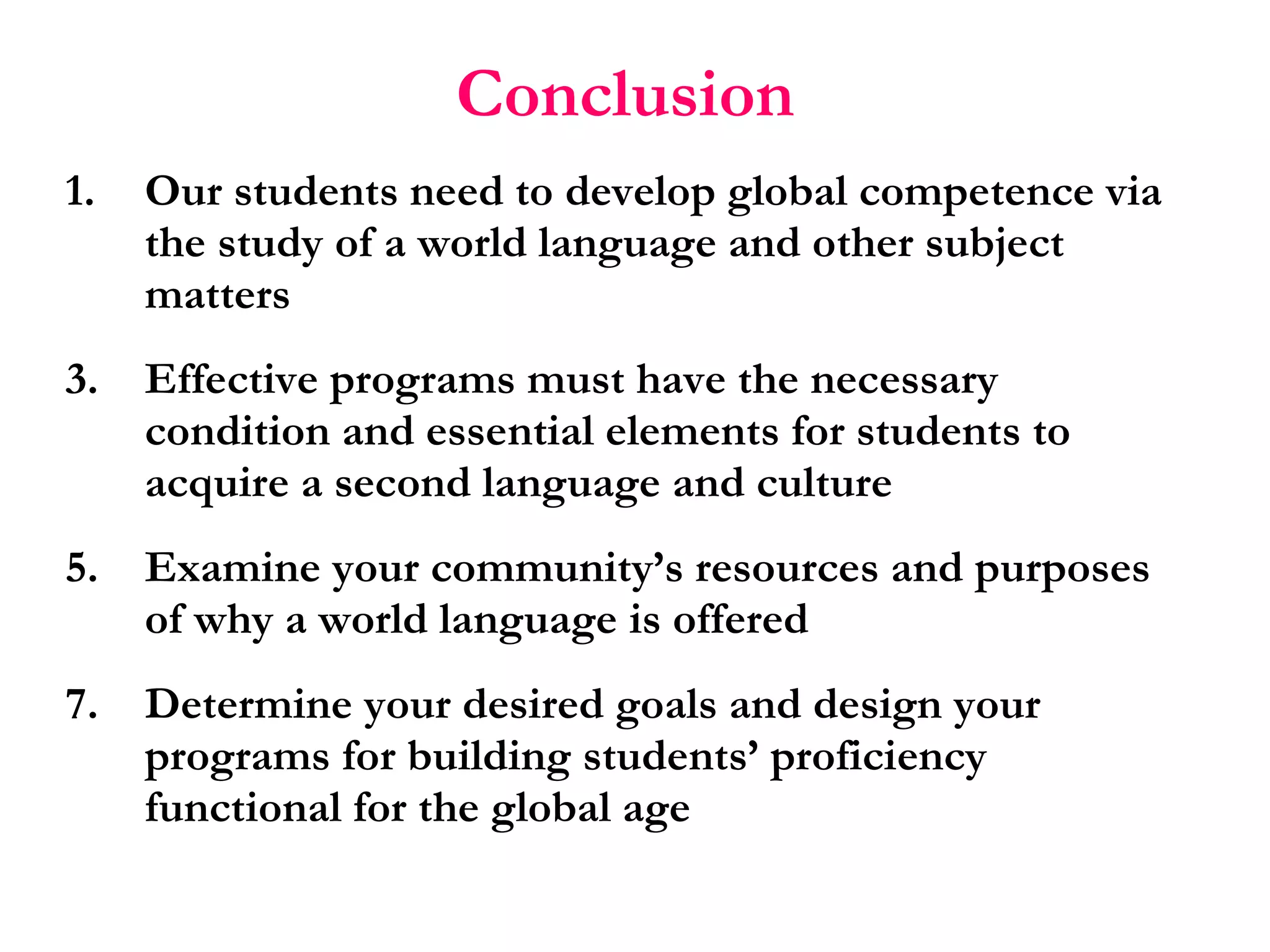
Conclusion   Our students need to develop global competence via the study of a world language and other subject matters Effective programs must have the necessary condition and essential elements for students to acquire a second language and culture Examine your community’s resources and purposes of why a world language is offered Determine your desired goals and design your programs for building students’ proficiency functional for the global age
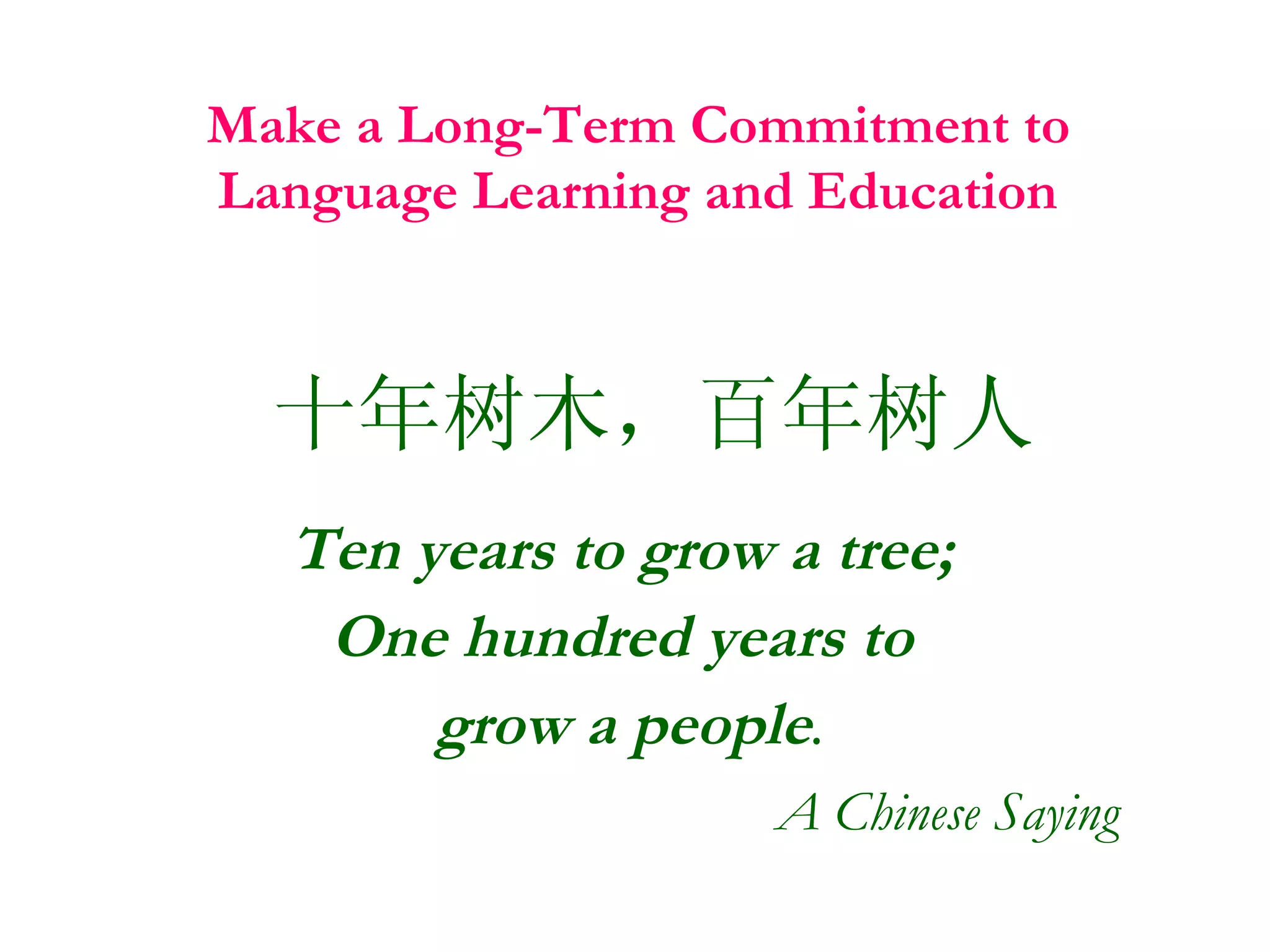
Make a Long-Term Commitment to  Language Learning and Education   十年树木,百年树人 Ten years to grow a tree;  One hundred years to  grow a people . A Chinese Saying
Thank you 谢谢 Deborah W. Robinson, Ph.D.,  [email_address] Shuhan C. Wang, Ph.D.  [email_address] http:// www.AskAsia.org /Chinese
Questions and Answers

Robinson Wang Creating Effective World Language Programs

  • 1.
    The Top 10Questions Regarding Effective World Language Programs International Education Conference July 11, 2008 Deborah W. Robinson, Ph.D. National Council of State Supervisors for Languages Shuhan Wang, Ph.D. Chinese Language Initiatives Asia Society
  • 2.
    Why should ourstudents learn a language other than English in the global age? Globalized economies National security concerns Cultural understanding Broader and more balanced worldviews US as a nation of immigrants Communication within and without our borders
  • 3.
    Monolinguals 1/3 Bilinguals& Multilinguals 2/3 Crystal, 1997 % of World Using 2 or More Languages
  • 4.
    EU and USLanguage Capacities EU Bilingual Citizens: Luxembourg was the highest with 99 percent; Britain was second last with 30 percent 8 out of 10 students, ages 15-24, can have a normal conversation in at least one foreign language US 9 percent of Americans speak both their native language and another language fluently (U.S. Senate resolution designating 2005 the "Year of Foreign Language Study”) Source: Associated Press, 09/2005
  • 5.
    Career Pathways Agriculturaland Environmental Systems Arts and Communication Business and Administrative Services Construction Technologies Education and Training Engineering and Science Technologies Finance Government and Public Administration Health Science Hospitality and Tourism Human Services Information Technology Law and Public Safety Manufacturing Technologies Marketing Transportation Systems
  • 6.
    Global Competence forthe 21 st Century Wang, work in Progress Disposition Experiences Perspectives Skills Knowledge Student
  • 7.
    Six Traits for Future Employees Trade literate Sensitive to foreign cultures Conversant in different languages Technology savvy Capable of managing complexity Ethical (Michael Eskew, UPS, States’ Institute, Dec. 8, 2005)
  • 8.
    2. What willbe the “hot languages” and why?  The Flavor of the Month Approach Won’t Work! All languages are important and beneficial Language learning enables students to learn how to learn Students are not locked to one language only
  • 9.
    Plan Strategically! Local and state demographic factors: Linguistic and cultural resources? Local and state international trade data: Economic development and job distributions? National Security Language Initiative (NSLI) Arabic, Chinese, Hindi, Korean, Persian (Farsi), Russian, and so on http:// www.ncela.gwu.edu /spotlight/NSLI
  • 10.
    Chinese! Opportunitiesand New Initiatives! January 22, 2007
  • 11.
    Chinese as aWorld Language Economy: China as a New “Globalizer” International Affairs National Security Demographics in the US Human Security Number of Speakers Technology Development and Use Culture
  • 12.
    Put Things intoPerspectives Number of students in China studying English: 200,000,000 Number of students in the United States studying Chinese: 24,000
  • 13.
    Consider the Localand Global Contexts in Determining Your Language Offerings Think about your mission, purposes, and current offerings What linguistic and cultural resources exist in your community? Language learning takes time More Choices; Longer Sequence
  • 14.
    3. What arethe essential elements that ensure second language acquisition? Input Output Negotiation of meaning Conducive affective environment
  • 15.
    Key Features ofEffective Programs Standards based Performance driven Culture embedded Content related Thematically organized Real life application Multiple perspectives fostered
  • 16.
    4. What arethe National Foreign Language Content Standards?
  • 17.
    Communication Communicate inLanguages Other Than English Presentational Interpretive Interpersonal
  • 18.
    Cultures Gain Knowledgeand Understanding of Other Cultures Perspectives Products Practices
  • 19.
    Connections Connect withOther Disciplines and Acquire Information
  • 20.
    Comparisons Develop Insightinto the Nature of Language and Culture Who? vs. ¿Quién? 谁?
  • 21.
    Communities Participate inMultilingual Communities at Home and Around the World
  • 22.
    6. How canwe ensure that curriculum, instruction and assessment are aligned and standards-based? Backward Design Plan learning experiences and instruction Determine Acceptable Evidence Identify Desired Results Grant Wiggins and Jay McTighe, 2005. Understanding by Design.
  • 23.
    7. What are possible outcomes based on time? ACTFL Performance Guidelines for K-12 Learners PRE-ADVANCED K-12 Articulated Sequence Can narrate and describe in present, past, and future time/aspect and handle a complicated situation or transaction. INTERMEDIATE K-8, 7-12, or 9-12 Can create with language, ask and answer simple questions on familiar topics, and handle a simple situation or transaction. NOVICE K-4, 5-8, 9-10 Language limited to memorized material, formulaic utterances, lists, and enumerations.
  • 24.
    Some Languages Take More Time than Others to Learn Cultural unfamiliarity Linguistic distance Needs Perception Attitude Contexts Opportunities for exposure Other factors
  • 25.
    Example InterpersonalCommunication Grade 4 : Students share likes and dislikes with each other and the class. Grade 8 : Students compare, contrast, and express opinions and preferences about the information gathered regarding events, experiences and other school subjects. Grade 12 : Students exchange, support and discuss their opinions and individual perspectives with peers and/or speakers of the target language on a variety of topics dealing with contemporary and historical issues.
  • 26.
    7. How dowe measure student learning and establish learning outcomes that are articulated from elementary language learning through post-secondary education? What are the expected outcomes at the next level that your students are supposed to know and demonstrate? What is the road map for them? What instruction and condition are necessary to achieve these outcomes?
  • 27.
    Beyond Paper andPencil: Show Me What You Can Do with the Language! Classroom-Based Performance Assessments Standardized Tests: SAT, AP Standardized Assessments: SOPA, ELLOPA, SOPI, OPI, WPT Computerized Assessments: STAMP Student Self-Assessment: LinguaFolio
  • 28.
    8. How dowe offer flexibility to students while allowing them sufficient time to stay in one language to build language proficiency and literacy? Two Models of Multiple Entry One Language Multiple Languages
  • 29.
  • 30.
  • 31.
    9. Where canI find qualified teachers? Traditional Licensure Programs Alternative and Intensive Licensure Programs for Career Changers and Heritage Speakers Guest Teachers
  • 32.
    10.What resources are available? Funding Foreign Language Assistance Program (FLAP) www.grants.ed.gov Critical Language Flagship Programs http://www.thelanguageflagship.org/funding_institutions.html STARTALK Critical Language Summer Programs for Teachers and Students http://www.startalk@umd.edu email: [email_address]
  • 33.
    Curricular Resources NewJersey www.state.nj.us/education/aps/cccs/wl/frameworks/wlo/ . Ohio http://ims.ode.state.oh.us/ Grade 12, “Human Needs Know No Boundaries” National Council of State Supervisors for Languages http://www.ncssfl.org
  • 34.
    Chinese Curricula Availablefor Sharing Chicago Public Schools K-3 Curriculum: Center for Applied Linguistics and National Foreign Language Resource Center (Iowa State University): http:// nflrc.iastate.edu / PreK-AP Curriculum: Chicago Public Schools , http://www.confuciusinstitute.chicago Minnesota Department of Education: Chinese Language Programs Curriculum Development Project, Feb. 2007 http://education.state.mn.us Ohio K-4 Curriculum (FLAP) Oregon/Portland K-16: http:// casls.uoregon.edu
  • 35.
    Asia Society ChineseLanguage Initiatives http://askasia.org/Chinese
  • 36.
  • 37.
    Monthly Electronic Newsletters:Chinese and International Ed
  • 38.
    Conclusion Our students need to develop global competence via the study of a world language and other subject matters Effective programs must have the necessary condition and essential elements for students to acquire a second language and culture Examine your community’s resources and purposes of why a world language is offered Determine your desired goals and design your programs for building students’ proficiency functional for the global age
  • 39.
    Make a Long-TermCommitment to Language Learning and Education 十年树木,百年树人 Ten years to grow a tree; One hundred years to grow a people . A Chinese Saying
  • 40.
    Thank you 谢谢Deborah W. Robinson, Ph.D., [email_address] Shuhan C. Wang, Ph.D. [email_address] http:// www.AskAsia.org /Chinese
  • 41.

Editor's Notes

  • #2 Shuhan You chose to attend this session because you have questions about quality world language programs. We’ve tried to anticipate your questions and answer them. We’ll try to leave a few moments at the end to answer other questions, but if we do not get to them, please feel free to e-mail us.