RNA Folding during Transcription  and Its Effect on Intrinsic Termination Natalia Komissarova January 11, 2011
Natalia Komissarova Lucyna Lubkowska Anu Mahardjan Mikhail Kashlev Robert Weisberg NCI, Frederick, MD NICHD, Bethesda, MD
RNA conformation is crucial for its functionality - translation - plasmid replication - RNA splicing - RNAi-induced gene silencing - gene control by riboswitches - transcription  pausing - transcription antitermination - transcription  termination
The rate of RNA elongation affects the folding pathway  The rate of RNA elongation affects the folding pathway  because the 5’ end of RNA can fold before the 3’ end is synthesized  .  Accumulation  of metastable folding intermediates can create a kinetic trap
Functional consequences of a kinetic trap in RNA folding   alternative splicing  inactive RNA conformations  regulation of time sensitive biological processes like  translation  and ribosome assembly .  Time sensitive processes that occur co-transcriptionally, such as RNA splicing, transcription pausing,  termination, and antitermination
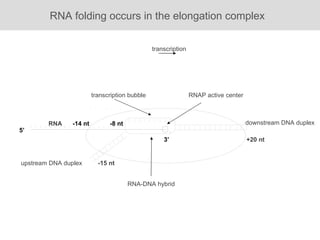
RNA folding occurs in the elongation complex  downstream DNA duplex transcription RNA upstream DNA duplex transcription bubble RNA-DNA hybrid -8 nt -14 nt 5’ 3’ RNAP active center -15 nt +20 nt
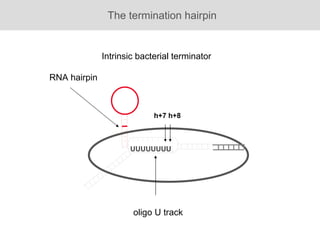
The termination hairpin UUUUUUUU RNA hairpin oligo U track Intrinsic bacterial terminator h+7 h+8
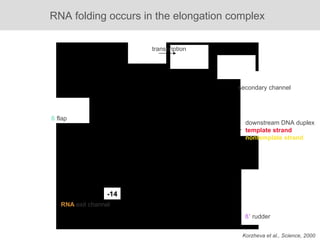
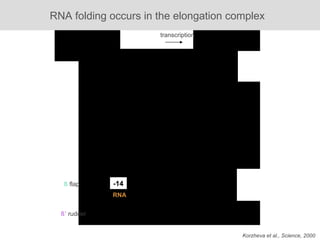
ß   flap ß’   rudder downstream DNA duplex template strand nontemplate strand transcription Korzheva et al., Science, 2000 secondary channel RNA   exit channel -14 RNA folding occurs in the elongation complex
ß   flap ß’   rudder transcription RNA -14 Korzheva et al., Science, 2000 RNA folding occurs in the elongation complex
Questions How does the elongation complex affect the termination hairpin folding? What is the pathway on the termination hairpin folding? What are the consequences of the constraint on the folding imposed by the elongation complex ?
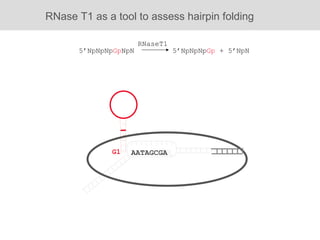
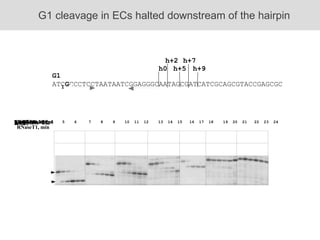
RNase T1 as a tool to assess hairpin folding AATAGCGA 5’NpNpNp Gp NpN 5’NpNpNp Gp  + 5’NpN RNaseT1 G1
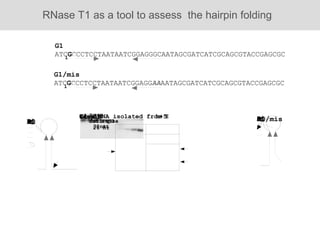
RNase T1 as a tool to assess  the hairpin folding G1 ATC G CCCTCCTAATAATCGGAGGGCAATAGCGATCATCGCAGCGTACCGAGCGC G1/mis ATC G CCCTCCTAATAATCGGAGG AA AATAGCGATCATCGCAGCGTACCGAGCGC
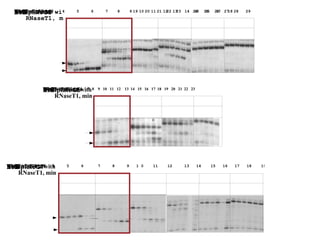
G1 ATC G CCCTCCTAATAATCGGAGGGCAATAGCGATCATCGCAGCGTACCGAGCGC G1 cleavage in ECs halted downstream of the hairpin
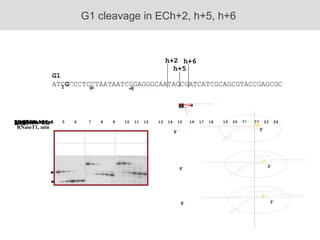
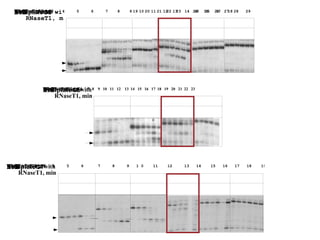
G1 ATC G CCCTCCTAATAATCGGAGGGCAATAGCGATCATCGCAGCGTACCGAGCGC AA A A 5’ 5’ 5’ 3’ 3’ 3’ h+6 G1 cleavage in ECh+2, h+5, h+6
Komissarova et all., Molecular Cell 2002 h+7 h+8 Hairpin destabilizes ECh+7 and ECh+8
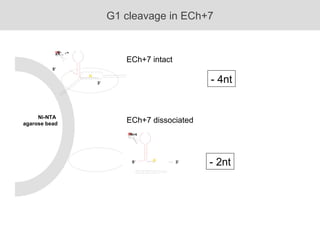
5’ 3’ A Ni-NTA  agarose bead - 4nt - 2nt ECh+7 dissociated ECh+7 intact G1 cleavage in ECh+7 5’ 3’ A
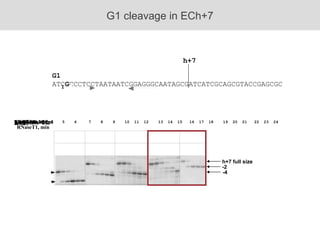
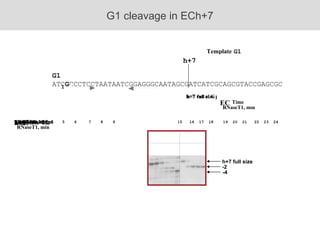
G1 ATC G CCCTCCTAATAATCGGAGGGCAATAGCGATCATCGCAGCGTACCGAGCGC G1 cleavage in ECh+7 h+7 full size -2 -4
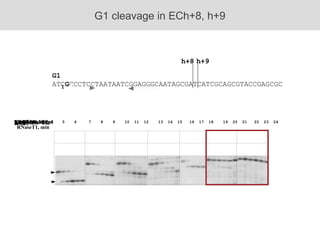
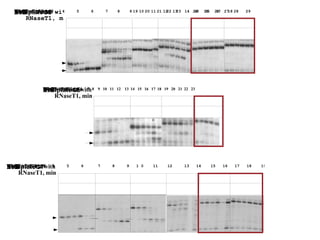
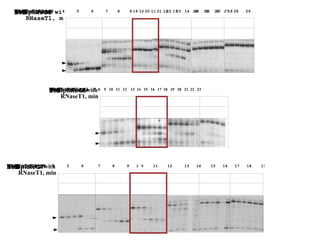
G1 ATC G CCCTCCTAATAATCGGAGGGCAATAGCGATCATCGCAGCGTACCGAGCGC G1 cleavage in ECh+8, h+9 h+8 h+9
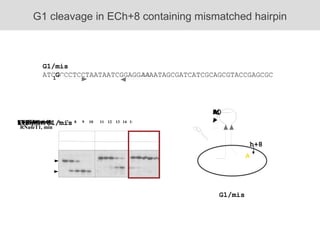
G1 cleavage in ECh+8 containing mismatched hairpin h+8 G1/mis ATC G CCCTCCTAATAATCGGAGG AA AATAGCGATCATCGCAGCGTACCGAGCGC  A
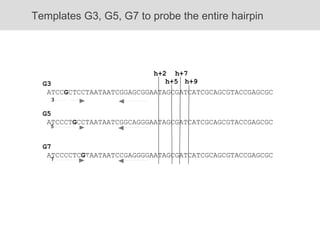
G3 ATCC G CTCCTAATAATCGGAGCGGAATAGCGATCATCGCAGCGTACCGAGCGC  Templates G3, G5, G7 to probe the entire hairpin G5 ATCCCT G CCTAATAATCGGCAGGGAATAGCGATCATCGCAGCGTACCGAGCGC G7 ATCCCCTC G TAATAATCCGAGGGGAATAGCGATCATCGCAGCGTACCGAGCGC
 
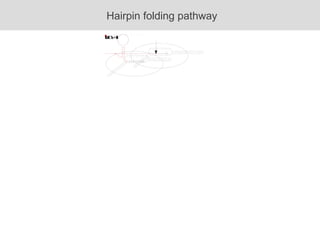
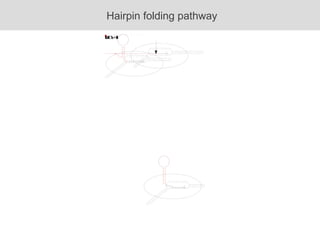
Hairpin folding pathway
 
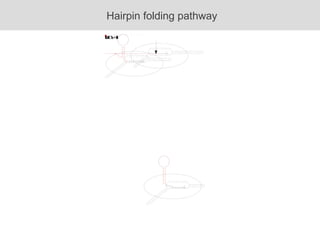
Hairpin folding pathway
 
G1 ATC G CCCTCCTAATAATCGGAGGGCAATAGCGATCATCGCAGCGTACCGAGCGC G1 cleavage in ECh+7 h+7 full size -2 -4
Hairpin folding pathway
 
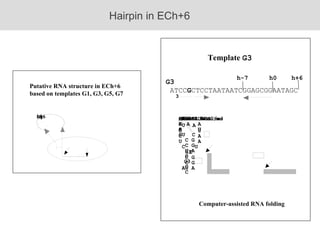
Putative RNA structure in ECh+6  based on templates G1, G3, G5, G7 Template  G3 Hairpin in ECh+6 Computer-assisted RNA folding G3 ATCC G CTCCTAATAATCGGAGCGGAATAGC h0 h+6 h-7
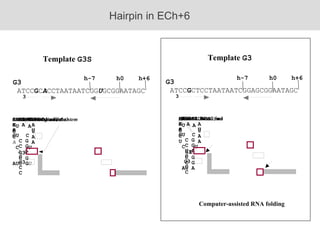
Template  G3 Computer-assisted RNA folding Template  G3S Hairpin in ECh+6 G3 ATCC G CTCCTAATAATCGGAGCGGAATAGC h0 h+6 h-7 G3 ATCC G C A CCTAATAATCGG U GCGGAATAGC h0 h+6 h-7
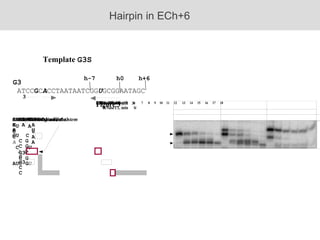
Template  G3S Hairpin in ECh+6 G3 ATCC G C A CCTAATAATCGG U GCGGAATAGC h0 h+6 h-7
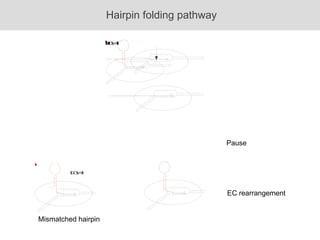
Hairpin folding pathway Pause  EC rearrangement Mismatched hairpin ECh+8
Alternative structure affects termination
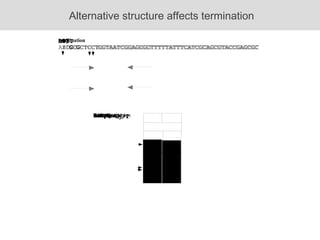
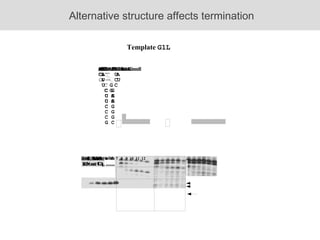
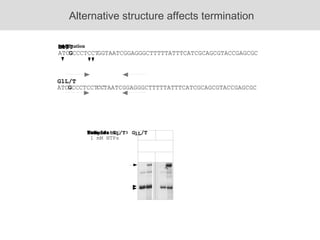
Alternative structure affects termination Template  G1L AA
Alternative structure affects termination
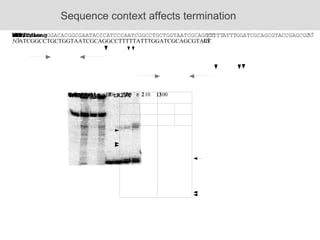
Sequence context affects termination
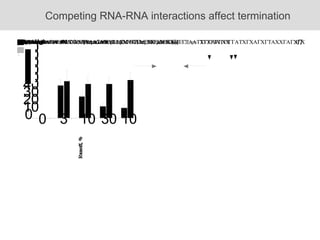
Competing RNA-RNA interactions affect termination
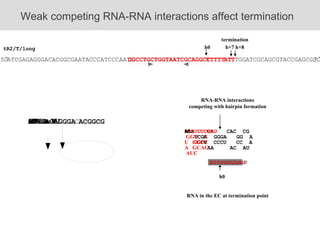
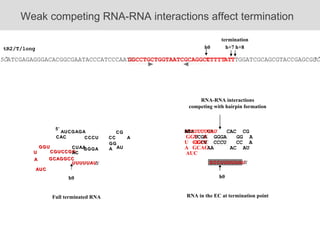
RNA-RNA interactions  competing with hairpin formation  Weak competing RNA-RNA interactions affect termination termination h+7 h+8 h0 h0 Full terminated RNA 3’ GCCUUUUUAU RNA in the EC at termination point  tR2/T/long  U AUCGAGA  CAC  CG  GGGA  GG  A GGU   CCCU  CC  A AU CGUCCGG CUAA  AC  GCAGGCC AUC A UUUUUAU 5’ 3’ h0
RNA-RNA interactions  competing with hairpin formation  Weak competing RNA-RNA interactions affect termination termination h+7 h+8 h0 h0 3’ GCCUUUUUAU RNA in the EC at termination point  tR2/T/long
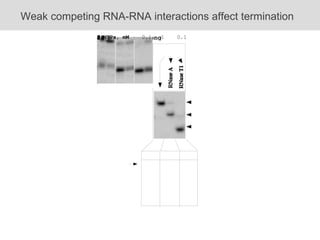
Weak competing RNA-RNA interactions affect termination
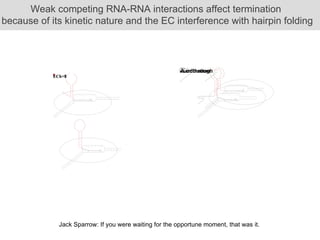
Weak competing RNA-RNA interactions affect termination  because of its kinetic nature and the EC interference with hairpin folding Jack Sparrow: If you were waiting for the opportune moment, that was it.
- why some mutations that  do not alter  or  increase  hairpin strength  decrease  termination  (Cheng et al., Science (1991), 254; Wilson and von Hippel, PNAS (1995), 92)   - why the efficiency of terminators depends on early transcribed promoter-proximal sequences  (Goliger et al. (1989) J. Mol. Biol. 205; Telesnitsky and Chamberlin (1989) J. Mol. Biol. 205) Models of termination do not explain:

Rna Folding

  • 1.
    RNA Folding duringTranscription and Its Effect on Intrinsic Termination Natalia Komissarova January 11, 2011
  • 2.
    Natalia Komissarova LucynaLubkowska Anu Mahardjan Mikhail Kashlev Robert Weisberg NCI, Frederick, MD NICHD, Bethesda, MD
  • 3.
    RNA conformation iscrucial for its functionality - translation - plasmid replication - RNA splicing - RNAi-induced gene silencing - gene control by riboswitches - transcription pausing - transcription antitermination - transcription termination
  • 4.
    The rate ofRNA elongation affects the folding pathway The rate of RNA elongation affects the folding pathway because the 5’ end of RNA can fold before the 3’ end is synthesized . Accumulation of metastable folding intermediates can create a kinetic trap
  • 5.
    Functional consequences ofa kinetic trap in RNA folding alternative splicing inactive RNA conformations regulation of time sensitive biological processes like translation and ribosome assembly . Time sensitive processes that occur co-transcriptionally, such as RNA splicing, transcription pausing, termination, and antitermination
  • 6.
    RNA folding occursin the elongation complex downstream DNA duplex transcription RNA upstream DNA duplex transcription bubble RNA-DNA hybrid -8 nt -14 nt 5’ 3’ RNAP active center -15 nt +20 nt
  • 7.
    The termination hairpinUUUUUUUU RNA hairpin oligo U track Intrinsic bacterial terminator h+7 h+8
  • 8.
    ß flap ß’ rudder downstream DNA duplex template strand nontemplate strand transcription Korzheva et al., Science, 2000 secondary channel RNA exit channel -14 RNA folding occurs in the elongation complex
  • 9.
    ß flap ß’ rudder transcription RNA -14 Korzheva et al., Science, 2000 RNA folding occurs in the elongation complex
  • 10.
    Questions How doesthe elongation complex affect the termination hairpin folding? What is the pathway on the termination hairpin folding? What are the consequences of the constraint on the folding imposed by the elongation complex ?
  • 11.
    RNase T1 asa tool to assess hairpin folding AATAGCGA 5’NpNpNp Gp NpN 5’NpNpNp Gp + 5’NpN RNaseT1 G1
  • 12.
    RNase T1 asa tool to assess the hairpin folding G1 ATC G CCCTCCTAATAATCGGAGGGCAATAGCGATCATCGCAGCGTACCGAGCGC G1/mis ATC G CCCTCCTAATAATCGGAGG AA AATAGCGATCATCGCAGCGTACCGAGCGC
  • 13.
    G1 ATC GCCCTCCTAATAATCGGAGGGCAATAGCGATCATCGCAGCGTACCGAGCGC G1 cleavage in ECs halted downstream of the hairpin
  • 14.
    G1 ATC GCCCTCCTAATAATCGGAGGGCAATAGCGATCATCGCAGCGTACCGAGCGC AA A A 5’ 5’ 5’ 3’ 3’ 3’ h+6 G1 cleavage in ECh+2, h+5, h+6
  • 15.
    Komissarova et all.,Molecular Cell 2002 h+7 h+8 Hairpin destabilizes ECh+7 and ECh+8
  • 16.
    5’ 3’ ANi-NTA agarose bead - 4nt - 2nt ECh+7 dissociated ECh+7 intact G1 cleavage in ECh+7 5’ 3’ A
  • 17.
    G1 ATC GCCCTCCTAATAATCGGAGGGCAATAGCGATCATCGCAGCGTACCGAGCGC G1 cleavage in ECh+7 h+7 full size -2 -4
  • 18.
    G1 ATC GCCCTCCTAATAATCGGAGGGCAATAGCGATCATCGCAGCGTACCGAGCGC G1 cleavage in ECh+8, h+9 h+8 h+9
  • 19.
    G1 cleavage inECh+8 containing mismatched hairpin h+8 G1/mis ATC G CCCTCCTAATAATCGGAGG AA AATAGCGATCATCGCAGCGTACCGAGCGC A
  • 20.
    G3 ATCC GCTCCTAATAATCGGAGCGGAATAGCGATCATCGCAGCGTACCGAGCGC Templates G3, G5, G7 to probe the entire hairpin G5 ATCCCT G CCTAATAATCGGCAGGGAATAGCGATCATCGCAGCGTACCGAGCGC G7 ATCCCCTC G TAATAATCCGAGGGGAATAGCGATCATCGCAGCGTACCGAGCGC
  • 21.
  • 22.
  • 23.
  • 24.
  • 25.
  • 26.
    G1 ATC GCCCTCCTAATAATCGGAGGGCAATAGCGATCATCGCAGCGTACCGAGCGC G1 cleavage in ECh+7 h+7 full size -2 -4
  • 27.
  • 28.
  • 29.
    Putative RNA structurein ECh+6 based on templates G1, G3, G5, G7 Template G3 Hairpin in ECh+6 Computer-assisted RNA folding G3 ATCC G CTCCTAATAATCGGAGCGGAATAGC h0 h+6 h-7
  • 30.
    Template G3Computer-assisted RNA folding Template G3S Hairpin in ECh+6 G3 ATCC G CTCCTAATAATCGGAGCGGAATAGC h0 h+6 h-7 G3 ATCC G C A CCTAATAATCGG U GCGGAATAGC h0 h+6 h-7
  • 31.
    Template G3SHairpin in ECh+6 G3 ATCC G C A CCTAATAATCGG U GCGGAATAGC h0 h+6 h-7
  • 32.
    Hairpin folding pathwayPause EC rearrangement Mismatched hairpin ECh+8
  • 33.
  • 34.
    Alternative structure affectstermination Template G1L AA
  • 35.
  • 36.
  • 37.
  • 38.
    RNA-RNA interactions competing with hairpin formation Weak competing RNA-RNA interactions affect termination termination h+7 h+8 h0 h0 Full terminated RNA 3’ GCCUUUUUAU RNA in the EC at termination point tR2/T/long U AUCGAGA CAC CG GGGA GG A GGU CCCU CC A AU CGUCCGG CUAA AC GCAGGCC AUC A UUUUUAU 5’ 3’ h0
  • 39.
    RNA-RNA interactions competing with hairpin formation Weak competing RNA-RNA interactions affect termination termination h+7 h+8 h0 h0 3’ GCCUUUUUAU RNA in the EC at termination point tR2/T/long
  • 40.
    Weak competing RNA-RNAinteractions affect termination
  • 41.
    Weak competing RNA-RNAinteractions affect termination because of its kinetic nature and the EC interference with hairpin folding Jack Sparrow: If you were waiting for the opportune moment, that was it.
  • 42.
    - why somemutations that do not alter or increase hairpin strength decrease termination (Cheng et al., Science (1991), 254; Wilson and von Hippel, PNAS (1995), 92) - why the efficiency of terminators depends on early transcribed promoter-proximal sequences (Goliger et al. (1989) J. Mol. Biol. 205; Telesnitsky and Chamberlin (1989) J. Mol. Biol. 205) Models of termination do not explain: