WELCOME ALL
INDUSTRIAL SAFETY
ENGINEERING
MANIPAL UNIVERSITY, DUBAI
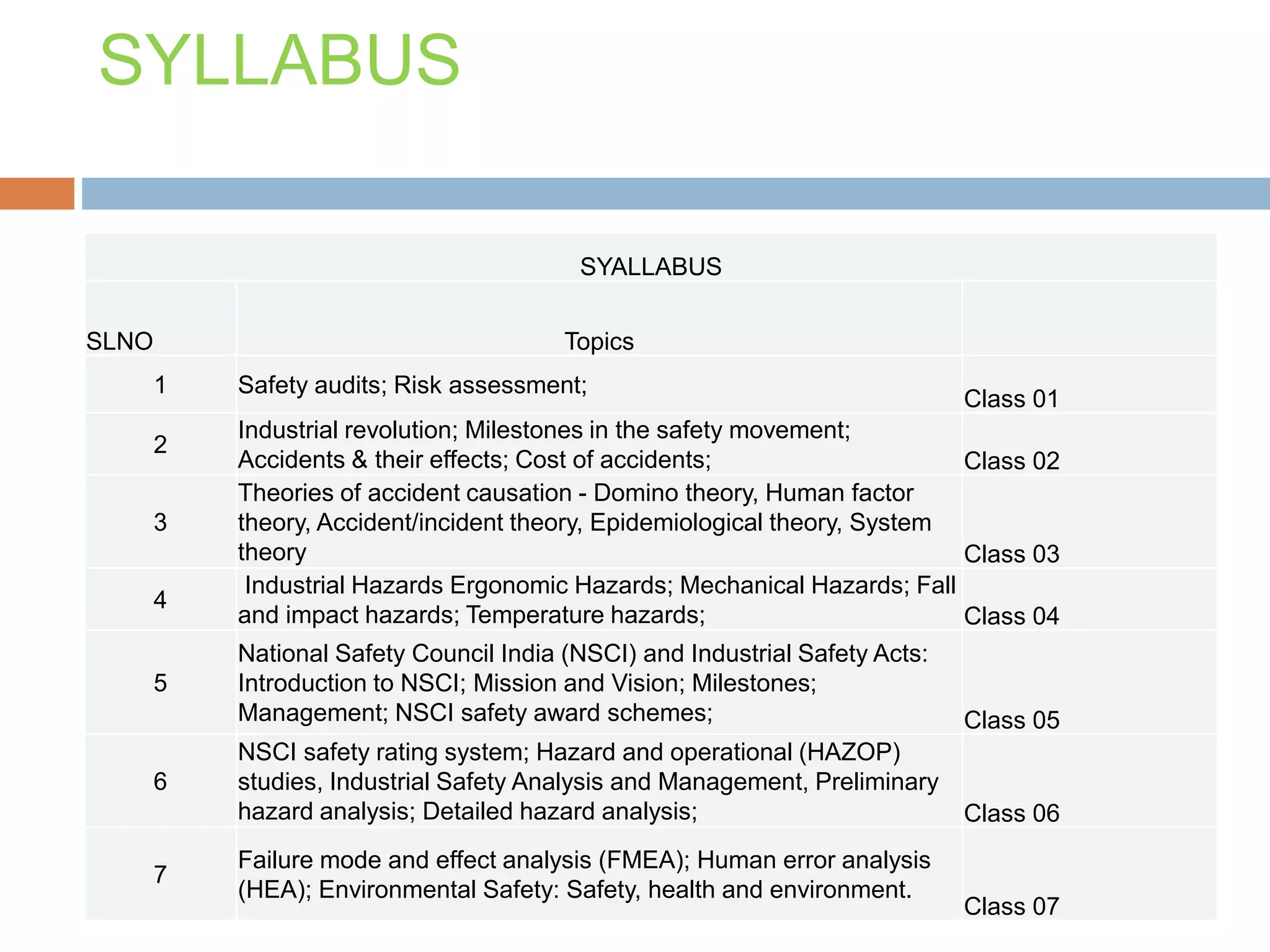
Jayakarthic Jeyakumar ME (ISE ), ANNA UNIVERSITY , INDIA & CSP
USA
SYLLABUS
SYALLABUS
SLNO Topics
1 Safety audits; Risk assessment;
Class 01
2
Industrial revolution; Milestones in the safety movement;
Accidents & their effects; Cost of accidents; Class 02
3
Theories of accident causation - Domino theory, Human factor
theory, Accident/incident theory, Epidemiological theory, System
theory Class 03
4
Industrial Hazards Ergonomic Hazards; Mechanical Hazards; Fall
and impact hazards; Temperature hazards; Class 04
5
National Safety Council India (NSCI) and Industrial Safety Acts:
Introduction to NSCI; Mission and Vision; Milestones;
Management; NSCI safety award schemes; Class 05
6
NSCI safety rating system; Hazard and operational (HAZOP)
studies, Industrial Safety Analysis and Management, Preliminary
hazard analysis; Detailed hazard analysis; Class 06
7
Failure mode and effect analysis (FMEA); Human error analysis
(HEA); Environmental Safety: Safety, health and environment.
Class 07
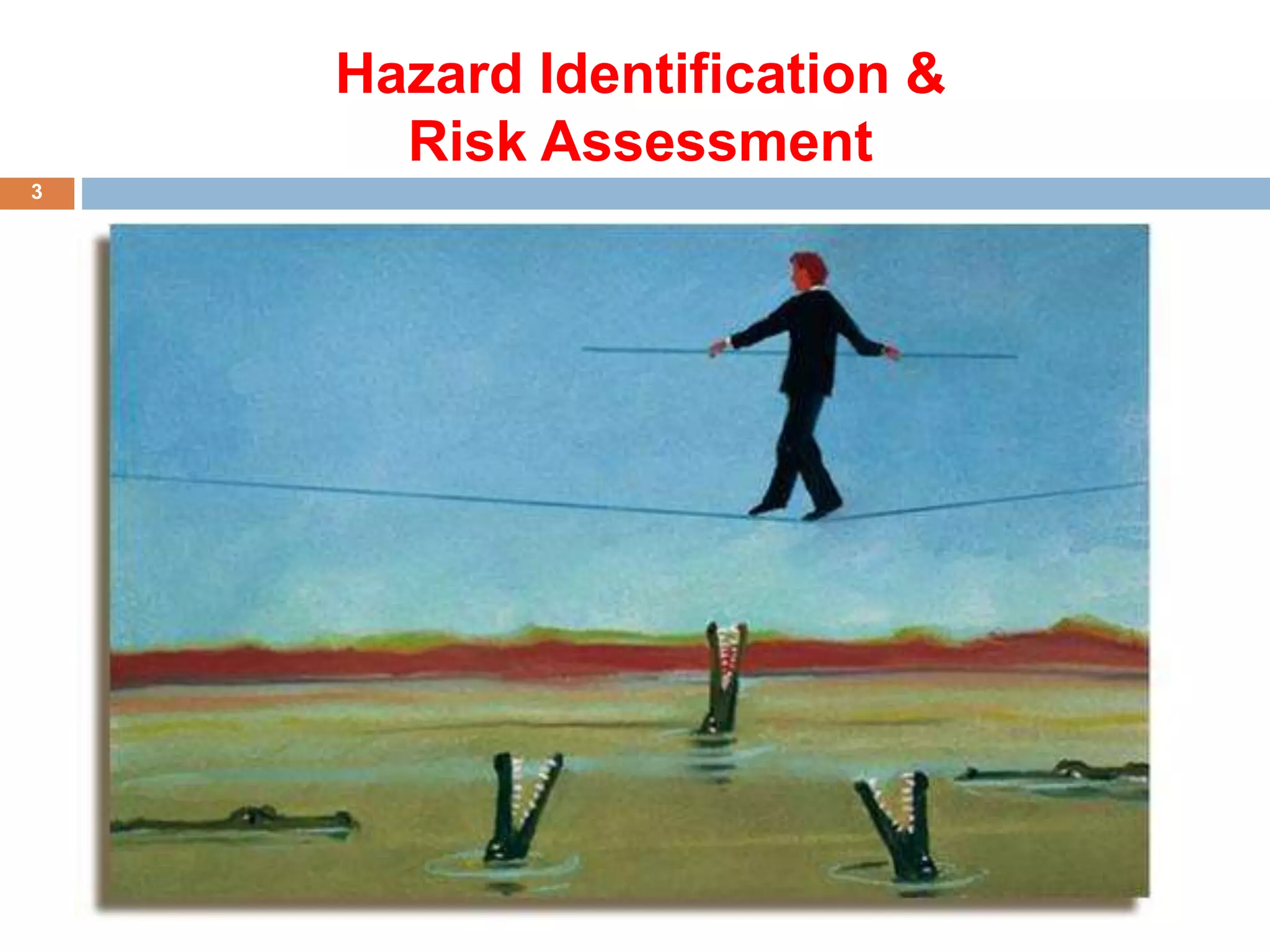
Hazard Identification &
Risk Assessment
3
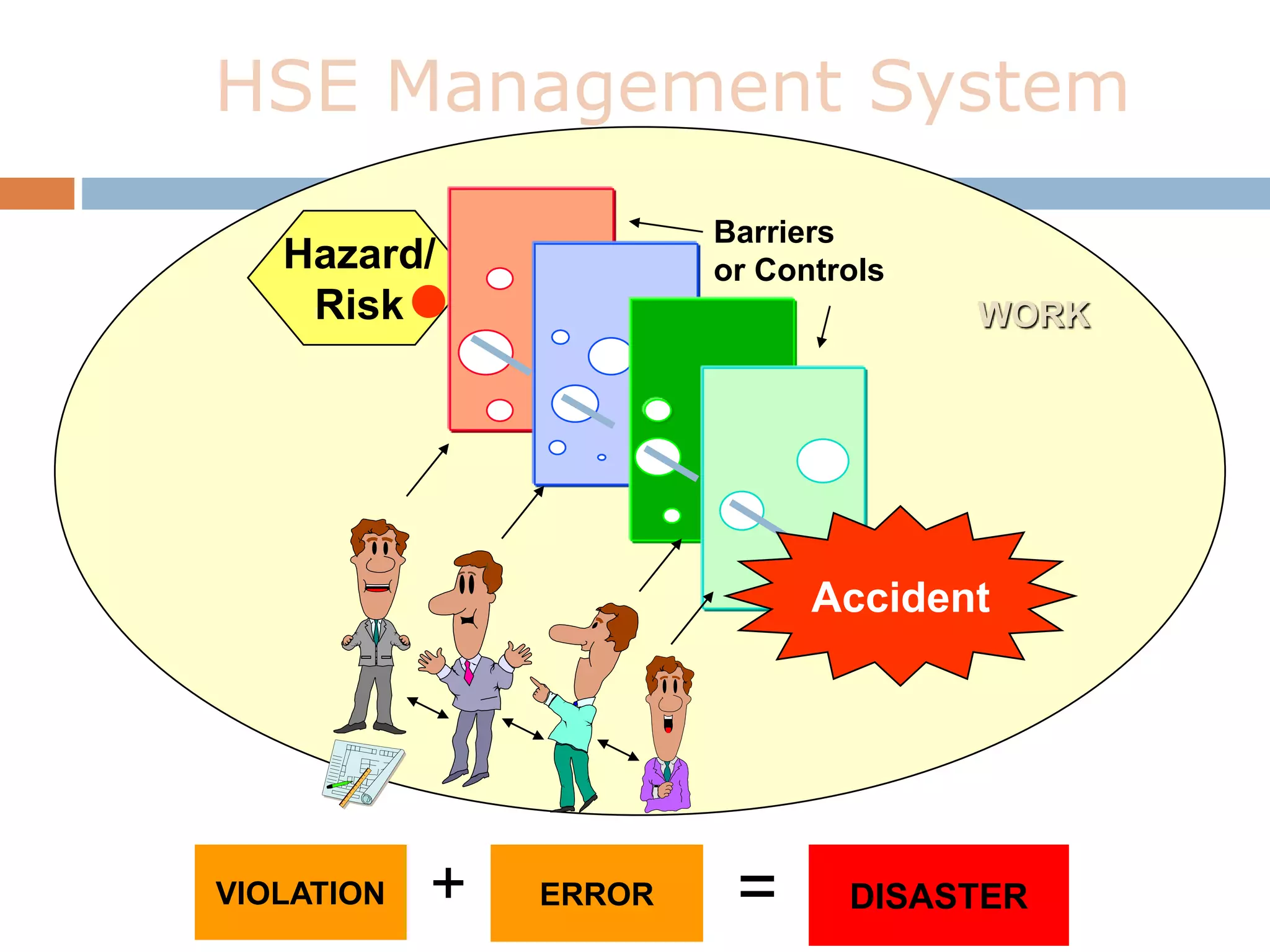
HSE Management System
Hazard/
Risk
Accident
WORK
Barriers
or Controls
DISASTER
VIOLATION ERROR
+ =
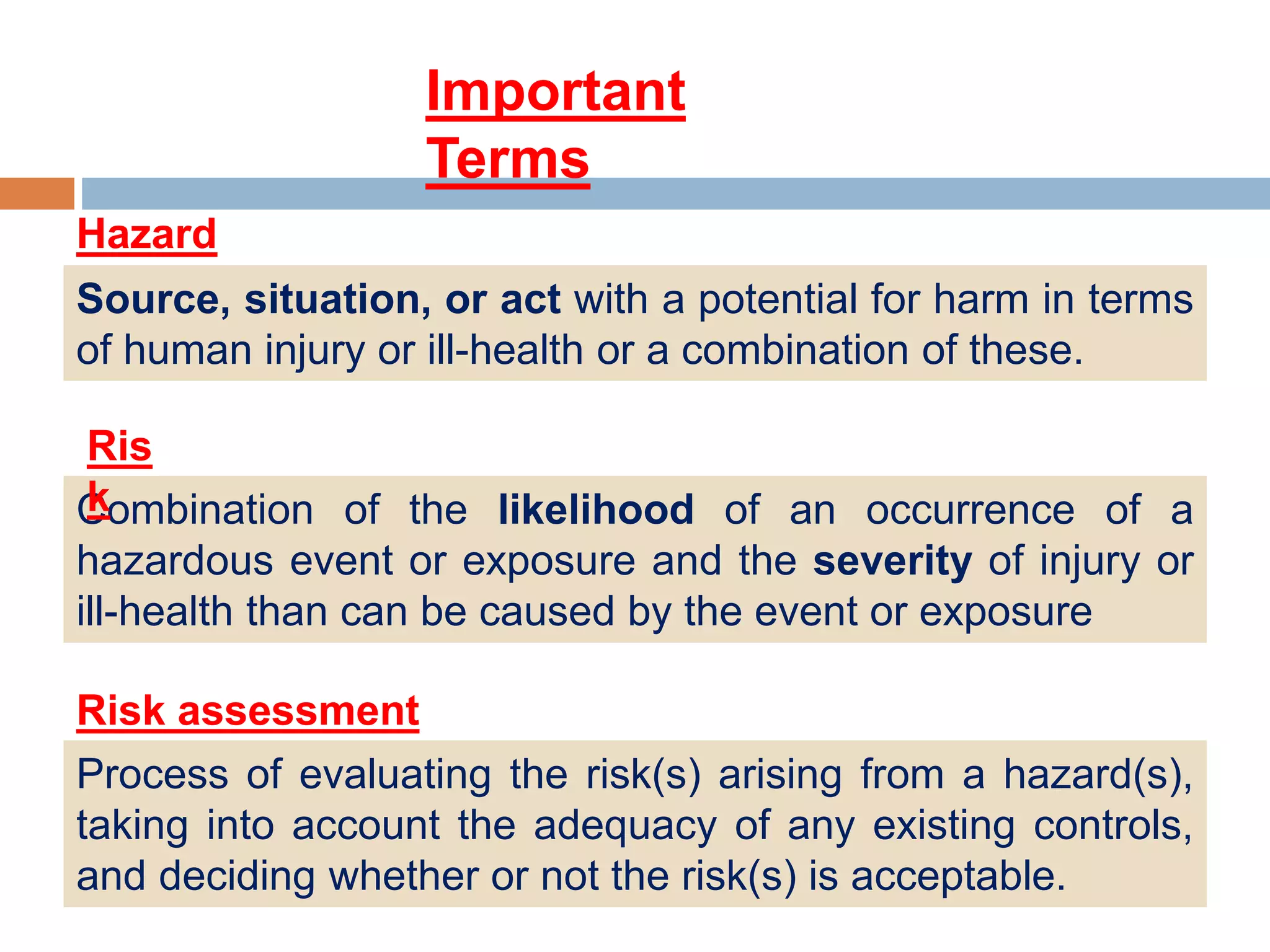
Source, situation, or act with a potential for harm in terms
of human injury or ill-health or a combination of these.
Important
Terms
Combination of the likelihood of an occurrence of a
hazardous event or exposure and the severity of injury or
ill-health than can be caused by the event or exposure
Hazard
Ris
k
Risk assessment
Process of evaluating the risk(s) arising from a hazard(s),
taking into account the adequacy of any existing controls,
and deciding whether or not the risk(s) is acceptable.
Quantitative Risk assessment
Qualitative Risk assessment
Dynamic Risk assessment
Important
Terms
Type of Risk assessment
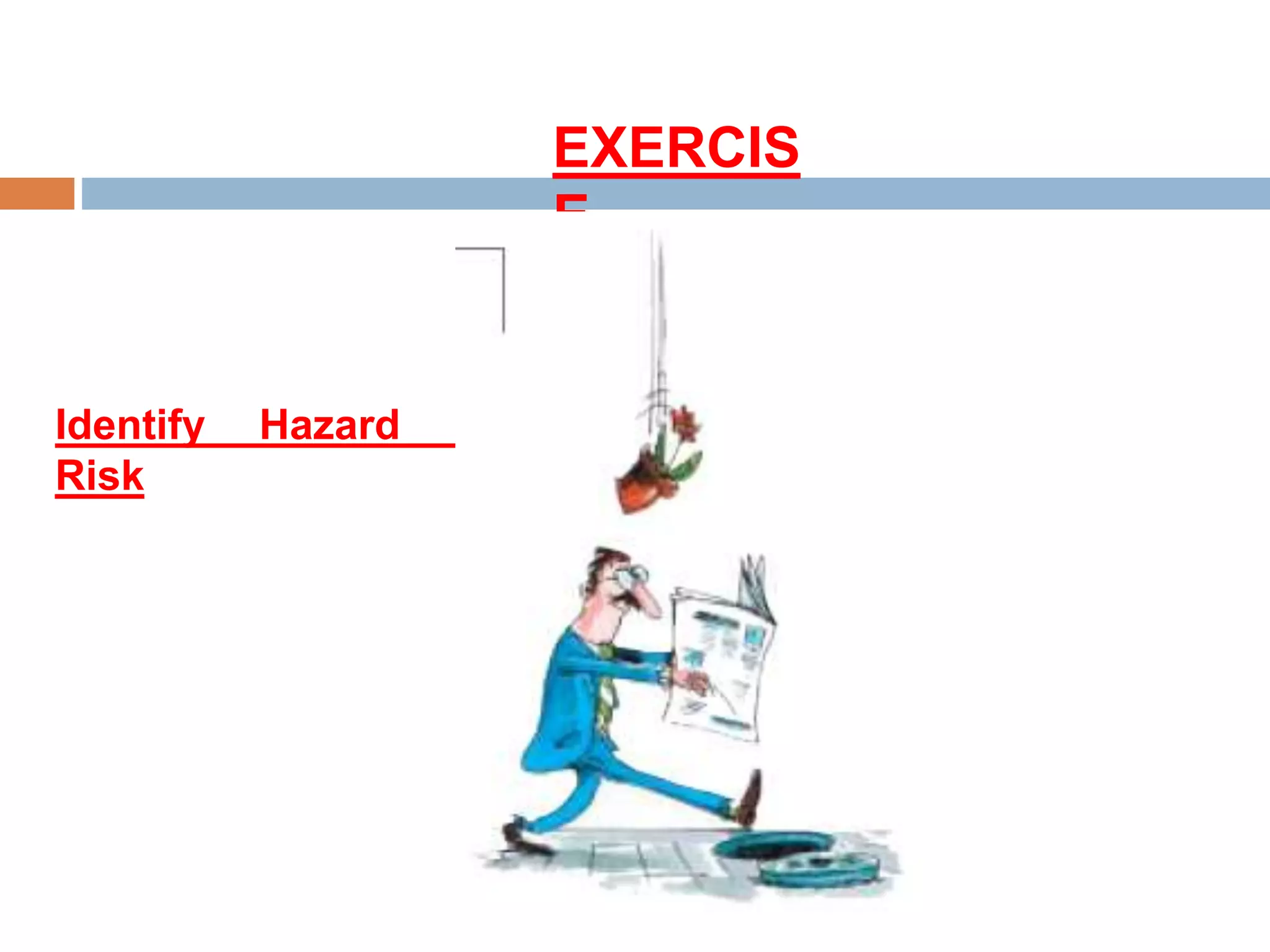
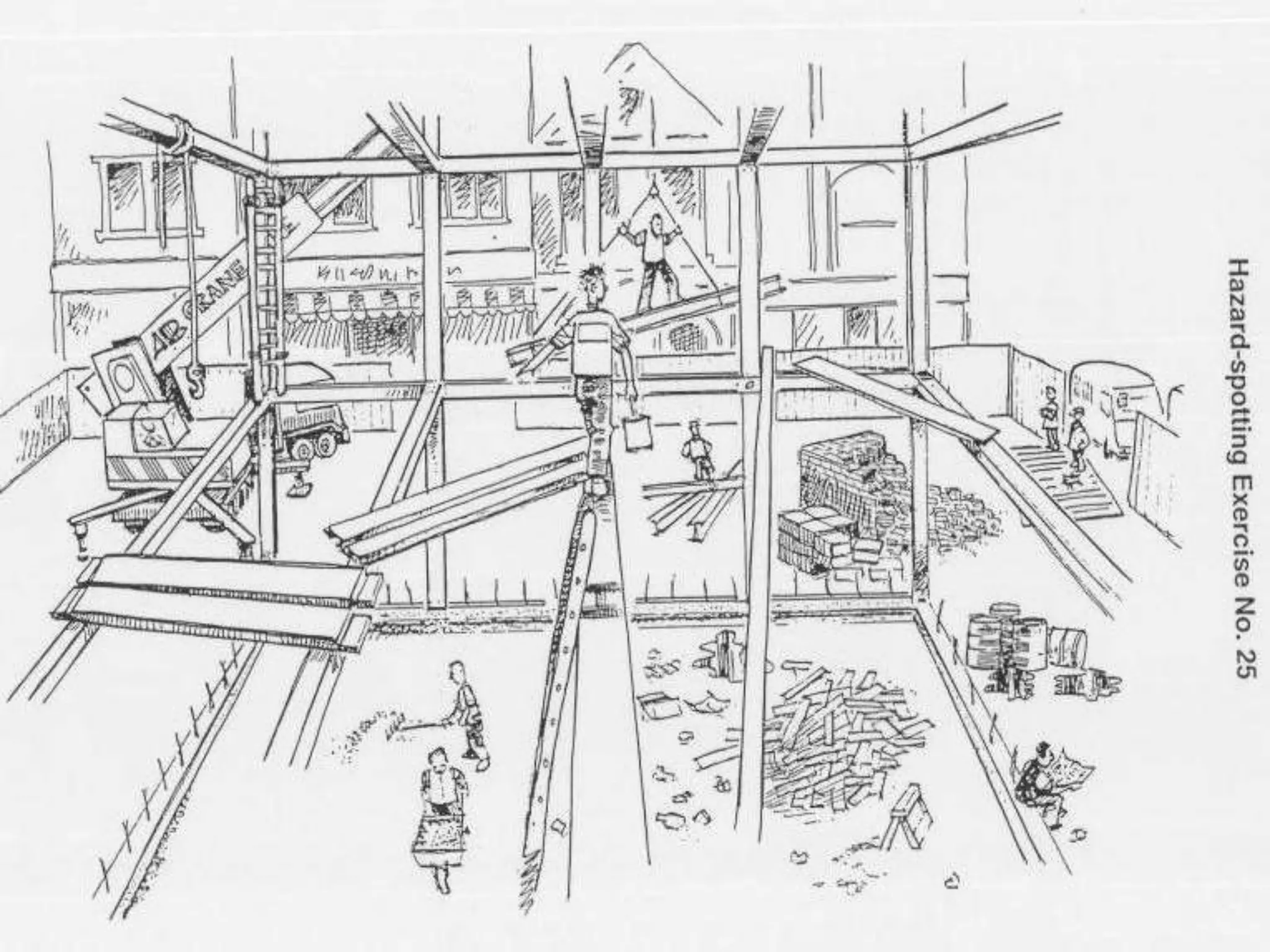
EXERCIS
E
Identify Hazard &
Risk
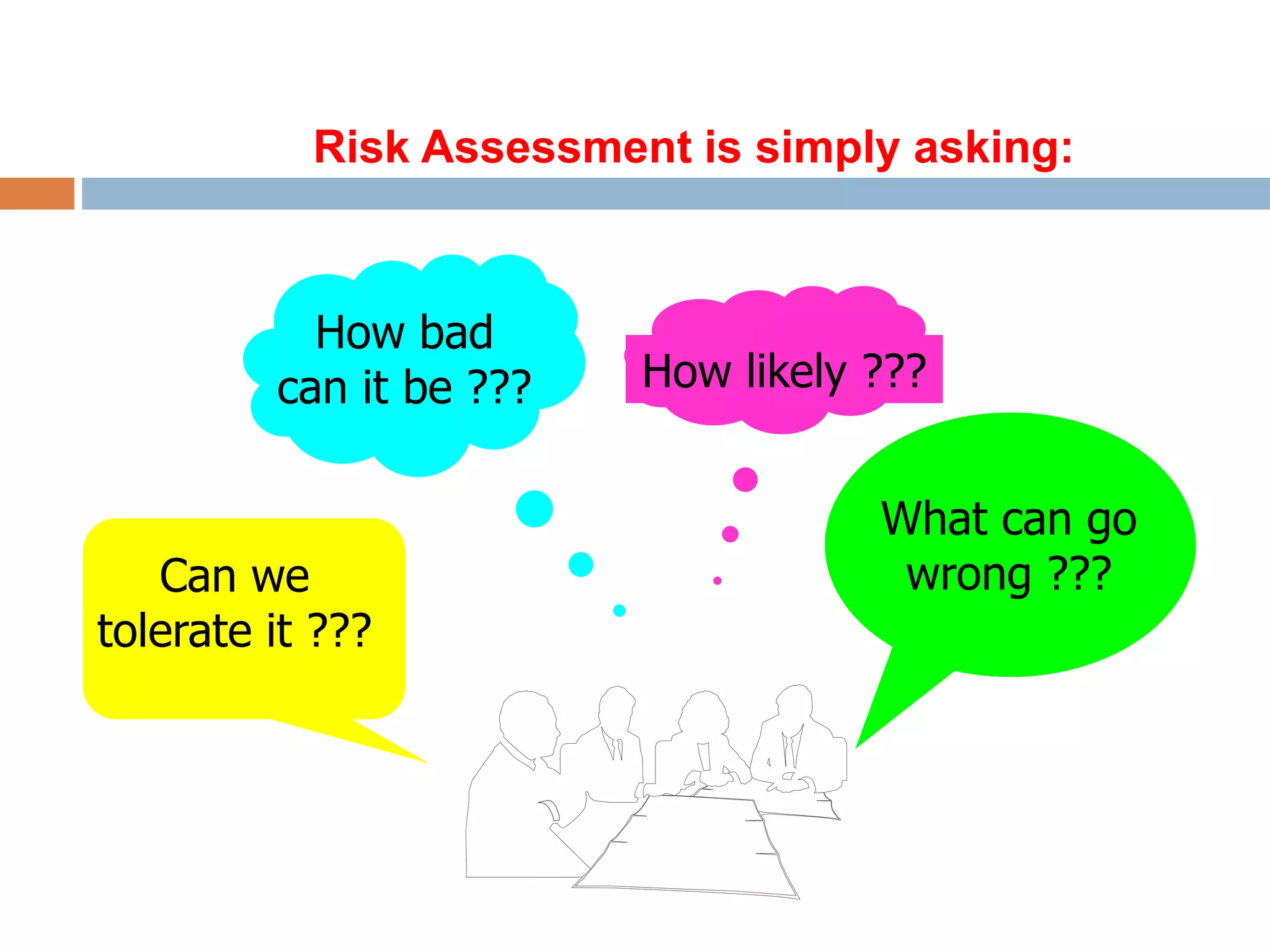
Risk Assessment is simply asking:
What can go
wrong ???
How bad
can it be ???
Can we
tolerate it ???
How likely ???
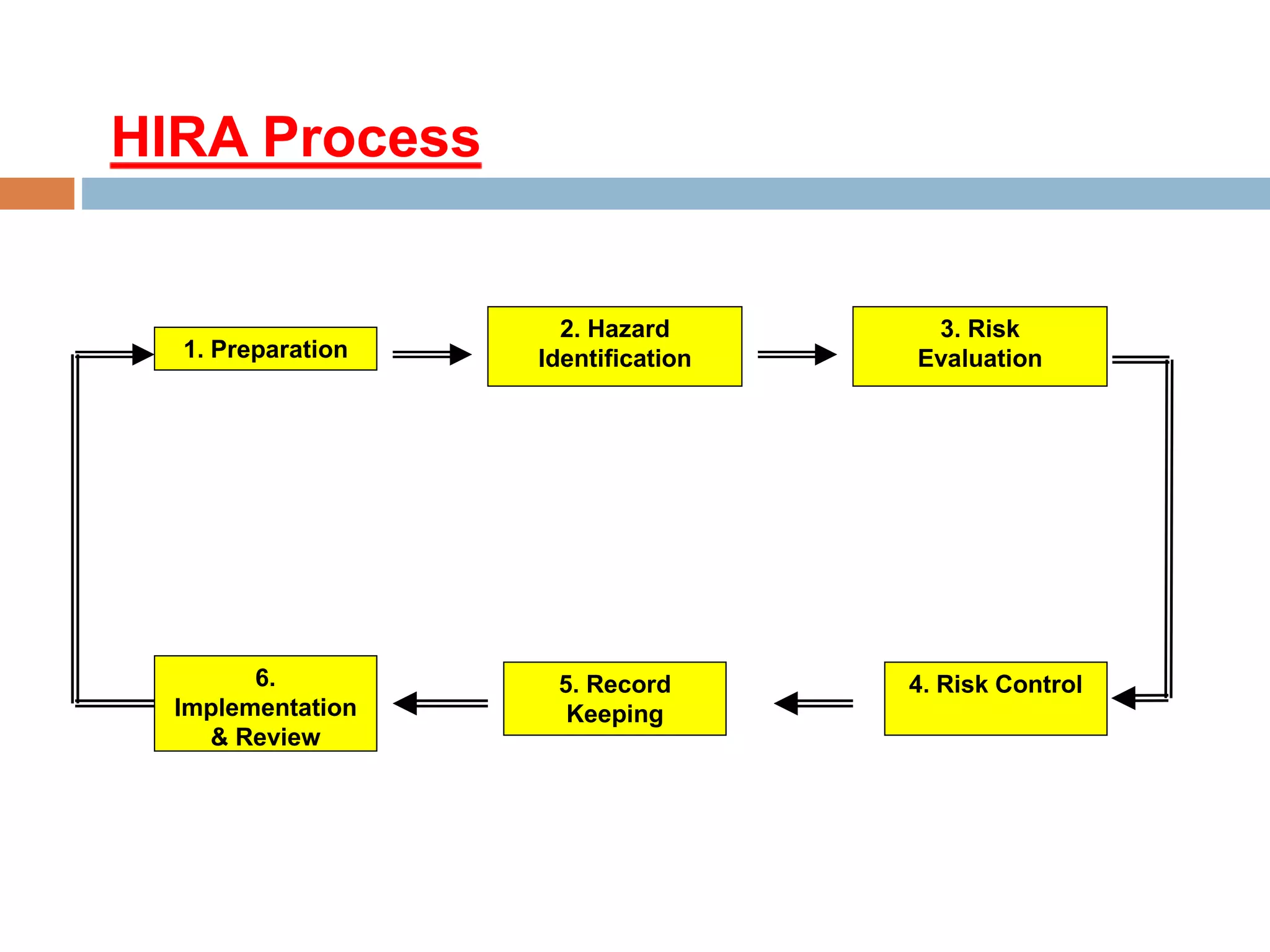
HIRA Process
2. Hazard
Identification
3. Risk
Evaluation
1. Preparation
6.
Implementation
& Review
5. Record
Keeping
4. Risk Control
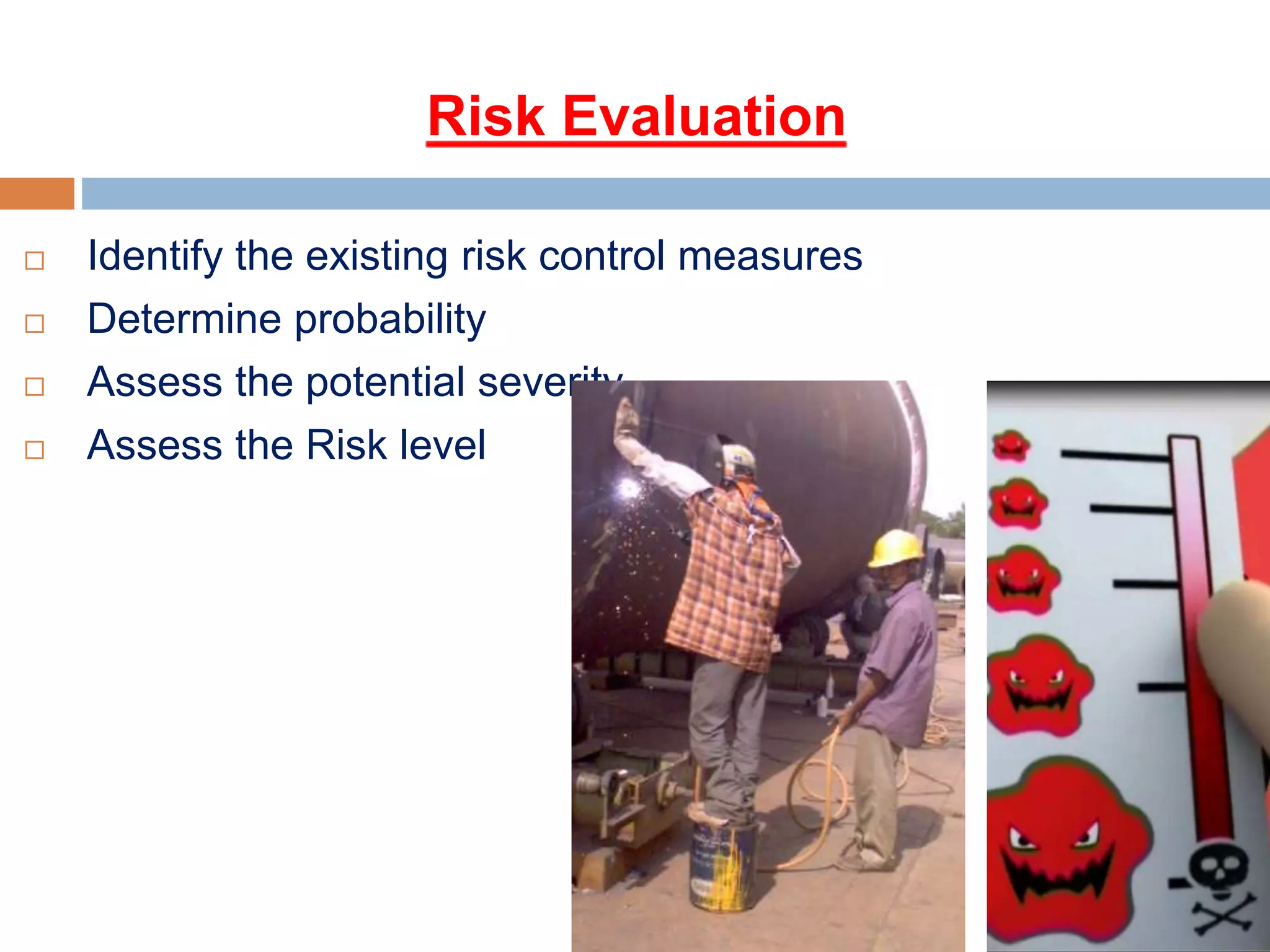
Risk Evaluation
 Identify the existing risk control measures
 Determine probability
 Assess the potential severity
 Assess the Risk level
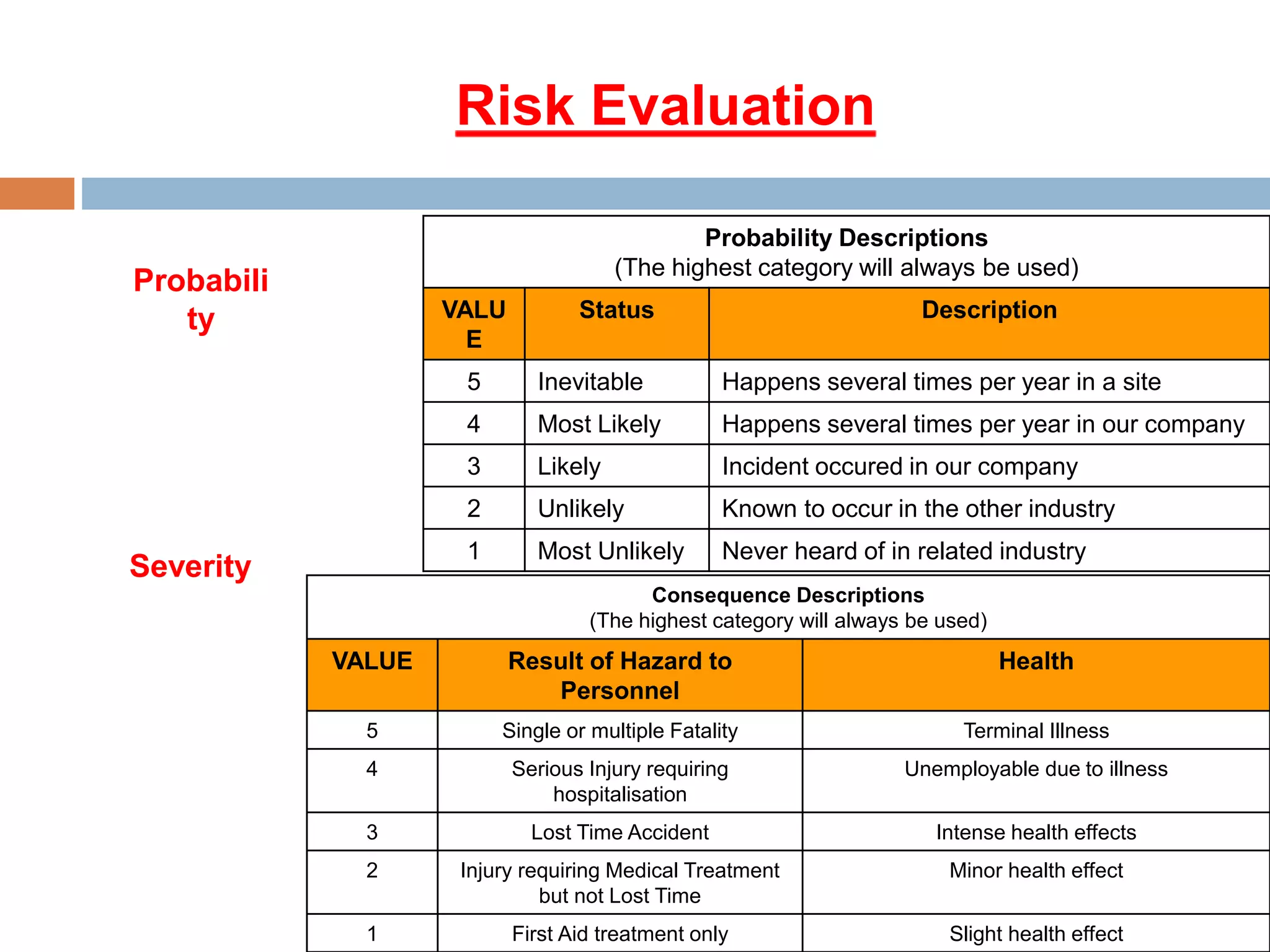
Risk Evaluation
Probabili
ty
Severity
Consequence Descriptions
(The highest category will always be used)
VALUE Result of Hazard to
Personnel
Health
5 Single or multiple Fatality Terminal Illness
4 Serious Injury requiring
hospitalisation
Unemployable due to illness
3 Lost Time Accident Intense health effects
2 Injury requiring Medical Treatment
but not Lost Time
Minor health effect
1 First Aid treatment only Slight health effect
Probability Descriptions
(The highest category will always be used)
VALU
E
Status Description
5 Inevitable Happens several times per year in a site
4 Most Likely Happens several times per year in our company
3 Likely Incident occured in our company
2 Unlikely Known to occur in the other industry
1 Most Unlikely Never heard of in related industry
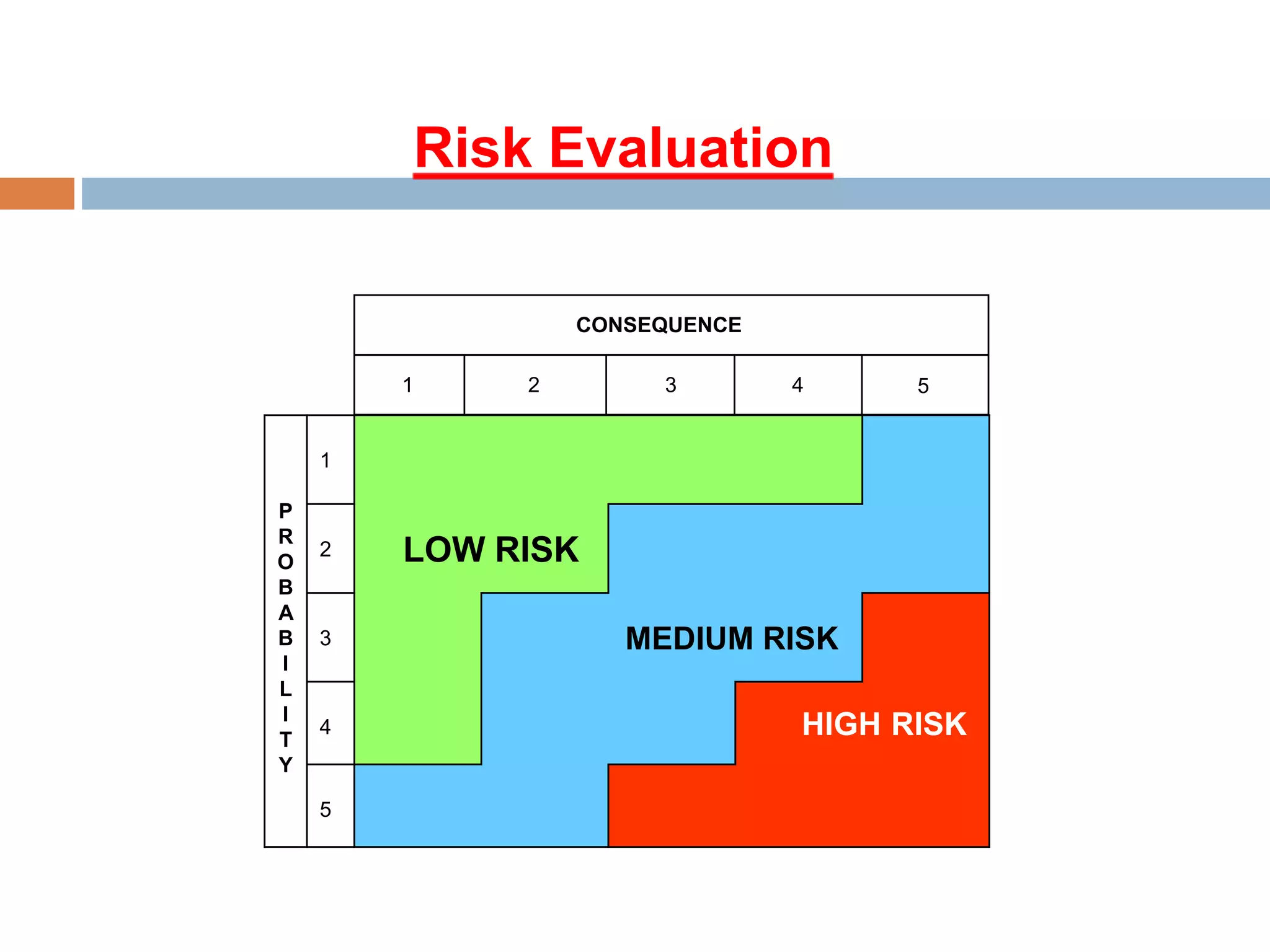
Risk Evaluation
P
R
O
B
A
B
I
L
I
T
Y
1
2 LOW RISK
3 MEDIUM RISK
4 HIGH RISK
5
1 2 3 4 5
CONSEQUENCE
Risk Mitigation
Measures
 Operational Control – Safe work method
 Communication to all employees
Elimination
Substitution
Engineering Control
Administrative Control
PPEs
Hierarchy of Control
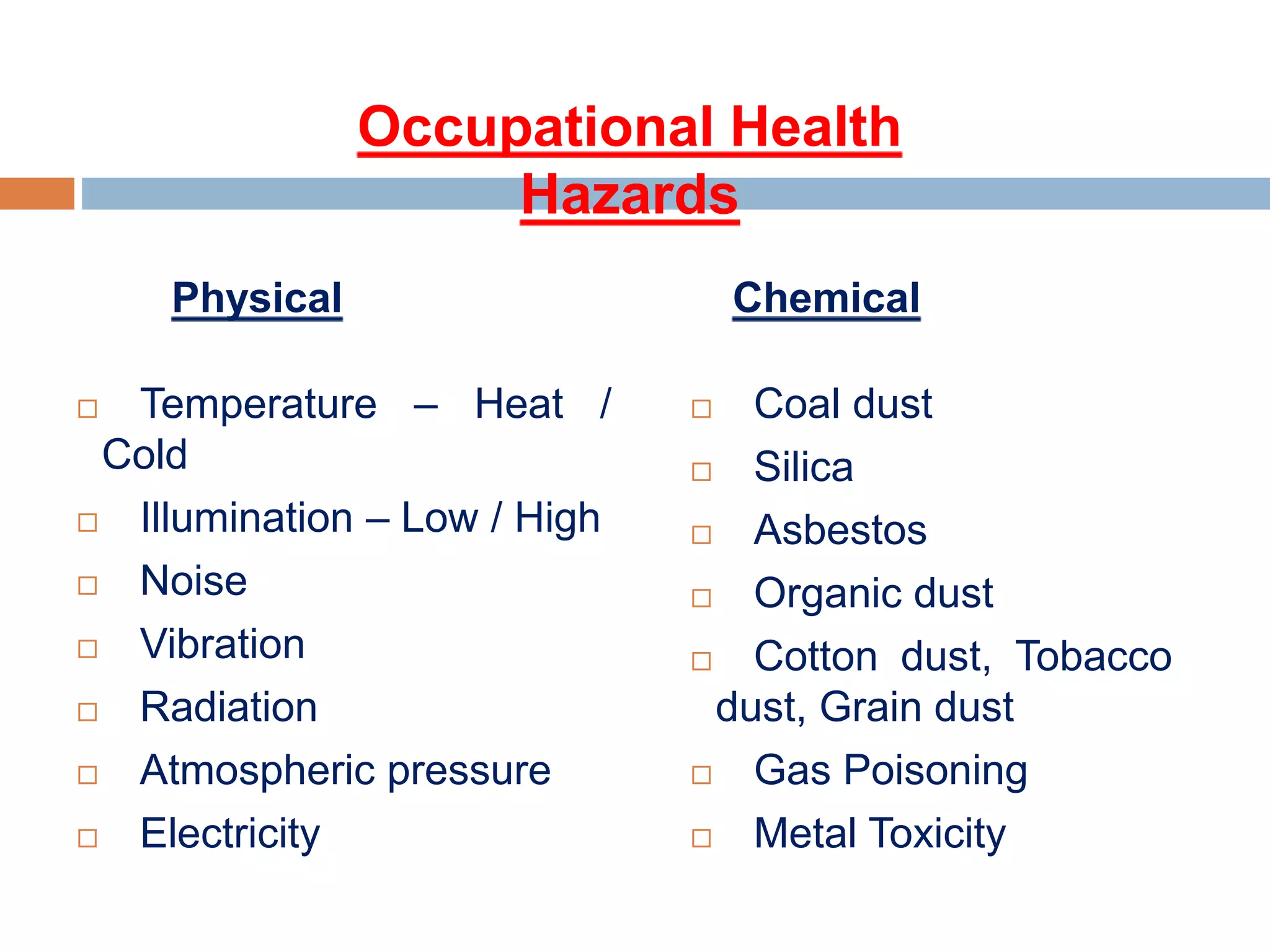
Occupational Health
Hazards
 Temperature – Heat /
Cold
 Illumination – Low / High
 Noise
 Vibration
 Radiation
 Atmospheric pressure
 Electricity
Physical
 Coal dust
 Silica
 Asbestos
 Organic dust
 Cotton dust, Tobacco
dust, Grain dust
 Gas Poisoning
 Metal Toxicity
Chemical
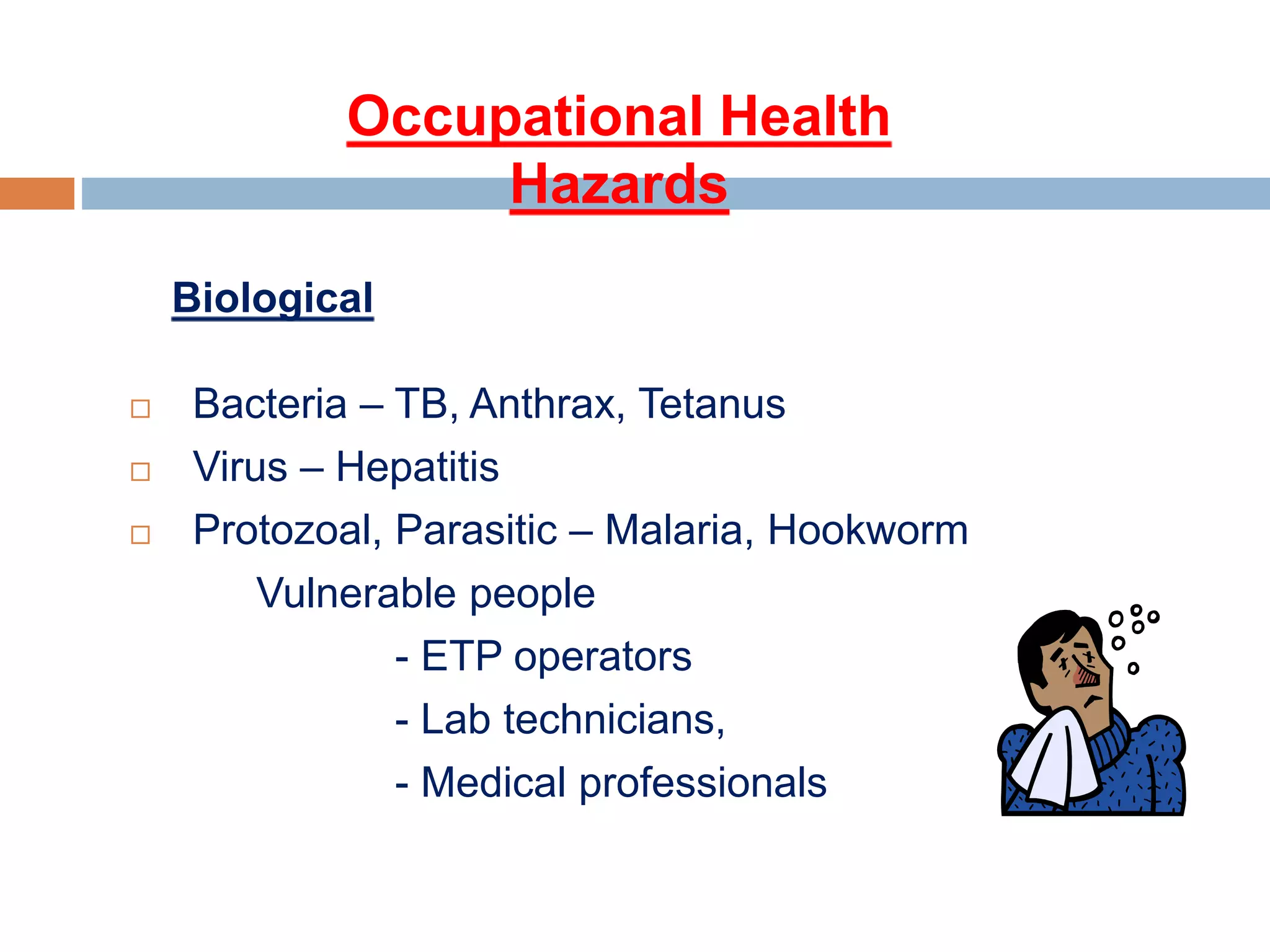
Occupational Health
Hazards
 Bacteria – TB, Anthrax, Tetanus
 Virus – Hepatitis
 Protozoal, Parasitic – Malaria, Hookworm
Vulnerable people
- ETP operators
- Lab technicians,
- Medical professionals
Biological
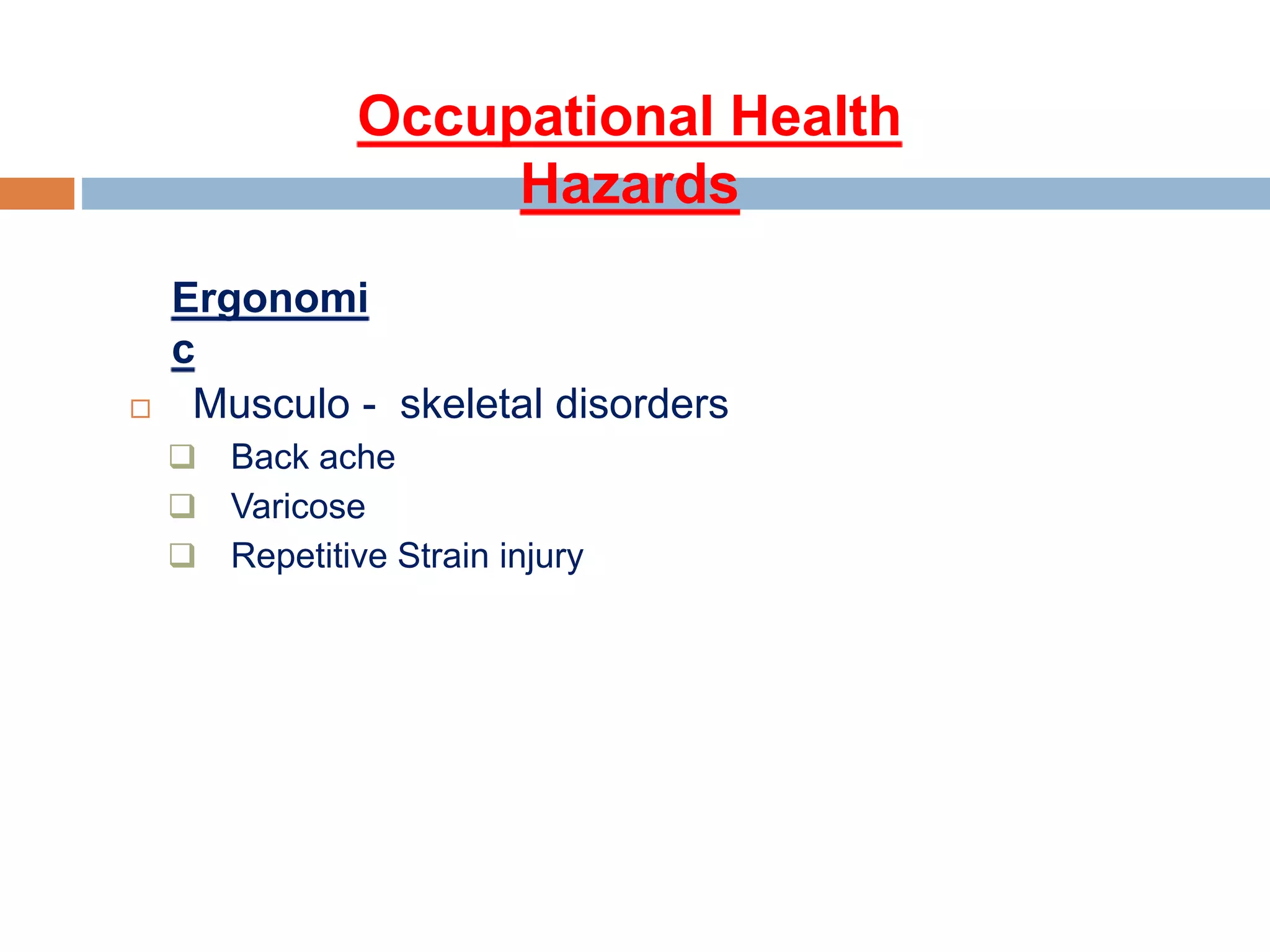
Occupational Health
Hazards
 Musculo - skeletal disorders
 Back ache
 Varicose
 Repetitive Strain injury
Ergonomi
c
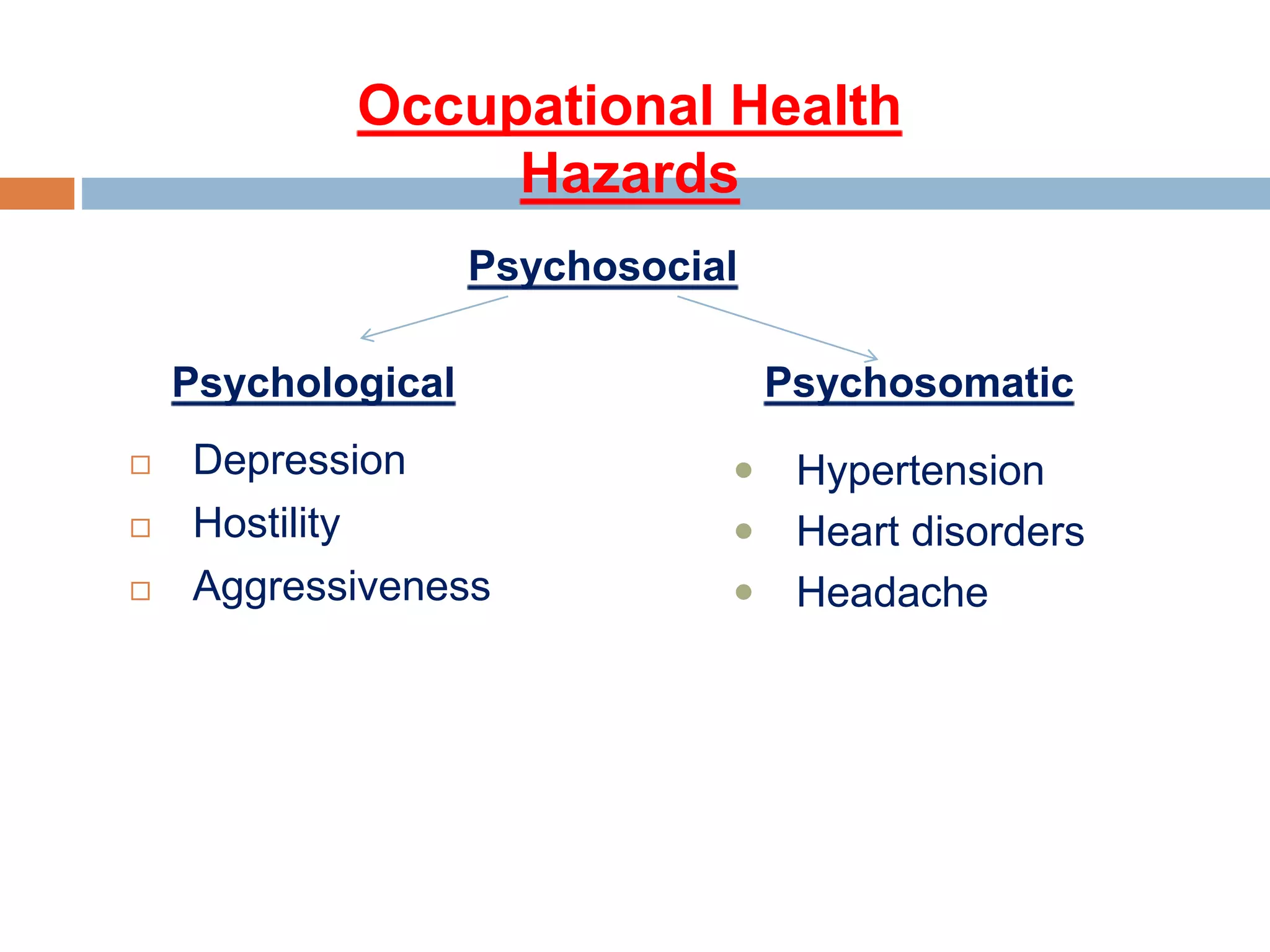
Occupational Health
Hazards
 Depression
 Hostility
 Aggressiveness
Psychosocial
 Hypertension
 Heart disorders
 Headache
Psychological Psychosomatic

Risk assessment.pptx

  • 1.
    WELCOME ALL INDUSTRIAL SAFETY ENGINEERING MANIPALUNIVERSITY, DUBAI Jayakarthic Jeyakumar ME (ISE ), ANNA UNIVERSITY , INDIA & CSP USA
  • 2.
    SYLLABUS SYALLABUS SLNO Topics 1 Safetyaudits; Risk assessment; Class 01 2 Industrial revolution; Milestones in the safety movement; Accidents & their effects; Cost of accidents; Class 02 3 Theories of accident causation - Domino theory, Human factor theory, Accident/incident theory, Epidemiological theory, System theory Class 03 4 Industrial Hazards Ergonomic Hazards; Mechanical Hazards; Fall and impact hazards; Temperature hazards; Class 04 5 National Safety Council India (NSCI) and Industrial Safety Acts: Introduction to NSCI; Mission and Vision; Milestones; Management; NSCI safety award schemes; Class 05 6 NSCI safety rating system; Hazard and operational (HAZOP) studies, Industrial Safety Analysis and Management, Preliminary hazard analysis; Detailed hazard analysis; Class 06 7 Failure mode and effect analysis (FMEA); Human error analysis (HEA); Environmental Safety: Safety, health and environment. Class 07
  • 3.
  • 4.
  • 5.
    Source, situation, oract with a potential for harm in terms of human injury or ill-health or a combination of these. Important Terms Combination of the likelihood of an occurrence of a hazardous event or exposure and the severity of injury or ill-health than can be caused by the event or exposure Hazard Ris k Risk assessment Process of evaluating the risk(s) arising from a hazard(s), taking into account the adequacy of any existing controls, and deciding whether or not the risk(s) is acceptable.
  • 6.
    Quantitative Risk assessment QualitativeRisk assessment Dynamic Risk assessment Important Terms Type of Risk assessment
  • 7.
  • 8.
    Risk Assessment issimply asking: What can go wrong ??? How bad can it be ??? Can we tolerate it ??? How likely ???
  • 9.
    HIRA Process 2. Hazard Identification 3.Risk Evaluation 1. Preparation 6. Implementation & Review 5. Record Keeping 4. Risk Control
  • 11.
    Risk Evaluation  Identifythe existing risk control measures  Determine probability  Assess the potential severity  Assess the Risk level
  • 12.
    Risk Evaluation Probabili ty Severity Consequence Descriptions (Thehighest category will always be used) VALUE Result of Hazard to Personnel Health 5 Single or multiple Fatality Terminal Illness 4 Serious Injury requiring hospitalisation Unemployable due to illness 3 Lost Time Accident Intense health effects 2 Injury requiring Medical Treatment but not Lost Time Minor health effect 1 First Aid treatment only Slight health effect Probability Descriptions (The highest category will always be used) VALU E Status Description 5 Inevitable Happens several times per year in a site 4 Most Likely Happens several times per year in our company 3 Likely Incident occured in our company 2 Unlikely Known to occur in the other industry 1 Most Unlikely Never heard of in related industry
  • 13.
    Risk Evaluation P R O B A B I L I T Y 1 2 LOWRISK 3 MEDIUM RISK 4 HIGH RISK 5 1 2 3 4 5 CONSEQUENCE
  • 14.
    Risk Mitigation Measures  OperationalControl – Safe work method  Communication to all employees Elimination Substitution Engineering Control Administrative Control PPEs Hierarchy of Control
  • 15.
    Occupational Health Hazards  Temperature– Heat / Cold  Illumination – Low / High  Noise  Vibration  Radiation  Atmospheric pressure  Electricity Physical  Coal dust  Silica  Asbestos  Organic dust  Cotton dust, Tobacco dust, Grain dust  Gas Poisoning  Metal Toxicity Chemical
  • 16.
    Occupational Health Hazards  Bacteria– TB, Anthrax, Tetanus  Virus – Hepatitis  Protozoal, Parasitic – Malaria, Hookworm Vulnerable people - ETP operators - Lab technicians, - Medical professionals Biological
  • 17.
    Occupational Health Hazards  Musculo- skeletal disorders  Back ache  Varicose  Repetitive Strain injury Ergonomi c
  • 18.
    Occupational Health Hazards  Depression Hostility  Aggressiveness Psychosocial  Hypertension  Heart disorders  Headache Psychological Psychosomatic