This document outlines various narrative theories that can be used to analyze media texts, including music videos. It introduces Todorov's theory of classic narrative structure with beginning, middle, end stages. Propp's character archetypes in stories are described. Levi-Strauss discusses binary oppositions between characters. Barthes' semiotics theory analyzes signs and codes. The objectives are to understand and apply these theories to analyze music videos and other media, and determine how well traditional narrative theories fit modern media forms.
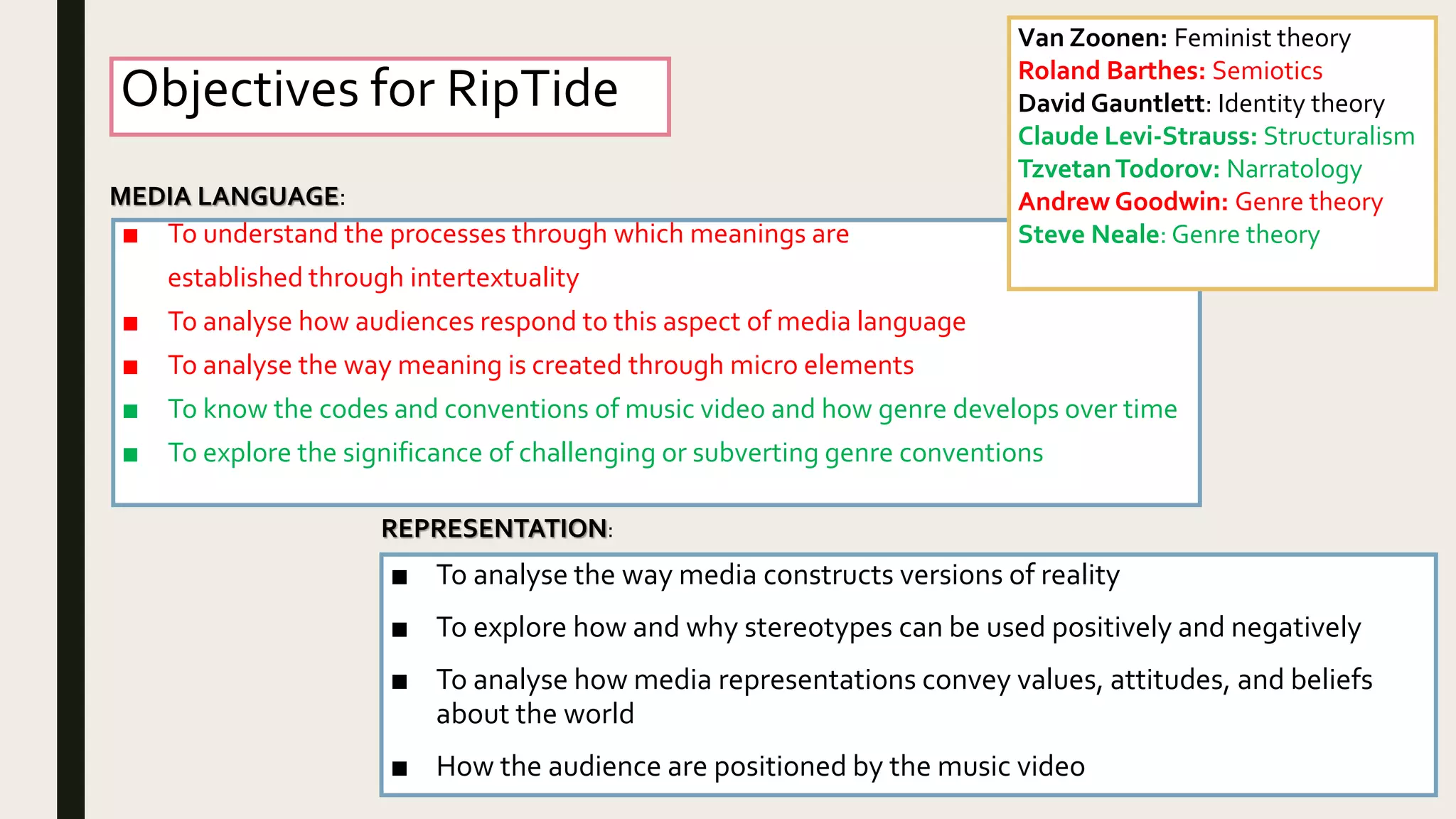
Objectives for RipTide
■To understand the processes through which meanings are
established through intertextuality
■ To analyse how audiences respond to this aspect of media language
■ To analyse the way meaning is created through micro elements
■ To know the codes and conventions of music video and how genre develops over time
■ To explore the significance of challenging or subverting genre conventions
MEDIA LANGUAGE:
REPRESENTATION:
■ To analyse the way media constructs versions of reality
■ To explore how and why stereotypes can be used positively and negatively
■ To analyse how media representations convey values, attitudes, and beliefs
about the world
■ How the audience are positioned by the music video
Van Zoonen: Feminist theory
Roland Barthes: Semiotics
David Gauntlett: Identity theory
Claude Levi-Strauss: Structuralism
TzvetanTodorov: Narratology
Andrew Goodwin: Genre theory
Steve Neale: Genre theory
3.
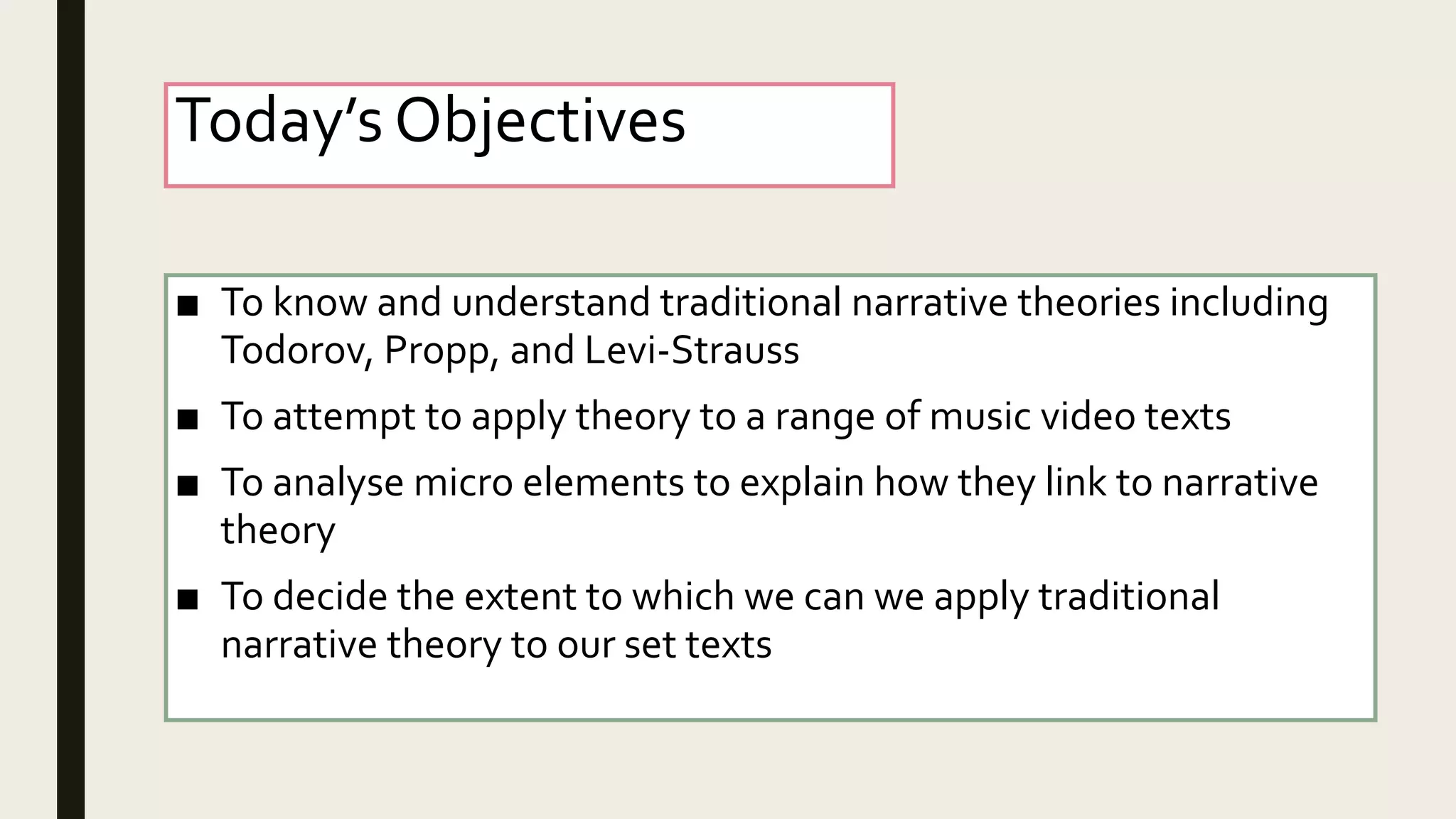
Today’s Objectives
■ Toknow and understand traditional narrative theories including
Todorov, Propp, and Levi-Strauss
■ To attempt to apply theory to a range of music video texts
■ To analyse micro elements to explain how they link to narrative
theory
■ To decide the extent to which we can we apply traditional
narrative theory to our set texts
4.
Starter
● In yourpairs, you have been given a stack of
images.
● Your task is to create a narrative from these
images.
● You have 3 minutes!
5.
What is Narrative?
●It is not the story…
● It is how the story is organised, or told
● Let’s see what each group came up with.
6.
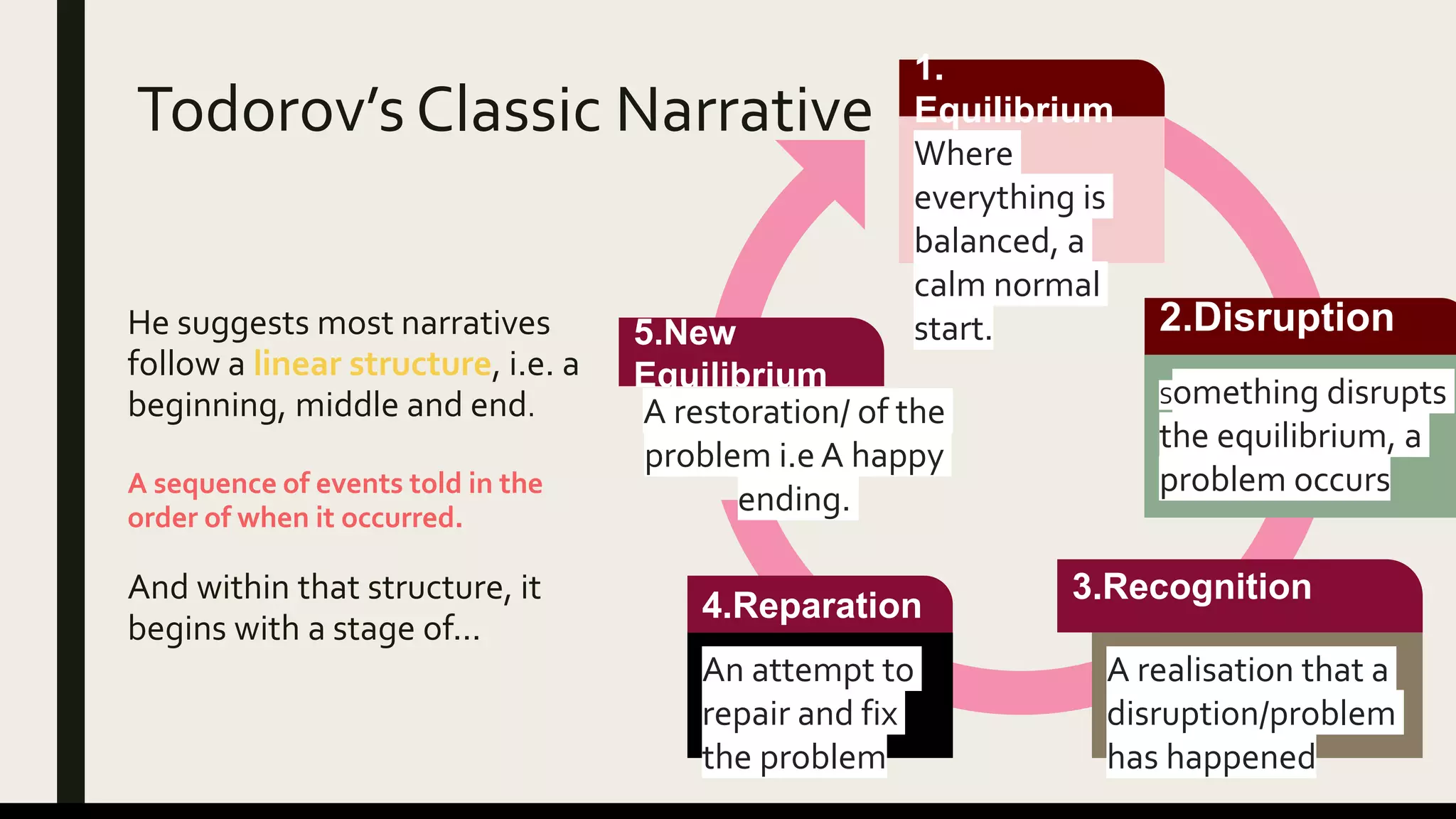
Todorov’s Classic Narrative
Hesuggests most narratives
follow a linear structure, i.e. a
beginning, middle and end.
A sequence of events told in the
order of when it occurred.
And within that structure, it
begins with a stage of...
Where
everything is
balanced, a
calm normal
start.
1.
Equilibrium
A restoration/ of the
problem i.e A happy
ending.
5.New
Equilibrium
A realisation that a
disruption/problem
has happened
3.Recognition
An attempt to
repair and fix
the problem
4.Reparation
Something disrupts
the equilibrium, a
problem occurs
2.Disruption
7.
Now go backto your images and create
a more exciting or interesting narrative
structure.
Let’s think aboutcharacters
in films
What types of characters can you identify in a superhero film?
10.
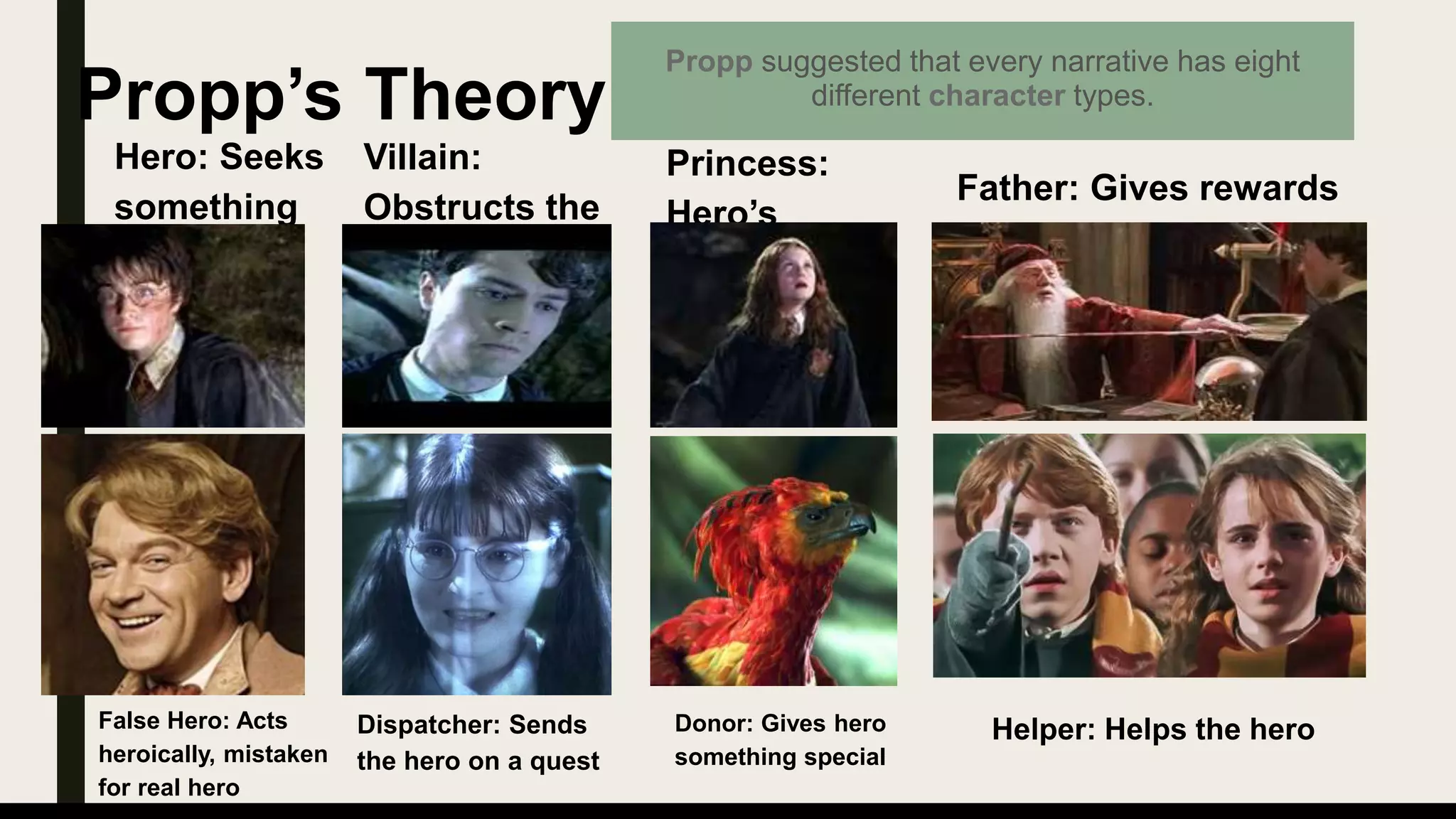
Propp’s Theory
Propp suggestedthat every narrative has eight
different character types.
Hero: Seeks
something
Villain:
Obstructs the
hero
Princess:
Hero’s
reward
Father: Gives rewards
Helper: Helps the heroDispatcher: Sends
the hero on a quest
Donor: Gives hero
something special
False Hero: Acts
heroically, mistaken
for real hero
11.
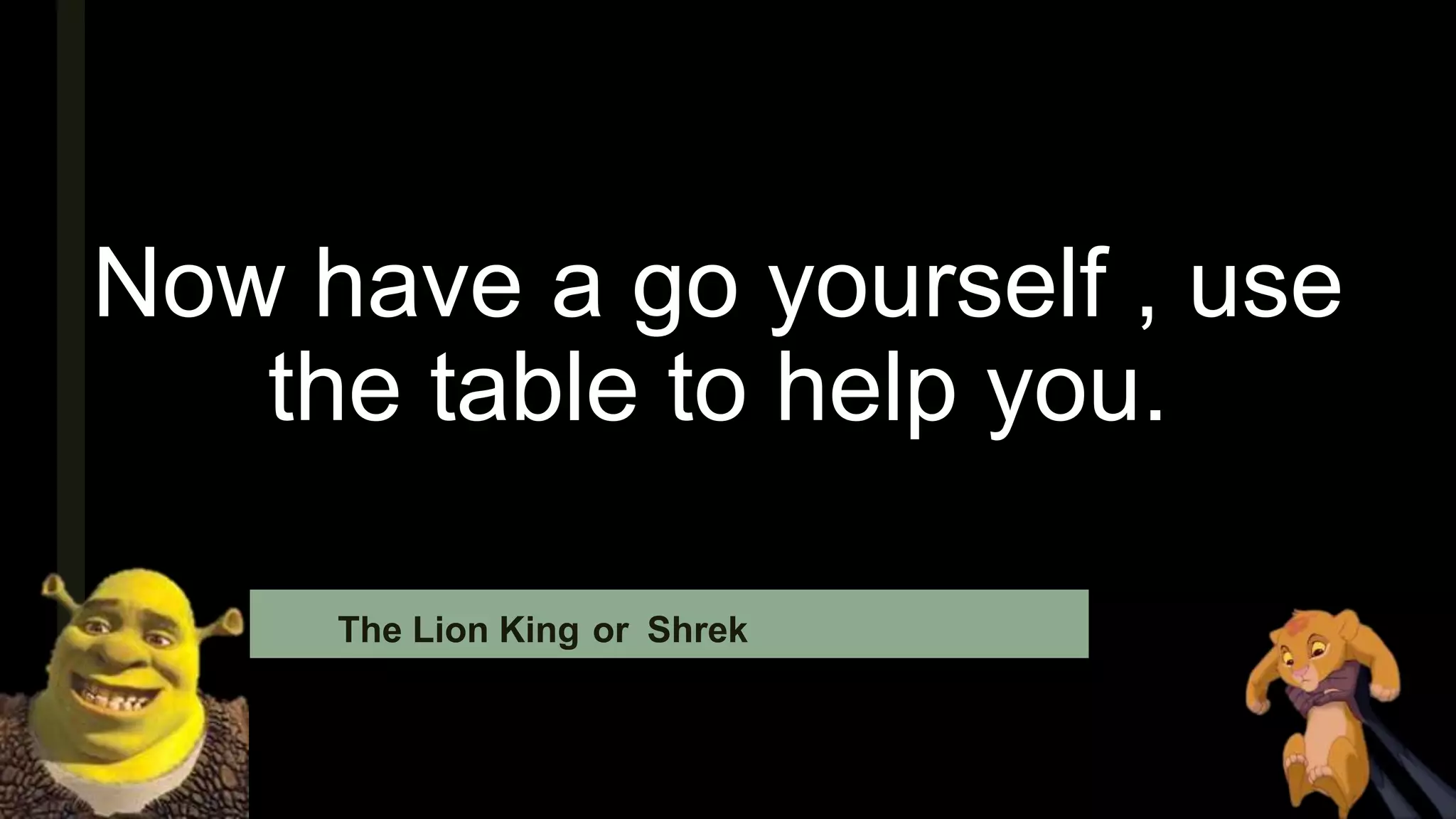
Now have ago yourself , use
the table to help you.
The Lion King or Shrek
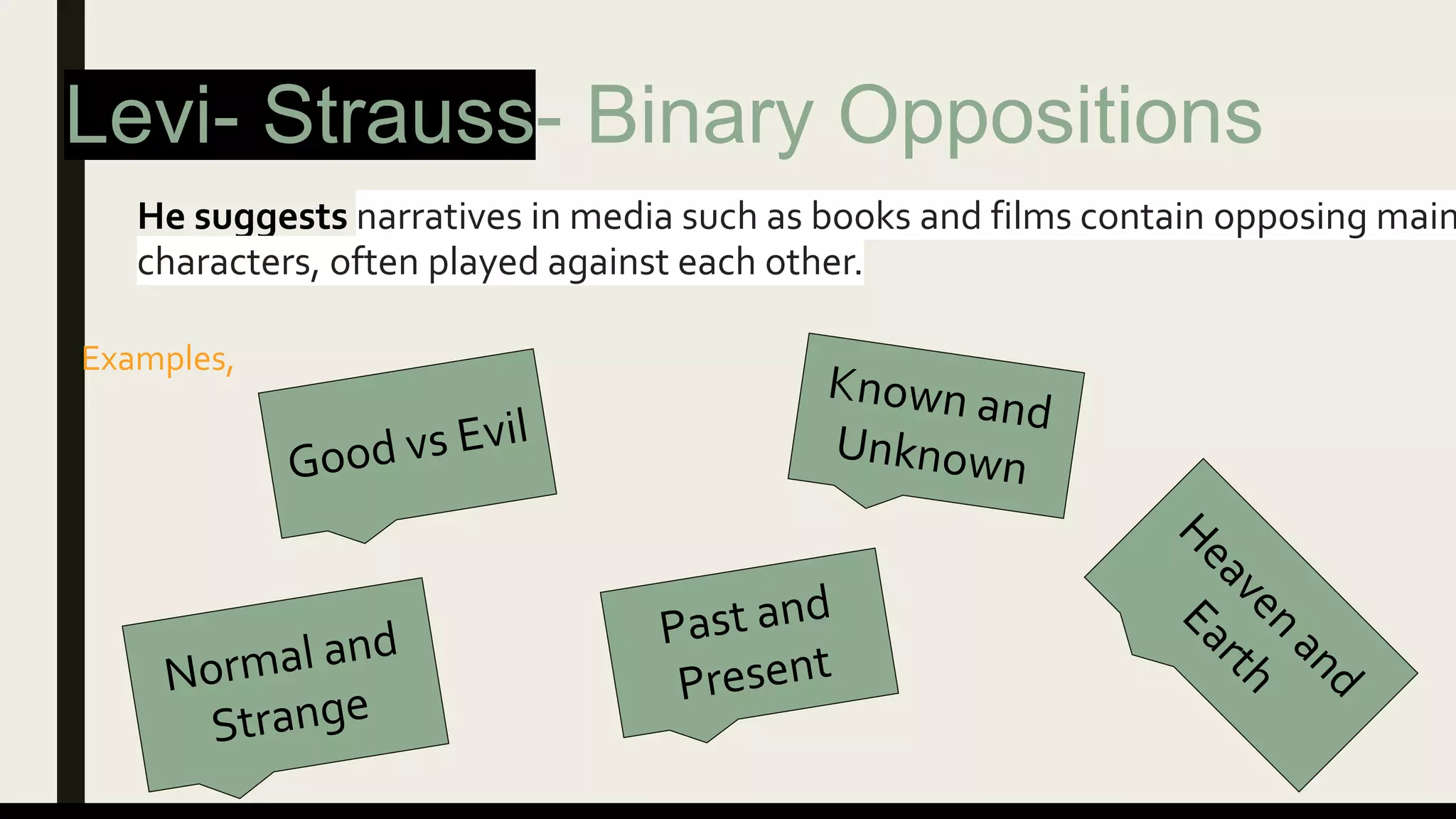
Levi- Strauss- BinaryOppositions
He suggests narratives in media such as books and films contain opposing main
characters, often played against each other.
Examples,
14.
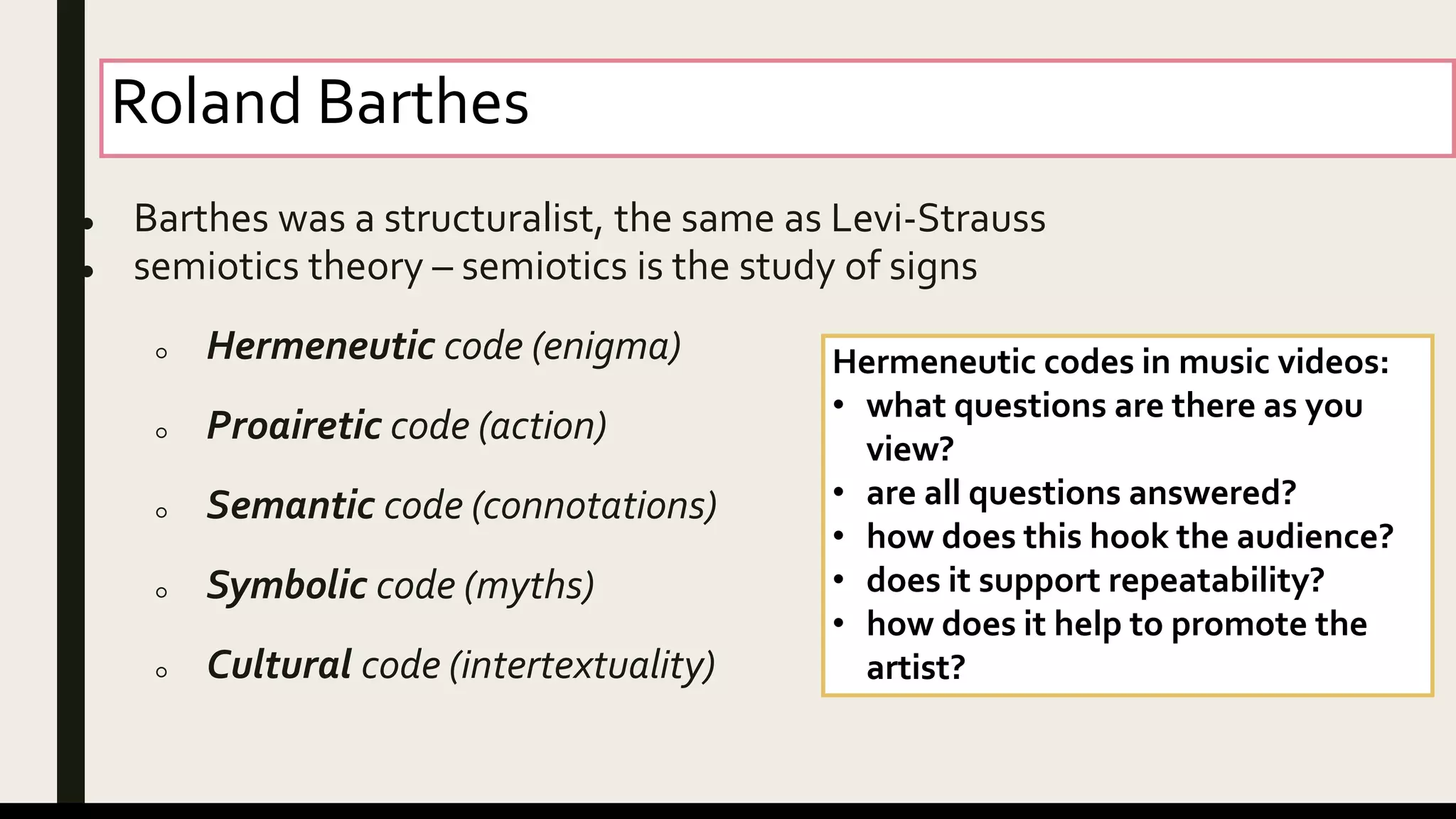
Roland Barthes
● Bartheswas a structuralist, the same as Levi-Strauss
● semiotics theory – semiotics is the study of signs
○ Hermeneutic code (enigma)
○ Proairetic code (action)
○ Semantic code (connotations)
○ Symbolic code (myths)
○ Cultural code (intertextuality)
Hermeneutic codes in music videos:
• what questions are there as you
view?
• are all questions answered?
• how does this hook the audience?
• does it support repeatability?
• how does it help to promote the
artist?
15.
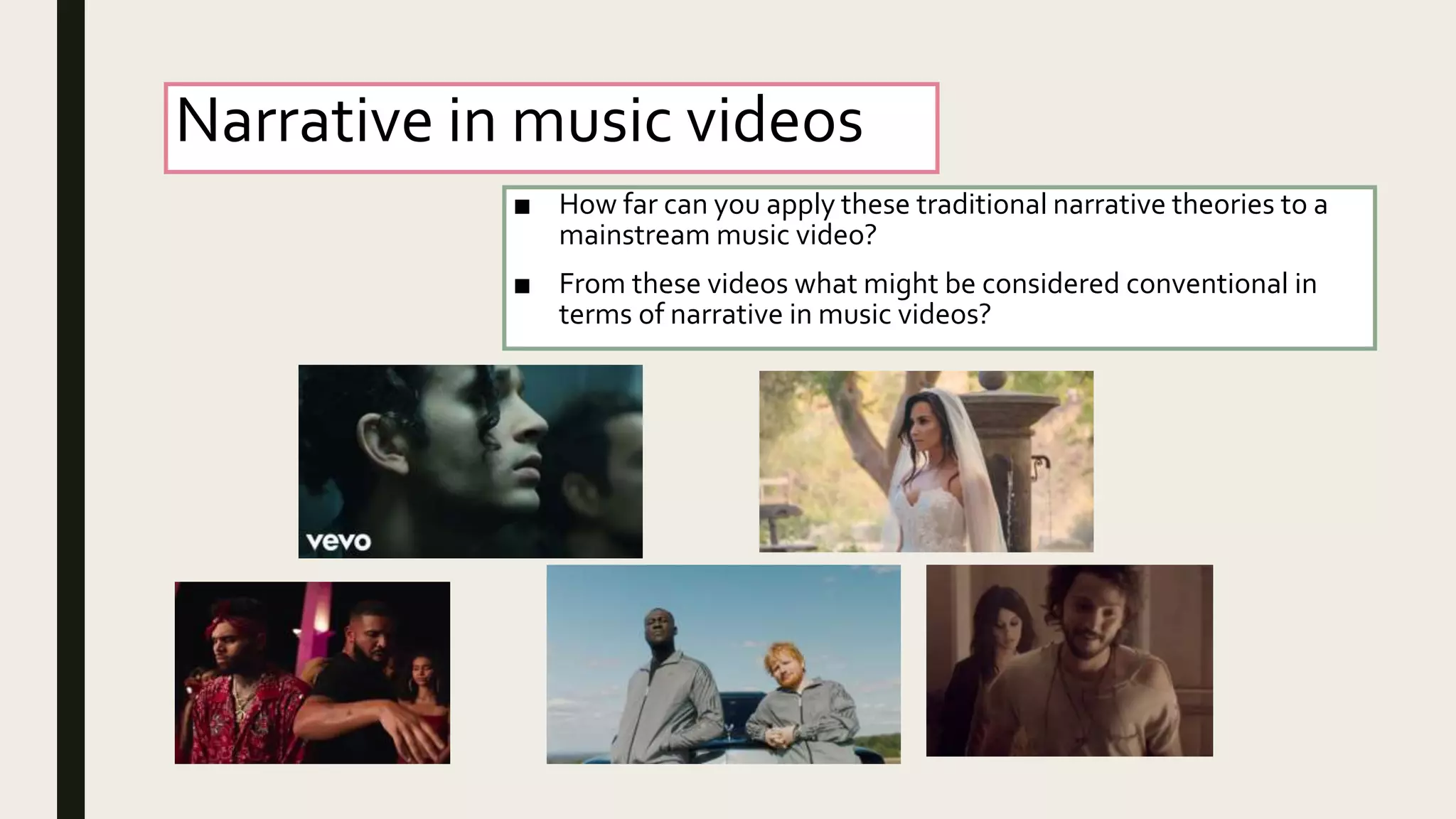
Narrative in musicvideos
■ How far can you apply these traditional narrative theories to a
mainstream music video?
■ From these videos what might be considered conventional in
terms of narrative in music videos?
16.
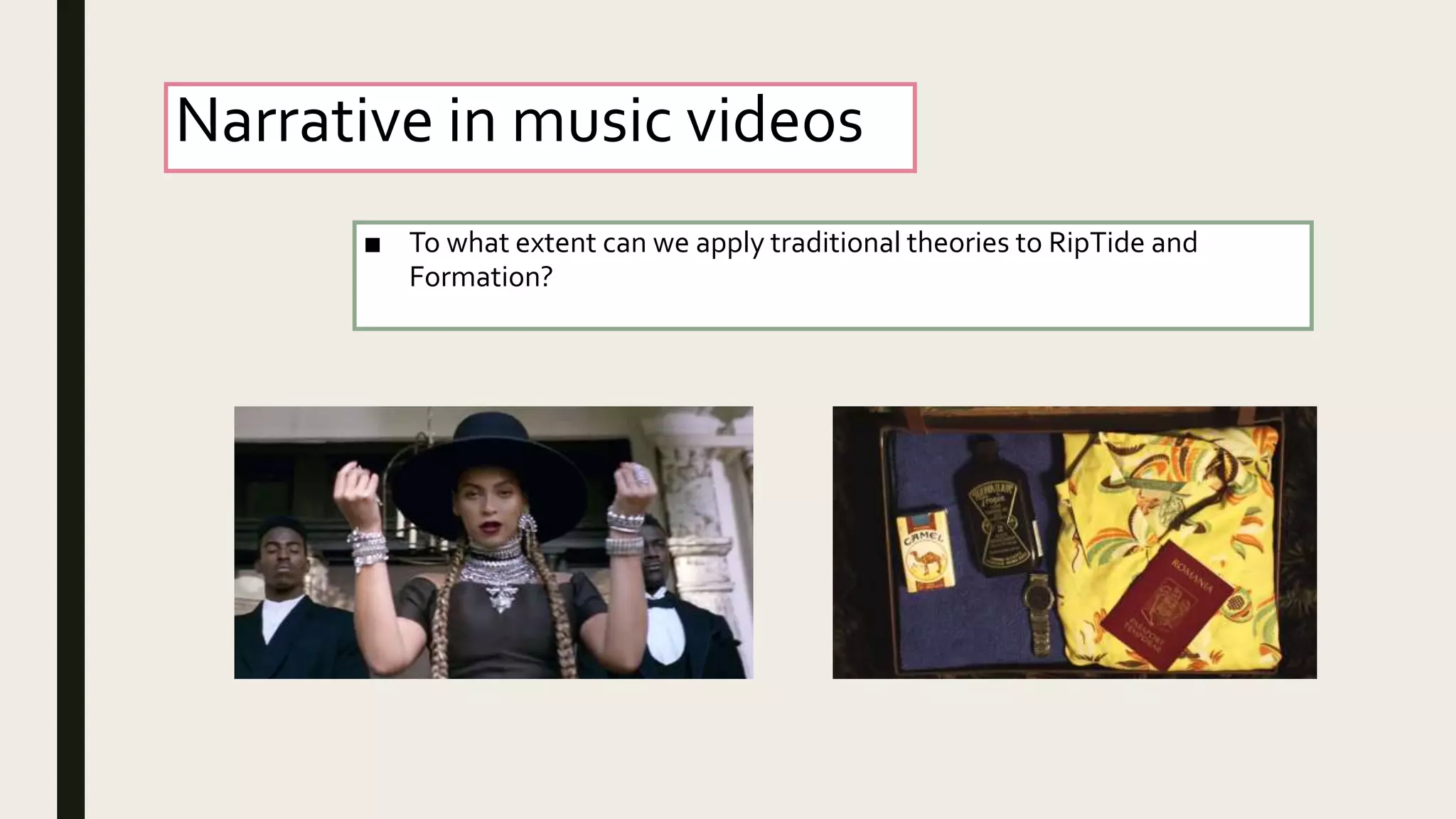
Narrative in musicvideos
■ To what extent can we apply traditional theories to RipTide and
Formation?
#5 10:25-10:35
Welcome students,Explain task and hand out envelop of images to each pair,
They will stick their pictures on blue-tack on A3 paper so they can present images to the class to see.
#6 10:35-10:40
Before students feedback, ask students what we mean by narrative?
Re-affirm that narrative is how it is told. And then ask each group to feedback their narrative.
Asking why this was their order
#7 10:40-10:45
Explain/re-affirm for those who had a linear narrative that this is Todorov’s theory. Explain each stage with examples to help learning.
#8 10:45-10:50
Students will rearrange the set of images to change the narrative so it is not linear. Those who started with a non-linear narrative will be asked to make the narrative linear.
Students will be asked to write down task sheet of what they know about narrative sturcture and what linear narrative is and how they used it and then changed the narrative.
#9 10:51-10:52
A rhetorical question to transition to next theorist.
#10 10:52-10:55
Get students to do a mind-map and ask what characters they commonly see in film.
Answers most liklely to be Hero, Villian, Heroine, Sidekick…
#11 10:55-11:00
Explain Propps 8 character types and re-affirm knowledge from the mind-map created as a class, where they said ‘side-kick’ say this is known as the helper… I will say we are looking at harry potter film…can you guess what character will come up for each type? Each image will pop up as a transition
Some will be easy, for some I will give hints.
Question: Why do you think it is not as frequent as before?
#12 11:00-11:10
They will be given a table with all the character types, they will use this guide to source pictures themselves, a word document with empty boxes will be included so they must find pictures that are associated with each image.
Differentiation, they will choose from the two films above,
Have a more detailed table.
Gifted, They have the option to choose their own film.
#13 11:10- 11:20
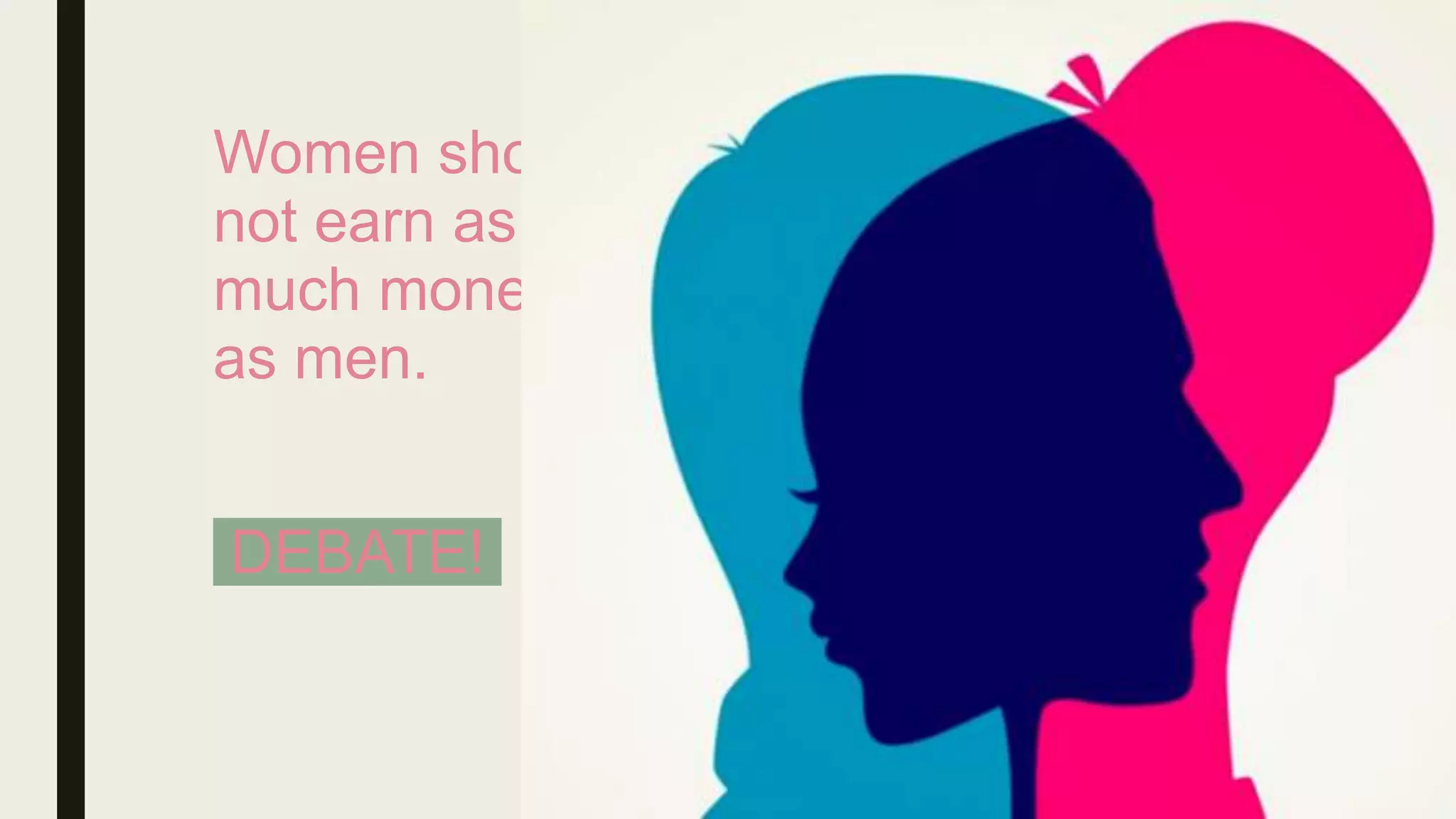
Students will form a debate and have a few spokespeople to argue this case..
Split in middle and a few will speak
#14 11:20-11:25
EXPLANATION of debate of havinf two direct opposites to create a narrative and used to create drama, engage audience.