Narrative Theories

IN RELATION TO MY MUSIC VIDEO
Vladimir Propp


 Studied folktales and legends
 Found that characters tend to be types such as 'the
  hero' and 'the villain'. Because he studied
  fairytales, many of the characters include types like
  'the princess' and 'the false hero'.
 These can be seen in many films, for example ‘Star
  Wars’
Propp and my music video

 Obviously this is more suited to films than music
  videos because a 3 minute video is not long enough
  to build up a story including all the different types of
  character
 My music video is in contrast to Propp’s theory – I
  only have two characters with no clear heroes or
  villains. The husband is portrayed in a negative way
  but he is not a ‘villain’.
 My video has no clear character types on
  purpose, the video is designed to make people think
  for themselves.
Claude Levi-Strauss

 Structural philosopher
 Interested in how much of the world is described
  using opposites.
 He called these ‘binary opposites’, for example:
    night/day
    Good/bad
    Light/dark
 In films this is seen in the classic hero/villain
 relationship for example Harry Potter and
 Voldemort.
Claude Levi-Strauss and my music video


 Again, this theory is not really applicable to my
  music video because there are only two characters
  and they are not ‘binary opposites’.
 Neither of the characters is good or bad – this is
  done on purpose to make audiences think for
  themselves which is something that the band
  Savages see as important.
 My video is in contrast to Levi-Strauss’s theory
Rolande Barthes

 Interested in the negotiated meaning between
  institutions and audiences
 Readers make meanings based on previous
  experience as well as the text itself, for example the
  meaning of a film about airlines will depend on
  viewer’s experience of airlines
 The cultural context of consumption is as important
  as the context.
 Also wrote about ‘the enigma code’ where there is a
  mystery to be solved by the audience, like a cliff-
  hanger.
Rolande Barthes and my music video

 Parts of this theory do apply to narrative music
  videos like mine.
 Because I am using plastic figures the amount of
  meaning that audiences can give the video is limited
 However the aspects of the video including the
  women’s magazines will have different meanings for
  men and women.
 The enigma code is not really relevant apart from the
  fact that video should make viewers want to listen to
  more Savages music
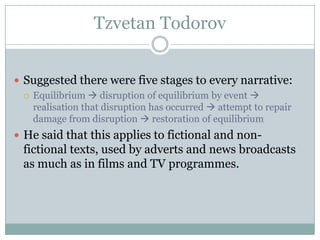
Tzvetan Todorov


 Suggested there were five stages to every narrative:
   Equilibrium  disruption of equilibrium by event 
    realisation that disruption has occurred  attempt to repair
    damage from disruption  restoration of equilibrium
 He said that this applies to fictional and non-
  fictional texts, used by adverts and news broadcasts
  as much as in films and TV programmes.
Tzvetan Todorov and my music video

 Can be seen in many narrative music videos, for
  example Need You by Duke Dumont
 My video is in contrast to Todorov’s equilibrium
  theory
 My story starts off with an equilibrium of sorts and
  then a disruption. But equilibrium is never restored
  at the end.
 I did this on purpose as it may leave the audience
  (unused to equilibrium not being restored) feeling
  uncomfortable but this will make the video more
  memorable and will suit the music.

Narrative theories

  • 1.
  • 2.
    Vladimir Propp  Studiedfolktales and legends  Found that characters tend to be types such as 'the hero' and 'the villain'. Because he studied fairytales, many of the characters include types like 'the princess' and 'the false hero'.  These can be seen in many films, for example ‘Star Wars’
  • 3.
    Propp and mymusic video  Obviously this is more suited to films than music videos because a 3 minute video is not long enough to build up a story including all the different types of character  My music video is in contrast to Propp’s theory – I only have two characters with no clear heroes or villains. The husband is portrayed in a negative way but he is not a ‘villain’.  My video has no clear character types on purpose, the video is designed to make people think for themselves.
  • 4.
    Claude Levi-Strauss  Structuralphilosopher  Interested in how much of the world is described using opposites.  He called these ‘binary opposites’, for example:  night/day  Good/bad  Light/dark  In films this is seen in the classic hero/villain relationship for example Harry Potter and Voldemort.
  • 5.
    Claude Levi-Strauss andmy music video  Again, this theory is not really applicable to my music video because there are only two characters and they are not ‘binary opposites’.  Neither of the characters is good or bad – this is done on purpose to make audiences think for themselves which is something that the band Savages see as important.  My video is in contrast to Levi-Strauss’s theory
  • 6.
    Rolande Barthes  Interestedin the negotiated meaning between institutions and audiences  Readers make meanings based on previous experience as well as the text itself, for example the meaning of a film about airlines will depend on viewer’s experience of airlines  The cultural context of consumption is as important as the context.  Also wrote about ‘the enigma code’ where there is a mystery to be solved by the audience, like a cliff- hanger.
  • 7.
    Rolande Barthes andmy music video  Parts of this theory do apply to narrative music videos like mine.  Because I am using plastic figures the amount of meaning that audiences can give the video is limited  However the aspects of the video including the women’s magazines will have different meanings for men and women.  The enigma code is not really relevant apart from the fact that video should make viewers want to listen to more Savages music
  • 8.
    Tzvetan Todorov  Suggestedthere were five stages to every narrative:  Equilibrium  disruption of equilibrium by event  realisation that disruption has occurred  attempt to repair damage from disruption  restoration of equilibrium  He said that this applies to fictional and non- fictional texts, used by adverts and news broadcasts as much as in films and TV programmes.
  • 9.
    Tzvetan Todorov andmy music video  Can be seen in many narrative music videos, for example Need You by Duke Dumont  My video is in contrast to Todorov’s equilibrium theory  My story starts off with an equilibrium of sorts and then a disruption. But equilibrium is never restored at the end.  I did this on purpose as it may leave the audience (unused to equilibrium not being restored) feeling uncomfortable but this will make the video more memorable and will suit the music.