Good Shepherd Health Care System
Lesli Scharbrough, RN, MSN
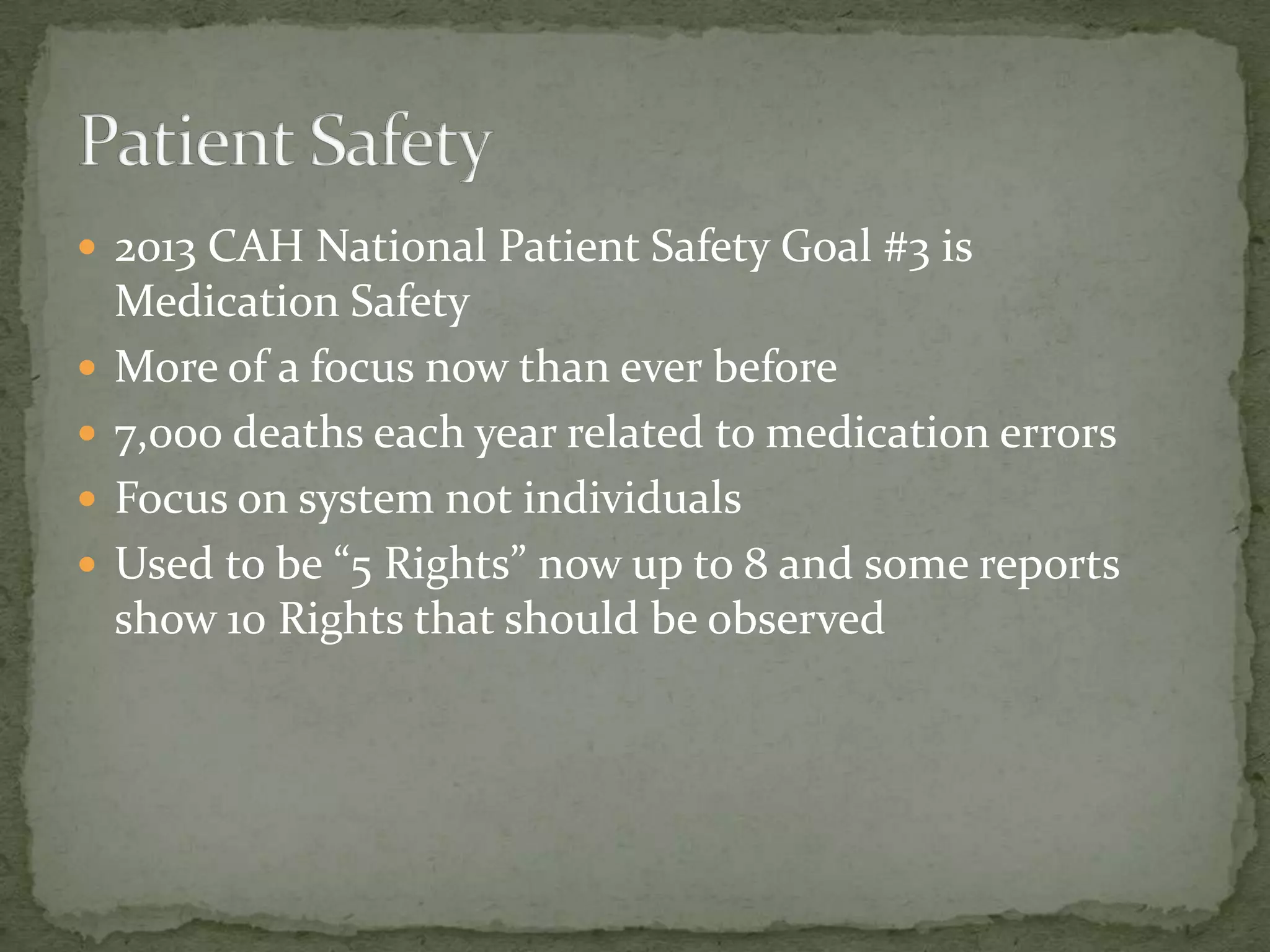
 2013 CAH National Patient Safety Goal #3 is
Medication Safety
 More of a focus now than ever before
 7,000 deaths each year related to medication errors
 Focus on system not individuals
 Used to be “5 Rights” now up to 8 and some reports
show 10 Rights that should be observed
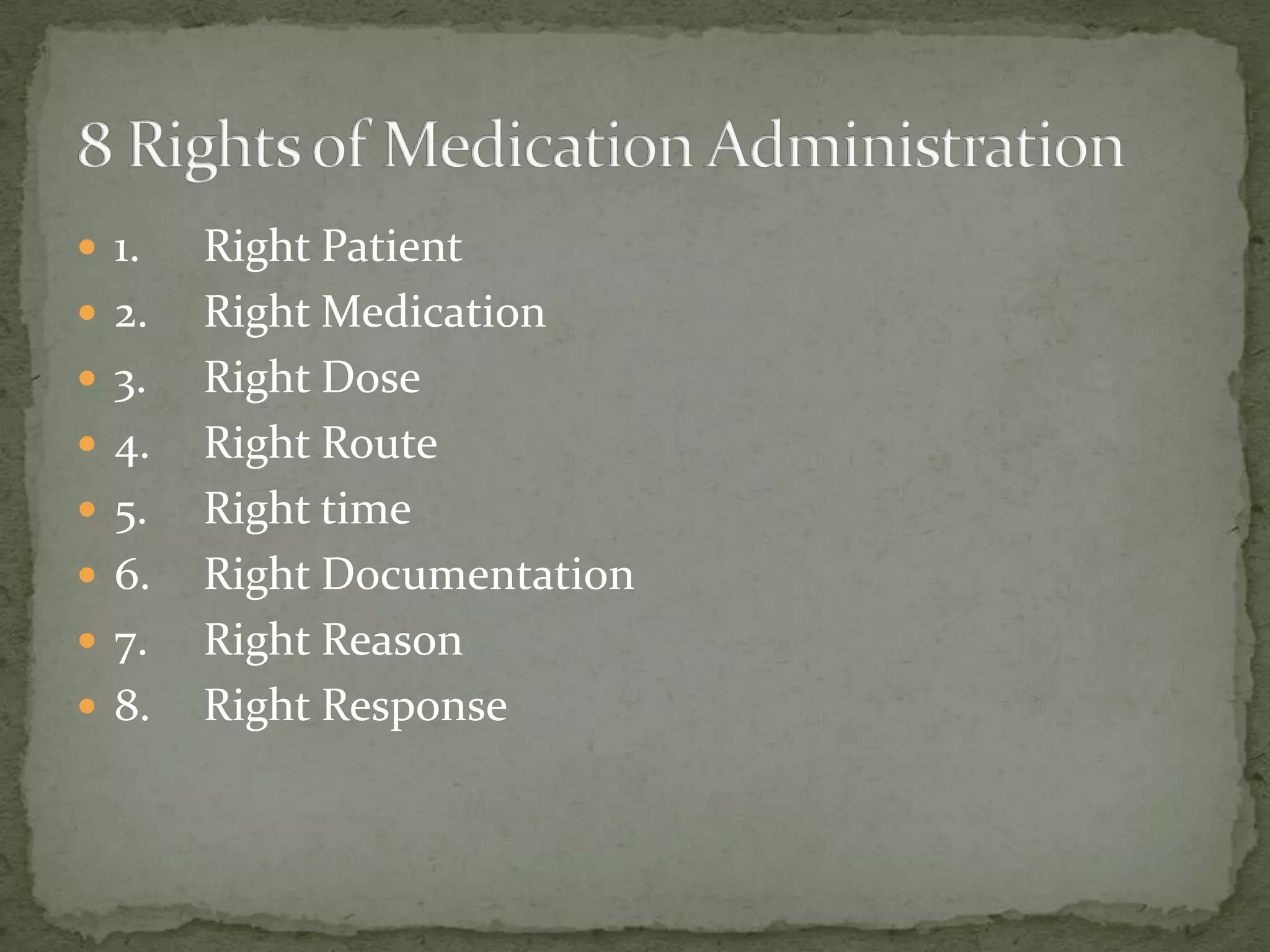
 1. Right Patient
 2. Right Medication
 3. Right Dose
 4. Right Route
 5. Right time
 6. Right Documentation
 7. Right Reason
 8. Right Response
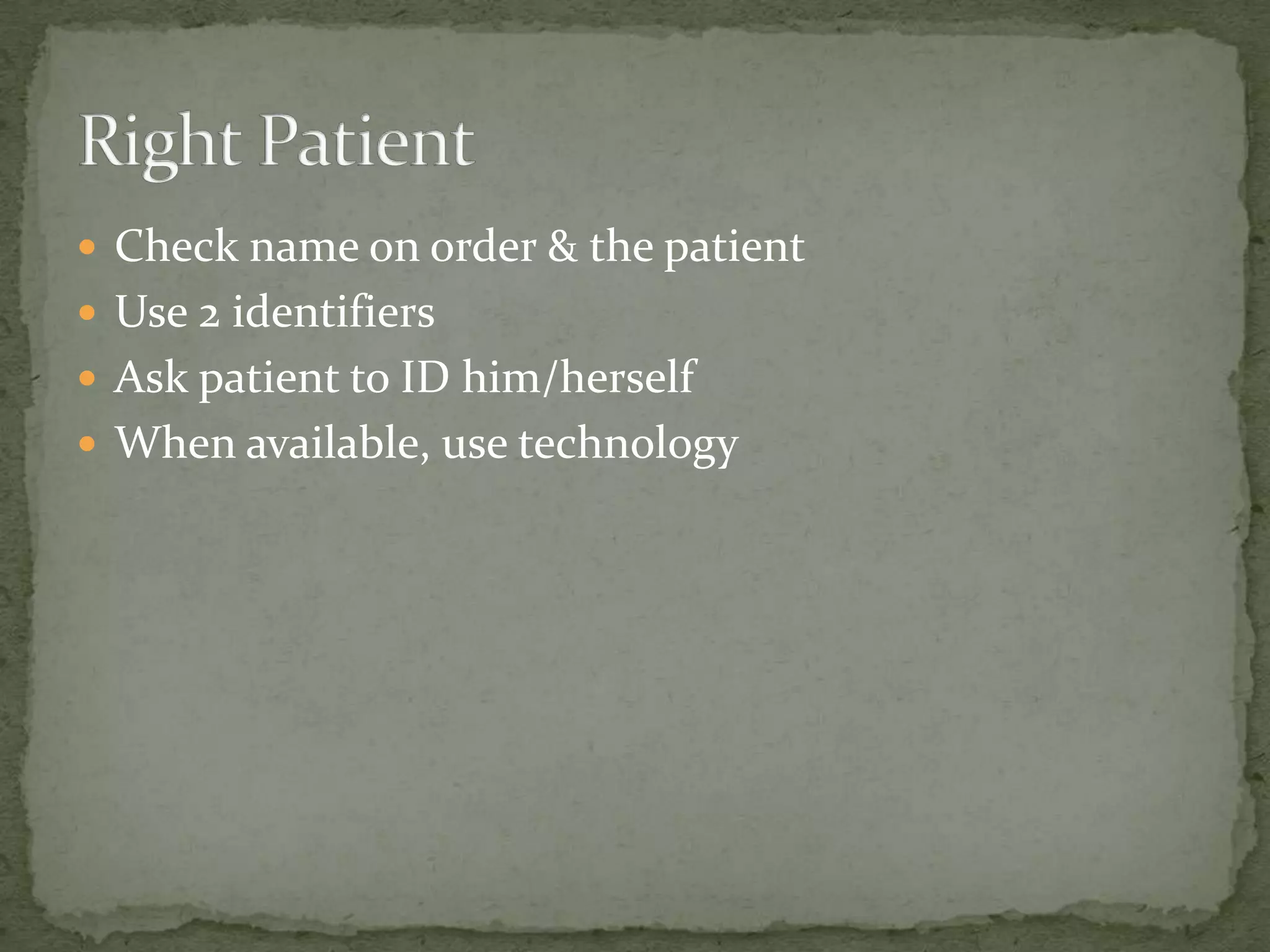
 Check name on order & the patient
 Use 2 identifiers
 Ask patient to ID him/herself
 When available, use technology
 Check the medication label
 Check the order
 Check the order
 Confirm appropriateness
 If necessary, calculate the dose
 Have another nurse calculate as well
 Again, check appropriateness of route ordered
 Confirm that pt. can have a medication by this route
 Check the frequency of the medication
 Double check that you are giving the ordered med at
the correct time
 Confirm time of last dose
 Document AFTER giving the medication
 Chart time, route, and any other specific information
 EG: site of an injection or
 Lab value or vital sign needed before administration
 Confirm the rationale for the medication
 History
 Why is patient taking this medication
 Revisit the reasons for long-term medication use
 Make sure that the desired effect is achieved
 If antihypertensive given did BP improve?
 Document the monitoring and any other interventions

Rights of medication administration

  • 1.
    Good Shepherd HealthCare System Lesli Scharbrough, RN, MSN
  • 2.
     2013 CAHNational Patient Safety Goal #3 is Medication Safety  More of a focus now than ever before  7,000 deaths each year related to medication errors  Focus on system not individuals  Used to be “5 Rights” now up to 8 and some reports show 10 Rights that should be observed
  • 3.
     1. RightPatient  2. Right Medication  3. Right Dose  4. Right Route  5. Right time  6. Right Documentation  7. Right Reason  8. Right Response
  • 4.
     Check nameon order & the patient  Use 2 identifiers  Ask patient to ID him/herself  When available, use technology
  • 5.
     Check themedication label  Check the order
  • 6.
     Check theorder  Confirm appropriateness  If necessary, calculate the dose  Have another nurse calculate as well
  • 7.
     Again, checkappropriateness of route ordered  Confirm that pt. can have a medication by this route
  • 8.
     Check thefrequency of the medication  Double check that you are giving the ordered med at the correct time  Confirm time of last dose
  • 9.
     Document AFTERgiving the medication  Chart time, route, and any other specific information  EG: site of an injection or  Lab value or vital sign needed before administration
  • 10.
     Confirm therationale for the medication  History  Why is patient taking this medication  Revisit the reasons for long-term medication use
  • 11.
     Make surethat the desired effect is achieved  If antihypertensive given did BP improve?  Document the monitoring and any other interventions