INTRODUCTION
Understanding the 10 rights of drug administration can help prevent
many medication errors.
It helps nurses to administered medication safely.
10 RIGHTS
Right patient
Right medication
Right dose
Right route
Right time
Right documentation
Right history and assessment
Drug approach and right to refuse
Right drug interaction and evaluation
Right education and information
1.RIGHT PATIENT
• Ask the name of the client.
• Check his/her ID.
• Even if you know the patients name, you still just ask to verify.
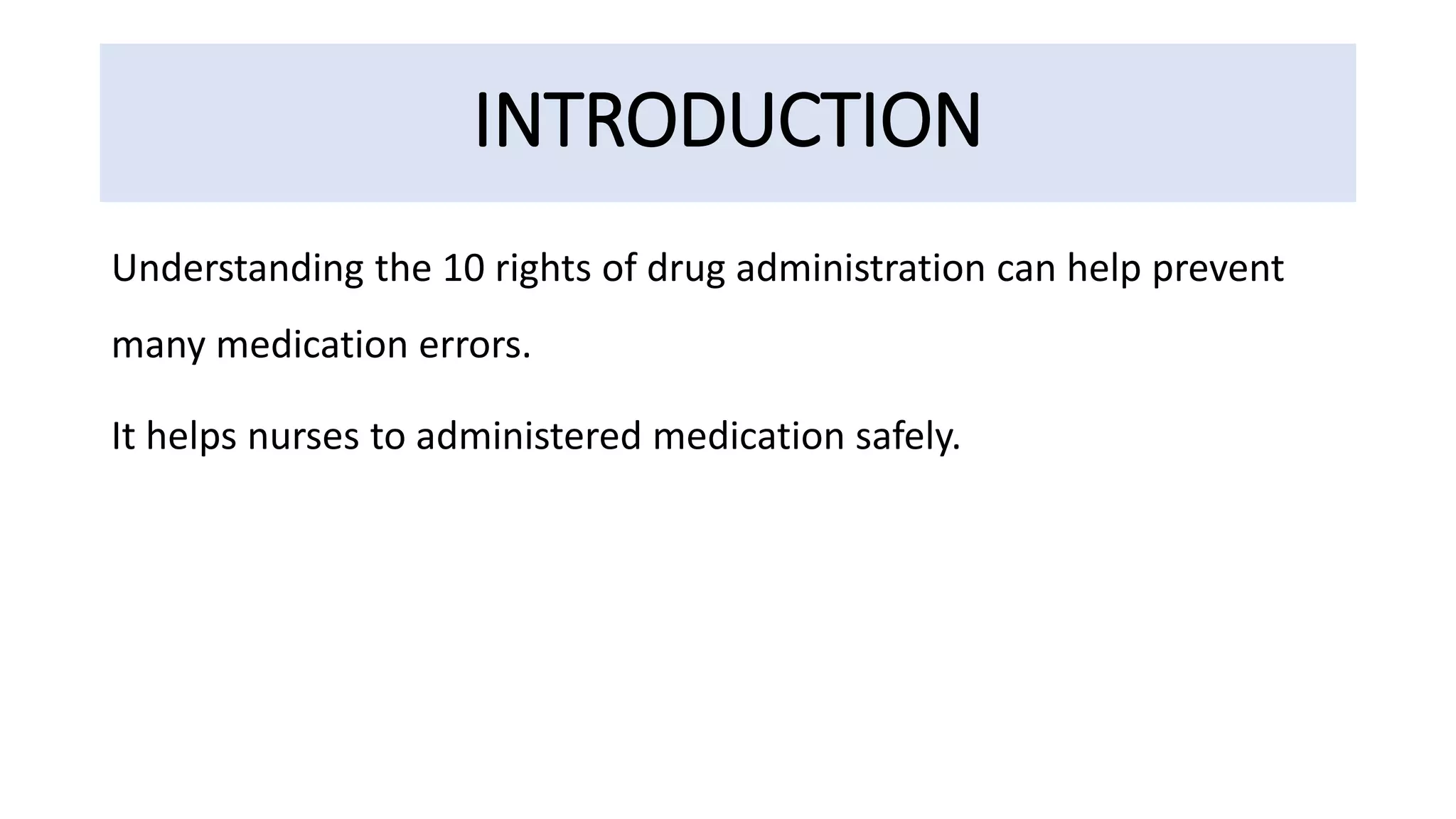
2. RIGHT MEDICATION
• Check and verify if it is the right name and form.
• Beware of look alike or sound alike medication names.
3. RIGHT DOSE
• Check medication sheet and docter advice before giving.
• Beware of adult dose and pediatric dose.
4. RIGHT ROUTE
• Check the order if it’s Oral,SC,IM,IV etc.
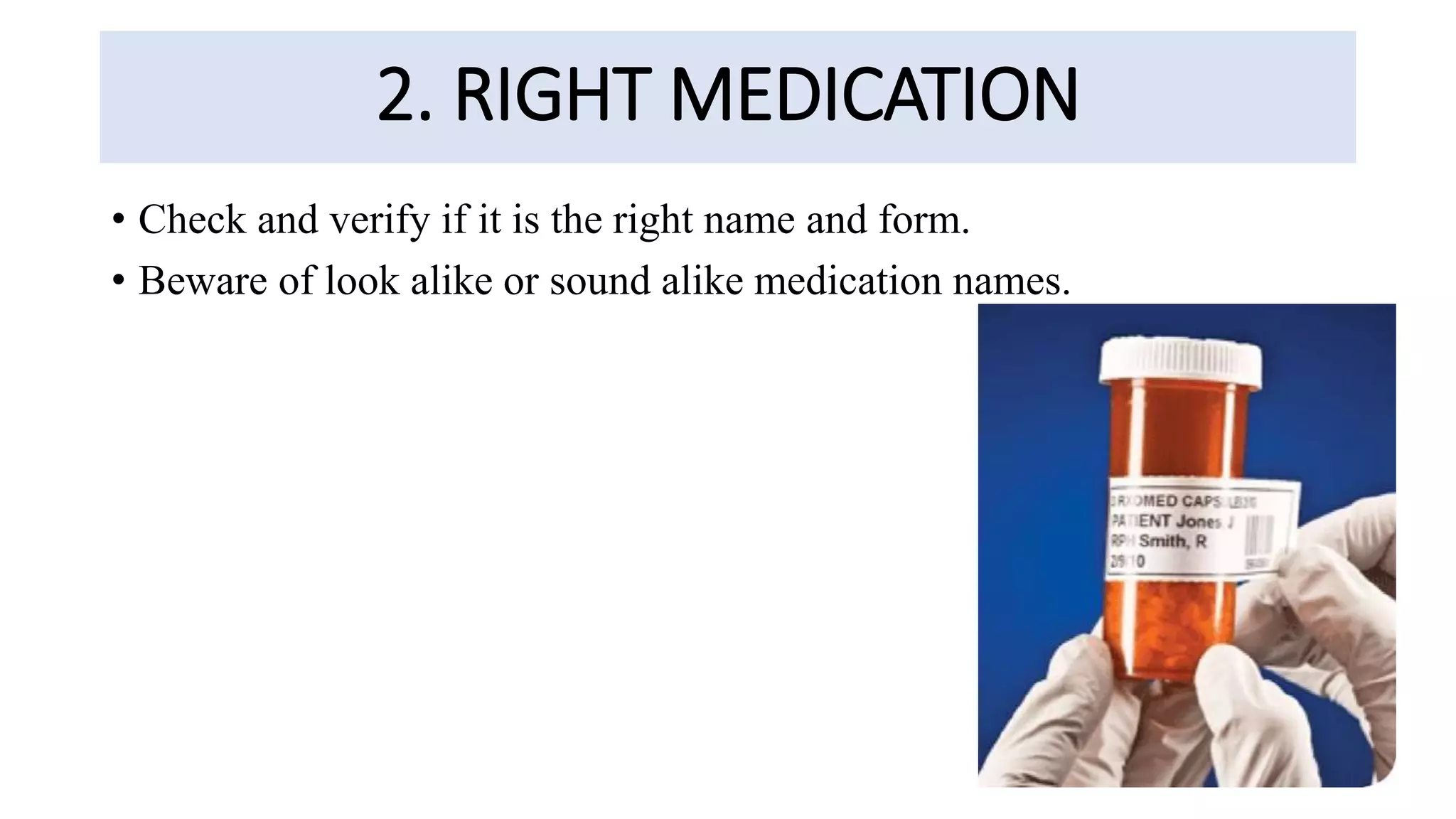
5. RIGHT TIME & FREQUENCY
• Check order for time and when was given last time.
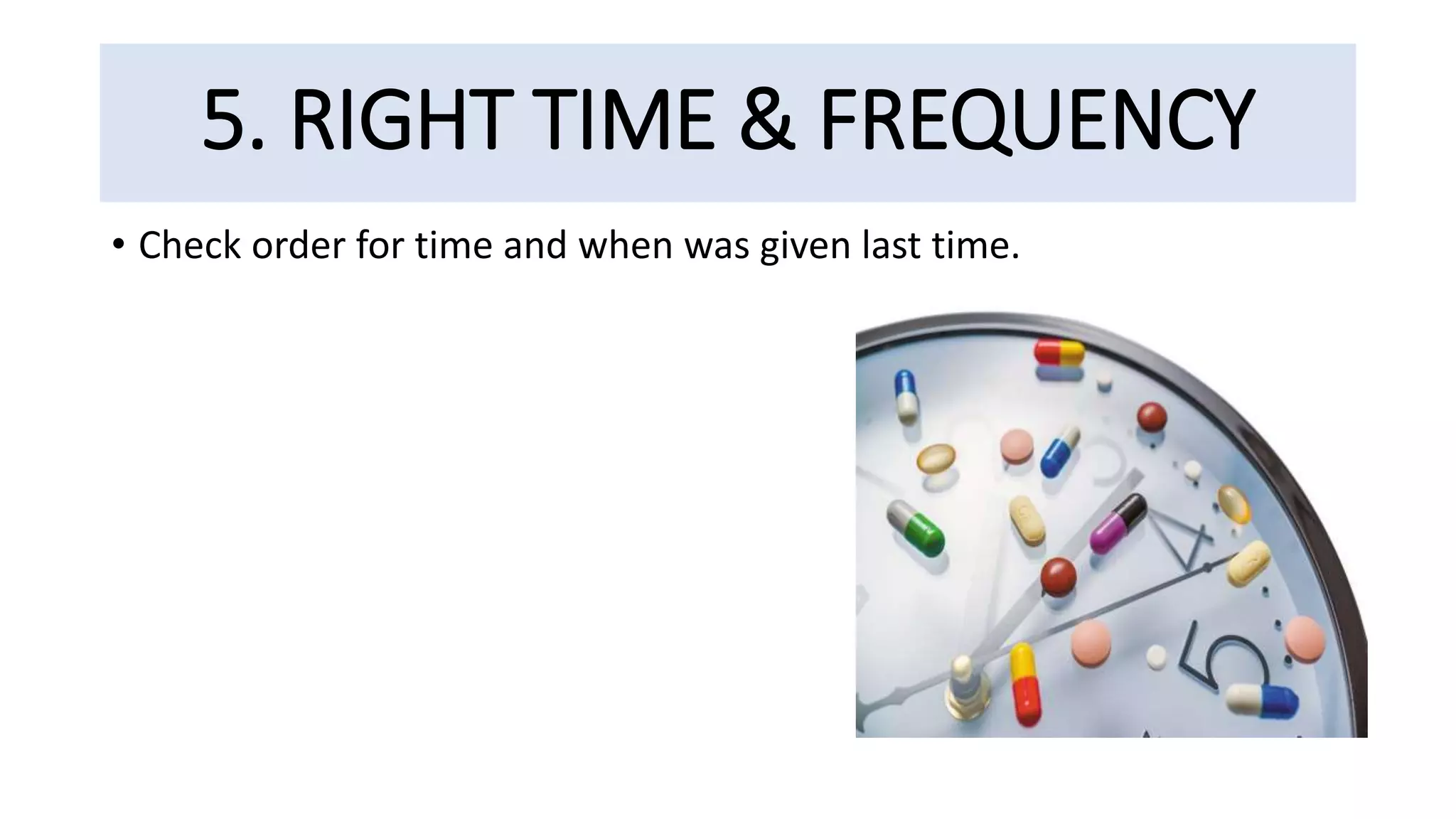
6. RIGHT DOCUMENTATION
• Make sure you record everything.
• Record time, dose, route, any allergies etc.
7. RIGHT HISTORY AND ASSESSMENT
• Secure a copy of the clients history to drug interaction and allergies.
8. DRUG APPROACH AND RIGHT TO REFUSE
• Give the client enough autonomy to refuse the medication after
thoroughly explaining the effects.
9. RIGHT DRUG INTERACTION AND EVALUATION
• Review any medication previously given or the diet of the patient that
can yield a bad interaction to the drug to be given.
• Check also expiry date of the medication.
10. RIGHT EDUCATION AND INFORMATION
• Provide enough knowledge of drug to the patients.
• Expected therapeutic and side effects etc.

10 right of drug administration

  • 2.
    INTRODUCTION Understanding the 10rights of drug administration can help prevent many medication errors. It helps nurses to administered medication safely.
  • 3.
  • 4.
    Right patient Right medication Rightdose Right route Right time Right documentation Right history and assessment Drug approach and right to refuse Right drug interaction and evaluation Right education and information
  • 5.
    1.RIGHT PATIENT • Askthe name of the client. • Check his/her ID. • Even if you know the patients name, you still just ask to verify.
  • 6.
    2. RIGHT MEDICATION •Check and verify if it is the right name and form. • Beware of look alike or sound alike medication names.
  • 7.
    3. RIGHT DOSE •Check medication sheet and docter advice before giving. • Beware of adult dose and pediatric dose.
  • 8.
    4. RIGHT ROUTE •Check the order if it’s Oral,SC,IM,IV etc.
  • 9.
    5. RIGHT TIME& FREQUENCY • Check order for time and when was given last time.
  • 10.
    6. RIGHT DOCUMENTATION •Make sure you record everything. • Record time, dose, route, any allergies etc.
  • 11.
    7. RIGHT HISTORYAND ASSESSMENT • Secure a copy of the clients history to drug interaction and allergies.
  • 12.
    8. DRUG APPROACHAND RIGHT TO REFUSE • Give the client enough autonomy to refuse the medication after thoroughly explaining the effects.
  • 13.
    9. RIGHT DRUGINTERACTION AND EVALUATION • Review any medication previously given or the diet of the patient that can yield a bad interaction to the drug to be given. • Check also expiry date of the medication.
  • 14.
    10. RIGHT EDUCATIONAND INFORMATION • Provide enough knowledge of drug to the patients. • Expected therapeutic and side effects etc.