RHS Level 2
Certificate
Year 2 Week 19 – Introduction to
plant diseases and disorders.
Physiological disorders and fungal
diseases.
Learning Objectives
•Explain why plant diseases need to be controlled
•State what is meant by the term ‘plant disease’.
•Describe the damage caused by plant diseases to
include: grey mould, strawberry powdery mildew, damping
off, honey fungus, rose black spot, potato blight, club root,
holly hock rust.
•Describe in outline the life-cycles of: damping off,
clubroot, potato blight, honey fungus
•Describe methods of spread of EACH of the diseases
named above
•Describe TWO different methods of minimising the effects
(including prevention) of EACH of the diseases stated
above. Methods to be selected from more than one of the
control options (physical, cultural, or chemical) available.
•Explain how knowledge of the life-cycle and biology of
diseases stated above contribute to the success of their
Physiological Disorders
 Plant problems caused not by pests or disease but by
some problem in the environment.
 For example: Water availability: frost causes
browning of foliage; strong winds, especially in winter
when the ground is frozen, can cause die back in
conifers.
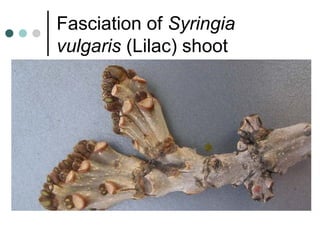
 Fasciation: distorted growth due to damage at the
growing tips of stems, flowers and fruit.
 Nutrient deficiencies – e.g. interveinal chlorosis in
Rhododendron sp caused by iron deficiency in high
pH soil.
 Lack of light – etioleted or leaning growth caused by
plants growing with insufficient light.
 Damage to plant cells – fasication.
Fasciation of Syringia
vulgaris (Lilac) shoot
Plant Disease
 Damage caused to plants by some disease
causing agent – bacteria, viruses or fungi.
Collectively disease causing agents are known
as pathogens.
 Plants do not have an immune system, unlike
animals. If an individual plant survives a
disease it will not be more resistant to another
attack in the future.
 Some cultivars however are genetically resistant
to disease – they are less likely to get it or less
affected than others in the same species.
Fungal diseases
 Plants under stress are most susceptible to fungal
infection – so growing healthy plants in the right
place is a good control.
 Many problem fungi are normally resident in dead
and decaying plant material – moving to living
plant tissue through damage to stems (e.g.
Clematis wilt) or via dying leaves or flower spikes.
 Some garden fungi are beneficial – mycorrhizal
fungi form beneficial symbiosis with many plant
roots
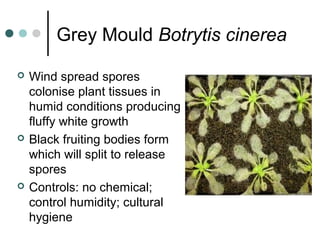
Grey Mould Botrytis cinerea
 Wind spread spores
colonise plant tissues in
humid conditions producing
fluffy white growth
 Black fruiting bodies form
which will split to release
spores
 Controls: no chemical;
control humidity; cultural
hygiene
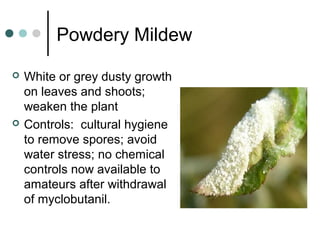
Powdery Mildew
 White or grey dusty growth
on leaves and shoots;
weaken the plant
 Controls: cultural hygiene
to remove spores; avoid
water stress; no chemical
controls now available to
amateurs after withdrawal
of myclobutanil.
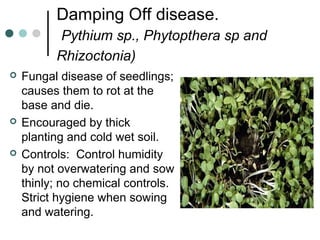
Damping Off disease.
Pythium sp., Phytopthera sp and
Rhizoctonia)
 Fungal disease of seedlings;
causes them to rot at the
base and die.
 Encouraged by thick
planting and cold wet soil.
 Controls: Control humidity
by not overwatering and sow
thinly; no chemical controls.
Strict hygiene when sowing
and watering.
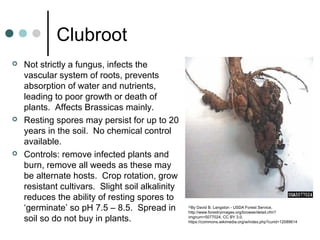
Clubroot
 Not strictly a fungus, infects the
vascular system of roots, prevents
absorption of water and nutrients,
leading to poor growth or death of
plants. Affects Brassicas mainly.
 Resting spores may persist for up to 20
years in the soil. No chemical control
available.
 Controls: remove infected plants and
burn, remove all weeds as these may
be alternate hosts. Crop rotation, grow
resistant cultivars. Slight soil alkalinity
reduces the ability of resting spores to
‘germinate’ so pH 7.5 – 8.5. Spread in
soil so do not buy in plants.
By David B. Langston - USDA Forest Service,
http://www.forestryimages.org/browse/detail.cfm?
imgnum=5077024, CC BY 3.0,
https://commons.wikimedia.org/w/index.php?curid=12089614
Honey Fungus
 Severe fungal infection that attacks both dead
and living wood.
 Spread by tough black ‘bootlaces’ through the
soil and then penetrates roots and grows into
the tree. White web of mycelium may be seen
just beneath the bark
 Visible signs are yellow or pale brown
mushrooms and sudden wilting or death of plant
 Controls – remove and burn all parts of the
affected plant; use soil barriers to prevent
spread. Do not grow susceptible species.
Rose Black Spot
 Black spots on leaves, sometimes with yellow
halo. Can cause cankers on stems. Badly
affected plants may defoliate, cankered stems can
die back.
 Controls: remove and burn fallen leaves, prune
out cankered stems and burn. Chemical controls:
tebuconazole or triticonazole or plant and fish oil
sprays. However fungus mutates rapidly so spray
programme of varied controls needed.
 Older roses and species roses less affected than
cluster and large flowered hybrids.
Potato late blight
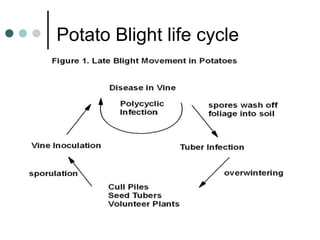
 Fungal spores carried by the wind settle onto leaves
of Solanaceae (potatoes and tomatoes). When the
correct conditions prevail (Smith Period) they
‘germinate’, penetrating the leaves and stems and
forming spore bearing bodies, taking nutrients from
the plant.
 Causes black patches on foliage that spread and
cause the collapse of the top growth; may be very
rapid indeed.
 No chemical controls available; cultural controls –
burn all crop residues (even if not obviously affected),
remove all tubers at harvest, no cull heaps. Grow
resistant varieties. Crop rotation. Early varieties less
affected than main crop.
Potato Blight life cycle
Holly Hock Rust
 Bright orange spots on leaves and stems;
older leaves show problem first. May cause
complete defoliation.
 Controls – Chemical: tebuconazole or
triticonazole or plant and fish oil sprays for
organic gardeners. However, fast mutating
and reproducing fungus so this may mean
weekly spraying. Cultural – grow as a
biennial and replace plants after second year.
Otherwise remove all top growth and debris in
autumn and burn.
Learning Outcomes
•Explain why plant diseases need to be controlled
•State what is meant by the term ‘plant disease’.
•Describe the damage caused by plant diseases to
include: grey mould, strawberry powdery mildew, damping
off, honey fungus, rose black spot, potato blight, club root.
•Describe in outline the life-cycles of: damping off,
clubroot, potato blight, honey fungus
•Describe methods of spread of EACH of the diseases
named above
•Describe TWO different methods of minimising the effects
(including prevention) of EACH of the diseases stated
above. Methods to be selected from more than one of the
control options (physical, cultural, or chemical) available.
•Explain how knowledge of the life-cycle and biology of
diseases stated above contribute to the success of their
control.

Rhs level 2 certificate year 2 week 19 2019

  • 1.
    RHS Level 2 Certificate Year2 Week 19 – Introduction to plant diseases and disorders. Physiological disorders and fungal diseases.
  • 2.
    Learning Objectives •Explain whyplant diseases need to be controlled •State what is meant by the term ‘plant disease’. •Describe the damage caused by plant diseases to include: grey mould, strawberry powdery mildew, damping off, honey fungus, rose black spot, potato blight, club root, holly hock rust. •Describe in outline the life-cycles of: damping off, clubroot, potato blight, honey fungus •Describe methods of spread of EACH of the diseases named above •Describe TWO different methods of minimising the effects (including prevention) of EACH of the diseases stated above. Methods to be selected from more than one of the control options (physical, cultural, or chemical) available. •Explain how knowledge of the life-cycle and biology of diseases stated above contribute to the success of their
  • 3.
    Physiological Disorders  Plantproblems caused not by pests or disease but by some problem in the environment.  For example: Water availability: frost causes browning of foliage; strong winds, especially in winter when the ground is frozen, can cause die back in conifers.  Fasciation: distorted growth due to damage at the growing tips of stems, flowers and fruit.  Nutrient deficiencies – e.g. interveinal chlorosis in Rhododendron sp caused by iron deficiency in high pH soil.  Lack of light – etioleted or leaning growth caused by plants growing with insufficient light.  Damage to plant cells – fasication.
  • 4.
  • 5.
    Plant Disease  Damagecaused to plants by some disease causing agent – bacteria, viruses or fungi. Collectively disease causing agents are known as pathogens.  Plants do not have an immune system, unlike animals. If an individual plant survives a disease it will not be more resistant to another attack in the future.  Some cultivars however are genetically resistant to disease – they are less likely to get it or less affected than others in the same species.
  • 6.
    Fungal diseases  Plantsunder stress are most susceptible to fungal infection – so growing healthy plants in the right place is a good control.  Many problem fungi are normally resident in dead and decaying plant material – moving to living plant tissue through damage to stems (e.g. Clematis wilt) or via dying leaves or flower spikes.  Some garden fungi are beneficial – mycorrhizal fungi form beneficial symbiosis with many plant roots
  • 7.
    Grey Mould Botrytiscinerea  Wind spread spores colonise plant tissues in humid conditions producing fluffy white growth  Black fruiting bodies form which will split to release spores  Controls: no chemical; control humidity; cultural hygiene
  • 8.
    Powdery Mildew  Whiteor grey dusty growth on leaves and shoots; weaken the plant  Controls: cultural hygiene to remove spores; avoid water stress; no chemical controls now available to amateurs after withdrawal of myclobutanil.
  • 9.
    Damping Off disease. Pythiumsp., Phytopthera sp and Rhizoctonia)  Fungal disease of seedlings; causes them to rot at the base and die.  Encouraged by thick planting and cold wet soil.  Controls: Control humidity by not overwatering and sow thinly; no chemical controls. Strict hygiene when sowing and watering.
  • 10.
    Clubroot  Not strictlya fungus, infects the vascular system of roots, prevents absorption of water and nutrients, leading to poor growth or death of plants. Affects Brassicas mainly.  Resting spores may persist for up to 20 years in the soil. No chemical control available.  Controls: remove infected plants and burn, remove all weeds as these may be alternate hosts. Crop rotation, grow resistant cultivars. Slight soil alkalinity reduces the ability of resting spores to ‘germinate’ so pH 7.5 – 8.5. Spread in soil so do not buy in plants. By David B. Langston - USDA Forest Service, http://www.forestryimages.org/browse/detail.cfm? imgnum=5077024, CC BY 3.0, https://commons.wikimedia.org/w/index.php?curid=12089614
  • 11.
    Honey Fungus  Severefungal infection that attacks both dead and living wood.  Spread by tough black ‘bootlaces’ through the soil and then penetrates roots and grows into the tree. White web of mycelium may be seen just beneath the bark  Visible signs are yellow or pale brown mushrooms and sudden wilting or death of plant  Controls – remove and burn all parts of the affected plant; use soil barriers to prevent spread. Do not grow susceptible species.
  • 12.
    Rose Black Spot Black spots on leaves, sometimes with yellow halo. Can cause cankers on stems. Badly affected plants may defoliate, cankered stems can die back.  Controls: remove and burn fallen leaves, prune out cankered stems and burn. Chemical controls: tebuconazole or triticonazole or plant and fish oil sprays. However fungus mutates rapidly so spray programme of varied controls needed.  Older roses and species roses less affected than cluster and large flowered hybrids.
  • 13.
    Potato late blight Fungal spores carried by the wind settle onto leaves of Solanaceae (potatoes and tomatoes). When the correct conditions prevail (Smith Period) they ‘germinate’, penetrating the leaves and stems and forming spore bearing bodies, taking nutrients from the plant.  Causes black patches on foliage that spread and cause the collapse of the top growth; may be very rapid indeed.  No chemical controls available; cultural controls – burn all crop residues (even if not obviously affected), remove all tubers at harvest, no cull heaps. Grow resistant varieties. Crop rotation. Early varieties less affected than main crop.
  • 14.
  • 15.
    Holly Hock Rust Bright orange spots on leaves and stems; older leaves show problem first. May cause complete defoliation.  Controls – Chemical: tebuconazole or triticonazole or plant and fish oil sprays for organic gardeners. However, fast mutating and reproducing fungus so this may mean weekly spraying. Cultural – grow as a biennial and replace plants after second year. Otherwise remove all top growth and debris in autumn and burn.
  • 16.
    Learning Outcomes •Explain whyplant diseases need to be controlled •State what is meant by the term ‘plant disease’. •Describe the damage caused by plant diseases to include: grey mould, strawberry powdery mildew, damping off, honey fungus, rose black spot, potato blight, club root. •Describe in outline the life-cycles of: damping off, clubroot, potato blight, honey fungus •Describe methods of spread of EACH of the diseases named above •Describe TWO different methods of minimising the effects (including prevention) of EACH of the diseases stated above. Methods to be selected from more than one of the control options (physical, cultural, or chemical) available. •Explain how knowledge of the life-cycle and biology of diseases stated above contribute to the success of their control.