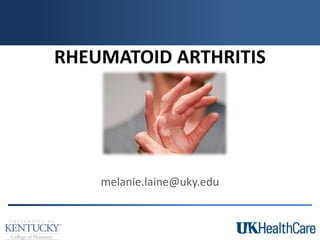
RHEUMATOID ARTHRITIS
Melanie Laine, PharmD
PGY1 Pharmacy Resident
University of Kentucky HealthCare
April 22, 2015
LEARNING OBJECTIVES
• Recognize the symptoms and characteristics of
rheumatoid arthritis (RA)
• Compare and contrast available pharmacologic
therapies for RA
• Design individualized therapeutic regimens and
monitoring plans for patients with RA
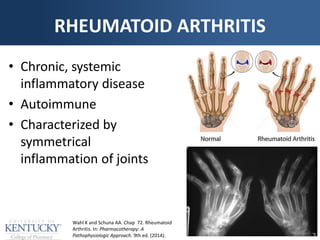
RHEUMATOID ARTHRITIS
• Chronic, systemic
inflammatory disease
• Autoimmune
• Characterized by
symmetrical
inflammation of joints
Wahl K and Schuna AA. Chap 72. Rheumatoid
Arthritis. In: Pharmacotherapy: A
Pathophysiologic Approach. 9th ed. (2014).
EPIDEMIOLOGY
• Most common systemic inflammatory disease
• Prevalence: 1-2%
• Occurrence:
 Any age
 3:1 in females
• Unknown etiology
 Interplay between genetic predisposition and
environmental triggers
Wahl K and Schuna AA. Chap 72. Rheumatoid Arthritis. In:
Pharmacotherapy: A Pathophysiologic Approach. 9th ed. (2014).
McInnes IB and Schett G. New Engl J Med. 2011; 365 (23): 2205-19.
PATHOPHYSIOLOGY
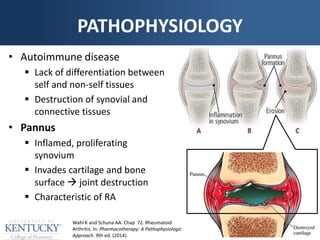
• Autoimmune disease
 Lack of differentiation between
self and non-self tissues
 Destruction of synovial and
connective tissues
• Pannus
 Inflamed, proliferating
synovium
 Invades cartilage and bone
surface  joint destruction
 Characteristic of RA
Wahl K and Schuna AA. Chap 72. Rheumatoid
Arthritis. In: Pharmacotherapy: A Pathophysiologic
Approach. 9th ed. (2014).
Vollenhoven RF. Nat Rev Rheumatol. 2009; 5 (10): 531-41.
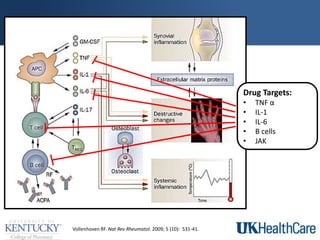
Drug Targets:
• TNF α
• IL-1
• IL-6
• B cells
• JAK
PATHOPHYSIOLOGY
Wahl K and Schuna AA. Chap 72. Rheumatoid Arthritis. In:
Pharmacotherapy: A Pathophysiologic Approach. 9th ed. (2014).
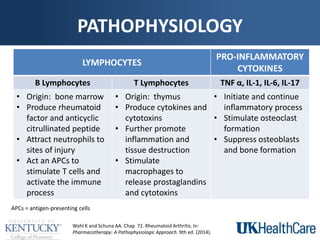
LYMPHOCYTES
PRO-INFLAMMATORY
CYTOKINES
B Lymphocytes T Lymphocytes TNF α, IL-1, IL-6, IL-17
• Origin: bone marrow
• Produce rheumatoid
factor and anticyclic
citrullinated peptide
• Attract neutrophils to
sites of injury
• Act an APCs to
stimulate T cells and
activate the immune
process
• Origin: thymus
• Produce cytokines and
cytotoxins
• Further promote
inflammation and
tissue destruction
• Stimulate
macrophages to
release prostaglandins
and cytotoxins
• Initiate and continue
inflammatory process
• Stimulate osteoclast
formation
• Suppress osteoblasts
and bone formation
APCs = antigen-presenting cells
CLINICAL PRESENTATION
• Develop over several weeks to months
 Constitutional symptoms: fever, fatigue, weakness, loss of
appetite
 Tenderness, warmth, and swelling over affected joints
 Muscle aches and stiffness
 Joint deformity (late disease)
• Symmetrical joint involvement
• Joint pain and stiffness > 6 weeks
Wahl K and Schuna AA. Chap 72. Rheumatoid Arthritis. In:
Pharmacotherapy: A Pathophysiologic Approach. 9th ed. (2014).
CLINICAL PRESENTATION
• Morning stiffness > 30 minutes
• Decreased range of motion and grip strength
• Stenosing flexor tenosynovitis (trigger fingers)
• Extraarticular involvement
• Laboratory abnormalities
Wahl K and Schuna AA. Chap 72. Rheumatoid Arthritis. In:
Pharmacotherapy: A Pathophysiologic Approach. 9th ed. (2014).
EXTRAARTICULAR INVOLVEMENT
• Rheumatoid nodules
• Vasculitis
• Pulmonary complications
• Ocular involvement
 Keratoconjunctivitis sicca
• Sjogren’s syndrome
• Cardiac involvement
• Felty’s syndrome
 Splenomegaly
 Neutropenia
 Thrombocytopenia
• Lymphadenopathy
• Rare complications
 Kidney injury
 Amyloidosis
Wahl K and Schuna AA. Chap 72. Rheumatoid Arthritis. In:
Pharmacotherapy: A Pathophysiologic Approach. 9th ed. (2014).
LABORATORY FINDINGS
• ↑ erythrocyte sedimentation rate (ESR)
• ↑ C-reactive protein (CRP)
• (+) Rheumatoid factor (RF)
• (+) Anticyclic citrullinated peptide (anti-CCP)
• Synovial fluid: turbid with many leukocytes
• Radiographic imaging
Wahl K and Schuna AA. Chap 72. Rheumatoid Arthritis. In:
Pharmacotherapy: A Pathophysiologic Approach. 9th ed. (2014).
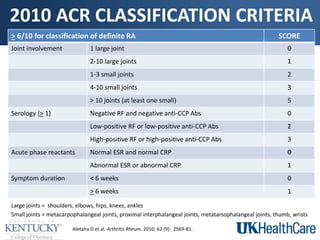
2010 ACR CLASSIFICATION CRITERIA
Aletaha D et al. Arthritis Rheum. 2010; 62 (9): 2569-81.
> 6/10 for classification of definite RA SCORE
Joint involvement 1 large joint 0
2-10 large joints 1
1-3 small joints 2
4-10 small joints 3
> 10 joints (at least one small) 5
Serology (> 1) Negative RF and negative anti-CCP Abs 0
Low-positive RF or low-positive anti-CCP Abs 2
High-positive RF or high-positive anti-CCP Abs 3
Acute phase reactants Normal ESR and normal CRP 0
Abnormal ESR or abnormal CRP 1
Symptom duration < 6 weeks 0
> 6 weeks 1
Large joints = shoulders, elbows, hips, knees, ankles
Small joints = metacarpophalangeal joints, proximal interphalangeal joints, metatarsophalangeal joints, thumb, wrists
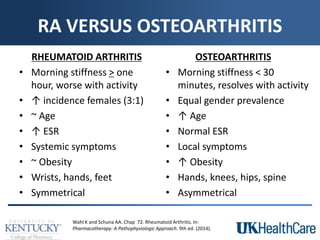
RA VERSUS OSTEOARTHRITIS
RHEUMATOID ARTHRITIS
• Morning stiffness > one
hour, worse with activity
• ↑ incidence females (3:1)
• ~ Age
• ↑ ESR
• Systemic symptoms
• ~ Obesity
• Wrists, hands, feet
• Symmetrical
OSTEOARTHRITIS
• Morning stiffness < 30
minutes, resolves with activity
• Equal gender prevalence
• ↑ Age
• Normal ESR
• Local symptoms
• ↑ Obesity
• Hands, knees, hips, spine
• Asymmetrical
Wahl K and Schuna AA. Chap 72. Rheumatoid Arthritis. In:
Pharmacotherapy: A Pathophysiologic Approach. 9th ed. (2014).
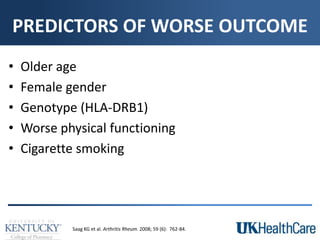
PREDICTORS OF WORSE OUTCOME
• Older age
• Female gender
• Genotype (HLA-DRB1)
• Worse physical functioning
• Cigarette smoking
Saag KG et al. Arthritis Rheum. 2008; 59 (6): 762-84.
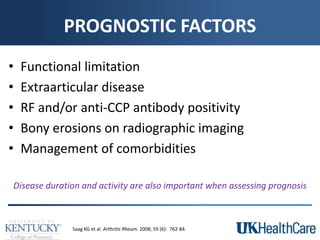
PROGNOSTIC FACTORS
• Functional limitation
• Extraarticular disease
• RF and/or anti-CCP antibody positivity
• Bony erosions on radiographic imaging
• Management of comorbidities
Disease duration and activity are also important when assessing prognosis
Saag KG et al. Arthritis Rheum. 2008; 59 (6): 762-84.
COMORBIDITIES
• Must be addressed in order to decrease morbidity
and mortality
• Comorbidities with greatest impact:
 Infection
 Osteoporosis
 Cardiovascular disease
O’Dell JR. New Engl J Med. 2004; 350 (25): 2591-602.
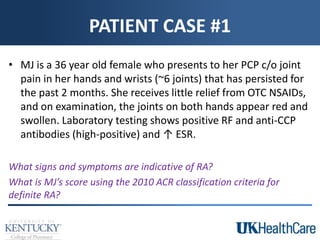
PATIENT CASE #1
• MJ is a 36 year old female who presents to her PCP c/o joint
pain in her hands and wrists (~6 joints) that has persisted for
the past 2 months. She receives little relief from OTC NSAIDs,
and on examination, the joints on both hands appear red and
swollen. Laboratory testing shows positive RF and anti-CCP
antibodies (high-positive) and ↑ ESR.
What signs and symptoms are indicative of RA?
What is MJ’s score using the 2010 ACR classification criteria for
definite RA?
GOALS OF TREATMENT
• Control disease activity and joint pain
• Maintain function in daily activities
• Slow destructive joint damage
• Achieve and maintain disease remission
Improve or maintain functional status and quality of life
Wahl K and Schuna AA. Chap 72. Rheumatoid Arthritis. In:
Pharmacotherapy: A Pathophysiologic Approach. 9th ed. (2014).
O’Dell JR. New Engl J Med. 2004; 350 (25): 2591-602.
TREATMENT OVERVIEW
• Non-pharmacologic therapy
• Pharmacologic therapy
 Non-disease modifying drugs
 NSAIDs
 Corticosteroids
 Disease-modifying antirheumatic drugs (DMARDs)
 Non-biologic
 Biologic
NON-PHARMACOLOGIC
• Rest
• Physical and occupational therapy
• Assistive devices
• Weight reduction
• Surgery
Wahl K and Schuna AA. Chap 72. Rheumatoid Arthritis. In:
Pharmacotherapy: A Pathophysiologic Approach. 9th ed. (2014).
Non-disease modifying drugs
PHARMACOLOGIC THERAPY
NSAIDs
• Analgesic and anti-inflammatory properties
 Rapid symptomatic relief for pain and stiffness
• Adverse effects: ulcers and GI bleeding, renal
impairment, hypertension, fluid retention
• Helpful during the first few weeks until definitive
diagnosis is made
Adjunct to DMARD therapy
Wahl K and Schuna AA. Chap 72. Rheumatoid Arthritis. In:
Pharmacotherapy: A Pathophysiologic Approach. 9th ed. (2014).
O’Dell JR. New Engl J Med. 2004; 350 (25): 2591-602.
CORTICOSTEROIDS
• Suppress inflammatory response
 Bridge to effective DMARD therapy
 Rapid symptomatic relief
• Dose: Prednisone < 10mg PO daily
• Adverse effects: hypertension, hyperlipidemia,
hyperglycemia, fat redistribution, cataracts,
osteoporosis, etc.
Adjunct to DMARD therapy
LexiComp Online. online.lexi.com. Accessed April 12, 2015.
O’Dell JR. New Engl J Med. 2004; 350 (25): 2591-602.
DMARDs
PHARMACOLOGIC THERAPY
DMARDs
• Retard or halt the progression of RA
 Sustained suppression of inflammation
• Initiate < 3 months of symptom onset
 Improve outcomes
 Reduce mortality
• All patients except those with limited disease
• Slow onset with regard to symptom management
Wahl K and Schuna AA. Chap 72. Rheumatoid Arthritis. In:
Pharmacotherapy: A Pathophysiologic Approach. 9th ed. (2014).
O’Dell JR. New Engl J Med. 2004; 350 (25): 2591-602.
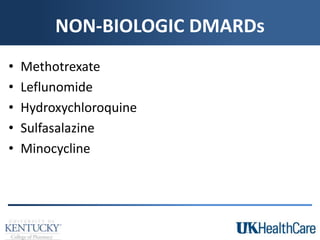
NON-BIOLOGIC DMARDs
• Methotrexate
• Leflunomide
• Hydroxychloroquine
• Sulfasalazine
• Minocycline
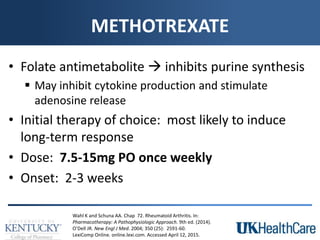
METHOTREXATE
• Folate antimetabolite  inhibits purine synthesis
 May inhibit cytokine production and stimulate
adenosine release
• Initial therapy of choice: most likely to induce
long-term response
• Dose: 7.5-15mg PO once weekly
• Onset: 2-3 weeks
Wahl K and Schuna AA. Chap 72. Rheumatoid Arthritis. In:
Pharmacotherapy: A Pathophysiologic Approach. 9th ed. (2014).
O’Dell JR. New Engl J Med. 2004; 350 (25): 2591-60.
LexiComp Online. online.lexi.com. Accessed April 12, 2015.
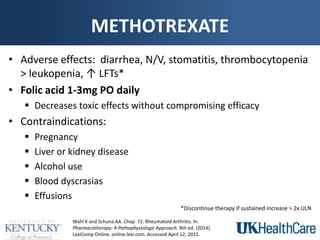
METHOTREXATE
• Adverse effects: diarrhea, N/V, stomatitis, thrombocytopenia
> leukopenia, ↑ LFTs*
• Folic acid 1-3mg PO daily
 Decreases toxic effects without compromising efficacy
• Contraindications:
 Pregnancy
 Liver or kidney disease
 Alcohol use
 Blood dyscrasias
 Effusions
Wahl K and Schuna AA. Chap 72. Rheumatoid Arthritis. In:
Pharmacotherapy: A Pathophysiologic Approach. 9th ed. (2014).
LexiComp Online. online.lexi.com. Accessed April 12, 2015.
*Discontinue therapy if sustained increase > 2x ULN
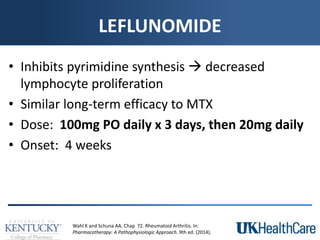
LEFLUNOMIDE
• Inhibits pyrimidine synthesis  decreased
lymphocyte proliferation
• Similar long-term efficacy to MTX
• Dose: 100mg PO daily x 3 days, then 20mg daily
• Onset: 4 weeks
Wahl K and Schuna AA. Chap 72. Rheumatoid Arthritis. In:
Pharmacotherapy: A Pathophysiologic Approach. 9th ed. (2014).
LEFLUNOMIDE
• Adverse effects: ↑ LFTs, pancytopenia
• Enterohepatic recycling prolongs elimination half
life
 Cholestyramine can rapidly decrease plasma levels
• Contraindications:
 Pregnancy
 Pre-existing liver disease
Wahl K and Schuna AA. Chap 72. Rheumatoid Arthritis. In:
Pharmacotherapy: A Pathophysiologic Approach. 9th ed. (2014).
LexiComp Online. online.lexi.com. Accessed April 12, 2015.
*Discontinue therapy if sustained increase > 3x ULN
HYDROXYCHLOROQUINE
• Inhibits PMN migration and eosinophil
chemotaxis; impairs Ag-Ab reactions
• Least potent, but best tolerated
 Recommended for patients without poor prognostic
factors, low disease activity, duration < 24 months
• Dose: 200-300mg PO BID x 1-2 months, then can
decrease to 200mg daily or BID
• Onset: 6 weeks
Wahl K and Schuna AA. Chap 72. Rheumatoid Arthritis. In:
Pharmacotherapy: A Pathophysiologic Approach. 9th ed. (2014).
LexiComp Online. online.lexi.com. Accessed April 12, 2015.
HYDROXYCHLOROQUINE
• Adverse effects: diarrhea, N/V, ocular toxicity,
rash, alopecia
• Limited monitoring
• Contraindications:
 Vision changes from therapy
Wahl K and Schuna AA. Chap 72. Rheumatoid Arthritis. In:
Pharmacotherapy: A Pathophysiologic Approach. 9th ed. (2014).
LexiComp Online. online.lexi.com. Accessed April 12, 2015.
SULFASALAZINE
• Prodrug  5-aminosalicylic and sulfapyridine
 MOA unknown
• First DMARD: similar efficacy to MTX
• Dose: 500mg-1000mg PO daily initially, then
1000mg PO BID (max 3000mg daily)
• Onset: 8 weeks
• Use limited by adverse effects
Wahl K and Schuna AA. Chap 72. Rheumatoid Arthritis. In:
Pharmacotherapy: A Pathophysiologic Approach. 9th ed. (2014).
O’Dell JR. New Engl J Med. 2004; 350 (25): 2591-60.
LexiComp Online. online.lexi.com. Accessed April 12, 2015.
SULFASALAZINE
• Adverse effects: diarrhea, N/V, anorexia, rash
urticaria, serum sickness*, alopecia, stomatitis, ↑
LFTs, myelosuppression
• Contraindications: sulfa allergy
• Drug interactions
 Antibiotics
 Iron supplements
 Warfarin
Wahl K and Schuna AA. Chap 72. Rheumatoid Arthritis. In:
Pharmacotherapy: A Pathophysiologic Approach. 9th ed. (2014).
LexiComp Online. online.lexi.com. Accessed April 12, 2015.
*Treat with antihistamines ± corticosteroids
MINOCYCLINE
• Tetracycline antibiotic; may inhibit
metalloproteinases
• Mild disease without poor prognostic factors
 Limited data
• Dose: 100-200mg PO daily
• Adverse reactions: minimal
Wahl K and Schuna AA. Chap 72. Rheumatoid Arthritis. In:
Pharmacotherapy: A Pathophysiologic Approach. 9th ed. (2014).
PATIENT CASE #1
• MJ is diagnosed with RA. After diagnosis, she is referred
to a rheumatologist who wishes to start her on a DMARD
as soon as possible. She does not have any pertinent
PMH and has a sulfa allergy. She also mentions that she
and her husband are trying to get pregnant.
Out of the non-biologic DMARDs, what is the best option for
initial therapy for MJ?
SUMMARY: NON-BIOLOGICS
Wahl K and Schuna AA. Chap 72. Rheumatoid Arthritis. In:
Pharmacotherapy: A Pathophysiologic Approach. 9th ed. (2014).
LexiComp Online. online.lexi.com. Accessed April 12, 2015.
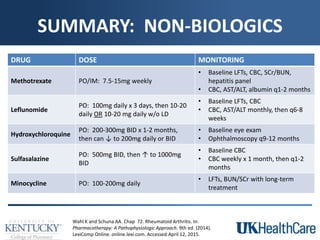
DRUG DOSE MONITORING
Methotrexate PO/IM: 7.5-15mg weekly
• Baseline LFTs, CBC, SCr/BUN,
hepatitis panel
• CBC, AST/ALT, albumin q1-2 months
Leflunomide
PO: 100mg daily x 3 days, then 10-20
daily OR 10-20 mg daily w/o LD
• Baseline LFTs, CBC
• CBC, AST/ALT monthly, then q6-8
weeks
Hydroxychloroquine
PO: 200-300mg BID x 1-2 months,
then can ↓ to 200mg daily or BID
• Baseline eye exam
• Ophthalmoscopy q9-12 months
Sulfasalazine
PO: 500mg BID, then ↑ to 1000mg
BID
• Baseline CBC
• CBC weekly x 1 month, then q1-2
months
Minocycline PO: 100-200mg daily
• LFTs, BUN/SCr with long-term
treatment
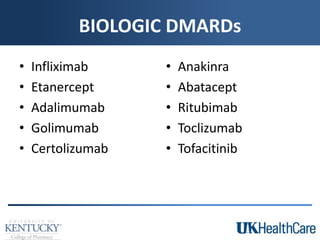
BIOLOGIC DMARDs
• Infliximab
• Etanercept
• Adalimumab
• Golimumab
• Certolizumab
• Anakinra
• Abatacept
• Ritubimab
• Toclizumab
• Tofacitinib
Vollenhoven RF. Nat Rev Rheumatol. 2009; 5 (10): 531-41.
Drug Targets:
• TNF α
• IL-1
• IL-6
• B cells
• JAK
BIOLOGIC DMARDs
• Genetically engineered protein molecules that
target pro-inflammatory cytokines or lymphocytes
• Not considered first line therapy
 High disease activity with poor prognostic factors
• May be effective when non-biologic DMARDs
have failed
• Expensive
Wahl K and Schuna AA. Chap 72. Rheumatoid Arthritis. In:
Pharmacotherapy: A Pathophysiologic Approach. 9th ed. (2014).
Singh JA et al. Arthrit Care Res. 2012; 64 (5): 625-39.
TNF α INHIBITORS
• Inactivate TNF α, preventing interaction with receptor
and inhibiting immune cell activation
• Increased infection risk
 Tuberculosis: must test prior to initiation
 Avoid live vaccines
• Multiple sclerosis-like illness
• Increased risk for lymphoma and other cancers
• Contraindication: NYHA class III-IV heart failure
Saag KG et al. Arthritis Rheum. 2008; 59 (6): 762-84.
LexiComp Online. online.lexi.com. Accessed April 12, 2015.
TNF α INHIBITORS
Wahl K and Schuna AA. Chap 72. Rheumatoid Arthritis. In:
Pharmacotherapy: A Pathophysiologic Approach. 9th ed. (2014).
Singh JA et al. Arthrit Care Res. 2012; 64 (5): 625-39.
LexiComp Online. online.lexi.com. Accessed April 12, 2015.
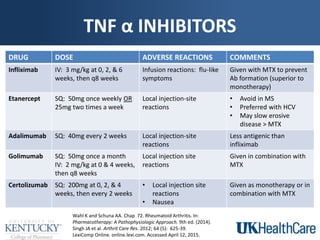
DRUG DOSE ADVERSE REACTIONS COMMENTS
Infliximab IV: 3 mg/kg at 0, 2, & 6
weeks, then q8 weeks
Infusion reactions: flu-like
symptoms
Given with MTX to prevent
Ab formation (superior to
monotherapy)
Etanercept SQ: 50mg once weekly OR
25mg two times a week
Local injection-site
reactions
• Avoid in MS
• Preferred with HCV
• May slow erosive
disease > MTX
Adalimumab SQ: 40mg every 2 weeks Local injection-site
reactions
Less antigenic than
infliximab
Golimumab SQ: 50mg once a month
IV: 2 mg/kg at 0 & 4 weeks,
then q8 weeks
Local injection site
reactions
Given in combination with
MTX
Certolizumab SQ: 200mg at 0, 2, & 4
weeks, then every 2 weeks
• Local injection site
reactions
• Nausea
Given as monotherapy or in
combination with MTX
B CELL DEPLETING AGENT
• Rituximab
• Depletes peripheral B cells by binding CD20
 Recovery takes several months – intermittent therapy
• For patients who have failed MTX therapy or TNF
α inhibitors (second line)
 Also preferred in recently treated solid malignancy and
PMH of treated lymphoma or skin melanoma
• Better outcomes when given with MTX
Wahl K and Schuna AA. Chap 72. Rheumatoid Arthritis. In:
Pharmacotherapy: A Pathophysiologic Approach. 9th ed. (2014).
Singh JA et al. Arthrit Care Res. 2012; 64 (5): 625-39.
B CELL DEPLETING AGENT
• Dose: 1000mg IV at 0 and 2 weeks
• Adverse reactions:
 Infusion reactions – pre-medicate*
 HBV reactivation – screen prior to initiation
• Black box warning for fatal infusion reactions
Wahl K and Schuna AA. Chap 72. Rheumatoid Arthritis. In:
Pharmacotherapy: A Pathophysiologic Approach. 9th ed. (2014).
LexiComp Online. online.lexi.com. Accessed April 12, 2015.
*Acetaminophen, diphenhydramine, and methylprednisolone 30 minutes prior to infusion
CD80/CD86 CO-STIMULATOR
MODULATOR
• Abatacept
• Binds to antigen-presenting cells, preventing
interaction with T cells and subsequent T cell
activation
• For patients who have failed MTX therapy or TNF
α inhibitors
 Response rate of 50% in clinical trials
Wahl K and Schuna AA. Chap 72. Rheumatoid Arthritis. In:
Pharmacotherapy: A Pathophysiologic Approach. 9th ed. (2014).
Singh JA et al. Arthrit Care Res. 2012; 64 (5): 625-39.
CD80/CD86 CO-STIMULATOR
MODULATOR
• Weight-based dosing: IV infusion at 0, 2, & 4 weeks,
then q4 weeks
 < 60kg: 500mg
 60-100kg: 750mg
 > 100kg: 1000mg
 Alternative: 125mg SQ weekly
• Adverse reactions: headache, nausea,
nasopharyngitis, infection, infusion reactions
Wahl K and Schuna AA. Chap 72. Rheumatoid Arthritis. In:
Pharmacotherapy: A Pathophysiologic Approach. 9th ed. (2014).
LexiComp Online. online.lexi.com. Accessed April 12, 2015.
INTERLEUKIN-6 INHIBITOR
• Tocilizumab
• IL-6 receptor antagonist, reducing production of
cytokines and acute phase reactants
• For patients who have failed MTX therapy or TNF
α inhibitors
• Can be as monotherapy or in combination with
MTX
Singh JA et al. Arthrit Care Res. 2012; 64 (5): 625-39.
LexiComp Online. online.lexi.com. Accessed April 12, 2015.
INTERLEUKIN-6 INHIBITOR
• Dose:
 IV: 4-8 mg/kg q4 weeks (max dose 800mg)
 SQ: 162mg every other week (< 100kg) or 162mg
weekly (> 100kg)
• Adverse reactions: infusion reactions,
hyperlipidemia, ↑ LFTs*, infection
• Monitoring: baseline and periodic CBC and LFTs
LexiComp Online. online.lexi.com. Accessed April 12, 2015.
*Discontinue therapy if sustained increase > 5x ULN
INTERLEUKIN-1 INHIBITOR
• Anakinra
• IL-1 receptor antagonist, preventing migration of
inflammatory leukocytes to tissues
• Literature suggests less efficacy
 No longer included in guideline recommendations
 Patients who fail MTX and TNF α inhibitors
• Should not be used with TNF α inhibitors
Wahl K and Schuna AA. Chap 72. Rheumatoid Arthritis. In:
Pharmacotherapy: A Pathophysiologic Approach. 9th ed. (2014).
INTERLEUKIN-1 INHIBITOR
• Dose: 100mcg SQ daily
• Adverse reactions: local injection-site reactions,
headache, arthralgias, neutropenia (rare),
infection
• Monitoring:
 Baseline: TB test, PMN count
 PMN count monthly x 3 months, then q3 months for
one year
Wahl K and Schuna AA. Chap 72. Rheumatoid Arthritis. In:
Pharmacotherapy: A Pathophysiologic Approach. 9th ed. (2014).
LexiComp Online. online.lexi.com. Accessed April 12, 2015.
JANUS KINASE (JAK) INHIBITOR
• Xeljanz (tofacitinib)
• FDA approved in 2012
 Moderate to severe RA refractory to MTX
• Versus placebo and MTX: significantly less
symptoms and improved physical function
• Dose: 5mg PO BID
LexiComp Online. online.lexi.com. Accessed April 12, 2015.
Pfizer Laboratories, Inc. Xeljanz (tofacitinib) Package Insert.
Fleischmann R et al. New Engl J Med. 2012; 367 (6): 495-507.
Lee EB et al. New Engl J Med. 2014; 370 (25): 2377-86.
JANUS KINASE (JAK) INHIBITOR
• Adverse effects: diarrhea, headache, infections,
malignancy
• Must test for tuberculosis and hepatitis B/C prior
to therapy initiation
• Monitoring:
 Baseline: hepatitis panel, TB test, LFTs, CBC, Hgb/Hct
 Lipids in 4-8 weeks then periodically
 CBC, Hgb/Hct q3 months
LexiComp Online. online.lexi.com. Accessed April 12, 2015.
Pfizer Laboratories, Inc. Xeljanz (tofacitinib) Package Insert.
OTHER AGENTS
• Gold salts, azathioprine, D-penicillamine,
cyclosporine, and cyclophosphamide
• Infrequently used or not recommended
 Toxicity
 Lack of long-term benefit
 Both
Wahl K and Schuna AA. Chap 72. Rheumatoid Arthritis. In:
Pharmacotherapy: A Pathophysiologic Approach. 9th ed. (2014).
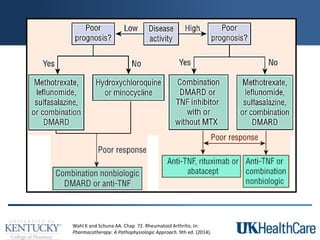
COMBINATION THERAPY
• Typically effective when monotherapy fails
• May be appropriate initially in moderate to high
disease activity
• Biologics in combination with MTX may be more
effective than biologic monotherapy
• Combination therapy with > one biologic is not
recommended
Wahl K and Schuna AA. Chap 72. Rheumatoid Arthritis. In:
Pharmacotherapy: A Pathophysiologic Approach. 9th ed. (2014).
Wahl K and Schuna AA. Chap 72. Rheumatoid Arthritis. In:
Pharmacotherapy: A Pathophysiologic Approach. 9th ed. (2014).
PATIENT CASE #2
• JF is a 63 year old female who was recently diagnosed
with RA. PMH significant for osteoporosis. She reports
difficulty performing her daily activities and painful,
swollen joints that keep her up at night. She has high
disease activity with the presence of bony erosions on
imaging.
What RA treatments would you consider for JF?
What other recommendations might you make?
EVALUATION OF THERAPY
• Clinical signs and symptoms of RA
 Swelling, warmth, and tenderness
 Pain, stiffness, and functional limitations
 Radiographic imaging
• Adverse effects and other drug monitoring
• American College of Rheumatology Improvement Criteria
 ACR20: 20% improvement in disease activity
 ACR50: 50% improvement in disease activity
Wahl K and Schuna AA. Chap 72. Rheumatoid Arthritis. In:
Pharmacotherapy: A Pathophysiologic Approach. 9th ed. (2014).
REFERENCES
1) Aletaha D et al. Arthritis Rheum. 2010; 62 (9): 2569-81.
2) Fleischmann R et al. New Engl J Med. 2012; 367 (6): 495-507.
3) Lee EB et al. New Engl J Med. 2014; 370 (25): 2377-86.
4) LexiComp Online. online.lexi.com.
5) McInnes IB and Schett G. New Engl J Med. 2011; 365 (23): 2205-19.
6) O’Dell JR. New Engl J Med. 2004; 350 (25): 2591-602.
7) Pfizer Laboratories, Inc. Xeljanz (tofacitinib) Package Insert.
8) Saag KG et al. Arthritis Rheum. 2008; 59 (6): 762-84.
9) Singh JA et al. Arthrit Care Res. 2012; 64 (5): 625-39.
10) Vollenhoven RF. Nat Rev Rheumatol. 2009; 5 (10): 531-41.
11) Wahl K and Schuna AA. Chap 72. Rheumatoid Arthritis. In: Pharmacotherapy:
A Pathophysiologic Approach. 9th ed. (2014).
RHEUMATOID ARTHRITIS
melanie.laine@uky.edu

Rheumatoid Arthritis Lecture.ppt

  • 1.
    RHEUMATOID ARTHRITIS Melanie Laine,PharmD PGY1 Pharmacy Resident University of Kentucky HealthCare April 22, 2015
  • 2.
    LEARNING OBJECTIVES • Recognizethe symptoms and characteristics of rheumatoid arthritis (RA) • Compare and contrast available pharmacologic therapies for RA • Design individualized therapeutic regimens and monitoring plans for patients with RA
  • 3.
    RHEUMATOID ARTHRITIS • Chronic,systemic inflammatory disease • Autoimmune • Characterized by symmetrical inflammation of joints Wahl K and Schuna AA. Chap 72. Rheumatoid Arthritis. In: Pharmacotherapy: A Pathophysiologic Approach. 9th ed. (2014).
  • 4.
    EPIDEMIOLOGY • Most commonsystemic inflammatory disease • Prevalence: 1-2% • Occurrence:  Any age  3:1 in females • Unknown etiology  Interplay between genetic predisposition and environmental triggers Wahl K and Schuna AA. Chap 72. Rheumatoid Arthritis. In: Pharmacotherapy: A Pathophysiologic Approach. 9th ed. (2014). McInnes IB and Schett G. New Engl J Med. 2011; 365 (23): 2205-19.
  • 5.
    PATHOPHYSIOLOGY • Autoimmune disease Lack of differentiation between self and non-self tissues  Destruction of synovial and connective tissues • Pannus  Inflamed, proliferating synovium  Invades cartilage and bone surface  joint destruction  Characteristic of RA Wahl K and Schuna AA. Chap 72. Rheumatoid Arthritis. In: Pharmacotherapy: A Pathophysiologic Approach. 9th ed. (2014).
  • 6.
    Vollenhoven RF. NatRev Rheumatol. 2009; 5 (10): 531-41. Drug Targets: • TNF α • IL-1 • IL-6 • B cells • JAK
  • 7.
    PATHOPHYSIOLOGY Wahl K andSchuna AA. Chap 72. Rheumatoid Arthritis. In: Pharmacotherapy: A Pathophysiologic Approach. 9th ed. (2014). LYMPHOCYTES PRO-INFLAMMATORY CYTOKINES B Lymphocytes T Lymphocytes TNF α, IL-1, IL-6, IL-17 • Origin: bone marrow • Produce rheumatoid factor and anticyclic citrullinated peptide • Attract neutrophils to sites of injury • Act an APCs to stimulate T cells and activate the immune process • Origin: thymus • Produce cytokines and cytotoxins • Further promote inflammation and tissue destruction • Stimulate macrophages to release prostaglandins and cytotoxins • Initiate and continue inflammatory process • Stimulate osteoclast formation • Suppress osteoblasts and bone formation APCs = antigen-presenting cells
  • 8.
    CLINICAL PRESENTATION • Developover several weeks to months  Constitutional symptoms: fever, fatigue, weakness, loss of appetite  Tenderness, warmth, and swelling over affected joints  Muscle aches and stiffness  Joint deformity (late disease) • Symmetrical joint involvement • Joint pain and stiffness > 6 weeks Wahl K and Schuna AA. Chap 72. Rheumatoid Arthritis. In: Pharmacotherapy: A Pathophysiologic Approach. 9th ed. (2014).
  • 9.
    CLINICAL PRESENTATION • Morningstiffness > 30 minutes • Decreased range of motion and grip strength • Stenosing flexor tenosynovitis (trigger fingers) • Extraarticular involvement • Laboratory abnormalities Wahl K and Schuna AA. Chap 72. Rheumatoid Arthritis. In: Pharmacotherapy: A Pathophysiologic Approach. 9th ed. (2014).
  • 10.
    EXTRAARTICULAR INVOLVEMENT • Rheumatoidnodules • Vasculitis • Pulmonary complications • Ocular involvement  Keratoconjunctivitis sicca • Sjogren’s syndrome • Cardiac involvement • Felty’s syndrome  Splenomegaly  Neutropenia  Thrombocytopenia • Lymphadenopathy • Rare complications  Kidney injury  Amyloidosis Wahl K and Schuna AA. Chap 72. Rheumatoid Arthritis. In: Pharmacotherapy: A Pathophysiologic Approach. 9th ed. (2014).
  • 11.
    LABORATORY FINDINGS • ↑erythrocyte sedimentation rate (ESR) • ↑ C-reactive protein (CRP) • (+) Rheumatoid factor (RF) • (+) Anticyclic citrullinated peptide (anti-CCP) • Synovial fluid: turbid with many leukocytes • Radiographic imaging Wahl K and Schuna AA. Chap 72. Rheumatoid Arthritis. In: Pharmacotherapy: A Pathophysiologic Approach. 9th ed. (2014).
  • 12.
    2010 ACR CLASSIFICATIONCRITERIA Aletaha D et al. Arthritis Rheum. 2010; 62 (9): 2569-81. > 6/10 for classification of definite RA SCORE Joint involvement 1 large joint 0 2-10 large joints 1 1-3 small joints 2 4-10 small joints 3 > 10 joints (at least one small) 5 Serology (> 1) Negative RF and negative anti-CCP Abs 0 Low-positive RF or low-positive anti-CCP Abs 2 High-positive RF or high-positive anti-CCP Abs 3 Acute phase reactants Normal ESR and normal CRP 0 Abnormal ESR or abnormal CRP 1 Symptom duration < 6 weeks 0 > 6 weeks 1 Large joints = shoulders, elbows, hips, knees, ankles Small joints = metacarpophalangeal joints, proximal interphalangeal joints, metatarsophalangeal joints, thumb, wrists
  • 13.
    RA VERSUS OSTEOARTHRITIS RHEUMATOIDARTHRITIS • Morning stiffness > one hour, worse with activity • ↑ incidence females (3:1) • ~ Age • ↑ ESR • Systemic symptoms • ~ Obesity • Wrists, hands, feet • Symmetrical OSTEOARTHRITIS • Morning stiffness < 30 minutes, resolves with activity • Equal gender prevalence • ↑ Age • Normal ESR • Local symptoms • ↑ Obesity • Hands, knees, hips, spine • Asymmetrical Wahl K and Schuna AA. Chap 72. Rheumatoid Arthritis. In: Pharmacotherapy: A Pathophysiologic Approach. 9th ed. (2014).
  • 14.
    PREDICTORS OF WORSEOUTCOME • Older age • Female gender • Genotype (HLA-DRB1) • Worse physical functioning • Cigarette smoking Saag KG et al. Arthritis Rheum. 2008; 59 (6): 762-84.
  • 15.
    PROGNOSTIC FACTORS • Functionallimitation • Extraarticular disease • RF and/or anti-CCP antibody positivity • Bony erosions on radiographic imaging • Management of comorbidities Disease duration and activity are also important when assessing prognosis Saag KG et al. Arthritis Rheum. 2008; 59 (6): 762-84.
  • 16.
    COMORBIDITIES • Must beaddressed in order to decrease morbidity and mortality • Comorbidities with greatest impact:  Infection  Osteoporosis  Cardiovascular disease O’Dell JR. New Engl J Med. 2004; 350 (25): 2591-602.
  • 17.
    PATIENT CASE #1 •MJ is a 36 year old female who presents to her PCP c/o joint pain in her hands and wrists (~6 joints) that has persisted for the past 2 months. She receives little relief from OTC NSAIDs, and on examination, the joints on both hands appear red and swollen. Laboratory testing shows positive RF and anti-CCP antibodies (high-positive) and ↑ ESR. What signs and symptoms are indicative of RA? What is MJ’s score using the 2010 ACR classification criteria for definite RA?
  • 18.
    GOALS OF TREATMENT •Control disease activity and joint pain • Maintain function in daily activities • Slow destructive joint damage • Achieve and maintain disease remission Improve or maintain functional status and quality of life Wahl K and Schuna AA. Chap 72. Rheumatoid Arthritis. In: Pharmacotherapy: A Pathophysiologic Approach. 9th ed. (2014). O’Dell JR. New Engl J Med. 2004; 350 (25): 2591-602.
  • 19.
    TREATMENT OVERVIEW • Non-pharmacologictherapy • Pharmacologic therapy  Non-disease modifying drugs  NSAIDs  Corticosteroids  Disease-modifying antirheumatic drugs (DMARDs)  Non-biologic  Biologic
  • 20.
    NON-PHARMACOLOGIC • Rest • Physicaland occupational therapy • Assistive devices • Weight reduction • Surgery Wahl K and Schuna AA. Chap 72. Rheumatoid Arthritis. In: Pharmacotherapy: A Pathophysiologic Approach. 9th ed. (2014).
  • 21.
  • 22.
    NSAIDs • Analgesic andanti-inflammatory properties  Rapid symptomatic relief for pain and stiffness • Adverse effects: ulcers and GI bleeding, renal impairment, hypertension, fluid retention • Helpful during the first few weeks until definitive diagnosis is made Adjunct to DMARD therapy Wahl K and Schuna AA. Chap 72. Rheumatoid Arthritis. In: Pharmacotherapy: A Pathophysiologic Approach. 9th ed. (2014). O’Dell JR. New Engl J Med. 2004; 350 (25): 2591-602.
  • 23.
    CORTICOSTEROIDS • Suppress inflammatoryresponse  Bridge to effective DMARD therapy  Rapid symptomatic relief • Dose: Prednisone < 10mg PO daily • Adverse effects: hypertension, hyperlipidemia, hyperglycemia, fat redistribution, cataracts, osteoporosis, etc. Adjunct to DMARD therapy LexiComp Online. online.lexi.com. Accessed April 12, 2015. O’Dell JR. New Engl J Med. 2004; 350 (25): 2591-602.
  • 24.
  • 25.
    DMARDs • Retard orhalt the progression of RA  Sustained suppression of inflammation • Initiate < 3 months of symptom onset  Improve outcomes  Reduce mortality • All patients except those with limited disease • Slow onset with regard to symptom management Wahl K and Schuna AA. Chap 72. Rheumatoid Arthritis. In: Pharmacotherapy: A Pathophysiologic Approach. 9th ed. (2014). O’Dell JR. New Engl J Med. 2004; 350 (25): 2591-602.
  • 26.
    NON-BIOLOGIC DMARDs • Methotrexate •Leflunomide • Hydroxychloroquine • Sulfasalazine • Minocycline
  • 27.
    METHOTREXATE • Folate antimetabolite inhibits purine synthesis  May inhibit cytokine production and stimulate adenosine release • Initial therapy of choice: most likely to induce long-term response • Dose: 7.5-15mg PO once weekly • Onset: 2-3 weeks Wahl K and Schuna AA. Chap 72. Rheumatoid Arthritis. In: Pharmacotherapy: A Pathophysiologic Approach. 9th ed. (2014). O’Dell JR. New Engl J Med. 2004; 350 (25): 2591-60. LexiComp Online. online.lexi.com. Accessed April 12, 2015.
  • 28.
    METHOTREXATE • Adverse effects:diarrhea, N/V, stomatitis, thrombocytopenia > leukopenia, ↑ LFTs* • Folic acid 1-3mg PO daily  Decreases toxic effects without compromising efficacy • Contraindications:  Pregnancy  Liver or kidney disease  Alcohol use  Blood dyscrasias  Effusions Wahl K and Schuna AA. Chap 72. Rheumatoid Arthritis. In: Pharmacotherapy: A Pathophysiologic Approach. 9th ed. (2014). LexiComp Online. online.lexi.com. Accessed April 12, 2015. *Discontinue therapy if sustained increase > 2x ULN
  • 29.
    LEFLUNOMIDE • Inhibits pyrimidinesynthesis  decreased lymphocyte proliferation • Similar long-term efficacy to MTX • Dose: 100mg PO daily x 3 days, then 20mg daily • Onset: 4 weeks Wahl K and Schuna AA. Chap 72. Rheumatoid Arthritis. In: Pharmacotherapy: A Pathophysiologic Approach. 9th ed. (2014).
  • 30.
    LEFLUNOMIDE • Adverse effects:↑ LFTs, pancytopenia • Enterohepatic recycling prolongs elimination half life  Cholestyramine can rapidly decrease plasma levels • Contraindications:  Pregnancy  Pre-existing liver disease Wahl K and Schuna AA. Chap 72. Rheumatoid Arthritis. In: Pharmacotherapy: A Pathophysiologic Approach. 9th ed. (2014). LexiComp Online. online.lexi.com. Accessed April 12, 2015. *Discontinue therapy if sustained increase > 3x ULN
  • 31.
    HYDROXYCHLOROQUINE • Inhibits PMNmigration and eosinophil chemotaxis; impairs Ag-Ab reactions • Least potent, but best tolerated  Recommended for patients without poor prognostic factors, low disease activity, duration < 24 months • Dose: 200-300mg PO BID x 1-2 months, then can decrease to 200mg daily or BID • Onset: 6 weeks Wahl K and Schuna AA. Chap 72. Rheumatoid Arthritis. In: Pharmacotherapy: A Pathophysiologic Approach. 9th ed. (2014). LexiComp Online. online.lexi.com. Accessed April 12, 2015.
  • 32.
    HYDROXYCHLOROQUINE • Adverse effects:diarrhea, N/V, ocular toxicity, rash, alopecia • Limited monitoring • Contraindications:  Vision changes from therapy Wahl K and Schuna AA. Chap 72. Rheumatoid Arthritis. In: Pharmacotherapy: A Pathophysiologic Approach. 9th ed. (2014). LexiComp Online. online.lexi.com. Accessed April 12, 2015.
  • 33.
    SULFASALAZINE • Prodrug 5-aminosalicylic and sulfapyridine  MOA unknown • First DMARD: similar efficacy to MTX • Dose: 500mg-1000mg PO daily initially, then 1000mg PO BID (max 3000mg daily) • Onset: 8 weeks • Use limited by adverse effects Wahl K and Schuna AA. Chap 72. Rheumatoid Arthritis. In: Pharmacotherapy: A Pathophysiologic Approach. 9th ed. (2014). O’Dell JR. New Engl J Med. 2004; 350 (25): 2591-60. LexiComp Online. online.lexi.com. Accessed April 12, 2015.
  • 34.
    SULFASALAZINE • Adverse effects:diarrhea, N/V, anorexia, rash urticaria, serum sickness*, alopecia, stomatitis, ↑ LFTs, myelosuppression • Contraindications: sulfa allergy • Drug interactions  Antibiotics  Iron supplements  Warfarin Wahl K and Schuna AA. Chap 72. Rheumatoid Arthritis. In: Pharmacotherapy: A Pathophysiologic Approach. 9th ed. (2014). LexiComp Online. online.lexi.com. Accessed April 12, 2015. *Treat with antihistamines ± corticosteroids
  • 35.
    MINOCYCLINE • Tetracycline antibiotic;may inhibit metalloproteinases • Mild disease without poor prognostic factors  Limited data • Dose: 100-200mg PO daily • Adverse reactions: minimal Wahl K and Schuna AA. Chap 72. Rheumatoid Arthritis. In: Pharmacotherapy: A Pathophysiologic Approach. 9th ed. (2014).
  • 36.
    PATIENT CASE #1 •MJ is diagnosed with RA. After diagnosis, she is referred to a rheumatologist who wishes to start her on a DMARD as soon as possible. She does not have any pertinent PMH and has a sulfa allergy. She also mentions that she and her husband are trying to get pregnant. Out of the non-biologic DMARDs, what is the best option for initial therapy for MJ?
  • 37.
    SUMMARY: NON-BIOLOGICS Wahl Kand Schuna AA. Chap 72. Rheumatoid Arthritis. In: Pharmacotherapy: A Pathophysiologic Approach. 9th ed. (2014). LexiComp Online. online.lexi.com. Accessed April 12, 2015. DRUG DOSE MONITORING Methotrexate PO/IM: 7.5-15mg weekly • Baseline LFTs, CBC, SCr/BUN, hepatitis panel • CBC, AST/ALT, albumin q1-2 months Leflunomide PO: 100mg daily x 3 days, then 10-20 daily OR 10-20 mg daily w/o LD • Baseline LFTs, CBC • CBC, AST/ALT monthly, then q6-8 weeks Hydroxychloroquine PO: 200-300mg BID x 1-2 months, then can ↓ to 200mg daily or BID • Baseline eye exam • Ophthalmoscopy q9-12 months Sulfasalazine PO: 500mg BID, then ↑ to 1000mg BID • Baseline CBC • CBC weekly x 1 month, then q1-2 months Minocycline PO: 100-200mg daily • LFTs, BUN/SCr with long-term treatment
  • 38.
    BIOLOGIC DMARDs • Infliximab •Etanercept • Adalimumab • Golimumab • Certolizumab • Anakinra • Abatacept • Ritubimab • Toclizumab • Tofacitinib
  • 39.
    Vollenhoven RF. NatRev Rheumatol. 2009; 5 (10): 531-41. Drug Targets: • TNF α • IL-1 • IL-6 • B cells • JAK
  • 40.
    BIOLOGIC DMARDs • Geneticallyengineered protein molecules that target pro-inflammatory cytokines or lymphocytes • Not considered first line therapy  High disease activity with poor prognostic factors • May be effective when non-biologic DMARDs have failed • Expensive Wahl K and Schuna AA. Chap 72. Rheumatoid Arthritis. In: Pharmacotherapy: A Pathophysiologic Approach. 9th ed. (2014). Singh JA et al. Arthrit Care Res. 2012; 64 (5): 625-39.
  • 41.
    TNF α INHIBITORS •Inactivate TNF α, preventing interaction with receptor and inhibiting immune cell activation • Increased infection risk  Tuberculosis: must test prior to initiation  Avoid live vaccines • Multiple sclerosis-like illness • Increased risk for lymphoma and other cancers • Contraindication: NYHA class III-IV heart failure Saag KG et al. Arthritis Rheum. 2008; 59 (6): 762-84. LexiComp Online. online.lexi.com. Accessed April 12, 2015.
  • 42.
    TNF α INHIBITORS WahlK and Schuna AA. Chap 72. Rheumatoid Arthritis. In: Pharmacotherapy: A Pathophysiologic Approach. 9th ed. (2014). Singh JA et al. Arthrit Care Res. 2012; 64 (5): 625-39. LexiComp Online. online.lexi.com. Accessed April 12, 2015. DRUG DOSE ADVERSE REACTIONS COMMENTS Infliximab IV: 3 mg/kg at 0, 2, & 6 weeks, then q8 weeks Infusion reactions: flu-like symptoms Given with MTX to prevent Ab formation (superior to monotherapy) Etanercept SQ: 50mg once weekly OR 25mg two times a week Local injection-site reactions • Avoid in MS • Preferred with HCV • May slow erosive disease > MTX Adalimumab SQ: 40mg every 2 weeks Local injection-site reactions Less antigenic than infliximab Golimumab SQ: 50mg once a month IV: 2 mg/kg at 0 & 4 weeks, then q8 weeks Local injection site reactions Given in combination with MTX Certolizumab SQ: 200mg at 0, 2, & 4 weeks, then every 2 weeks • Local injection site reactions • Nausea Given as monotherapy or in combination with MTX
  • 43.
    B CELL DEPLETINGAGENT • Rituximab • Depletes peripheral B cells by binding CD20  Recovery takes several months – intermittent therapy • For patients who have failed MTX therapy or TNF α inhibitors (second line)  Also preferred in recently treated solid malignancy and PMH of treated lymphoma or skin melanoma • Better outcomes when given with MTX Wahl K and Schuna AA. Chap 72. Rheumatoid Arthritis. In: Pharmacotherapy: A Pathophysiologic Approach. 9th ed. (2014). Singh JA et al. Arthrit Care Res. 2012; 64 (5): 625-39.
  • 44.
    B CELL DEPLETINGAGENT • Dose: 1000mg IV at 0 and 2 weeks • Adverse reactions:  Infusion reactions – pre-medicate*  HBV reactivation – screen prior to initiation • Black box warning for fatal infusion reactions Wahl K and Schuna AA. Chap 72. Rheumatoid Arthritis. In: Pharmacotherapy: A Pathophysiologic Approach. 9th ed. (2014). LexiComp Online. online.lexi.com. Accessed April 12, 2015. *Acetaminophen, diphenhydramine, and methylprednisolone 30 minutes prior to infusion
  • 45.
    CD80/CD86 CO-STIMULATOR MODULATOR • Abatacept •Binds to antigen-presenting cells, preventing interaction with T cells and subsequent T cell activation • For patients who have failed MTX therapy or TNF α inhibitors  Response rate of 50% in clinical trials Wahl K and Schuna AA. Chap 72. Rheumatoid Arthritis. In: Pharmacotherapy: A Pathophysiologic Approach. 9th ed. (2014). Singh JA et al. Arthrit Care Res. 2012; 64 (5): 625-39.
  • 46.
    CD80/CD86 CO-STIMULATOR MODULATOR • Weight-baseddosing: IV infusion at 0, 2, & 4 weeks, then q4 weeks  < 60kg: 500mg  60-100kg: 750mg  > 100kg: 1000mg  Alternative: 125mg SQ weekly • Adverse reactions: headache, nausea, nasopharyngitis, infection, infusion reactions Wahl K and Schuna AA. Chap 72. Rheumatoid Arthritis. In: Pharmacotherapy: A Pathophysiologic Approach. 9th ed. (2014). LexiComp Online. online.lexi.com. Accessed April 12, 2015.
  • 47.
    INTERLEUKIN-6 INHIBITOR • Tocilizumab •IL-6 receptor antagonist, reducing production of cytokines and acute phase reactants • For patients who have failed MTX therapy or TNF α inhibitors • Can be as monotherapy or in combination with MTX Singh JA et al. Arthrit Care Res. 2012; 64 (5): 625-39. LexiComp Online. online.lexi.com. Accessed April 12, 2015.
  • 48.
    INTERLEUKIN-6 INHIBITOR • Dose: IV: 4-8 mg/kg q4 weeks (max dose 800mg)  SQ: 162mg every other week (< 100kg) or 162mg weekly (> 100kg) • Adverse reactions: infusion reactions, hyperlipidemia, ↑ LFTs*, infection • Monitoring: baseline and periodic CBC and LFTs LexiComp Online. online.lexi.com. Accessed April 12, 2015. *Discontinue therapy if sustained increase > 5x ULN
  • 49.
    INTERLEUKIN-1 INHIBITOR • Anakinra •IL-1 receptor antagonist, preventing migration of inflammatory leukocytes to tissues • Literature suggests less efficacy  No longer included in guideline recommendations  Patients who fail MTX and TNF α inhibitors • Should not be used with TNF α inhibitors Wahl K and Schuna AA. Chap 72. Rheumatoid Arthritis. In: Pharmacotherapy: A Pathophysiologic Approach. 9th ed. (2014).
  • 50.
    INTERLEUKIN-1 INHIBITOR • Dose:100mcg SQ daily • Adverse reactions: local injection-site reactions, headache, arthralgias, neutropenia (rare), infection • Monitoring:  Baseline: TB test, PMN count  PMN count monthly x 3 months, then q3 months for one year Wahl K and Schuna AA. Chap 72. Rheumatoid Arthritis. In: Pharmacotherapy: A Pathophysiologic Approach. 9th ed. (2014). LexiComp Online. online.lexi.com. Accessed April 12, 2015.
  • 51.
    JANUS KINASE (JAK)INHIBITOR • Xeljanz (tofacitinib) • FDA approved in 2012  Moderate to severe RA refractory to MTX • Versus placebo and MTX: significantly less symptoms and improved physical function • Dose: 5mg PO BID LexiComp Online. online.lexi.com. Accessed April 12, 2015. Pfizer Laboratories, Inc. Xeljanz (tofacitinib) Package Insert. Fleischmann R et al. New Engl J Med. 2012; 367 (6): 495-507. Lee EB et al. New Engl J Med. 2014; 370 (25): 2377-86.
  • 52.
    JANUS KINASE (JAK)INHIBITOR • Adverse effects: diarrhea, headache, infections, malignancy • Must test for tuberculosis and hepatitis B/C prior to therapy initiation • Monitoring:  Baseline: hepatitis panel, TB test, LFTs, CBC, Hgb/Hct  Lipids in 4-8 weeks then periodically  CBC, Hgb/Hct q3 months LexiComp Online. online.lexi.com. Accessed April 12, 2015. Pfizer Laboratories, Inc. Xeljanz (tofacitinib) Package Insert.
  • 53.
    OTHER AGENTS • Goldsalts, azathioprine, D-penicillamine, cyclosporine, and cyclophosphamide • Infrequently used or not recommended  Toxicity  Lack of long-term benefit  Both Wahl K and Schuna AA. Chap 72. Rheumatoid Arthritis. In: Pharmacotherapy: A Pathophysiologic Approach. 9th ed. (2014).
  • 54.
    COMBINATION THERAPY • Typicallyeffective when monotherapy fails • May be appropriate initially in moderate to high disease activity • Biologics in combination with MTX may be more effective than biologic monotherapy • Combination therapy with > one biologic is not recommended Wahl K and Schuna AA. Chap 72. Rheumatoid Arthritis. In: Pharmacotherapy: A Pathophysiologic Approach. 9th ed. (2014).
  • 55.
    Wahl K andSchuna AA. Chap 72. Rheumatoid Arthritis. In: Pharmacotherapy: A Pathophysiologic Approach. 9th ed. (2014).
  • 56.
    PATIENT CASE #2 •JF is a 63 year old female who was recently diagnosed with RA. PMH significant for osteoporosis. She reports difficulty performing her daily activities and painful, swollen joints that keep her up at night. She has high disease activity with the presence of bony erosions on imaging. What RA treatments would you consider for JF? What other recommendations might you make?
  • 57.
    EVALUATION OF THERAPY •Clinical signs and symptoms of RA  Swelling, warmth, and tenderness  Pain, stiffness, and functional limitations  Radiographic imaging • Adverse effects and other drug monitoring • American College of Rheumatology Improvement Criteria  ACR20: 20% improvement in disease activity  ACR50: 50% improvement in disease activity Wahl K and Schuna AA. Chap 72. Rheumatoid Arthritis. In: Pharmacotherapy: A Pathophysiologic Approach. 9th ed. (2014).
  • 58.
    REFERENCES 1) Aletaha Det al. Arthritis Rheum. 2010; 62 (9): 2569-81. 2) Fleischmann R et al. New Engl J Med. 2012; 367 (6): 495-507. 3) Lee EB et al. New Engl J Med. 2014; 370 (25): 2377-86. 4) LexiComp Online. online.lexi.com. 5) McInnes IB and Schett G. New Engl J Med. 2011; 365 (23): 2205-19. 6) O’Dell JR. New Engl J Med. 2004; 350 (25): 2591-602. 7) Pfizer Laboratories, Inc. Xeljanz (tofacitinib) Package Insert. 8) Saag KG et al. Arthritis Rheum. 2008; 59 (6): 762-84. 9) Singh JA et al. Arthrit Care Res. 2012; 64 (5): 625-39. 10) Vollenhoven RF. Nat Rev Rheumatol. 2009; 5 (10): 531-41. 11) Wahl K and Schuna AA. Chap 72. Rheumatoid Arthritis. In: Pharmacotherapy: A Pathophysiologic Approach. 9th ed. (2014).
  • 59.

Editor's Notes

  • #9 Affected joints are most commonly the hands, wrists, and feet
  • #12 The tests for rheumatoid factor routinely detect IgM RF, which are present in 60-70% of patients with RA (do not IgG or IgA which may be present in some patients but not detected) May be present due to other disease states like SLE, mononucleosis, syphilis, TB, bacterial endocarditis, acute hepatitis, cirrhosis, pulmonary fibrosis The presence of antibodies to CCP has high specificity of RA, > 90% (but lower sensitivity) 30% of patients will have bony erosions on radiographic imaging at the time of diagnosis
  • #13 The 1987 ACR classification criteria has been criticized for its lack of sensitivity in early disease. Joint damage and bony erosions that occur 2/2 to RA are irreversible and can occur early in the course of disease (30% of patients have bony erosions on imaging at the time of diagnosis). Additionally, initiation of DMARDs within 3 months of diagnosis is essential for improving clinical outcomes and reducing radiographic evidence of damage. In 2010, the ACR and European League Against Rheumatism developed a new approach for classifying RA in order to identify patients who are at risk for developing persistent and/or erosive disease. The new classification criteria focuses on early diagnosis in order to facilitate early initiation of DMARDs to prevent progression to erosive disease.
  • #16 Most clinically important markers of poor prognosis. Important to assess these factors when deciding initial therapy. Disease duration: Early disease: < 6 months Intermediate disease: 6-24 months Late disease: > 24 months Disease activity determined by specific tools and scoring systems
  • #17 Infection: especially pulmonary infections Patients with RA are at twice the risk for developing serious infections; correlates with disease severity, may also correlate with treatment (use of corticosteroids) Yearly influenza vaccine, pneumococcal vaccine; ideal to vaccinate before starting DMARD therapy, in addition to testing for TB before starting TNF alpha inhibitors. Must avoid live vaccines while receiving immunosuppressive therapy. Treatment should be stopped or withdrawn during active infection Incidence of osteoporosis is doubled in patients with RA (especially with corticosteroid use) Baseline DEXA scan and use of bisphosphonate therapy when indicated CV disease accounts for most of the excess mortality in RA  occurs 2/2 inflammation which leads to vascular endothelial damage and atherosclerosis
  • #20 Non-disease modifying drugs have no effect on disease progression
  • #21 Rest relieves stress on inflamed joints and prevents further destruction. Also alleviates pain However, too much immobility leads to decreased range of motion, muscle atrophy, and contractures Weight loss helps alleviate stress on inflamed joints, but may be more important in osteoarthritis Surgical management is reserved for severe disease Tendon repair Joint replacement
  • #23 Not included in guideline recommendations Higher incidence of adverse effects in patients with PMH peptic ulcer disease, concomitant corticosteroid use, and older age Can be used with a PPI to reduce incidence of GI distress
  • #24 Use lowest effective dose for the shortest period of time to avoid side effects. May have disease modifying activity, but use is limited by adverse effects
  • #26 Decrease radiographic progression
  • #28 Rapid onset of action compared to other DMARDs Decreased oral bioavailability for oral doses > 15mg per week
  • #29 Induces folic acid deficiency, which is thought to be responsible for toxic effects Pregnancy category X
  • #30 Loading dose allows patient to achieve therapeutic response in about a month, otherwise it would take several months due to the long half life (~2 weeks)
  • #31 Reliable contraception must be used before, during, and for 2 years after leflunomide therapy is discontinued (< 0.02 mcg/mL)
  • #32 Can be used in combination with MTX for patients with more severe disease
  • #33 Patients on hydroxycholoquine are required to have regular eye exams (q9-12 months) and report any changes in vision
  • #34 Cleaved by bacteria in the colon to sulfapyridine and 5-ASA Dose is titrated due to GI effects Can increase to 3g if response to 2g is inadequate after 12 weeks of therapy
  • #41 When a patient still has moderate to severe disease activity after 3 months of MTX monotherapy or DMARD combination therapy
  • #42 Typically first choice of biologic Rare reports of new onset or exacerbation of CNS demyelinating disorders Black box warning for lymphoma and other cancers (particularly skin cancer)  TNF kills cancer cells! Increased risk for cardiac mortality
  • #43 Adverse reactions with etanercept are rare, but there are reports of pancytopenia and MS-like syndromes
  • #44 CD20 is a receptor that is found on mature B lymphocytes Therapy is intermittent and based on reactivation of arthritis symptoms
  • #49 Can cause neutropenia and thrombocytopenia. Can also cause transamininitis, but is typically reversible and does not correlate with hepatic injury
  • #50 Increased infection risk without increased benefit when used with TNF inhibitors
  • #52 Inhibits cytokine production, which is integral to lymphocyte function Place in RA therapy unclear
  • #53 No live vaccines during therapy
  • #55 MTX plus leflunomide, hydroxychloroquine, or sulfasalazine