Introduction to Anthropology
Traditions and customs transmitted
through learning is:
A. Anthropology
B. Culture
C. Production
D. Ethnology
Examples of items within the archaeological
record include all of the following except:
A. Pottery
B. Tools
C. Metal
D. Living animals
The archaeological study of human
remains and pathogens is:
A. Bioarchaeology
B. Zooarchaeology
C. Ethnoarchaeology
D. Applied anthropology
Otherwise known as Physical Anthropology,
this is the study of human physical
variation through time and space is:
A. Cultural Anthropology
B. Linguistics
C. Bioanthropology
D. Archaeology
A sub-field of Anthropology that focuses
on modern crimes is:
A. Bioarchaeology
B. Forensic Anthropology
C. Genetic Anthropology
D. Molecular Anthropology
Which of the following examines, interprets,
and analyzes the results of ethnography (the
data gathered in different societies):
A. Ethnology
B. Ethnobotany
C. Bioarchaeology
D. Systematics
The study of language in a society is
know as:
A. Sociology
B. Cultural Anthropology
C. Sociolinguistics
D. Linguistic Forensics
A(n) ________ is a suggested yet
unverified explanation of a phenomena
A. Association
B. Hypothesis
C. Theory
D. Data Set
A(n) ________ is a set of ideas formulating
an explanation of a phenomena
A. Theory
B. Hypothesis
C. Association
D. Data set
The study of human behavior through
material remains is:
A. Bioarchaeology
B. Ethnology
C. Physical Anthropology
D. Archaeology
All of the following are examples of portable
artifacts except:
A. Housing structures
B. Blade tools
C. Ceramic vessels
D. Textiles (i.e. jewelry, clothing, blankets,
etc.)
A means of discovering archaeological
settlements across a large area would be:
A. Systematic survey
B. Geology
C. Fossilization
D. None of the above
Establishing a broad time frame in
relation to other strata or materials is:
A. Carbon dating
B. Absolute dating
C. Relative dating
D. Speed dating
Establishing dates in numbers, or a close
range of numbers, is:
A. Absolute dating
B. Relative dating
C. Radiometrics
D. Bioturbation
All of these are considered absolute
dating except:
A. Stratigraphic
B. Dendrochronology
C. Potassium-argon
D. Carbon-14
The Law of Superposition states that
lower layers of soil are older than the top
layers of soil
A. True
B. False
DNA comparisons used to determine
evolutionary links is known as:
A. Cultural Anthropology
B. Dendrochronology
C. Biology
D. Molecular Anthropology
Which of the following societal
developments were necessary for the
discipline of Anthropology to appear?
A. Ships
B. Magnetic compass
C. Rise in religious questioning
D. All of the above
Culture-bound assertions are:
A. Usually true
B. Assumptions based on our own
reality
C. Geographically based
D. All of the above
All of the following are societal elements
studied by Physical Anthropologists
except:
A. Disease, pollution, and poverty
B. Biological adaptations in humans
C. Birthing practices of women
D. Hormonal growth in children
Forensic Anthropologists can confirm age,
sex, diet, and population affiliation
A. True
B. False
Franz Boas is known for all of the following
except:
A. Incredible preservation of material goods
B. Combating racism and prejudice
C. The four-field approach
D. Shedding light on ethnocentrism
An ecofact is:
A. A truth about the environment
B. Differentiation in soil coloration
C. Natural remains left in the soil
D. A correlation between humans and
their surroundings
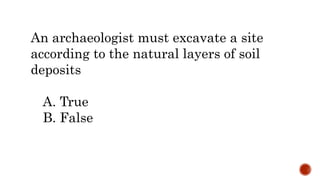
An archaeologist must excavate a site
according to the natural layers of soil
deposits
A. True
B. False
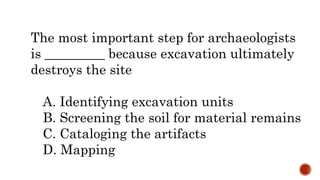
The most important step for archaeologists
is _________ because excavation ultimately
destroys the site
A. Identifying excavation units
B. Screening the soil for material remains
C. Cataloging the artifacts
D. Mapping
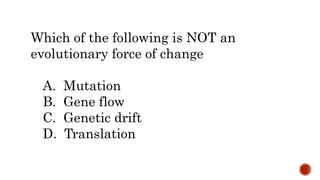
Which of the following is NOT an
evolutionary force of change
A. Mutation
B. Gene flow
C. Genetic drift
D. Translation
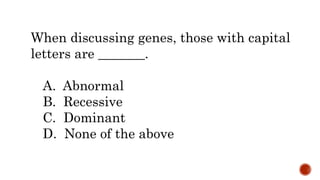
When discussing genes, those with capital
letters are _______.
A. Abnormal
B. Recessive
C. Dominant
D. None of the above
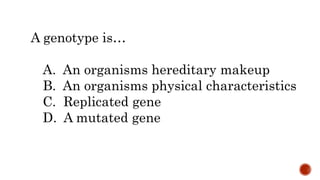
A genotype is…
A. An organisms hereditary makeup
B. An organisms physical characteristics
C. Replicated gene
D. A mutated gene
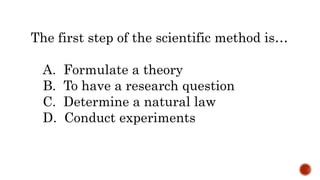
The first step of the scientific method is…
A. Formulate a theory
B. To have a research question
C. Determine a natural law
D. Conduct experiments
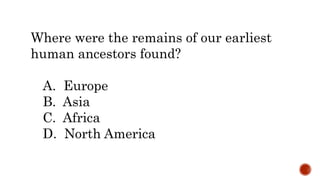
Where were the remains of our earliest
human ancestors found?
A. Europe
B. Asia
C. Africa
D. North America
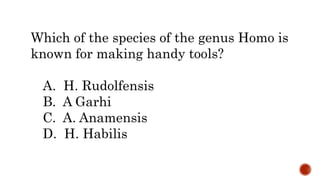
Which of the species of the genus Homo is
known for making handy tools?
A. H. Rudolfensis
B. A Garhi
C. A. Anamensis
D. H. Habilis
A phenotype refers to …
A. The physical characteristics of a
person
B. The entire genetic makeup of a human
C. A grouping of species
D. A mode of locomotion
The foramen magnum can be found…
A. Above the sternum
B. Near the elbow
C. Where the femur meets the pelvis
D. At the base of the skull
Continental drift is
A. The time it takes for genes to manifest
B. How the earth was made
C. The movement of continents over time
D. How climate is measured
Taxonomy is based on _________, which are
similarities between species based on
structure, function, and formation.
A. Homologies
B. Analogies
C. Heterozygous
D. Mutations
 2 B
 3 D
 4 A
 5 C
 6 B
 7 A
 8 C
 9 B
 10 A
 11 D
 12 A
 13 A
 14 C
 15 A
 16 A
 17 A
 18 D
 19 D
 20 B
 21 C
 22 A
 23 A
 24 C
 25 B
 26 D
 27 D
 28 C
 29 A
 30 B
 31 C
 32 D
 33 A
 34 D
 35 C
 36 A

Intro to Anthropology: Review Exam 1

  • 1.
  • 2.
    Traditions and customstransmitted through learning is: A. Anthropology B. Culture C. Production D. Ethnology
  • 3.
    Examples of itemswithin the archaeological record include all of the following except: A. Pottery B. Tools C. Metal D. Living animals
  • 4.
    The archaeological studyof human remains and pathogens is: A. Bioarchaeology B. Zooarchaeology C. Ethnoarchaeology D. Applied anthropology
  • 5.
    Otherwise known asPhysical Anthropology, this is the study of human physical variation through time and space is: A. Cultural Anthropology B. Linguistics C. Bioanthropology D. Archaeology
  • 6.
    A sub-field ofAnthropology that focuses on modern crimes is: A. Bioarchaeology B. Forensic Anthropology C. Genetic Anthropology D. Molecular Anthropology
  • 7.
    Which of thefollowing examines, interprets, and analyzes the results of ethnography (the data gathered in different societies): A. Ethnology B. Ethnobotany C. Bioarchaeology D. Systematics
  • 8.
    The study oflanguage in a society is know as: A. Sociology B. Cultural Anthropology C. Sociolinguistics D. Linguistic Forensics
  • 9.
    A(n) ________ isa suggested yet unverified explanation of a phenomena A. Association B. Hypothesis C. Theory D. Data Set
  • 10.
    A(n) ________ isa set of ideas formulating an explanation of a phenomena A. Theory B. Hypothesis C. Association D. Data set
  • 11.
    The study ofhuman behavior through material remains is: A. Bioarchaeology B. Ethnology C. Physical Anthropology D. Archaeology
  • 12.
    All of thefollowing are examples of portable artifacts except: A. Housing structures B. Blade tools C. Ceramic vessels D. Textiles (i.e. jewelry, clothing, blankets, etc.)
  • 13.
    A means ofdiscovering archaeological settlements across a large area would be: A. Systematic survey B. Geology C. Fossilization D. None of the above
  • 14.
    Establishing a broadtime frame in relation to other strata or materials is: A. Carbon dating B. Absolute dating C. Relative dating D. Speed dating
  • 15.
    Establishing dates innumbers, or a close range of numbers, is: A. Absolute dating B. Relative dating C. Radiometrics D. Bioturbation
  • 16.
    All of theseare considered absolute dating except: A. Stratigraphic B. Dendrochronology C. Potassium-argon D. Carbon-14
  • 17.
    The Law ofSuperposition states that lower layers of soil are older than the top layers of soil A. True B. False
  • 18.
    DNA comparisons usedto determine evolutionary links is known as: A. Cultural Anthropology B. Dendrochronology C. Biology D. Molecular Anthropology
  • 19.
    Which of thefollowing societal developments were necessary for the discipline of Anthropology to appear? A. Ships B. Magnetic compass C. Rise in religious questioning D. All of the above
  • 20.
    Culture-bound assertions are: A.Usually true B. Assumptions based on our own reality C. Geographically based D. All of the above
  • 21.
    All of thefollowing are societal elements studied by Physical Anthropologists except: A. Disease, pollution, and poverty B. Biological adaptations in humans C. Birthing practices of women D. Hormonal growth in children
  • 22.
    Forensic Anthropologists canconfirm age, sex, diet, and population affiliation A. True B. False
  • 23.
    Franz Boas isknown for all of the following except: A. Incredible preservation of material goods B. Combating racism and prejudice C. The four-field approach D. Shedding light on ethnocentrism
  • 24.
    An ecofact is: A.A truth about the environment B. Differentiation in soil coloration C. Natural remains left in the soil D. A correlation between humans and their surroundings
  • 25.
    An archaeologist mustexcavate a site according to the natural layers of soil deposits A. True B. False
  • 26.
    The most importantstep for archaeologists is _________ because excavation ultimately destroys the site A. Identifying excavation units B. Screening the soil for material remains C. Cataloging the artifacts D. Mapping
  • 27.
    Which of thefollowing is NOT an evolutionary force of change A. Mutation B. Gene flow C. Genetic drift D. Translation
  • 28.
    When discussing genes,those with capital letters are _______. A. Abnormal B. Recessive C. Dominant D. None of the above
  • 29.
    A genotype is… A.An organisms hereditary makeup B. An organisms physical characteristics C. Replicated gene D. A mutated gene
  • 30.
    The first stepof the scientific method is… A. Formulate a theory B. To have a research question C. Determine a natural law D. Conduct experiments
  • 31.
    Where were theremains of our earliest human ancestors found? A. Europe B. Asia C. Africa D. North America
  • 32.
    Which of thespecies of the genus Homo is known for making handy tools? A. H. Rudolfensis B. A Garhi C. A. Anamensis D. H. Habilis
  • 33.
    A phenotype refersto … A. The physical characteristics of a person B. The entire genetic makeup of a human C. A grouping of species D. A mode of locomotion
  • 34.
    The foramen magnumcan be found… A. Above the sternum B. Near the elbow C. Where the femur meets the pelvis D. At the base of the skull
  • 35.
    Continental drift is A.The time it takes for genes to manifest B. How the earth was made C. The movement of continents over time D. How climate is measured
  • 36.
    Taxonomy is basedon _________, which are similarities between species based on structure, function, and formation. A. Homologies B. Analogies C. Heterozygous D. Mutations
  • 37.
     2 B 3 D  4 A  5 C  6 B  7 A  8 C  9 B  10 A  11 D  12 A  13 A  14 C  15 A  16 A  17 A  18 D  19 D  20 B  21 C  22 A  23 A  24 C  25 B  26 D  27 D  28 C  29 A  30 B  31 C  32 D  33 A  34 D  35 C  36 A