REVIEW 1750-1900
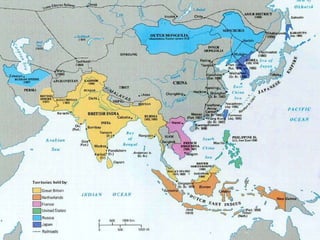
Ottoman Empire
Qing Chinese Empire
Meiji Japanese Empire
EMPIRES! Evil
and not so evil
The new economic needs created in
Europe by the Industrial Revolution
encouraged Europeans to
_____________.
a. cut back on consumption
b. borrow large sums of money
c. expand across the globe
d. reconsider their values
e. unite
Europeans came to see themselves as
____________ superior to all other people
in the world as a result of their sudden
dominance.
a. athletically
b. racially
c. agriculturally
d. not very
e. temporarily
"Social Darwinism" was
the notion that only
the fittest races would
_____________.
a. be happy
b. have large families
c. become literate
d. survive
e. learn to swim
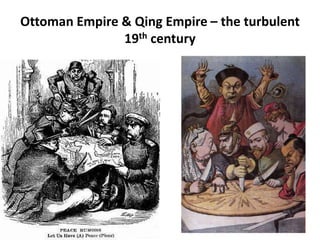
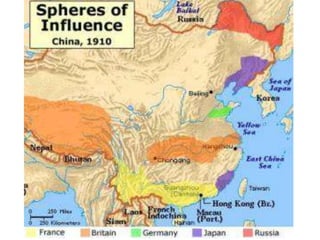
Ottoman Empire & Qing Empire – the turbulent
19th century
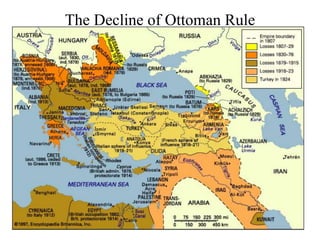
The Decline of Ottoman Rule
The decision of the Qing government to
destroy more than 3 million pounds of
__________ that it had seized from
Western traders caused the British to
attack China in 1842.
a. rubber
b. porcelain
c. silk
d. opium
e. tobacco
Empires that didn’t strike back!
Qing Dynasty of China (1644 – 1911) The
end of a 4000 years of dynastic cycles.
Ottoman Empire (1300 – 1918)
600 year old powerhouse fell.
CAUSES
In the 1700s, Qing China & the Ottoman
Empire
• Had governments that resisted economic
change & attempted to maintain pre-
industrial forms of economic production
• Had leadership that underestimated the
growing power of the European nations
The Taiping uprising
sought to _________
all of China's poor
peasants.
a. redistribute land to
b. give food to
c. murder
d. bless
e. employ
Empires that didn’t strike back!
CHANGES
• Reforms were limited by
conservative elites
• Economy weakened
• Political Rebellions
• European pressure / takeover
Modest reforms in the early twentieth
century were ___________ to save the
imperial order in China.
a. just in time
b. more than enough
c. almost enough
d. not necessary
e. too little and too late
One goal of the Ottoman Empire's
attempts at modernization was to
better __________ the empire's
many non-Muslim communities.
a. integrate
b. oppress
c. find
d. enslave
e. murder
1860s - 1900s
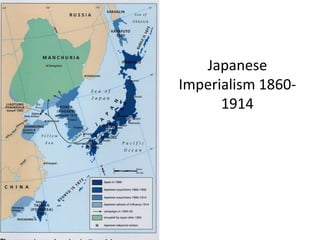
Japan transformed itself into a
major industrial and military power
The young samurai behind the Meiji
restoration in 1868 sought to
________________.
a. return Japan to traditional Japanese
values
b. redistribute the imbalance in wealth
among Japanese merchants
c. learn as much as possible from the West
so as to renew Japanese power
d. return confiscated property to European
merchants
e. restore the shogunate
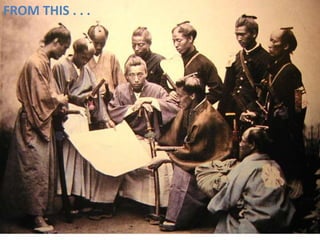
FROM THIS . . .
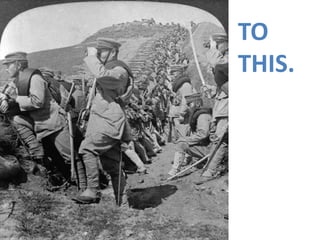
TO
THIS.
Japanese
Imperialism 1860-
1914
JAPAN~
Changes-
• New dynasty – Meiji Period began
• From a closed economy to Industrial
Power
• From Traditional to Modern – Culture,
Economy, Military
• Isolated nation-state to Imperial Power
Japan managed to modernize and
industrialize without _____________,
something that had severely damaged
Ottoman and Egyptian attempts to
modernize.
a. internal chaos
b. losing its identity
c. converting to Christianity
d. accruing massive foreign debt
e. polluting the environment
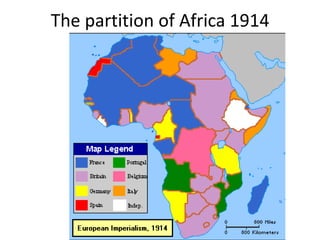
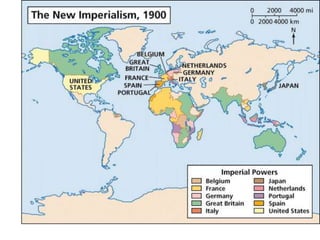
The partition of Africa 1914
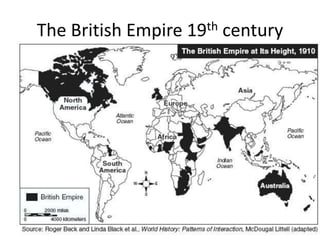
The British Empire 19th century
Why did ordinary Europeans come to care
whether their country gained new territories
around the globe or not?
a. Profits from new territories were
distributed equally among all Europeans.
b. Most Europeans were naturally curious
about other cultures around the world.
c. Many Europeans became swept up in mass
nationalism.
d. Many Europeans were looking for new
places to settle or visit on vacation.
Which of the following
inventions/discoveries was NOT a major
factor in aiding European expansion in the
nineteenth century?
a. Quinine
b. Breech-loading rifles and machine guns
c. The underwater telegraph
d. The cotton gin
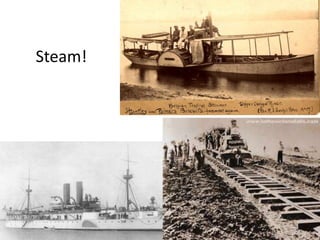
Steam!
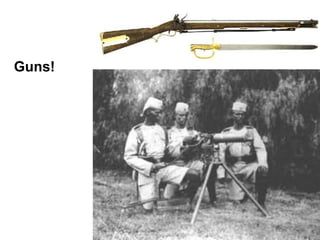
Guns!
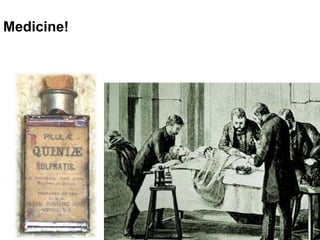
Medicine!
How did many Europeans come to
understand the importance of race in the
nineteenth century as a result of their
industrial and territorial advancements?
a. They came to recognize that racial
differences are just skin deep.
b. They saw the different races as separate
but equal.
c. They created "scientific" racial
hierarchies with themselves at the top.
d. Their views on race did not change over
the course of the nineteenth century.
________________ became British
settler colonies.
a. Hong Kong and Belize
b. India and Tibet
c. Nigeria and Ghana
d. Australia and New Zealand
e. Egypt and Sudan
The legalized segregation of blacks and
whites in South Africa came to be known as
____________.
a. phrenology
b. social Darwinism
c. apartheid
d. varna
e. the homeland system
By forcing colonized peoples to do work
other than their traditional agriculture,
European campaigns of forced labor
caused widespread ____________ in those
colonies.
a. progress
b. military conflict
c. food shortages and famines
d. population growth
e. competition
Some Africans and Asians benefited from
the new European dominance by engaging
in _______________, which often was
highly profitable.
a. stock market trading
b. cash-crop farming
c. industrial enterprise
d. drug dealing
e. the sale of art to tourists
For a small minority of colonial subjects,
the acquisition of Western _________
helped them create a new identity.
a. money
b. souvenirs
c. spouses
d. passports
e. education
Which of the following was NOT a consequence of
European colonialism for African women?
a. Especially in the rural areas of South Africa,
many women became heads of impoverished
households, as their husbands left for work in the
mines or cities.
b. Some women in West Africa established
themselves as small-scale traders.
c. Under the influence of Christianity, most
women began to marry later and have smaller
families.
d. Women's domestic workload increased greatly,
as men were involved in the modern economy.

Review 1750 1900 2

  • 1.
    REVIEW 1750-1900 Ottoman Empire QingChinese Empire Meiji Japanese Empire
  • 2.
  • 4.
    The new economicneeds created in Europe by the Industrial Revolution encouraged Europeans to _____________. a. cut back on consumption b. borrow large sums of money c. expand across the globe d. reconsider their values e. unite
  • 5.
    Europeans came tosee themselves as ____________ superior to all other people in the world as a result of their sudden dominance. a. athletically b. racially c. agriculturally d. not very e. temporarily
  • 6.
    "Social Darwinism" was thenotion that only the fittest races would _____________. a. be happy b. have large families c. become literate d. survive e. learn to swim
  • 7.
    Ottoman Empire &Qing Empire – the turbulent 19th century
  • 8.
    The Decline ofOttoman Rule
  • 9.
    The decision ofthe Qing government to destroy more than 3 million pounds of __________ that it had seized from Western traders caused the British to attack China in 1842. a. rubber b. porcelain c. silk d. opium e. tobacco
  • 11.
    Empires that didn’tstrike back! Qing Dynasty of China (1644 – 1911) The end of a 4000 years of dynastic cycles. Ottoman Empire (1300 – 1918) 600 year old powerhouse fell.
  • 12.
    CAUSES In the 1700s,Qing China & the Ottoman Empire • Had governments that resisted economic change & attempted to maintain pre- industrial forms of economic production • Had leadership that underestimated the growing power of the European nations
  • 13.
    The Taiping uprising soughtto _________ all of China's poor peasants. a. redistribute land to b. give food to c. murder d. bless e. employ
  • 14.
    Empires that didn’tstrike back! CHANGES • Reforms were limited by conservative elites • Economy weakened • Political Rebellions • European pressure / takeover
  • 15.
    Modest reforms inthe early twentieth century were ___________ to save the imperial order in China. a. just in time b. more than enough c. almost enough d. not necessary e. too little and too late
  • 16.
    One goal ofthe Ottoman Empire's attempts at modernization was to better __________ the empire's many non-Muslim communities. a. integrate b. oppress c. find d. enslave e. murder
  • 17.
    1860s - 1900s Japantransformed itself into a major industrial and military power
  • 19.
    The young samuraibehind the Meiji restoration in 1868 sought to ________________. a. return Japan to traditional Japanese values b. redistribute the imbalance in wealth among Japanese merchants c. learn as much as possible from the West so as to renew Japanese power d. return confiscated property to European merchants e. restore the shogunate
  • 20.
  • 21.
  • 22.
  • 23.
    JAPAN~ Changes- • New dynasty– Meiji Period began • From a closed economy to Industrial Power • From Traditional to Modern – Culture, Economy, Military • Isolated nation-state to Imperial Power
  • 24.
    Japan managed tomodernize and industrialize without _____________, something that had severely damaged Ottoman and Egyptian attempts to modernize. a. internal chaos b. losing its identity c. converting to Christianity d. accruing massive foreign debt e. polluting the environment
  • 27.
    The partition ofAfrica 1914
  • 28.
    The British Empire19th century
  • 29.
    Why did ordinaryEuropeans come to care whether their country gained new territories around the globe or not? a. Profits from new territories were distributed equally among all Europeans. b. Most Europeans were naturally curious about other cultures around the world. c. Many Europeans became swept up in mass nationalism. d. Many Europeans were looking for new places to settle or visit on vacation.
  • 30.
    Which of thefollowing inventions/discoveries was NOT a major factor in aiding European expansion in the nineteenth century? a. Quinine b. Breech-loading rifles and machine guns c. The underwater telegraph d. The cotton gin
  • 31.
  • 32.
  • 33.
  • 35.
    How did manyEuropeans come to understand the importance of race in the nineteenth century as a result of their industrial and territorial advancements? a. They came to recognize that racial differences are just skin deep. b. They saw the different races as separate but equal. c. They created "scientific" racial hierarchies with themselves at the top. d. Their views on race did not change over the course of the nineteenth century.
  • 36.
    ________________ became British settlercolonies. a. Hong Kong and Belize b. India and Tibet c. Nigeria and Ghana d. Australia and New Zealand e. Egypt and Sudan
  • 37.
    The legalized segregationof blacks and whites in South Africa came to be known as ____________. a. phrenology b. social Darwinism c. apartheid d. varna e. the homeland system
  • 38.
    By forcing colonizedpeoples to do work other than their traditional agriculture, European campaigns of forced labor caused widespread ____________ in those colonies. a. progress b. military conflict c. food shortages and famines d. population growth e. competition
  • 39.
    Some Africans andAsians benefited from the new European dominance by engaging in _______________, which often was highly profitable. a. stock market trading b. cash-crop farming c. industrial enterprise d. drug dealing e. the sale of art to tourists
  • 40.
    For a smallminority of colonial subjects, the acquisition of Western _________ helped them create a new identity. a. money b. souvenirs c. spouses d. passports e. education
  • 41.
    Which of thefollowing was NOT a consequence of European colonialism for African women? a. Especially in the rural areas of South Africa, many women became heads of impoverished households, as their husbands left for work in the mines or cities. b. Some women in West Africa established themselves as small-scale traders. c. Under the influence of Christianity, most women began to marry later and have smaller families. d. Women's domestic workload increased greatly, as men were involved in the modern economy.