Retrospectives
The different ways to run it
AGILE PRINCIPLES
• Our highest priority is to satisfy the customer through early and continuous delivery of valuable software.

• Welcome changing requirements, even late in  development. Agile processes harness change for the customer's competitive advantage.

• Deliver working software frequently, from a  couple of weeks to a couple of months, with a  preference to the shorter timescale.

• Business people and developers must work together daily throughout the project.

• Build projects around motivated individuals. Give them the environment and support they need, and trust them to get the job done.

• The most efficient and effective method of conveying information to and within a development team is face-to-face conversation.

• Working software is the primary measure of progress.

• Agile processes promote sustainable development. The sponsors, developers, and users should be able to maintain a constant pace indefinitely.

• Continuous attention to technical excellence and good design enhances agility.

• Simplicity--the art of maximizing the amount of work not done--is essential.

• The best architectures, requirements, and designs emerge from self-organizing teams.

• At regular intervals, the team reflectson how to become more effective, then tunes & adjusts its behaviours accordingly.

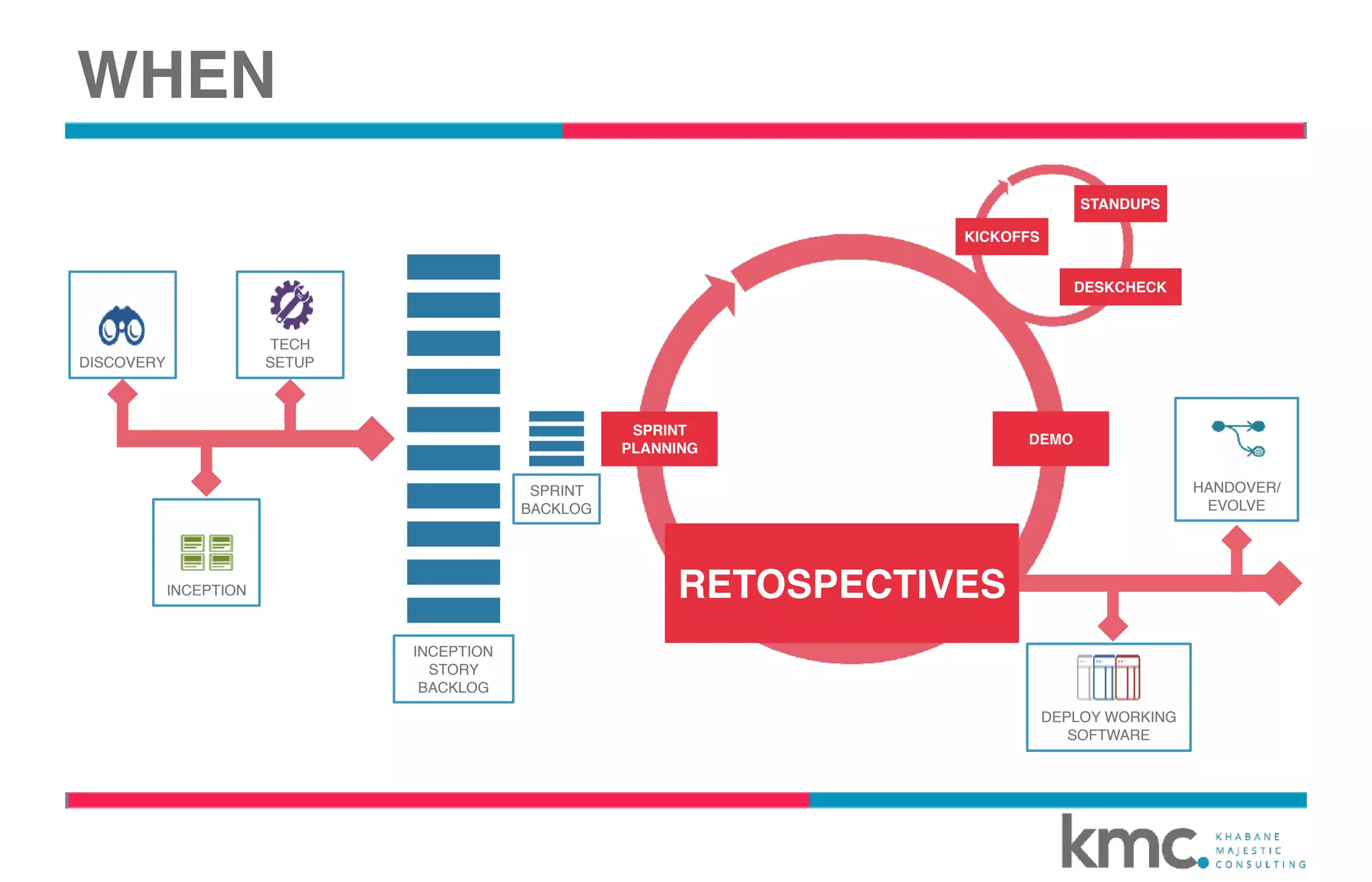
WHEN
INCEPTION
STORY
BACKLOG
SPRINT
BACKLOG
DISCOVERY
STANDUPS
KICKOFFS
DESKCHECK
SPRINT
PLANNING
DEMO
RETOSPECTIVES
TECH
SETUP
INCEPTION
DEPLOY WORKING
SOFTWARE
HANDOVER/
EVOLVE
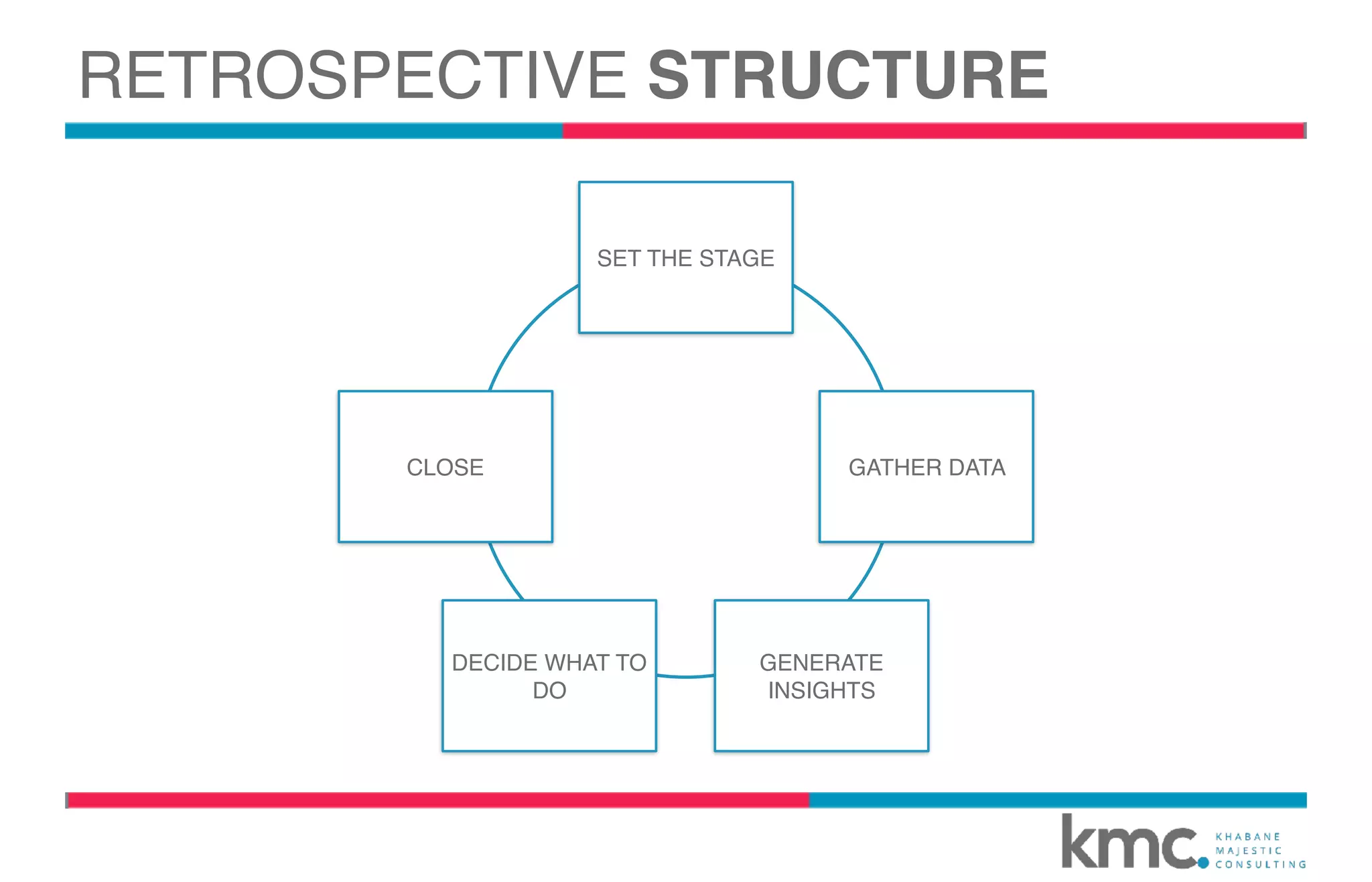
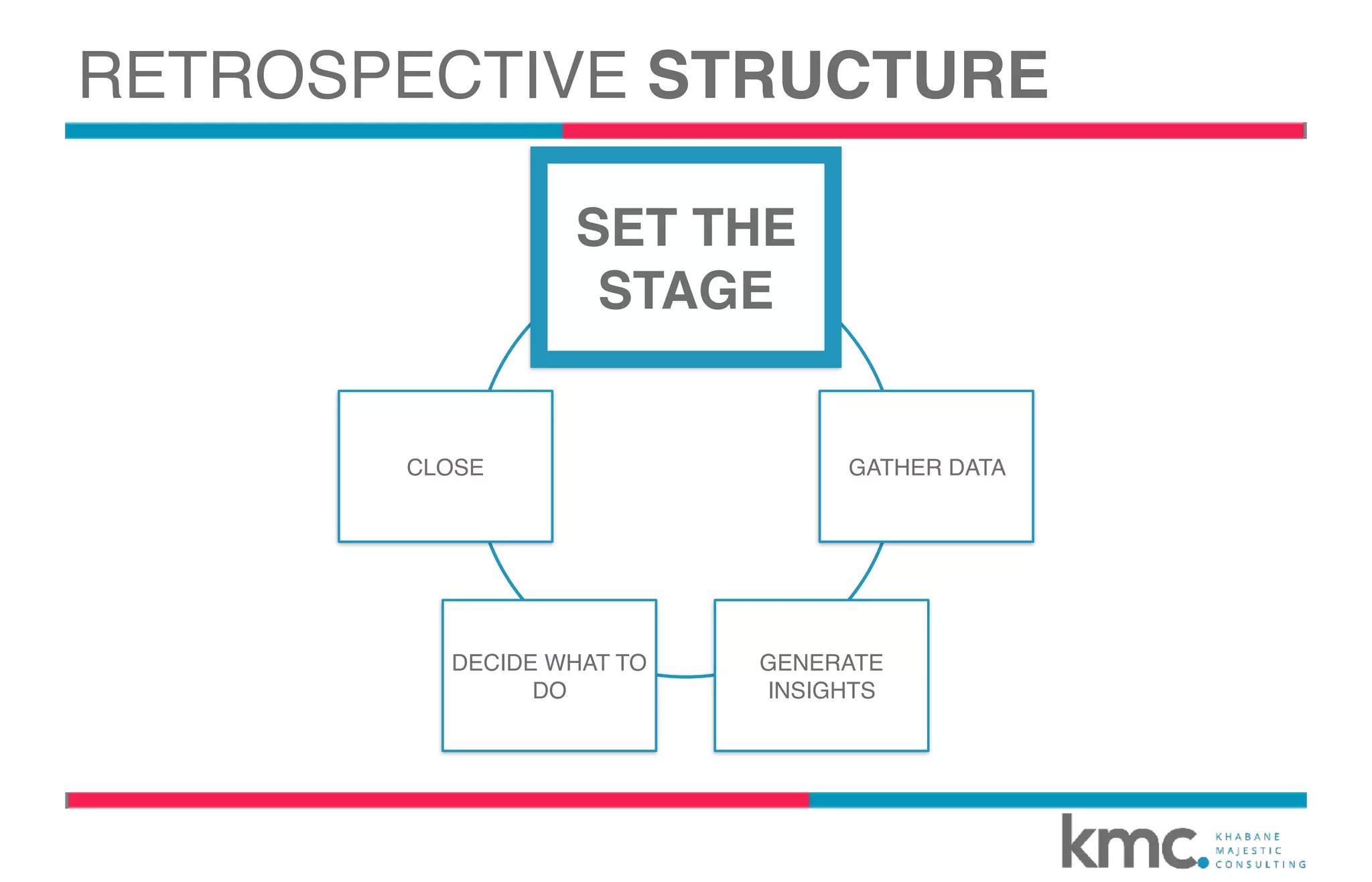
SET THE STAGE
GATHER DATA
GENERATE
INSIGHTS
DECIDE WHAT TO
DO
CLOSE
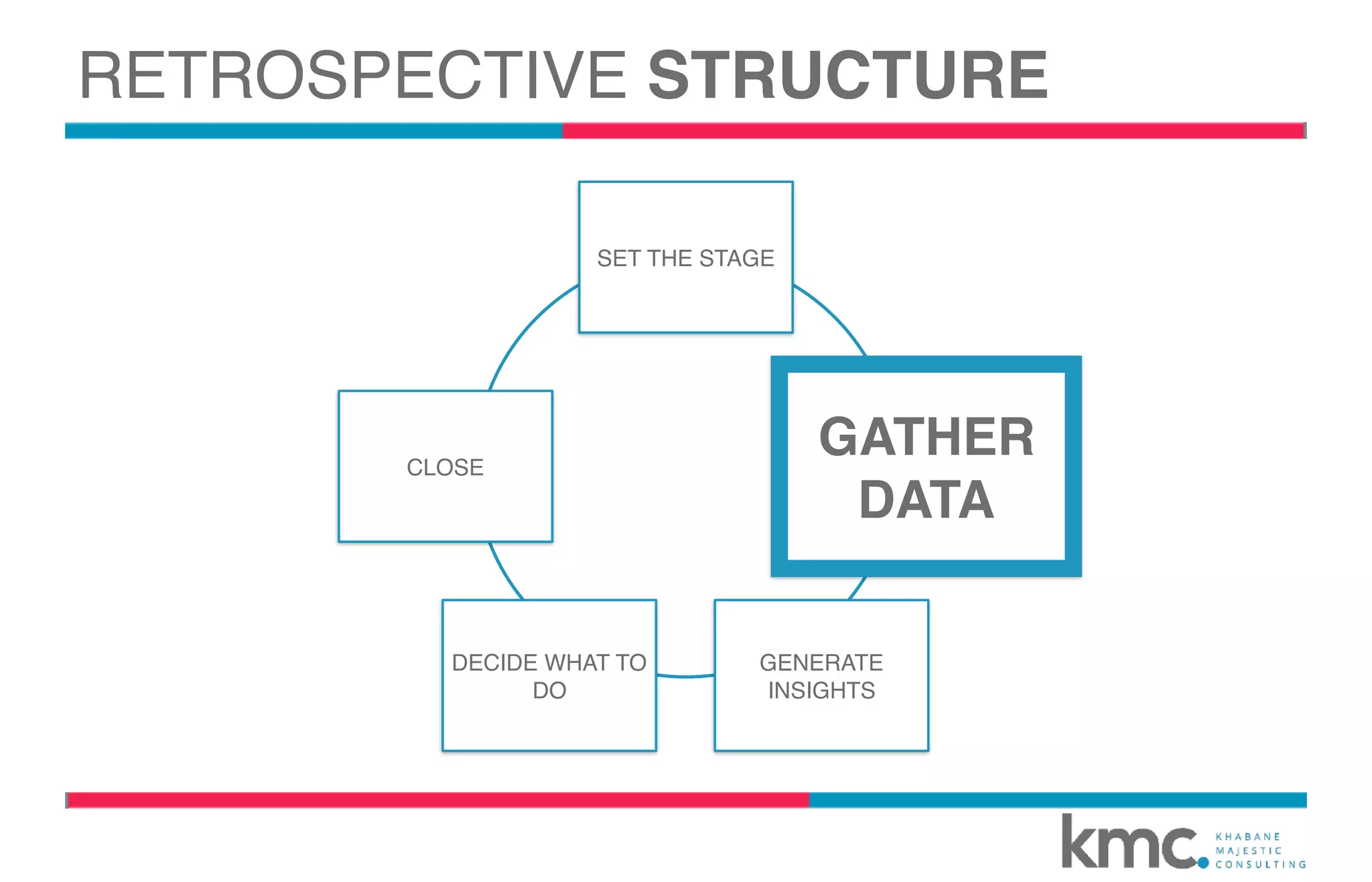
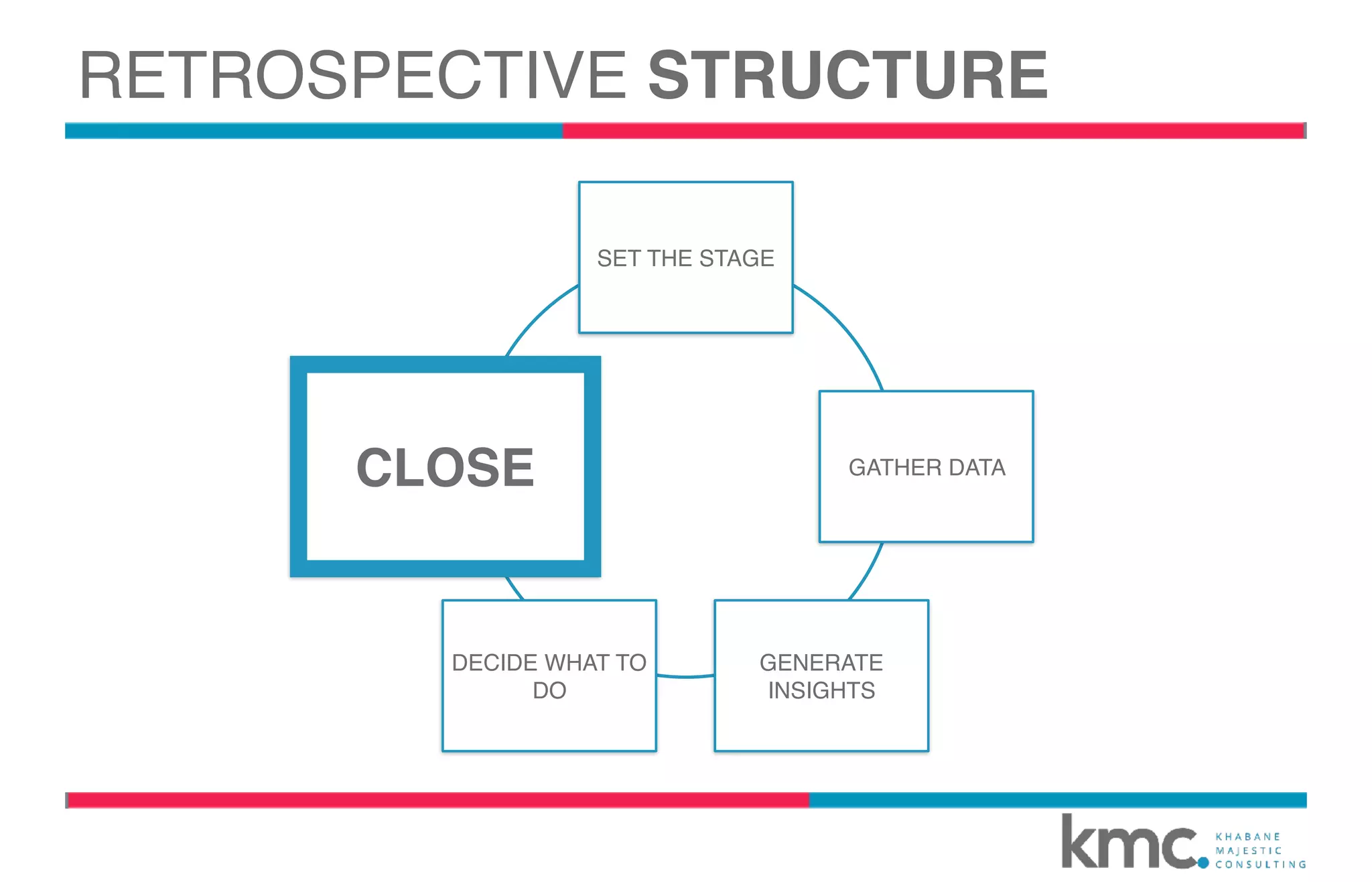
RETROSPECTIVE STRUCTURE
SET THE STAGE
GATHER DATA
GENERATE
INSIGHTS
DECIDE WHAT TO
DO
CLOSE
SET THE
STAGE
RETROSPECTIVE STRUCTURE
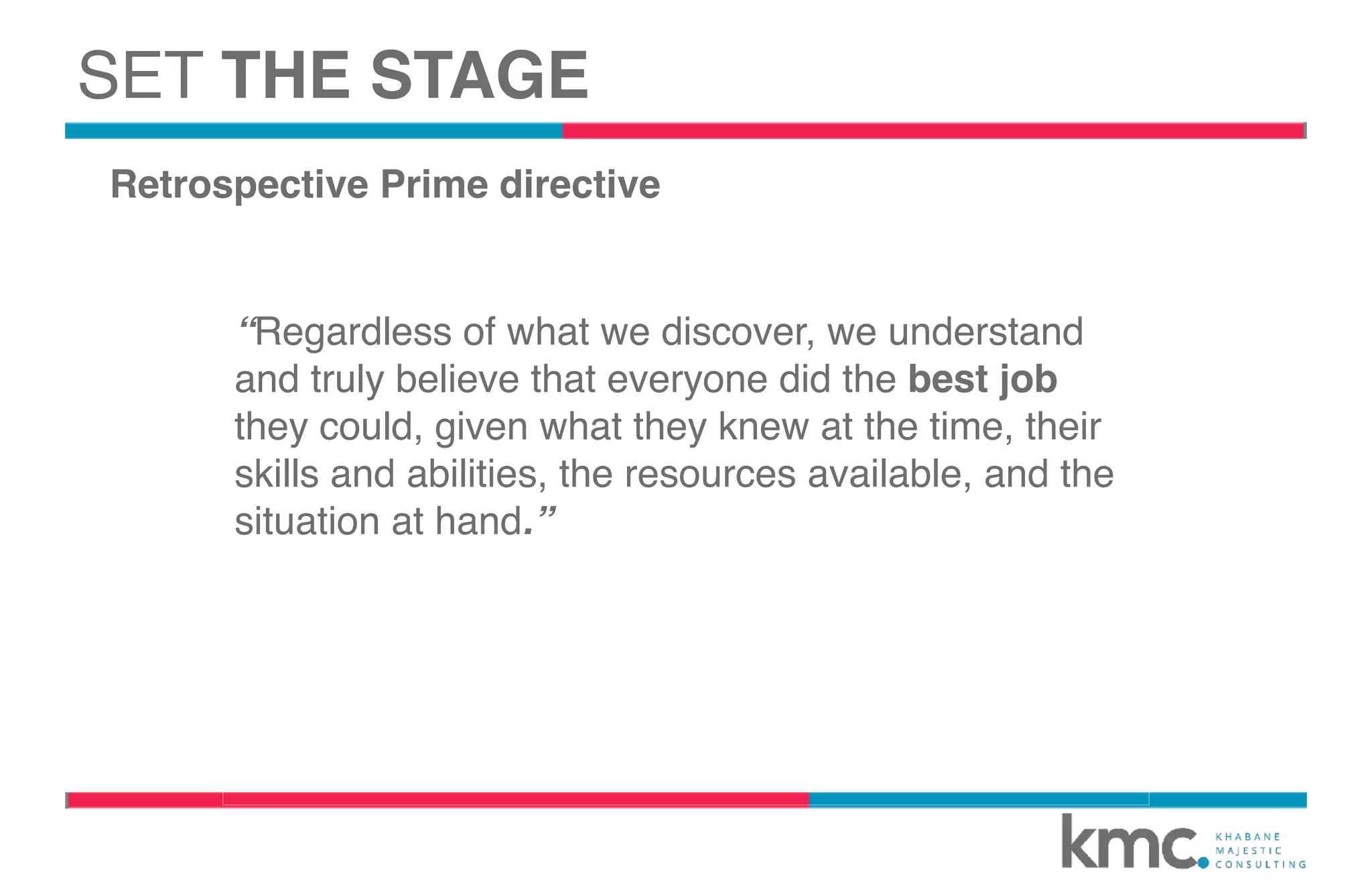
“Regardless of what we discover, we understand
and truly believe that everyone did the best job
they could, given what they knew at the time, their
skills and abilities, the resources available, and the
situation at hand.”
SET THE STAGE
Retrospective Prime directive
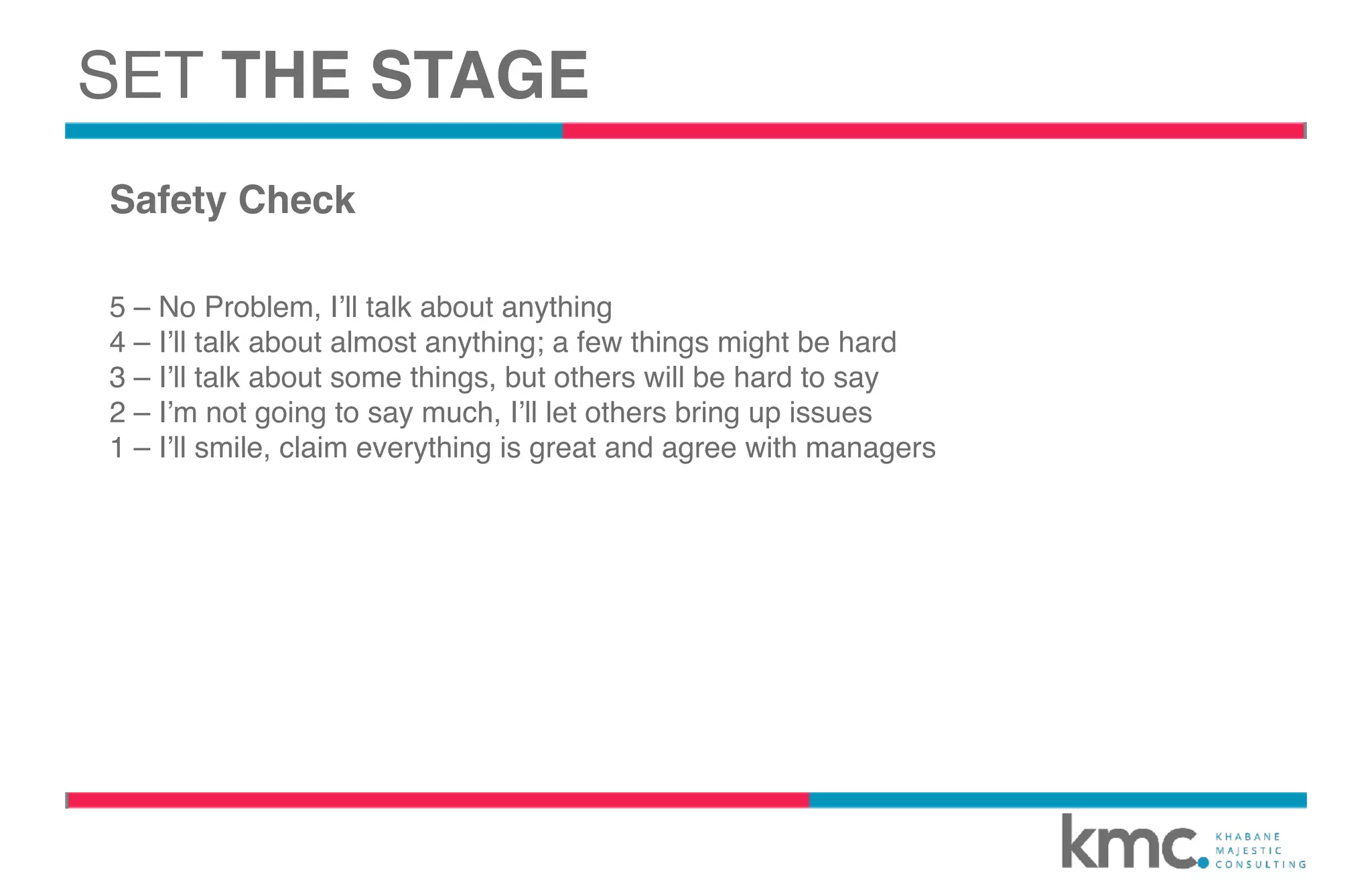
Safety Check
5 – No Problem, I’ll talk about anything
4 – I’ll talk about almost anything; a few things might be hard
3 – I’ll talk about some things, but others will be hard to say
2 – I’m not going to say much, I’ll let others bring up issues
1 – I’ll smile, claim everything is great and agree with managers
SET THE STAGE
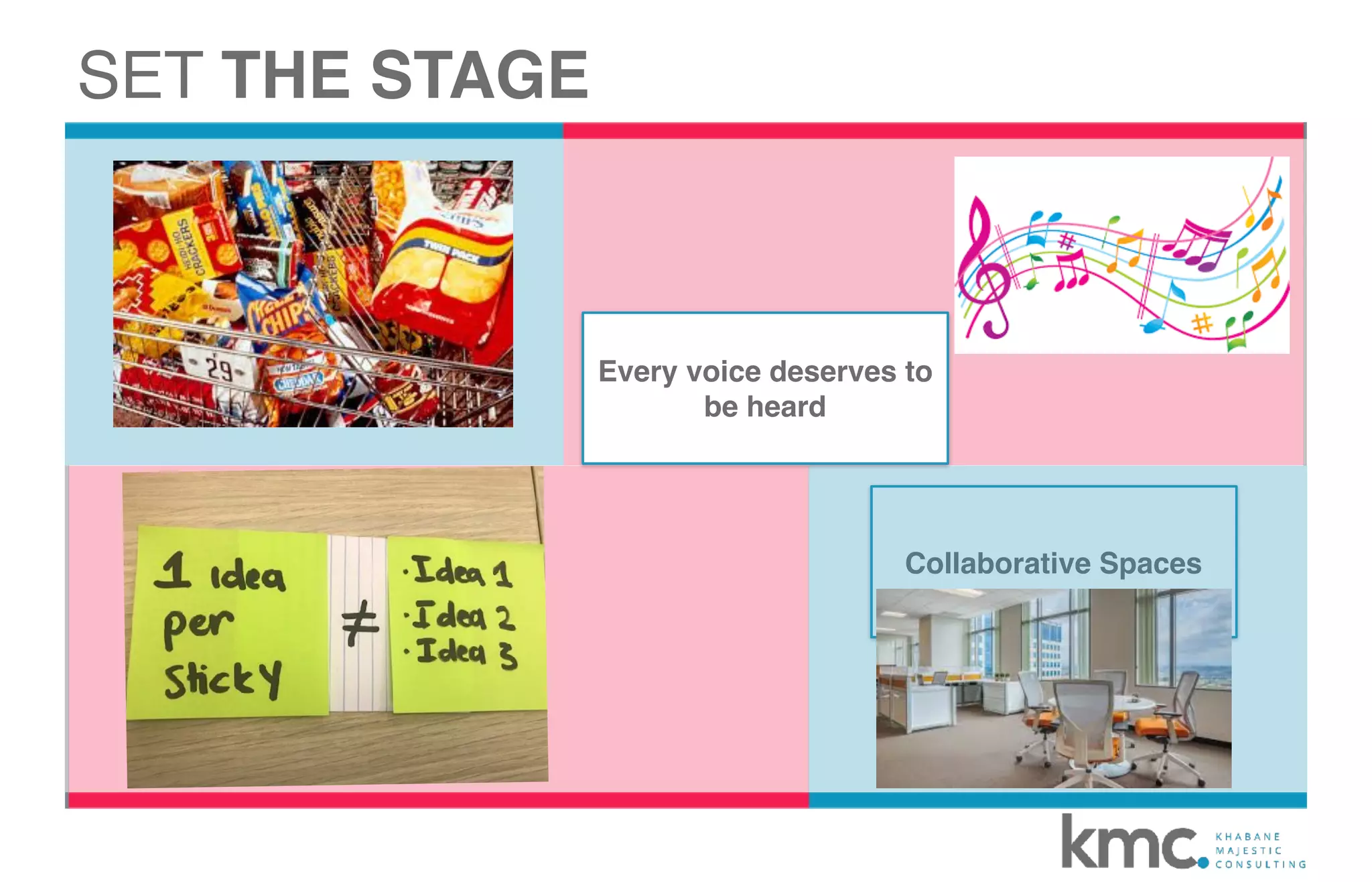
Collaborative Spaces
SET THE STAGE
Every voice deserves to
be heard
SET THE STAGE
GATHER DATA
GENERATE
INSIGHTS
DECIDE WHAT TO
DO
CLOSE
GATHER
DATA
RETROSPECTIVE STRUCTURE
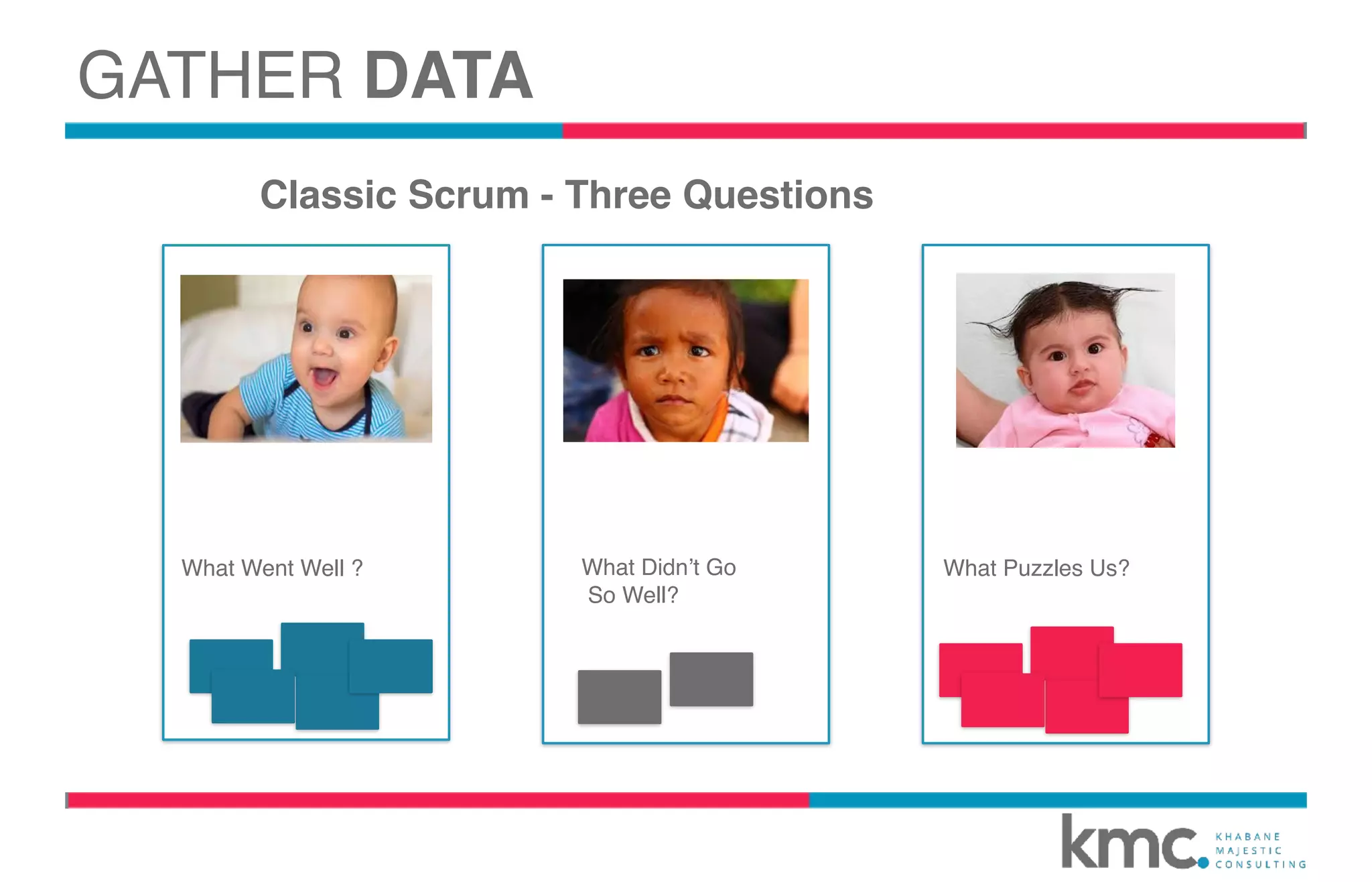
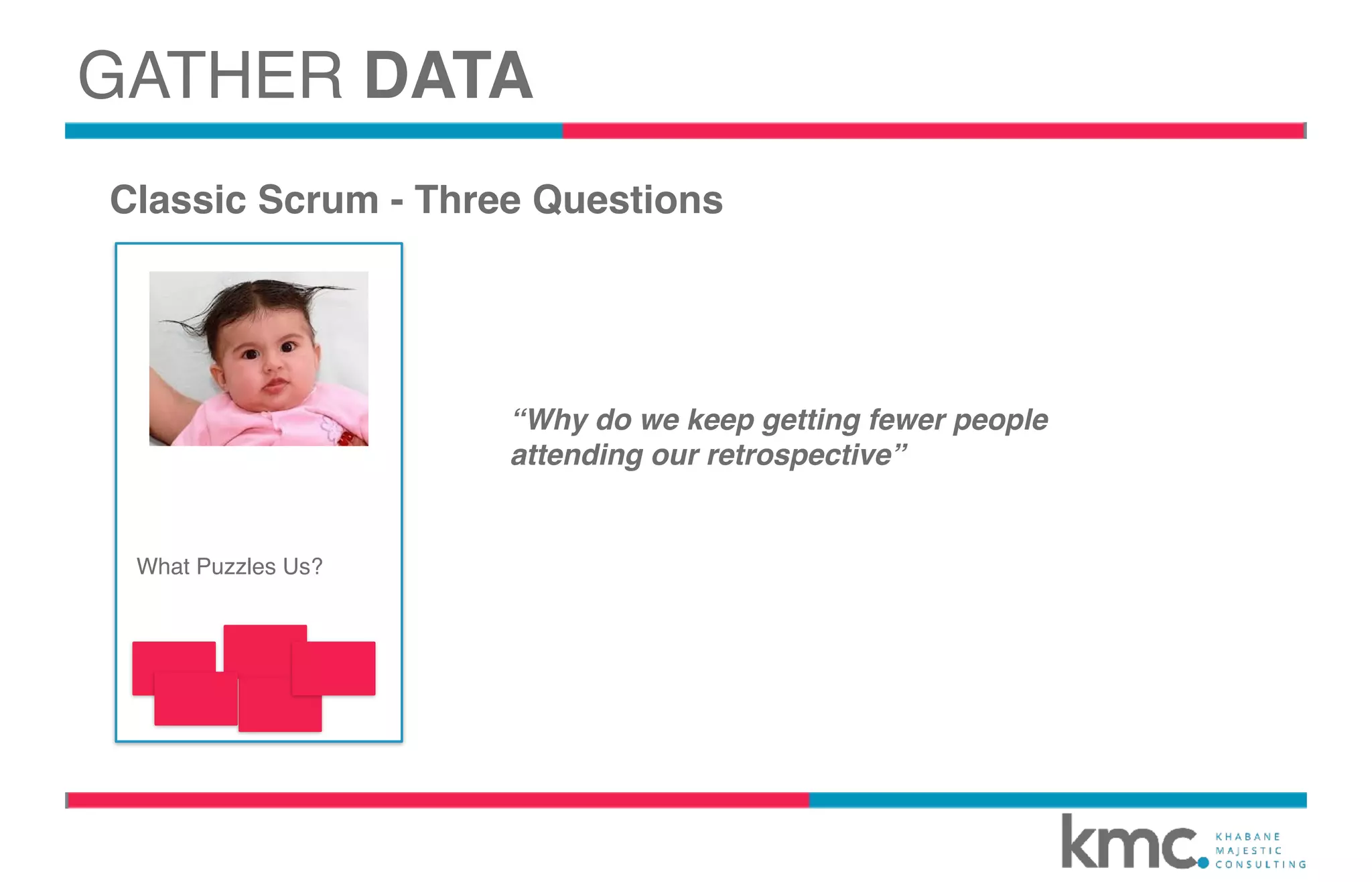
Classic Scrum - Three Questions
What Didn’t Go
So Well?
GATHER DATA
What Went Well ? What Puzzles Us?
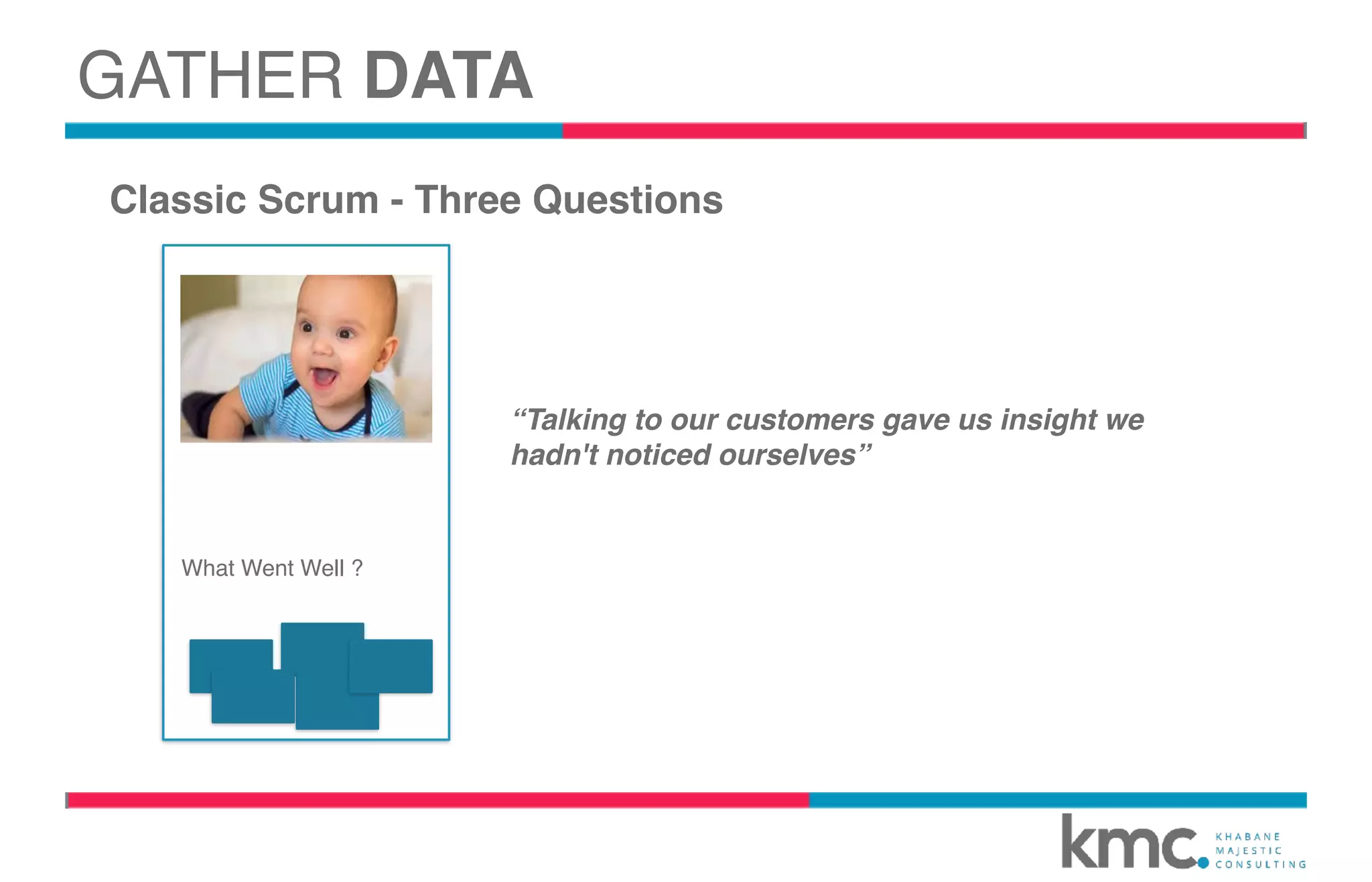
“Talking to our customers gave us insight we
hadn't noticed ourselves”
Classic Scrum - Three Questions
GATHER DATA
What Went Well ?
Classic Scrum - Three Questions
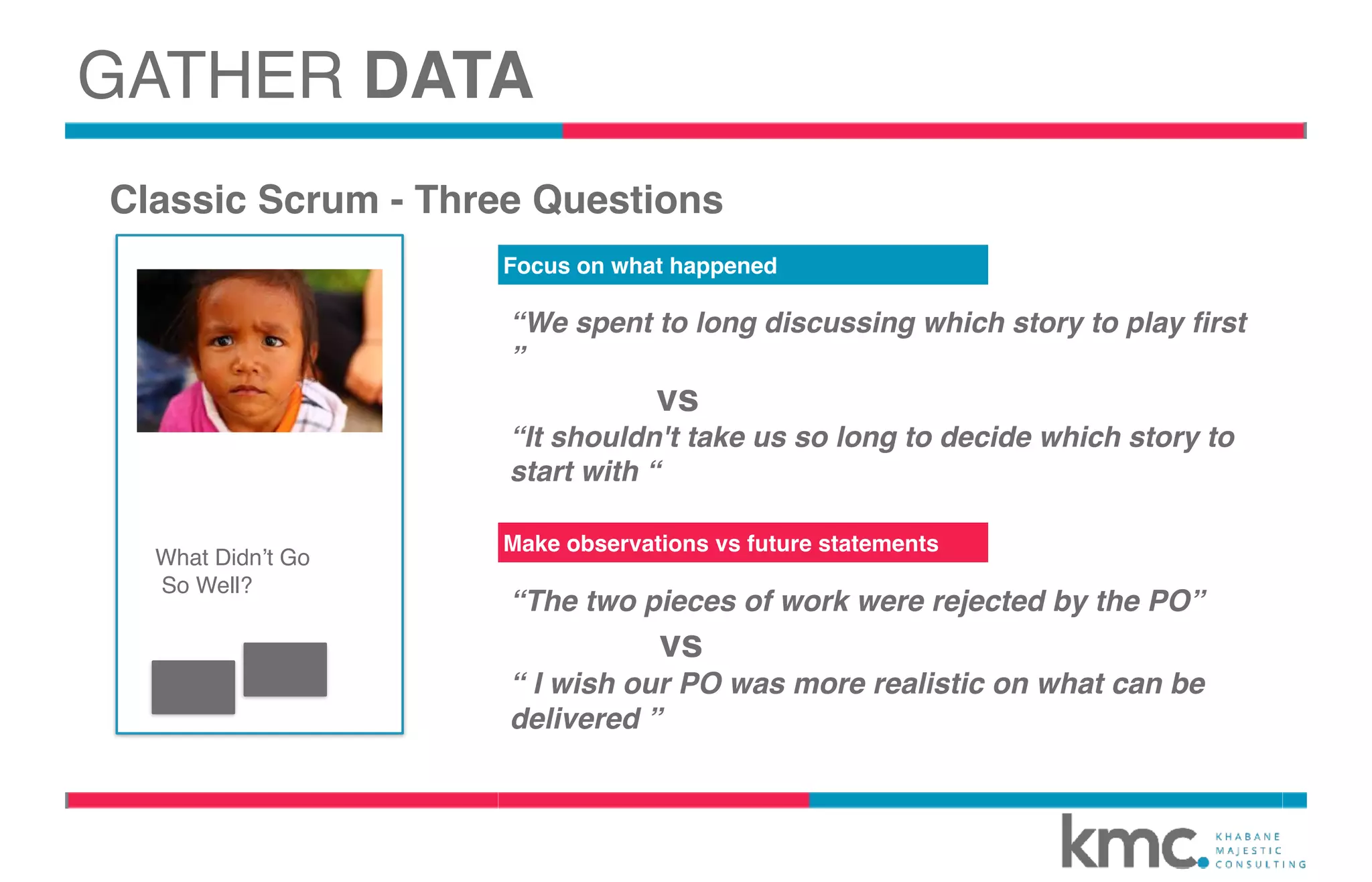
“We spent to long discussing which story to play first
”
vs
“It shouldn't take us so long to decide which story to
start with “
“The two pieces of work were rejected by the PO”
vs
“ I wish our PO was more realistic on what can be
delivered ”
Focus on what happened
Make observations vs future statements
GATHER DATA
What Didn’t Go
So Well?
Classic Scrum - Three Questions
“Why do we keep getting fewer people
attending our retrospective”
GATHER DATA
What Puzzles Us?
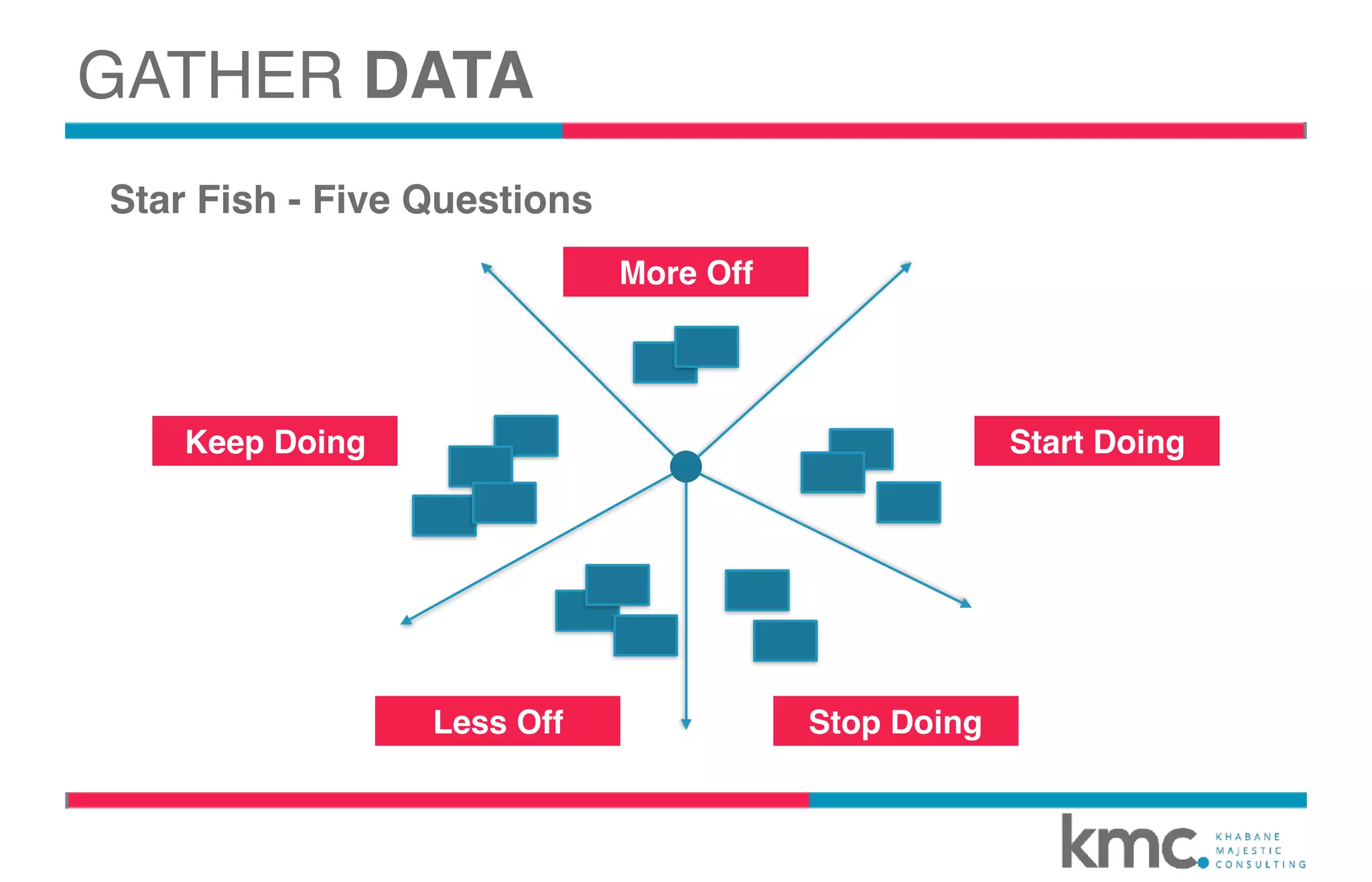
Star Fish - Five Questions
More Off
Keep Doing Start Doing
Less Off Stop Doing
GATHER DATA
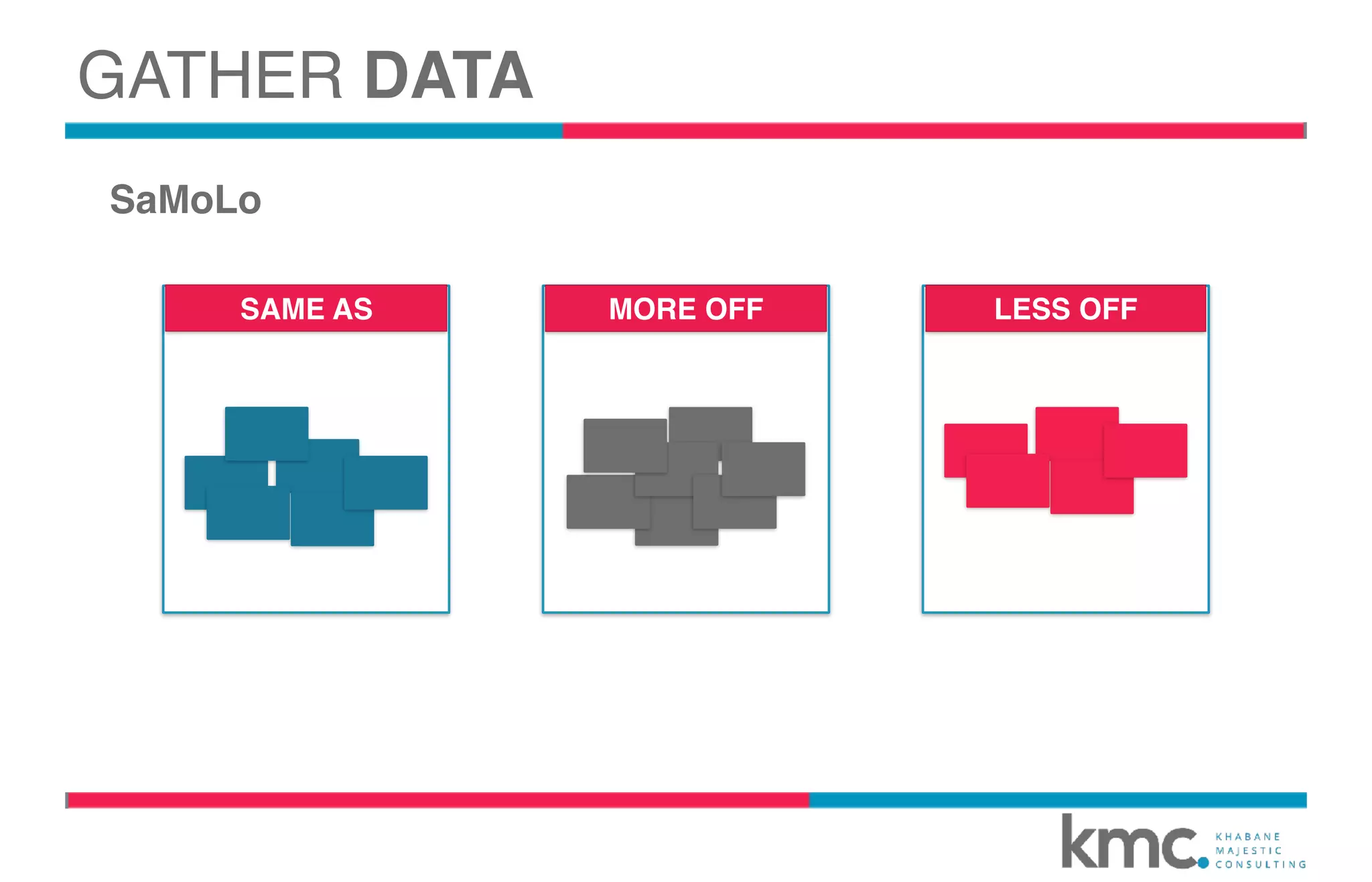
SaMoLo
GATHER DATA
SAME AS MORE OFF LESS OFF
GATHER DATA
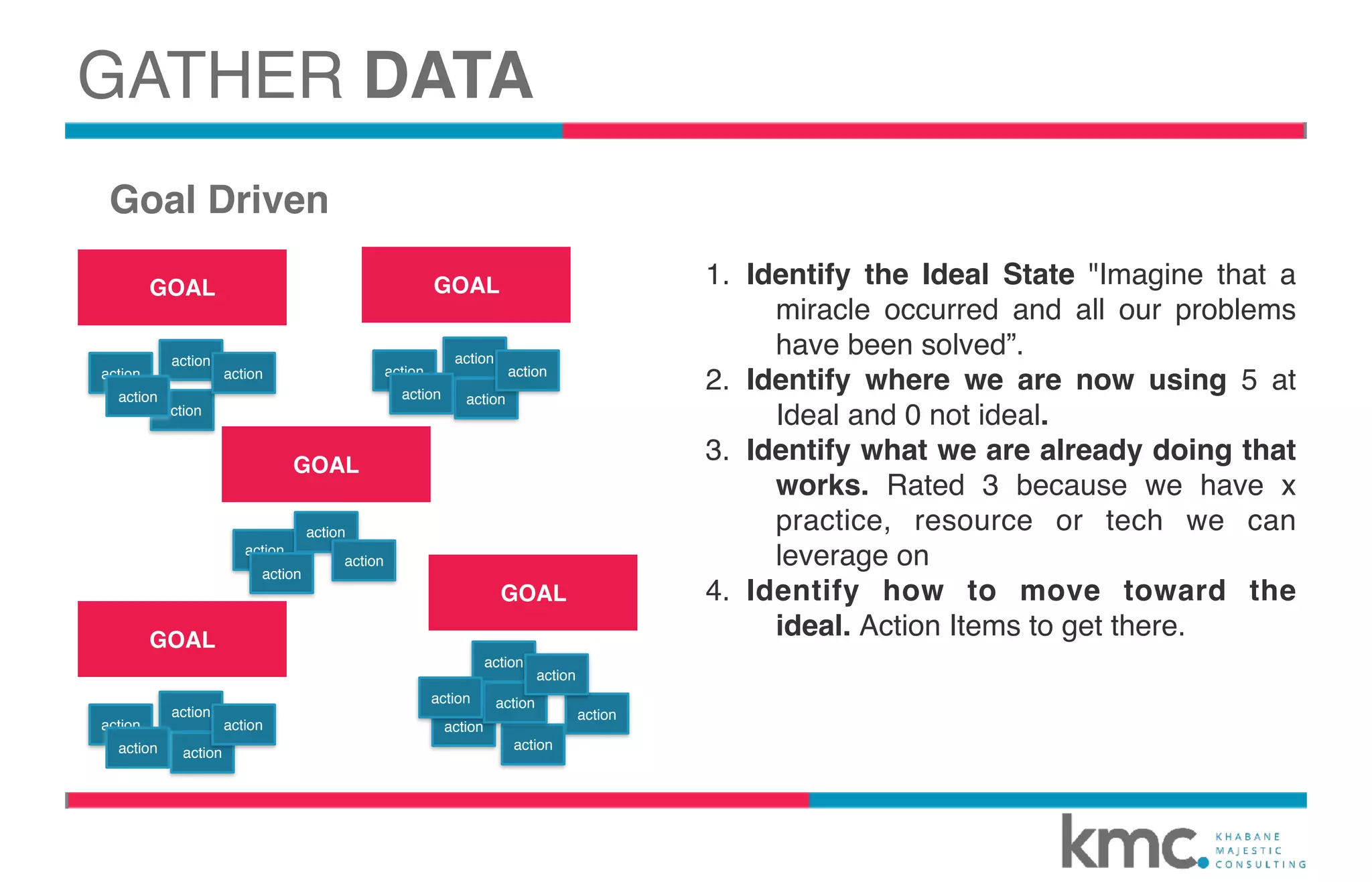
Goal Driven
action
action
action
action
action
GOAL
action
action
action
action
action
GOAL
action
action
action
action
GOAL
action
action
action
action
action
GOAL
action
action
action
action
action
action
action
GOAL
1. Identify the Ideal State "Imagine that a
miracle occurred and all our problems
have been solved”.
2. Identify where we are now using 5 at
Ideal and 0 not ideal.  
3. Identify what we are already doing that
works. Rated 3 because we have x
practice, resource or tech we can
leverage on 
4. Identify how to move toward the
ideal. Action Items to get there.
GATHER DATA
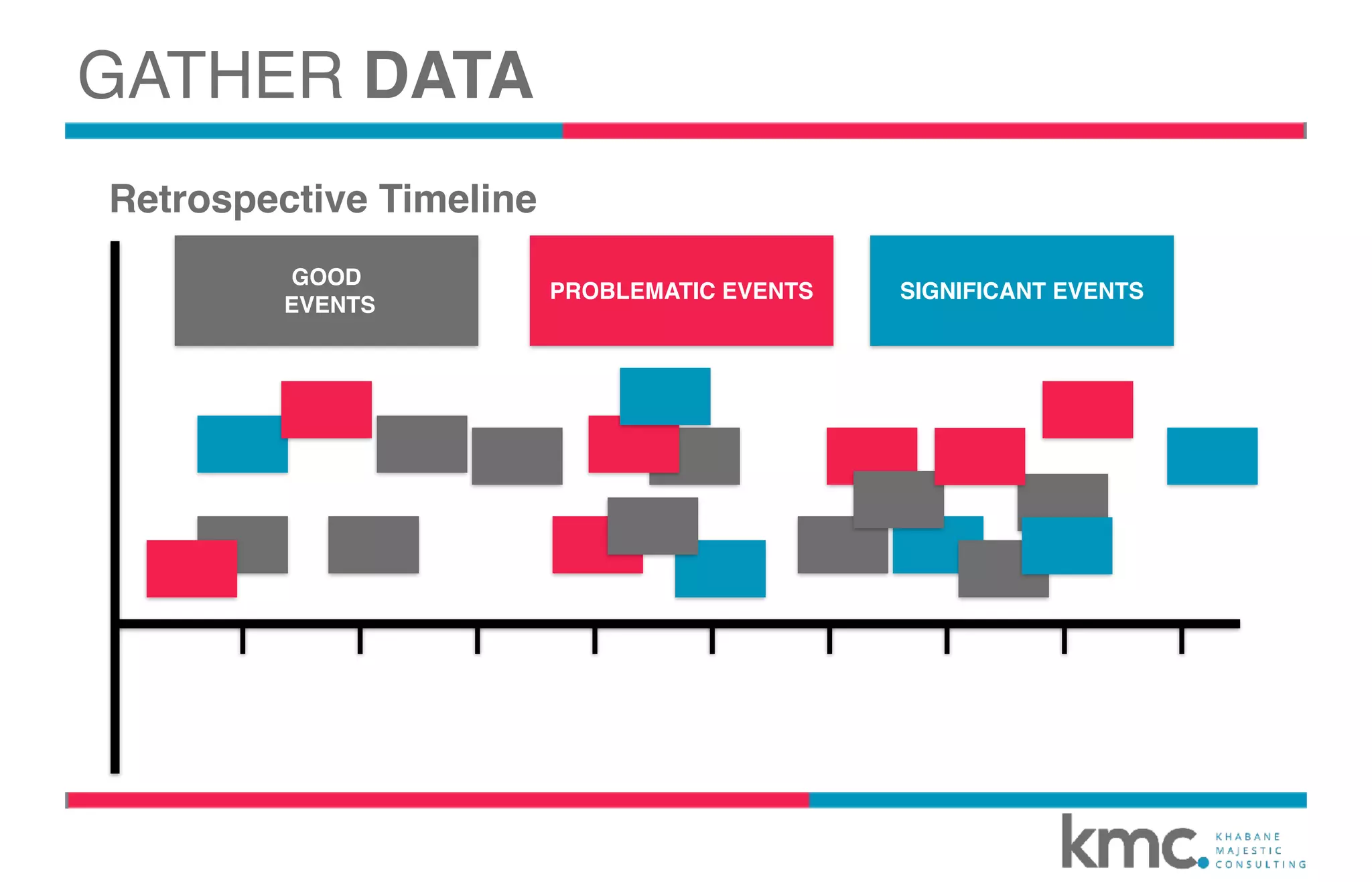
SIGNIFICANT EVENTSPROBLEMATIC EVENTS
GOOD
EVENTS
GATHER DATA
Retrospective Timeline
GATHER DATA
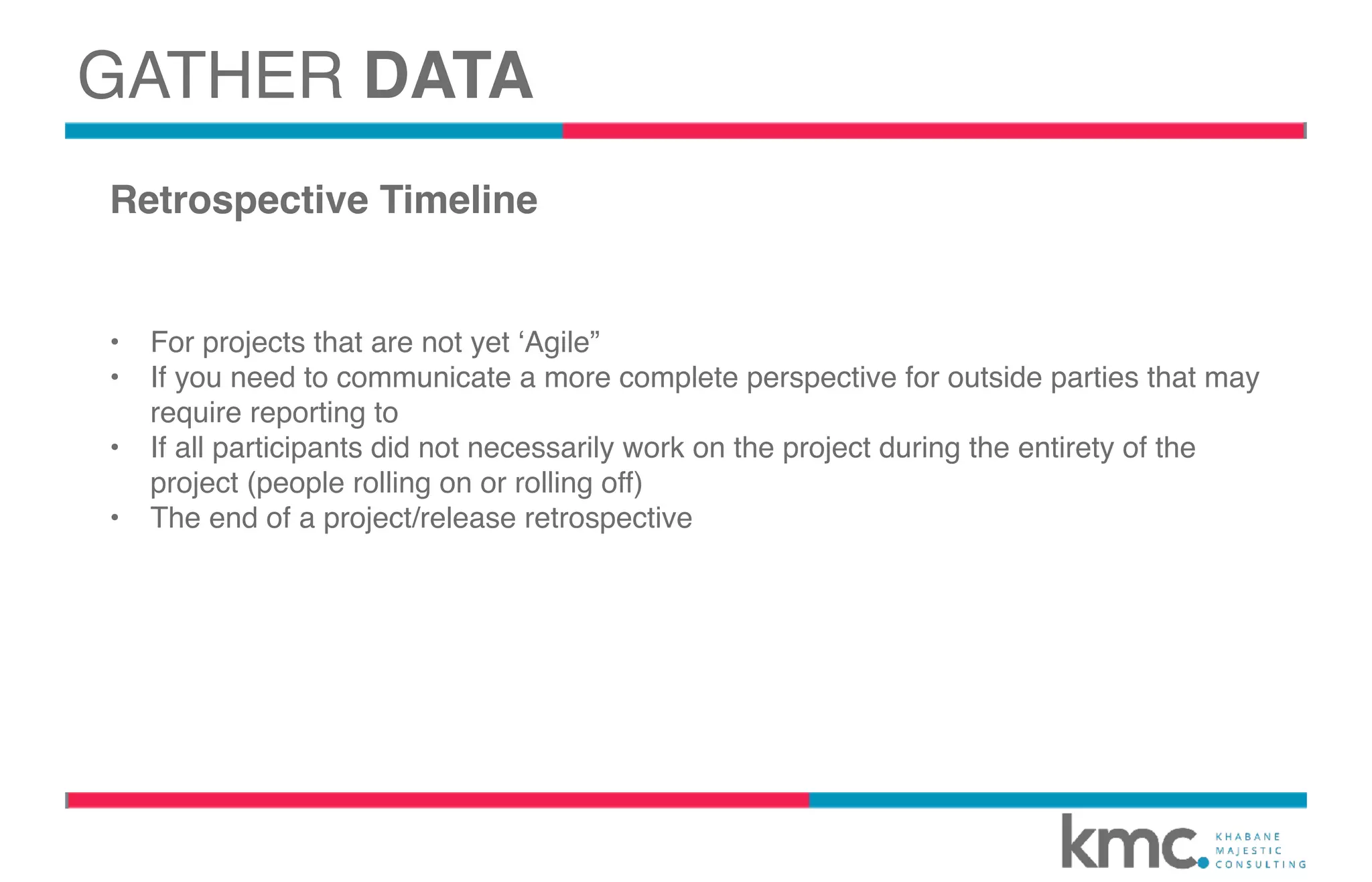
Retrospective Timeline
• For projects that are not yet ‘Agile”
• If you need to communicate a more complete perspective for outside parties that may
require reporting to
• If all participants did not necessarily work on the project during the entirety of the
project (people rolling on or rolling off)
• The end of a project/release retrospective
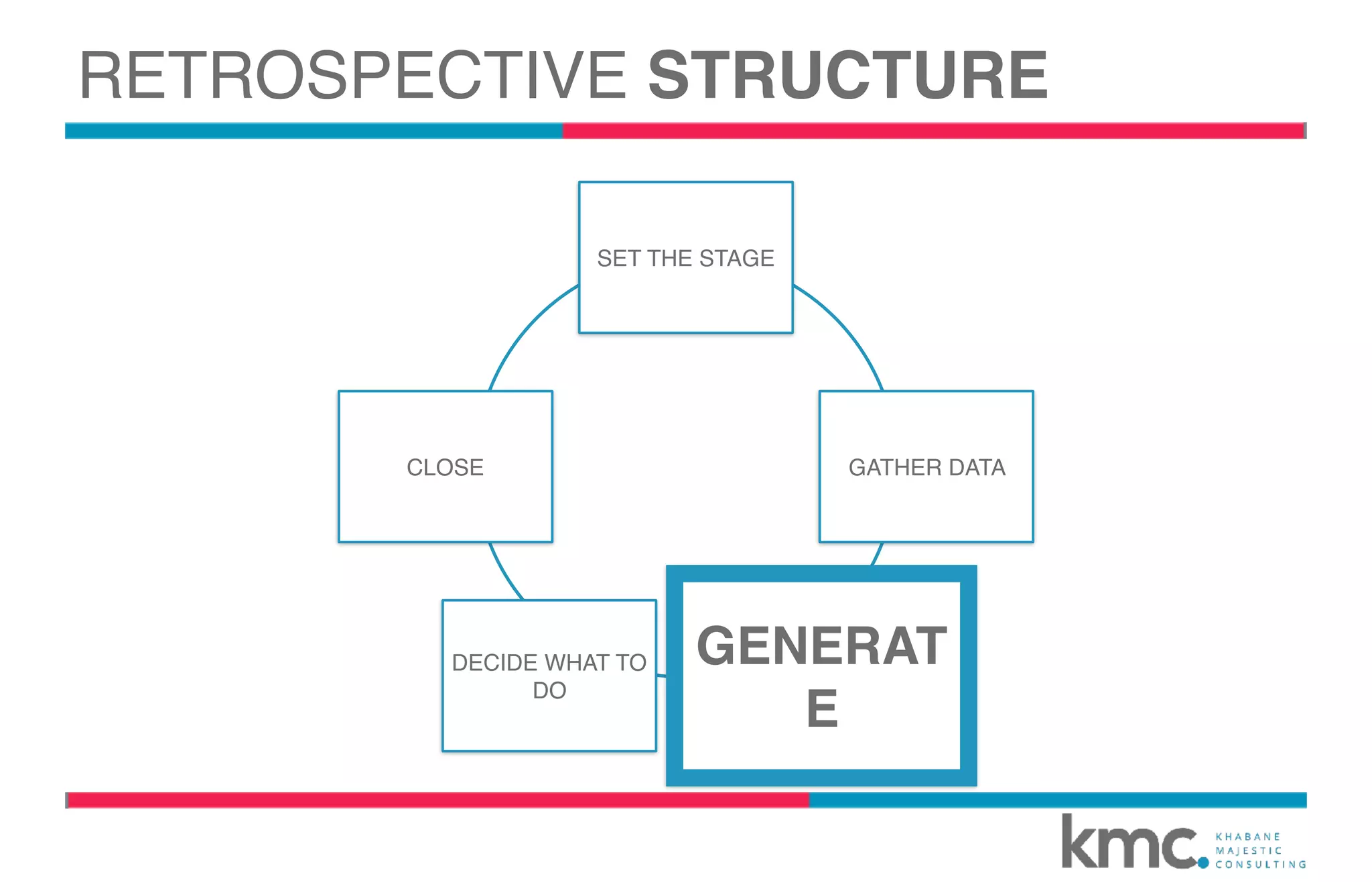
RETROSPECTIVE STRUCTURE
SET THE STAGE
GATHER DATA
GENERATE
INSIGHTS
DECIDE WHAT TO
DO
CLOSE
GENERAT
E
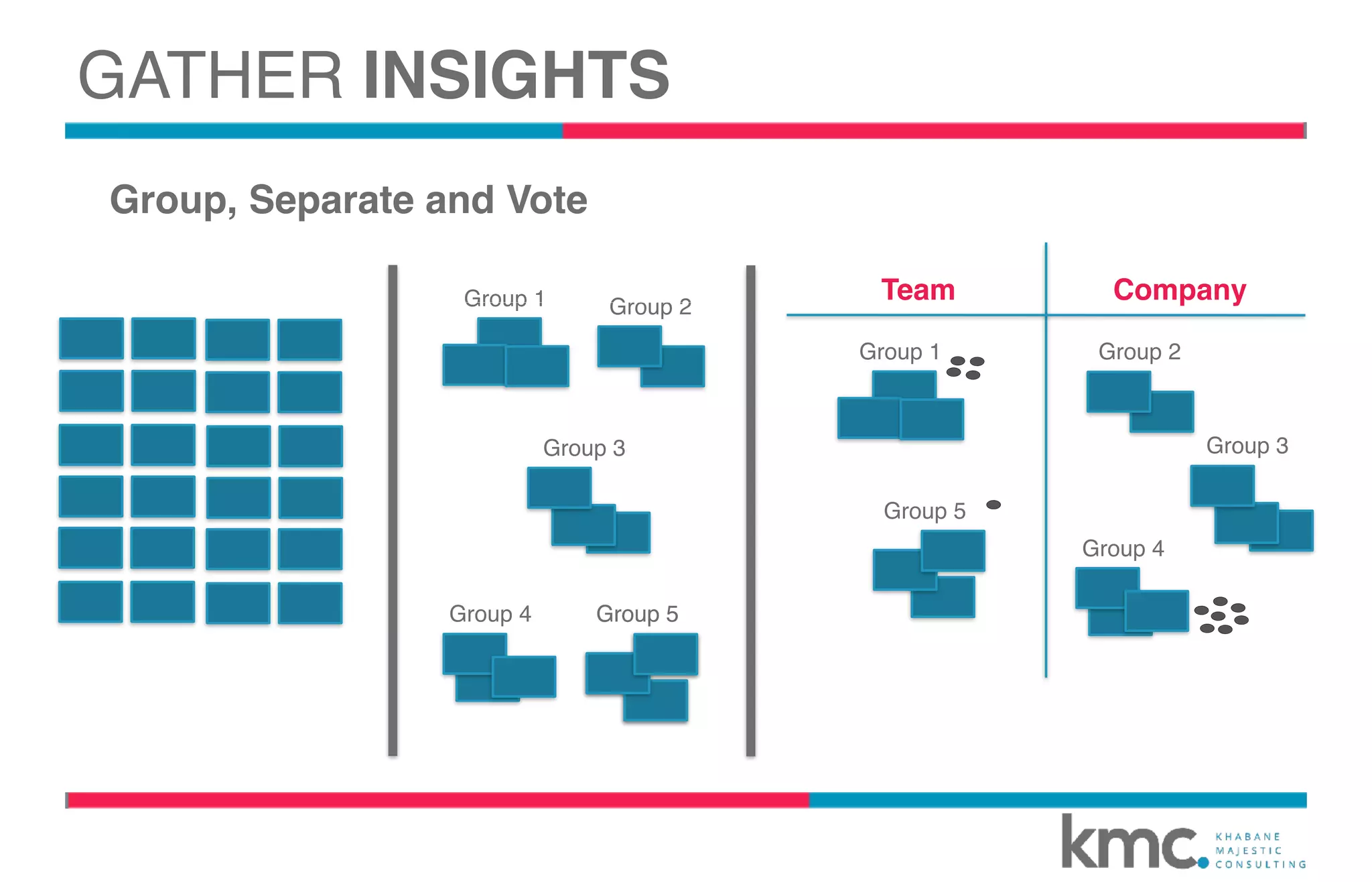
Group 1 Group 2
Group 5
Group 3
Group 4 Group 5
Group, Separate and Vote
GATHER INSIGHTS
Team Company
Group 1
Group 5
Group 2
Group 3
Group 4
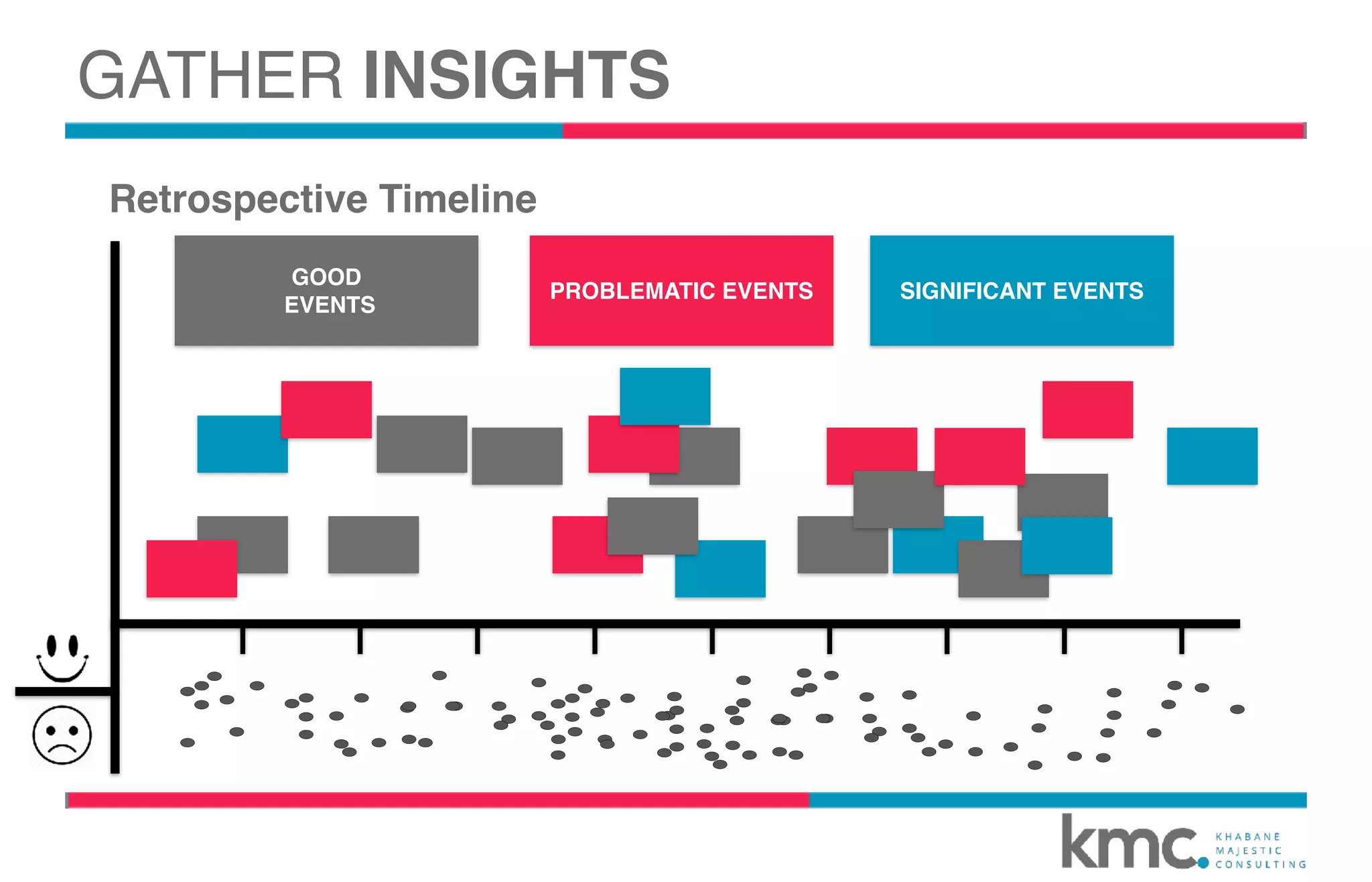
Retrospective Timeline
SIGNIFICANT EVENTSPROBLEMATIC EVENTS
GOOD
EVENTS
GATHER INSIGHTS
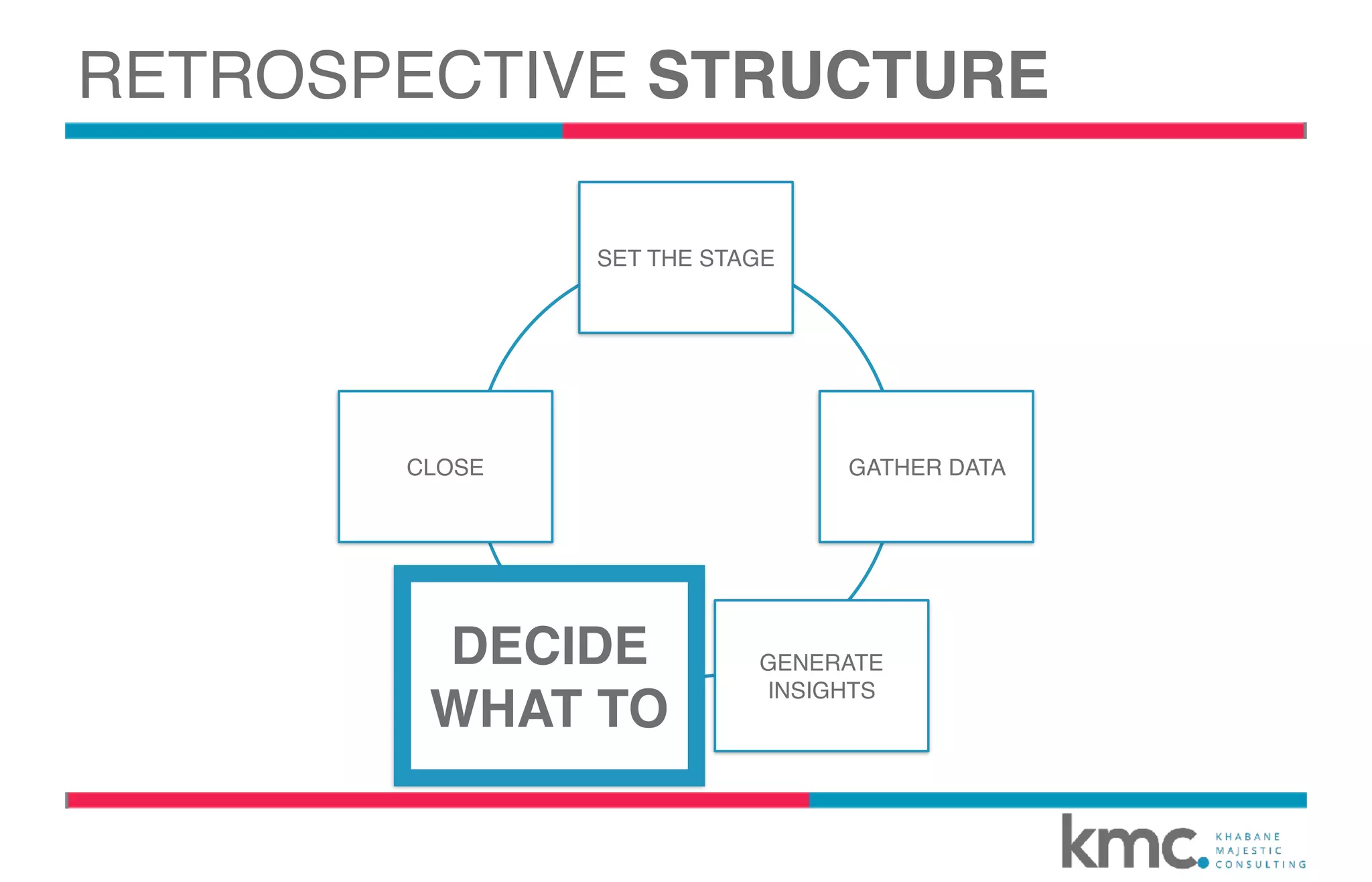
SET THE STAGE
GATHER DATA
GENERATE
INSIGHTS
DECIDE WHAT TO
DO
CLOSE
DECIDE
WHAT TO
RETROSPECTIVE STRUCTURE
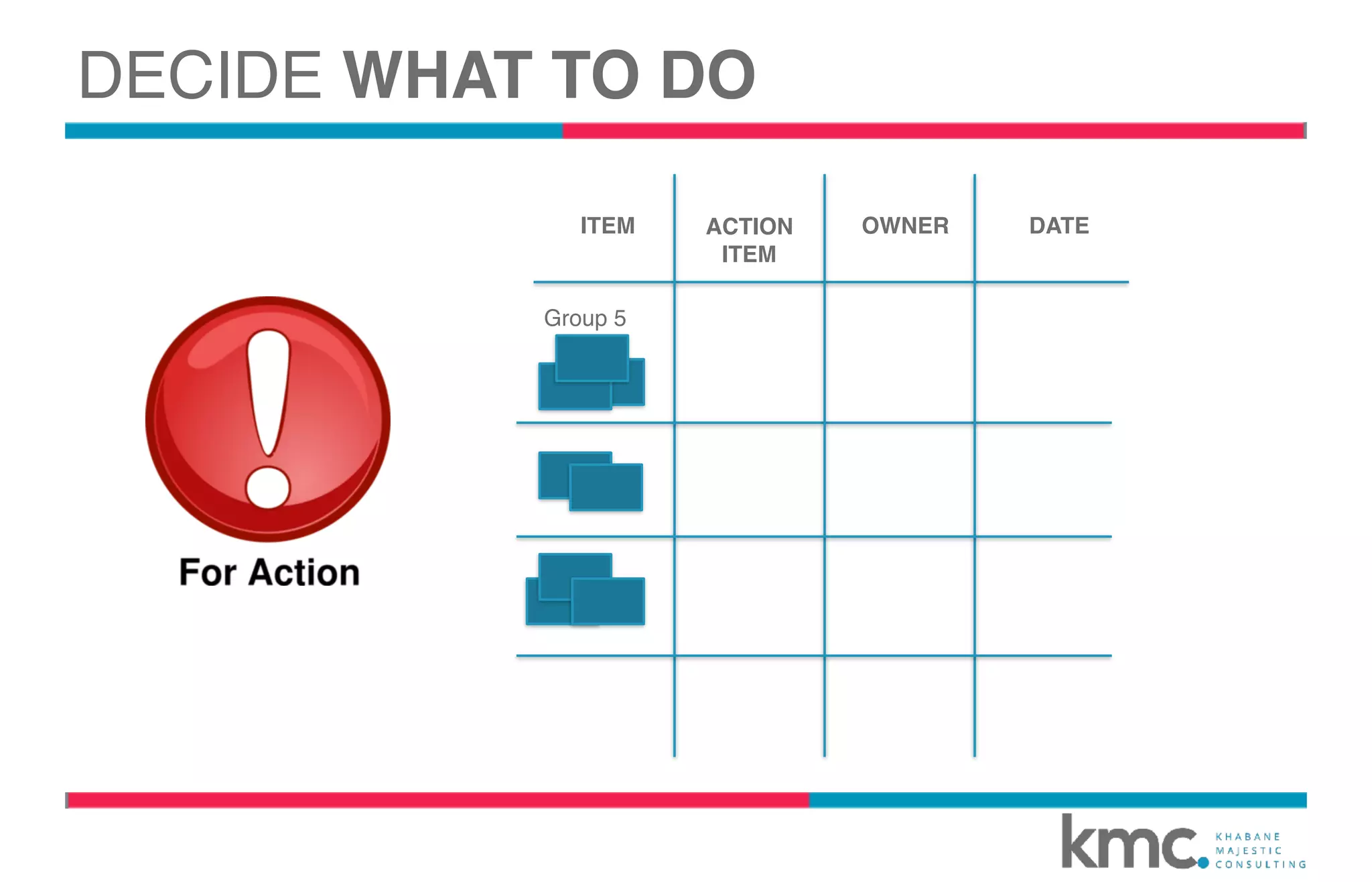
Group 5
ITEM ACTION
ITEM
OWNER DATE
DECIDE WHAT TO DO
RETROSPECTIVE STRUCTURE
SET THE STAGE
GATHER DATA
GENERATE
INSIGHTS
DECIDE WHAT TO
DO
CLOSECLOSE
CLOSE
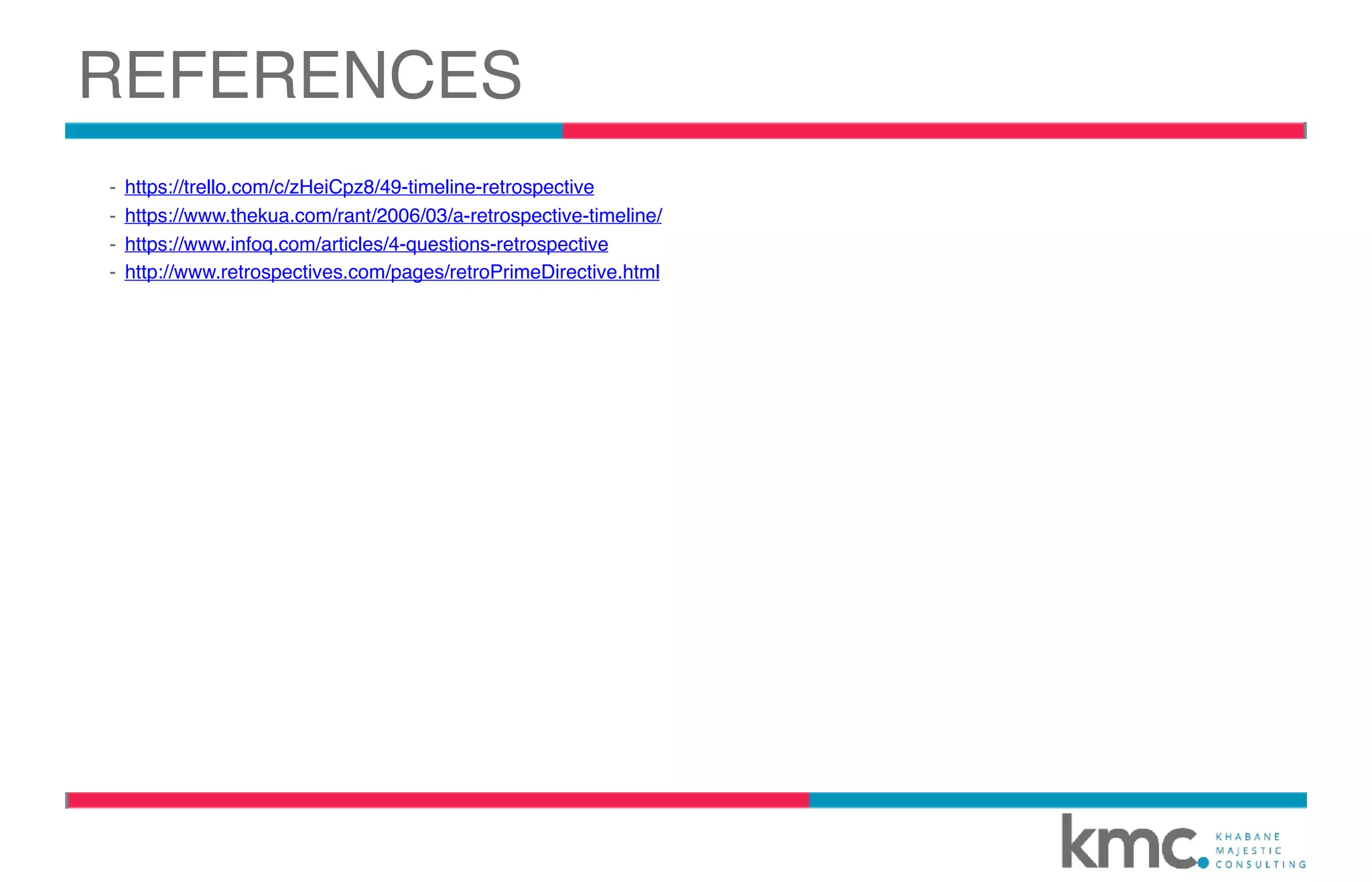
REFERENCES
- https://trello.com/c/zHeiCpz8/49-timeline-retrospective
- https://www.thekua.com/rant/2006/03/a-retrospective-timeline/
- https://www.infoq.com/articles/4-questions-retrospective
- http://www.retrospectives.com/pages/retroPrimeDirective.html
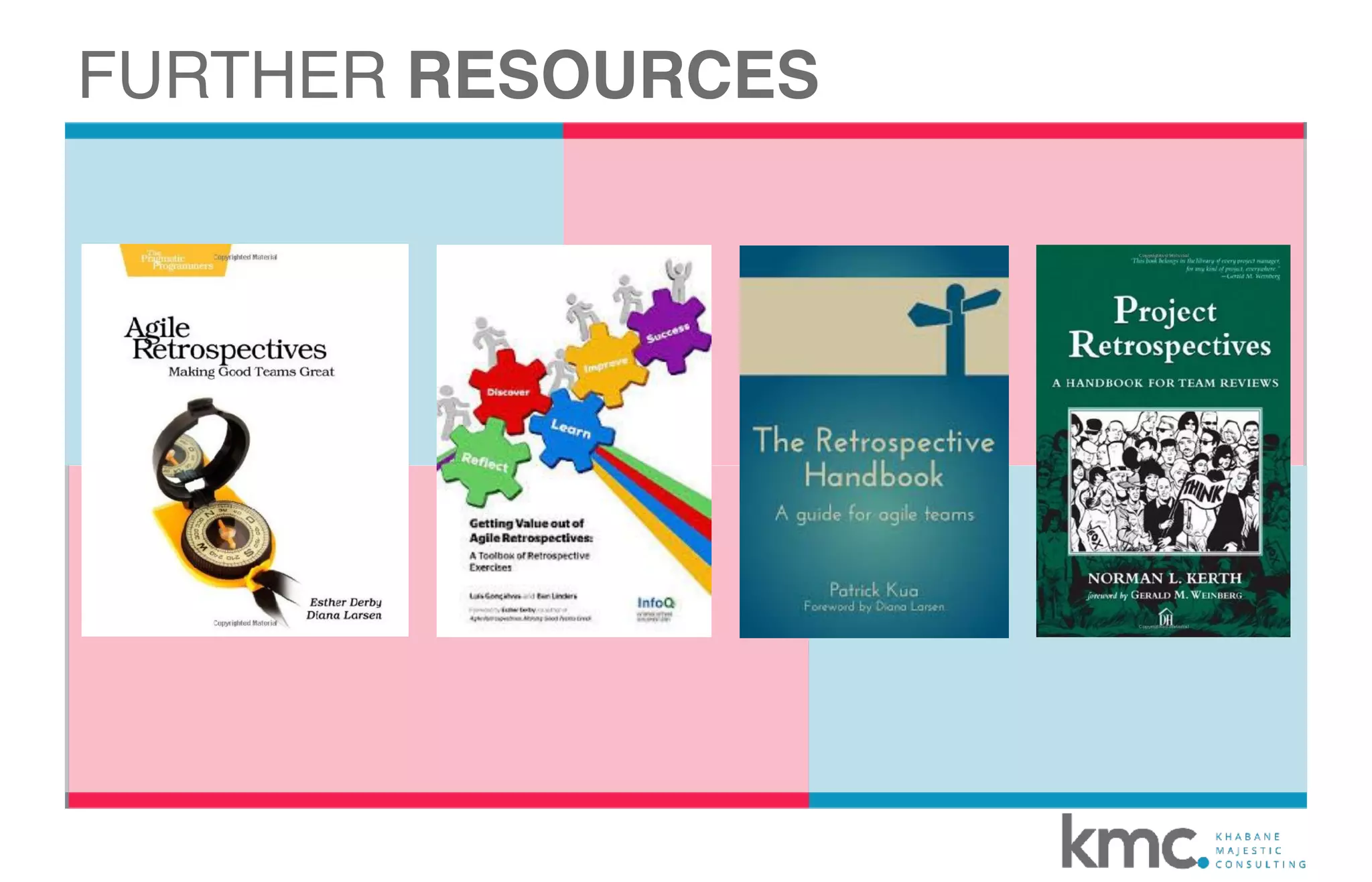
FURTHER RESOURCES
THANK
YOU

Retrospective and different ways to run it