Retail Loss Detection and Prevention
Policies and Procedures
By-JohnE. GrimesIII,MS,CFE,CFI
Loss prevention defined
Loss Prevention is the concept of establishing policies,
procedures and business practices to prevent the loss
of inventory or monies and preserve profit in a retail
environment.
Role of Loss prevention
• While each retail company approaches the mission and purpose of their
loss prevention programs based upon the unique needs, structure and
culture of the organization, at its core the role of loss prevention is to
enhance the profitability of the company – just like every other role in
retail. Primarily, that role focuses on the reduction of shrink (losses).
• Loss prevention departments look at all of the various issues that can
potentially lead to losses, devise strategies to minimize those pitfalls within
the business, and implement strategies that are practical, actionable, and
consistent with the goals of the business.
Shrinkage (shrink)
• Inventory Losses in a Retail Environment are referred to as Shrinkage.
• Shrinkage can best be described as the amount of merchandise physically
available in a location versus the amount of merchandise that should be on
hand based on inventory records. In simple term it is missing product.
Measuring shrink
There are many other factors that are accounted for
when determining the expected inventory count other
than purchases and sales. They include:
• Markdowns
• Markups
• Returns by customers
• Returns to the supplier
• Damaged merchandise
What causes inventory
shrinkage
• Internal Theft (various schemes, including cash theft schemes)
• External Theft
• Vendor Theft
• Paperwork Errors
• Inaccurate shipments
• Inventory miscounts
• Poor receiving practices
• Failure to record all markdowns.
Non-inventory dollar losses
Non-inventory related losses that occur at store level.
• Net Cash Register Discrepancies
• Net Deposit Loss and Discrepancies
• Credit Card Charge backs
• Bad Check Loss
• Gift Card Loss due to theft
• Cash Robberies
THIS IS WHY IT IS IMPERATIVE THAT
LOSS PREVENTION BECOME A CRITICAL
COMPONENT OF BUSINESS
PHILOSOPHY!
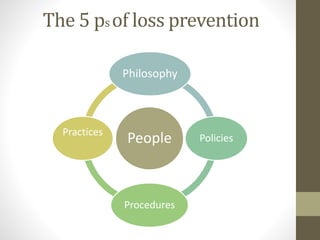
The 5 psof loss prevention
People
Philosophy
Policies
Procedures
Practices
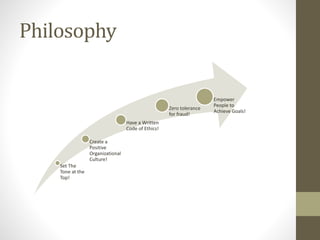
Philosophy
Set The
Tone at the
Top!
Create a
Positive
Organizational
Culture!
Have a Written
Code of Ethics!
Zero tolerance
for fraud!
Empower
People to
Achieve Goals!
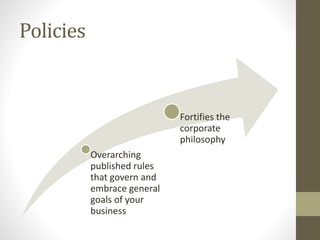
Policies
Overarching
published rules
that govern and
embrace general
goals of your
business
Fortifies the
corporate
philosophy
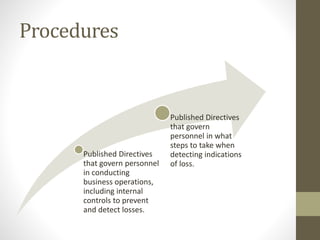
Procedures
Published Directives
that govern personnel
in conducting
business operations,
including internal
controls to prevent
and detect losses.
Published Directives
that govern
personnel in what
steps to take when
detecting indications
of loss.
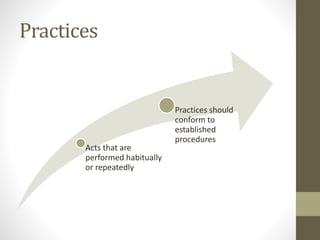
Practices
Acts that are
performed habitually
or repeatedly
Practices should
conform to
established
procedures
People
THE HUMAN FACTOR
Employee Theft
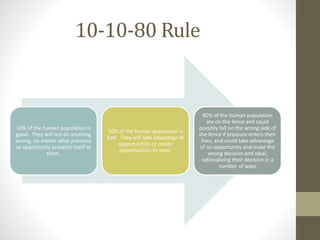
10-10-80 Rule
10% of the human population is
good. They will not do anything
wrong, no matter what pressure
or opportunity presents itself to
them.
10% of the human population is
bad. They will take advantage of
opportunities or create
opportunities to steal.
80% of the human population
are on the fence and could
possibly fall on the wrong side of
the fence if pressure enters their
lives, and could take advantage
of an opportunity and make the
wrong decision and steal,
rationalizing their decision in a
number of ways
Understand why some of the
80% fall on the wrong side of
the fence.
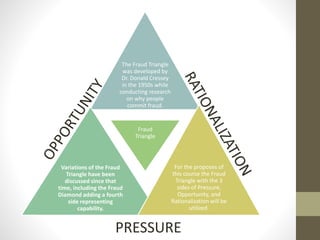
The Fraud Triangle
was developed by
Dr. Donald Cressey
in the 1950s while
conducting research
on why people
commit fraud.
Variations of the Fraud
Triangle have been
discussed since that
time, including the Fraud
Diamond adding a fourth
side representing
capability.
Fraud
Triangle
For the proposes of
this course the Fraud
Triangle with the 3
sides of Pressure,
Opportunity, and
Rationalization will be
utilized.
PRESSURE
Thank you !

Retail loss

  • 1.
    Retail Loss Detectionand Prevention Policies and Procedures By-JohnE. GrimesIII,MS,CFE,CFI
  • 2.
    Loss prevention defined LossPrevention is the concept of establishing policies, procedures and business practices to prevent the loss of inventory or monies and preserve profit in a retail environment.
  • 3.
    Role of Lossprevention • While each retail company approaches the mission and purpose of their loss prevention programs based upon the unique needs, structure and culture of the organization, at its core the role of loss prevention is to enhance the profitability of the company – just like every other role in retail. Primarily, that role focuses on the reduction of shrink (losses). • Loss prevention departments look at all of the various issues that can potentially lead to losses, devise strategies to minimize those pitfalls within the business, and implement strategies that are practical, actionable, and consistent with the goals of the business.
  • 4.
    Shrinkage (shrink) • InventoryLosses in a Retail Environment are referred to as Shrinkage. • Shrinkage can best be described as the amount of merchandise physically available in a location versus the amount of merchandise that should be on hand based on inventory records. In simple term it is missing product.
  • 5.
    Measuring shrink There aremany other factors that are accounted for when determining the expected inventory count other than purchases and sales. They include: • Markdowns • Markups • Returns by customers • Returns to the supplier • Damaged merchandise
  • 6.
    What causes inventory shrinkage •Internal Theft (various schemes, including cash theft schemes) • External Theft • Vendor Theft • Paperwork Errors • Inaccurate shipments • Inventory miscounts • Poor receiving practices • Failure to record all markdowns.
  • 7.
    Non-inventory dollar losses Non-inventoryrelated losses that occur at store level. • Net Cash Register Discrepancies • Net Deposit Loss and Discrepancies • Credit Card Charge backs • Bad Check Loss • Gift Card Loss due to theft • Cash Robberies
  • 8.
    THIS IS WHYIT IS IMPERATIVE THAT LOSS PREVENTION BECOME A CRITICAL COMPONENT OF BUSINESS PHILOSOPHY!
  • 9.
    The 5 psofloss prevention People Philosophy Policies Procedures Practices
  • 10.
    Philosophy Set The Tone atthe Top! Create a Positive Organizational Culture! Have a Written Code of Ethics! Zero tolerance for fraud! Empower People to Achieve Goals!
  • 11.
    Policies Overarching published rules that governand embrace general goals of your business Fortifies the corporate philosophy
  • 12.
    Procedures Published Directives that governpersonnel in conducting business operations, including internal controls to prevent and detect losses. Published Directives that govern personnel in what steps to take when detecting indications of loss.
  • 13.
    Practices Acts that are performedhabitually or repeatedly Practices should conform to established procedures
  • 14.
  • 15.
    10-10-80 Rule 10% ofthe human population is good. They will not do anything wrong, no matter what pressure or opportunity presents itself to them. 10% of the human population is bad. They will take advantage of opportunities or create opportunities to steal. 80% of the human population are on the fence and could possibly fall on the wrong side of the fence if pressure enters their lives, and could take advantage of an opportunity and make the wrong decision and steal, rationalizing their decision in a number of ways
  • 16.
    Understand why someof the 80% fall on the wrong side of the fence.
  • 17.
    The Fraud Triangle wasdeveloped by Dr. Donald Cressey in the 1950s while conducting research on why people commit fraud. Variations of the Fraud Triangle have been discussed since that time, including the Fraud Diamond adding a fourth side representing capability. Fraud Triangle For the proposes of this course the Fraud Triangle with the 3 sides of Pressure, Opportunity, and Rationalization will be utilized. PRESSURE
  • 18.