Equine Restraint Techniques
Safety  There is no circumstance for which a human injury is justified The individual restraining the horse is responsible for the safety of all present
Safety If the horse doesn’t feel safe, the handler is not safe. A horse can not learn while frightened. -The installation of fear is not an appropriate  training technique.
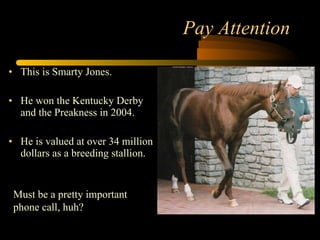
Pay Attention This is Smarty Jones. He won the Kentucky Derby and the Preakness in 2004. He is valued at over 34 million dollars as a breeding stallion. Must be a pretty important phone call, huh?
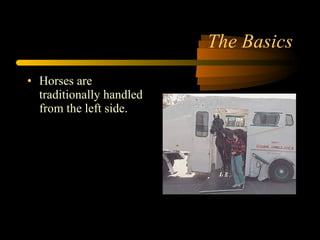
The Basics Horses are traditionally handled from the left side.
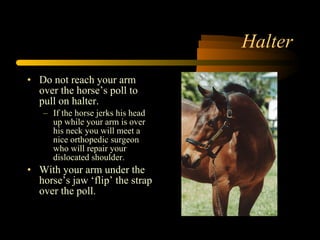
Halter Do not reach your arm over the horse’s poll to pull on halter. If the horse jerks his head up while your arm is over his neck you will meet a nice orthopedic surgeon who will repair your dislocated shoulder. With your arm under the horse’s jaw ‘flip’ the strap over the poll.
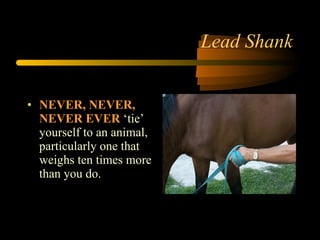
Lead Shank NEVER, NEVER, NEVER EVER  ‘tie’ yourself to an animal, particularly one that weighs ten times more than you do.
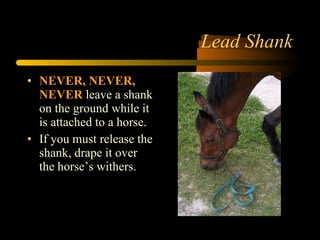
Lead Shank NEVER, NEVER, NEVER  leave a shank on the ground while it is attached to a horse.  If you must release the shank, drape it over the horse’s withers.
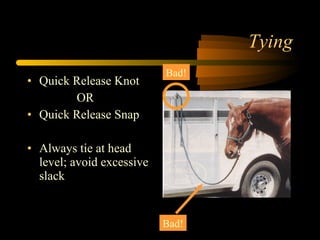
Tying Quick Release Knot OR Quick Release Snap Always tie at head level; avoid excessive slack Bad! Bad!
Note:  Individual restraining the horse should  always   stand on the same side as the individual performing the procedure
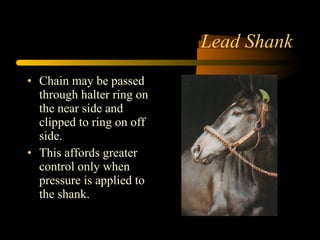
Lead Shank Chain may be passed through halter ring on the near side and clipped to ring on off side. This affords greater control only when pressure is applied to the shank.
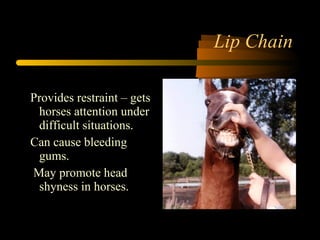
Lip Chain Provides restraint – gets horses attention under difficult situations. Can cause bleeding gums. May promote head shyness in horses.
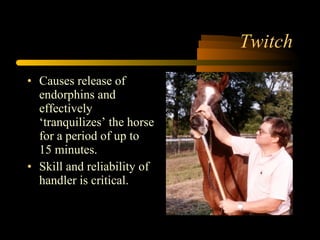
Twitch Causes release of endorphins and effectively ‘tranquilizes’ the horse for a period of up to 15 minutes. Skill and reliability of handler is critical.
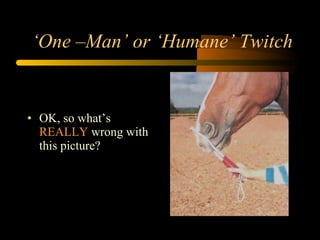
‘ One –Man’ or ‘Humane’ Twitch OK, so what’s  REALLY  wrong with this picture?
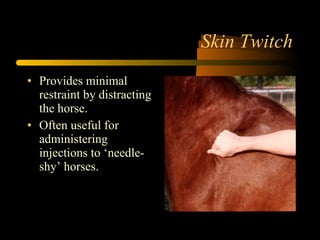
Skin Twitch Provides minimal restraint by distracting the horse. Often useful for administering injections to ‘needle-shy’ horses.
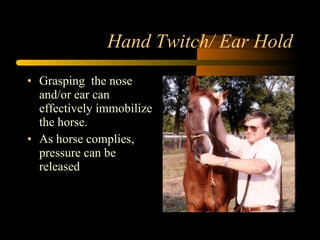
Hand Twitch/ Ear Hold Grasping  the nose and/or ear can effectively immobilize the horse.  As horse complies, pressure can be released
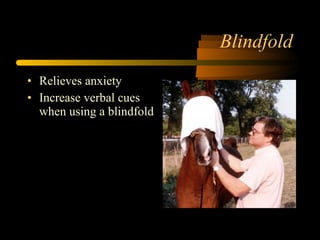
Blindfold Relieves anxiety Increase verbal cues when using a blindfold
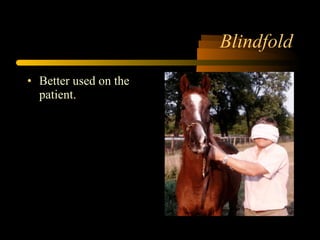
Blindfold Better used on the patient.
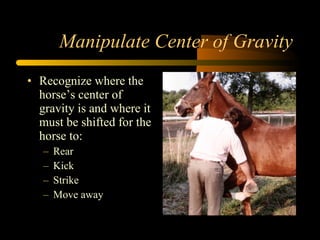
Manipulate Center of Gravity Recognize where the horse’s center of gravity is and where it must be shifted for the horse to: Rear Kick Strike Move away
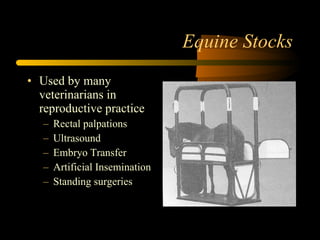
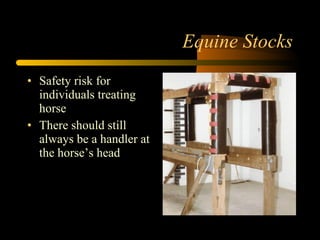
Equine Stocks Used by many veterinarians in reproductive practice Rectal palpations Ultrasound Embryo Transfer Artificial Insemination Standing surgeries
Equine Stocks Safety risk for individuals treating horse There should still always be a handler at the horse’s head
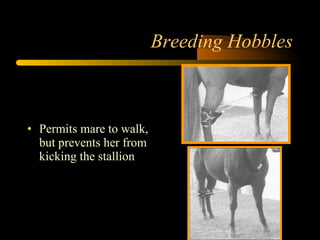
Breeding Hobbles Permits mare to walk, but prevents her from kicking the stallion
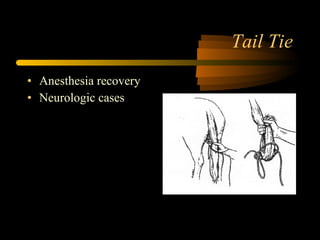
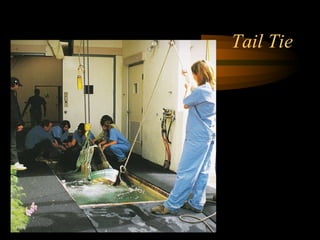
Tail Tie Anesthesia recovery Neurologic cases
Tail Tie
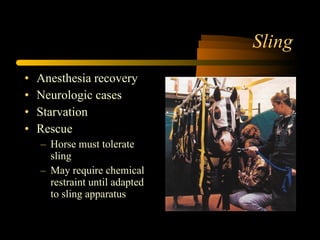
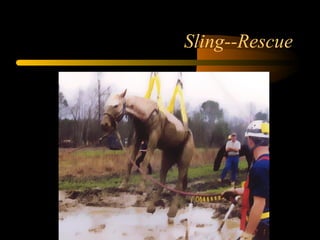
Sling Anesthesia recovery Neurologic cases Starvation Rescue Horse must tolerate sling May require chemical restraint until adapted to sling apparatus
Sling--Rescue

G Equine Restraint

  • 1.
  • 2.
    Safety Thereis no circumstance for which a human injury is justified The individual restraining the horse is responsible for the safety of all present
  • 3.
    Safety If thehorse doesn’t feel safe, the handler is not safe. A horse can not learn while frightened. -The installation of fear is not an appropriate training technique.
  • 4.
    Pay Attention Thisis Smarty Jones. He won the Kentucky Derby and the Preakness in 2004. He is valued at over 34 million dollars as a breeding stallion. Must be a pretty important phone call, huh?
  • 5.
    The Basics Horsesare traditionally handled from the left side.
  • 6.
    Halter Do notreach your arm over the horse’s poll to pull on halter. If the horse jerks his head up while your arm is over his neck you will meet a nice orthopedic surgeon who will repair your dislocated shoulder. With your arm under the horse’s jaw ‘flip’ the strap over the poll.
  • 7.
    Lead Shank NEVER,NEVER, NEVER EVER ‘tie’ yourself to an animal, particularly one that weighs ten times more than you do.
  • 8.
    Lead Shank NEVER,NEVER, NEVER leave a shank on the ground while it is attached to a horse. If you must release the shank, drape it over the horse’s withers.
  • 9.
    Tying Quick ReleaseKnot OR Quick Release Snap Always tie at head level; avoid excessive slack Bad! Bad!
  • 10.
    Note: Individualrestraining the horse should always stand on the same side as the individual performing the procedure
  • 11.
    Lead Shank Chainmay be passed through halter ring on the near side and clipped to ring on off side. This affords greater control only when pressure is applied to the shank.
  • 12.
    Lip Chain Providesrestraint – gets horses attention under difficult situations. Can cause bleeding gums. May promote head shyness in horses.
  • 13.
    Twitch Causes releaseof endorphins and effectively ‘tranquilizes’ the horse for a period of up to 15 minutes. Skill and reliability of handler is critical.
  • 14.
    ‘ One –Man’or ‘Humane’ Twitch OK, so what’s REALLY wrong with this picture?
  • 15.
    Skin Twitch Providesminimal restraint by distracting the horse. Often useful for administering injections to ‘needle-shy’ horses.
  • 16.
    Hand Twitch/ EarHold Grasping the nose and/or ear can effectively immobilize the horse. As horse complies, pressure can be released
  • 17.
    Blindfold Relieves anxietyIncrease verbal cues when using a blindfold
  • 18.
    Blindfold Better usedon the patient.
  • 19.
    Manipulate Center ofGravity Recognize where the horse’s center of gravity is and where it must be shifted for the horse to: Rear Kick Strike Move away
  • 20.
    Equine Stocks Usedby many veterinarians in reproductive practice Rectal palpations Ultrasound Embryo Transfer Artificial Insemination Standing surgeries
  • 21.
    Equine Stocks Safetyrisk for individuals treating horse There should still always be a handler at the horse’s head
  • 22.
    Breeding Hobbles Permitsmare to walk, but prevents her from kicking the stallion
  • 23.
    Tail Tie Anesthesiarecovery Neurologic cases
  • 24.
  • 25.
    Sling Anesthesia recoveryNeurologic cases Starvation Rescue Horse must tolerate sling May require chemical restraint until adapted to sling apparatus
  • 26.