Repeat breeding in domestic
animals
G.N.Purohit
Department ofVeterinary Gynaecology
and Obstetrics,Veterinary College,
Bikaner
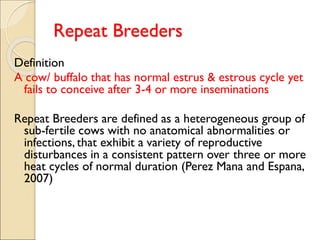
Repeat Breeders
Definition
A cow/ buffalo that has normal estrus & estrous cycle yet
fails to conceive after 3-4 or more inseminations
Repeat Breeders are defined as a heterogeneous group of
sub-fertile cows with no anatomical abnormalities or
infections, that exhibit a variety of reproductive
disturbances in a consistent pattern over three or more
heat cycles of normal duration (Perez Mana and Espana,
2007)
A manifestation by the animal due to
multifactorial etiology
Global Problem
Modern day high producing Holstein cows
due to intensive selection for high yields have
reduced fertility (Dobson et al.,2007)
Incidence : 06 to 35 %
2nd most common reproductive disorder
More common in cows vs buffaloes
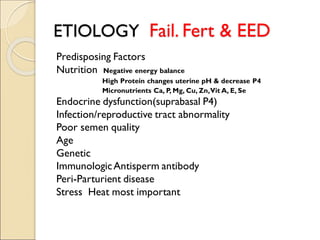
ETIOLOGY Fail. Fert & EED
Predisposing Factors
Nutrition Negative energy balance
High Protein changes uterine pH & decrease P4
Micronutrients Ca, P, Mg, Cu, Zn,Vit A, E, Se
Endocrine dysfunction(suprabasal P4)
Infection/reproductive tract abnormality
Poor semen quality
Age
Genetic
ImmunologicAntisperm antibody
Peri-Parturient disease
Stress Heat most important
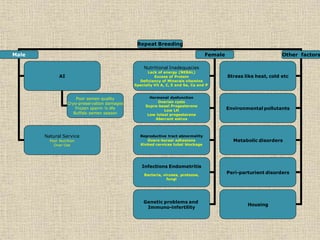
Repeat Breeding
Male Female Other factors
AI
Poor semen quality
Cryo-preservation damages
Frozen sperm ½ life
Buffalo semen season
Natural Service
Poor Nutrition
Over-Use
Nutritional Inadequacies
Lack of energy (NEBAL)
Excess of Protein
Deficiency of Minerals vitamins
Specially Vit A, C, E and Se, Ca and P
Hormonal dysfunction
Ovarian cysts
Supra-basal Progesterone
Low LH
Low luteal progesterone
Aberrant estrus
Reproductive tract abnormality
Ovaro-bursal adhesions
Kinked cervices tubal blockage
Infections Endometritis
Bacteria, viruses, protozoa,
fungi
Genetic problems and
Immuno-infertility
Stress like heat, cold etc
Environmental pollutants
Metabolic disorders
Peri-parturient disorders
Housing
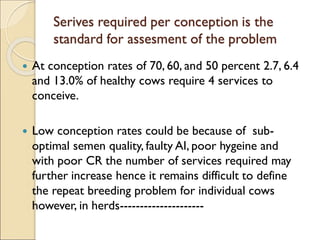
Serives required per conception is the
standard for assesment of the problem
 At conception rates of 70, 60, and 50 percent 2.7, 6.4
and 13.0% of healthy cows require 4 services to
conceive.
 Low conception rates could be because of sub-
optimal semen quality, faulty AI, poor hygeine and
with poor CR the number of services required may
further increase hence it remains difficult to define
the repeat breeding problem for individual cows
however, in herds---------------------
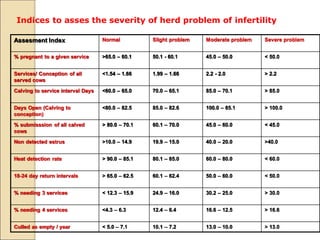
Assesment Index Normal Slight problem Moderate problem Severe problem
% pregnant to a given service >65.0 – 60.1 50.1 - 60.1 45.0 – 50.0 < 50.0
Services/ Conception of all
served cows
<1.54 – 1.66 1.99 – 1.66 2.2 - 2.0 > 2.2
Calving to service interval Days <60.0 – 65.0 70.0 – 65.1 85.0 – 70.1 > 85.0
Days Open (Calving to
conception)
<80.0 – 82.5 85.0 – 82.6 100.0 – 85.1 > 100.0
% submisssion of all calved
cows
> 80.0 – 70.1 60.1 – 70.0 45.0 – 60.0 < 45.0
Non detected estrus >10.0 – 14.9 19.9 – 15.0 40.0 – 20.0 >40.0
Heat detection rate > 90.0 – 85.1 80.1 – 85.0 60.0 – 80.0 < 60.0
18-24 day return intervals > 65.0 – 62.5 60.1 – 62.4 50.0 – 60.0 < 50.0
% needing 3 services < 12.3 – 15.9 24.9 – 16.0 30.2 – 25.0 > 30.0
% needing 4 services <4.3 – 6.3 12.4 – 6.4 16.6 – 12.5 > 16.6
Culled as empty / year < 5.0 – 7.1 10.1 – 7.2 13.0 – 10.0 > 13.0
Indices to asses the severity of herd problem of infertility
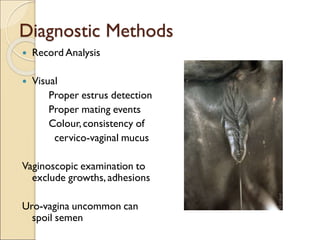
Diagnostic Methods
 Record Analysis
 Visual
Proper estrus detection
Proper mating events
Colour,consistency of
cervico-vaginal mucus
Vaginoscopic examination to
exclude growths, adhesions
Uro-vagina uncommon can
spoil semen
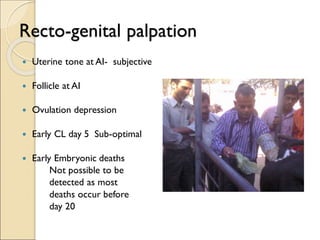
Recto-genital palpation
 Uterine tone at AI- subjective
 Follicle at AI
 Ovulation depression
 Early CL day 5 Sub-optimal
 Early Embryonic deaths
Not possible to be
detected as most
deaths occur before
day 20
Laboratory Tests
 Uterine pH
Normal pH 7.3
6.9 and 8.0 suggest
endometritis
White side test to detect metritis
Cervical mucus + NaOH Boil
Yellow colour indicates metritis
Cervical mucus penetration assay
Hemizona assay more to asses sperm
function
Metabolic profiles Glucose,Ca, P
Karyotyping on lymphocytes
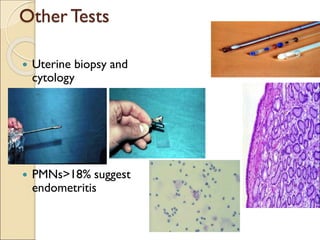
Other Tests
 Uterine biopsy and
cytology
 PMNs>18% suggest
endometritis
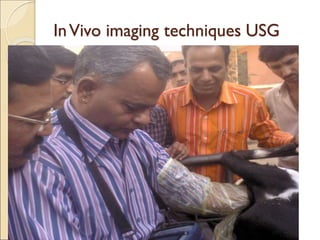
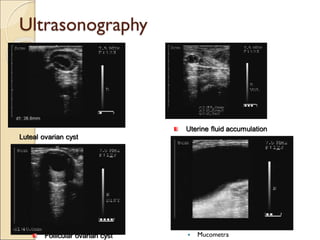
InVivo imaging techniques USG
Ultrasonography
 Mucometra
Uterine fluid accumulation
Follicular ovarian cyst
Luteal ovarian cyst
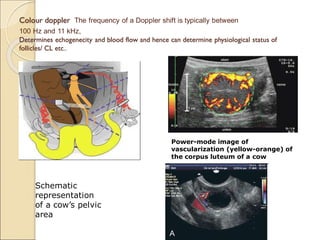
Colour doppler The frequency of a Doppler shift is typically between
100 Hz and 11 kHz,
Determines echogenecity and blood flow and hence can determine physiological status of
follicles/ CL etc..
Power-mode image of
vascularization (yellow-orange) of
the corpus luteum of a cow
Schematic
representation
of a cow’s pelvic
area
Magnetic Resonance Imaging
 Three dimensional images can
predict ability of follicles to
produce steroid and ovulate
and hence can predict the exact
physiology
Magnetic resonance imaging is based
upon relaxation
of hydrogen protons in a large
magnetic field after a radio-frequency
pulse (RF) has
deflected the proton spin
transversely.
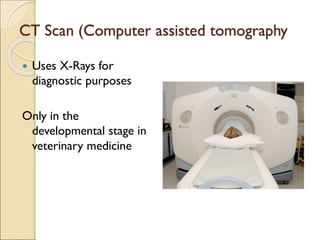
CT Scan (Computer assisted tomography
 Uses X-Rays for
diagnostic purposes
Only in the
developmental stage in
veterinary medicine
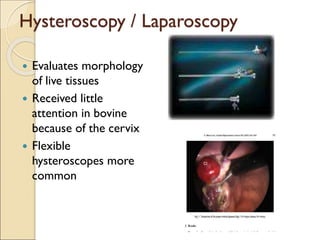
Hysteroscopy / Laparoscopy
 Evaluates morphology
of live tissues
 Received little
attention in bovine
because of the cervix
 Flexible
hysteroscopes more
common
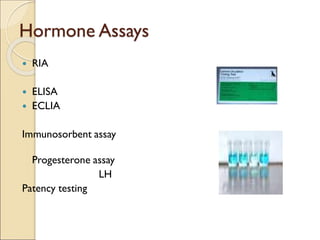
Hormone Assays
 RIA
 ELISA
 ECLIA
Immunosorbent assay
Progesterone assay
LH
Patency testing
Diagnosis of herd problem can be attempted but the diagnosis
of cause of repeat breeding in an individual animal is extremely
difficult
Therapy
Evaluate semen
Evaluate for anatomic defects
Evaluate for nutrition and management and
advice appropriate measures of correction
Evaluate reproductive hygeine and
insemination procedures and adopt
corrective measures
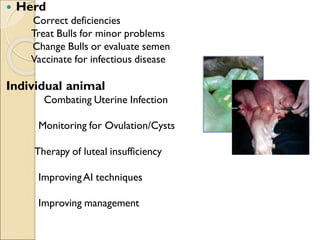
 Herd
Correct deficiencies
Treat Bulls for minor problems
Change Bulls or evaluate semen
Vaccinate for infectious disease
Individual animal
Combating Uterine Infection
Monitoring for Ovulation/Cysts
Therapy of luteal insufficiency
ImprovingAI techniques
Improving management
Specific corrective measures
 Genital tract infection
Intrauterine/parentral antibiotics
Prostaglandins
Immunomodulators
Oyster glycogen 500 mg in 50 mL PBS I/Ut.
LPS 100 µg in 30 mL PBS I/Ut
Agents to alter Uterine environment
Antioxidants: 4mMTaurine + 50 mM fructose in
PBS beforeAI
Vitamin C Inj Ascovet 20 mL before AI
Enzymes: Trypsin,Chymotrypsin,papain I/Ut.
Uterine motility stimulants
Mifepristone,clitoral massage
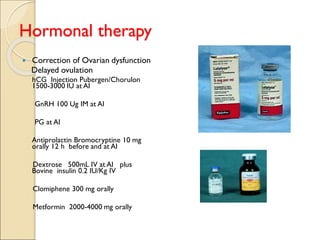
Hormonal therapy
 Correction of Ovarian dysfunction
Delayed ovulation
hCG Injection Pubergen/Chorulon
1500-3000 IU at AI
GnRH 100 Ug IM at AI
PG at AI
Antiprolactin Bromocryptine 10 mg
orally 12 h before and at AI
Dextrose 500mL IV at AI plus
Bovine insulin 0.2 IU/Kg IV
Clomiphene 300 mg orally
Metformin 2000-4000 mg orally
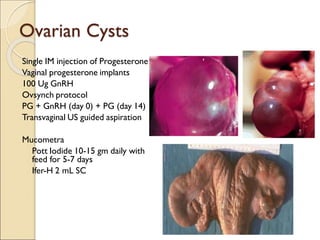
Ovarian Cysts
Single IM injection of Progesterone
Vaginal progesterone implants
100 Ug GnRH
Ovsynch protocol
PG + GnRH (day 0) + PG (day 14)
Transvaginal US guided aspiration
Mucometra
Pott Iodide 10-15 gm daily with
feed for 5-7 days
Ifer-H 2 mL SC
Luteal Insufficiency
hCG injection at 4-5 days of AI
Progesterone injection 500 mg at 5 days of AI
Progesterone vaginal implants.
Recombinant Bovine Somatotropin 500 mg SC at AI
Antiestrogens Tamoxifen citrate ??
GnRH at AI and at day 14-16
Bovine insulin on day 8,9 and 10 of estrus
Feeding of fish oil
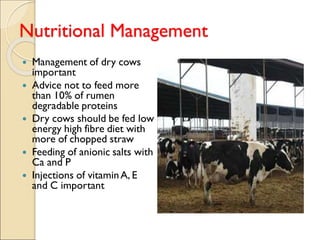
Nutritional Management
 Management of dry cows
important
 Advice not to feed more
than 10% of rumen
degradable proteins
 Dry cows should be fed low
energy high fibre diet with
more of chopped straw
 Feeding of anionic salts with
Ca and P
 Injections of vitaminA, E
and C important
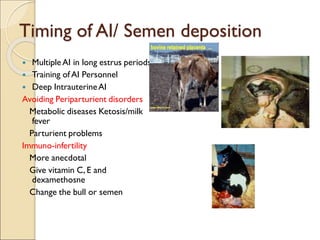
Timing of AI/ Semen deposition
 MultipleAI in long estrus periods
 Training of AI Personnel
 Deep IntrauterineAI
Avoiding Periparturient disorders
Metabolic diseases Ketosis/milk
fever
Parturient problems
Immuno-infertility
More anecdotal
Give vitamin C, E and
dexamethosne
Change the bull or semen
Other therapies Acupuncture and Intraperitoneal
AI or embryo transfer.
 Repeated inseminations
 Mineral vitamin supplements
 Cooling of heat stressed cows/ buffaloes
 Adequate hygeine at parturition & at AI
 Regular and frequent check of semen
 Addition of sperm motility enhancers when
liquid semen is used eg. caffeine
 Prevention of natural mating with scrub bulls
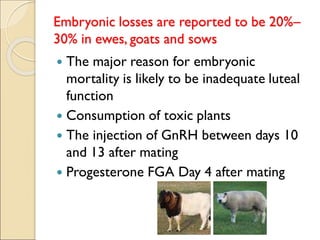
Embryonic losses are reported to be 20%–
30% in ewes, goats and sows
 The major reason for embryonic
mortality is likely to be inadequate luteal
function
 Consumption of toxic plants
 The injection of GnRH between days 10
and 13 after mating
 Progesterone FGA Day 4 after mating
Mare Embryonic Resorption
 Endometritis
 Alterations in progesterone levels, the
uterine and oviductal environment,
maternal age and postpartum breeding
have all been implicated with causing EED,
either directly or indirectly.
 Foal heat breedings
 Retarded development of the embryo
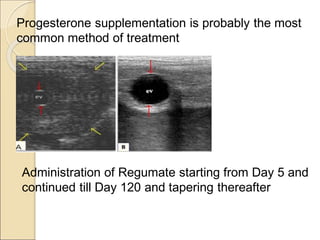
Progesterone supplementation is probably the most
common method of treatment
Administration of Regumate starting from Day 5 and
continued till Day 120 and tapering thereafter
Embryonic losses in camels
 Occurs between Day 20-90 0f gestation
 Incidence 5-20%
 Diagnosis USG, plasma progesterone
 Day 15 and 35 important
Reasons of Embryonic losses in Dogs
Infectious Reasons
Brucella canis: The most important clinical signs are
abortion in late pregnancy (after 45th day) in bitches.
Although there are no clinical signs prior to abortion, a
serosanguinous discharge may be observed for 1-6 weeks
following abortion
Recommended antibiotics for B.canis treatment are
minocycline (25 mg/kg SID, 21 days) and ihydrostreptomycin
(5mg/kg IM, 7 days) combined, tetracycline (30 mg/kg BID,
21 days) and streptomycin (20 mg/kg IM, 14 days) combined
and per os enrofloxacin for 4 weeks
 Fetal death, mummification,abortion,
premature birth and stillbirth may occur if
pregnant bitches are infected with canine
herpes virus.

 Neospora caninum: Neospora caninum is a
protozoan of which its final host is dog.
Neosporosis causes early fetal death,
mummification,fetal resorption and weak
neonatals in pregnant bitches (6,8,11,12).
However, it is not definite yet if N. caninum is
the primary reason of natural aborts of
bitches or not
 Non-Infectious Reasons
Hypoluteodism: Hypoluteodism is due to
insufficiency of plasma progesterone concentration
The best option accepted in hypoluteodism treatment is
daily administration of 0.1 mg/kg Megestrol acetate up to
62nd day of
pregnancy
 Drugs: Adverse effects of drugs in pregnants cause
congenital malformation of embryo or fetus due to
teratogenic effect or cause fetal resorption or abortion
because of embryotoxic effects
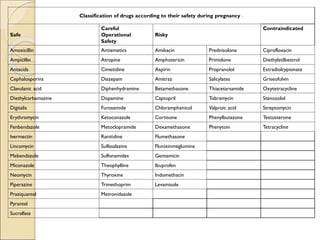
Classification of drugs according to their safety during pregnancy .
Safe
Careful
Operational
Safety
Risky
Contraindicated
Amoxicillin Antiemetics Amikacin Prednisolone Ciprofloxacin
Ampicillin Atropine Amphotericin Primidone Diethylstilbestrol
Antacids Cimetidine Aspirin Propranolol Estradiolcypionate
Cephalosporins Diazepam Amitraz Salicylates Griseofulvin
Clavulanic acid Diphenhydramine Betamethasone Thiacetarsamide Oxytetracycline
Diethylcarbamazine Dopamine Captopril Tobramycin Stanozolol
Digitalis Furosemide Chloramphenicol Valproic acid Streptomycin
Erythromycin Ketoconazole Cortisone Phenylbutazone Testosterone
Fenbendazole Metoclopramide Dexamethasone Phenytoin Tetracycline
Ivermectin Ranitidine Flumethasone
Lincomycin Sulfasalazine Flunixinmeglumine
Mebendazole Sulfonamides Gentamicin
Miconazole Theophylline Ibuprofen
Neomycin Thyroxine Indomethacin
Piperazine Trimethoprim Levamisole
Praziquantel Metronidazole
Pyrantel
Sucralfate
 The above lectures are also explained in
video lectures at myYouTube Channel
Govind Narayan Purohit
 Kindly share the videos and subscribe to
my channel if you like them
 Thanks

Lecture 10 repeat breeding

  • 1.
    Repeat breeding indomestic animals G.N.Purohit Department ofVeterinary Gynaecology and Obstetrics,Veterinary College, Bikaner
  • 2.
    Repeat Breeders Definition A cow/buffalo that has normal estrus & estrous cycle yet fails to conceive after 3-4 or more inseminations Repeat Breeders are defined as a heterogeneous group of sub-fertile cows with no anatomical abnormalities or infections, that exhibit a variety of reproductive disturbances in a consistent pattern over three or more heat cycles of normal duration (Perez Mana and Espana, 2007)
  • 3.
    A manifestation bythe animal due to multifactorial etiology Global Problem Modern day high producing Holstein cows due to intensive selection for high yields have reduced fertility (Dobson et al.,2007) Incidence : 06 to 35 % 2nd most common reproductive disorder More common in cows vs buffaloes
  • 4.
    ETIOLOGY Fail. Fert& EED Predisposing Factors Nutrition Negative energy balance High Protein changes uterine pH & decrease P4 Micronutrients Ca, P, Mg, Cu, Zn,Vit A, E, Se Endocrine dysfunction(suprabasal P4) Infection/reproductive tract abnormality Poor semen quality Age Genetic ImmunologicAntisperm antibody Peri-Parturient disease Stress Heat most important
  • 5.
    Repeat Breeding Male FemaleOther factors AI Poor semen quality Cryo-preservation damages Frozen sperm ½ life Buffalo semen season Natural Service Poor Nutrition Over-Use Nutritional Inadequacies Lack of energy (NEBAL) Excess of Protein Deficiency of Minerals vitamins Specially Vit A, C, E and Se, Ca and P Hormonal dysfunction Ovarian cysts Supra-basal Progesterone Low LH Low luteal progesterone Aberrant estrus Reproductive tract abnormality Ovaro-bursal adhesions Kinked cervices tubal blockage Infections Endometritis Bacteria, viruses, protozoa, fungi Genetic problems and Immuno-infertility Stress like heat, cold etc Environmental pollutants Metabolic disorders Peri-parturient disorders Housing
  • 6.
    Serives required perconception is the standard for assesment of the problem  At conception rates of 70, 60, and 50 percent 2.7, 6.4 and 13.0% of healthy cows require 4 services to conceive.  Low conception rates could be because of sub- optimal semen quality, faulty AI, poor hygeine and with poor CR the number of services required may further increase hence it remains difficult to define the repeat breeding problem for individual cows however, in herds---------------------
  • 7.
    Assesment Index NormalSlight problem Moderate problem Severe problem % pregnant to a given service >65.0 – 60.1 50.1 - 60.1 45.0 – 50.0 < 50.0 Services/ Conception of all served cows <1.54 – 1.66 1.99 – 1.66 2.2 - 2.0 > 2.2 Calving to service interval Days <60.0 – 65.0 70.0 – 65.1 85.0 – 70.1 > 85.0 Days Open (Calving to conception) <80.0 – 82.5 85.0 – 82.6 100.0 – 85.1 > 100.0 % submisssion of all calved cows > 80.0 – 70.1 60.1 – 70.0 45.0 – 60.0 < 45.0 Non detected estrus >10.0 – 14.9 19.9 – 15.0 40.0 – 20.0 >40.0 Heat detection rate > 90.0 – 85.1 80.1 – 85.0 60.0 – 80.0 < 60.0 18-24 day return intervals > 65.0 – 62.5 60.1 – 62.4 50.0 – 60.0 < 50.0 % needing 3 services < 12.3 – 15.9 24.9 – 16.0 30.2 – 25.0 > 30.0 % needing 4 services <4.3 – 6.3 12.4 – 6.4 16.6 – 12.5 > 16.6 Culled as empty / year < 5.0 – 7.1 10.1 – 7.2 13.0 – 10.0 > 13.0 Indices to asses the severity of herd problem of infertility
  • 8.
    Diagnostic Methods  RecordAnalysis  Visual Proper estrus detection Proper mating events Colour,consistency of cervico-vaginal mucus Vaginoscopic examination to exclude growths, adhesions Uro-vagina uncommon can spoil semen
  • 9.
    Recto-genital palpation  Uterinetone at AI- subjective  Follicle at AI  Ovulation depression  Early CL day 5 Sub-optimal  Early Embryonic deaths Not possible to be detected as most deaths occur before day 20
  • 10.
    Laboratory Tests  UterinepH Normal pH 7.3 6.9 and 8.0 suggest endometritis White side test to detect metritis Cervical mucus + NaOH Boil Yellow colour indicates metritis Cervical mucus penetration assay Hemizona assay more to asses sperm function Metabolic profiles Glucose,Ca, P Karyotyping on lymphocytes
  • 11.
    Other Tests  Uterinebiopsy and cytology  PMNs>18% suggest endometritis
  • 12.
  • 13.
    Ultrasonography  Mucometra Uterine fluidaccumulation Follicular ovarian cyst Luteal ovarian cyst
  • 14.
    Colour doppler Thefrequency of a Doppler shift is typically between 100 Hz and 11 kHz, Determines echogenecity and blood flow and hence can determine physiological status of follicles/ CL etc.. Power-mode image of vascularization (yellow-orange) of the corpus luteum of a cow Schematic representation of a cow’s pelvic area
  • 15.
    Magnetic Resonance Imaging Three dimensional images can predict ability of follicles to produce steroid and ovulate and hence can predict the exact physiology Magnetic resonance imaging is based upon relaxation of hydrogen protons in a large magnetic field after a radio-frequency pulse (RF) has deflected the proton spin transversely.
  • 16.
    CT Scan (Computerassisted tomography  Uses X-Rays for diagnostic purposes Only in the developmental stage in veterinary medicine
  • 17.
    Hysteroscopy / Laparoscopy Evaluates morphology of live tissues  Received little attention in bovine because of the cervix  Flexible hysteroscopes more common
  • 18.
    Hormone Assays  RIA ELISA  ECLIA Immunosorbent assay Progesterone assay LH Patency testing
  • 19.
    Diagnosis of herdproblem can be attempted but the diagnosis of cause of repeat breeding in an individual animal is extremely difficult Therapy Evaluate semen Evaluate for anatomic defects Evaluate for nutrition and management and advice appropriate measures of correction Evaluate reproductive hygeine and insemination procedures and adopt corrective measures
  • 20.
     Herd Correct deficiencies TreatBulls for minor problems Change Bulls or evaluate semen Vaccinate for infectious disease Individual animal Combating Uterine Infection Monitoring for Ovulation/Cysts Therapy of luteal insufficiency ImprovingAI techniques Improving management
  • 21.
    Specific corrective measures Genital tract infection Intrauterine/parentral antibiotics Prostaglandins Immunomodulators Oyster glycogen 500 mg in 50 mL PBS I/Ut. LPS 100 µg in 30 mL PBS I/Ut Agents to alter Uterine environment Antioxidants: 4mMTaurine + 50 mM fructose in PBS beforeAI Vitamin C Inj Ascovet 20 mL before AI Enzymes: Trypsin,Chymotrypsin,papain I/Ut. Uterine motility stimulants Mifepristone,clitoral massage
  • 22.
    Hormonal therapy  Correctionof Ovarian dysfunction Delayed ovulation hCG Injection Pubergen/Chorulon 1500-3000 IU at AI GnRH 100 Ug IM at AI PG at AI Antiprolactin Bromocryptine 10 mg orally 12 h before and at AI Dextrose 500mL IV at AI plus Bovine insulin 0.2 IU/Kg IV Clomiphene 300 mg orally Metformin 2000-4000 mg orally
  • 23.
    Ovarian Cysts Single IMinjection of Progesterone Vaginal progesterone implants 100 Ug GnRH Ovsynch protocol PG + GnRH (day 0) + PG (day 14) Transvaginal US guided aspiration Mucometra Pott Iodide 10-15 gm daily with feed for 5-7 days Ifer-H 2 mL SC
  • 24.
    Luteal Insufficiency hCG injectionat 4-5 days of AI Progesterone injection 500 mg at 5 days of AI Progesterone vaginal implants. Recombinant Bovine Somatotropin 500 mg SC at AI Antiestrogens Tamoxifen citrate ?? GnRH at AI and at day 14-16 Bovine insulin on day 8,9 and 10 of estrus Feeding of fish oil
  • 25.
    Nutritional Management  Managementof dry cows important  Advice not to feed more than 10% of rumen degradable proteins  Dry cows should be fed low energy high fibre diet with more of chopped straw  Feeding of anionic salts with Ca and P  Injections of vitaminA, E and C important
  • 26.
    Timing of AI/Semen deposition  MultipleAI in long estrus periods  Training of AI Personnel  Deep IntrauterineAI Avoiding Periparturient disorders Metabolic diseases Ketosis/milk fever Parturient problems Immuno-infertility More anecdotal Give vitamin C, E and dexamethosne Change the bull or semen
  • 27.
    Other therapies Acupunctureand Intraperitoneal AI or embryo transfer.  Repeated inseminations  Mineral vitamin supplements  Cooling of heat stressed cows/ buffaloes  Adequate hygeine at parturition & at AI  Regular and frequent check of semen  Addition of sperm motility enhancers when liquid semen is used eg. caffeine  Prevention of natural mating with scrub bulls
  • 29.
    Embryonic losses arereported to be 20%– 30% in ewes, goats and sows  The major reason for embryonic mortality is likely to be inadequate luteal function  Consumption of toxic plants  The injection of GnRH between days 10 and 13 after mating  Progesterone FGA Day 4 after mating
  • 30.
    Mare Embryonic Resorption Endometritis  Alterations in progesterone levels, the uterine and oviductal environment, maternal age and postpartum breeding have all been implicated with causing EED, either directly or indirectly.  Foal heat breedings  Retarded development of the embryo
  • 31.
    Progesterone supplementation isprobably the most common method of treatment Administration of Regumate starting from Day 5 and continued till Day 120 and tapering thereafter
  • 32.
    Embryonic losses incamels  Occurs between Day 20-90 0f gestation  Incidence 5-20%  Diagnosis USG, plasma progesterone  Day 15 and 35 important
  • 33.
    Reasons of Embryoniclosses in Dogs Infectious Reasons Brucella canis: The most important clinical signs are abortion in late pregnancy (after 45th day) in bitches. Although there are no clinical signs prior to abortion, a serosanguinous discharge may be observed for 1-6 weeks following abortion Recommended antibiotics for B.canis treatment are minocycline (25 mg/kg SID, 21 days) and ihydrostreptomycin (5mg/kg IM, 7 days) combined, tetracycline (30 mg/kg BID, 21 days) and streptomycin (20 mg/kg IM, 14 days) combined and per os enrofloxacin for 4 weeks
  • 34.
     Fetal death,mummification,abortion, premature birth and stillbirth may occur if pregnant bitches are infected with canine herpes virus.  Neospora caninum: Neospora caninum is a protozoan of which its final host is dog. Neosporosis causes early fetal death, mummification,fetal resorption and weak neonatals in pregnant bitches (6,8,11,12). However, it is not definite yet if N. caninum is the primary reason of natural aborts of bitches or not
  • 35.
     Non-Infectious Reasons Hypoluteodism:Hypoluteodism is due to insufficiency of plasma progesterone concentration The best option accepted in hypoluteodism treatment is daily administration of 0.1 mg/kg Megestrol acetate up to 62nd day of pregnancy  Drugs: Adverse effects of drugs in pregnants cause congenital malformation of embryo or fetus due to teratogenic effect or cause fetal resorption or abortion because of embryotoxic effects
  • 36.
    Classification of drugsaccording to their safety during pregnancy . Safe Careful Operational Safety Risky Contraindicated Amoxicillin Antiemetics Amikacin Prednisolone Ciprofloxacin Ampicillin Atropine Amphotericin Primidone Diethylstilbestrol Antacids Cimetidine Aspirin Propranolol Estradiolcypionate Cephalosporins Diazepam Amitraz Salicylates Griseofulvin Clavulanic acid Diphenhydramine Betamethasone Thiacetarsamide Oxytetracycline Diethylcarbamazine Dopamine Captopril Tobramycin Stanozolol Digitalis Furosemide Chloramphenicol Valproic acid Streptomycin Erythromycin Ketoconazole Cortisone Phenylbutazone Testosterone Fenbendazole Metoclopramide Dexamethasone Phenytoin Tetracycline Ivermectin Ranitidine Flumethasone Lincomycin Sulfasalazine Flunixinmeglumine Mebendazole Sulfonamides Gentamicin Miconazole Theophylline Ibuprofen Neomycin Thyroxine Indomethacin Piperazine Trimethoprim Levamisole Praziquantel Metronidazole Pyrantel Sucralfate
  • 37.
     The abovelectures are also explained in video lectures at myYouTube Channel Govind Narayan Purohit  Kindly share the videos and subscribe to my channel if you like them  Thanks