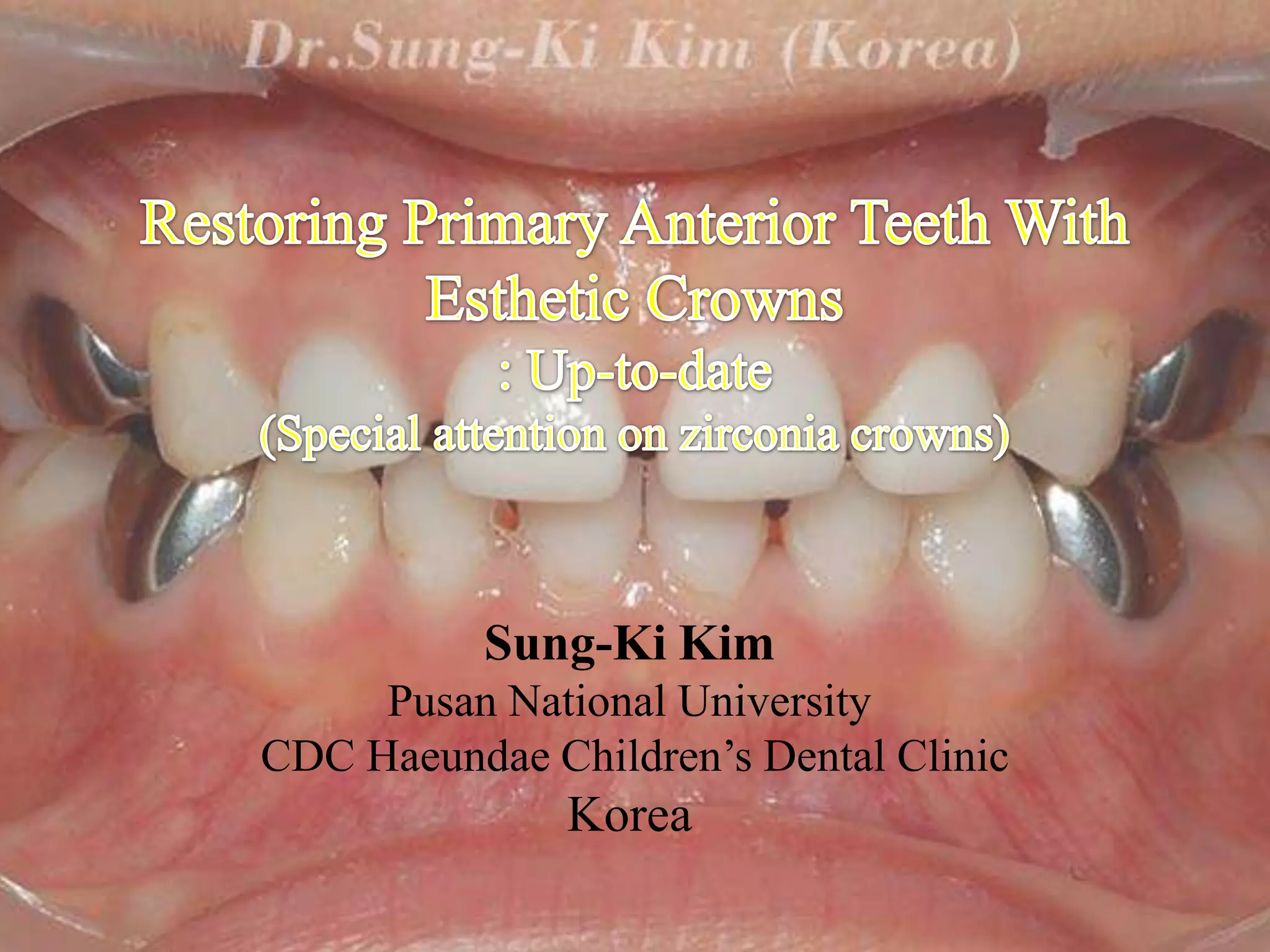
Sung-Ki Kim
Pusan National University
CDC Haeundae Children’s Dental Clinic

Korea
Requirements
for Primary Anterior Crowns
Strip crown

Open-faced SS crown

discoloration

total failure
chipping

Durable △

Retentive O Esthetic X

Durable X

Retentive X

Preveneered SS crown

Durable △

Retentive O

Esthetic △

Esthetic O
WHAT IS ZIRCONIA?
• Physical property : close to metal

• Color : tooth-like

• “Ceramic Steel”
Its physical, mechanical (i.e., high strength, hardness,
wear resistance, resistance to corrosion, modulus of
elasticity similar to steel, coefficient of thermal
expansion similar to iron, and elevated fracture
toughness) and chemical properties make zirconia a
material of interest for biomedical sciences.
Scanning electron microscopy(SEM) observation of
fibroblasts cultured on zirconia : cells grow on the
whole zirconia surface, covering it with a cellular layer.
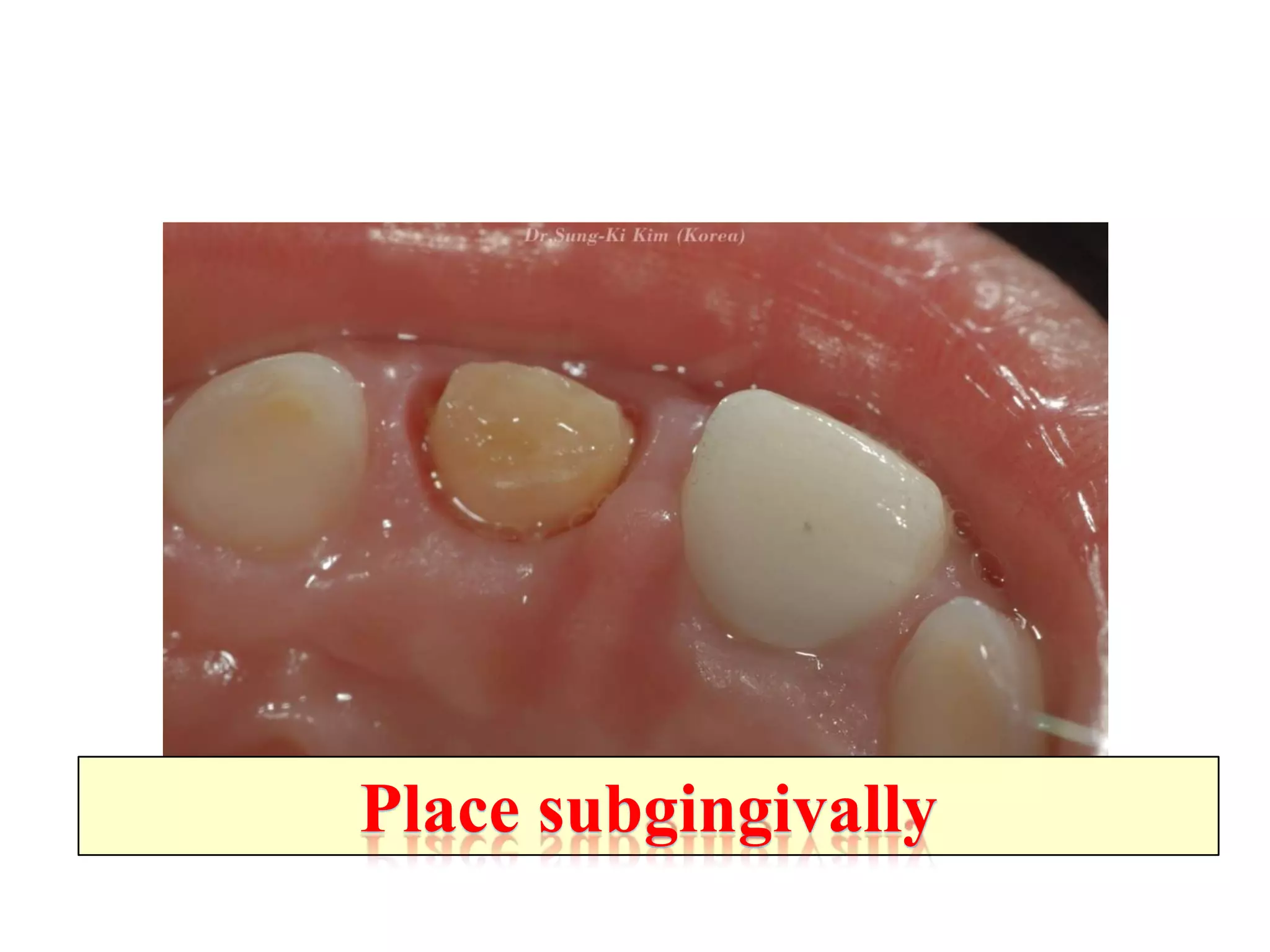
Place subgingivally
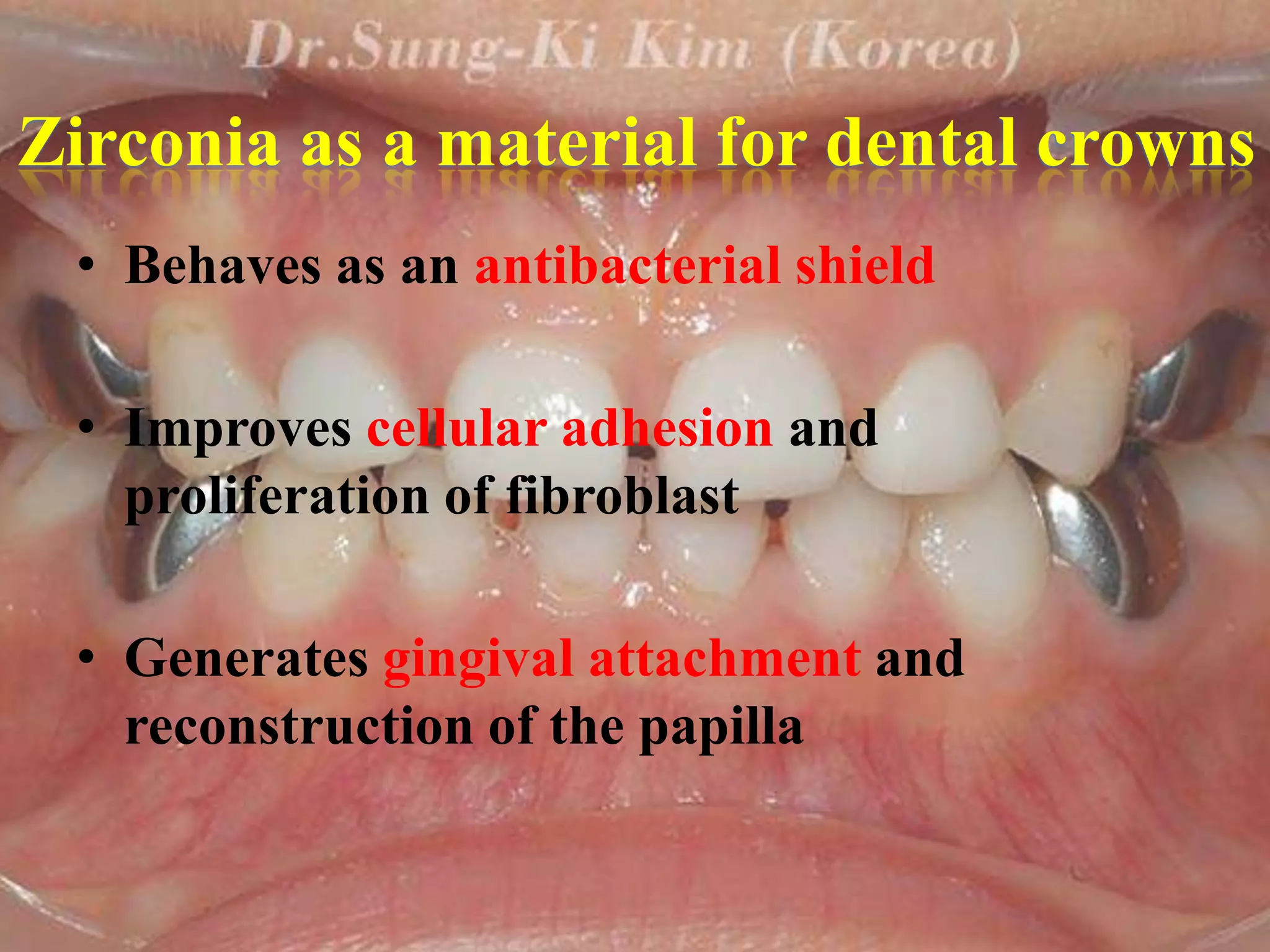
Zirconia as a material for dental crowns
• Behaves as an antibacterial shield
• Improves cellular adhesion and
proliferation of fibroblast
• Generates gingival attachment and
reconstruction of the papilla
Advantages of zirconia crowns
• Esthetics in addition to strength
• Biocompatibility
• Chair-time decreased

• No impression : only 1-visit
Resin-bonded luting has proved to be the best
choice for Zr-ceramic restorations, although the
use of conventional cementation may also be
permissible.
Zirconia crowns for
primary anterior teeth
• Strong adhesive strength like permanent crown
is not necessary
• Bleeding
• Passive fit : hard to hold the crown in the
proper position

Recommendation : Light-cured
cement (resin or GIC)
Dental wear
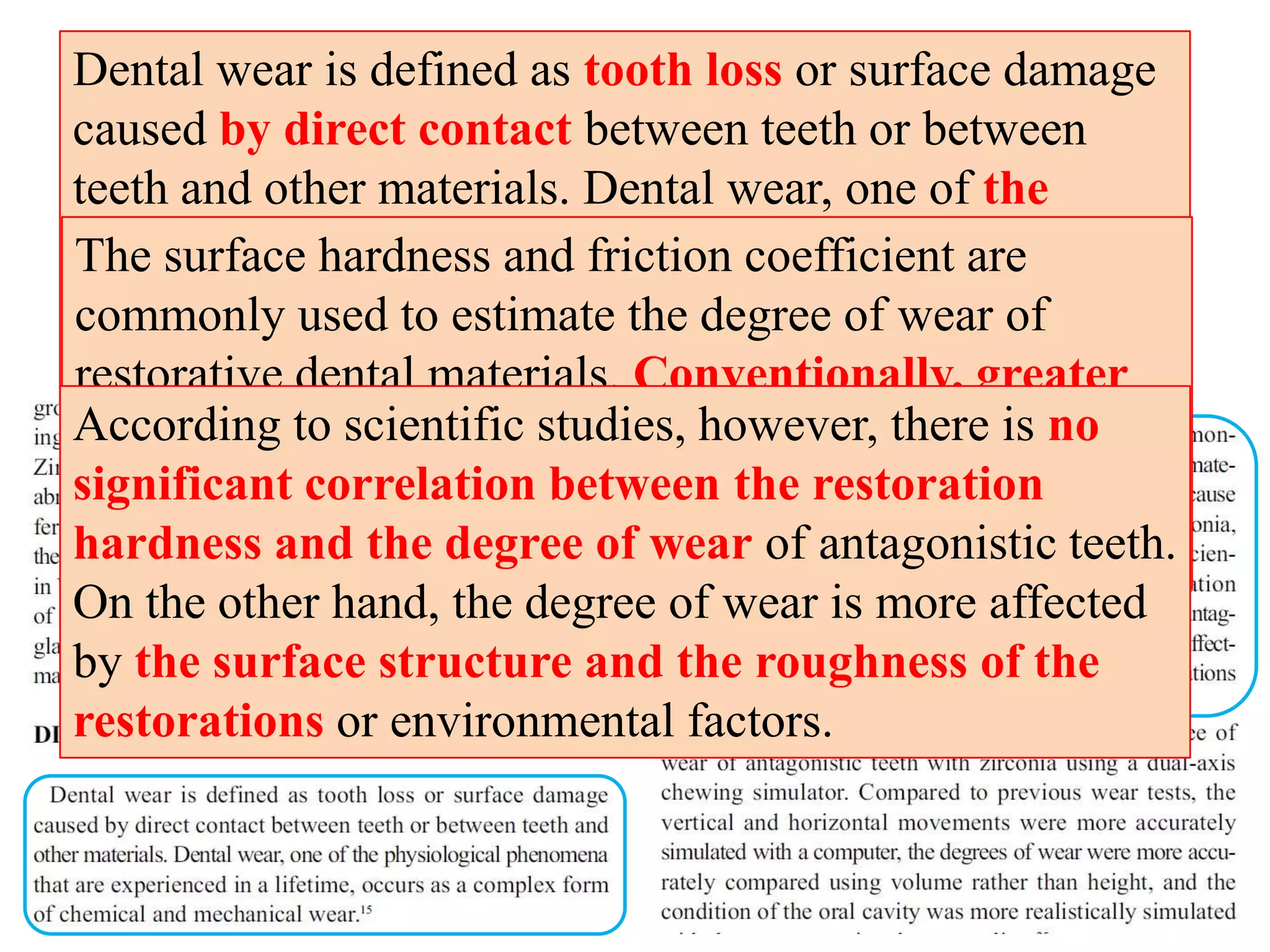
Dental wear is defined as tooth loss or surface damage
caused by direct contact between teeth or between
teeth and other materials. Dental wear, one of the
physiological phenomena that are experienced in a
The surface hardness and friction coefficient are
lifetime, occurs as a complex form of chemicalof
commonly used to estimate the degree of wear and
mechanicaldental materials. Conventionally, greater
restorative wear.
Accordinghasscientific studies, however, there is no
hardness to been believed to cause more wear.
significantmore wear was expected from zirconia, as
Therefore, correlation between the restoration
hardness and the degree of wear of antagonistic teeth.
zirconia has strong surface hardness.
On the other hand, the degree of wear is more affected
by the surface structure and the roughness of the
restorations or environmental factors.
Wear of Pediatric Enamel by Different
Ceramic Materials (Pilot Project)
Gary Frey, DDS
Davette Johnson, DDS
Houston Center for Biomaterials and Biomimetics
University of Texas School of Dentistry at Houston
7500 Cambridge St. Suite 5350
width
height
Houston, TX 77054-2008
Stylus

Material

X-axis wear

Y-axis wear

Depth

1

Zirconia

93.6 microns

98.8 microns

46 microns

3

Zirconia

118.2 microns

110.6 microns

112 microns

5

Zirconia

93.2 microns

75.1 microns

75 microns

7

Zirconia

94.8 microns

85.3 microns

41 microns

2

Alumina

100.2 microns

95.3 microns

42 microns

4

Alumina

101.6 microns

88.3 microns

57 microns

6

Alumina

94.3 microns

105.0 microns

54 microns

8

Alumina

87.3 microns

95.3 microns

66 microns

Using a Leinfelder style in-vitro wear-test apparatus, 800,000 cycles
Material

X-axis wear
(mean/year)

Y-axis wear
(mean/year)

Depth
(mean/year)

Zirconia

24.87 ㎛/year

23.03 ㎛/year

17.12 ㎛/year

Alumina

23.96 ㎛/year

23.99 ㎛/year

13.70 ㎛/year

Zirconia is not harmful
Normal wear rates of enamel :
8-30 ㎛/year
(depending on the study)
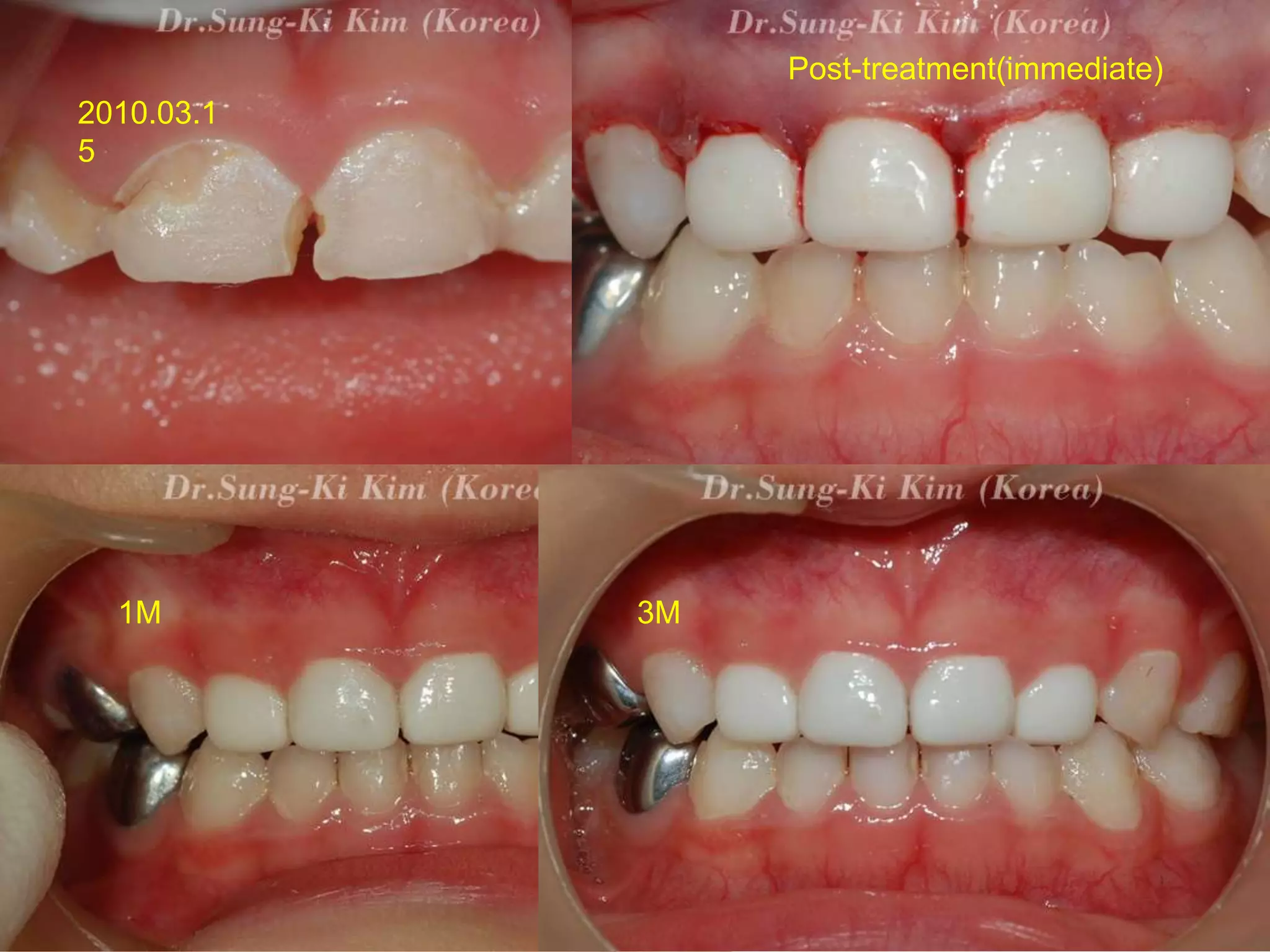
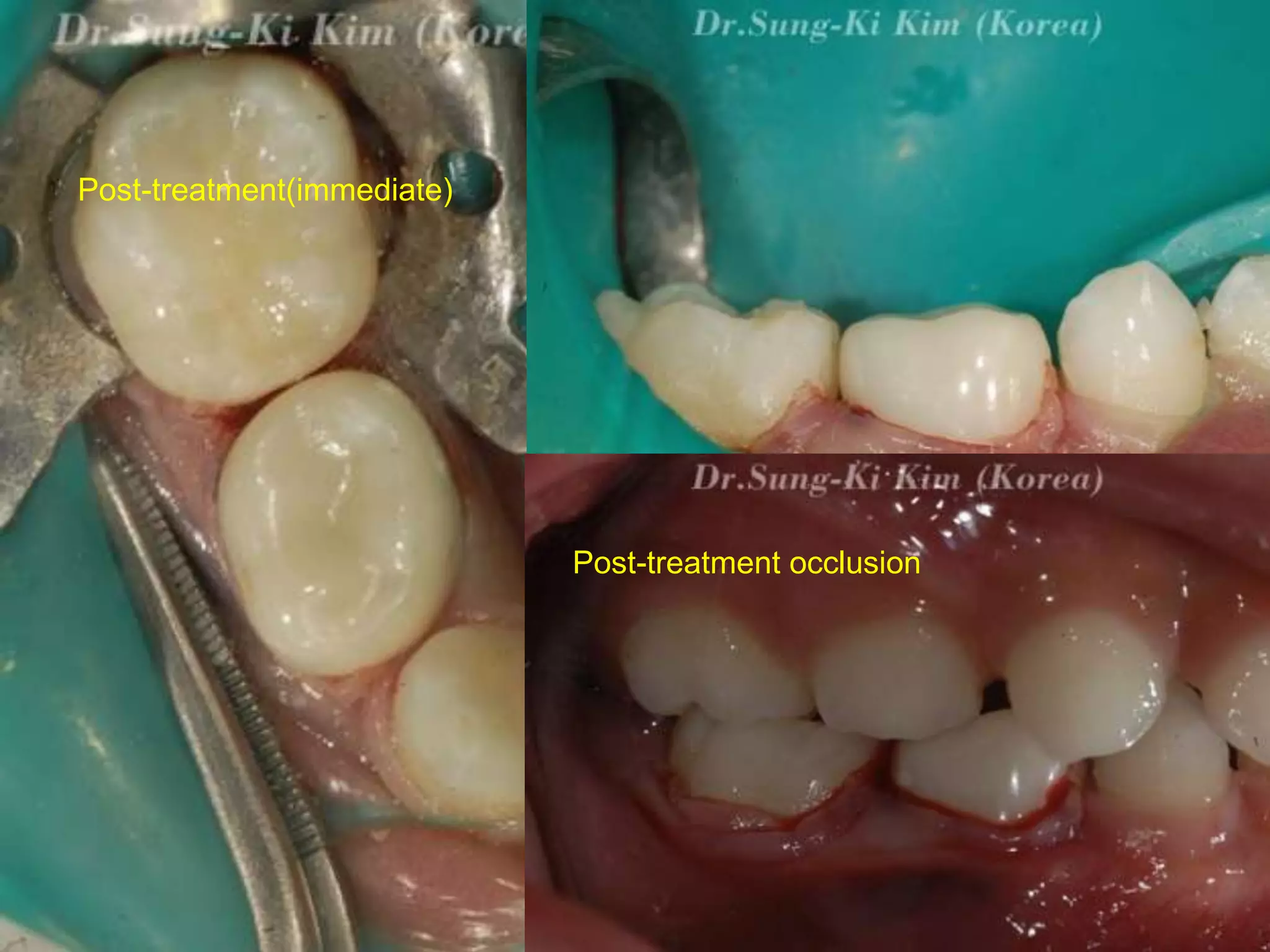
Post-treatment(immediate)
2010.03.1
5

1M

3M
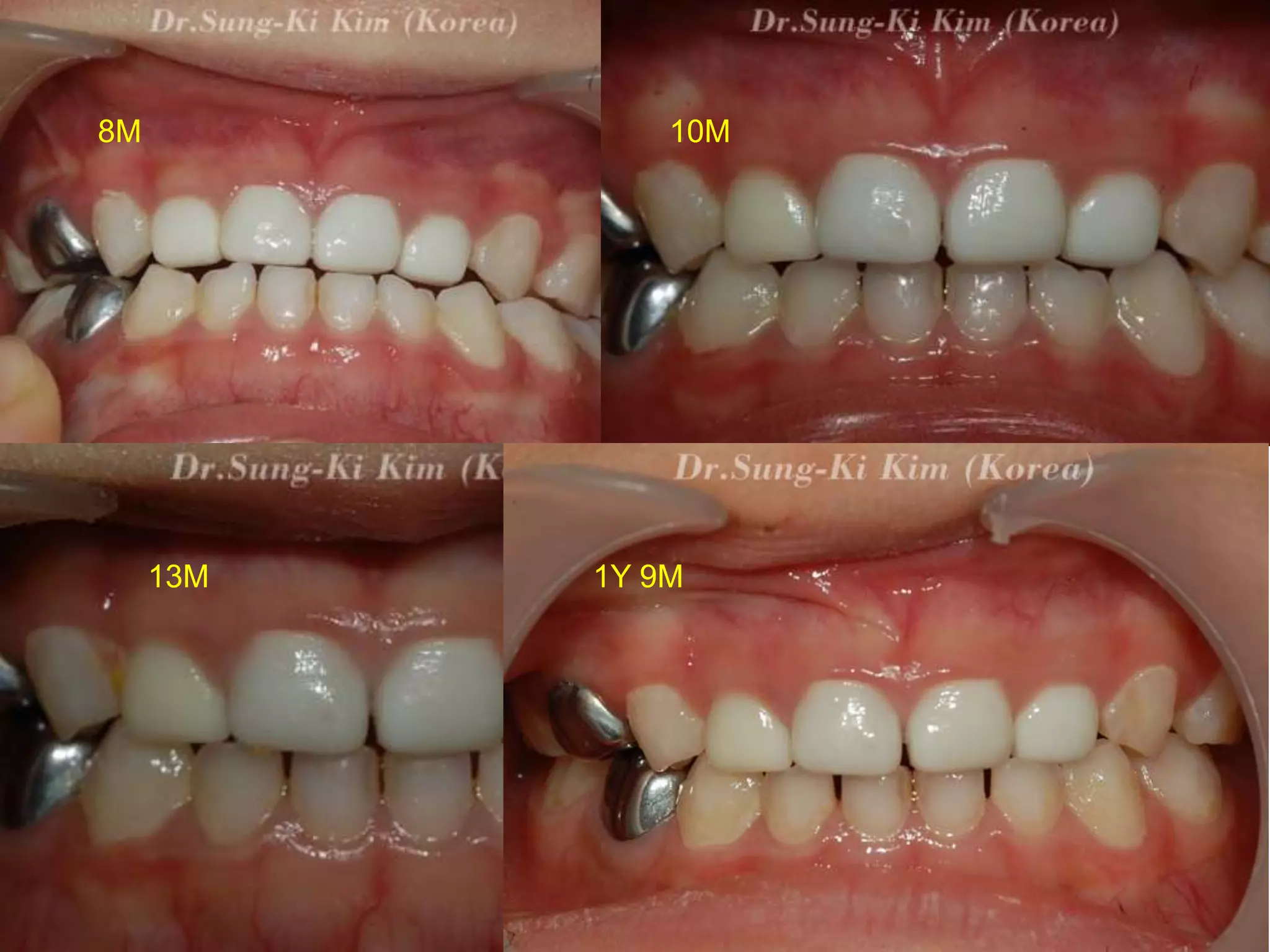
8M

10M

13M

1Y 9M
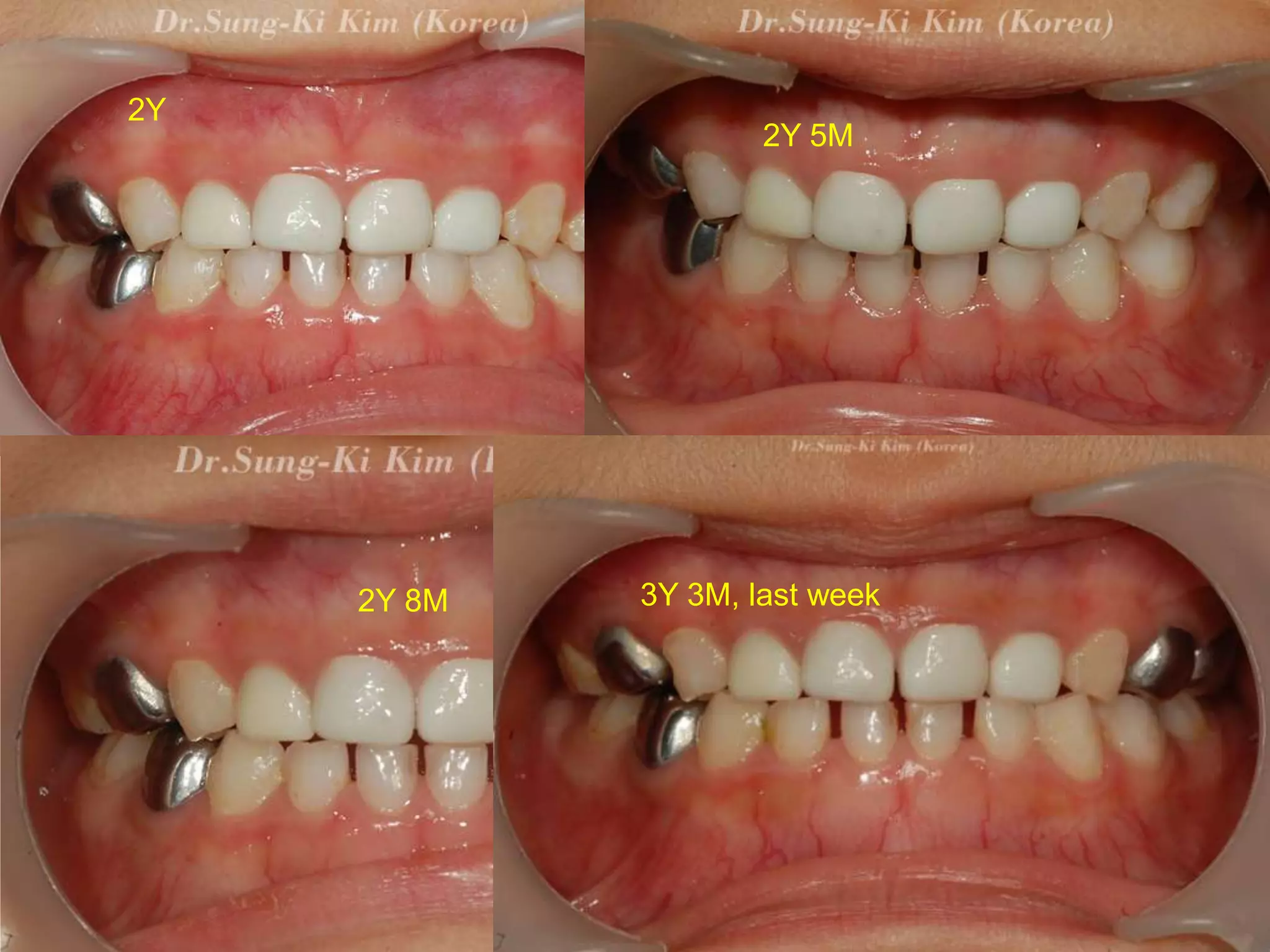
2Y

2Y 5M

2Y 8M

3Y 3M, last week
No excessive attrition
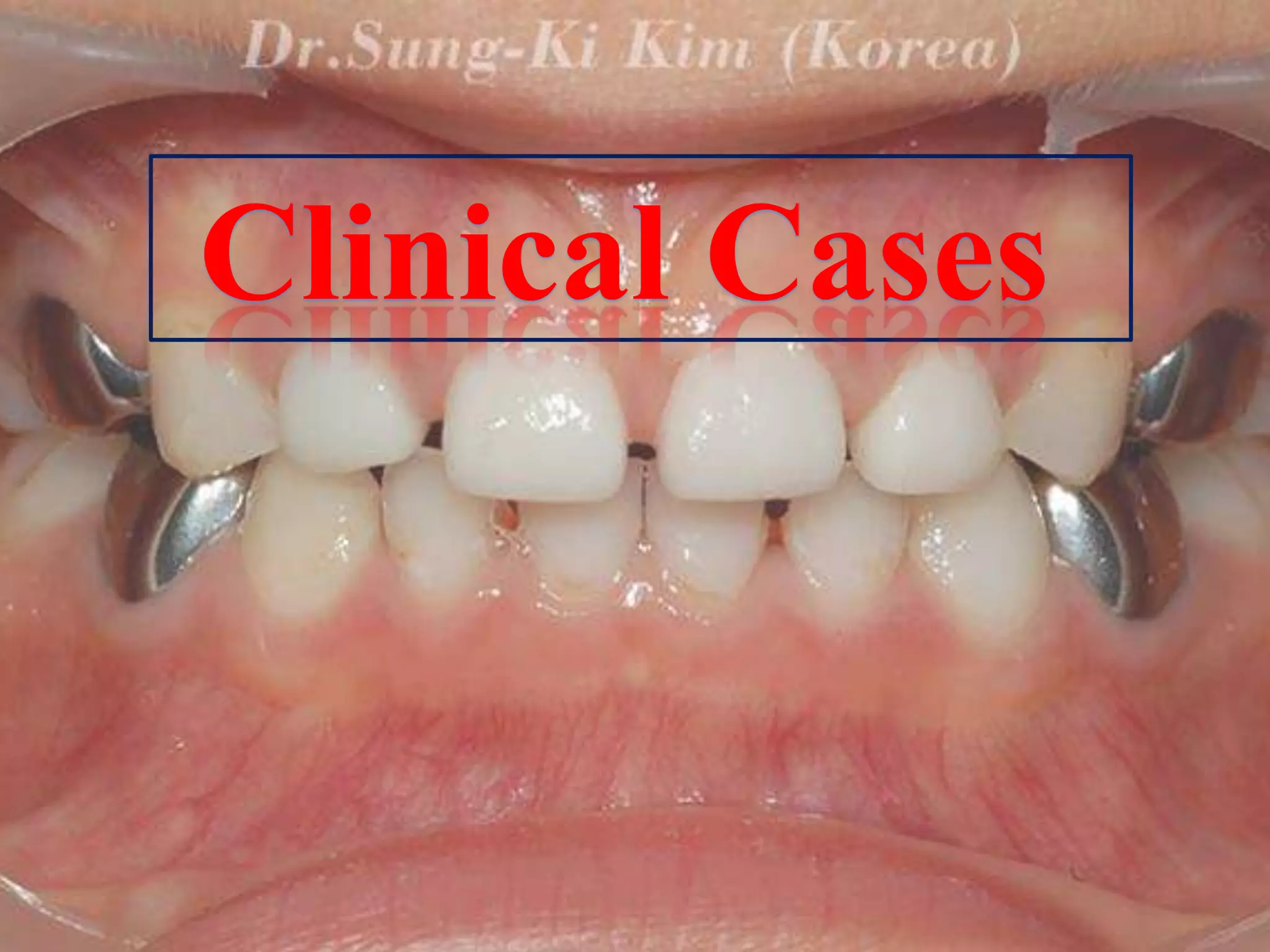
Clinical Cases
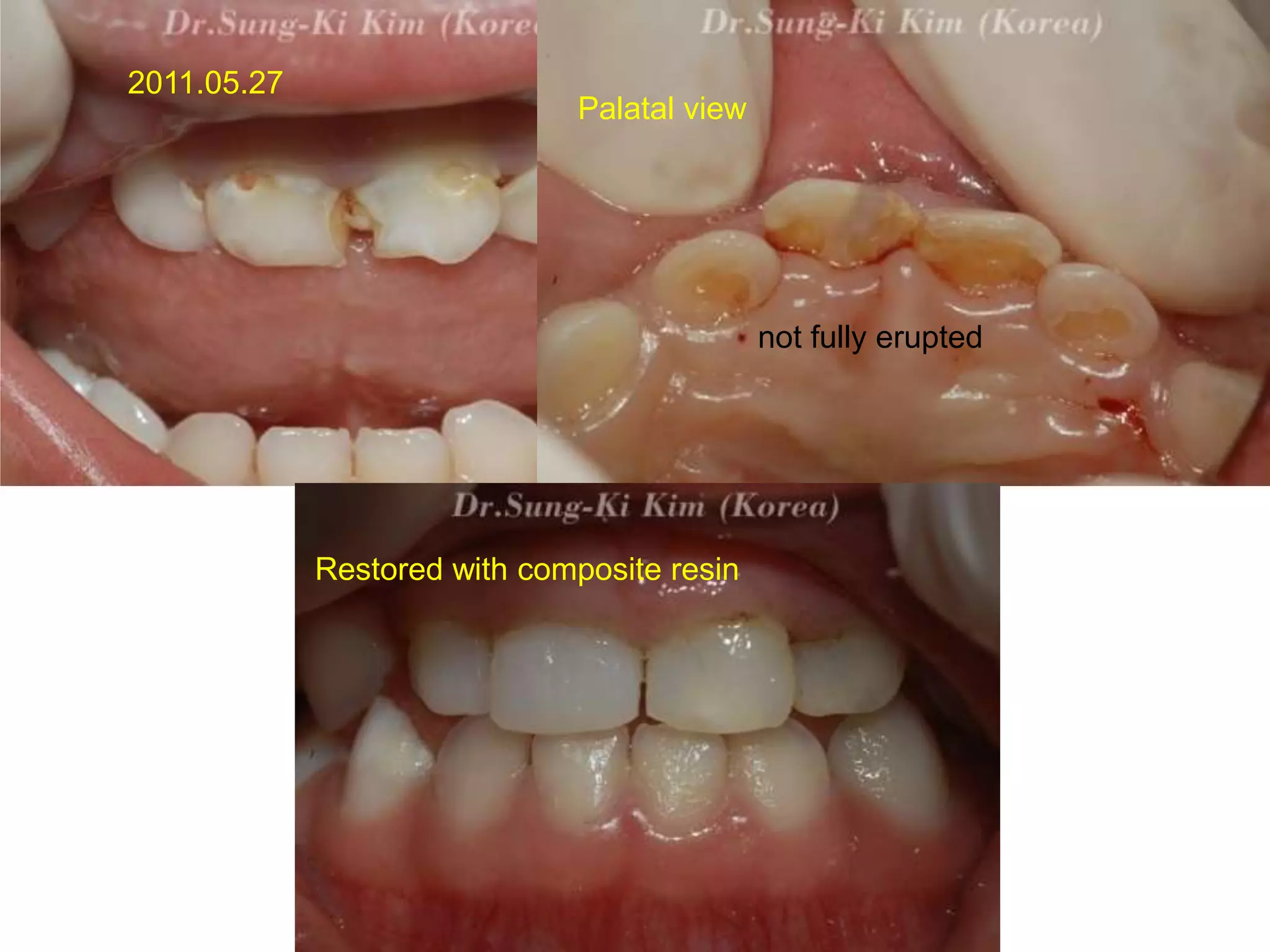
2011.05.27

Palatal view

not fully erupted

Restored with composite resin
3M after treatment
Palatal view
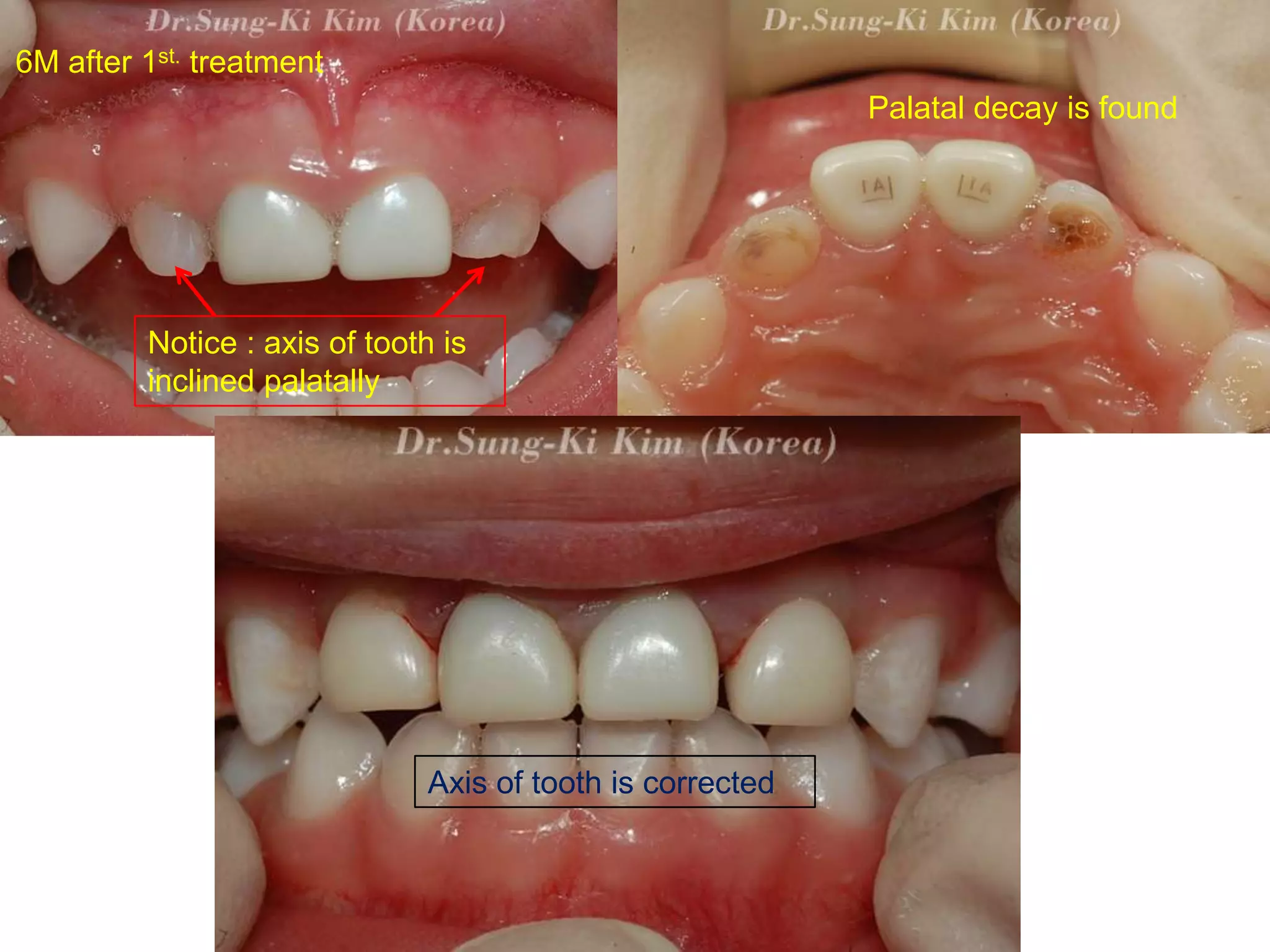
6M after 1st. treatment
Palatal decay is found

Notice : axis of tooth is
inclined palatally

Axis of tooth is corrected
10M after 1st. Treatment /
2M after last treatment

1Y after 1st. treatment/
4M after last treatment

1Y 8M after 1st. treatment/
1Y after last treatment

1Y 4M after 1st. treatment/
8M after last treatment
2Y after 1st. treatment/
1Y 4M after last treatment

No excessive attrition
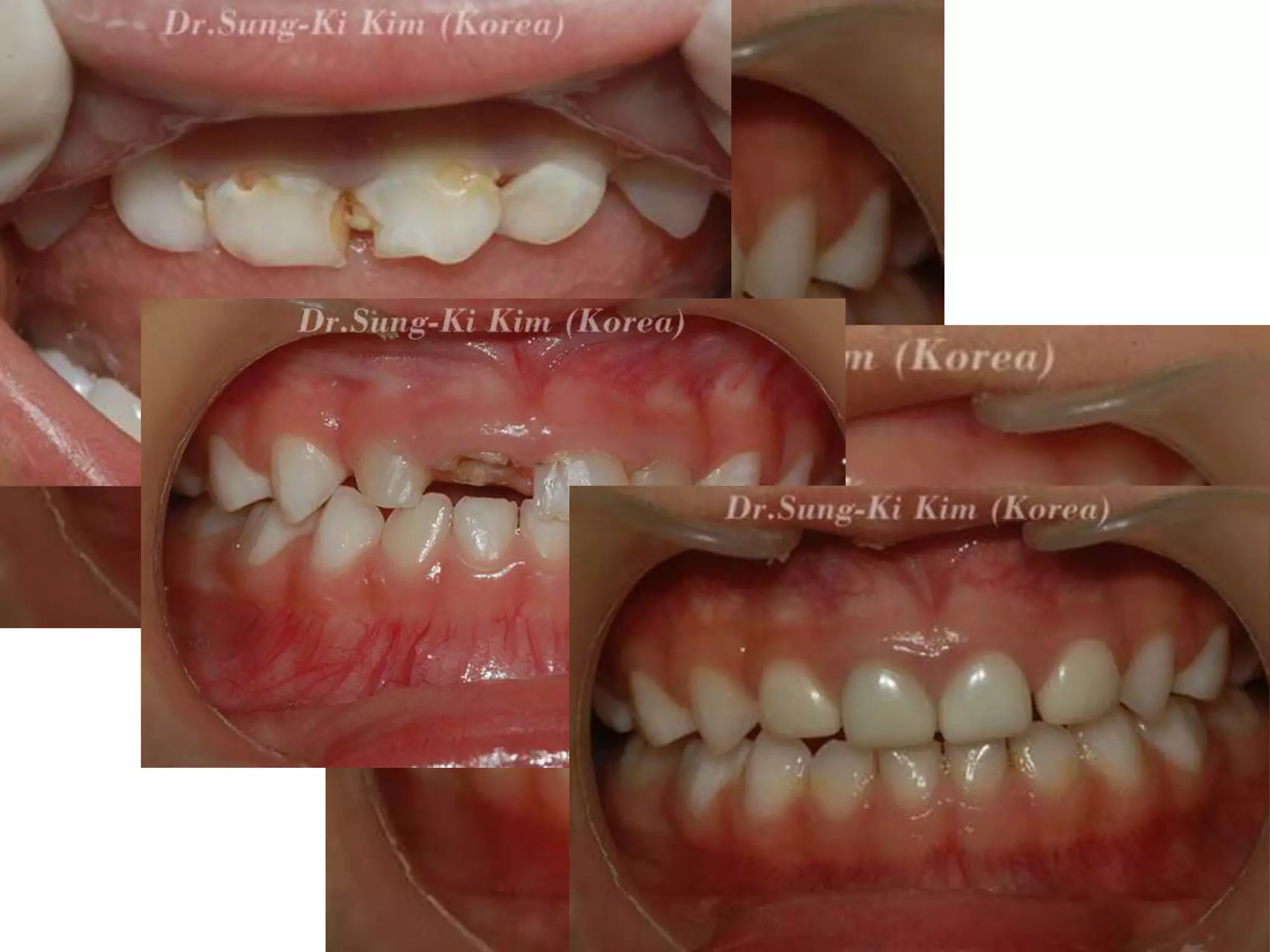
2010.09.10
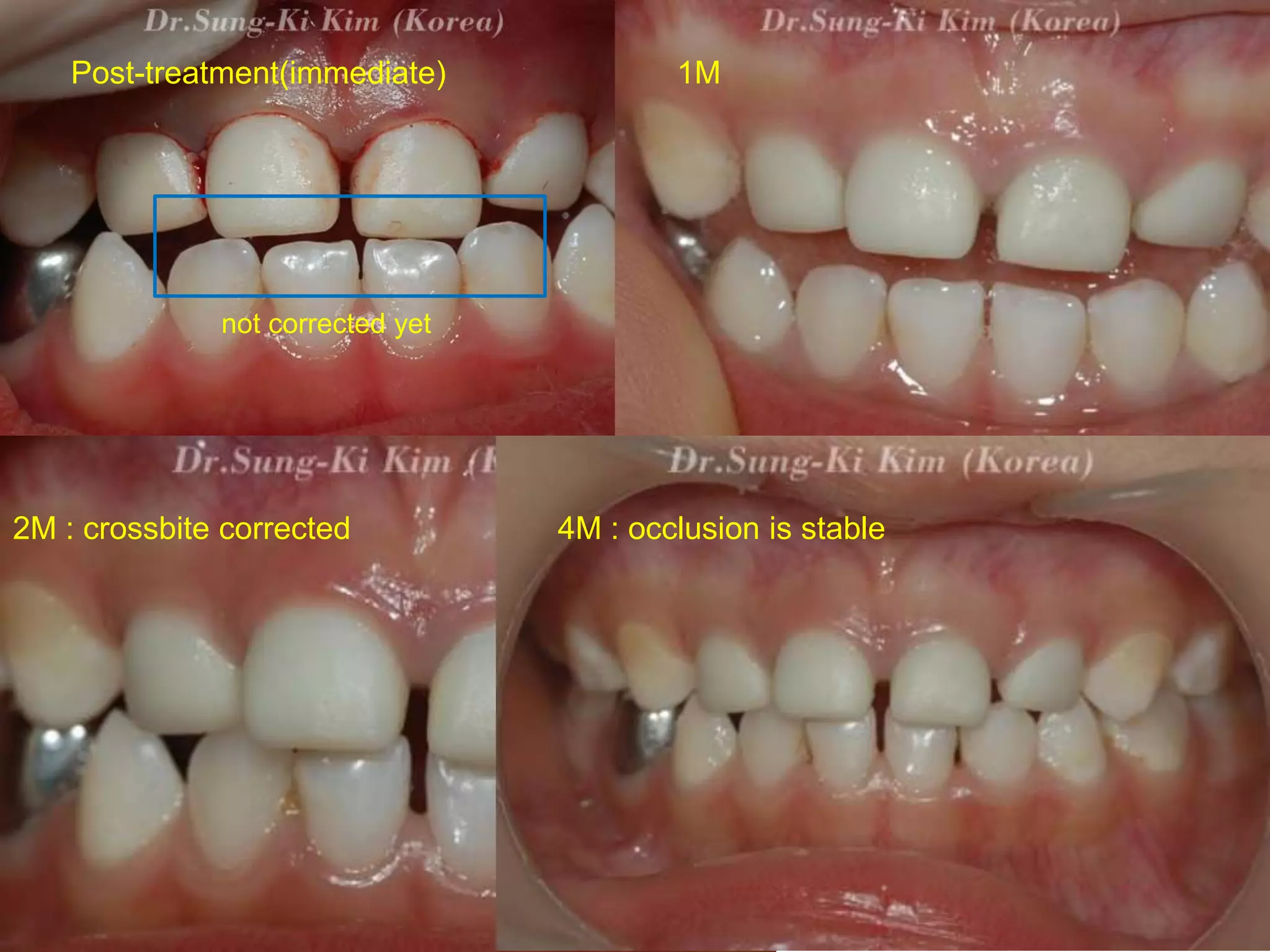
Post-treatment(immediate)

1M

not corrected yet

2M : crossbite corrected

4M : occlusion is stable
7M

1Y 3M

1Y

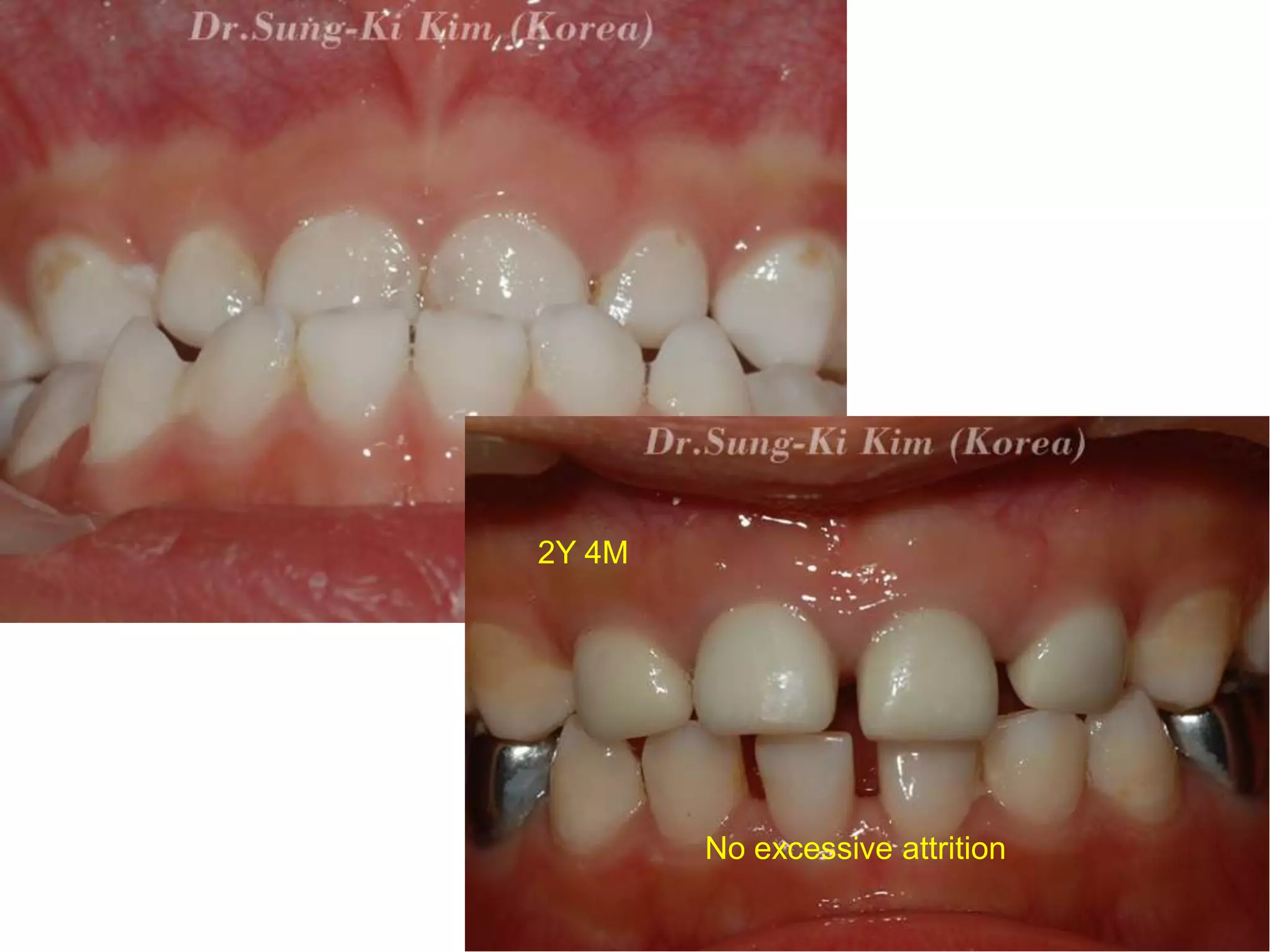
2Y 4M
2Y 4M

No excessive attrition
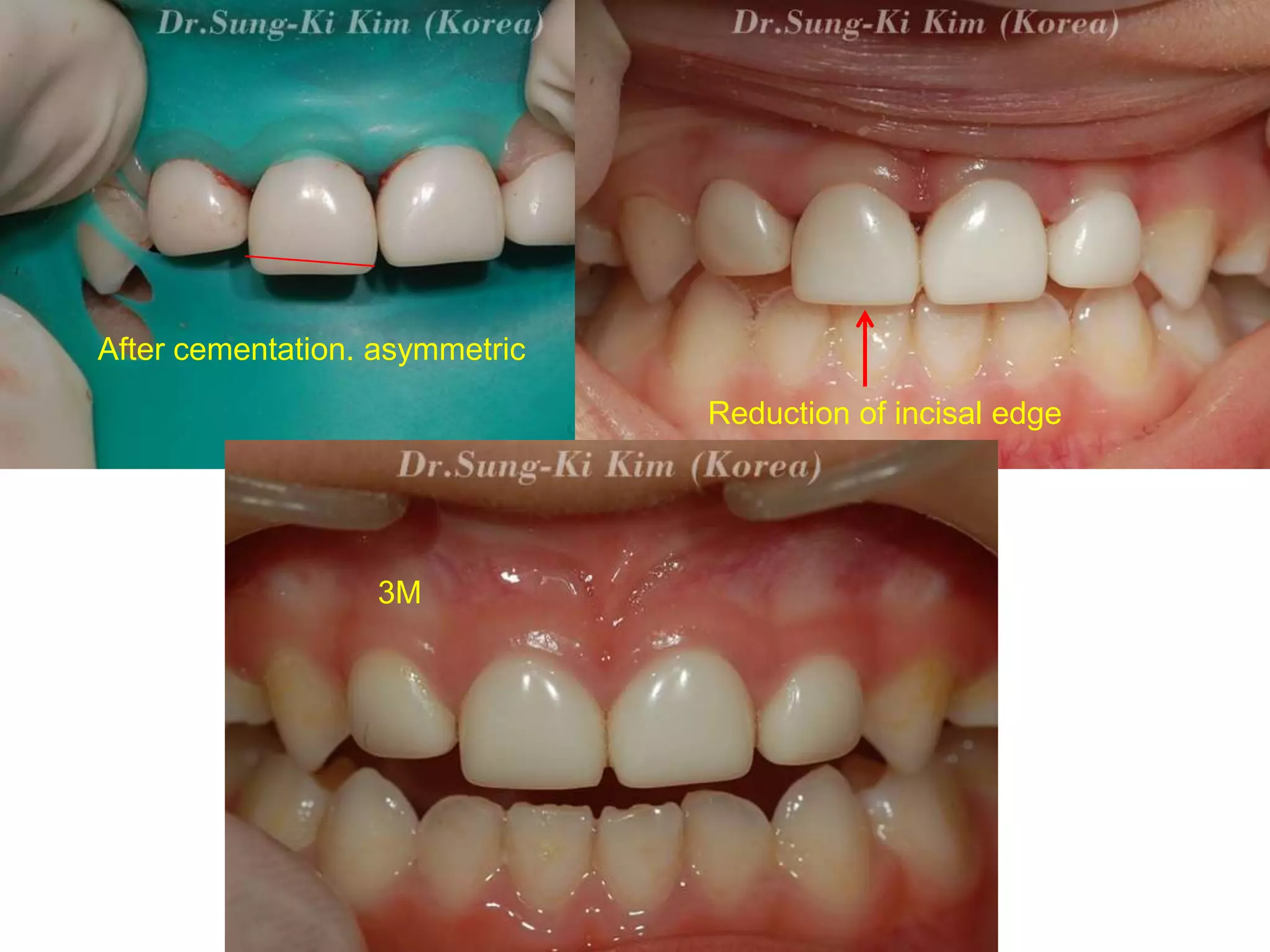
After cementation. asymmetric
Reduction of incisal edge

3M
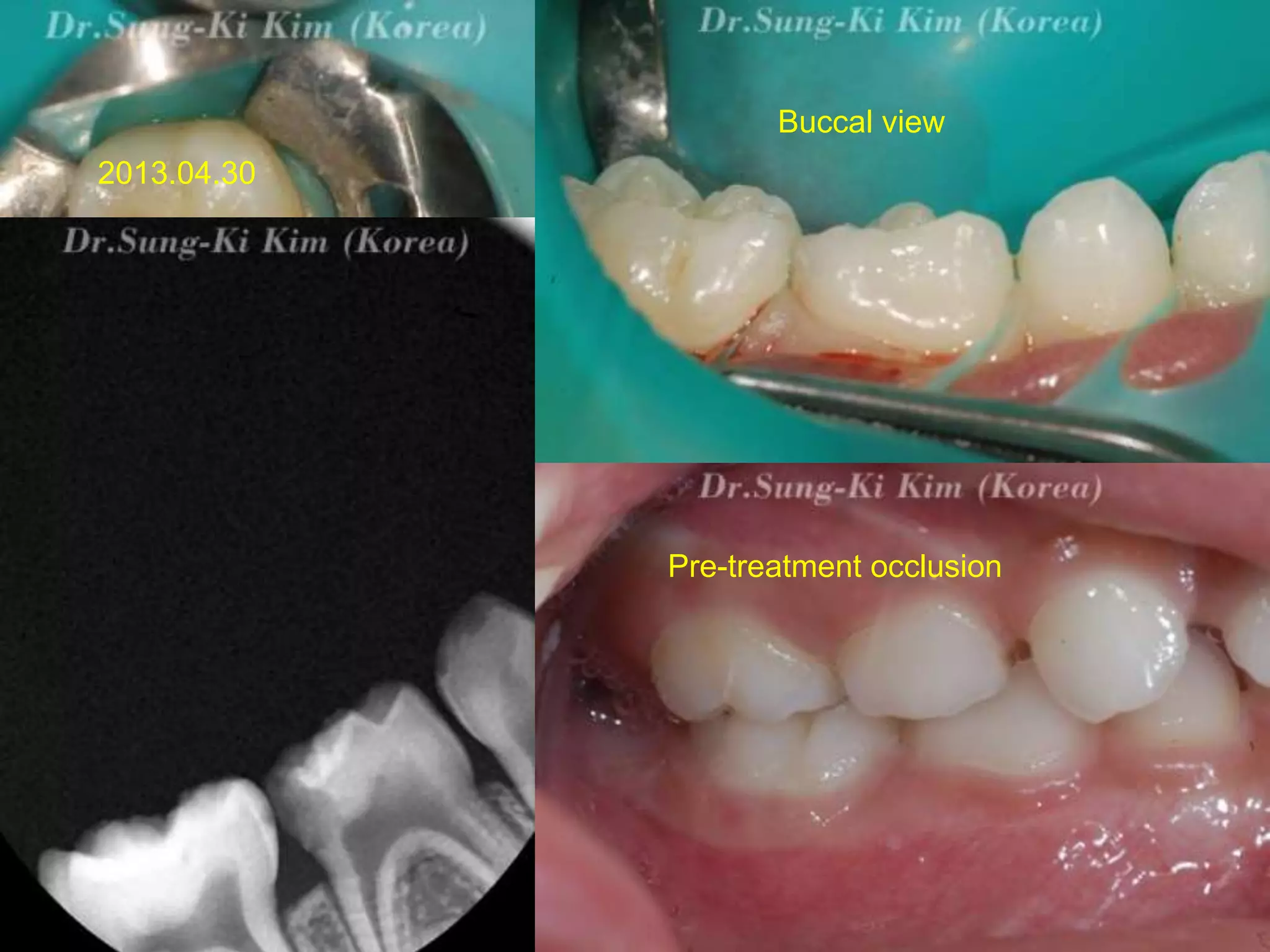
Buccal view
2013.04.30

Pre-treatment occlusion
Preparation(more
than that of SSC)
Post-treatment(immediate)

Post-treatment occlusion
Buccal view

Slight marginal exposure

1 week later

occlusion
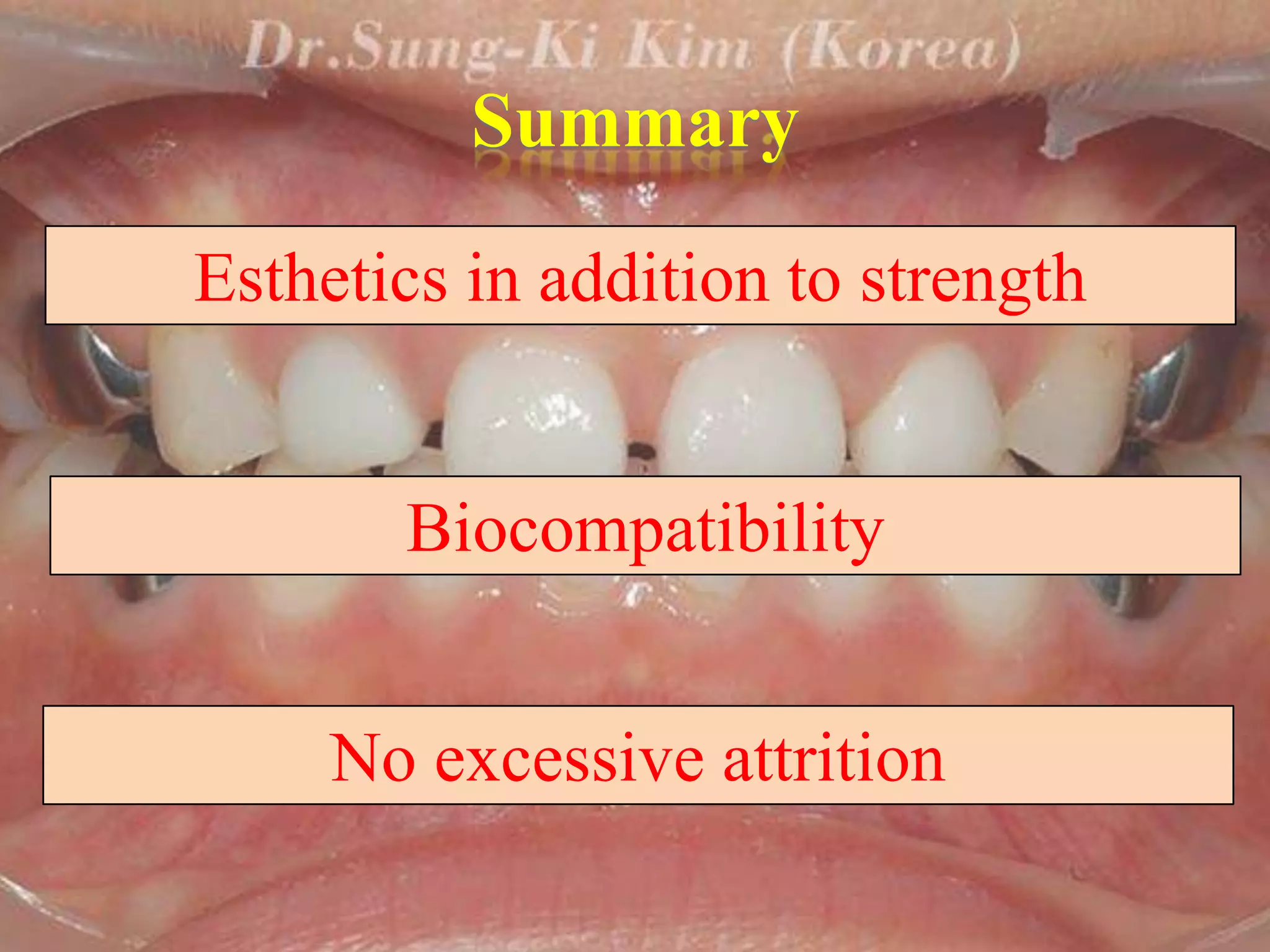
Summary
Esthetics in addition to strength

Biocompatibility
No excessive attrition
kimsungki99@gmail.com

Restoring primary anterior teeth with esthetic crowns

  • 1.
    Sung-Ki Kim Pusan NationalUniversity CDC Haeundae Children’s Dental Clinic Korea
  • 2.
  • 6.
    Strip crown Open-faced SScrown discoloration total failure chipping Durable △ Retentive O Esthetic X Durable X Retentive X Preveneered SS crown Durable △ Retentive O Esthetic △ Esthetic O
  • 7.
    WHAT IS ZIRCONIA? •Physical property : close to metal • Color : tooth-like • “Ceramic Steel”
  • 8.
    Its physical, mechanical(i.e., high strength, hardness, wear resistance, resistance to corrosion, modulus of elasticity similar to steel, coefficient of thermal expansion similar to iron, and elevated fracture toughness) and chemical properties make zirconia a material of interest for biomedical sciences.
  • 9.
    Scanning electron microscopy(SEM)observation of fibroblasts cultured on zirconia : cells grow on the whole zirconia surface, covering it with a cellular layer.
  • 10.
  • 11.
    Zirconia as amaterial for dental crowns • Behaves as an antibacterial shield • Improves cellular adhesion and proliferation of fibroblast • Generates gingival attachment and reconstruction of the papilla
  • 12.
    Advantages of zirconiacrowns • Esthetics in addition to strength • Biocompatibility • Chair-time decreased • No impression : only 1-visit
  • 14.
    Resin-bonded luting hasproved to be the best choice for Zr-ceramic restorations, although the use of conventional cementation may also be permissible.
  • 15.
    Zirconia crowns for primaryanterior teeth • Strong adhesive strength like permanent crown is not necessary • Bleeding • Passive fit : hard to hold the crown in the proper position Recommendation : Light-cured cement (resin or GIC)
  • 16.
  • 17.
    Dental wear isdefined as tooth loss or surface damage caused by direct contact between teeth or between teeth and other materials. Dental wear, one of the physiological phenomena that are experienced in a The surface hardness and friction coefficient are lifetime, occurs as a complex form of chemicalof commonly used to estimate the degree of wear and mechanicaldental materials. Conventionally, greater restorative wear. Accordinghasscientific studies, however, there is no hardness to been believed to cause more wear. significantmore wear was expected from zirconia, as Therefore, correlation between the restoration hardness and the degree of wear of antagonistic teeth. zirconia has strong surface hardness. On the other hand, the degree of wear is more affected by the surface structure and the roughness of the restorations or environmental factors.
  • 18.
    Wear of PediatricEnamel by Different Ceramic Materials (Pilot Project) Gary Frey, DDS Davette Johnson, DDS Houston Center for Biomaterials and Biomimetics University of Texas School of Dentistry at Houston 7500 Cambridge St. Suite 5350 width height Houston, TX 77054-2008 Stylus Material X-axis wear Y-axis wear Depth 1 Zirconia 93.6 microns 98.8 microns 46 microns 3 Zirconia 118.2 microns 110.6 microns 112 microns 5 Zirconia 93.2 microns 75.1 microns 75 microns 7 Zirconia 94.8 microns 85.3 microns 41 microns 2 Alumina 100.2 microns 95.3 microns 42 microns 4 Alumina 101.6 microns 88.3 microns 57 microns 6 Alumina 94.3 microns 105.0 microns 54 microns 8 Alumina 87.3 microns 95.3 microns 66 microns Using a Leinfelder style in-vitro wear-test apparatus, 800,000 cycles
  • 19.
    Material X-axis wear (mean/year) Y-axis wear (mean/year) Depth (mean/year) Zirconia 24.87㎛/year 23.03 ㎛/year 17.12 ㎛/year Alumina 23.96 ㎛/year 23.99 ㎛/year 13.70 ㎛/year Zirconia is not harmful Normal wear rates of enamel : 8-30 ㎛/year (depending on the study)
  • 20.
  • 21.
  • 22.
    2Y 2Y 5M 2Y 8M 3Y3M, last week
  • 23.
  • 24.
  • 25.
    2011.05.27 Palatal view not fullyerupted Restored with composite resin
  • 26.
  • 27.
    6M after 1st.treatment Palatal decay is found Notice : axis of tooth is inclined palatally Axis of tooth is corrected
  • 28.
    10M after 1st.Treatment / 2M after last treatment 1Y after 1st. treatment/ 4M after last treatment 1Y 8M after 1st. treatment/ 1Y after last treatment 1Y 4M after 1st. treatment/ 8M after last treatment
  • 29.
    2Y after 1st.treatment/ 1Y 4M after last treatment No excessive attrition
  • 30.
  • 31.
    Post-treatment(immediate) 1M not corrected yet 2M: crossbite corrected 4M : occlusion is stable
  • 32.
  • 33.
  • 34.
  • 35.
  • 36.
  • 37.
  • 38.
    Buccal view Slight marginalexposure 1 week later occlusion
  • 39.
    Summary Esthetics in additionto strength Biocompatibility No excessive attrition
  • 40.