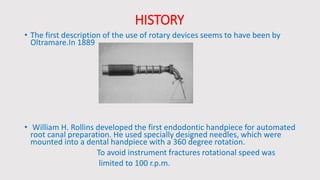
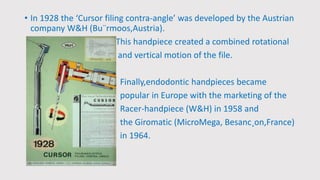
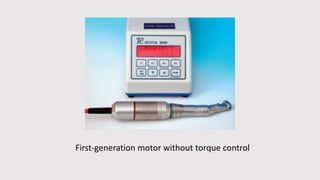
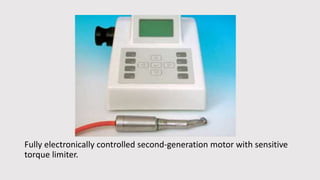
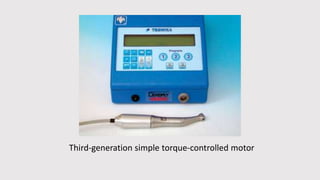
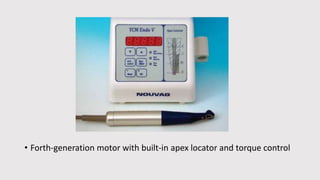
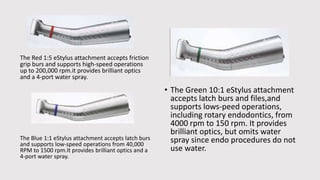
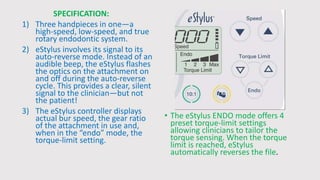
Rotary endodontic instruments are used within root canals and follow rotational motion dynamics. They are replacing conventional hand files to improve canal shaping ability and reduce clinical errors. Nickel-titanium alloys are commonly used due to their ability to flexibly conform to canal curvatures without plastic deformation. Modern rotary instrument systems incorporate torque-controlled motors that can reverse rotation to prevent instrument separation if excessive torque is applied. Continued research aims to further optimize flexibility, strength and cutting ability of these instruments.