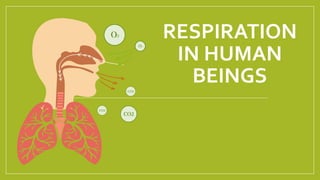
RESPIRATION
IN HUMAN
BEINGS
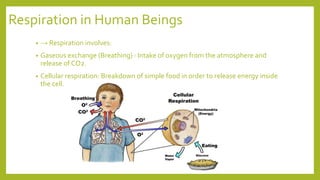
Respiration in Human Beings
• → Respiration involves:
• Gaseous exchange (Breathing) : Intake of oxygen from the atmosphere and
release of CO2.
• Cellular respiration: Breakdown of simple food in order to release energy inside
the cell.
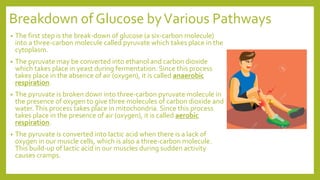
Breakdown of Glucose byVarious Pathways
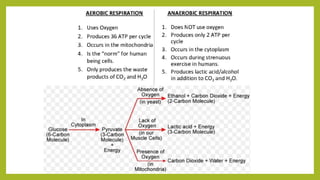
• The first step is the break-down of glucose (a six-carbon molecule)
into a three-carbon molecule called pyruvate which takes place in the
cytoplasm.
• The pyruvate may be converted into ethanol and carbon dioxide
which takes place in yeast during fermentation. Since this process
takes place in the absence of air (oxygen), it is called anaerobic
respiration.
• The pyruvate is broken down into three-carbon pyruvate molecule in
the presence of oxygen to give three molecules of carbon dioxide and
water.This process takes place in mitochondria. Since this process
takes place in the presence of air (oxygen), it is called aerobic
respiration.
• The pyruvate is converted into lactic acid when there is a lack of
oxygen in our muscle cells, which is also a three-carbon molecule.
This build-up of lactic acid in our muscles during sudden activity
causes cramps.
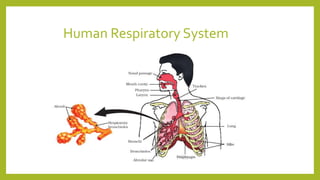
Human Respiratory System
Passage of air through the respiratory system
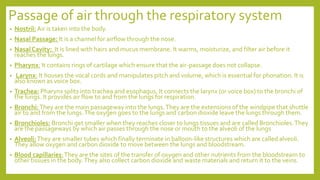
• Nostril: Air is taken into the body.
• Nasal Passage: It is a channel for airflow through the nose.
• Nasal Cavity: It is lined with hairs and mucus membrane. It warms, moisturize, and filter air before it
reaches the lungs.
• Pharynx: It contains rings of cartilage which ensure that the air-passage does not collapse.
• Larynx: It houses the vocal cords and manipulates pitch and volume, which is essential for phonation. It is
also known as voice box.
• Trachea: Pharynx splits into trachea and esophagus. It connects the larynx (or voice box) to the bronchi of
the lungs. It provides air flow to and from the lungs for respiration.
• Bronchi:They are the main passageway into the lungs.They are the extensions of the windpipe that shuttle
air to and from the lungs.The oxygen goes to the lungs and carbon dioxide leave the lungs through them.
• Bronchioles: Bronchi get smaller when they reaches closer to lungs tissues and are called Bronchioles.They
are the passageways by which air passes through the nose or mouth to the alveoli of the lungs
• Alveoli:They are smaller tubes which finally terminate in balloon-like structures which are called alveoli.
They allow oxygen and carbon dioxide to move between the lungs and bloodstream.
• Blood capillaries:They are the sites of the transfer of oxygen and other nutrients from the bloodstream to
other tissues in the body.They also collect carbon dioxide and waste materials and return it to the veins.
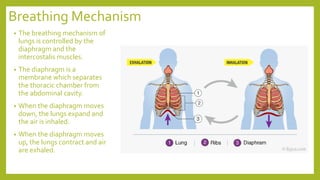
Breathing Mechanism
• The breathing mechanism of
lungs is controlled by the
diaphragm and the
intercostalis muscles.
• The diaphragm is a
membrane which separates
the thoracic chamber from
the abdominal cavity.
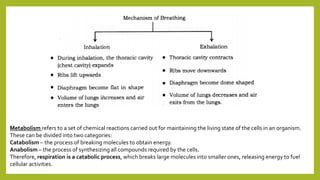
• When the diaphragm moves
down, the lungs expand and
the air is inhaled.
• When the diaphragm moves
up, the lungs contract and air
are exhaled.
Metabolism refers to a set of chemical reactions carried out for maintaining the living state of the cells in an organism.
These can be divided into two categories:
Catabolism – the process of breaking molecules to obtain energy.
Anabolism – the process of synthesizing all compounds required by the cells.
Therefore, respiration is a catabolic process, which breaks large molecules into smaller ones, releasing energy to fuel
cellular activities.
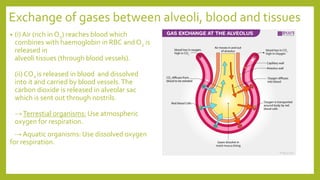
Exchange of gases between alveoli, blood and tissues
• (i) Air (rich in O2) reaches blood which
combines with haemoglobin in RBC and O2 is
released in
alveoli tissues (through blood vessels).
(ii) CO2 is released in blood and dissolved
into it and carried by blood vessels.The
carbon dioxide is released in alveolar sac
which is sent out through nostrils.
→Terrestial organisms: Use atmospheric
oxygen for respiration.
→ Aquatic organisms: Use dissolved oxygen
for respiration.
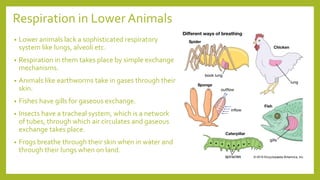
Respiration in Lower Animals
• Lower animals lack a sophisticated respiratory
system like lungs, alveoli etc.
• Respiration in them takes place by simple exchange
mechanisms.
• Animals like earthworms take in gases through their
skin.
• Fishes have gills for gaseous exchange.
• Insects have a tracheal system, which is a network
of tubes, through which air circulates and gaseous
exchange takes place.
• Frogs breathe through their skin when in water and
through their lungs when on land.
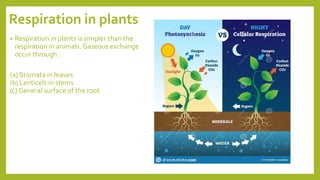
Respiration in plants
• Respiration in plants is simpler than the
respiration in animals. Gaseous exchange
occur through :
(a) Stomata in leaves
(b) Lenticels in stems
(c) General surface of the root

Respiration in human beings

  • 1.
  • 2.
    Respiration in HumanBeings • → Respiration involves: • Gaseous exchange (Breathing) : Intake of oxygen from the atmosphere and release of CO2. • Cellular respiration: Breakdown of simple food in order to release energy inside the cell.
  • 3.
    Breakdown of GlucosebyVarious Pathways • The first step is the break-down of glucose (a six-carbon molecule) into a three-carbon molecule called pyruvate which takes place in the cytoplasm. • The pyruvate may be converted into ethanol and carbon dioxide which takes place in yeast during fermentation. Since this process takes place in the absence of air (oxygen), it is called anaerobic respiration. • The pyruvate is broken down into three-carbon pyruvate molecule in the presence of oxygen to give three molecules of carbon dioxide and water.This process takes place in mitochondria. Since this process takes place in the presence of air (oxygen), it is called aerobic respiration. • The pyruvate is converted into lactic acid when there is a lack of oxygen in our muscle cells, which is also a three-carbon molecule. This build-up of lactic acid in our muscles during sudden activity causes cramps.
  • 5.
  • 6.
    Passage of airthrough the respiratory system • Nostril: Air is taken into the body. • Nasal Passage: It is a channel for airflow through the nose. • Nasal Cavity: It is lined with hairs and mucus membrane. It warms, moisturize, and filter air before it reaches the lungs. • Pharynx: It contains rings of cartilage which ensure that the air-passage does not collapse. • Larynx: It houses the vocal cords and manipulates pitch and volume, which is essential for phonation. It is also known as voice box. • Trachea: Pharynx splits into trachea and esophagus. It connects the larynx (or voice box) to the bronchi of the lungs. It provides air flow to and from the lungs for respiration. • Bronchi:They are the main passageway into the lungs.They are the extensions of the windpipe that shuttle air to and from the lungs.The oxygen goes to the lungs and carbon dioxide leave the lungs through them. • Bronchioles: Bronchi get smaller when they reaches closer to lungs tissues and are called Bronchioles.They are the passageways by which air passes through the nose or mouth to the alveoli of the lungs • Alveoli:They are smaller tubes which finally terminate in balloon-like structures which are called alveoli. They allow oxygen and carbon dioxide to move between the lungs and bloodstream. • Blood capillaries:They are the sites of the transfer of oxygen and other nutrients from the bloodstream to other tissues in the body.They also collect carbon dioxide and waste materials and return it to the veins.
  • 7.
    Breathing Mechanism • Thebreathing mechanism of lungs is controlled by the diaphragm and the intercostalis muscles. • The diaphragm is a membrane which separates the thoracic chamber from the abdominal cavity. • When the diaphragm moves down, the lungs expand and the air is inhaled. • When the diaphragm moves up, the lungs contract and air are exhaled.
  • 8.
    Metabolism refers toa set of chemical reactions carried out for maintaining the living state of the cells in an organism. These can be divided into two categories: Catabolism – the process of breaking molecules to obtain energy. Anabolism – the process of synthesizing all compounds required by the cells. Therefore, respiration is a catabolic process, which breaks large molecules into smaller ones, releasing energy to fuel cellular activities.
  • 9.
    Exchange of gasesbetween alveoli, blood and tissues • (i) Air (rich in O2) reaches blood which combines with haemoglobin in RBC and O2 is released in alveoli tissues (through blood vessels). (ii) CO2 is released in blood and dissolved into it and carried by blood vessels.The carbon dioxide is released in alveolar sac which is sent out through nostrils. →Terrestial organisms: Use atmospheric oxygen for respiration. → Aquatic organisms: Use dissolved oxygen for respiration.
  • 10.
    Respiration in LowerAnimals • Lower animals lack a sophisticated respiratory system like lungs, alveoli etc. • Respiration in them takes place by simple exchange mechanisms. • Animals like earthworms take in gases through their skin. • Fishes have gills for gaseous exchange. • Insects have a tracheal system, which is a network of tubes, through which air circulates and gaseous exchange takes place. • Frogs breathe through their skin when in water and through their lungs when on land.
  • 11.
    Respiration in plants •Respiration in plants is simpler than the respiration in animals. Gaseous exchange occur through : (a) Stomata in leaves (b) Lenticels in stems (c) General surface of the root