Step One: Getting Started
       •     Define and refine your topic. Start by brainstorming, on your own or with a friend, to
       identify what you already know about the topic, what you want to know, and what you need to
       know.
       •    If you are writing an essay, identify the possible topics or arguments you are going to
       explore in your paper to support your thesis statement.
       •     Use your instructor's assessment information to identify specific information that is
       required.
       •      Make sure you understand the assignment . Talk to your instructor if you need
       clarification about the assignment requirements or how you'll be assessed.
       •    Use an encyclopedia to get an overview of your topic. Choose your subject, then scroll
       down the page to see a list of multi-disciplinary and/or subject-specific encyclopedias available
       @ the library or online.
       •    If you need help writing an outline or drafting your report these websites offer
       suggestions, more details, and examples that may be helpful:
              o      Writing Lab Reports and Scientific Papers
              o      Writing Research Papers
                      §     Writing a thesis statement
                              §     Bad and better thesis statements
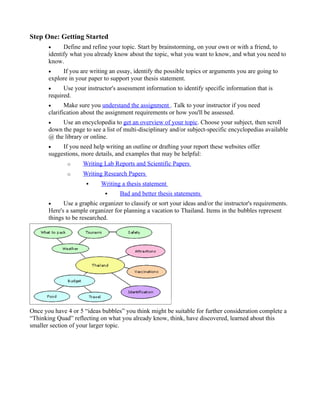
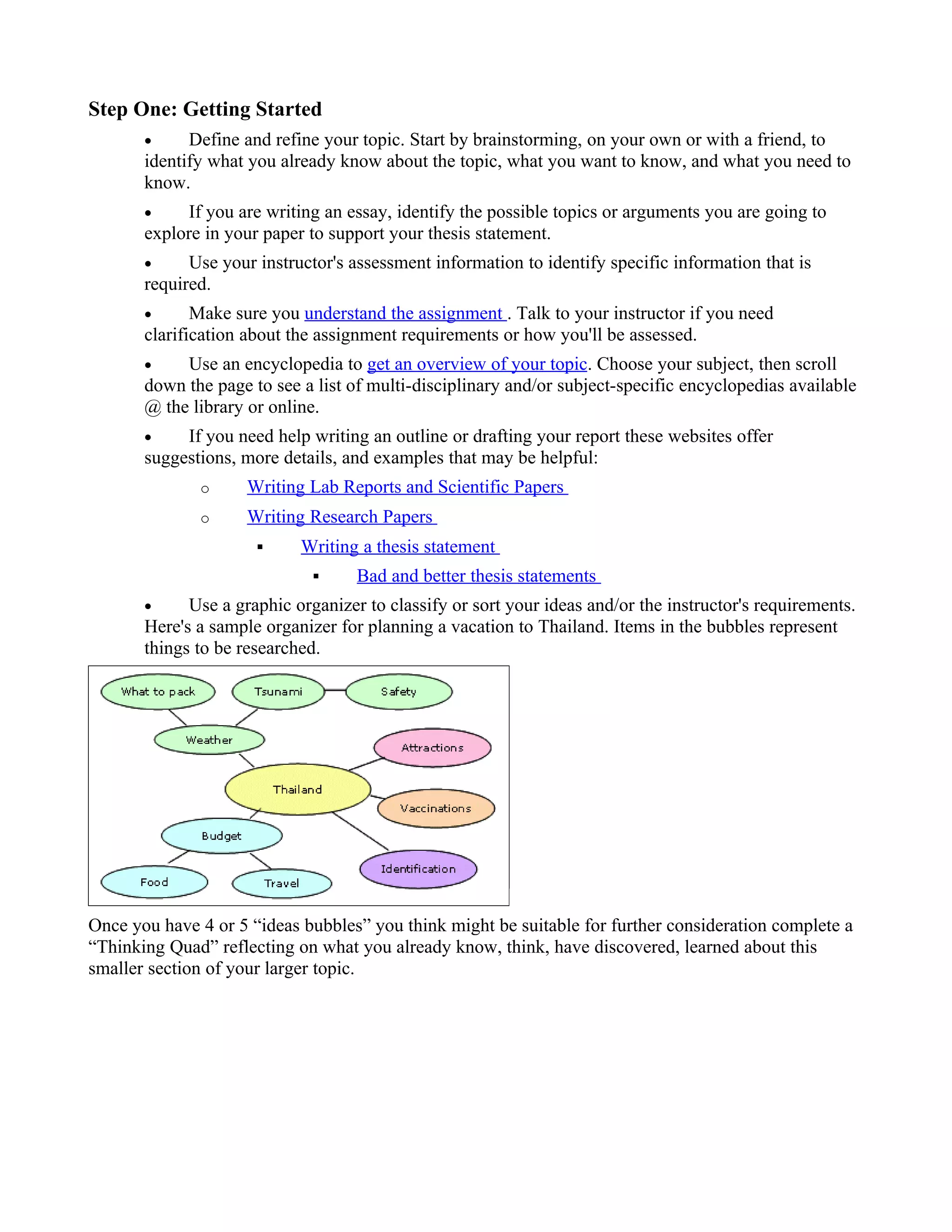
       •     Use a graphic organizer to classify or sort your ideas and/or the instructor's requirements.
       Here's a sample organizer for planning a vacation to Thailand. Items in the bubbles represent
       things to be researched.


Once you have 4 or 5 “ideas bubbles” you think might be suitable for further consideration complete a
“Thinking Quad” reflecting on what you already know, think, have discovered, learned about this
smaller section of your larger topic.
Step Two: Gathering Information

What kind of information do I need?
Consider possible sources for your research. Think about the following questions:
       •     Do you need scholarly information, or is a mix of information from scholarly, popular and
       trade publications acceptable?
       •       Do you need to use primary sources as well as secondary sources?
       •       Will you use books, articles, websites, or other sources (videos, interviews, etc.)?
For help with these questions, see below Comparing Sources of Information
Comparing Sources of Information
The following source comparisons can help you in your research. Scroll down to see them all.


What is the difference between scholarly and popular sources?
                                Scholarly                                 Popular
Length of       longer articles, in-depth and detailed       shorter articles, broad overview
articles        coverage
Author          author usually an expert;                    staff writer or freelance writer;
                credentials and contact information          articles often unsigned
                listed
Language        discipline-specific vocabulary,              no specialized background
                specialized knowledge of the discipline      knowledge of the subject matter
                required to understand the article           required to understand the article
Intended        researchers and experts in the field         general public
audience
Article lay-    structured articles with sub-headings        often do not follow a specific
out and         like abstract, literature review,            format or structure
design          methodology, results, conclusion,
                bibliography
Images          images that support the text are often       colour photos support the text
                charts or tables; few colour photos
Editorial       experts in the field review and critically   articles are not critically
review          evaluate articles before publication         evaluated by discipline experts


What is the difference between primary and secondary sources?
                            Primary Sources                         Secondary Sources
Content         created at the time of an event, or very     created after event; sometimes a
                soon after                                   long time after something
                                                             happened

                                                             often uses primary sources as
                created by someone who saw or heard          examples
                an event themselves
                                                             expresses an opinion or an
argument about a past event

               often one-of-a-kind, or rare
Examples       diaries, letters, memoirs, speeches,       history text books, historical
               manuscripts, interviews, statistics,       movies and biographies (can all
               treaties, laws, research articles, records be secondary sources)
               of information collected by the
               government, organizations, committees
               (can all be primary sources)
Eamon, Michael. (Library and Archives Canada, 2004). Defining primary and secondary sources.
Retrieved 09.05.07 from http://www.collectionscanada.ca/education/008-3010-e.html#e

What are the differences between books, articles and websites?
                           Strengths                            Weaknesses
Books           In-depth coverage                  accessible from the library during
                                                   operating hours only
                                                   usually only one copy available for loan
Periodicals     Current                            difficult to identify the most important
                                                   articles on a topic, as there's often so
                Multiple users can access the      many
                same electronic article
                simultaneously
Websites        Accessible 24x7; free!             require extra-special evaluation, as
                                                   websites can be posted by anyone


Step Three: Analyzing and Evaluating
Before you incorporate information from a book, article, website or other source in your research
paper, consider the following:
        •     Who is the author? What are his or her credentials? Is it possible to learn more about the
        individual?
        •     Does the author refer to or provide a bibliography of other sources? A bibliography can
        indicate that the author is knowledgeable and has done some research.
        •     Who is the publisher? Is it a recognized university press, a reputable commercial
        publisher or a vanity press?
        •     What is the agenda, bias or point-of-view of the publisher, sponsoring organization or
        individual?
        •     When was the information published? Consider whether you need current or historical
        information?
        •     Where was the information published? Consider whether you require Canadian, US or
        international perspectives on your topic.
        •     Does the publication's intended purpose support your research needs?
•       Can the information be verified?
       •       Is the publication peer-reviewed (reviewed by experts in the field)?
For help with these questions, see previous Comparing Sources of Information

Special Considerations for Websites
       •       Is there a publisher or sponsoring organization for the website? Or, is this a personal web
       page?
       •       Why was the site created?
       •       Can you identify the place of origin or where the web site was created?
       •       How current is the information on the website? Is there a "last updated" date or copyright
       date?

Clues:
       •      Look at the URL. Does it incorporate a person's name or is it an organization? Does it
       have a ~, which might indicate that it is a private page? What is the URL ending? Look for a
       link that tells "About" the organization or authors.
       •       Check the page header and footer.
       •       Look for any "disclaimers" that may be linked from the page.


More Information
For more information on evaluating websites, please refer to:
       •    Finding Information on the Internet: A Tutorial
       by UC Berkley Library
       •    Criteria for Evaluating Internet Resources
       by University of British Columbia Library
Step Four: Presenting Information and Citing Sources

ResearchProcessDC

  • 1.
    Step One: GettingStarted • Define and refine your topic. Start by brainstorming, on your own or with a friend, to identify what you already know about the topic, what you want to know, and what you need to know. • If you are writing an essay, identify the possible topics or arguments you are going to explore in your paper to support your thesis statement. • Use your instructor's assessment information to identify specific information that is required. • Make sure you understand the assignment . Talk to your instructor if you need clarification about the assignment requirements or how you'll be assessed. • Use an encyclopedia to get an overview of your topic. Choose your subject, then scroll down the page to see a list of multi-disciplinary and/or subject-specific encyclopedias available @ the library or online. • If you need help writing an outline or drafting your report these websites offer suggestions, more details, and examples that may be helpful: o Writing Lab Reports and Scientific Papers o Writing Research Papers § Writing a thesis statement § Bad and better thesis statements • Use a graphic organizer to classify or sort your ideas and/or the instructor's requirements. Here's a sample organizer for planning a vacation to Thailand. Items in the bubbles represent things to be researched. Once you have 4 or 5 “ideas bubbles” you think might be suitable for further consideration complete a “Thinking Quad” reflecting on what you already know, think, have discovered, learned about this smaller section of your larger topic.
  • 2.
    Step Two: GatheringInformation What kind of information do I need? Consider possible sources for your research. Think about the following questions: • Do you need scholarly information, or is a mix of information from scholarly, popular and trade publications acceptable? • Do you need to use primary sources as well as secondary sources? • Will you use books, articles, websites, or other sources (videos, interviews, etc.)? For help with these questions, see below Comparing Sources of Information Comparing Sources of Information The following source comparisons can help you in your research. Scroll down to see them all. What is the difference between scholarly and popular sources? Scholarly Popular Length of longer articles, in-depth and detailed shorter articles, broad overview articles coverage Author author usually an expert; staff writer or freelance writer; credentials and contact information articles often unsigned listed Language discipline-specific vocabulary, no specialized background specialized knowledge of the discipline knowledge of the subject matter required to understand the article required to understand the article Intended researchers and experts in the field general public audience Article lay- structured articles with sub-headings often do not follow a specific out and like abstract, literature review, format or structure design methodology, results, conclusion, bibliography Images images that support the text are often colour photos support the text charts or tables; few colour photos Editorial experts in the field review and critically articles are not critically review evaluate articles before publication evaluated by discipline experts What is the difference between primary and secondary sources? Primary Sources Secondary Sources Content created at the time of an event, or very created after event; sometimes a soon after long time after something happened often uses primary sources as created by someone who saw or heard examples an event themselves expresses an opinion or an
  • 3.
    argument about apast event often one-of-a-kind, or rare Examples diaries, letters, memoirs, speeches, history text books, historical manuscripts, interviews, statistics, movies and biographies (can all treaties, laws, research articles, records be secondary sources) of information collected by the government, organizations, committees (can all be primary sources) Eamon, Michael. (Library and Archives Canada, 2004). Defining primary and secondary sources. Retrieved 09.05.07 from http://www.collectionscanada.ca/education/008-3010-e.html#e What are the differences between books, articles and websites? Strengths Weaknesses Books In-depth coverage accessible from the library during operating hours only usually only one copy available for loan Periodicals Current difficult to identify the most important articles on a topic, as there's often so Multiple users can access the many same electronic article simultaneously Websites Accessible 24x7; free! require extra-special evaluation, as websites can be posted by anyone Step Three: Analyzing and Evaluating Before you incorporate information from a book, article, website or other source in your research paper, consider the following: • Who is the author? What are his or her credentials? Is it possible to learn more about the individual? • Does the author refer to or provide a bibliography of other sources? A bibliography can indicate that the author is knowledgeable and has done some research. • Who is the publisher? Is it a recognized university press, a reputable commercial publisher or a vanity press? • What is the agenda, bias or point-of-view of the publisher, sponsoring organization or individual? • When was the information published? Consider whether you need current or historical information? • Where was the information published? Consider whether you require Canadian, US or international perspectives on your topic. • Does the publication's intended purpose support your research needs?
  • 4.
    Can the information be verified? • Is the publication peer-reviewed (reviewed by experts in the field)? For help with these questions, see previous Comparing Sources of Information Special Considerations for Websites • Is there a publisher or sponsoring organization for the website? Or, is this a personal web page? • Why was the site created? • Can you identify the place of origin or where the web site was created? • How current is the information on the website? Is there a "last updated" date or copyright date? Clues: • Look at the URL. Does it incorporate a person's name or is it an organization? Does it have a ~, which might indicate that it is a private page? What is the URL ending? Look for a link that tells "About" the organization or authors. • Check the page header and footer. • Look for any "disclaimers" that may be linked from the page. More Information For more information on evaluating websites, please refer to: • Finding Information on the Internet: A Tutorial by UC Berkley Library • Criteria for Evaluating Internet Resources by University of British Columbia Library
  • 5.
    Step Four: PresentingInformation and Citing Sources