RESEARCH PRESENTATION 
A Case Study 
on the 
Concept and Practice of Maternity and Infant Care 
in 
Lasuntar, Gamcha and Chunnikhel VDC 
Presenter: Priyanka Kapar 
BaSW Final Year
INTRODUCTION 
 Issue: 
 Maternity Care 
 What is safe motherhood? 
 Infant Care 
 Scope of the research: 
 Antenatal checkup 
 Tetanus toxoid vaccination 
 Iron supplementation 
 Delivery practice (place of 
delivery) 
 Postnatal care 
 Post partum Vitamin A 
Supplementation 
 New born care
OBJECTIVES 
 To determine the knowledge level and practice of maternity care 
 To find out the knowledge level and practice of maternity care
PROBLEM STATEMENT 
 585,000 women die yearly from pregnancy related causes 
 Most of the deaths are due to lack of maternity consciousness 
 South East Asia region alone accounts for 1/3 of global maternal and 
child deaths 
 In Nepal, 281 maternal deaths occur per 100,0 live births 
 Necessity of the knowledge and concept of maternity and infant care
METHODOLOGY 
 Research Site 
 Lasuntar, Chunnikhle and Gamcha VDC 
 Research design 
 Descriptive research design 
 Sampling 
 Non-probability Sampling (Snowball Sampling) 
 Data Collection 
 Primary Data (questionnaire and interview) 
 Secondary Data (books, newspaper, research papers and the internet)
DATA ANALYSIS 
 SECTION I: ANTENATAL CHECKUP 
 Frequency and Percentage of respondents who went for antenatal 
checkup 
Period Frequency Percentage 
Only in 1st trimester - - 
Only in 2nd trimester - - 
Only in 3rd trimester 2 4 
In all periods 40 80 
42 84 
Didn’t go at all 8 16 
TOTAL 50 100
DATA ANALYSIS (CONTD.) 
30 
25 
20 
15 
10 
5 
0 
Awareness on the importance of Antenatal Checkup 
Good health of the 
mother ad baby 
Hearsay I do not know 
Awareness on the importance 
of Antenatal Checkup
DATA ANALYSIS (CONTD.) 
SECTION II: PRACTICE AND AWARENESS ON T.T 
VACCINATION 
120 
100 
80 
60 
40 
20 
0 
Yes No 
Number of respondents 
Awareness on T.T 
Vaccination 
0 100 
Receiving T.t vaccination 40 10
DATA ANALYSIS (CONTD.) 
SECTION III: IRON SUPPLEMENTATION 
Intake of Iron 
Supplementation 
Yes No 
96% 
4% 
35 
30 
25 
20 
15 
10 
5 
0 
Less than three 
months 
3-6 months 6 months and 
more 
Duration of Iron Intake 
Total: 48
DATA ANALYSIS (CONTD.) 
25 
20 
15 
10 
5 
0 
SECTION III: IRON SUPPLEMENTATION 
To make the 
mother strong 
Why is Iron taken during pregnancy? 
Because the doctor 
said so 
For healthy baby I do not know
DATA ANALYSIS (CONTD.) 
 SECTION IV: DELIVERY PRACTICE 
Place for delivery 
Hospital Home Home then Hospital 
68% 
24% 
8%
DATA ANALYSIS (CONTD.) 
 SECTION V: POSTNATAL CHECKUP 
Went for Post Natal Checkup 
40% 
60% 
Yes NO
DATA ANALYSIS (CONTD.) 
 SECTION VI: INFANT CARE 
Yes No 
60 
50 
40 
30 
20 
10 
0 
Number of 
respondents 
Post Natal Checkup for 
the baby 
26 24 
Feeding Colostrums 50 0
DATA ANALYSIS (CONTD.) 
 Exclusive breastfeeding practices 
45 
40 
35 
30 
25 
20 
15 
10 
5 
0 
Less than 6 
months 
6 months and 
more 
Depends on 
the need of the 
child 
Concept on the duration 
of exclusive 
breastfeeding 
Practice on Exclusive 
Breastfeeding
MAJOR FINDINGS 
 56 percent responded antenatal checkup necessary, all of them go for 
antenatal checkup 
 Cent percent women tae T.T. injection during pregnancy but none of them 
know the importance of T.T vaccination 
 96 percent take iron supplementation 
 Delivery:34 percent-hospital, 66 percent-home 
 60 percent women go for post natal checkup; 
tendency of seeking crisis care
MAJOR FINDINGS (contd.) 
 Iron supplementation after delivery is satisfactory 
 26 percent of the women didn’t take Vitamin A supplementation as they 
found it unnecessary. 
 Tendency of not taking their babies to postnatal checkup. 
 Concept on colostrums and breastfeeding practices clear in the level of 
understanding as well as practice
RECOMMENDATIONS 
 NGOs deploy neighborhood volunteers to raise knowledge and 
awareness regarding the maternity and infant care. 
 Get hospitals established in suburban areas as well 
 Issues of maternity care and infant care be addressed in the curriculum 
 Explanation about the need and importance along with the prescription
CONCLUSION 
 The women in all the three VDCs adopt all the measures required 
during their pregnancy, delivery and after delivery but the conceptual 
knowledge is really very low. 
 Need to ensure that the women just do not follow the practices, but also 
know why is it important.
PHOTO GALLERY 
19 
Respondents with their children
20 
PHOTO GALLERY 
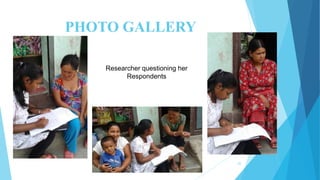
Researcher questioning her 
Respondents
VOTE OF THANKS 
 Research guide: Ms. Neesha Shakya 
 Gynecologists Dr. Geeta Gurung 
 Respondents of the Research area 
 Safe Motherhood Network Federation 
 Kathmandu Model College

A Case Study on the Concept and Practice of Maternity and Infant Care in Lasuntar, Gamcha and Chunnikhel VDC

  • 1.
    RESEARCH PRESENTATION ACase Study on the Concept and Practice of Maternity and Infant Care in Lasuntar, Gamcha and Chunnikhel VDC Presenter: Priyanka Kapar BaSW Final Year
  • 2.
    INTRODUCTION  Issue:  Maternity Care  What is safe motherhood?  Infant Care  Scope of the research:  Antenatal checkup  Tetanus toxoid vaccination  Iron supplementation  Delivery practice (place of delivery)  Postnatal care  Post partum Vitamin A Supplementation  New born care
  • 3.
    OBJECTIVES  Todetermine the knowledge level and practice of maternity care  To find out the knowledge level and practice of maternity care
  • 4.
    PROBLEM STATEMENT 585,000 women die yearly from pregnancy related causes  Most of the deaths are due to lack of maternity consciousness  South East Asia region alone accounts for 1/3 of global maternal and child deaths  In Nepal, 281 maternal deaths occur per 100,0 live births  Necessity of the knowledge and concept of maternity and infant care
  • 5.
    METHODOLOGY  ResearchSite  Lasuntar, Chunnikhle and Gamcha VDC  Research design  Descriptive research design  Sampling  Non-probability Sampling (Snowball Sampling)  Data Collection  Primary Data (questionnaire and interview)  Secondary Data (books, newspaper, research papers and the internet)
  • 6.
    DATA ANALYSIS SECTION I: ANTENATAL CHECKUP  Frequency and Percentage of respondents who went for antenatal checkup Period Frequency Percentage Only in 1st trimester - - Only in 2nd trimester - - Only in 3rd trimester 2 4 In all periods 40 80 42 84 Didn’t go at all 8 16 TOTAL 50 100
  • 7.
    DATA ANALYSIS (CONTD.) 30 25 20 15 10 5 0 Awareness on the importance of Antenatal Checkup Good health of the mother ad baby Hearsay I do not know Awareness on the importance of Antenatal Checkup
  • 8.
    DATA ANALYSIS (CONTD.) SECTION II: PRACTICE AND AWARENESS ON T.T VACCINATION 120 100 80 60 40 20 0 Yes No Number of respondents Awareness on T.T Vaccination 0 100 Receiving T.t vaccination 40 10
  • 9.
    DATA ANALYSIS (CONTD.) SECTION III: IRON SUPPLEMENTATION Intake of Iron Supplementation Yes No 96% 4% 35 30 25 20 15 10 5 0 Less than three months 3-6 months 6 months and more Duration of Iron Intake Total: 48
  • 10.
    DATA ANALYSIS (CONTD.) 25 20 15 10 5 0 SECTION III: IRON SUPPLEMENTATION To make the mother strong Why is Iron taken during pregnancy? Because the doctor said so For healthy baby I do not know
  • 11.
    DATA ANALYSIS (CONTD.)  SECTION IV: DELIVERY PRACTICE Place for delivery Hospital Home Home then Hospital 68% 24% 8%
  • 12.
    DATA ANALYSIS (CONTD.)  SECTION V: POSTNATAL CHECKUP Went for Post Natal Checkup 40% 60% Yes NO
  • 13.
    DATA ANALYSIS (CONTD.)  SECTION VI: INFANT CARE Yes No 60 50 40 30 20 10 0 Number of respondents Post Natal Checkup for the baby 26 24 Feeding Colostrums 50 0
  • 14.
    DATA ANALYSIS (CONTD.)  Exclusive breastfeeding practices 45 40 35 30 25 20 15 10 5 0 Less than 6 months 6 months and more Depends on the need of the child Concept on the duration of exclusive breastfeeding Practice on Exclusive Breastfeeding
  • 15.
    MAJOR FINDINGS 56 percent responded antenatal checkup necessary, all of them go for antenatal checkup  Cent percent women tae T.T. injection during pregnancy but none of them know the importance of T.T vaccination  96 percent take iron supplementation  Delivery:34 percent-hospital, 66 percent-home  60 percent women go for post natal checkup; tendency of seeking crisis care
  • 16.
    MAJOR FINDINGS (contd.)  Iron supplementation after delivery is satisfactory  26 percent of the women didn’t take Vitamin A supplementation as they found it unnecessary.  Tendency of not taking their babies to postnatal checkup.  Concept on colostrums and breastfeeding practices clear in the level of understanding as well as practice
  • 17.
    RECOMMENDATIONS  NGOsdeploy neighborhood volunteers to raise knowledge and awareness regarding the maternity and infant care.  Get hospitals established in suburban areas as well  Issues of maternity care and infant care be addressed in the curriculum  Explanation about the need and importance along with the prescription
  • 18.
    CONCLUSION  Thewomen in all the three VDCs adopt all the measures required during their pregnancy, delivery and after delivery but the conceptual knowledge is really very low.  Need to ensure that the women just do not follow the practices, but also know why is it important.
  • 19.
    PHOTO GALLERY 19 Respondents with their children
  • 20.
    20 PHOTO GALLERY Researcher questioning her Respondents
  • 21.
    VOTE OF THANKS  Research guide: Ms. Neesha Shakya  Gynecologists Dr. Geeta Gurung  Respondents of the Research area  Safe Motherhood Network Federation  Kathmandu Model College