Our Body SystemsOur Body Systems
Why do we need to
reproduce?
• To ensure survival of the species
• To produce egg and sperm cells
• To transport and sustain these cells
• To nurture the developing offspring
• To produce hormones
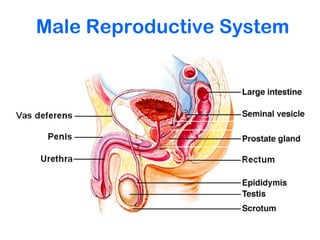
Male Reproductive System
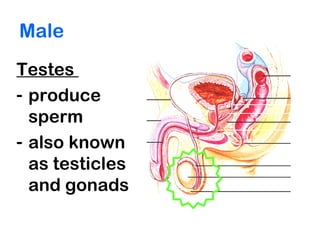
Testes
- produce
sperm
- also known
as testicles
and gonads
Male
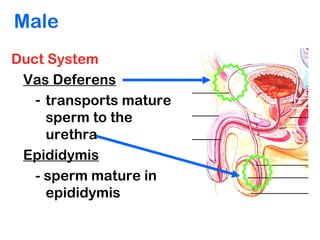
Duct System
Vas Deferens
- transports mature
sperm to the
urethra
Epididymis
- sperm mature in
epididymis
Male
Male
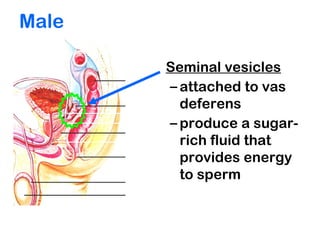
Seminal vesicles
– attached to vas
deferens
– produce a sugar-
rich fluid that
provides energy
to sperm
Male
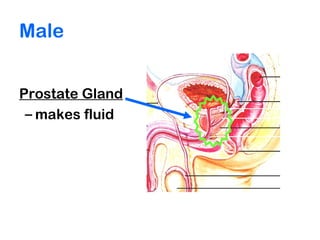
Prostate Gland
– makes fluid
Male
Urethra
– tube that carries
urine from the
bladder to outside
of the body
– also carries sperm
out of the body
Male
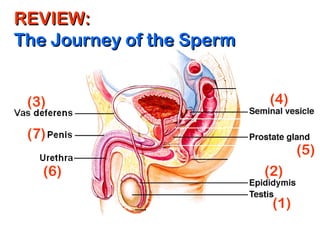
REVIEW:REVIEW:
The Journey of the SpermThe Journey of the Sperm
(1)
(2)
(3) (4)
(5)
(6)
(7)
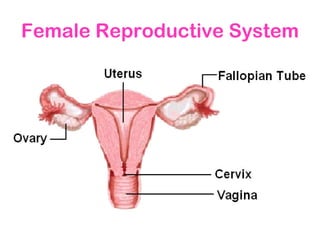
Female Reproductive System
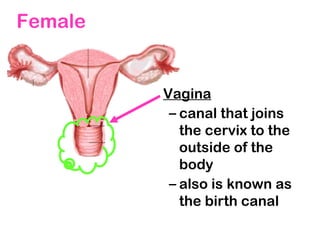
Female
Vagina
– canal that joins
the cervix to the
outside of the
body
– also is known as
the birth canal
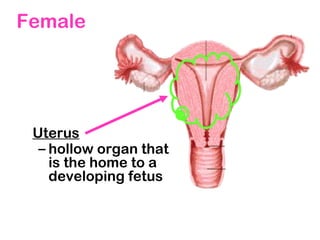
Female
Uterus
– hollow organ that
is the home to a
developing fetus
Female
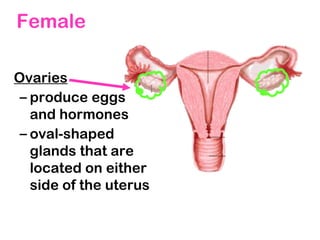
Ovaries
– produce eggs
and hormones
– oval-shaped
glands that are
located on either
side of the uterus
Female
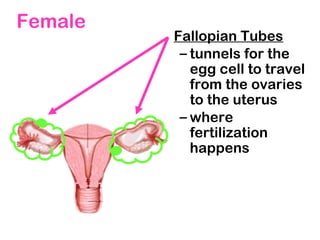
Fallopian Tubes
– tunnels for the
egg cell to travel
from the ovaries
to the uterus
– where
fertilization
happens
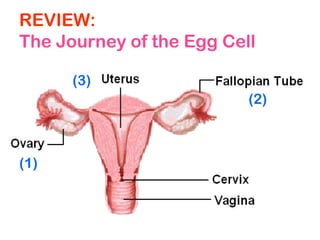
REVIEW:
The Journey of the Egg Cell
(1)
(2)
(3)
The Magic of Life
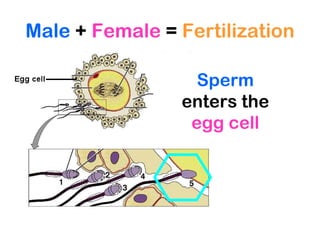
Male + Female
= Fertilization
Male + Female = Fertilization
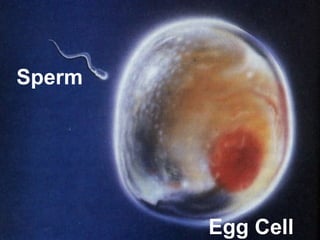
Sperm
enters the
egg cell
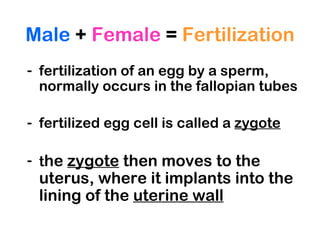
Male + Female = Fertilization
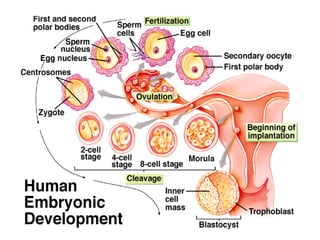
- fertilization of an egg by a sperm,
normally occurs in the fallopian tubes
- fertilized egg cell is called a zygote
- the zygote then moves to the
uterus, where it implants into the
lining of the uterine wall
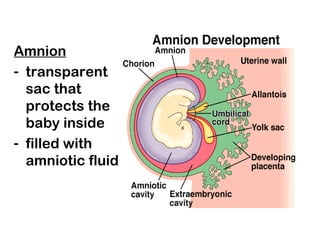
Amnion
- transparent
sac that
protects the
baby inside
- filled with
amniotic fluid
Sperm
Egg Cell
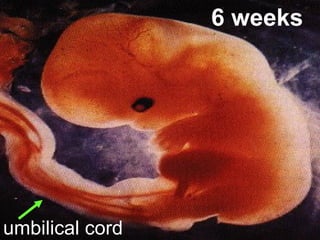
6 weeks
umbilical cord
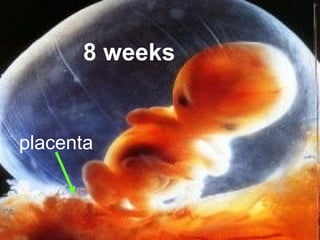
8 weeks
placenta
The greatest reward for doing
is the opportunity to do more.
- Jonas Salk
Sources:
www.ricancercouncil.org
www.wikipedia.org
www.kidshealth.com
www.pbs.org/wgbh/nova
www.cybersleuth.com
http://hes.ucf.k12.pa.us/gclaypo/repro/tocbgb.html
The end…

Reproductivesystem