Reproductive Systems
           Male & Female
Function
 To   ensure survival of the species
        To produce egg and sperm cells
        To transport and sustain these cells
        To nurture the developing offspring
        To produce hormones
    Other systems strive to maintain a state of
     homeostasis
Male & Female
 Include:
     Reproductive organs called gonads that produce
      gametes (reproductive cells) and hormones
     Ducts that transport gametes
     Accessory glands and organs that secrete fluids
Male & Female
 Production
           of hormones that permit the
 secondary sex characteristics, such as breast
 development in women and beard growth in
 men
Male
 Functions
    To produce, maintain and transport sperm (the
     male reproductive cells) and protective fluid
     (semen)
    To produce and secrete male sex hormones
     responsible for maintaining the male reproductive
     system
Male
 Consists      of:
    A pair of testes
    A network of excretory ducts
        epididymis
        vas deferens
        ejaculatory ducts
    Seminal vesicles
    Prostate
    Urethra
    Penis
http://www.uh.edu/~tgill2/image010.jpg
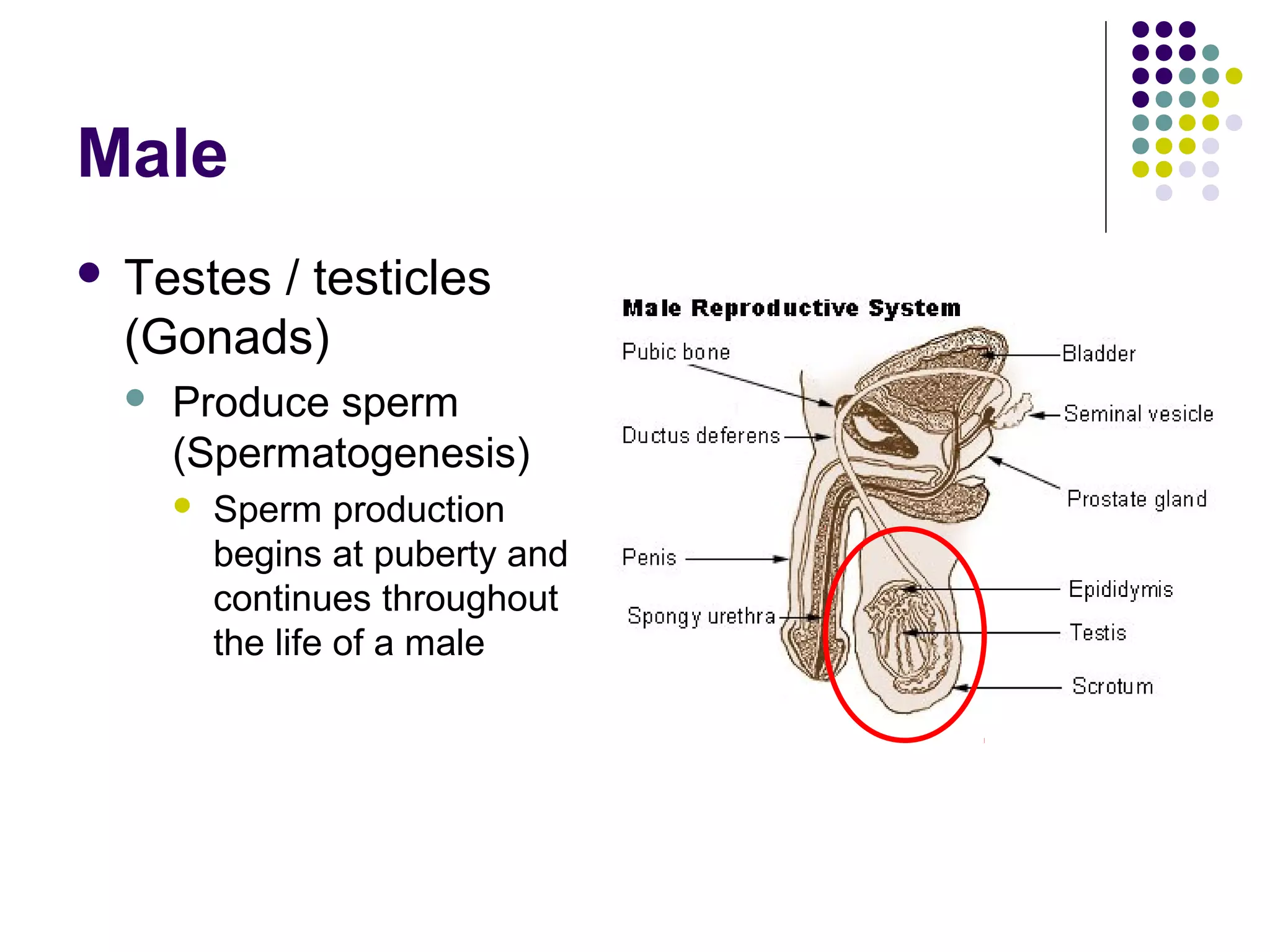
Male
   Testes / testicles
    (Gonads)
       Produce sperm
        (Spermatogenesis)
           Sperm production
            begins at puberty and
            continues throughout
            the life of a male
Male
   Testes / testicles
    (Gonads)
       Produce testosterone
           Hair patterns and voice
            changes
           Development of the male
            accessory organs
            (prostate, seminal vesicles
            etc.)
           Stimulates the effect of
            protein building in the
            body that is responsible
            for the greater muscle
            development and strength
            of the male
Male
   Duct System
       Epididymis
         Sperm mature in
          epididymis
       Vas Deferens
         Transports mature
          sperm to the
          urethra
       Ejaculatory ducts
         empty into the
          urethra
Male
   Seminal vesicles
       Attached to vas
        deferens
       Produce a sugar-
        rich fluid
        (fructose) that
        provides energy
        to sperm
Male
 Prostate   Gland
    Makes fluid
Male
   Urethra
       Tube that carries
        urine from the
        bladder to outside
        of the body
       Also carries semen
        out of the body
Female
 Functions
    Produces the female egg cells
    Transports the eggs to the site of fertilization
    The fertilization of an egg by a sperm, occurs in
     the fallopian tubes
Female
 Functions
    After fertilization, provides a place for a baby to
     develop
    If fertilization does not take place, the system is
     designed to menstruate
    Produces female sex hormones that maintain the
     reproductive cycle.
Female
 Consists   of:
    Vagina
    Uterus
    Ovaries
    Fallopian tubes
http://biology.clc.uc.edu/graphics/bio
105/repro%20female.jpg
Female
   Vagina
       Canal that joins
        the cervix (the
        lower part of
        uterus) to the
        outside of the
        body
       Also is known
        as the birth
        canal
Female
   Uterus
       Hollow, pear-shaped
        organ that is the home
        to a developing fetus
         Divided into two parts:
             the cervix, the lower
              part that opens into the
              vagina
             Main body of the uterus,
              called the corpus.
             The corpus can easily
              expand to hold a
              developing baby.
             A channel through the
              cervix allows sperm to
              enter and menstrual
              blood to exit
Female
   Ovaries
       Oval-shaped glands that
        are located on either side
        of the uterus
       Produce eggs and
        hormones.


                          http://www.ricancercouncil.org/img/cervical.gif
Female
   Fallopian Tubes
       Narrow tubes that are
        attached to the upper part
        of the uterus and serve as
        tunnels for the egg cell to
        travel from the ovaries to
        the uterus
       Fertilization of an egg by a
        sperm, normally occurs in
        the fallopian tubes
       The fertilized egg then
        moves to the uterus, where
        it implants into the lining of
        the uterine wall

                              http://www.ricancercouncil.org/img/cervical.gif

Reproductive systems

  • 1.
    Reproductive Systems Male & Female
  • 2.
    Function  To ensure survival of the species  To produce egg and sperm cells  To transport and sustain these cells  To nurture the developing offspring  To produce hormones  Other systems strive to maintain a state of homeostasis
  • 3.
    Male & Female Include:  Reproductive organs called gonads that produce gametes (reproductive cells) and hormones  Ducts that transport gametes  Accessory glands and organs that secrete fluids
  • 4.
    Male & Female Production of hormones that permit the secondary sex characteristics, such as breast development in women and beard growth in men
  • 5.
    Male  Functions  To produce, maintain and transport sperm (the male reproductive cells) and protective fluid (semen)  To produce and secrete male sex hormones responsible for maintaining the male reproductive system
  • 6.
    Male  Consists of:  A pair of testes  A network of excretory ducts  epididymis  vas deferens  ejaculatory ducts  Seminal vesicles  Prostate  Urethra  Penis
  • 7.
  • 8.
    Male  Testes / testicles (Gonads)  Produce sperm (Spermatogenesis)  Sperm production begins at puberty and continues throughout the life of a male
  • 9.
    Male  Testes / testicles (Gonads)  Produce testosterone  Hair patterns and voice changes  Development of the male accessory organs (prostate, seminal vesicles etc.)  Stimulates the effect of protein building in the body that is responsible for the greater muscle development and strength of the male
  • 10.
    Male  Duct System  Epididymis  Sperm mature in epididymis  Vas Deferens  Transports mature sperm to the urethra  Ejaculatory ducts  empty into the urethra
  • 11.
    Male  Seminal vesicles  Attached to vas deferens  Produce a sugar- rich fluid (fructose) that provides energy to sperm
  • 12.
    Male  Prostate Gland  Makes fluid
  • 13.
    Male  Urethra  Tube that carries urine from the bladder to outside of the body  Also carries semen out of the body
  • 14.
    Female  Functions  Produces the female egg cells  Transports the eggs to the site of fertilization  The fertilization of an egg by a sperm, occurs in the fallopian tubes
  • 15.
    Female  Functions  After fertilization, provides a place for a baby to develop  If fertilization does not take place, the system is designed to menstruate  Produces female sex hormones that maintain the reproductive cycle.
  • 16.
    Female  Consists of:  Vagina  Uterus  Ovaries  Fallopian tubes
  • 17.
  • 18.
    Female  Vagina  Canal that joins the cervix (the lower part of uterus) to the outside of the body  Also is known as the birth canal
  • 19.
    Female  Uterus  Hollow, pear-shaped organ that is the home to a developing fetus  Divided into two parts:  the cervix, the lower part that opens into the vagina  Main body of the uterus, called the corpus.  The corpus can easily expand to hold a developing baby.  A channel through the cervix allows sperm to enter and menstrual blood to exit
  • 20.
    Female  Ovaries  Oval-shaped glands that are located on either side of the uterus  Produce eggs and hormones. http://www.ricancercouncil.org/img/cervical.gif
  • 21.
    Female  Fallopian Tubes  Narrow tubes that are attached to the upper part of the uterus and serve as tunnels for the egg cell to travel from the ovaries to the uterus  Fertilization of an egg by a sperm, normally occurs in the fallopian tubes  The fertilized egg then moves to the uterus, where it implants into the lining of the uterine wall http://www.ricancercouncil.org/img/cervical.gif