1
Asexual Reproduction
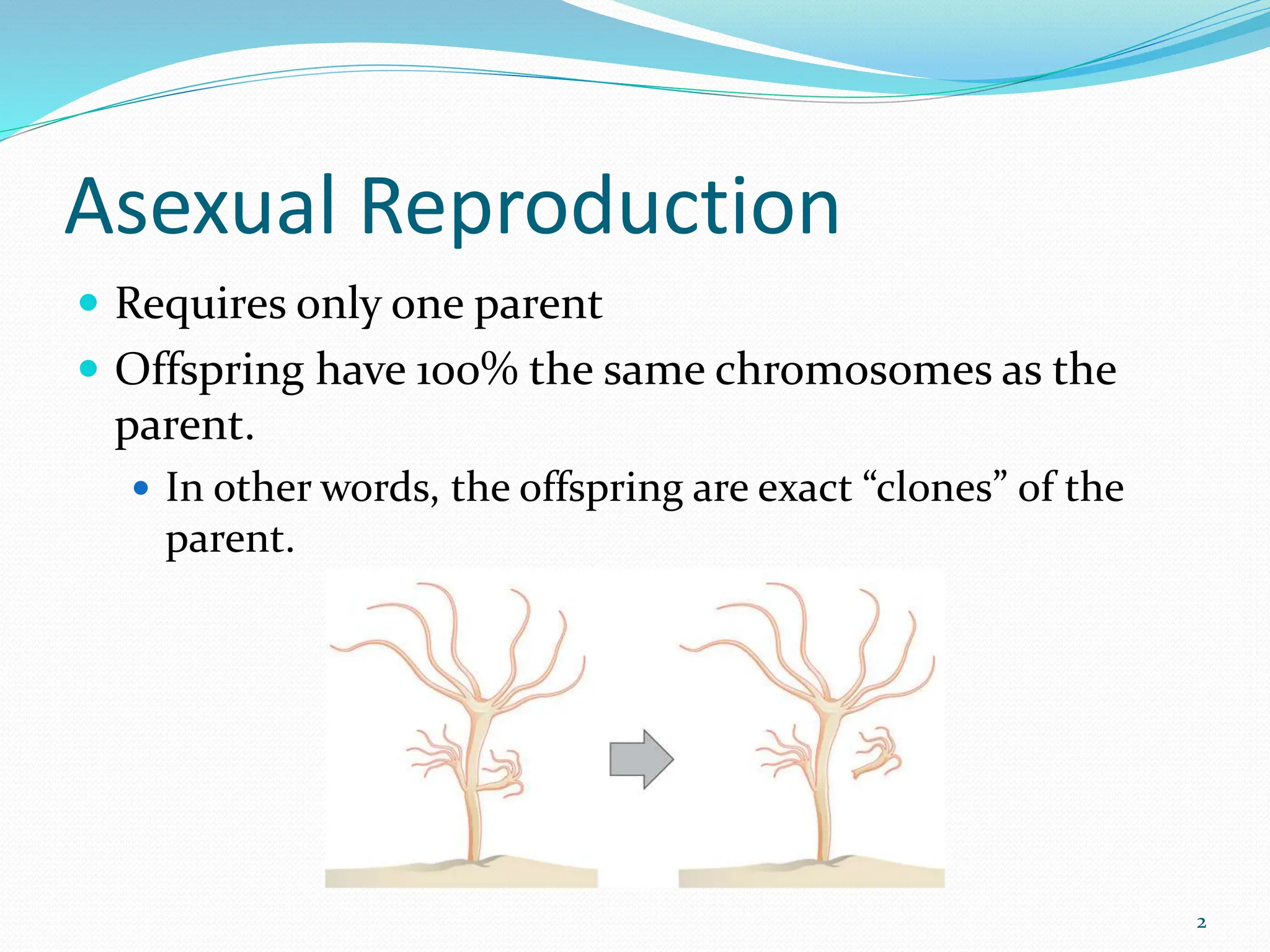
 Requires only one parent
 Offspring have 100% the same chromosomes as the
parent.
 In other words, the offspring are exact “clones” of the
parent.
2
Asexual Reproduction
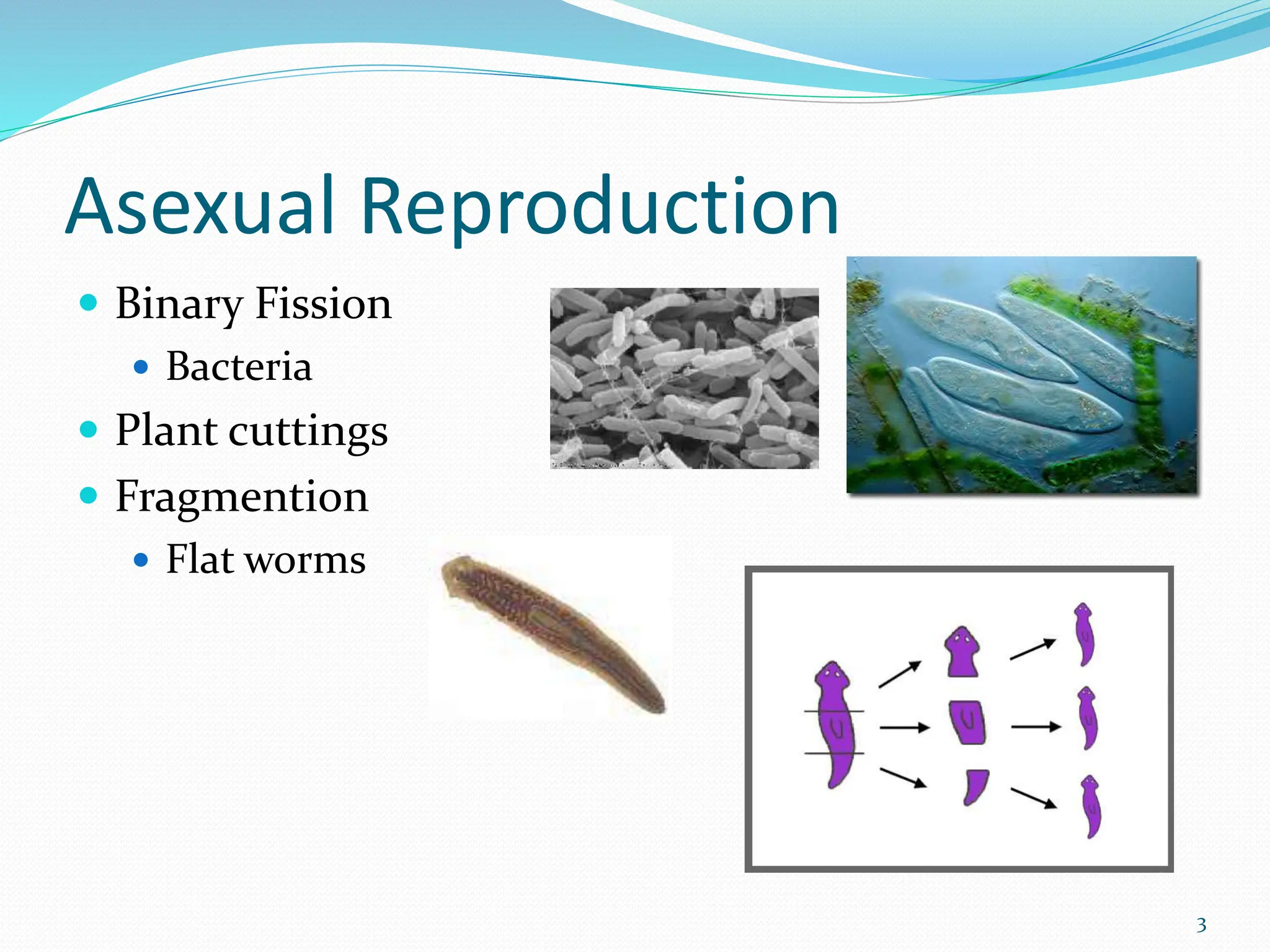
 Binary Fission
 Bacteria
 Plant cuttings
 Fragmention
 Flat worms
3
Asexual Reproduction
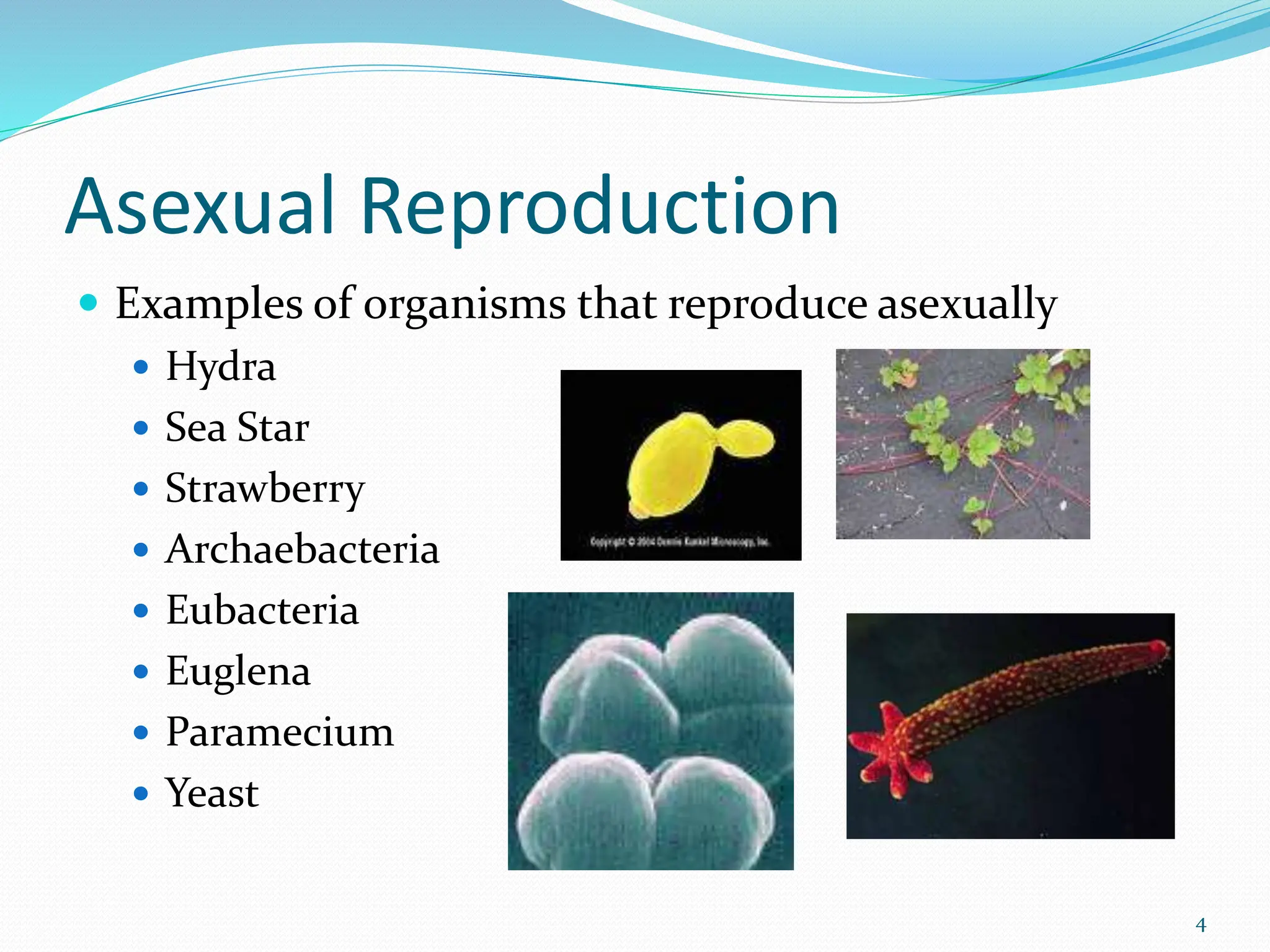
 Examples of organisms that reproduce asexually
 Hydra
 Sea Star
 Strawberry
 Archaebacteria
 Eubacteria
 Euglena
 Paramecium
 Yeast
4
Sexual Reproduction
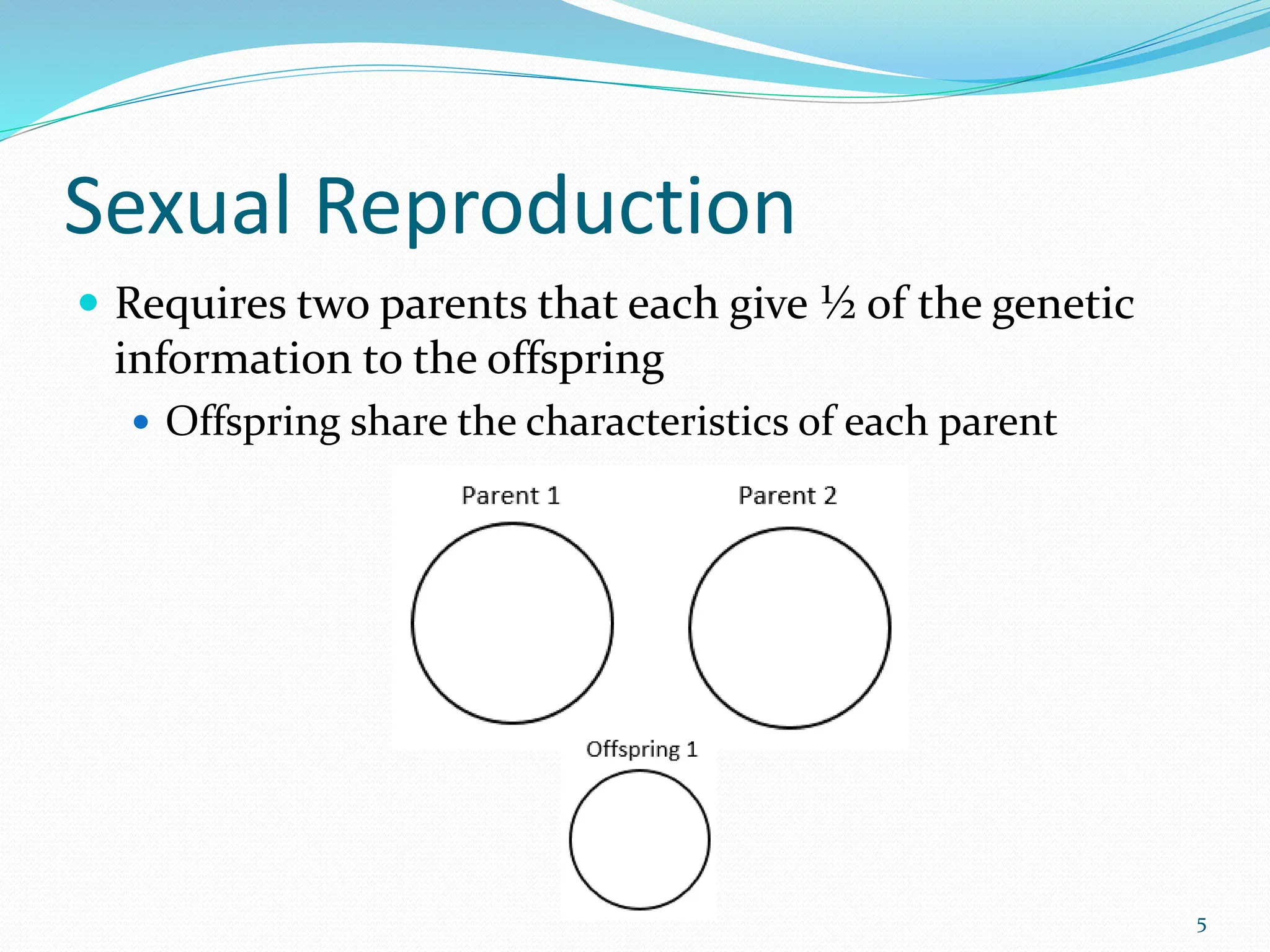
 Requires two parents that each give ½ of the genetic
information to the offspring
 Offspring share the characteristics of each parent
5
Sexual Reproduction
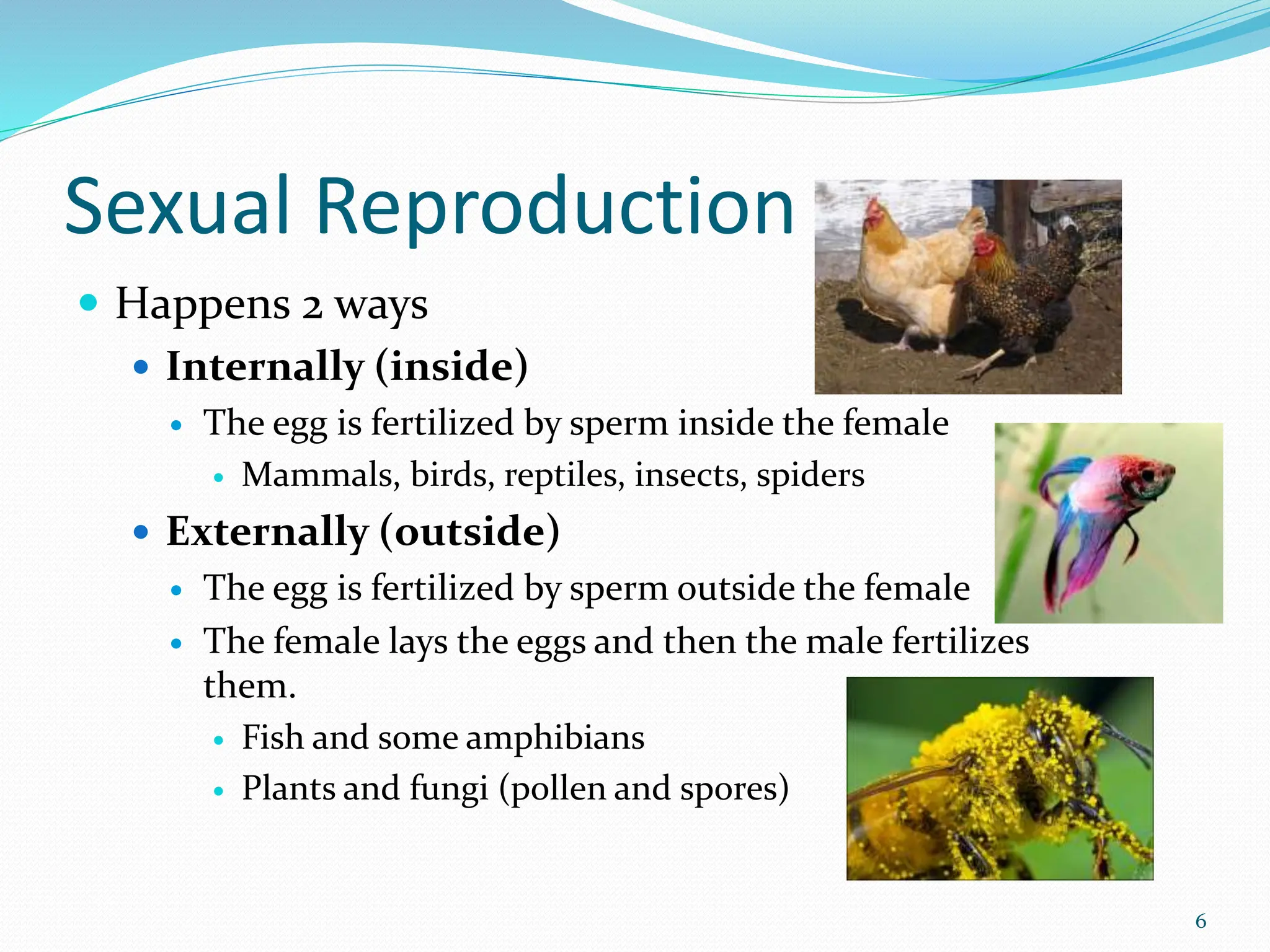
 Happens 2 ways
 Internally (inside)
 The egg is fertilized by sperm inside the female
 Mammals, birds, reptiles, insects, spiders
 Externally (outside)
 The egg is fertilized by sperm outside the female
 The female lays the eggs and then the male fertilizes
them.
 Fish and some amphibians
 Plants and fungi (pollen and spores)
6
Sexual Reproduction
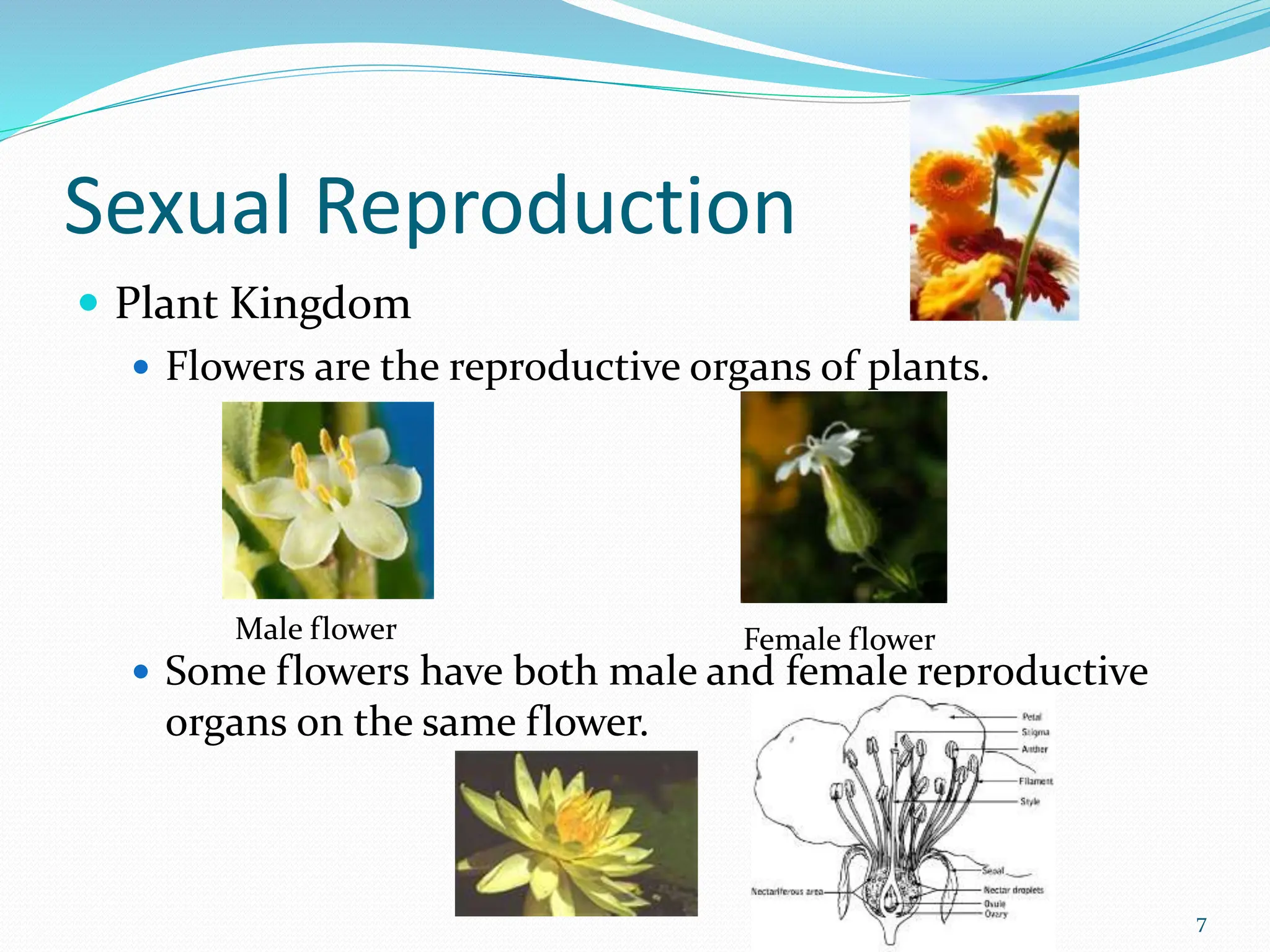
 Plant Kingdom
 Flowers are the reproductive organs of plants.
 Some flowers have both male and female reproductive
organs on the same flower.
7
Male flower Female flower
Sexual Reproduction
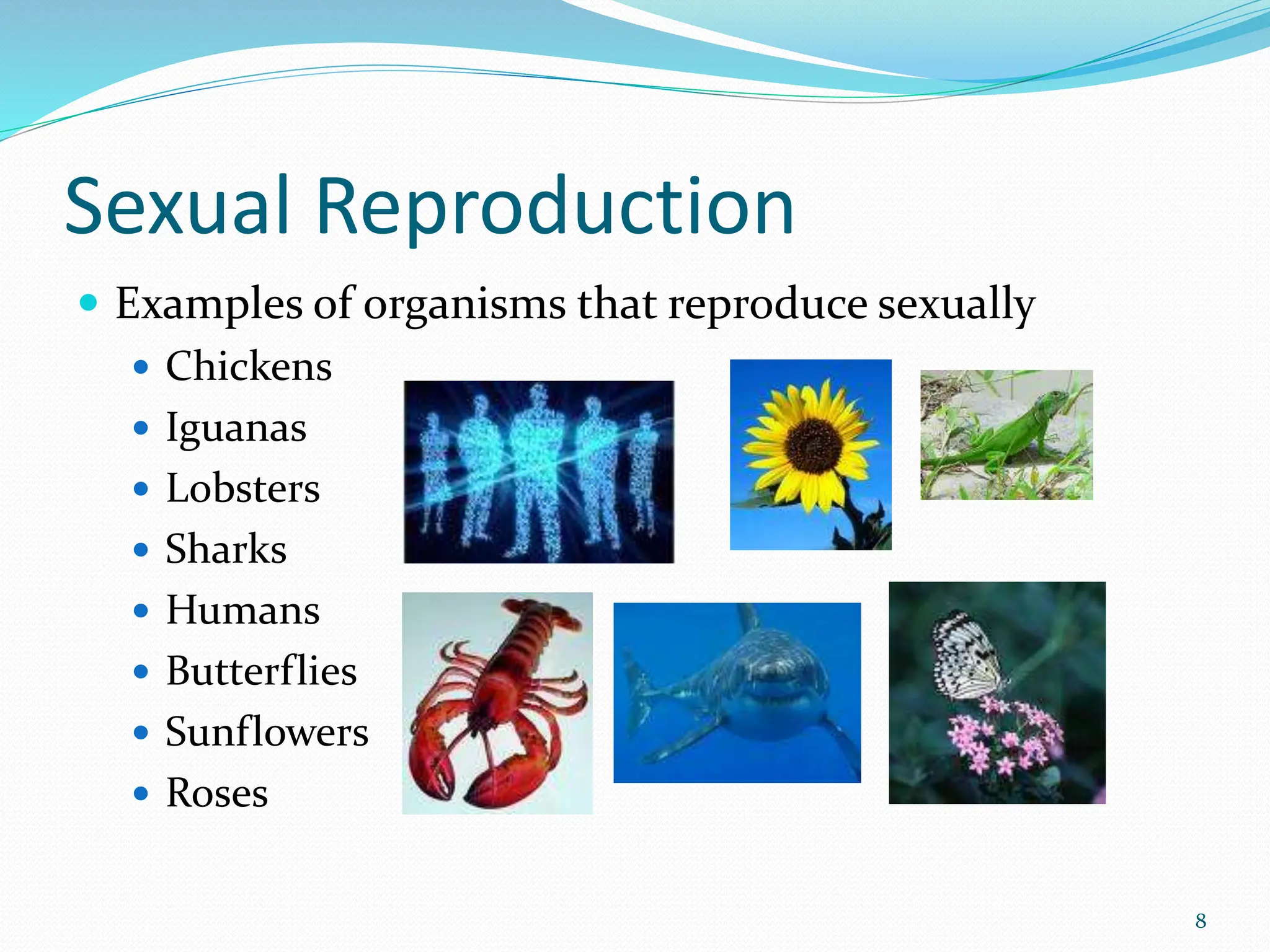
 Examples of organisms that reproduce sexually
 Chickens
 Iguanas
 Lobsters
 Sharks
 Humans
 Butterflies
 Sunflowers
 Roses
8
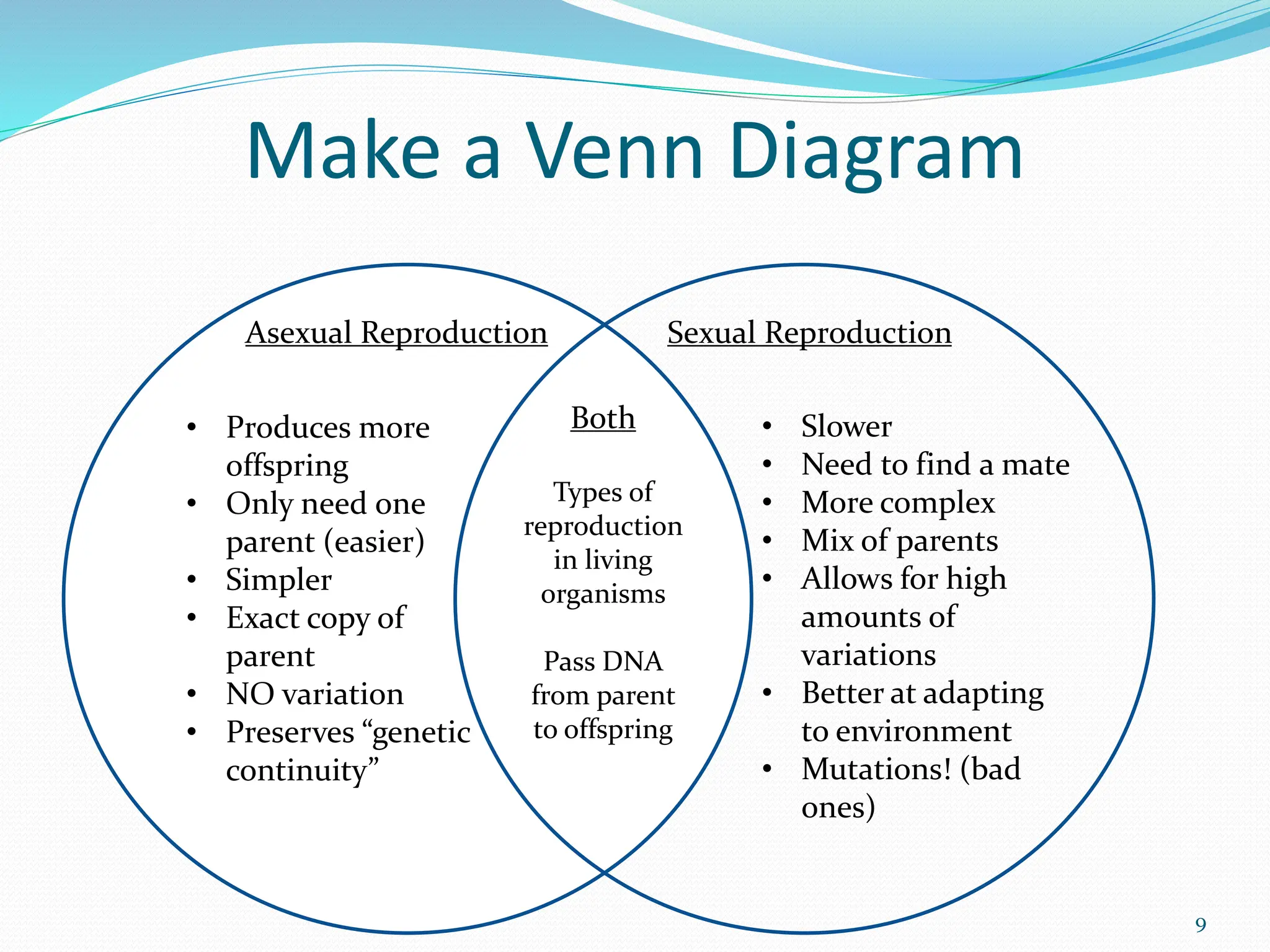
Make a Venn Diagram
9
Asexual Reproduction Sexual Reproduction
Both
Types of
reproduction
in living
organisms
Pass DNA
from parent
to offspring
• Produces more
offspring
• Only need one
parent (easier)
• Simpler
• Exact copy of
parent
• NO variation
• Preserves “genetic
continuity”
• Slower
• Need to find a mate
• More complex
• Mix of parents
• Allows for high
amounts of
variations
• Better at adapting
to environment
• Mutations! (bad
ones)

Reproduction Reproduction Reproduction Reproduction

  • 1.
  • 2.
    Asexual Reproduction  Requiresonly one parent  Offspring have 100% the same chromosomes as the parent.  In other words, the offspring are exact “clones” of the parent. 2
  • 3.
    Asexual Reproduction  BinaryFission  Bacteria  Plant cuttings  Fragmention  Flat worms 3
  • 4.
    Asexual Reproduction  Examplesof organisms that reproduce asexually  Hydra  Sea Star  Strawberry  Archaebacteria  Eubacteria  Euglena  Paramecium  Yeast 4
  • 5.
    Sexual Reproduction  Requirestwo parents that each give ½ of the genetic information to the offspring  Offspring share the characteristics of each parent 5
  • 6.
    Sexual Reproduction  Happens2 ways  Internally (inside)  The egg is fertilized by sperm inside the female  Mammals, birds, reptiles, insects, spiders  Externally (outside)  The egg is fertilized by sperm outside the female  The female lays the eggs and then the male fertilizes them.  Fish and some amphibians  Plants and fungi (pollen and spores) 6
  • 7.
    Sexual Reproduction  PlantKingdom  Flowers are the reproductive organs of plants.  Some flowers have both male and female reproductive organs on the same flower. 7 Male flower Female flower
  • 8.
    Sexual Reproduction  Examplesof organisms that reproduce sexually  Chickens  Iguanas  Lobsters  Sharks  Humans  Butterflies  Sunflowers  Roses 8
  • 9.
    Make a VennDiagram 9 Asexual Reproduction Sexual Reproduction Both Types of reproduction in living organisms Pass DNA from parent to offspring • Produces more offspring • Only need one parent (easier) • Simpler • Exact copy of parent • NO variation • Preserves “genetic continuity” • Slower • Need to find a mate • More complex • Mix of parents • Allows for high amounts of variations • Better at adapting to environment • Mutations! (bad ones)