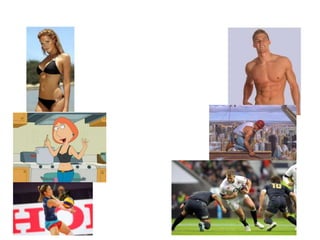
Representations of femininity
• Women’s role in society has been required to
change through time, as now women are
required to work in the same field as men.
• However the media still presents women as
sexual, emotional and body conscious,
although the media has also shown the
change within women’s role in society
overtime, such as in the film Lucy where the
lead character becomes a god.
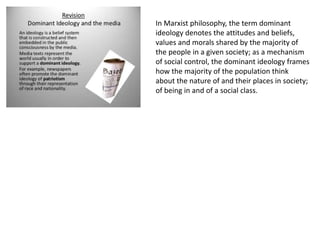
In Marxist philosophy, the term dominant
ideology denotes the attitudes and beliefs,
values and morals shared by the majority of
the people in a given society; as a mechanism
of social control, the dominant ideology frames
how the majority of the population think
about the nature of and their places in society;
of being in and of a social class.
Representations of Femininity
• Women don’t often have important roles
within drama.
• There is still 3x male characters in TV drama
than women.
• Women tend to be the sympathetic characters
within drama.
• If women do not conform to the stereotypes,
they are perceived as dangerous and deviant.
• America are much stricter about female roles
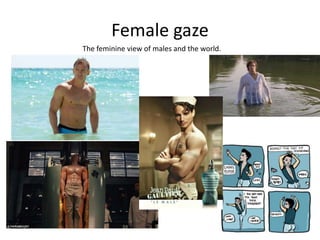
Female gaze
The feminine view of males and the world.
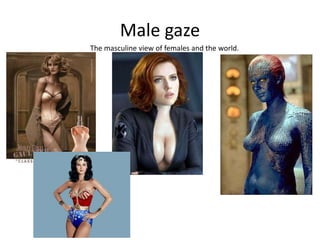
Male gaze
The masculine view of females and the world.
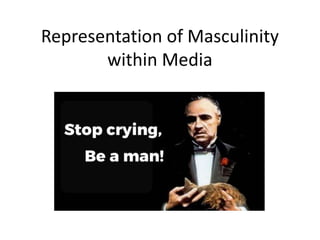
Representation of Masculinity
within Media
• Masculinity has more fixed stereotypes then
femininity.
• They are usually portrayed as being strong,
intelligent and independent individuals.
• They must be powerful and in control, taking
no orders from women.
• Males are usually in power within the media,
so they represent themselves how they want
to be seen.
• The masculinity and power represented
influences more feminine men to be more
masculine.
• The construct of masculinity is then circulated
within the expectations of gender.
• This could be considered as the acts of
patriarchy, which is a system where men hold
the power and women are largely excluded.
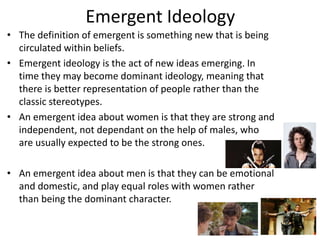
Emergent Ideology
• The definition of emergent is something new that is being
circulated within beliefs.
• Emergent ideology is the act of new ideas emerging. In
time they may become dominant ideology, meaning that
there is better representation of people rather than the
classic stereotypes.
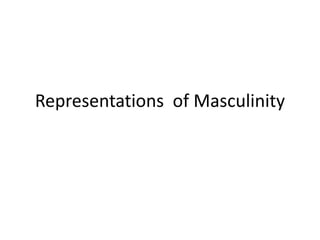
• An emergent idea about women is that they are strong and
independent, not dependant on the help of males, who
are usually expected to be the strong ones.
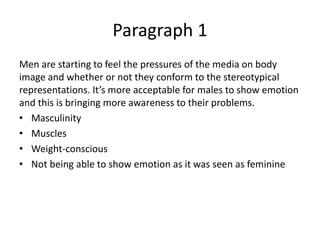
• An emergent idea about men is that they can be emotional
and domestic, and play equal roles with women rather
than being the dominant character.
Representations of Masculinity
Paragraph 1
Men are starting to feel the pressures of the media on body
image and whether or not they conform to the stereotypical
representations. It’s more acceptable for males to show emotion
and this is bringing more awareness to their problems.
• Masculinity
• Muscles
• Weight-conscious
• Not being able to show emotion as it was seen as feminine
Paragraph 2
Media has started to specifically target males for products.
Companies are making a profit on their insecurities. They are
expected to aspire to the ‘perfect’ role models that the media
creates. This is unrealistic to our culture.
• Fashion
• Skin care
• Hair care
• Fitness
Paragraph 3
There’s growing concern about living-up to the media’s portrayal
of male stereotypes.
• Magazines
• Social media
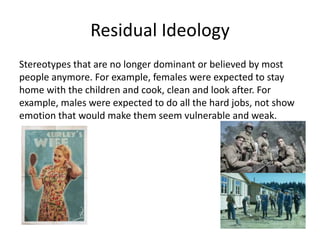
Residual Ideology
Stereotypes that are no longer dominant or believed by most
people anymore. For example, females were expected to stay
home with the children and cook, clean and look after. For
example, males were expected to do all the hard jobs, not show
emotion that would make them seem vulnerable and weak.

Represenation of gender class work

  • 1.
  • 2.
    • Women’s rolein society has been required to change through time, as now women are required to work in the same field as men. • However the media still presents women as sexual, emotional and body conscious, although the media has also shown the change within women’s role in society overtime, such as in the film Lucy where the lead character becomes a god.
  • 3.
    In Marxist philosophy,the term dominant ideology denotes the attitudes and beliefs, values and morals shared by the majority of the people in a given society; as a mechanism of social control, the dominant ideology frames how the majority of the population think about the nature of and their places in society; of being in and of a social class.
  • 5.
  • 6.
    • Women don’toften have important roles within drama. • There is still 3x male characters in TV drama than women. • Women tend to be the sympathetic characters within drama.
  • 7.
    • If womendo not conform to the stereotypes, they are perceived as dangerous and deviant. • America are much stricter about female roles
  • 8.
    Female gaze The feminineview of males and the world.
  • 9.
    Male gaze The masculineview of females and the world.
  • 10.
  • 11.
    • Masculinity hasmore fixed stereotypes then femininity. • They are usually portrayed as being strong, intelligent and independent individuals. • They must be powerful and in control, taking no orders from women.
  • 12.
    • Males areusually in power within the media, so they represent themselves how they want to be seen. • The masculinity and power represented influences more feminine men to be more masculine. • The construct of masculinity is then circulated within the expectations of gender. • This could be considered as the acts of patriarchy, which is a system where men hold the power and women are largely excluded.
  • 13.
    Emergent Ideology • Thedefinition of emergent is something new that is being circulated within beliefs. • Emergent ideology is the act of new ideas emerging. In time they may become dominant ideology, meaning that there is better representation of people rather than the classic stereotypes. • An emergent idea about women is that they are strong and independent, not dependant on the help of males, who are usually expected to be the strong ones. • An emergent idea about men is that they can be emotional and domestic, and play equal roles with women rather than being the dominant character.
  • 14.
  • 15.
    Paragraph 1 Men arestarting to feel the pressures of the media on body image and whether or not they conform to the stereotypical representations. It’s more acceptable for males to show emotion and this is bringing more awareness to their problems. • Masculinity • Muscles • Weight-conscious • Not being able to show emotion as it was seen as feminine
  • 16.
    Paragraph 2 Media hasstarted to specifically target males for products. Companies are making a profit on their insecurities. They are expected to aspire to the ‘perfect’ role models that the media creates. This is unrealistic to our culture. • Fashion • Skin care • Hair care • Fitness
  • 17.
    Paragraph 3 There’s growingconcern about living-up to the media’s portrayal of male stereotypes. • Magazines • Social media
  • 18.
    Residual Ideology Stereotypes thatare no longer dominant or believed by most people anymore. For example, females were expected to stay home with the children and cook, clean and look after. For example, males were expected to do all the hard jobs, not show emotion that would make them seem vulnerable and weak.