Reported
   Speech
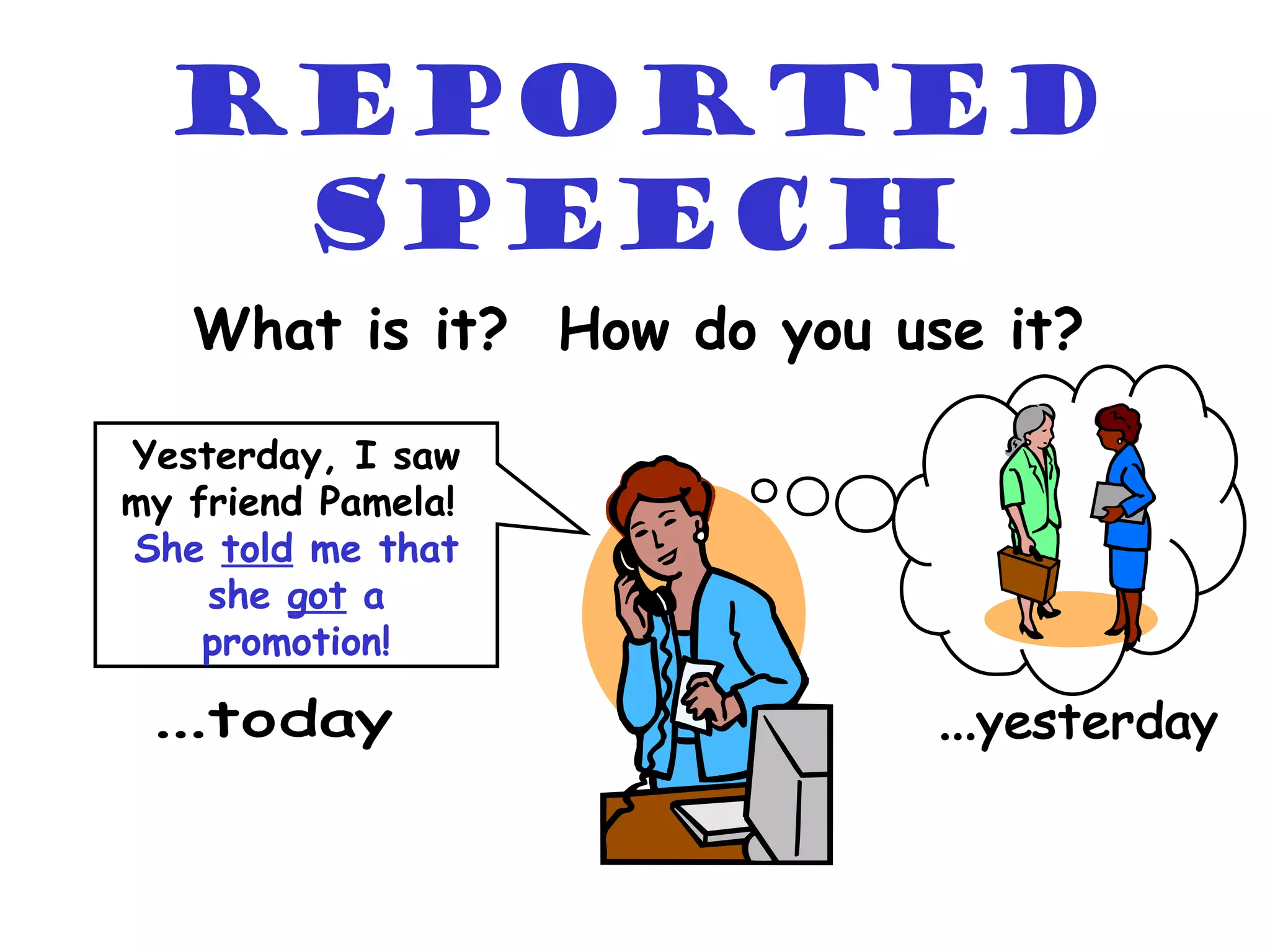
   What is it? How do you use it?

Yesterday, I saw
my friend Pamela!
She told me that
    she got a
    promotion!
Reported Speech
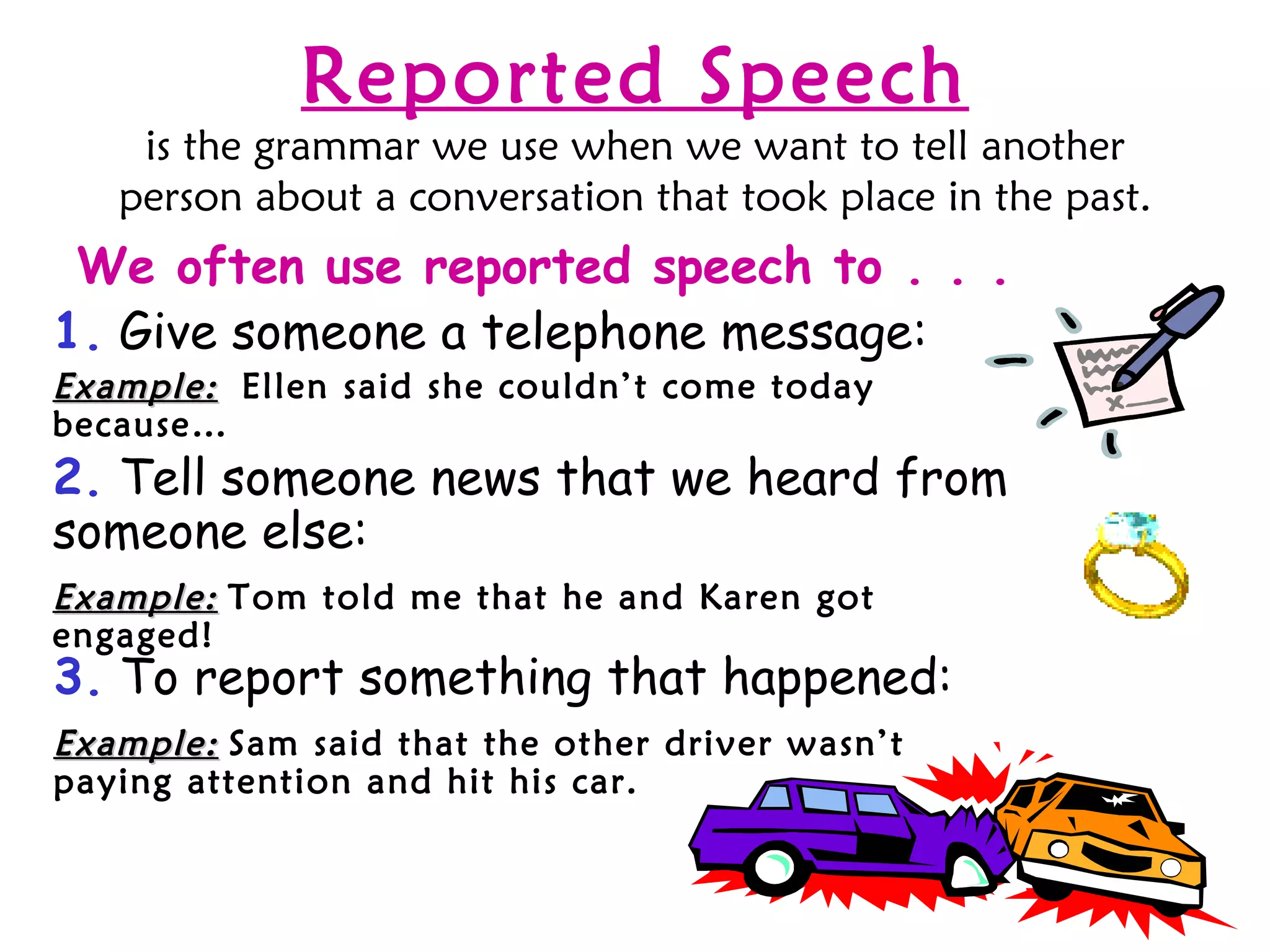
    is the grammar we use when we want to tell another
   person about a conversation that took place in the past.
 We often use reported speech to . . .
1. Give someone a telephone message:
Example: Ellen said she couldn’t come today
because…
2. Tell someone news that we heard from
someone else:
Example: Tom told me that he and Karen got
engaged!
3. To report something that happened:
Example: Sam said that the other driver wasn’t
paying attention and hit his car.
How to use
reported speech:
When we use reported speech, we are
usually talking about the past.
Therefore, verbs usually change to the
past tense in reported speech.
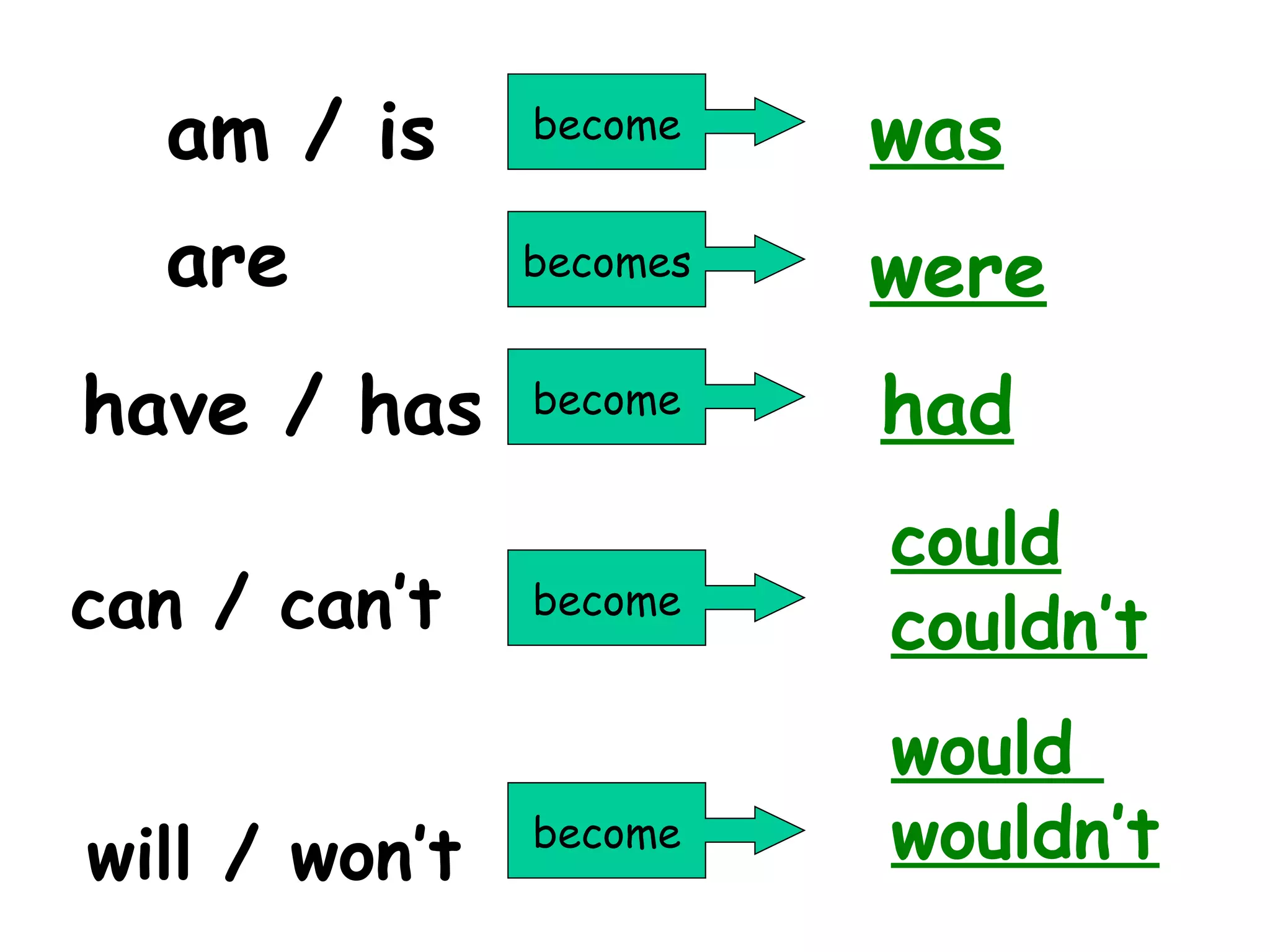
am / is      become    was
  are          becomes   were
have / has     become    had
                         could
can / can’t    become
                         couldn’t
                         would
will / won’t   become    wouldn’t
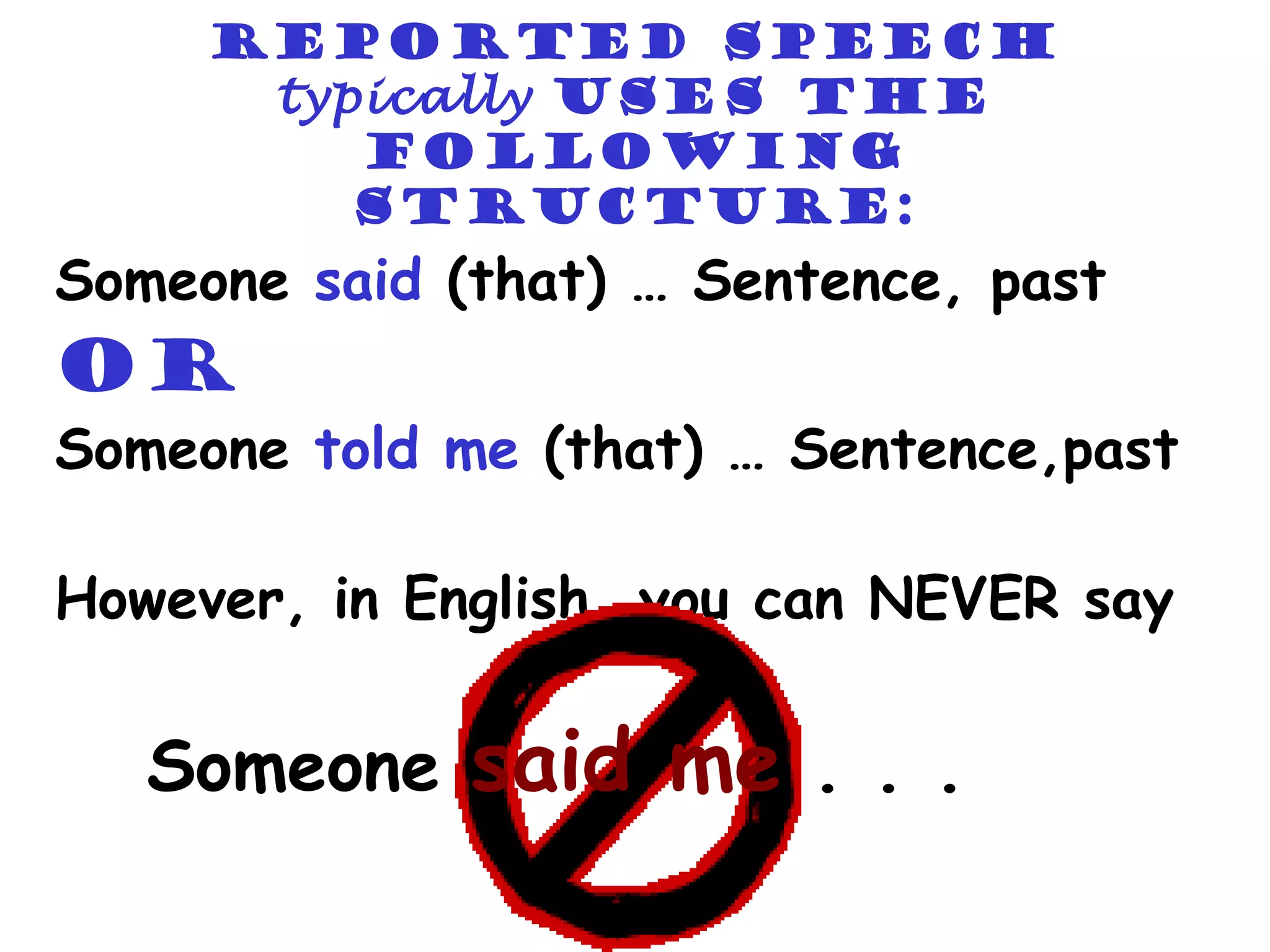
Reported speech
      typically uses the
         following
         structure:
Someone said (that) … Sentence, past
OR
Someone told me (that) … Sentence,past

However, in English, you can NEVER say


   Someone said me . . .
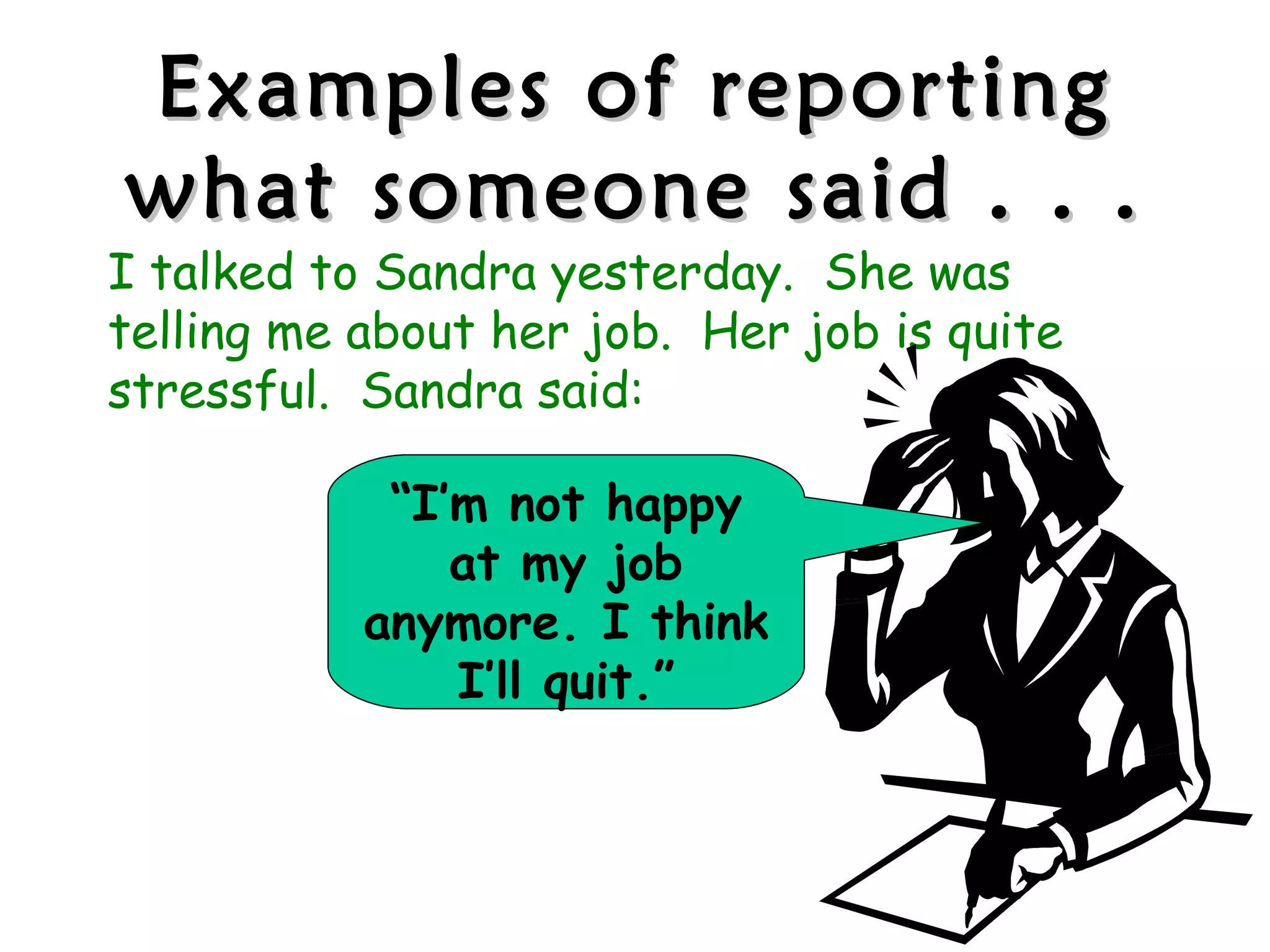
Examples of reporting
what someone said . . .
I talked to Sandra yesterday. She was
telling me about her job. Her job is quite
stressful. Sandra said:

            “I’m not happy
               at my job
           anymore. I think
               I’ll quit.”
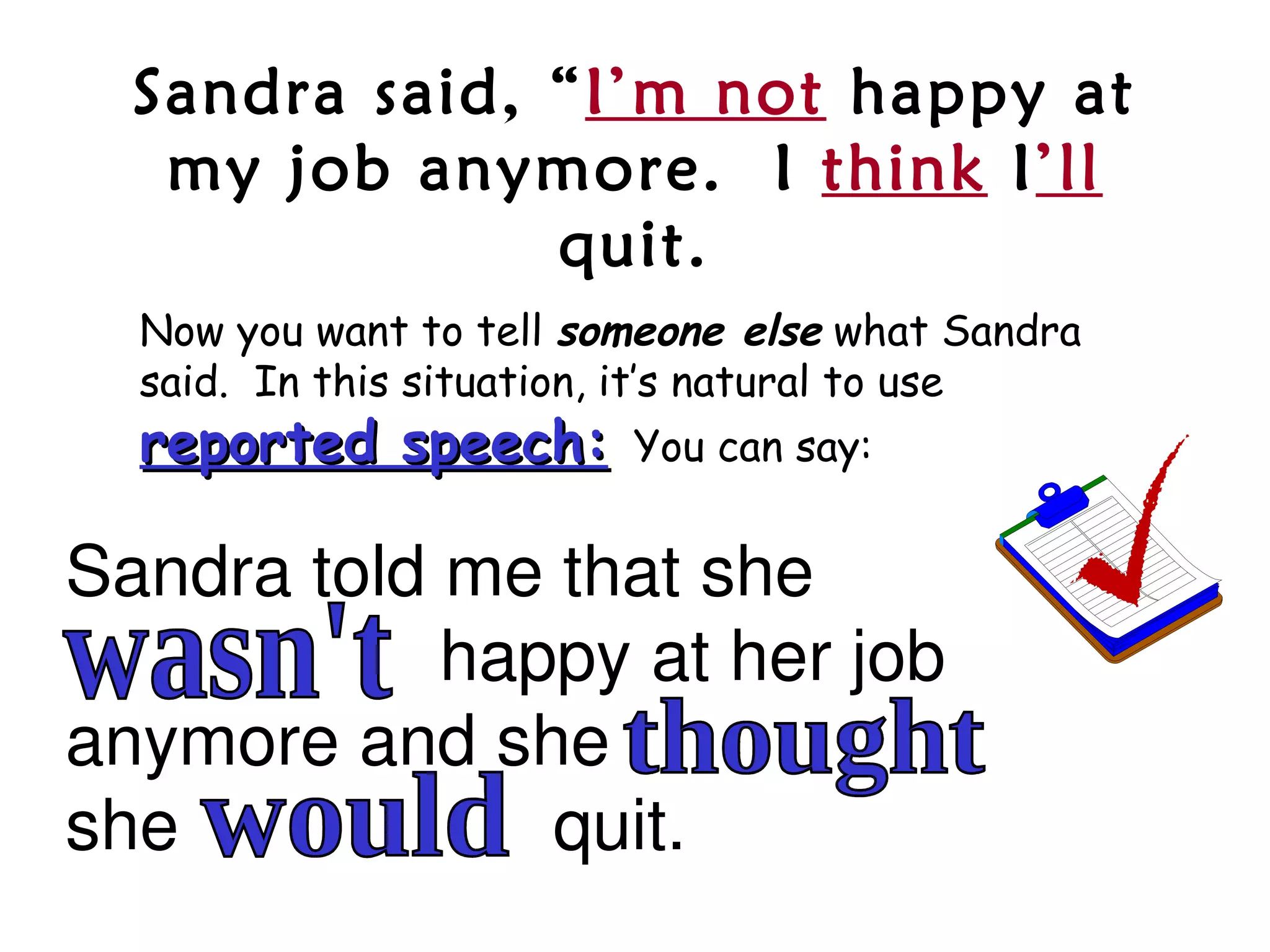
Sandra said, “I’m not happy at
   my job anymore. I think I’ll
               quit.
  Now you want to tell someone else what Sandra
  said. In this situation, it’s natural to use
  reported speech:       You can say:


Sandra told me that she
                   happy at her job 
anymore and she                    
she                   quit.
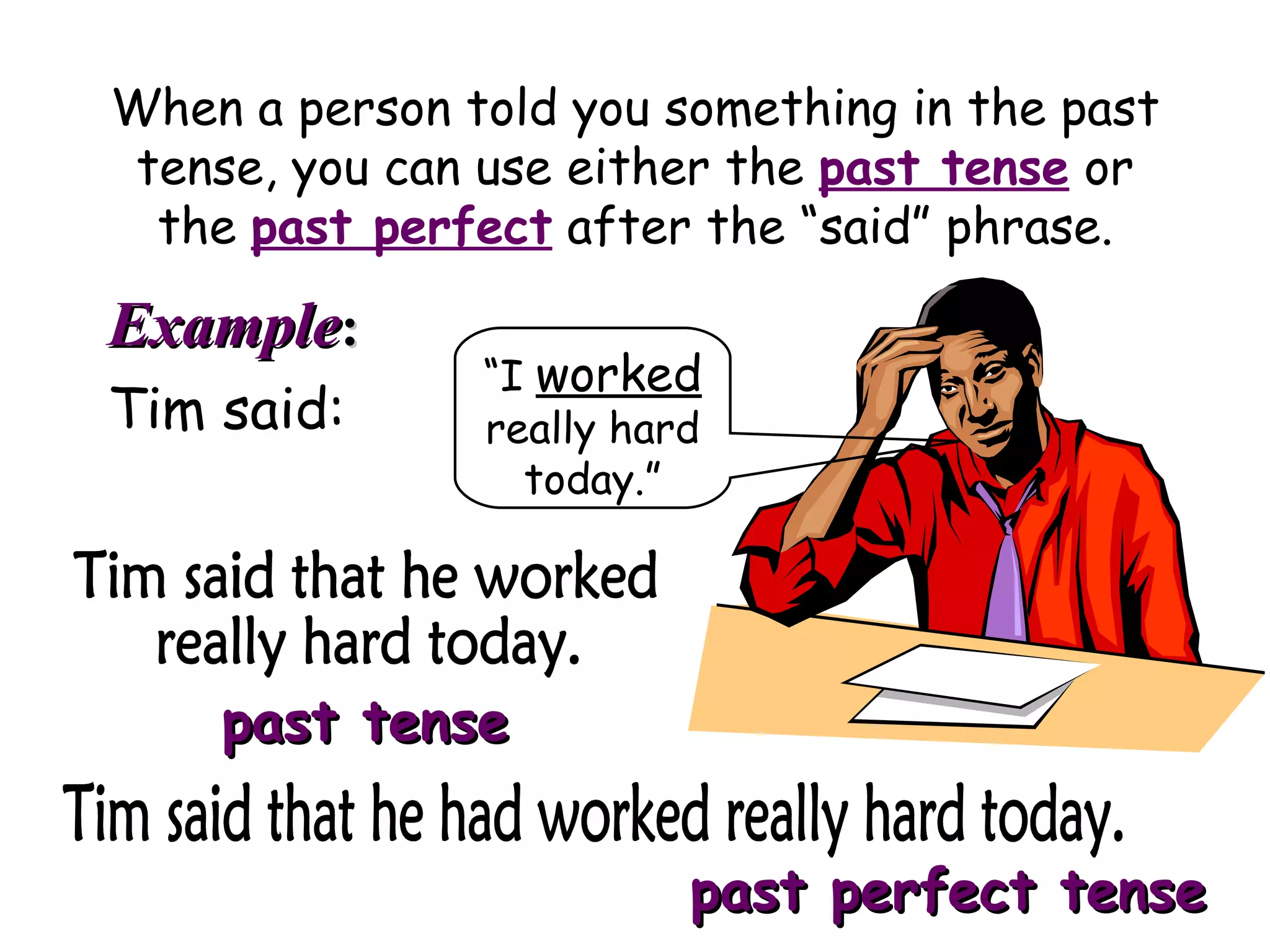
When a person told you something in the past
 tense, you can use either the past tense or
  the past perfect after the “said” phrase.

Example:
               “I worked
Tim said:      really hard
                 today.”


    past tense

                         past perfect tense
You will hear native
 speakers use both the past
      and past perfect
      in this situation;
However, it’s much easier to just
put everything in the simple past
tense when using reported speech,
so . . .
Examples for practice:
1. Shawn said:
“I don’t feel like going to the movies tonight.”
Reported speech:
Shawn said that he didn’t feel like going to the movies
tonight.

2. Tina said:
“My sister is coming to visit me soon.”
Reported speech:
Tina told me that her sister was coming to visit
her soon.
. . . And more examples:
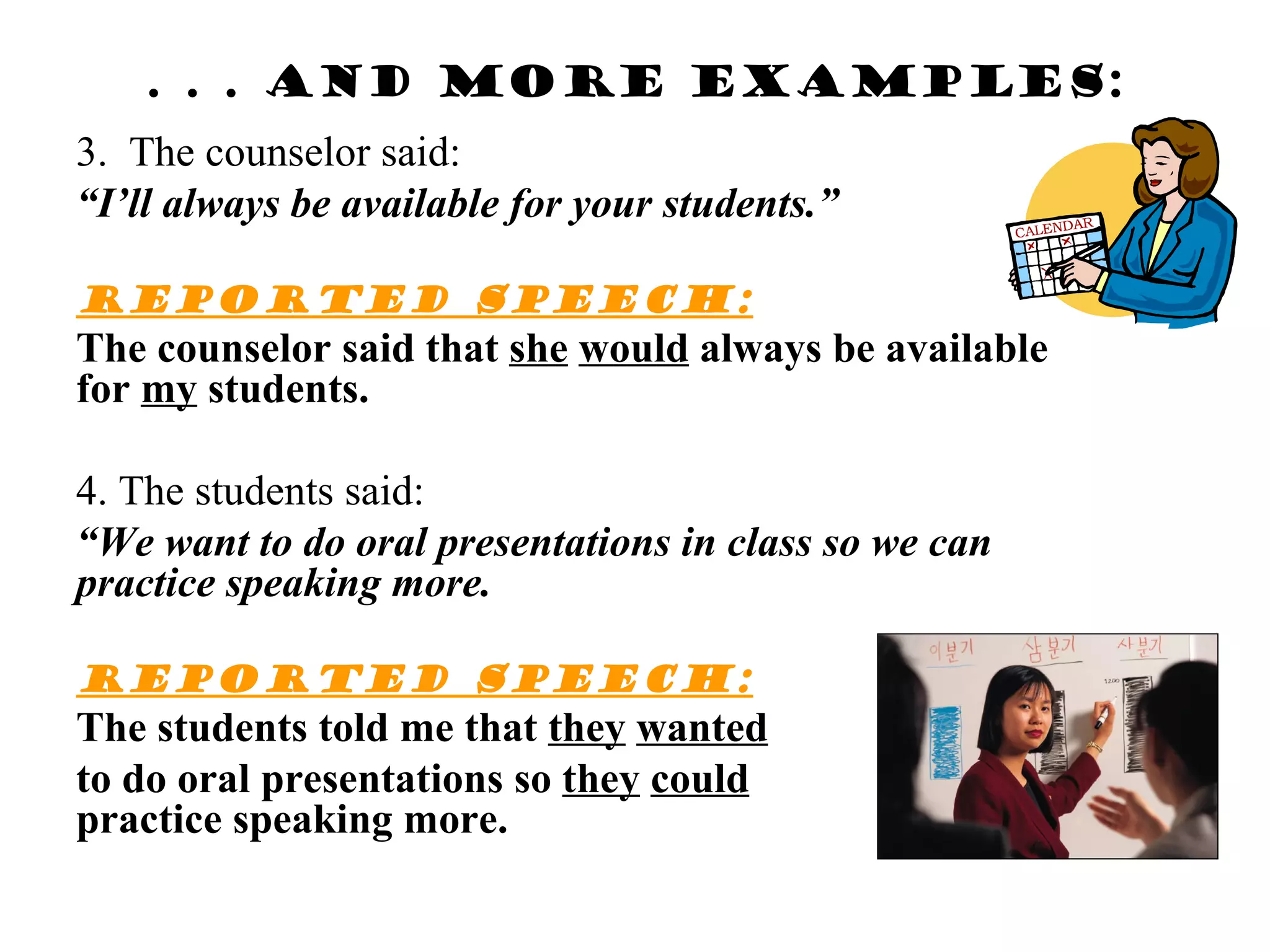
3. The counselor said:
“I’ll always be available for your students.”

Reported speech:
The counselor said that she would always be available
for my students.

4. The students said:
“We want to do oral presentations in class so we can
practice speaking more.

Reported speech:
The students told me that they wanted
to do oral presentations so they could
practice speaking more.
Do you understand reported
 speech better NOW than you
         did BEFORE?
             BEFORE

Congratulations!


 Keep practicing!!!
 And please . . . ask
          if you need
 assistance!

Reported

  • 1.
    Reported Speech What is it? How do you use it? Yesterday, I saw my friend Pamela! She told me that she got a promotion!
  • 2.
    Reported Speech is the grammar we use when we want to tell another person about a conversation that took place in the past. We often use reported speech to . . . 1. Give someone a telephone message: Example: Ellen said she couldn’t come today because… 2. Tell someone news that we heard from someone else: Example: Tom told me that he and Karen got engaged! 3. To report something that happened: Example: Sam said that the other driver wasn’t paying attention and hit his car.
  • 3.
    How to use reportedspeech: When we use reported speech, we are usually talking about the past. Therefore, verbs usually change to the past tense in reported speech.
  • 4.
    am / is become was are becomes were have / has become had could can / can’t become couldn’t would will / won’t become wouldn’t
  • 5.
    Reported speech typically uses the following structure: Someone said (that) … Sentence, past OR Someone told me (that) … Sentence,past However, in English, you can NEVER say Someone said me . . .
  • 6.
    Examples of reporting whatsomeone said . . . I talked to Sandra yesterday. She was telling me about her job. Her job is quite stressful. Sandra said: “I’m not happy at my job anymore. I think I’ll quit.”
  • 7.
    Sandra said, “I’mnot happy at my job anymore. I think I’ll quit. Now you want to tell someone else what Sandra said. In this situation, it’s natural to use reported speech: You can say: Sandra told me that she                    happy at her job  anymore and she                     she                   quit.
  • 8.
    When a persontold you something in the past tense, you can use either the past tense or the past perfect after the “said” phrase. Example: “I worked Tim said: really hard today.” past tense past perfect tense
  • 9.
    You will hearnative speakers use both the past and past perfect in this situation; However, it’s much easier to just put everything in the simple past tense when using reported speech, so . . .
  • 10.
    Examples for practice: 1.Shawn said: “I don’t feel like going to the movies tonight.” Reported speech: Shawn said that he didn’t feel like going to the movies tonight. 2. Tina said: “My sister is coming to visit me soon.” Reported speech: Tina told me that her sister was coming to visit her soon.
  • 11.
    . . .And more examples: 3. The counselor said: “I’ll always be available for your students.” Reported speech: The counselor said that she would always be available for my students. 4. The students said: “We want to do oral presentations in class so we can practice speaking more. Reported speech: The students told me that they wanted to do oral presentations so they could practice speaking more.
  • 12.
    Do you understandreported speech better NOW than you did BEFORE? BEFORE Congratulations! Keep practicing!!! And please . . . ask if you need assistance!