REPORTED SPEECH
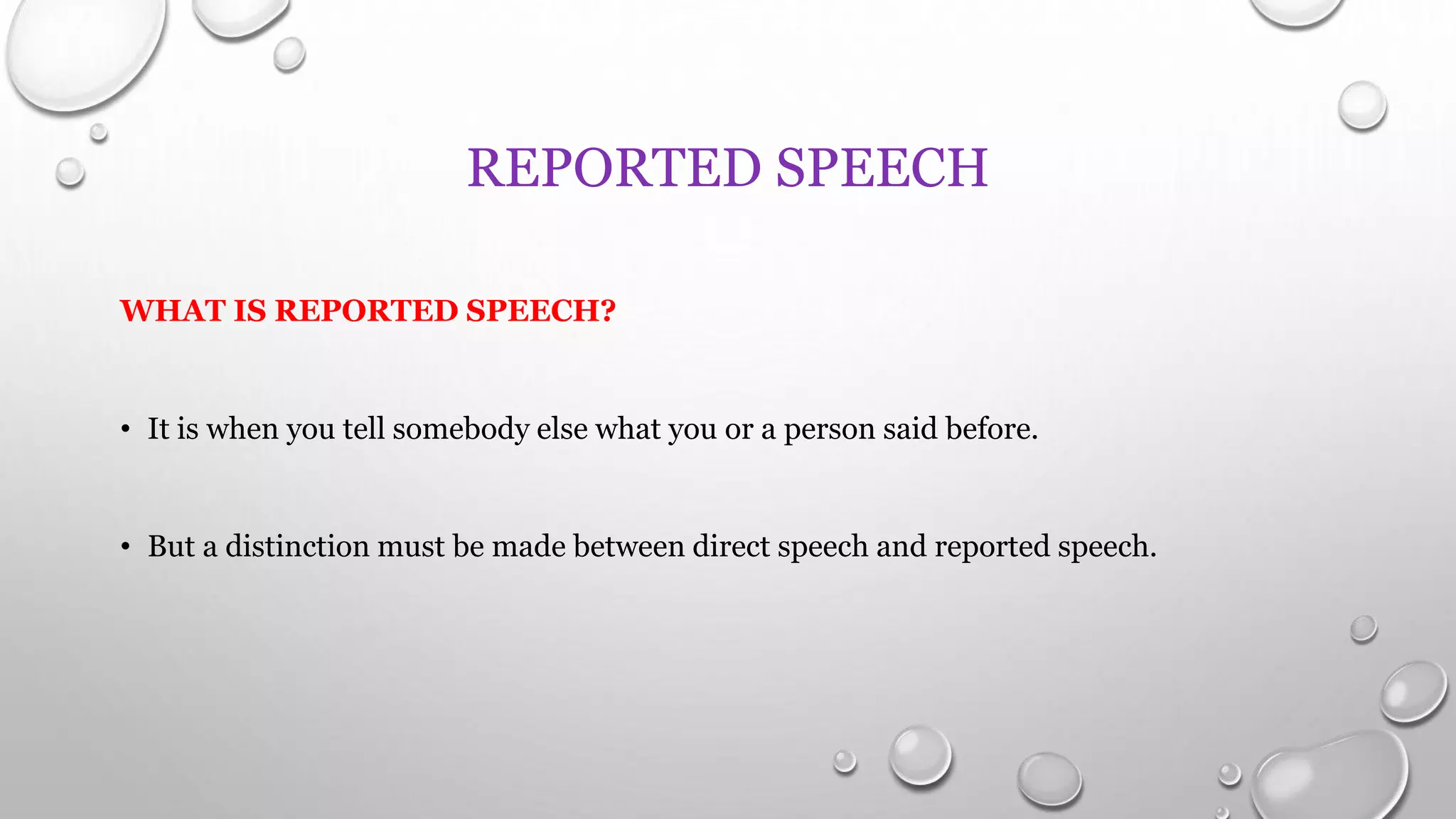
WHAT IS REPORTED SPEECH?
• It is when you tell somebody else what you or a person said before.
• But a distinction must be made between direct speech and reported speech.
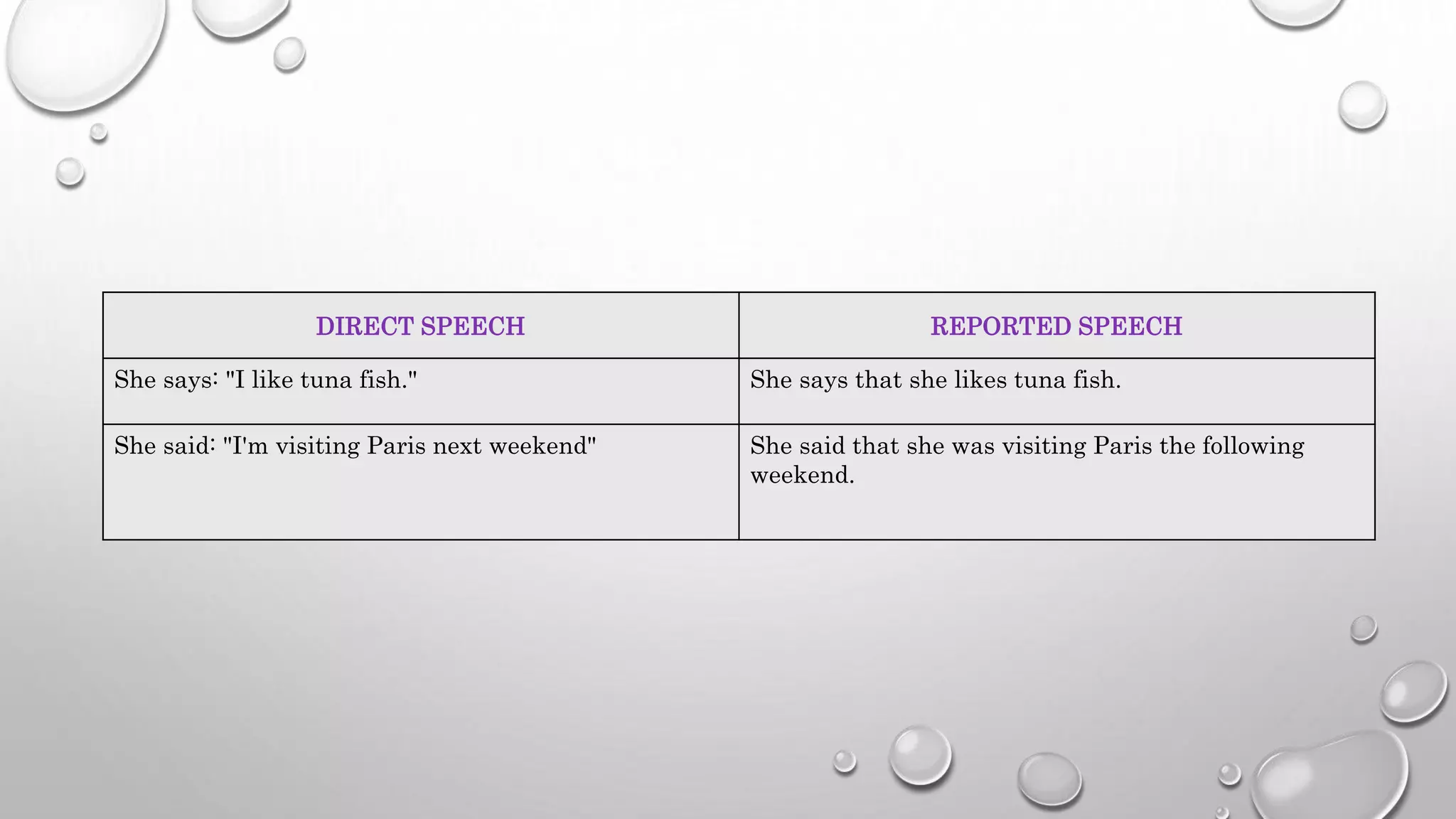
DIRECT SPEECH REPORTED SPEECH
She says: "I like tuna fish." She says that she likes tuna fish.
She said: "I'm visiting Paris next weekend" She said that she was visiting Paris the following
weekend.
LET’S GET INTO IT
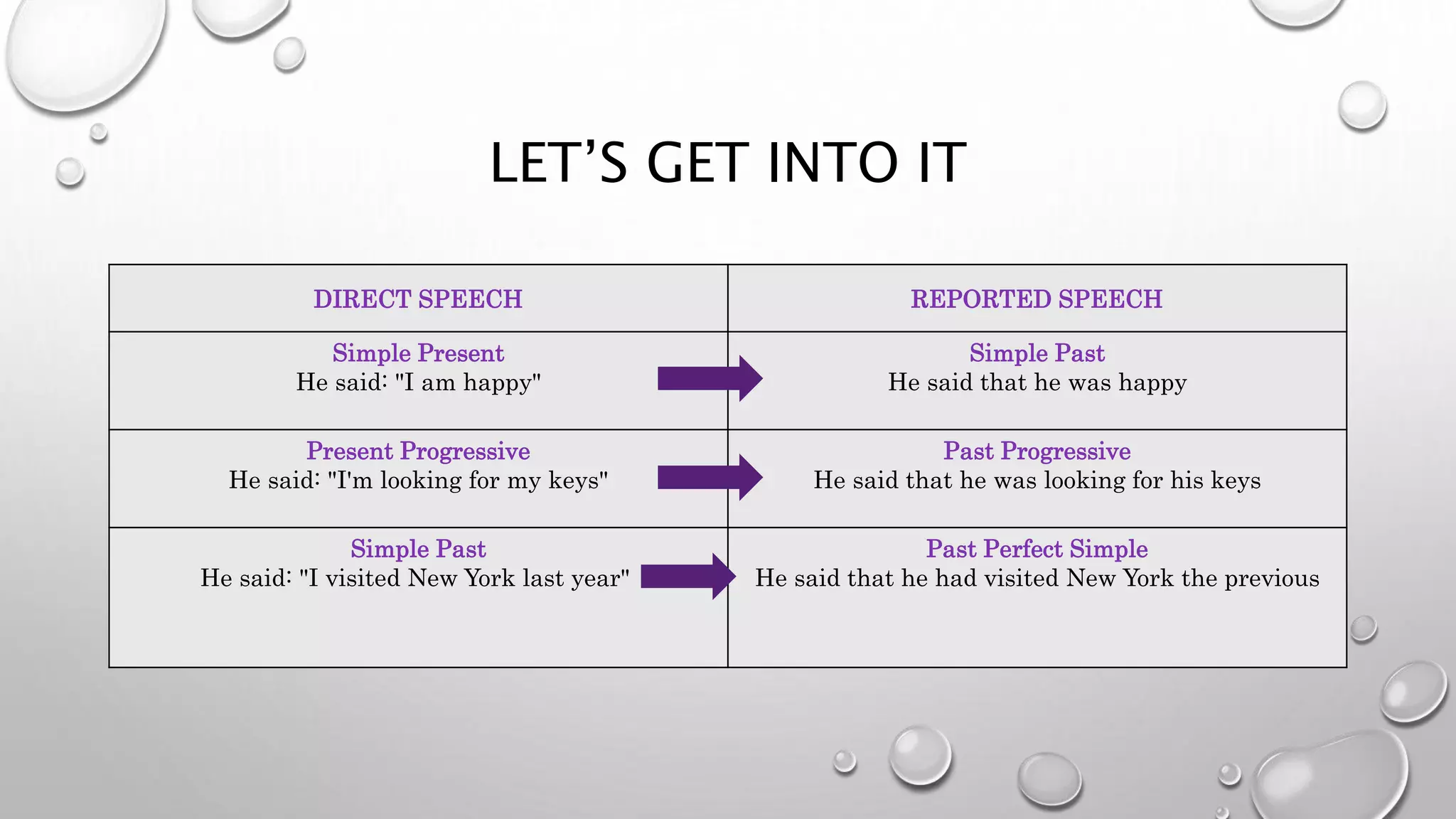
DIRECT SPEECH REPORTED SPEECH
Simple Present
He said: "I am happy"
Simple Past
He said that he was happy
Present Progressive
He said: "I'm looking for my keys"
Past Progressive
He said that he was looking for his keys
Simple Past
He said: "I visited New York last year"
Past Perfect Simple
He said that he had visited New York the previous
Present Perfect
He said: " I've lived here for a long time "
Past Perfect
He said that he had lived there for a long time
Past Perfect
He said: "They had finished the work when Iarrived"
Past Perfect
He said that they had finished the work when he had
Past Progressive
He said: "I was playing football when the accident occurred"
Past Perfect Progressive
He said that he had been playing football when the
accident had occurred
Present Perfect Progressive
He said: "I have been playing football for two
Past Perfect Progressive
He said that he had been playing football for two
hours
Past Perfect Progressive
He said: "I had been reading a newspaper when the
light went off"
Past Perfect Progressive
He said that he had been reading a newspaper
the light had gone off
Future Simple (will+verb)
He said: "I will open the door."
Conditional (would+verb)
He said that he would open the door.
Conditional (would+verb)
He said: "I would buy Mercedes if I were rich"
Conditional (would+verb)
He said that he would buy Mercedes if he had been
rich"
Modal Direct speech Reported speech
can "I can do it." He said he could do it.
may "May I go out?" He wanted to know if he might go
out.
must "She must apply for the job." He said that she must/had
for the job.
will "They will call you." He told her that they would call
Time Expressions
today that day
now then
yesterday the day before
… days ago … days before
last week the week before
next year the following year
tomorrow the next day / the following day

Reported speech

  • 2.
    REPORTED SPEECH WHAT ISREPORTED SPEECH? • It is when you tell somebody else what you or a person said before. • But a distinction must be made between direct speech and reported speech.
  • 3.
    DIRECT SPEECH REPORTEDSPEECH She says: "I like tuna fish." She says that she likes tuna fish. She said: "I'm visiting Paris next weekend" She said that she was visiting Paris the following weekend.
  • 4.
    LET’S GET INTOIT DIRECT SPEECH REPORTED SPEECH Simple Present He said: "I am happy" Simple Past He said that he was happy Present Progressive He said: "I'm looking for my keys" Past Progressive He said that he was looking for his keys Simple Past He said: "I visited New York last year" Past Perfect Simple He said that he had visited New York the previous
  • 5.
    Present Perfect He said:" I've lived here for a long time " Past Perfect He said that he had lived there for a long time Past Perfect He said: "They had finished the work when Iarrived" Past Perfect He said that they had finished the work when he had Past Progressive He said: "I was playing football when the accident occurred" Past Perfect Progressive He said that he had been playing football when the accident had occurred
  • 6.
    Present Perfect Progressive Hesaid: "I have been playing football for two Past Perfect Progressive He said that he had been playing football for two hours Past Perfect Progressive He said: "I had been reading a newspaper when the light went off" Past Perfect Progressive He said that he had been reading a newspaper the light had gone off Future Simple (will+verb) He said: "I will open the door." Conditional (would+verb) He said that he would open the door. Conditional (would+verb) He said: "I would buy Mercedes if I were rich" Conditional (would+verb) He said that he would buy Mercedes if he had been rich"
  • 7.
    Modal Direct speechReported speech can "I can do it." He said he could do it. may "May I go out?" He wanted to know if he might go out. must "She must apply for the job." He said that she must/had for the job. will "They will call you." He told her that they would call
  • 8.
    Time Expressions today thatday now then yesterday the day before … days ago … days before last week the week before next year the following year tomorrow the next day / the following day