Renal Pathology
for medical students
The Nephrotic Syndrome
Professor Wadie M Y Elmadhoun
E-mail: wadie2222@yahoo.com
Kidney Pathology – Nephrotic Syndrome – Prof. Wadie 1
Presentation outlines
1. Intended Learning outcomes (ILOs).
2. The nephrotic syndrome: definition, causes,
clinical course and morphology of:
1. Minimal Change Disease.
2. Focal segmental glomerulosclerosis.
3. Membranous glomerulonephritis.
4. Membranoproliferative glomerulonephritis.
3. Complications of nephrotic syndrome.
5. Quizzes.
6. Further learning resources.
Kidney Pathology – Nephrotic Syndrome – Prof. Wadie
2
Intended Learning outcomes (ILOs)
• By the end of studying this lecture, students should be
able to:
1. Define the nephrotic syndrome and explain its
components, causes and pathogenesis.
2. Define and describe minimal change disease
3. Define and describe focal segmental
glomerulosclerosis.
4. Define and describe membranous
glomerulonephritis.
5. Define and describe membranoproliferative GN
6. List the complications of the nephrotic syndrome
Kidney Pathology – Nephrotic Syndrome – Prof. Wadie
3
Definition of the nephrotic syndrome
• A Manifestation of glomerular disease,
characterized by
• Heavy proteinuria leading to
• hypoalbuminaemia , and
• edema
• With/without hyperlipidemia and lipiduria.
Kidney Pathology – Nephrotic Syndrome – Prof. Wadie 4
Overview of causes and pathogenesis
• The causes of the NS are either:
1. Primary glomerular diseases (GN) or
2. Systemic diseases leading to glomerulopathy.
• The main point in pathogenesis is:
• Glomerular basement (GBM) damage by the
immune system results in loss of proteins
from circulation to urine.
Kidney Pathology – Nephrotic Syndrome – Prof. Wadie 5
Nephrotic Syndrome (NS)
• Massive proteinuria: 3.5 g/24hrs in adults,
• Hypoalbuminemia: below 2.5 g/dl.
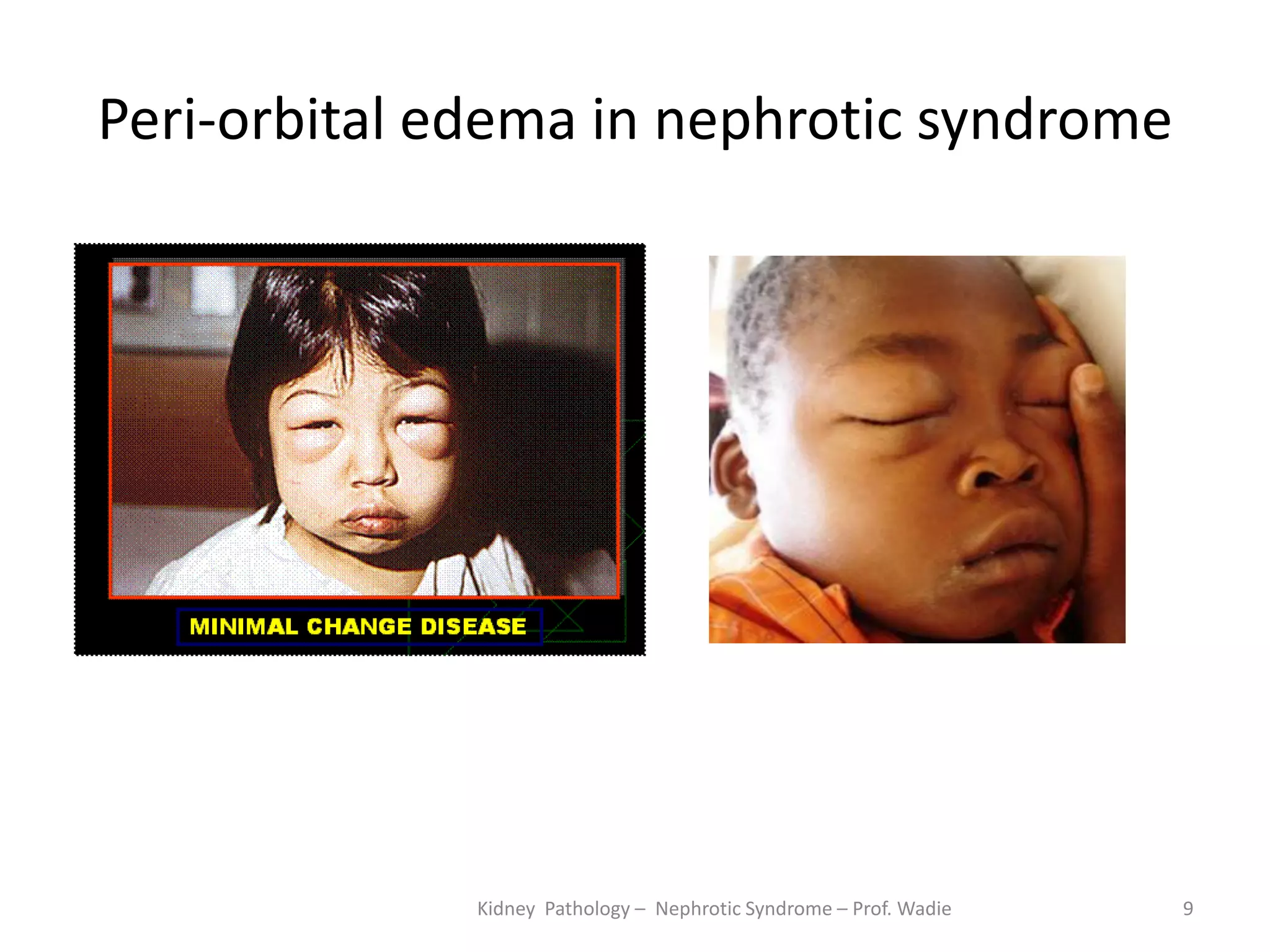
• Edema: peri-orbital, or generalized. Due to decreased
oncotic pressure, leading to increased production of aldosterone.
• Hyperlipidemia: due to excessive free lipids + increased
hepatic production.
• Lipiduria: leak due to GBM damage.
Kidney Pathology – Nephrotic Syndrome – Prof. Wadie
Kidney Pathology – Nephrotic Syndrome – Prof. Wadie 7
Foamy, turbid urine in NS
Kidney Pathology – Nephrotic Syndrome – Prof. Wadie
8
Peri-orbital edema in nephrotic syndrome
Kidney Pathology – Nephrotic Syndrome – Prof. Wadie 9
Leg edema: with and without nephrotic syndrome
Kidney Pathology – Nephrotic Syndrome – Prof. Wadie 10
Causes of the nephrotic syndrome
• Primary glomerulonephritis: (idiopathic GN):
1. Minimal change disease (MCD).
2. Focal segmental glomerulosclerosis (FSGS).
3. Membranous glomerulonephritis (MGN).
4. Membranoproliferative glomerulonephritis (MpGN).
• Secondary causes:
• Diabetes, amyloid, SLE, drugs, HBV, HCV, malaria,
syphilis, Cancer, heroin, ….
Kidney Pathology – Nephrotic Syndrome – Prof. Wadie
11
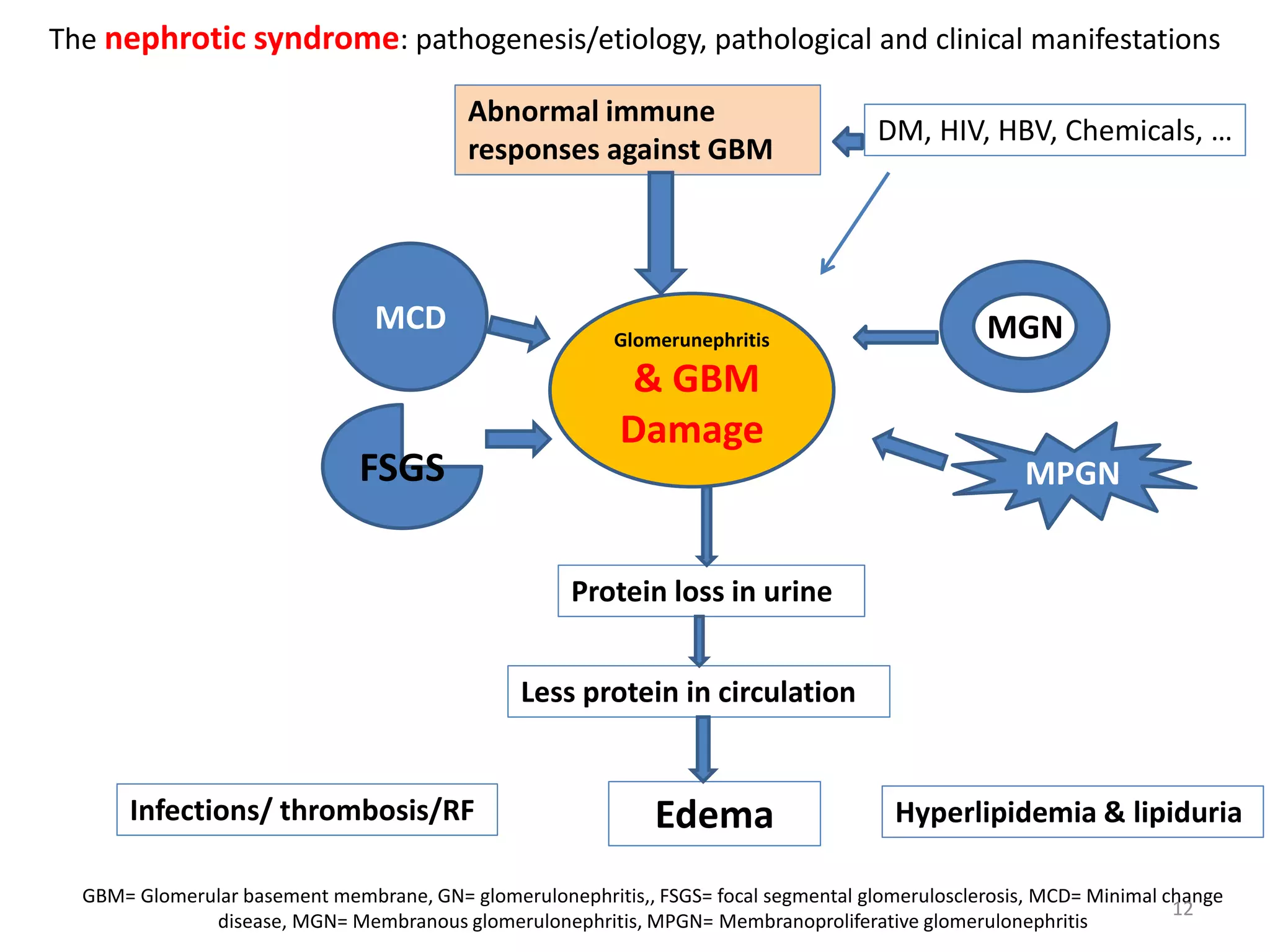
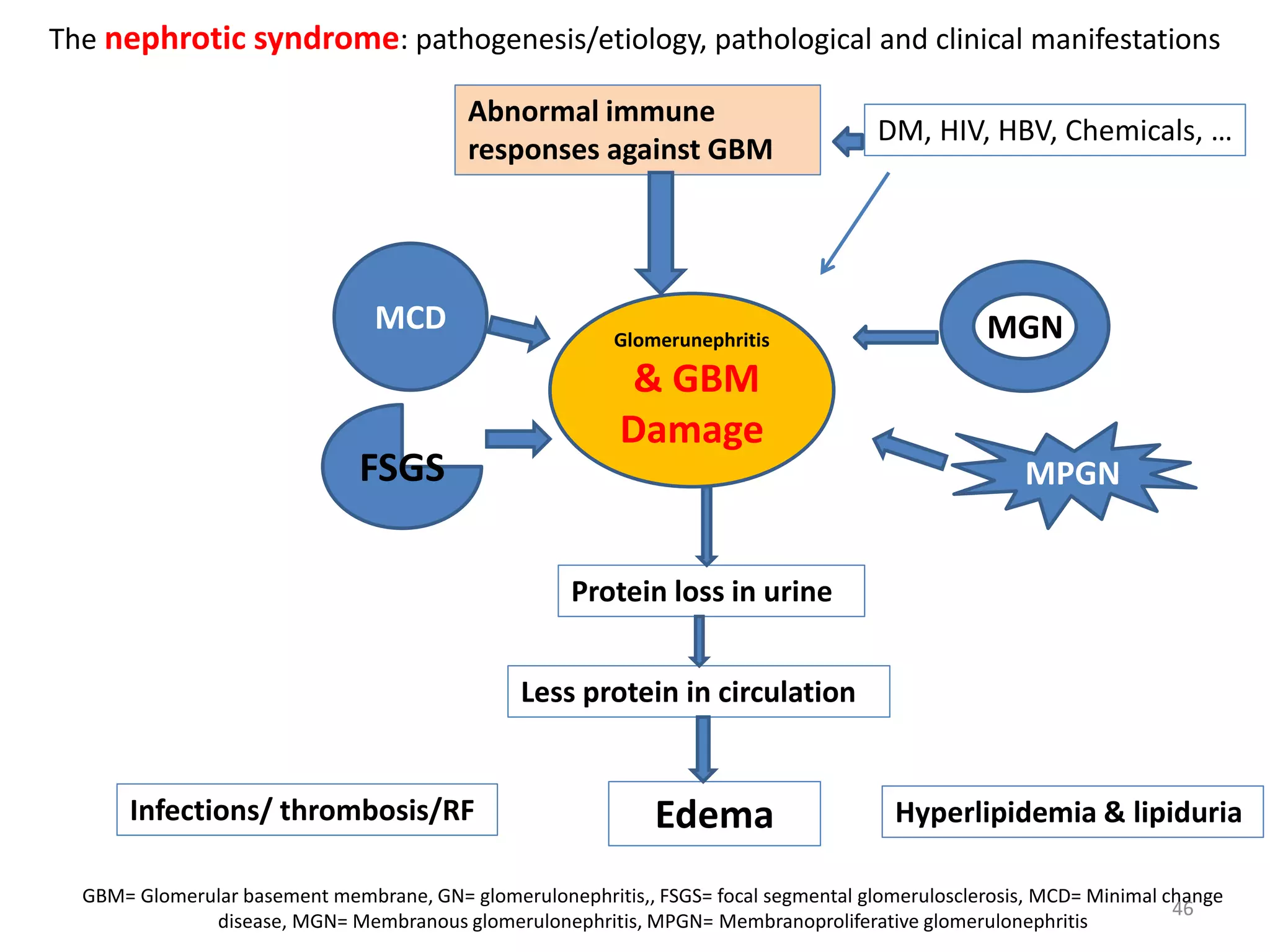
The nephrotic syndrome: pathogenesis/etiology, pathological and clinical manifestations
GBM= Glomerular basement membrane, GN= glomerulonephritis,, FSGS= focal segmental glomerulosclerosis, MCD= Minimal change
disease, MGN= Membranous glomerulonephritis, MPGN= Membranoproliferative glomerulonephritis
12
Abnormal immune
responses against GBM
DM, HIV, HBV, Chemicals, …
Protein loss in urine
Less protein in circulation
EdemaInfections/ thrombosis/RF Hyperlipidemia & lipiduria
Glomerunephritis
& GBM
Damage
MPGNFSGS
MGNMCD
Minimal Change Disease (MCD)
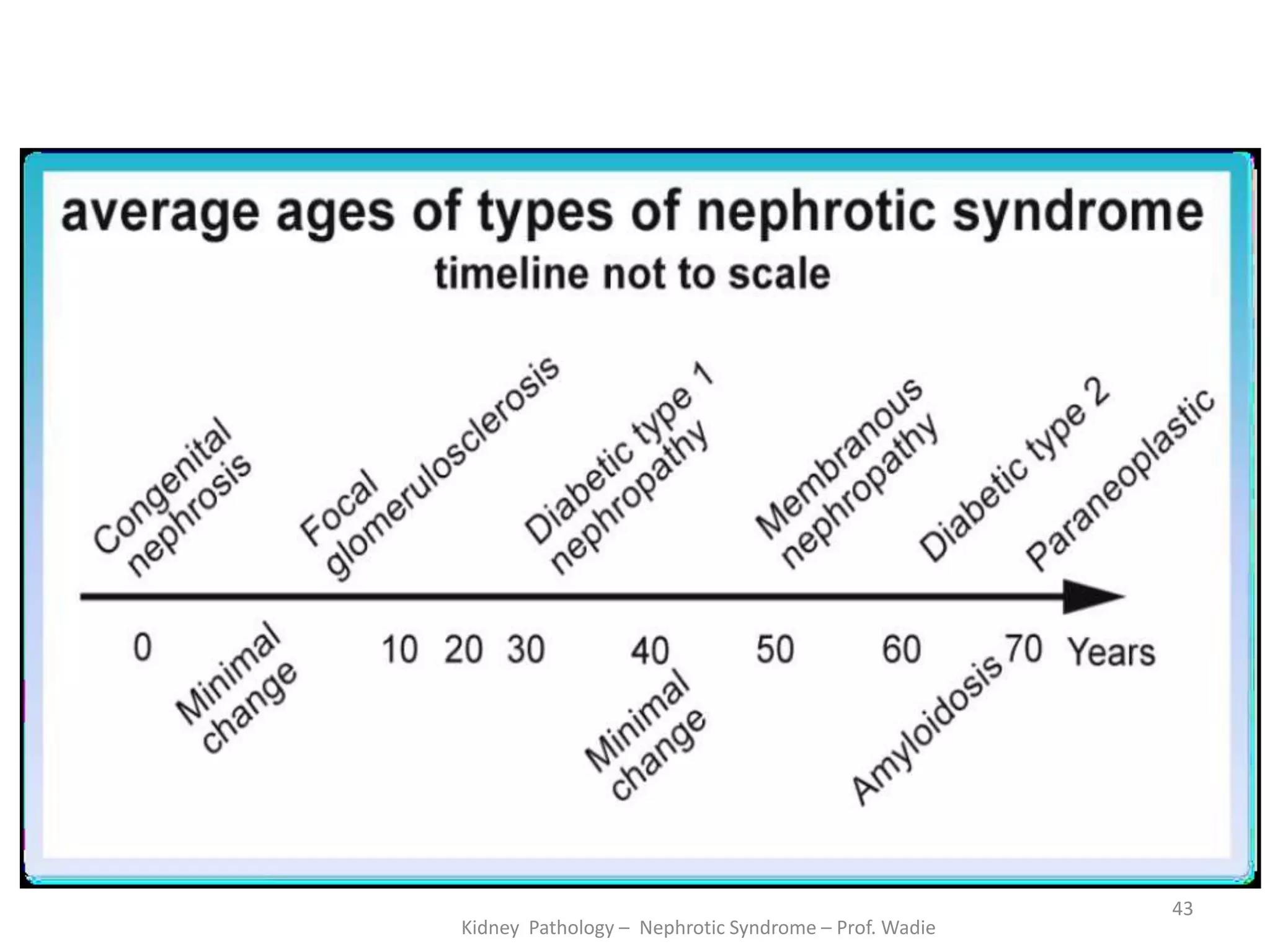
• Accounts for 80% of all cases of the nephrotic
syndrome in children. About 10% in adults.
• Light microscope: Normal glomeruli, no changes.
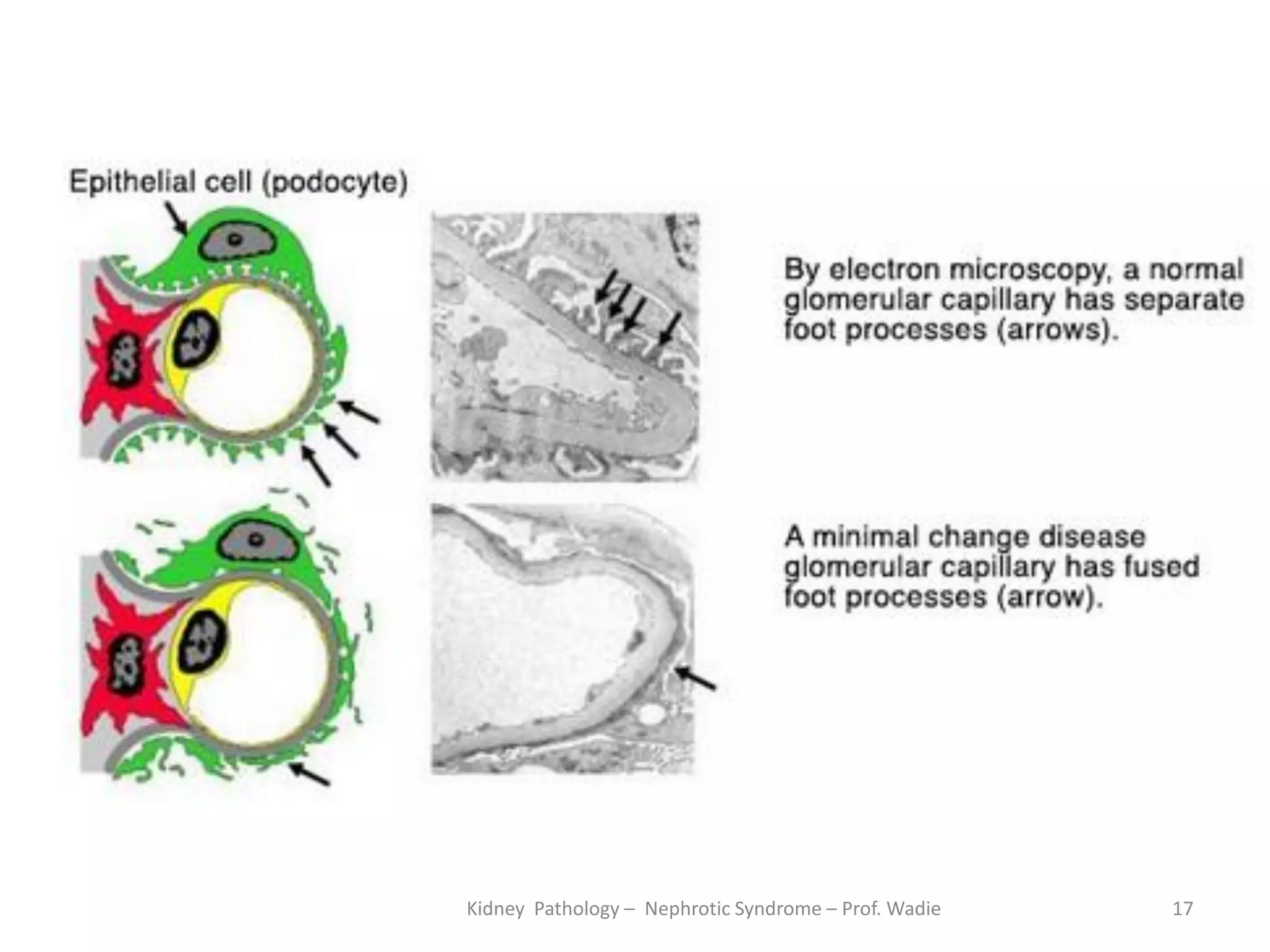
• By electron microscope: loss of foot processes of
podocytes (effacement).
Kidney Pathology – Nephrotic Syndrome – Prof. Wadie 13
Kidney Pathology – Nephrotic Syndrome – Prof. Wadie 14
Kidney Pathology – Nephrotic Syndrome – Prof. Wadie
15
Minimal Change Glom.
(Lipoid Nephrosis)
• most common cause of nephrotic syndrome
in children
• effacement of foot processes
Kidney Pathology – Nephrotic Syndrome – Prof. Wadie
Kidney Pathology – Nephrotic Syndrome – Prof. Wadie 17
Kidney Pathology – Nephrotic Syndrome – Prof. Wadie 18
Kidney Pathology – Nephrotic Syndrome – Prof. Wadie 19
Kidney Pathology – Nephrotic Syndrome – Prof. Wadie 20
Clinical course of Minimal change disease
• Starts insidiously in an otherwise healthy
individual.
• 90% respond to predinsolone.
• Recurrent Proteinuria in 60% (steriod dependent).
• Less than 5% develop chronic renal failure in 25
years.
Kidney Pathology – Nephrotic Syndrome – Prof. Wadie 21
Focal Segmental
Glomerulo-sclerosis (FSGS)
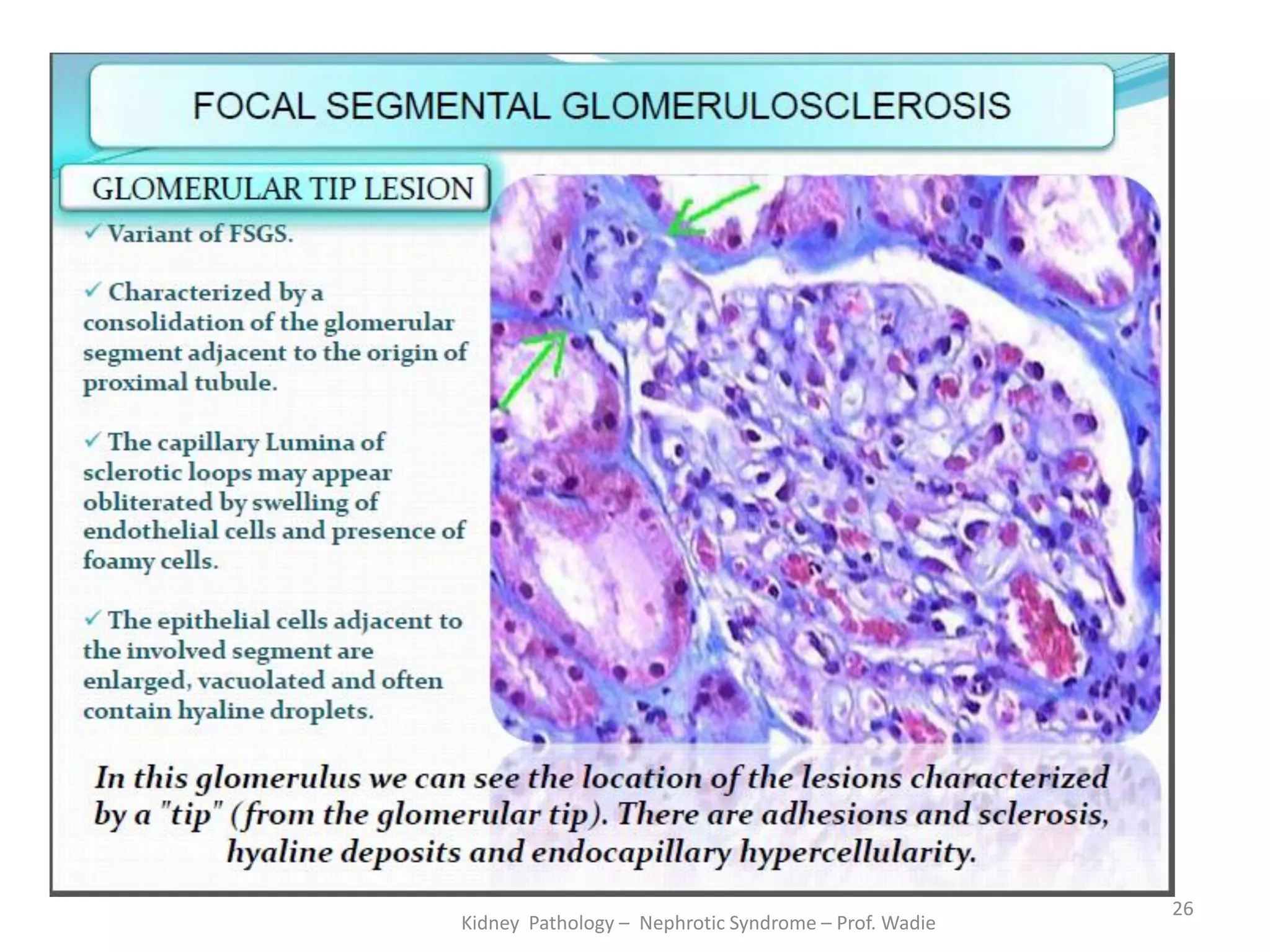
• Just like its name:
- Focal: some, not all, glomeruli affected.
- Segmental: only segments, not whole,
glomerulus affected.
- Glomerulo-SCLEROSIS: fibrosis (NOT –itis)
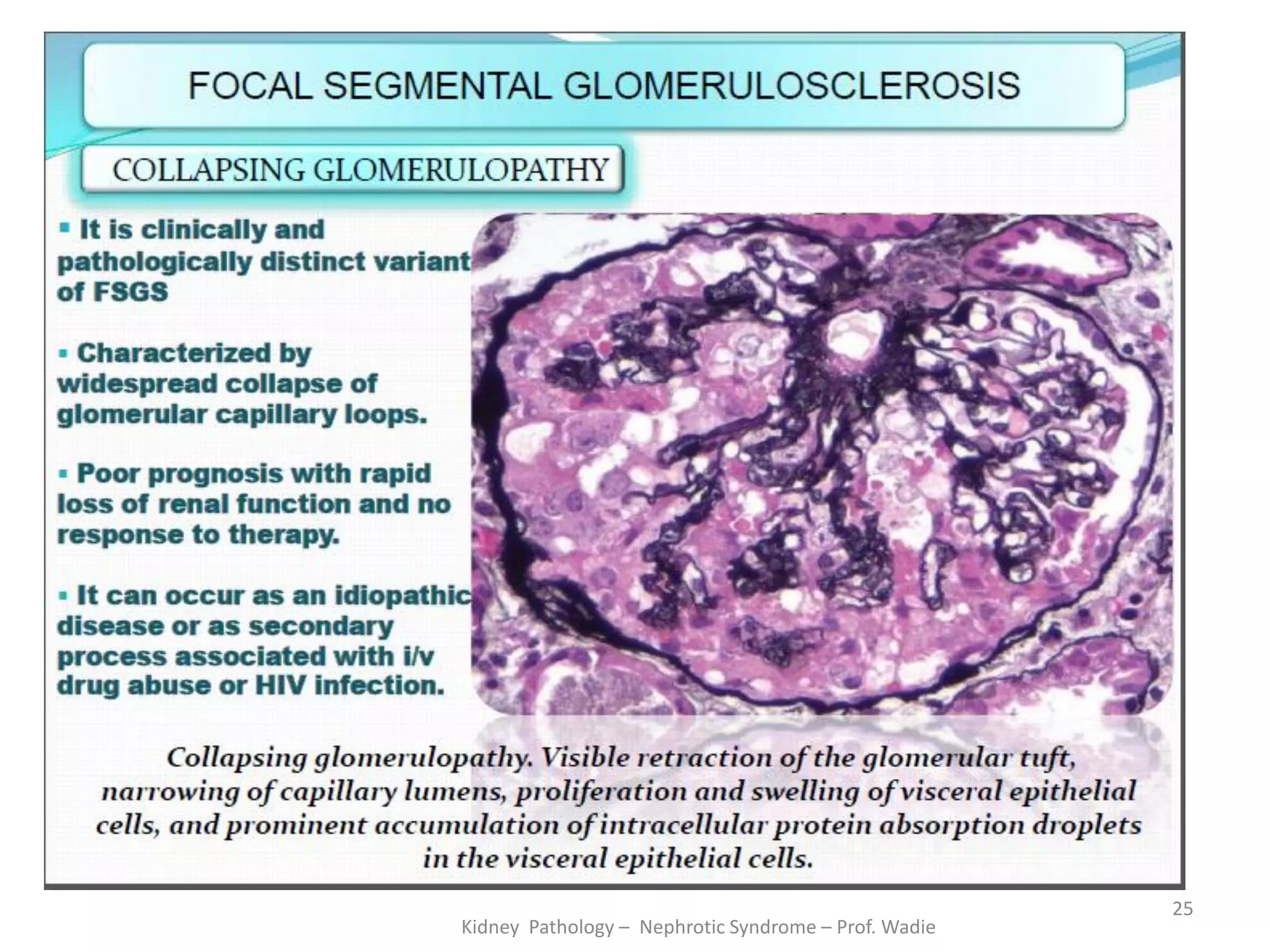
• Is the Most common cause of
ADULT nephrotic syndrome.
• Associated with : HIV, Heroin,…
Focal segmental glomerulosclerosis
• FSGS constitutes 30-40% of nephrotic
syndrome (NS) in adults.
• and about 10% of NS in children.
• May be due to immunoglobulins and
complement immune responses.
• Onset is insidious.
• 50% develop renal failure in 10 years.
Kidney Pathology – Nephrotic Syndrome – Prof. Wadie 23
Kidney Pathology – Nephrotic Syndrome – Prof. Wadie
24
Kidney Pathology – Nephrotic Syndrome – Prof. Wadie
25
Kidney Pathology – Nephrotic Syndrome – Prof. Wadie
26
Kidney Pathology – Nephrotic Syndrome – Prof. Wadie 27
Kidney Pathology – Nephrotic Syndrome – Prof. Wadie
28
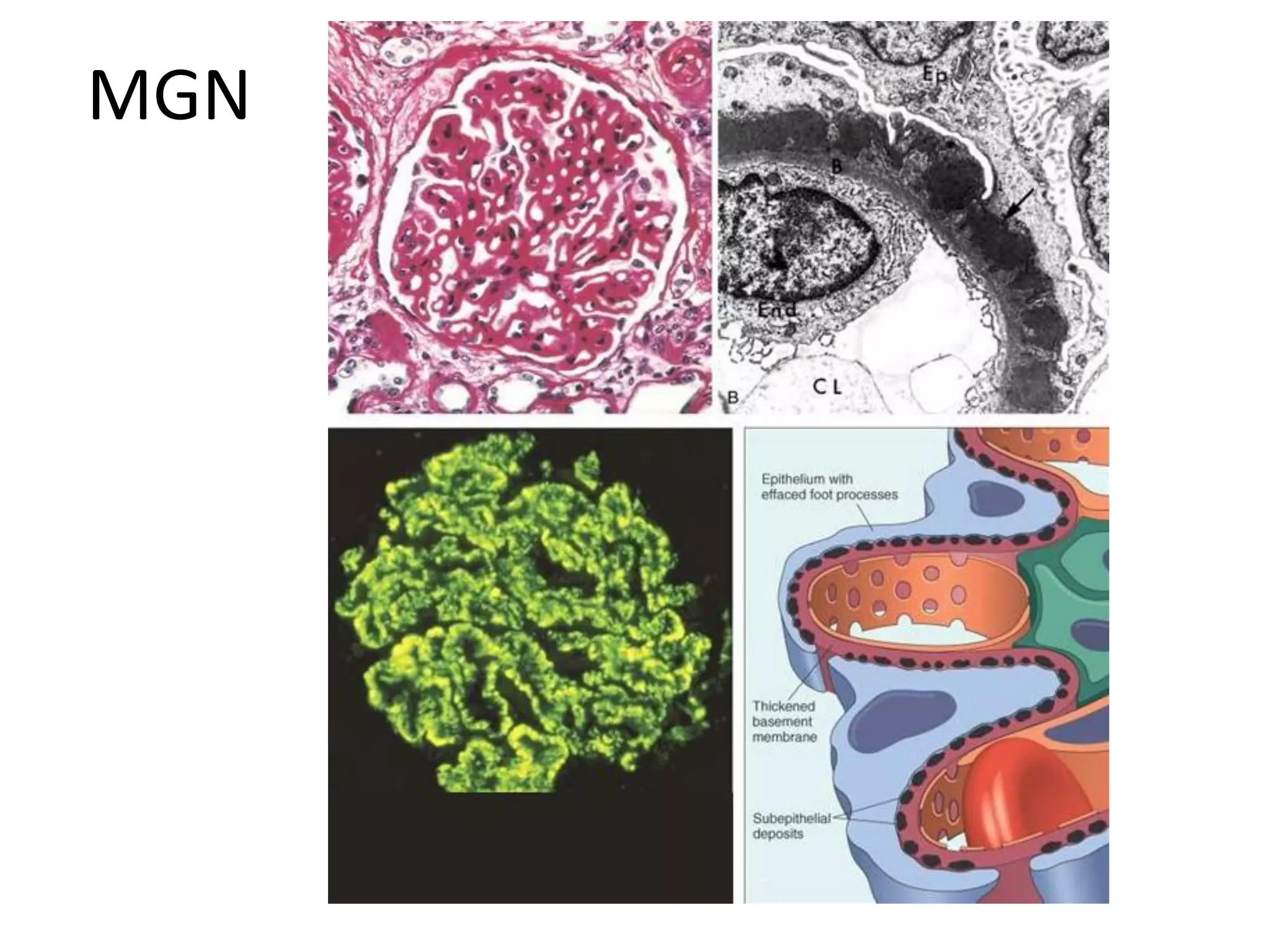
Membranous Glomerulonephritis
(MGN)
• Causes about 30% of nephrotic syndrome in adults,
but only 5% of NS in children.
• Associated with: Drugs, malignancies, SLE, Infections
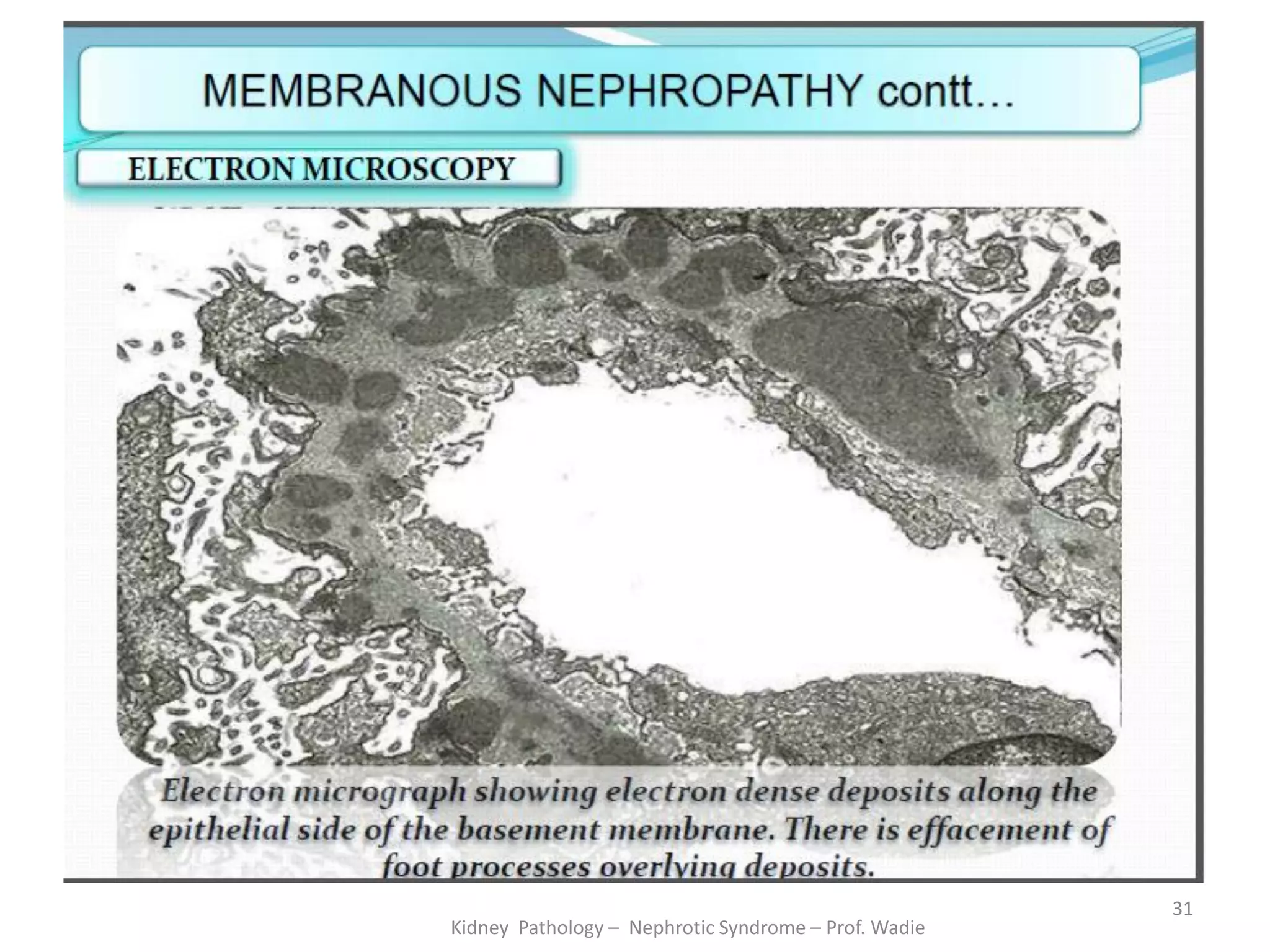
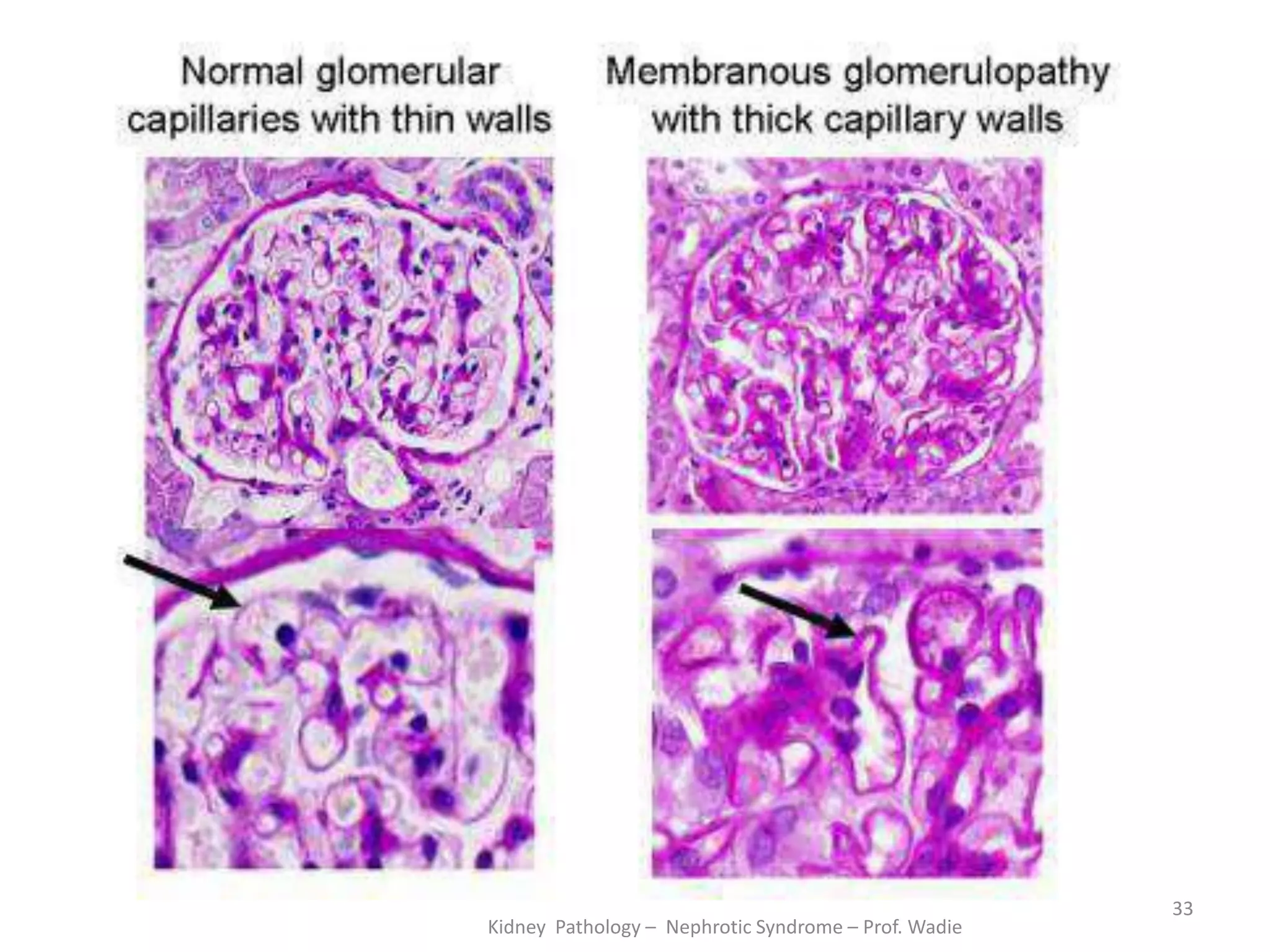
• There is subepithelial deposition of Ag-Ab complexes.
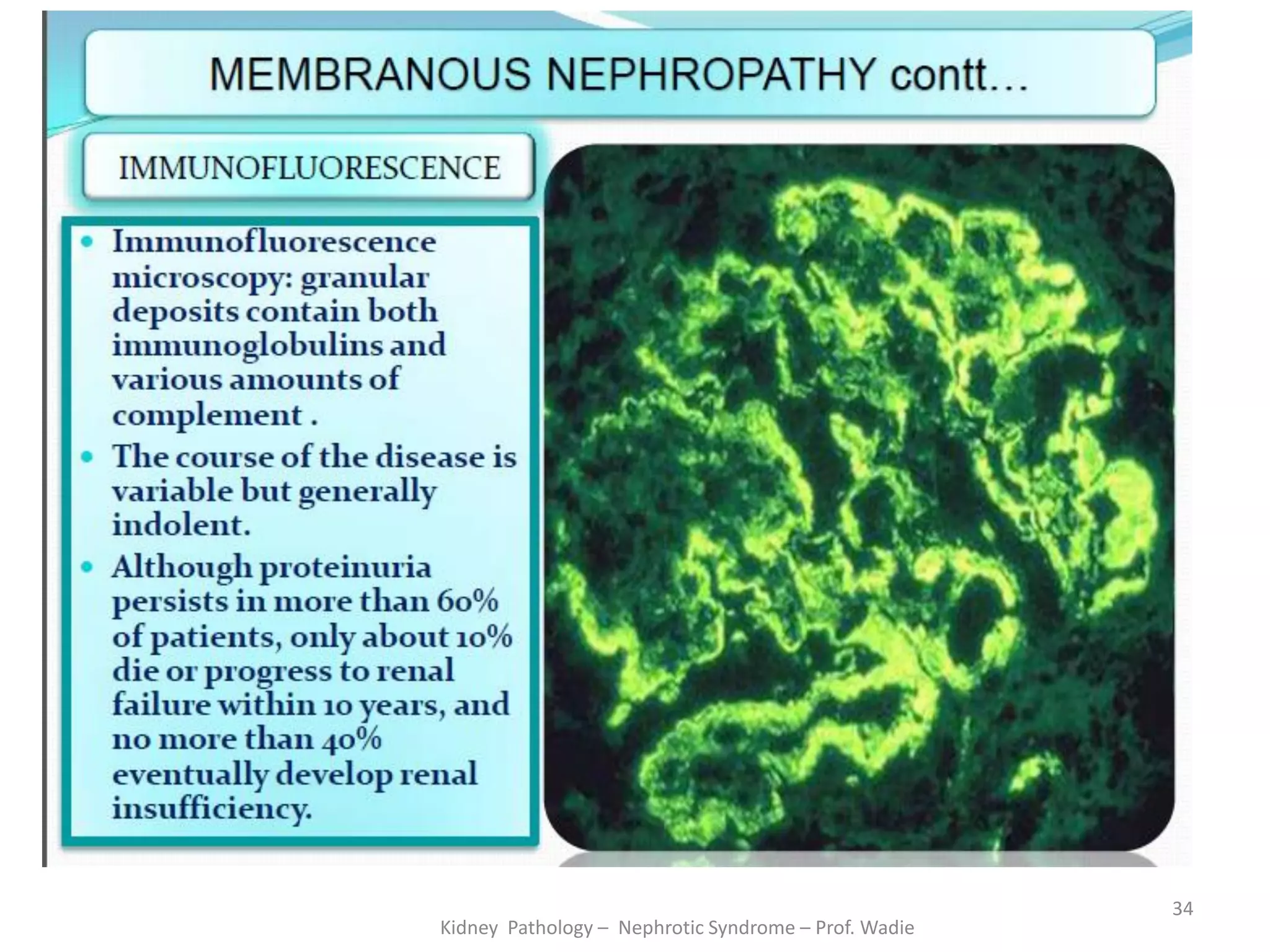
• Indolent course.
• About 60% will continue to have persistent
proteinuria.
• 10% to 40% go on to renal insufficiency in 10 years.
MGN
Kidney Pathology – Nephrotic Syndrome – Prof. Wadie
31
Kidney Pathology – Nephrotic Syndrome – Prof. Wadie
32
Kidney Pathology – Nephrotic Syndrome – Prof. Wadie
33
Kidney Pathology – Nephrotic Syndrome – Prof. Wadie
34
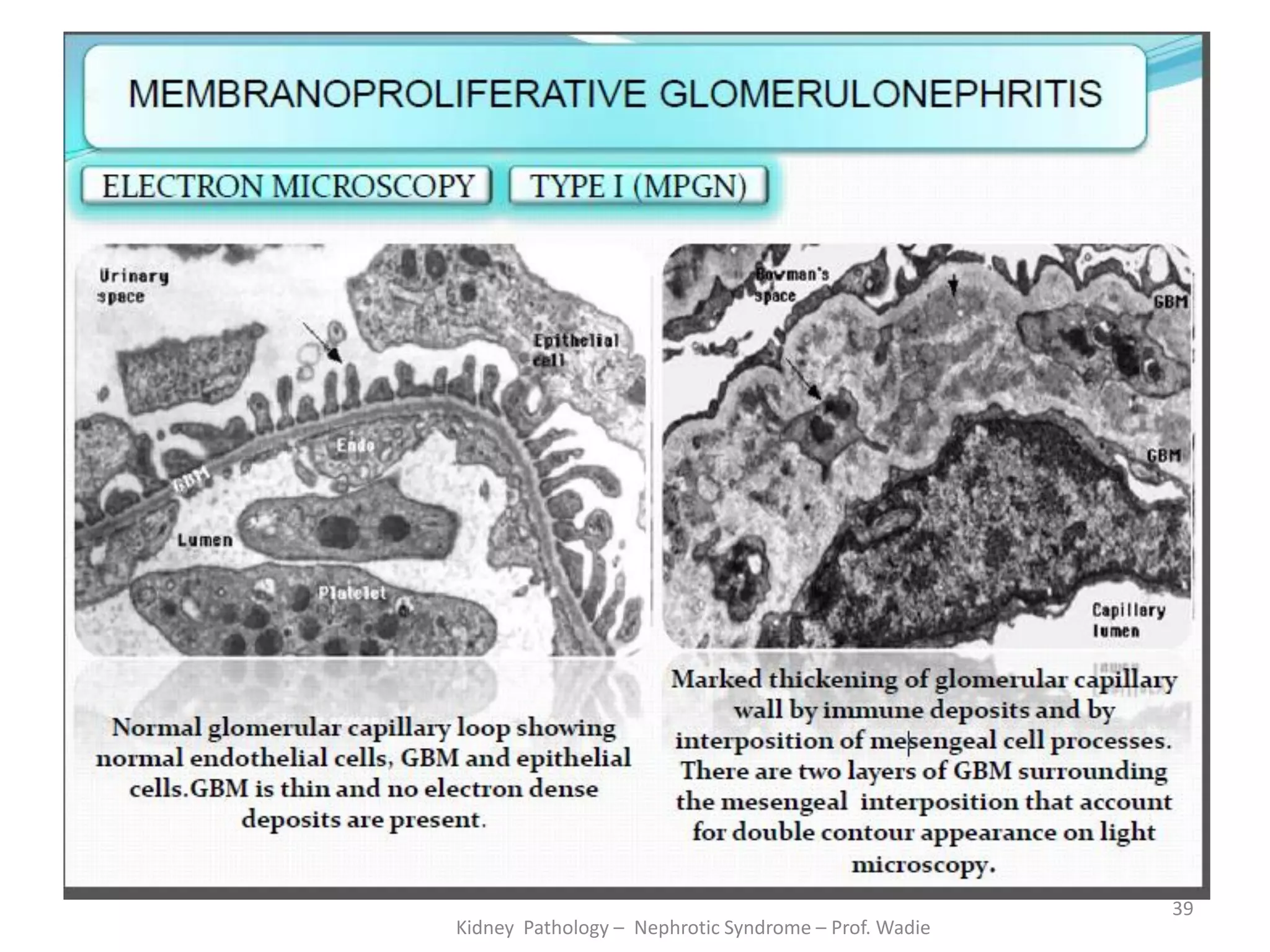
Membranoproliferative
Glomerulonephritis (MPGN)
• Also known as
mesagiocapillary GN.
• Accounts for 10% of nephrotic
syndrome cases.
• GBM changes, subendothelial
deposits, mesangial
proliferation and
• Leukocyte infiltrations.
MPGN
• MPGN can be idiopathic or 2º e.g SLE,
viral/bacterial infections.
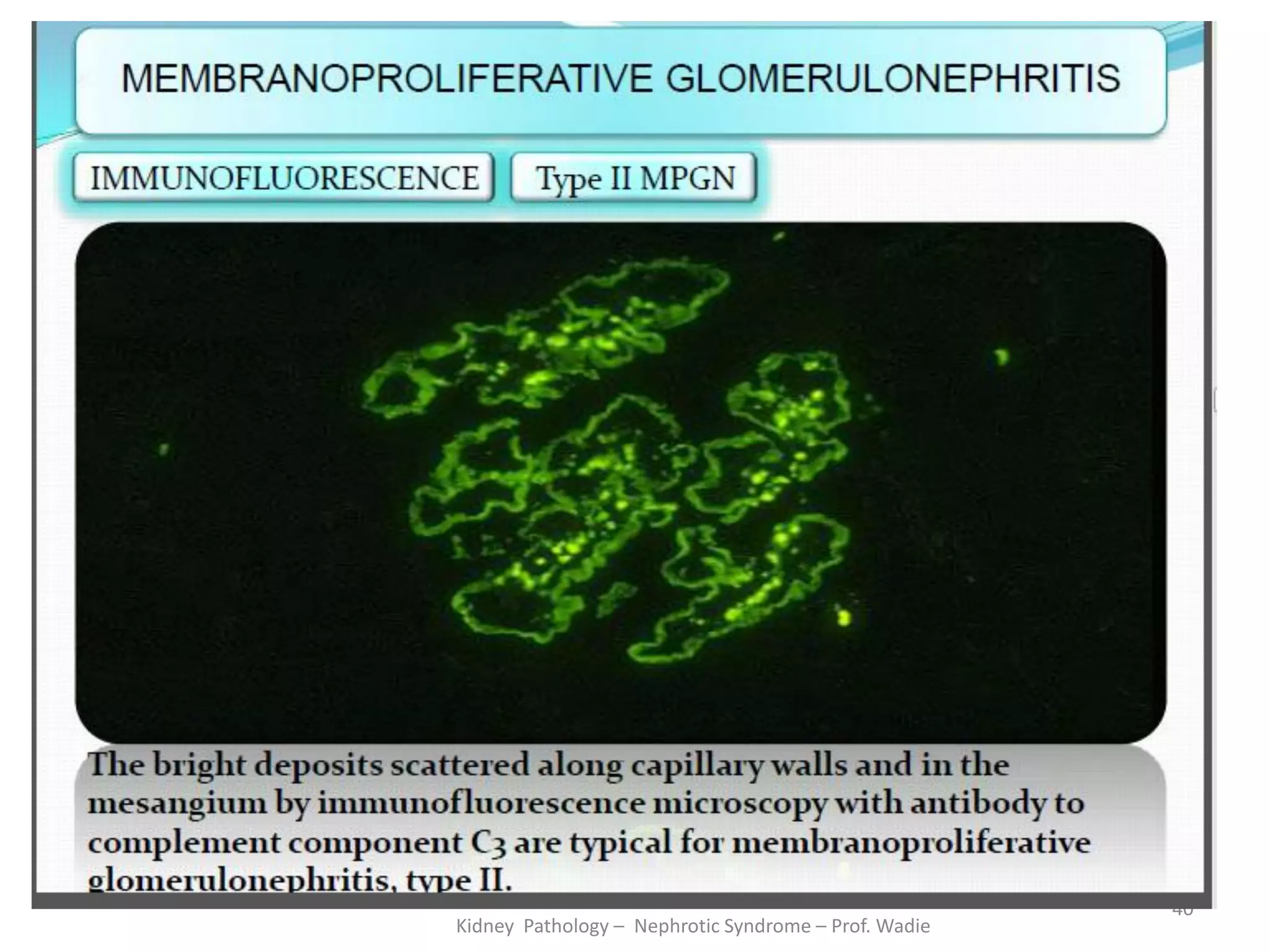
• There are 2 types:
1. Type I MPGN (80%): due to immune complex
deposition,
2. Type II MPGN: (dense deposit disease) due to
complement activation.
• MPGN is persistent and progresses to renal
failure.
Kidney Pathology – Nephrotic Syndrome – Prof. Wadie 36
Kidney Pathology – Nephrotic Syndrome – Prof. Wadie 37
Kidney Pathology – Nephrotic Syndrome – Prof. Wadie
38
Kidney Pathology – Nephrotic Syndrome – Prof. Wadie
39
Kidney Pathology – Nephrotic Syndrome – Prof. Wadie
40
Kidney Pathology – Nephrotic Syndrome – Prof. Wadie 41
Kidney Pathology – Nephrotic Syndrome – Prof. Wadie 42
Kidney Pathology – Nephrotic Syndrome – Prof. Wadie
43
Complications of nephrotic syndrome
• Infections
• Thrombosis
• Acute renal failure
• Chronic renal failure
• Steriod side effects.
Kidney Pathology – Nephrotic Syndrome – Prof. Wadie 44
Please
Have a careful look once again at
the following 2 repeated slides.
Kidney Pathology – Nephrotic Syndrome – Prof. Wadie 45
The nephrotic syndrome: pathogenesis/etiology, pathological and clinical manifestations
GBM= Glomerular basement membrane, GN= glomerulonephritis,, FSGS= focal segmental glomerulosclerosis, MCD= Minimal change
disease, MGN= Membranous glomerulonephritis, MPGN= Membranoproliferative glomerulonephritis
46
Abnormal immune
responses against GBM
DM, HIV, HBV, Chemicals, …
Protein loss in urine
Less protein in circulation
EdemaInfections/ thrombosis/RF Hyperlipidemia & lipiduria
Glomerunephritis
& GBM
Damage
MPGNFSGS
MGNMCD
ASSIGNMENT
• Can you write a comprehensive essay through
answering the following points:
1. Define the nephrotic syndrome and explain its
components, causes and pathogenesis.
2. Define and describe minimal change disease
3. Define and describe focal segmental
glomerulosclerosis.
4. Define and describe membraneous
glomerulonephritis.
5. Define and describe membranoproliferative GN.
6. List the complications of the nephrotic syndrome.
Kidney Pathology – Nephrotic Syndrome – Prof. Wadie
47
Quiz 1
Kidney Pathology – Nephrotic Syndrome – Prof. Wadie
48
• What is the cutoff for urine protein that
defines nephrotic syndrome in adults?
• Answer:
• > 3.5 g/24 hr
• 40 mg/m2/hr
• Urine protein: creatinine ratio of 2:1 or more.
• Early morning protein 3+/4+ on dipstick.
Quiz 2
• What is the level, in grams per dL, for serum
protein that is consistent with nephrotic
syndrome?
• Answer:
• Less than 2.5 g/dL
Kidney Pathology – Nephrotic Syndrome – Prof. Wadie
49
Quiz 3
• What is the difference between 1°
(primary) and 2° (secondary) nephrotic
syndromes?
• Answer:
• Primary - due to direct GBM and podocyte damage by
immune system;
• Secondary - damage occurs in the setting of a systemic
illness (eg, diabetes, SLE, HIV, amyloidosis,…)
Kidney Pathology – Nephrotic Syndrome – Prof. Wadie 50
Quiz 4
• Focal segmental glomerulosclerosis, minimal
change disease, membranous nephropathy:
are they 1° nephropathy, 2° nephropathy, or
both?
• Answer:
• All 3 may present as either a 1° or 2° disorder
Kidney Pathology – Nephrotic Syndrome – Prof. Wadie 51
Quiz 5
• The definition of nephrotic syndrome
includes:
A. Hypolipidemia
B. Lipiduria
C. 24 hour urine protein less than 2 grams.
D. hypertension
Kidney Pathology – Nephrotic Syndrome – Prof. Wadie 52
Quiz 6
• A patient exhibits diffuse edema. He voids 4 g
of protein per day and has hypoalbuminemia
and hyperlipidemia. What will glomerular
biopsy show?
• Answer:
• Podocyte disruption: loss of foot processes is a
hallmark of nephrotic syndrome
Kidney Pathology – Nephrotic Syndrome – Prof. Wadie 53
Quiz 7
• Give 5 examples of disorders that
present largely as nephrotic
syndrome.
• Answer:
• Focal segmental glomerulosclerosis,
membranous nephropathy, minimal
change disease, amyloidosis, and
diabetic glomerulonephropathy
Kidney Pathology – Nephrotic Syndrome – Prof. Wadie 54
Consider this illustration the major glomerular structures.
Demonstrate what morphological changes you expect to find in each
of the following glomerulopathies: MCD, FSGS, MGN, MPGN.
Hints: effacement, subendothelial/subepithelial deposits, proliferation, thickening, slerosis. 55
GBM
Capillary lumen
Mesangial
cell
Mesangial
cell
Further sources for learning
1. https://www.mayoclinic.org/diseases-
conditions/nephrotic-syndrome/symptoms-
causes/syc-20375608
2. https://glomcon.org/overview-of-gn/basic-principles-
of-renal-pathology-part-1/
3. https://www.kidneypathology.com/English_version/T
utorial_index.html
4. https://en.wikipedia.org/wiki/Kidney
5. https://en.wikipedia.org/wiki/Glomerulonephritis
6. http://www.pathwaymedicine.org/basic-glomerular-
pathogenesis
Kidney Pathology – Nephrotic Syndrome – Prof. Wadie 56
Thanks
Kidney Pathology – Nephrotic Syndrome – Prof. Wadie 57

Renal pathology the nephrotic syndrome- prof wadie

  • 1.
    Renal Pathology for medicalstudents The Nephrotic Syndrome Professor Wadie M Y Elmadhoun E-mail: wadie2222@yahoo.com Kidney Pathology – Nephrotic Syndrome – Prof. Wadie 1
  • 2.
    Presentation outlines 1. IntendedLearning outcomes (ILOs). 2. The nephrotic syndrome: definition, causes, clinical course and morphology of: 1. Minimal Change Disease. 2. Focal segmental glomerulosclerosis. 3. Membranous glomerulonephritis. 4. Membranoproliferative glomerulonephritis. 3. Complications of nephrotic syndrome. 5. Quizzes. 6. Further learning resources. Kidney Pathology – Nephrotic Syndrome – Prof. Wadie 2
  • 3.
    Intended Learning outcomes(ILOs) • By the end of studying this lecture, students should be able to: 1. Define the nephrotic syndrome and explain its components, causes and pathogenesis. 2. Define and describe minimal change disease 3. Define and describe focal segmental glomerulosclerosis. 4. Define and describe membranous glomerulonephritis. 5. Define and describe membranoproliferative GN 6. List the complications of the nephrotic syndrome Kidney Pathology – Nephrotic Syndrome – Prof. Wadie 3
  • 4.
    Definition of thenephrotic syndrome • A Manifestation of glomerular disease, characterized by • Heavy proteinuria leading to • hypoalbuminaemia , and • edema • With/without hyperlipidemia and lipiduria. Kidney Pathology – Nephrotic Syndrome – Prof. Wadie 4
  • 5.
    Overview of causesand pathogenesis • The causes of the NS are either: 1. Primary glomerular diseases (GN) or 2. Systemic diseases leading to glomerulopathy. • The main point in pathogenesis is: • Glomerular basement (GBM) damage by the immune system results in loss of proteins from circulation to urine. Kidney Pathology – Nephrotic Syndrome – Prof. Wadie 5
  • 6.
    Nephrotic Syndrome (NS) •Massive proteinuria: 3.5 g/24hrs in adults, • Hypoalbuminemia: below 2.5 g/dl. • Edema: peri-orbital, or generalized. Due to decreased oncotic pressure, leading to increased production of aldosterone. • Hyperlipidemia: due to excessive free lipids + increased hepatic production. • Lipiduria: leak due to GBM damage. Kidney Pathology – Nephrotic Syndrome – Prof. Wadie
  • 7.
    Kidney Pathology –Nephrotic Syndrome – Prof. Wadie 7
  • 8.
    Foamy, turbid urinein NS Kidney Pathology – Nephrotic Syndrome – Prof. Wadie 8
  • 9.
    Peri-orbital edema innephrotic syndrome Kidney Pathology – Nephrotic Syndrome – Prof. Wadie 9
  • 10.
    Leg edema: withand without nephrotic syndrome Kidney Pathology – Nephrotic Syndrome – Prof. Wadie 10
  • 11.
    Causes of thenephrotic syndrome • Primary glomerulonephritis: (idiopathic GN): 1. Minimal change disease (MCD). 2. Focal segmental glomerulosclerosis (FSGS). 3. Membranous glomerulonephritis (MGN). 4. Membranoproliferative glomerulonephritis (MpGN). • Secondary causes: • Diabetes, amyloid, SLE, drugs, HBV, HCV, malaria, syphilis, Cancer, heroin, …. Kidney Pathology – Nephrotic Syndrome – Prof. Wadie 11
  • 12.
    The nephrotic syndrome:pathogenesis/etiology, pathological and clinical manifestations GBM= Glomerular basement membrane, GN= glomerulonephritis,, FSGS= focal segmental glomerulosclerosis, MCD= Minimal change disease, MGN= Membranous glomerulonephritis, MPGN= Membranoproliferative glomerulonephritis 12 Abnormal immune responses against GBM DM, HIV, HBV, Chemicals, … Protein loss in urine Less protein in circulation EdemaInfections/ thrombosis/RF Hyperlipidemia & lipiduria Glomerunephritis & GBM Damage MPGNFSGS MGNMCD
  • 13.
    Minimal Change Disease(MCD) • Accounts for 80% of all cases of the nephrotic syndrome in children. About 10% in adults. • Light microscope: Normal glomeruli, no changes. • By electron microscope: loss of foot processes of podocytes (effacement). Kidney Pathology – Nephrotic Syndrome – Prof. Wadie 13
  • 14.
    Kidney Pathology –Nephrotic Syndrome – Prof. Wadie 14
  • 15.
    Kidney Pathology –Nephrotic Syndrome – Prof. Wadie 15
  • 16.
    Minimal Change Glom. (LipoidNephrosis) • most common cause of nephrotic syndrome in children • effacement of foot processes Kidney Pathology – Nephrotic Syndrome – Prof. Wadie
  • 17.
    Kidney Pathology –Nephrotic Syndrome – Prof. Wadie 17
  • 18.
    Kidney Pathology –Nephrotic Syndrome – Prof. Wadie 18
  • 19.
    Kidney Pathology –Nephrotic Syndrome – Prof. Wadie 19
  • 20.
    Kidney Pathology –Nephrotic Syndrome – Prof. Wadie 20
  • 21.
    Clinical course ofMinimal change disease • Starts insidiously in an otherwise healthy individual. • 90% respond to predinsolone. • Recurrent Proteinuria in 60% (steriod dependent). • Less than 5% develop chronic renal failure in 25 years. Kidney Pathology – Nephrotic Syndrome – Prof. Wadie 21
  • 22.
    Focal Segmental Glomerulo-sclerosis (FSGS) •Just like its name: - Focal: some, not all, glomeruli affected. - Segmental: only segments, not whole, glomerulus affected. - Glomerulo-SCLEROSIS: fibrosis (NOT –itis) • Is the Most common cause of ADULT nephrotic syndrome. • Associated with : HIV, Heroin,…
  • 23.
    Focal segmental glomerulosclerosis •FSGS constitutes 30-40% of nephrotic syndrome (NS) in adults. • and about 10% of NS in children. • May be due to immunoglobulins and complement immune responses. • Onset is insidious. • 50% develop renal failure in 10 years. Kidney Pathology – Nephrotic Syndrome – Prof. Wadie 23
  • 24.
    Kidney Pathology –Nephrotic Syndrome – Prof. Wadie 24
  • 25.
    Kidney Pathology –Nephrotic Syndrome – Prof. Wadie 25
  • 26.
    Kidney Pathology –Nephrotic Syndrome – Prof. Wadie 26
  • 27.
    Kidney Pathology –Nephrotic Syndrome – Prof. Wadie 27
  • 28.
    Kidney Pathology –Nephrotic Syndrome – Prof. Wadie 28
  • 29.
    Membranous Glomerulonephritis (MGN) • Causesabout 30% of nephrotic syndrome in adults, but only 5% of NS in children. • Associated with: Drugs, malignancies, SLE, Infections • There is subepithelial deposition of Ag-Ab complexes. • Indolent course. • About 60% will continue to have persistent proteinuria. • 10% to 40% go on to renal insufficiency in 10 years.
  • 30.
  • 31.
    Kidney Pathology –Nephrotic Syndrome – Prof. Wadie 31
  • 32.
    Kidney Pathology –Nephrotic Syndrome – Prof. Wadie 32
  • 33.
    Kidney Pathology –Nephrotic Syndrome – Prof. Wadie 33
  • 34.
    Kidney Pathology –Nephrotic Syndrome – Prof. Wadie 34
  • 35.
    Membranoproliferative Glomerulonephritis (MPGN) • Alsoknown as mesagiocapillary GN. • Accounts for 10% of nephrotic syndrome cases. • GBM changes, subendothelial deposits, mesangial proliferation and • Leukocyte infiltrations.
  • 36.
    MPGN • MPGN canbe idiopathic or 2º e.g SLE, viral/bacterial infections. • There are 2 types: 1. Type I MPGN (80%): due to immune complex deposition, 2. Type II MPGN: (dense deposit disease) due to complement activation. • MPGN is persistent and progresses to renal failure. Kidney Pathology – Nephrotic Syndrome – Prof. Wadie 36
  • 37.
    Kidney Pathology –Nephrotic Syndrome – Prof. Wadie 37
  • 38.
    Kidney Pathology –Nephrotic Syndrome – Prof. Wadie 38
  • 39.
    Kidney Pathology –Nephrotic Syndrome – Prof. Wadie 39
  • 40.
    Kidney Pathology –Nephrotic Syndrome – Prof. Wadie 40
  • 41.
    Kidney Pathology –Nephrotic Syndrome – Prof. Wadie 41
  • 42.
    Kidney Pathology –Nephrotic Syndrome – Prof. Wadie 42
  • 43.
    Kidney Pathology –Nephrotic Syndrome – Prof. Wadie 43
  • 44.
    Complications of nephroticsyndrome • Infections • Thrombosis • Acute renal failure • Chronic renal failure • Steriod side effects. Kidney Pathology – Nephrotic Syndrome – Prof. Wadie 44
  • 45.
    Please Have a carefullook once again at the following 2 repeated slides. Kidney Pathology – Nephrotic Syndrome – Prof. Wadie 45
  • 46.
    The nephrotic syndrome:pathogenesis/etiology, pathological and clinical manifestations GBM= Glomerular basement membrane, GN= glomerulonephritis,, FSGS= focal segmental glomerulosclerosis, MCD= Minimal change disease, MGN= Membranous glomerulonephritis, MPGN= Membranoproliferative glomerulonephritis 46 Abnormal immune responses against GBM DM, HIV, HBV, Chemicals, … Protein loss in urine Less protein in circulation EdemaInfections/ thrombosis/RF Hyperlipidemia & lipiduria Glomerunephritis & GBM Damage MPGNFSGS MGNMCD
  • 47.
    ASSIGNMENT • Can youwrite a comprehensive essay through answering the following points: 1. Define the nephrotic syndrome and explain its components, causes and pathogenesis. 2. Define and describe minimal change disease 3. Define and describe focal segmental glomerulosclerosis. 4. Define and describe membraneous glomerulonephritis. 5. Define and describe membranoproliferative GN. 6. List the complications of the nephrotic syndrome. Kidney Pathology – Nephrotic Syndrome – Prof. Wadie 47
  • 48.
    Quiz 1 Kidney Pathology– Nephrotic Syndrome – Prof. Wadie 48 • What is the cutoff for urine protein that defines nephrotic syndrome in adults? • Answer: • > 3.5 g/24 hr • 40 mg/m2/hr • Urine protein: creatinine ratio of 2:1 or more. • Early morning protein 3+/4+ on dipstick.
  • 49.
    Quiz 2 • Whatis the level, in grams per dL, for serum protein that is consistent with nephrotic syndrome? • Answer: • Less than 2.5 g/dL Kidney Pathology – Nephrotic Syndrome – Prof. Wadie 49
  • 50.
    Quiz 3 • Whatis the difference between 1° (primary) and 2° (secondary) nephrotic syndromes? • Answer: • Primary - due to direct GBM and podocyte damage by immune system; • Secondary - damage occurs in the setting of a systemic illness (eg, diabetes, SLE, HIV, amyloidosis,…) Kidney Pathology – Nephrotic Syndrome – Prof. Wadie 50
  • 51.
    Quiz 4 • Focalsegmental glomerulosclerosis, minimal change disease, membranous nephropathy: are they 1° nephropathy, 2° nephropathy, or both? • Answer: • All 3 may present as either a 1° or 2° disorder Kidney Pathology – Nephrotic Syndrome – Prof. Wadie 51
  • 52.
    Quiz 5 • Thedefinition of nephrotic syndrome includes: A. Hypolipidemia B. Lipiduria C. 24 hour urine protein less than 2 grams. D. hypertension Kidney Pathology – Nephrotic Syndrome – Prof. Wadie 52
  • 53.
    Quiz 6 • Apatient exhibits diffuse edema. He voids 4 g of protein per day and has hypoalbuminemia and hyperlipidemia. What will glomerular biopsy show? • Answer: • Podocyte disruption: loss of foot processes is a hallmark of nephrotic syndrome Kidney Pathology – Nephrotic Syndrome – Prof. Wadie 53
  • 54.
    Quiz 7 • Give5 examples of disorders that present largely as nephrotic syndrome. • Answer: • Focal segmental glomerulosclerosis, membranous nephropathy, minimal change disease, amyloidosis, and diabetic glomerulonephropathy Kidney Pathology – Nephrotic Syndrome – Prof. Wadie 54
  • 55.
    Consider this illustrationthe major glomerular structures. Demonstrate what morphological changes you expect to find in each of the following glomerulopathies: MCD, FSGS, MGN, MPGN. Hints: effacement, subendothelial/subepithelial deposits, proliferation, thickening, slerosis. 55 GBM Capillary lumen Mesangial cell Mesangial cell
  • 56.
    Further sources forlearning 1. https://www.mayoclinic.org/diseases- conditions/nephrotic-syndrome/symptoms- causes/syc-20375608 2. https://glomcon.org/overview-of-gn/basic-principles- of-renal-pathology-part-1/ 3. https://www.kidneypathology.com/English_version/T utorial_index.html 4. https://en.wikipedia.org/wiki/Kidney 5. https://en.wikipedia.org/wiki/Glomerulonephritis 6. http://www.pathwaymedicine.org/basic-glomerular- pathogenesis Kidney Pathology – Nephrotic Syndrome – Prof. Wadie 56
  • 57.
    Thanks Kidney Pathology –Nephrotic Syndrome – Prof. Wadie 57