POLITEKNIK SULTAN SALAHUDDIN
ABDUL AZIZ SHAH
SHAH ALAM
CC203 CONCRETE TECHNOLOGY
ASSIGNMENT
REINFORCEMENT
Concrete is about 90%
weaker in tension than it
is in compression

Steel has high tensile strength,
has the same thermal expansion
as concrete, and bonds well with
concrete
REINFORCED CONCRETE
• Reinforced concrete is a strong
durable building material that can
be formed into many varied shapes
and sizes.
• Its utility and versatility are achieved
by combining the best features of
concrete and steel.
PROPERTIES OF
REINFORCED
CONCRETE

• The tensile strength is only about 10 per cent of the compressive
strength.
• Reinforced concrete structures are designed on the assumption
that the concrete does not resist any tensile forces.
• Reinforcement is designed to carry these tensile forces, which
are transferred by bond between the interface of the two
materials.
• If this bond is not adequate, the reinforcing bars will just slip
within the concrete and there will not be a composite action.
• Concrete must be well compacted around the reinforcement
during construction.
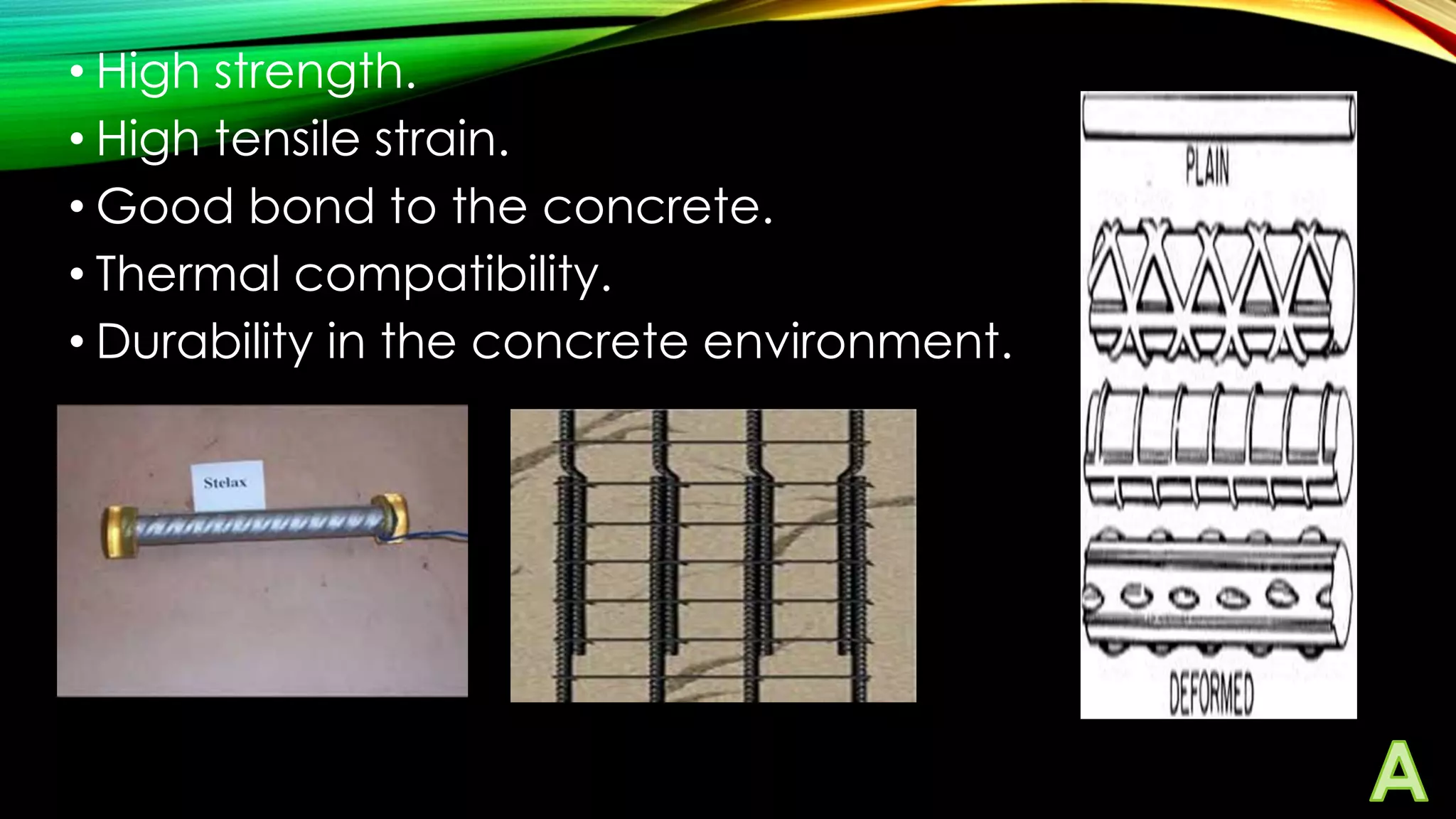
• In addition, some bars are ribbed or twisted so that there is an
extra mechanical grip.
• High strength.
• High tensile strain.
• Good bond to the concrete.
• Thermal compatibility.
• Durability in the concrete environment.
THE POSITION OF
REINFORCEMENT BAR
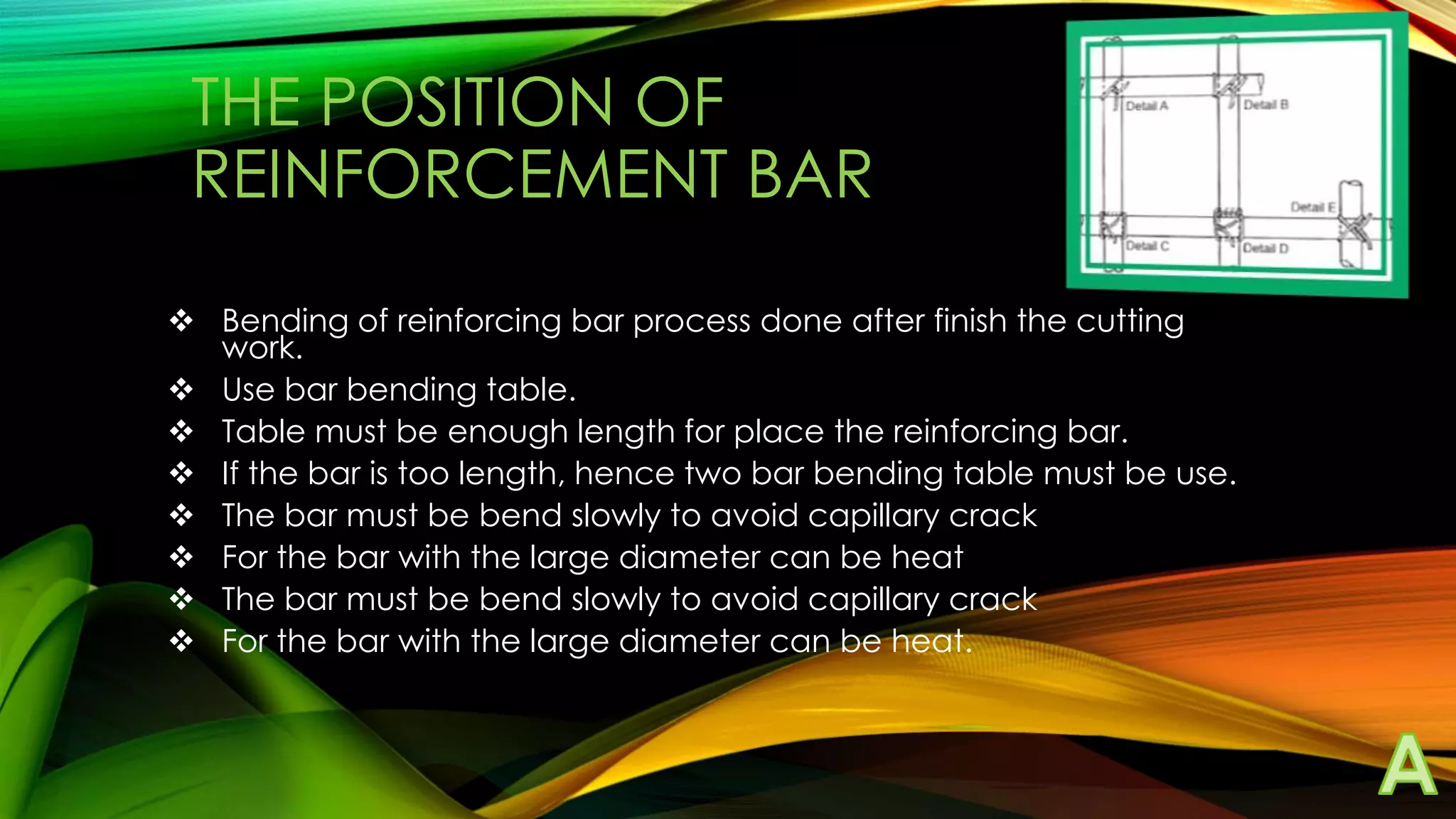
 Bending of reinforcing bar process done after finish the cutting
work.
 Use bar bending table.
 Table must be enough length for place the reinforcing bar.
 If the bar is too length, hence two bar bending table must be use.
 The bar must be bend slowly to avoid capillary crack
 For the bar with the large diameter can be heat
 The bar must be bend slowly to avoid capillary crack
 For the bar with the large diameter can be heat.
BENDING METHOD FOR REINFORCED BAR

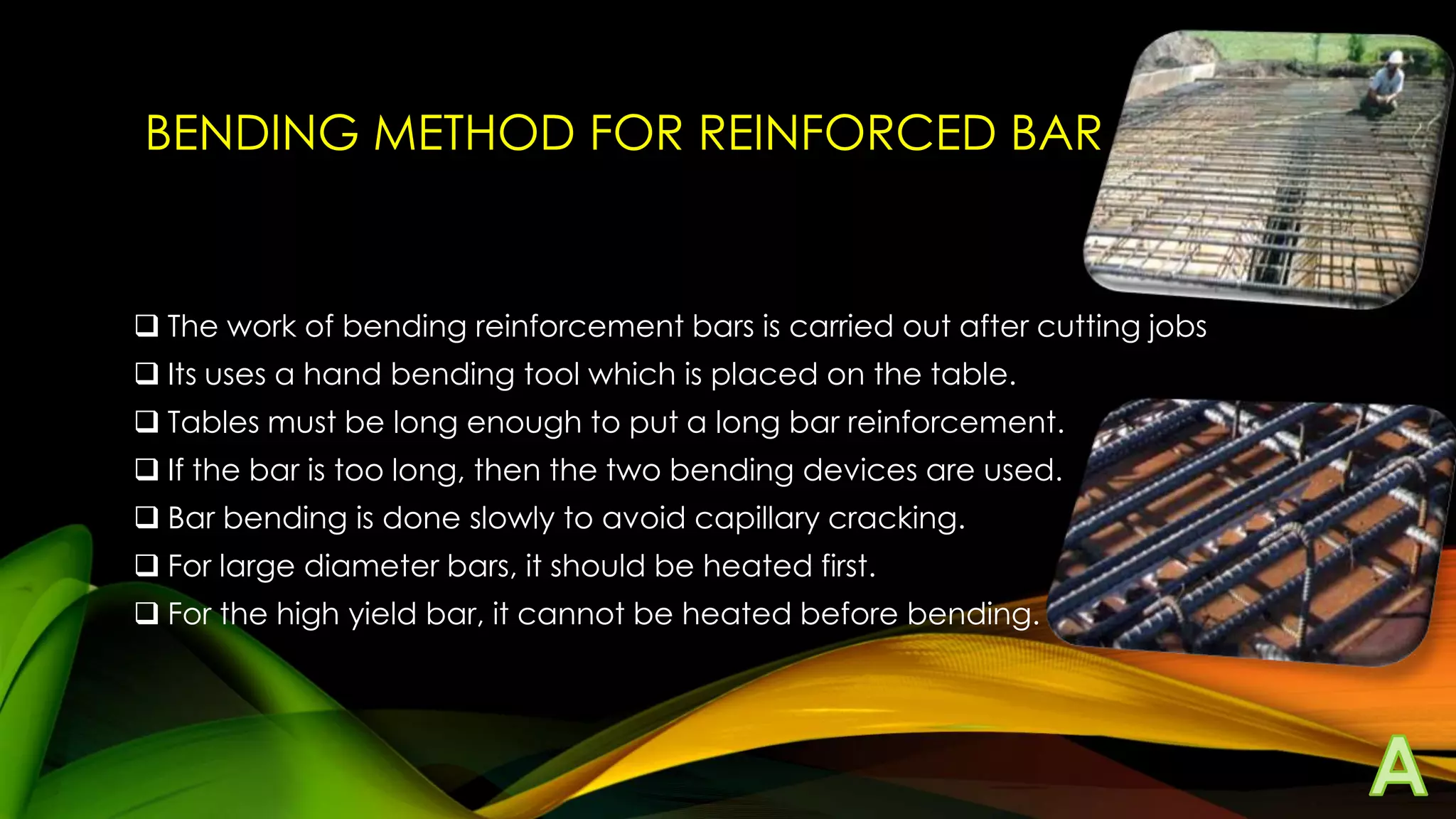
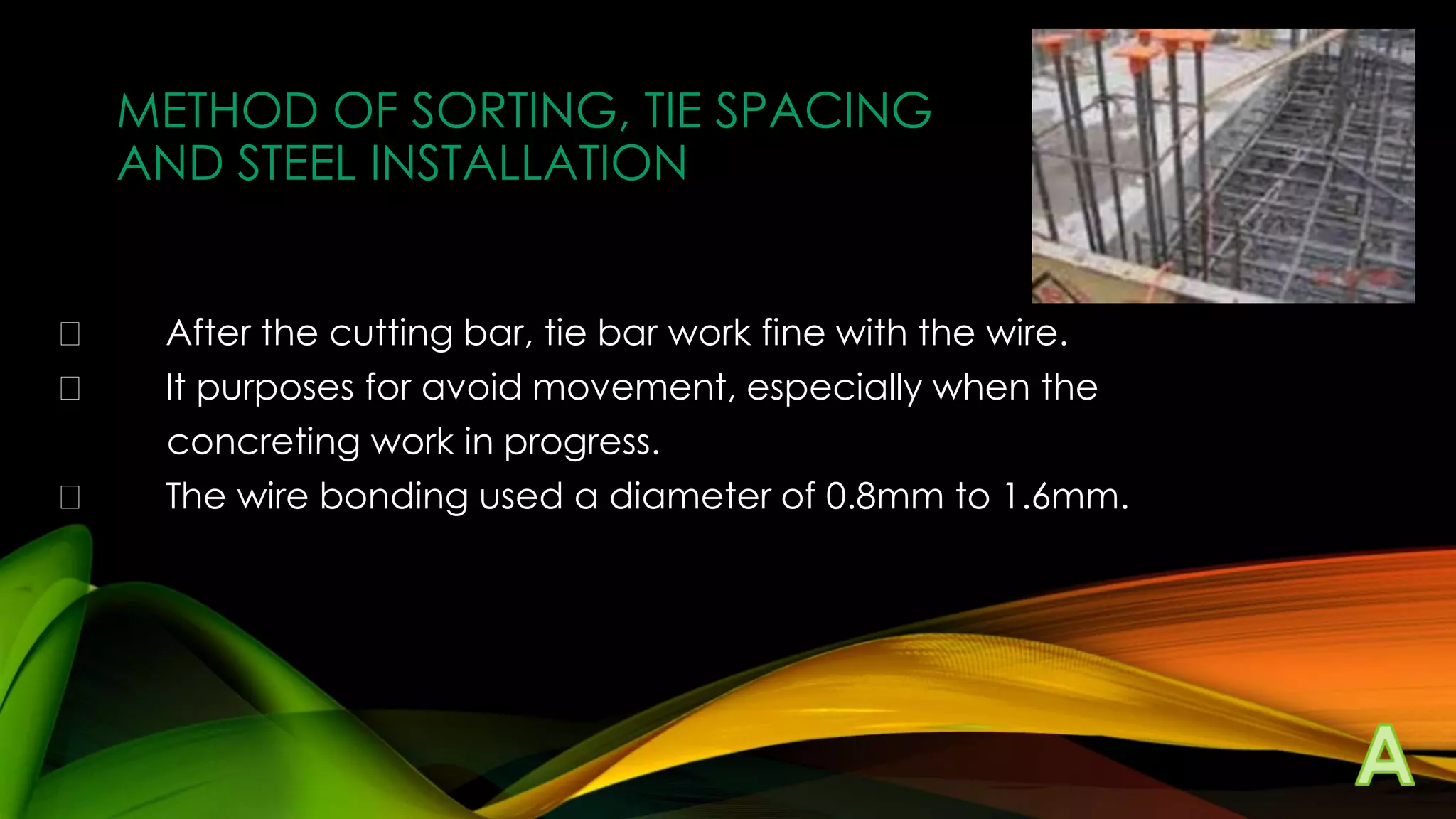
 The work of bending reinforcement bars is carried out after cutting jobs
 Its uses a hand bending tool which is placed on the table.
 Tables must be long enough to put a long bar reinforcement.
 If the bar is too long, then the two bending devices are used.
 Bar bending is done slowly to avoid capillary cracking.
 For large diameter bars, it should be heated first.
 For the high yield bar, it cannot be heated before bending.
METHOD OF SORTING, TIE SPACING
AND STEEL INSTALLATION




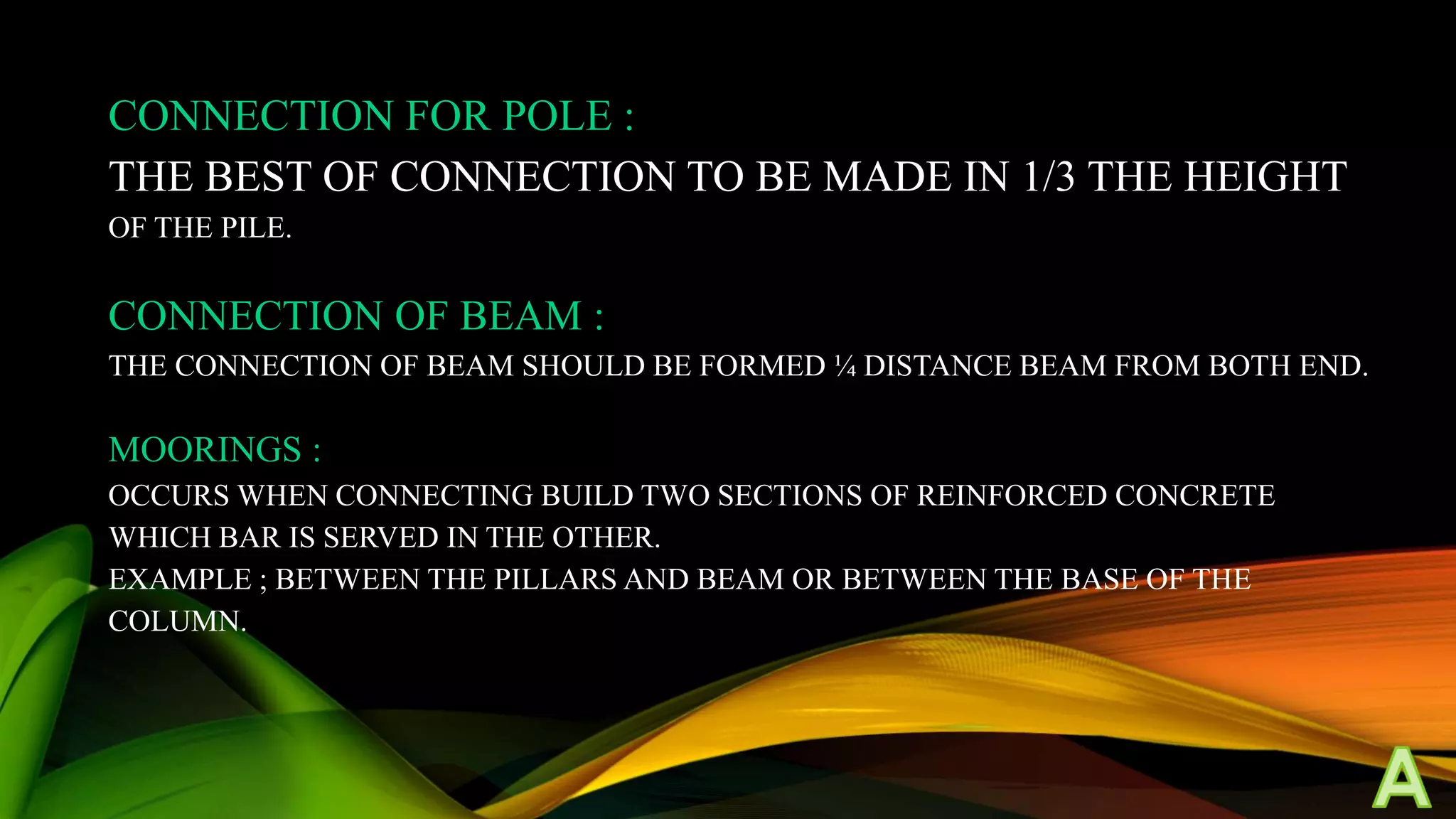
After the cutting bar, tie bar work fine with the wire.
It purposes for avoid movement, especially when the
concreting work in progress.
The wire bonding used a diameter of 0.8mm to 1.6mm.
CONNECTION METHOD

 Lap joint
 Butt joint
 Fillet joint
CONNECTION FOR POLE :
THE BEST OF CONNECTION TO BE MADE IN 1/3 THE HEIGHT
OF THE PILE.

CONNECTION OF BEAM :
THE CONNECTION OF BEAM SHOULD BE FORMED ¼ DISTANCE BEAM FROM BOTH END.

MOORINGS :
OCCURS WHEN CONNECTING BUILD TWO SECTIONS OF REINFORCED CONCRETE
WHICH BAR IS SERVED IN THE OTHER.
EXAMPLE ; BETWEEN THE PILLARS AND BEAM OR BETWEEN THE BASE OF THE
COLUMN.
TYPE OF
REINFORCEMENT
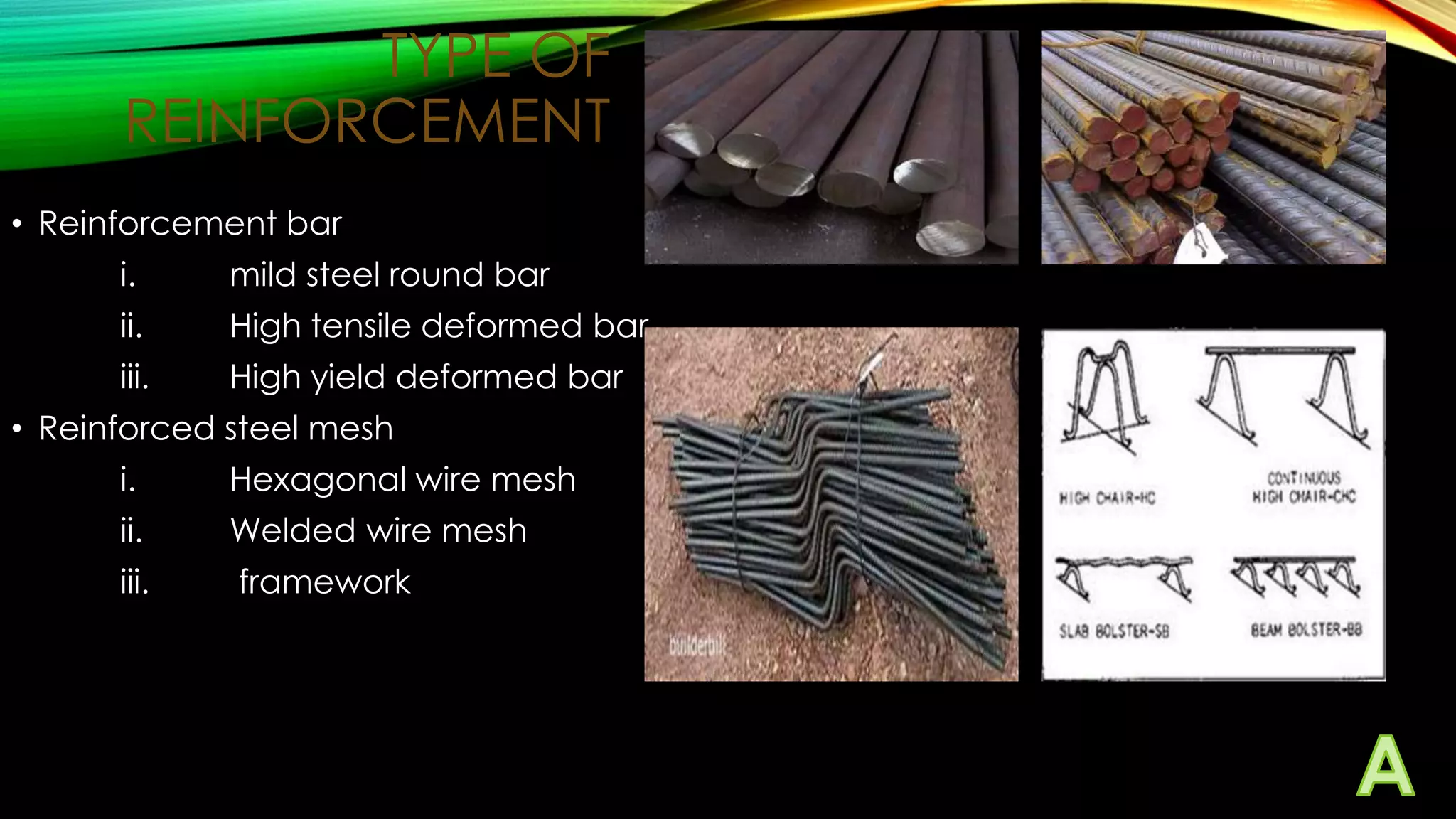
• Reinforcement bar
i.

mild steel round bar

ii.

High tensile deformed bar

iii.

High yield deformed bar

• Reinforced steel mesh
i.

Hexagonal wire mesh

ii.

Welded wire mesh

iii.

framework
RELATE THE BINDING SPACING IN
REINFORCEMENT INSTALLATION
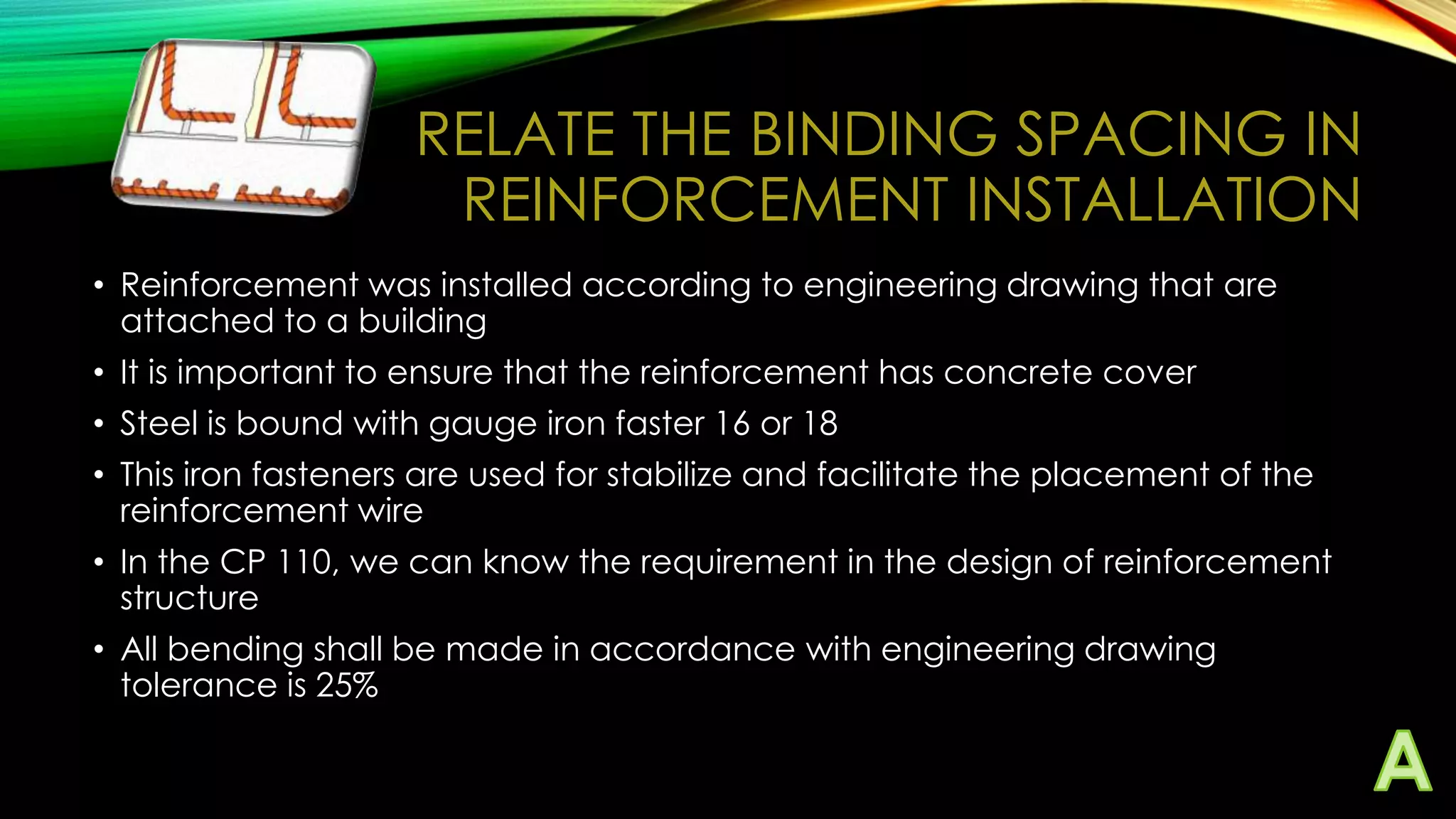
• Reinforcement was installed according to engineering drawing that are
attached to a building
• It is important to ensure that the reinforcement has concrete cover
• Steel is bound with gauge iron faster 16 or 18

• This iron fasteners are used for stabilize and facilitate the placement of the
reinforcement wire
• In the CP 110, we can know the requirement in the design of reinforcement
structure
• All bending shall be made in accordance with engineering drawing
tolerance is 25%
• 

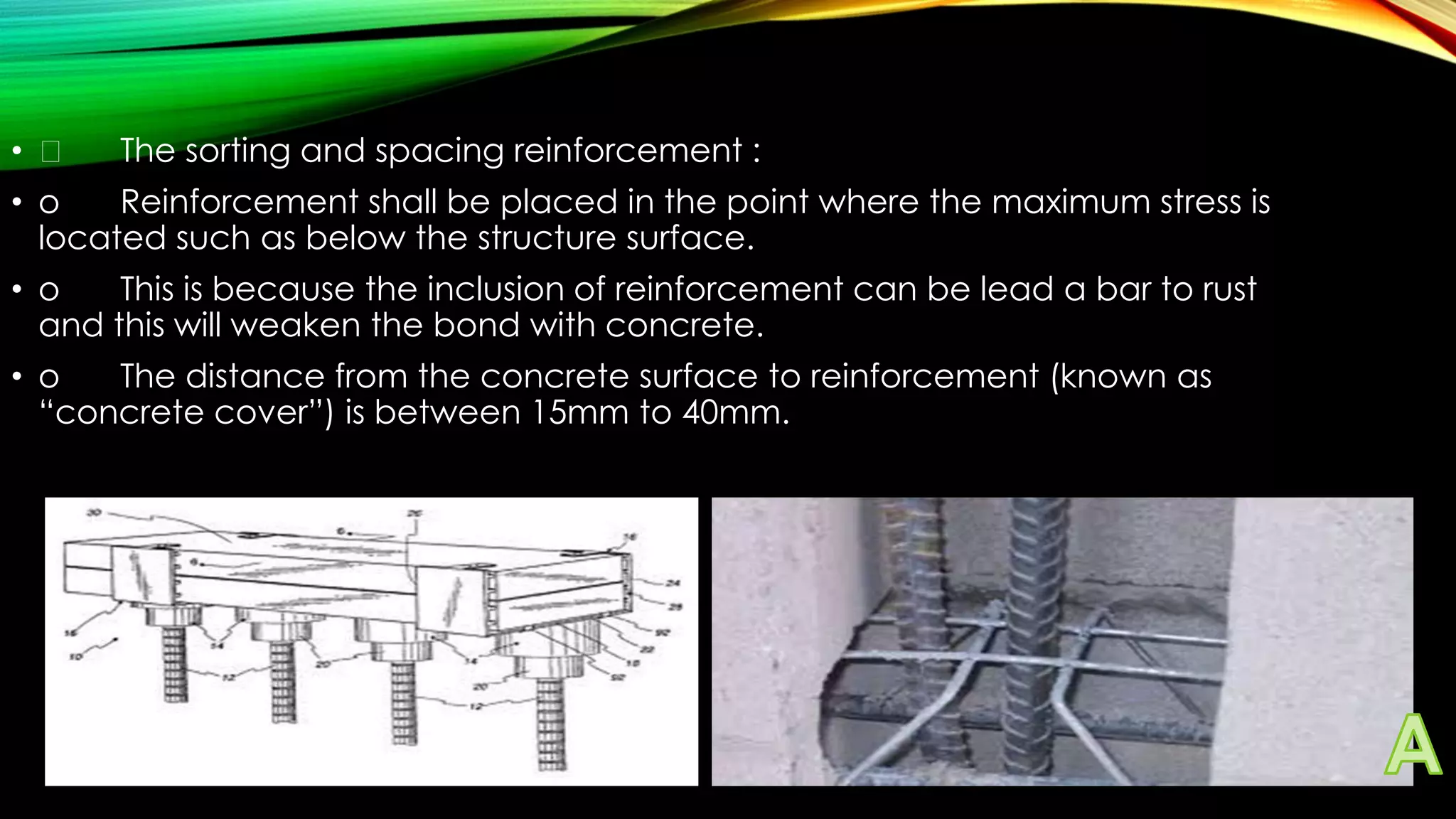
The sorting and spacing reinforcement :

• o
Reinforcement shall be placed in the point where the maximum stress is
located such as below the structure surface.

• o
This is because the inclusion of reinforcement can be lead a bar to rust
and this will weaken the bond with concrete.
• o
The distance from the concrete surface to reinforcement (known as
“concrete cover”) is between 15mm to 40mm.

Reinforcement ppt assignment

  • 1.
    POLITEKNIK SULTAN SALAHUDDIN ABDULAZIZ SHAH SHAH ALAM CC203 CONCRETE TECHNOLOGY ASSIGNMENT
  • 2.
    REINFORCEMENT Concrete is about90% weaker in tension than it is in compression Steel has high tensile strength, has the same thermal expansion as concrete, and bonds well with concrete
  • 3.
    REINFORCED CONCRETE • Reinforcedconcrete is a strong durable building material that can be formed into many varied shapes and sizes. • Its utility and versatility are achieved by combining the best features of concrete and steel.
  • 4.
    PROPERTIES OF REINFORCED CONCRETE • Thetensile strength is only about 10 per cent of the compressive strength. • Reinforced concrete structures are designed on the assumption that the concrete does not resist any tensile forces. • Reinforcement is designed to carry these tensile forces, which are transferred by bond between the interface of the two materials. • If this bond is not adequate, the reinforcing bars will just slip within the concrete and there will not be a composite action. • Concrete must be well compacted around the reinforcement during construction. • In addition, some bars are ribbed or twisted so that there is an extra mechanical grip.
  • 5.
    • High strength. •High tensile strain. • Good bond to the concrete. • Thermal compatibility. • Durability in the concrete environment.
  • 6.
    THE POSITION OF REINFORCEMENTBAR  Bending of reinforcing bar process done after finish the cutting work.  Use bar bending table.  Table must be enough length for place the reinforcing bar.  If the bar is too length, hence two bar bending table must be use.  The bar must be bend slowly to avoid capillary crack  For the bar with the large diameter can be heat  The bar must be bend slowly to avoid capillary crack  For the bar with the large diameter can be heat.
  • 7.
    BENDING METHOD FORREINFORCED BAR  The work of bending reinforcement bars is carried out after cutting jobs  Its uses a hand bending tool which is placed on the table.  Tables must be long enough to put a long bar reinforcement.  If the bar is too long, then the two bending devices are used.  Bar bending is done slowly to avoid capillary cracking.  For large diameter bars, it should be heated first.  For the high yield bar, it cannot be heated before bending.
  • 8.
    METHOD OF SORTING,TIE SPACING AND STEEL INSTALLATION    After the cutting bar, tie bar work fine with the wire. It purposes for avoid movement, especially when the concreting work in progress. The wire bonding used a diameter of 0.8mm to 1.6mm.
  • 9.
    CONNECTION METHOD  Lapjoint  Butt joint  Fillet joint
  • 10.
    CONNECTION FOR POLE: THE BEST OF CONNECTION TO BE MADE IN 1/3 THE HEIGHT OF THE PILE. CONNECTION OF BEAM : THE CONNECTION OF BEAM SHOULD BE FORMED ¼ DISTANCE BEAM FROM BOTH END. MOORINGS : OCCURS WHEN CONNECTING BUILD TWO SECTIONS OF REINFORCED CONCRETE WHICH BAR IS SERVED IN THE OTHER. EXAMPLE ; BETWEEN THE PILLARS AND BEAM OR BETWEEN THE BASE OF THE COLUMN.
  • 11.
    TYPE OF REINFORCEMENT • Reinforcementbar i. mild steel round bar ii. High tensile deformed bar iii. High yield deformed bar • Reinforced steel mesh i. Hexagonal wire mesh ii. Welded wire mesh iii. framework
  • 12.
    RELATE THE BINDINGSPACING IN REINFORCEMENT INSTALLATION • Reinforcement was installed according to engineering drawing that are attached to a building • It is important to ensure that the reinforcement has concrete cover • Steel is bound with gauge iron faster 16 or 18 • This iron fasteners are used for stabilize and facilitate the placement of the reinforcement wire • In the CP 110, we can know the requirement in the design of reinforcement structure • All bending shall be made in accordance with engineering drawing tolerance is 25%
  • 13.
    •  The sortingand spacing reinforcement : • o Reinforcement shall be placed in the point where the maximum stress is located such as below the structure surface. • o This is because the inclusion of reinforcement can be lead a bar to rust and this will weaken the bond with concrete. • o The distance from the concrete surface to reinforcement (known as “concrete cover”) is between 15mm to 40mm.