Verbs in English
Regular and Irregular
Past form of the verbs!
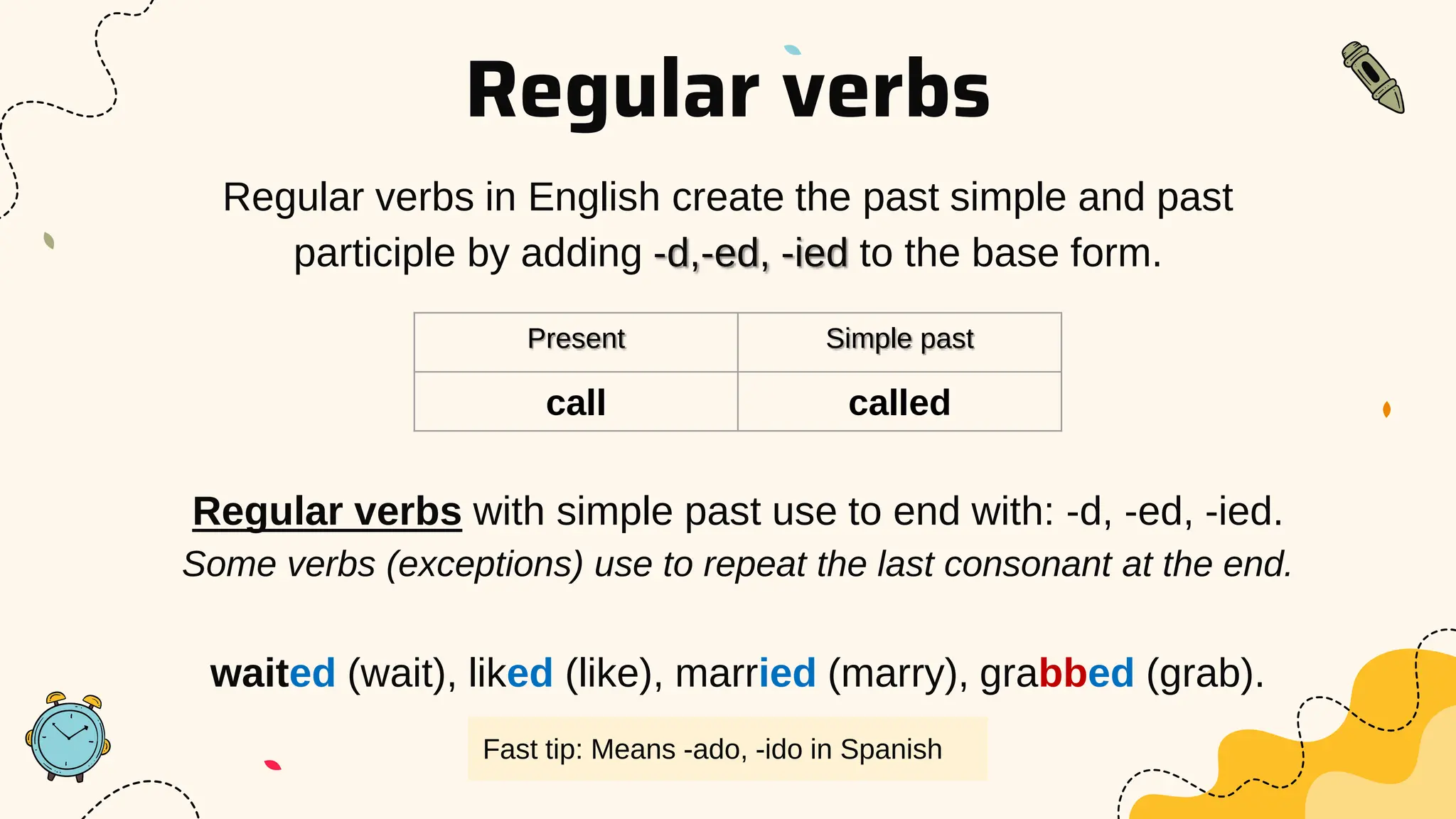
Regular verbs
Regular verbs in English create the past simple and past
participle by adding -d,-ed, -ied to the base form.
Present Simple past
call called
Regular verbs with simple past use to end with: -d, -ed, -ied.
Some verbs (exceptions) use to repeat the last consonant at the end.
waited (wait), liked (like), married (marry), grabbed (grab).
Fast tip: Means -ado, -ido in Spanish
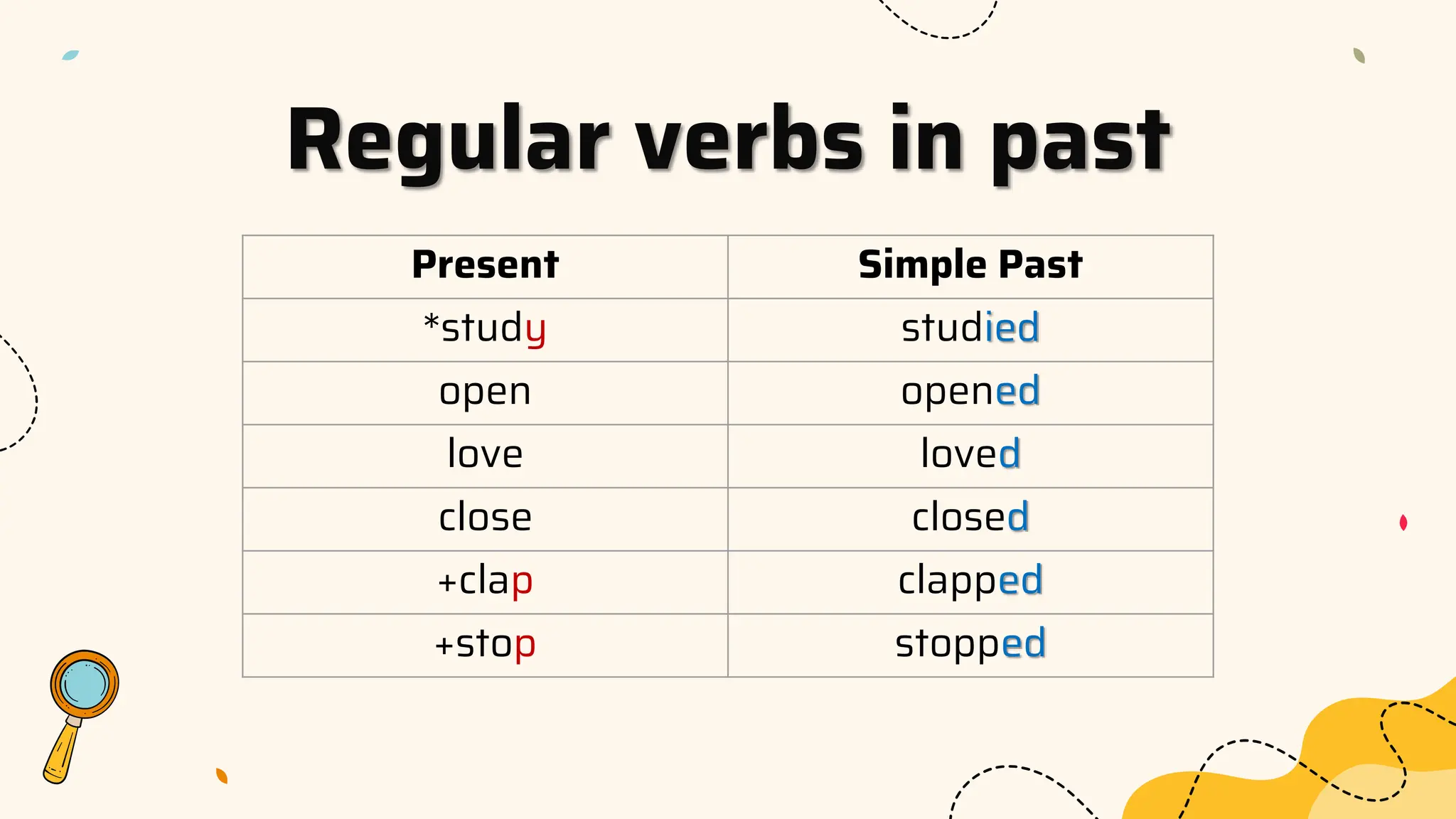
Regular verbs in past
Present Simple Past
*study studied
open opened
love loved
close closed
+clap clapped
+stop stopped
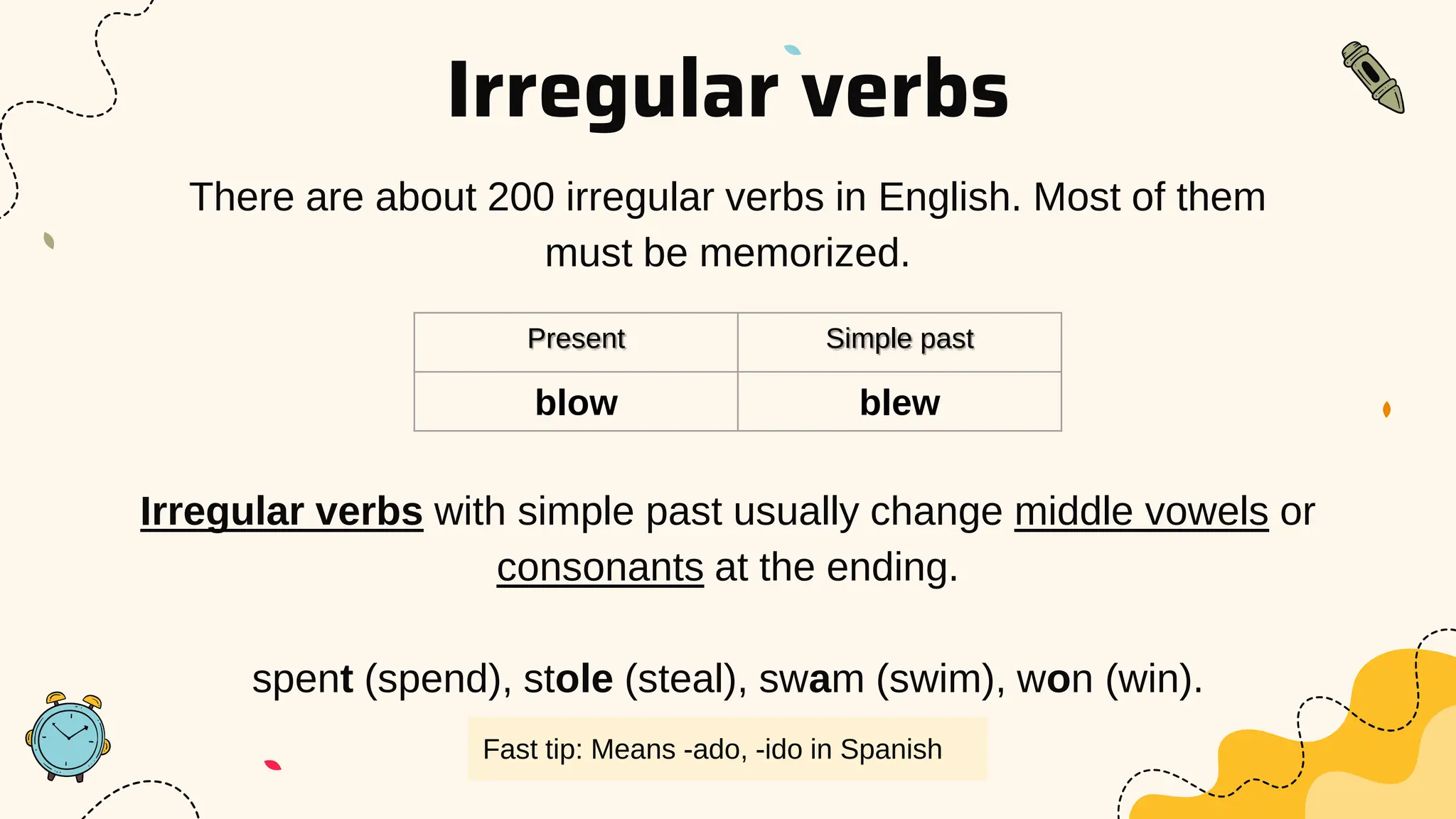
Irregular verbs
There are about 200 irregular verbs in English. Most of them
must be memorized.
Present Simple past
blow blew
Irregular verbs with simple past usually change middle vowels or
consonants at the ending.
spent (spend), stole (steal), swam (swim), won (win).
Fast tip: Means -ado, -ido in Spanish
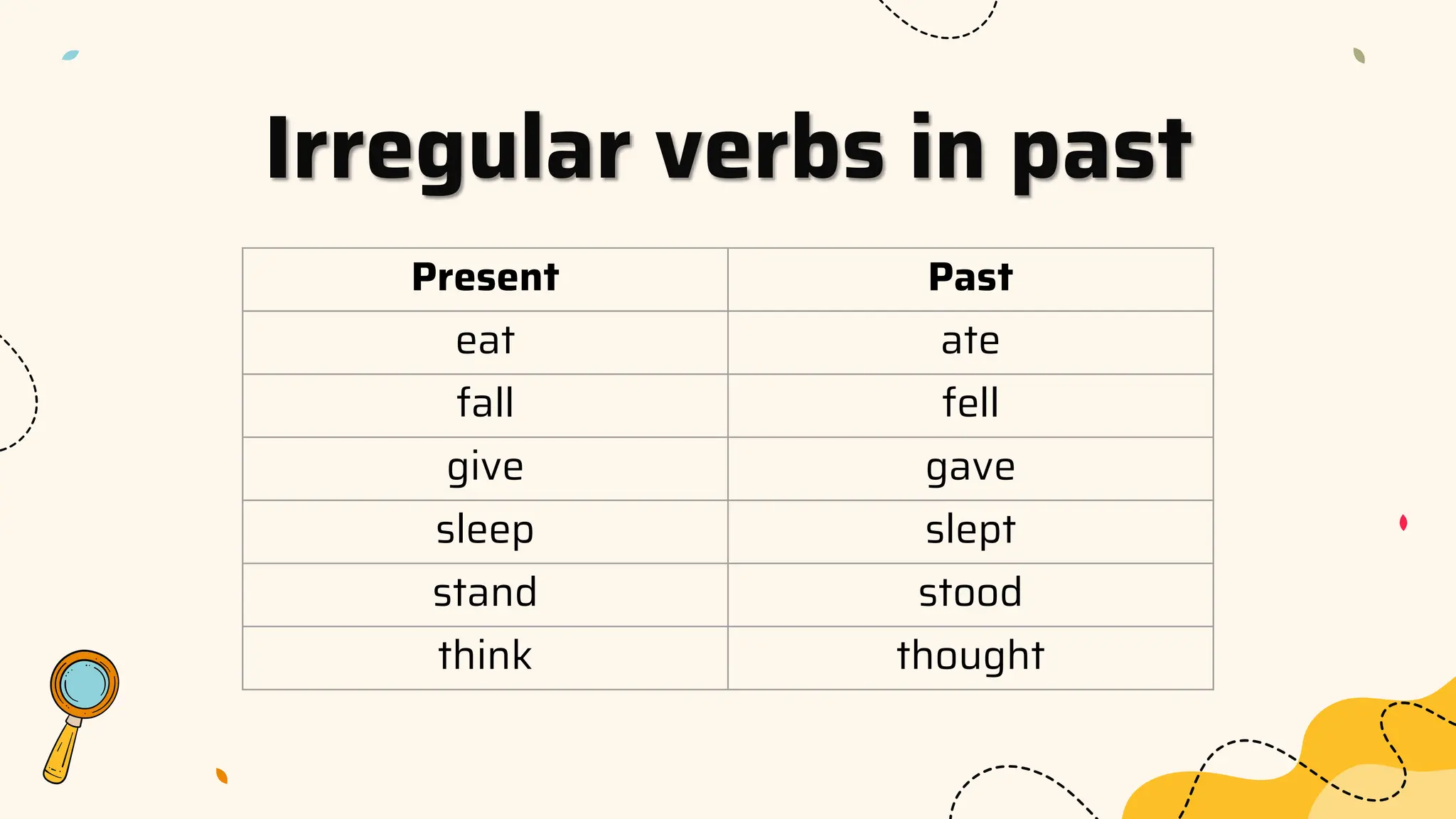
Irregular verbs in past
Present Past
eat ate
fall fell
give gave
sleep slept
stand stood
think thought
Activity time!
Classify correctly regulars and
irregulars verbs
Match with lines correctly!
close
play
call
sleep
eat
win
won
ate
slept
called
played
closed
Participle in English
Past and present
Includes regular and irregular verbs
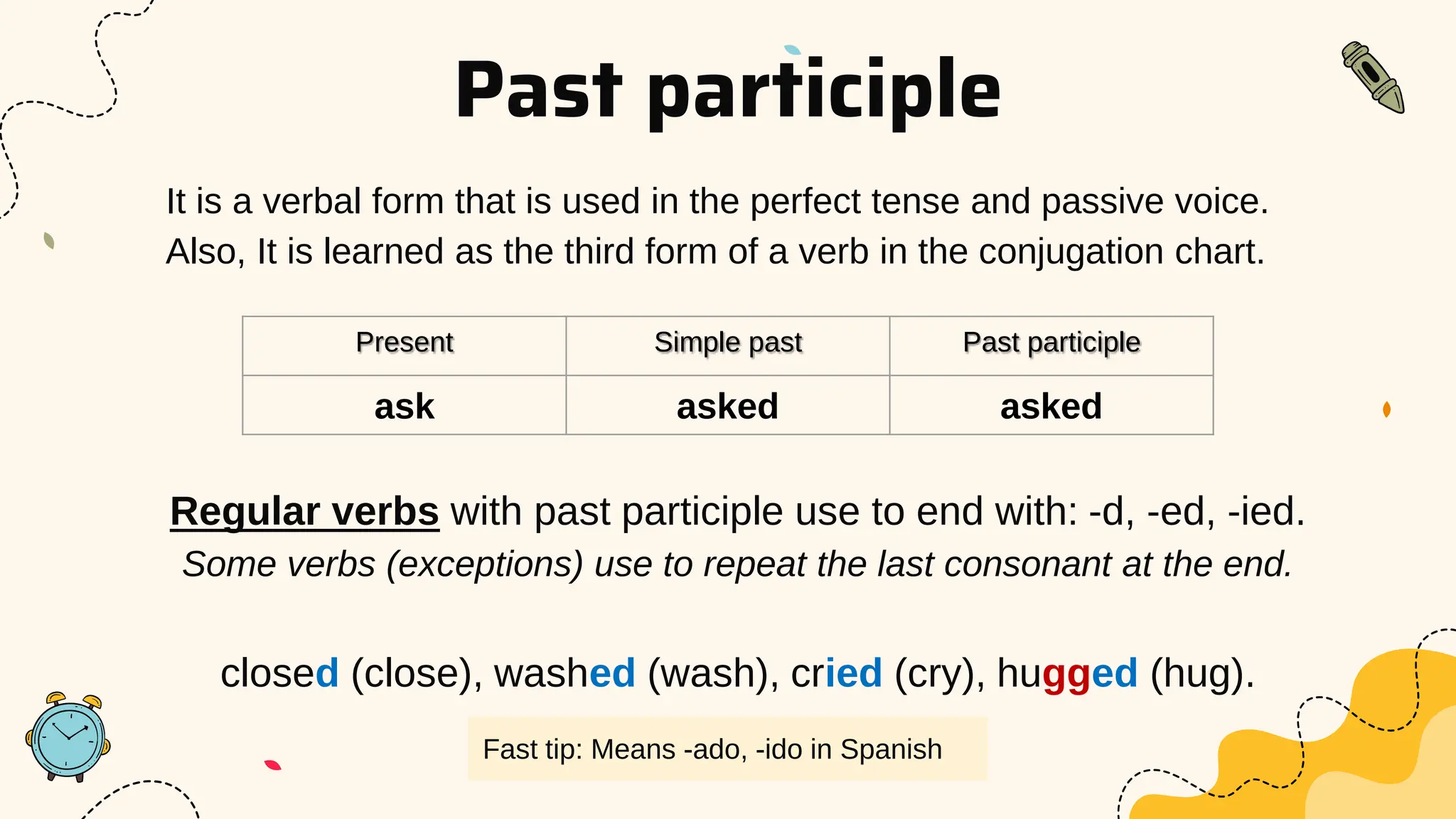
Past participle
It is a verbal form that is used in the perfect tense and passive voice.
Also, It is learned as the third form of a verb in the conjugation chart.
Present Simple past Past participle
ask asked asked
Regular verbs with past participle use to end with: -d, -ed, -ied.
Some verbs (exceptions) use to repeat the last consonant at the end.
closed (close), washed (wash), cried (cry), hugged (hug).
Fast tip: Means -ado, -ido in Spanish
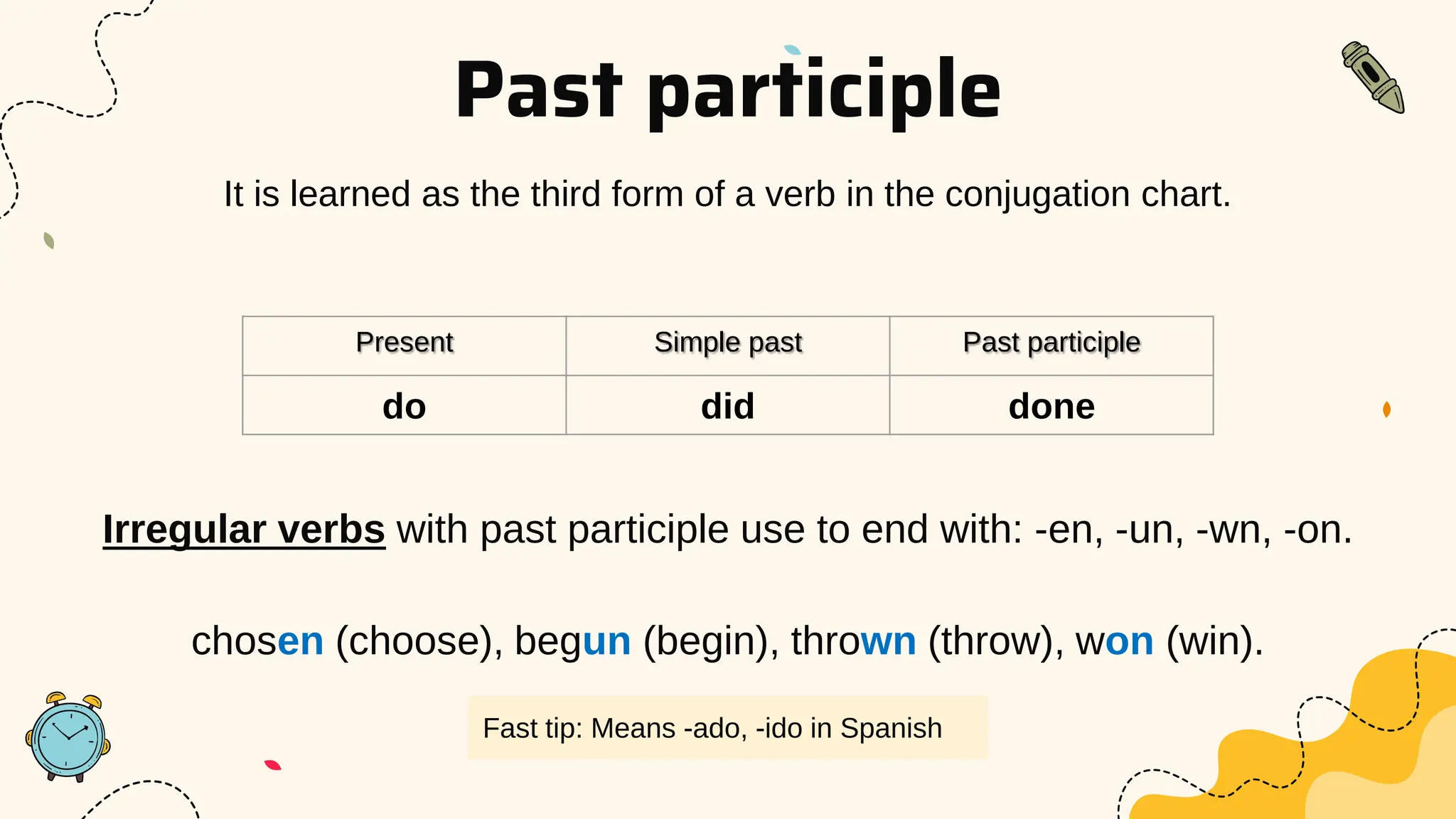
Past participle
It is learned as the third form of a verb in the conjugation chart.
Present Simple past Past participle
do did done
Irregular verbs with past participle use to end with: -en, -un, -wn, -on.
chosen (choose), begun (begin), thrown (throw), won (win).
Fast tip: Means -ado, -ido in Spanish
Past participle
Present Past participle
regular verbs
Present Past participle
irregular verbs
talk talked be been
start started drink drunk
clean cleaned do done
help helped eat eaten
cook cooked see seen
look looked take taken
visit visited write written
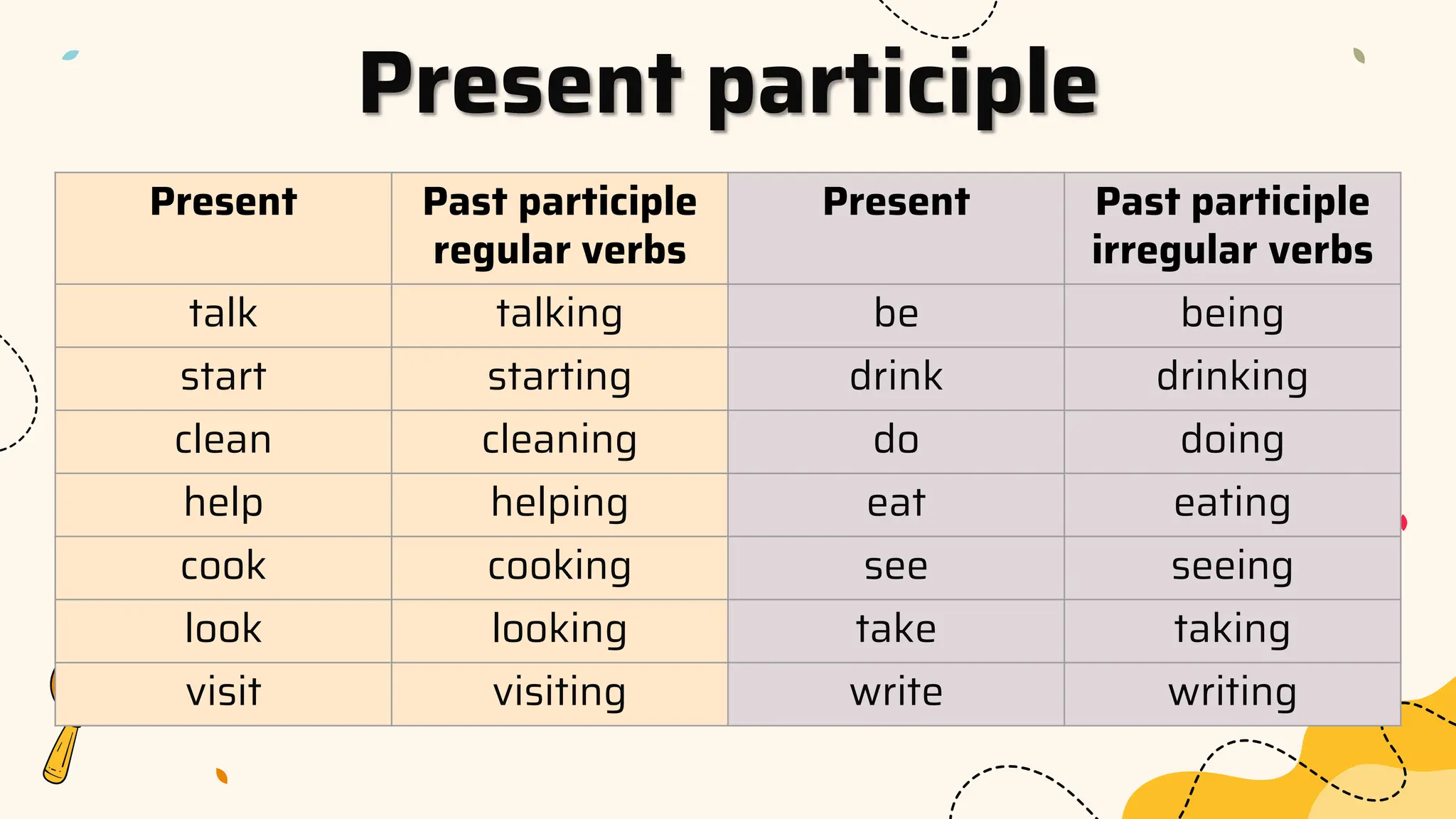
Present participle
It is a verb form that is used to form progressive tenses with things
that are happening at that moment.
Present Present participle Present Present participle
play playing run running
Regular and irregular verbs with present participle use to end
with: -ing.
calling (call), taking (take), learning (learn), drinking (drink).
Fast tip: Means -ando, -endo in Spanish
Present participle
Present Past participle
regular verbs
Present Past participle
irregular verbs
talk talking be being
start starting drink drinking
clean cleaning do doing
help helping eat eating
cook cooking see seeing
look looking take taking
visit visiting write writing

REGULAR AND IRREGULAR VERBS - PAST PRESENT PARTICIPLE.pptx

  • 1.
    Verbs in English Regularand Irregular Past form of the verbs!
  • 2.
    Regular verbs Regular verbsin English create the past simple and past participle by adding -d,-ed, -ied to the base form. Present Simple past call called Regular verbs with simple past use to end with: -d, -ed, -ied. Some verbs (exceptions) use to repeat the last consonant at the end. waited (wait), liked (like), married (marry), grabbed (grab). Fast tip: Means -ado, -ido in Spanish
  • 3.
    Regular verbs inpast Present Simple Past *study studied open opened love loved close closed +clap clapped +stop stopped
  • 4.
    Irregular verbs There areabout 200 irregular verbs in English. Most of them must be memorized. Present Simple past blow blew Irregular verbs with simple past usually change middle vowels or consonants at the ending. spent (spend), stole (steal), swam (swim), won (win). Fast tip: Means -ado, -ido in Spanish
  • 5.
    Irregular verbs inpast Present Past eat ate fall fell give gave sleep slept stand stood think thought
  • 6.
    Activity time! Classify correctlyregulars and irregulars verbs
  • 7.
    Match with linescorrectly! close play call sleep eat win won ate slept called played closed
  • 8.
    Participle in English Pastand present Includes regular and irregular verbs
  • 9.
    Past participle It isa verbal form that is used in the perfect tense and passive voice. Also, It is learned as the third form of a verb in the conjugation chart. Present Simple past Past participle ask asked asked Regular verbs with past participle use to end with: -d, -ed, -ied. Some verbs (exceptions) use to repeat the last consonant at the end. closed (close), washed (wash), cried (cry), hugged (hug). Fast tip: Means -ado, -ido in Spanish
  • 10.
    Past participle It islearned as the third form of a verb in the conjugation chart. Present Simple past Past participle do did done Irregular verbs with past participle use to end with: -en, -un, -wn, -on. chosen (choose), begun (begin), thrown (throw), won (win). Fast tip: Means -ado, -ido in Spanish
  • 11.
    Past participle Present Pastparticiple regular verbs Present Past participle irregular verbs talk talked be been start started drink drunk clean cleaned do done help helped eat eaten cook cooked see seen look looked take taken visit visited write written
  • 12.
    Present participle It isa verb form that is used to form progressive tenses with things that are happening at that moment. Present Present participle Present Present participle play playing run running Regular and irregular verbs with present participle use to end with: -ing. calling (call), taking (take), learning (learn), drinking (drink). Fast tip: Means -ando, -endo in Spanish
  • 13.
    Present participle Present Pastparticiple regular verbs Present Past participle irregular verbs talk talking be being start starting drink drinking clean cleaning do doing help helping eat eating cook cooking see seeing look looking take taking visit visiting write writing