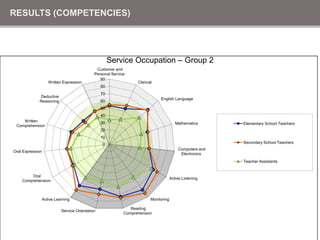
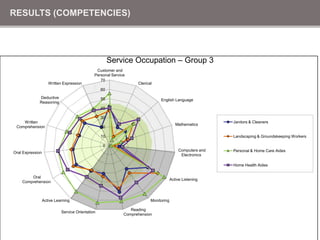
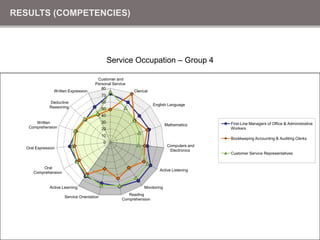
Regional Workforce Alliance: Competencies
INTRODUCTIONData-driven industry and labor market informationLinks education programs and O*NET (knowledge, skills and abilities)Updated quarterly to reflect most current economic informationOpen source economic and workforce developmentSeeks to aid in developing strategies for implementationRegional Collaboration and innovationAssists in planning and implementation strategies for regional development
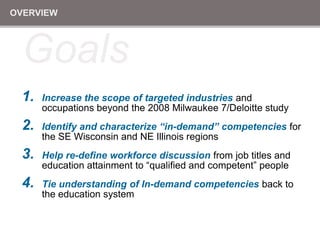
OVERVIEWGoalsIncrease the scopeof targeted industriesand occupations beyond the 2008 Milwaukee 7/Deloitte studyIdentify and characterize“in-demand” competenciesfor the SE Wisconsin and NE Illinois regionsHelp re-define workforce discussionfrom job titles and education attainment to “qualified and competent” peopleTie understanding of In-demand competenciesback to the education system
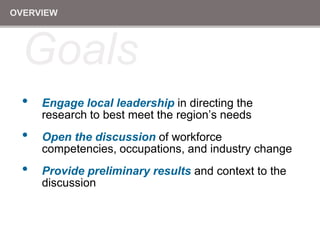
OVERVIEWGoalsEngage local leadershipin directing the research to best meet the region’s needs
Open the discussionof workforce competencies, occupations, and industry change
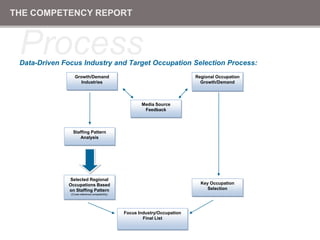
Provide preliminary resultsand context to the discussionGrowth/Demand IndustriesRegional Occupation Growth/DemandMedia Source FeedbackStaffing Pattern AnalysisSelected Regional Occupations Based on Staffing Pattern(Cross-reference compatibility)Key Occupation SelectionFocus Industry/Occupation Final ListTHE COMPETENCY REPORTProcessData-Driven Focus Industry and Target Occupation Selection Process:
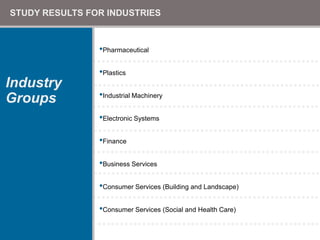
STUDY RESULTS FOR INDUSTRIESPharmaceutical
Plastics
Industrial Machinery
Electronic Systems
Finance
Business Services
Consumer Services (Building and Landscape)
Consumer Services (Social and Health Care)Industry Groups
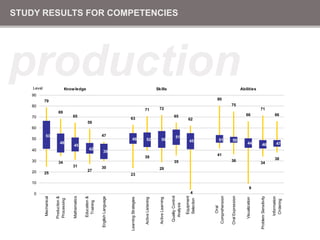
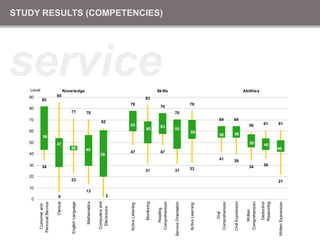
STUDY RESULTS FOR COMPETENCIESproduction
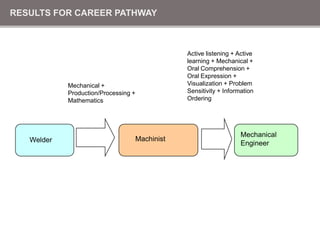
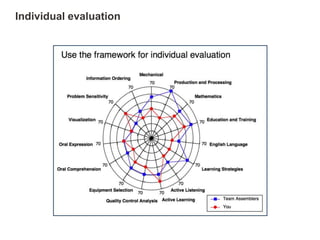
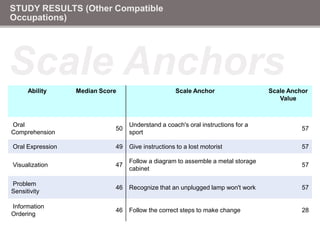
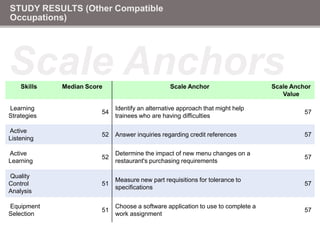
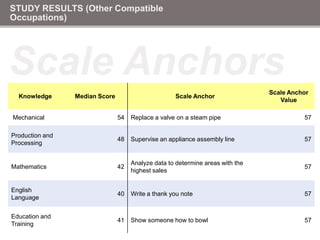
Active listening + Active learning + Mechanical + Oral Comprehension + Oral Expression + Visualization + Problem Sensitivity + Information OrderingMechanical + Production/Processing + MathematicsMechanical EngineerMachinistWelderRESULTS FOR CAREER PATHWAY
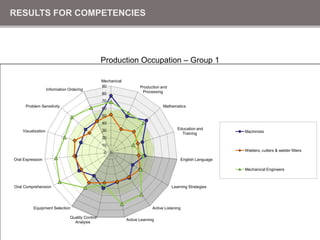
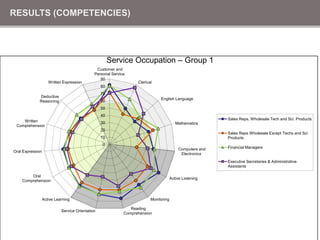
RESULTS FOR COMPETENCIESProduction Occupation – Group 1
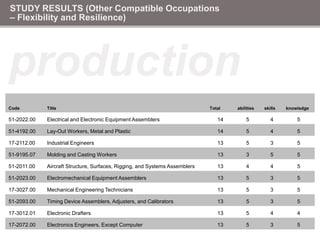
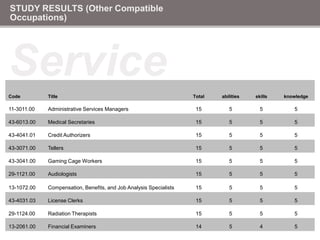
STUDY RESULTS (Other Compatible Occupations – Flexibility and Resilience)production
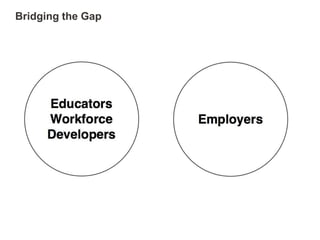
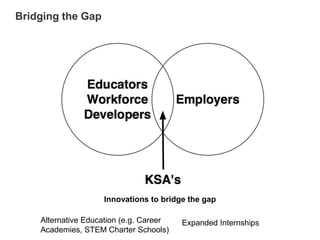
Bridging the Gap
Bridging the GapInnovations to bridge the gapAlternative Education (e.g. Career Academies, STEM Charter Schools)Expanded Internships
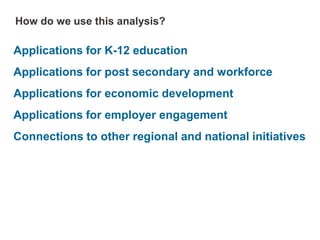
How do we use this analysis?Applications for K-12 educationApplications for post secondary and workforceApplications for economic developmentApplications for employer engagementConnections to other regional and national initiatives
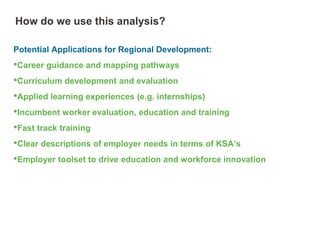
How do we use this analysis?Potential Applications for Regional Development:Career guidance and mapping pathways
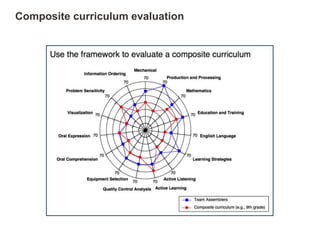
Curriculum development and evaluation
Applied learning experiences (e.g. internships)
Incumbent worker evaluation, education and training
Fast track training
Clear descriptions of employer needs in terms of KSA’s

Regional Workforce Alliance Competency Report Summary