Workforce Development 2.0:
How to Design a New Public
Workforce System

Ed Morrison
Purdue Center for Regional Development
AUBER | Indianapolis
October, 2011
Lessons from around the country
Location of Strategic Doing presentations and workshops
Collaborations to innovate
A few key concepts
To move toward Workforce Development 2.0
Workforce Development 2.0
Comes down to the 5 realities


  1. Understanding a systems perspective
  2. Adopting skills as a common language
  3. Designing new visual maps for careers
  4. Managing our regional “skills bank”
  5. Accelerating open innovation: Collaborating quickly
Our outdated ideas
Many of us have an obsolete mental model


                         4 Years of        Career
      K through 12
                          College


                  del explains less
          This mo
                    of wha  t goes on
          t han 25%
Reality 1: Take a systems view
Less than 50% are prepared for high income careers

                                       4 Years of
                                        College

                                 3    2 Years of
    Early                              College                                              Career
  Childhood   K through 12

                                     Certifications
                             2
                                                                                                                     5
              1
                                                                                                                       $10.00
                                                                                                                      per hour
                                                    4
                                       Entry
                                       level                                        Unemployed


                                        Working
              Dependency                 poor
                Cycle
                                                        Source: Ed Morrison,
                                                        This material is distributed under a Creative Commons Attribution-ShareAlike 3.0 license.
Workforce Development in a Nutshell
Less than 50% are prepared for high income careers


                                 Source: Ed Morrison,
                                 This material is distributed under a Creative Commons Attribution-ShareAlike 3.0 license.
Reality 2: Skills as a common language
Bridge the communications gaps
Advance Manufacturing Competency model


                                         Source: US DOL
Reality 3: New career pathway maps
Using skills as path markers


                                              Active
                                              listening +
                                              Active learning +
                   Mechanical +               Mechanical + Oral
                   Production/                Comprehension +     Mechanical
          Welder                  Machinist   Oral Expression +
                   Processing +
                                              Visualization +
                                                                   Engineer
                   Mathematics
                                              Problem
                                              Sensitivity +
                                              Information
                                              Ordering


                                                                               Source: EMSI
Manufacturing Career Map


                           Source: EMSI
Student/Parent Career Map for Nursing


A high level health career roadmap for parents of young
children might look something like this...


  Early
Childhood                       K through 12                           4 Years of College
Education
                                                                                                                Middle and High
                                                              2 Years of College                                Skill Health Care
 Ready for                                                                                                            Career
  School
                                                                      Certifications
        Reading by
         Grade 2


                     Career exploration     Career guidance
                        Grades 4-8           Grades 9-12


                              Alegebra by       Chemistry,
                               Grade 9        Physics, Biology


                                                   Early college
                                                                                            Source: Strategy-Nets
Nursing Career Map


                     A nursing career map from the UK
                     Source: UK Department of Health
Reality 4: Regional Skills Banks
Understanding Occupational Clusters


     http://www.statsamerica.org/innovation   Source: Purdue Center for Regional Development, EMSI, and
                                              Indiana University Business Research Center
Skills Mapping: An Example
JOHNSON	
  SPACE	
  CENTER	
  	
  Explora3on	
   "Marketable	
  Skill"	
  for	
                                  Petroleum	
               Life	
  
Core/Support	
  Competency                       Industry                                                        Refining	
  &	
   	
   Sciences	
  &	


                                                                 Systems	
  Engineering;	
  Project	
             Chemical	
           Healthcare
1.1	
  SpacecraL	
  SE&I                                         Management                                           	
  
                                                                                                                  Products        	


2.1.1	
  Integrated	
  Mission	
  Architecture	
  Defini3on	
  
&	
  Analysis                                                  Systems	
  Architect                                      	


2.1.2	
  Explora3on	
  Trade	
  Studies	
  &	
  Analysis         Acquisi8on/Procurement                                 P              	


                                                                 Engineering	
  Discipline/Domain	
  
2.1.3	
  Vehicle	
  Design	
  &	
  Integra3on                    Exper8se                                                	


                                                                 Pyrotechnics/Explosives;	
  Hypervelocity	
  
2.1.4	
  Al3tude,	
  Impact,	
  and	
  Materials	
  Tes3ng       Physics/Analysis;	
  Sta8s8cs;	
  Engineering           	


2.2.1	
  Technology	
  Assessment	
  &	
  Planning               Technology	
  Research	
  &	
  Development             P              	
        S          	
   	
  
                                                                 SoCware	
  Development;	
  Integrated	
  
3.1.1	
  Mission	
  Planning	
  &	
  Flight	
  Design            Mission	
  Planning                                     	


                                                                 Logis8cs/Project	
  Management/
3.1.2	
  Flight	
  Opera3ons	
  &	
  Training                    Simula8on                                              P              	
        S          	
   	
  
                                                                 Sports	
  Medicine;	
  Bioengineering;	
  
4.1.1	
  Human	
  Health	
  &	
  Performance                     Biomedical	
  R&D;	
  Nutri8on	
  R&D                   	
            	
        S          	
   	
  
                                                                 Telemedicine;	
  Bioengineering;	
  
4.1.2	
  Space	
  Medicine	
  and	
  Health	
  Care	
  Systems   Environmental	
  Engineering;	
                         	
            	
        S          	


4.1.3	
  Human	
  Factors                                        Biomedical	
  R&D;	
  Human	
  Factors                  	
            	
        S          	


S	
  =	
  Strong	
  Likelihood	
  of	
  Skills	
  Match
P	
  =	
  Possible	
  Likelihood	
  of	
  Skills	
  Match
                                                                                                                                  Source: Regionerate
Blank	
  =	
  No	
  known	
  likely	
  Skills	
  Match
Reality 5: Strategic Collaborations
Building metrics driven collaborations quickly

                                       4 Years of
                                        College

                                 3    2 Years of
    Early                              College             Career
  Childhood   K through 12

                                     Certifications
                             2
                                                                     5
              1
                                                                      $10.00
                                                                     per hour
                                                    4
                                       Entry
                                       level            Unemployed


                                        Working
              Dependency                 poor
                Cycle
Washington State: Industry Skill Panels
Pennsylvania: Industry Partnerships
Indiana: Re-engagement Pathways
Strategy-Nets:Youth Network Pilots
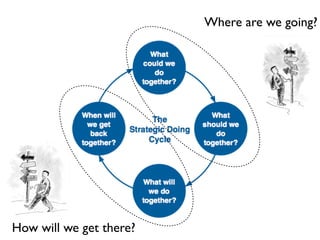
Strategic Doing
Develops strategy for collaborations


     Where are we going?           How will we get there?
Where are we going?


How will we get there?
Workforce 2.0
Implications for new policy

 Scrap old programs: Move from fixing problems to
 “linking and leveraging” assets

 We need investments in:
 • One Stop infrastructure for skill assessments
    and career guidance
 • Vouchers for subsidizing training tied to skill
    assessments
 • Seed investments in productive collaborations
 • Applied research on new tool development
    and dynamic evaluation
Thank you


  Ed Morrison
  Economic Policy Advisor
  Purdue Center for Regional Development
  edmorrison@purdue.edu

Workforce Development 2.0

  • 1.
    Workforce Development 2.0: Howto Design a New Public Workforce System Ed Morrison Purdue Center for Regional Development AUBER | Indianapolis October, 2011
  • 2.
    Lessons from aroundthe country Location of Strategic Doing presentations and workshops
  • 3.
  • 4.
    A few keyconcepts To move toward Workforce Development 2.0
  • 5.
    Workforce Development 2.0 Comesdown to the 5 realities 1. Understanding a systems perspective 2. Adopting skills as a common language 3. Designing new visual maps for careers 4. Managing our regional “skills bank” 5. Accelerating open innovation: Collaborating quickly
  • 6.
    Our outdated ideas Manyof us have an obsolete mental model 4 Years of Career K through 12 College del explains less This mo of wha t goes on t han 25%
  • 7.
    Reality 1: Takea systems view Less than 50% are prepared for high income careers 4 Years of College 3 2 Years of Early College Career Childhood K through 12 Certifications 2 5 1 $10.00 per hour 4 Entry level Unemployed Working Dependency poor Cycle Source: Ed Morrison, This material is distributed under a Creative Commons Attribution-ShareAlike 3.0 license.
  • 8.
    Workforce Development ina Nutshell Less than 50% are prepared for high income careers Source: Ed Morrison, This material is distributed under a Creative Commons Attribution-ShareAlike 3.0 license.
  • 9.
    Reality 2: Skillsas a common language Bridge the communications gaps
  • 10.
  • 11.
    Reality 3: Newcareer pathway maps Using skills as path markers Active listening + Active learning + Mechanical + Mechanical + Oral Production/ Comprehension + Mechanical Welder Machinist Oral Expression + Processing + Visualization + Engineer Mathematics Problem Sensitivity + Information Ordering Source: EMSI
  • 12.
  • 13.
    Student/Parent Career Mapfor Nursing A high level health career roadmap for parents of young children might look something like this... Early Childhood K through 12 4 Years of College Education Middle and High 2 Years of College Skill Health Care Ready for Career School Certifications Reading by Grade 2 Career exploration Career guidance Grades 4-8 Grades 9-12 Alegebra by Chemistry, Grade 9 Physics, Biology Early college Source: Strategy-Nets
  • 14.
    Nursing Career Map A nursing career map from the UK Source: UK Department of Health
  • 15.
    Reality 4: RegionalSkills Banks Understanding Occupational Clusters http://www.statsamerica.org/innovation Source: Purdue Center for Regional Development, EMSI, and Indiana University Business Research Center
  • 16.
    Skills Mapping: AnExample JOHNSON  SPACE  CENTER    Explora3on   "Marketable  Skill"  for   Petroleum   Life   Core/Support  Competency Industry Refining  &     Sciences  &       Systems  Engineering;  Project   Chemical   Healthcare 1.1  SpacecraL  SE&I Management   Products         2.1.1  Integrated  Mission  Architecture  Defini3on   &  Analysis Systems  Architect           2.1.2  Explora3on  Trade  Studies  &  Analysis Acquisi8on/Procurement P         Engineering  Discipline/Domain   2.1.3  Vehicle  Design  &  Integra3on Exper8se           Pyrotechnics/Explosives;  Hypervelocity   2.1.4  Al3tude,  Impact,  and  Materials  Tes3ng Physics/Analysis;  Sta8s8cs;  Engineering           2.2.1  Technology  Assessment  &  Planning Technology  Research  &  Development P   S     SoCware  Development;  Integrated   3.1.1  Mission  Planning  &  Flight  Design Mission  Planning           Logis8cs/Project  Management/ 3.1.2  Flight  Opera3ons  &  Training Simula8on P   S     Sports  Medicine;  Bioengineering;   4.1.1  Human  Health  &  Performance Biomedical  R&D;  Nutri8on  R&D     S     Telemedicine;  Bioengineering;   4.1.2  Space  Medicine  and  Health  Care  Systems Environmental  Engineering;       S     4.1.3  Human  Factors Biomedical  R&D;  Human  Factors     S     S  =  Strong  Likelihood  of  Skills  Match P  =  Possible  Likelihood  of  Skills  Match Source: Regionerate Blank  =  No  known  likely  Skills  Match
  • 17.
    Reality 5: StrategicCollaborations Building metrics driven collaborations quickly 4 Years of College 3 2 Years of Early College Career Childhood K through 12 Certifications 2 5 1 $10.00 per hour 4 Entry level Unemployed Working Dependency poor Cycle
  • 18.
  • 19.
  • 20.
  • 21.
  • 22.
    Strategic Doing Develops strategyfor collaborations Where are we going? How will we get there?
  • 23.
    Where are wegoing? How will we get there?
  • 24.
    Workforce 2.0 Implications fornew policy Scrap old programs: Move from fixing problems to “linking and leveraging” assets We need investments in: • One Stop infrastructure for skill assessments and career guidance • Vouchers for subsidizing training tied to skill assessments • Seed investments in productive collaborations • Applied research on new tool development and dynamic evaluation
  • 25.
    Thank you Ed Morrison Economic Policy Advisor Purdue Center for Regional Development edmorrison@purdue.edu