for Unit 1A (sections 3.1)


Although the 13 original colonies all were
part of the British Empire they had little in
common
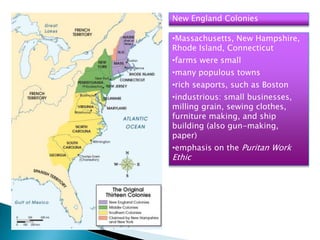
New England Colonies
•Massachusetts, New Hampshire,
Rhode Island, Connecticut
•farms were small
•many populous towns
•rich seaports, such as Boston
•industrious: small businesses,
milling grain, sewing clothes,
furniture making, and ship
building (also gun-making,
paper)
•emphasis on the Puritan Work

Ethic
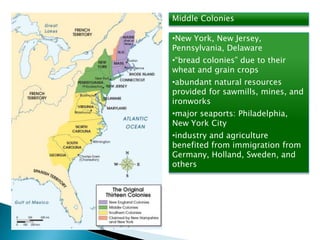
Middle Colonies
•New York, New Jersey,
Pennsylvania, Delaware
•“bread colonies” due to their
wheat and grain crops
•abundant natural resources
provided for sawmills, mines, and
ironworks
•major seaports: Philadelphia,
New York City
•industry and agriculture
benefited from immigration from
Germany, Holland, Sweden, and
others
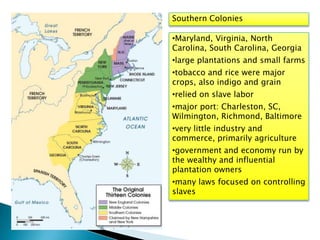
Southern Colonies
•Maryland, Virginia, North
Carolina, South Carolina, Georgia
•large plantations and small farms
•tobacco and rice were major
crops, also indigo and grain
•relied on slave labor
•major port: Charleston, SC,
Wilmington, Richmond, Baltimore
•very little industry and
commerce, primarily agriculture
•government and economy run by
the wealthy and influential
plantation owners
•many laws focused on controlling
slaves

Regional Differences

  • 1.
    for Unit 1A(sections 3.1)
  • 2.
     Although the 13original colonies all were part of the British Empire they had little in common
  • 3.
    New England Colonies •Massachusetts,New Hampshire, Rhode Island, Connecticut •farms were small •many populous towns •rich seaports, such as Boston •industrious: small businesses, milling grain, sewing clothes, furniture making, and ship building (also gun-making, paper) •emphasis on the Puritan Work Ethic
  • 4.
    Middle Colonies •New York,New Jersey, Pennsylvania, Delaware •“bread colonies” due to their wheat and grain crops •abundant natural resources provided for sawmills, mines, and ironworks •major seaports: Philadelphia, New York City •industry and agriculture benefited from immigration from Germany, Holland, Sweden, and others
  • 5.
    Southern Colonies •Maryland, Virginia,North Carolina, South Carolina, Georgia •large plantations and small farms •tobacco and rice were major crops, also indigo and grain •relied on slave labor •major port: Charleston, SC, Wilmington, Richmond, Baltimore •very little industry and commerce, primarily agriculture •government and economy run by the wealthy and influential plantation owners •many laws focused on controlling slaves