Refractive index
Prepared by :
Aras Jabar , Shaxawan Rahim
Tishko mhamad
content
 Introduction
 Refractive index
 Snell”s law
 Factors have effect on R.I
 Applications
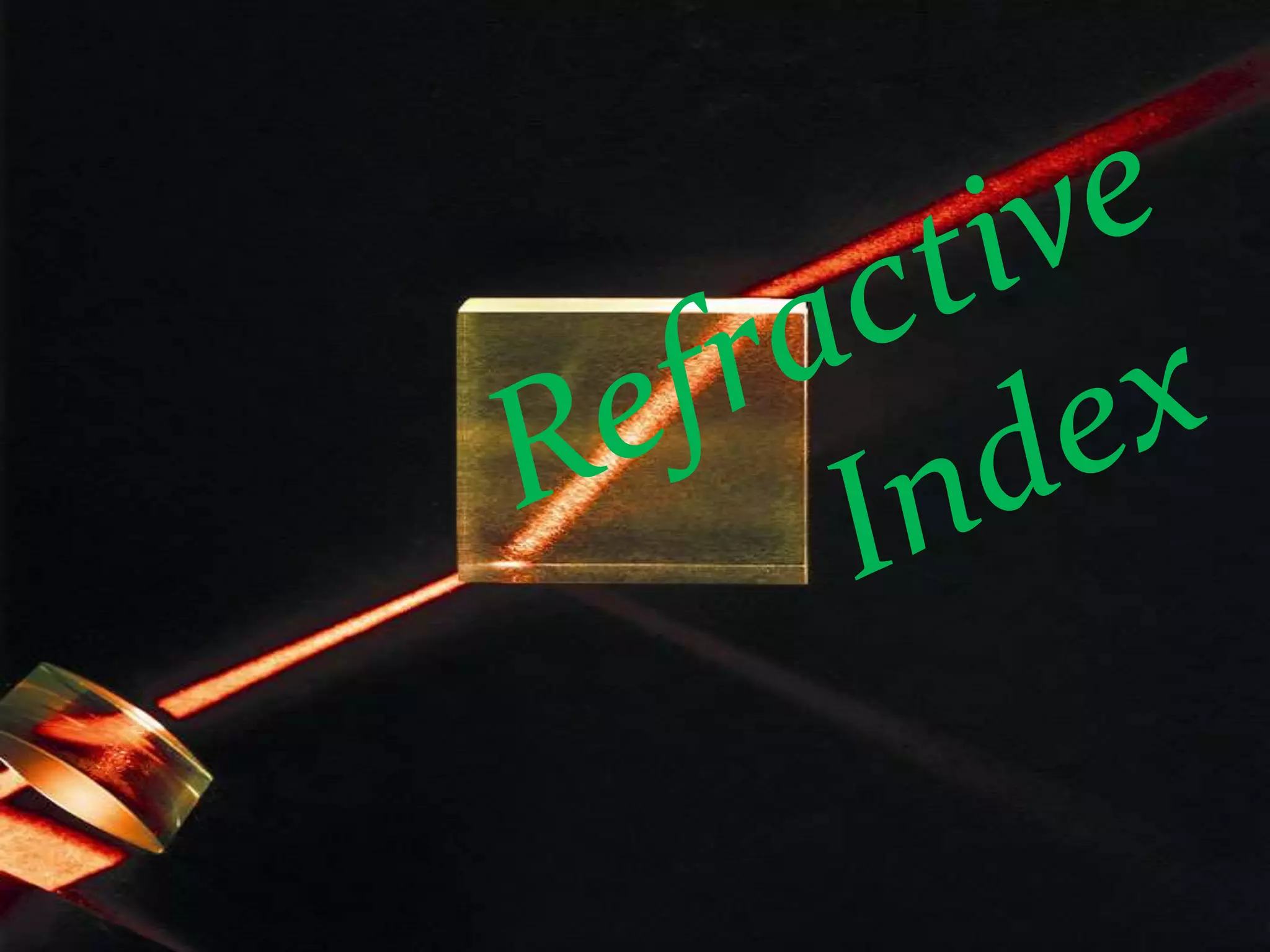
Refractive index
Refractive Index : Is defined as the ratio of
velocity of light in vacuum to the velocity of
light in a substance at same wave length.
Refractive Index
Refractive index: is dependent on the
color of light travelling through the
medium.
Also depending on the density of the
medium.
White light is made up of light of
different colors.
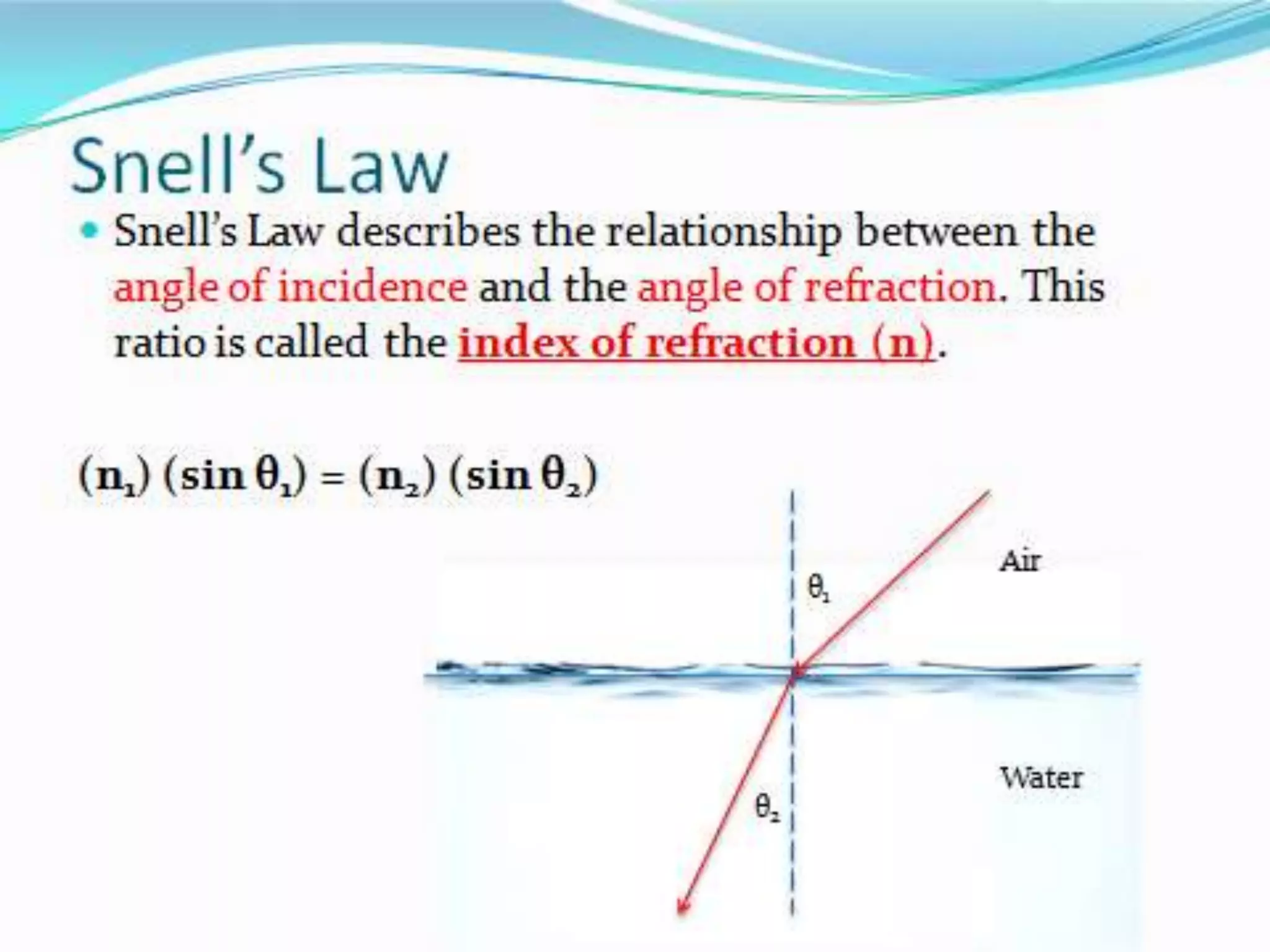
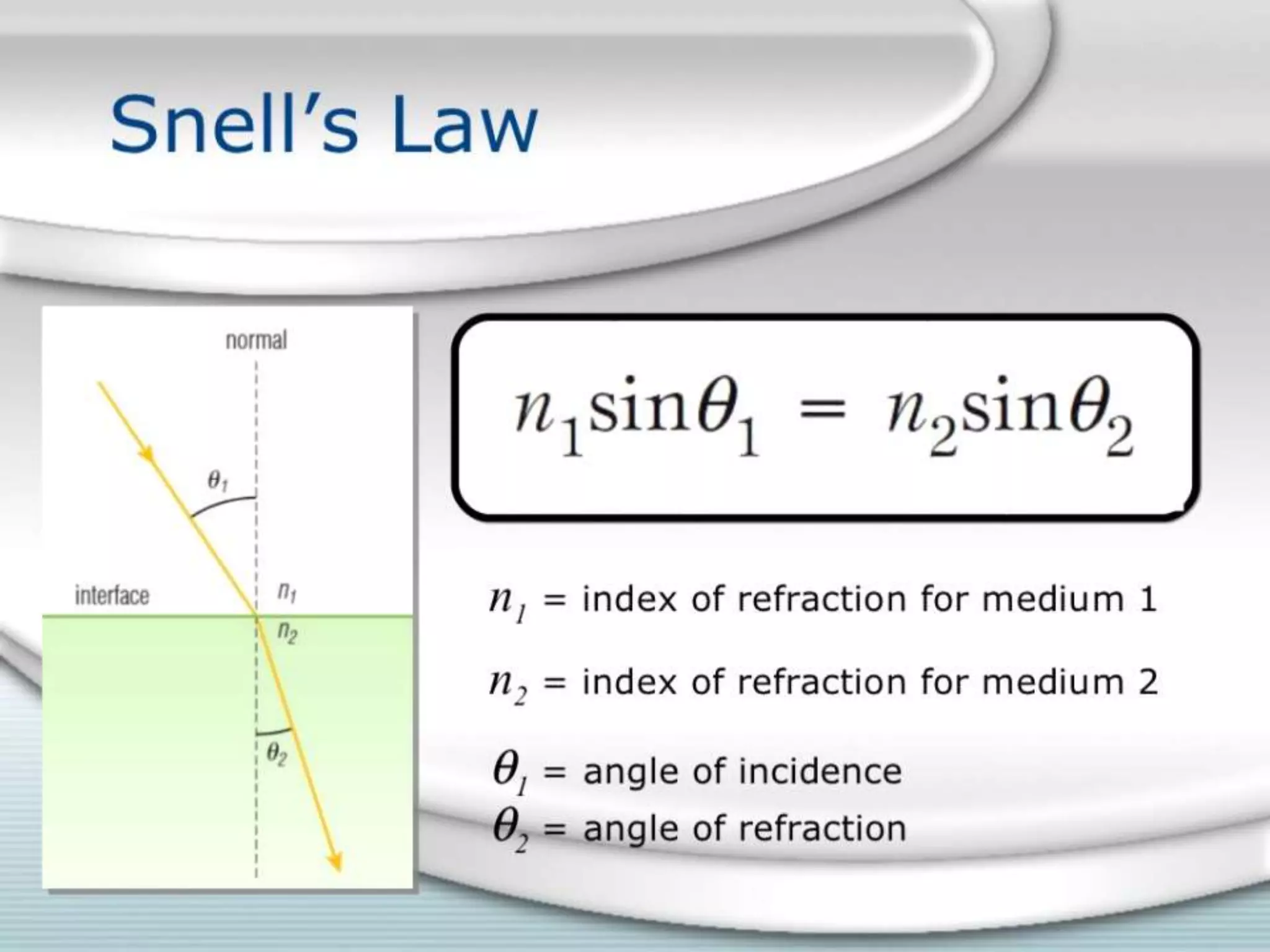
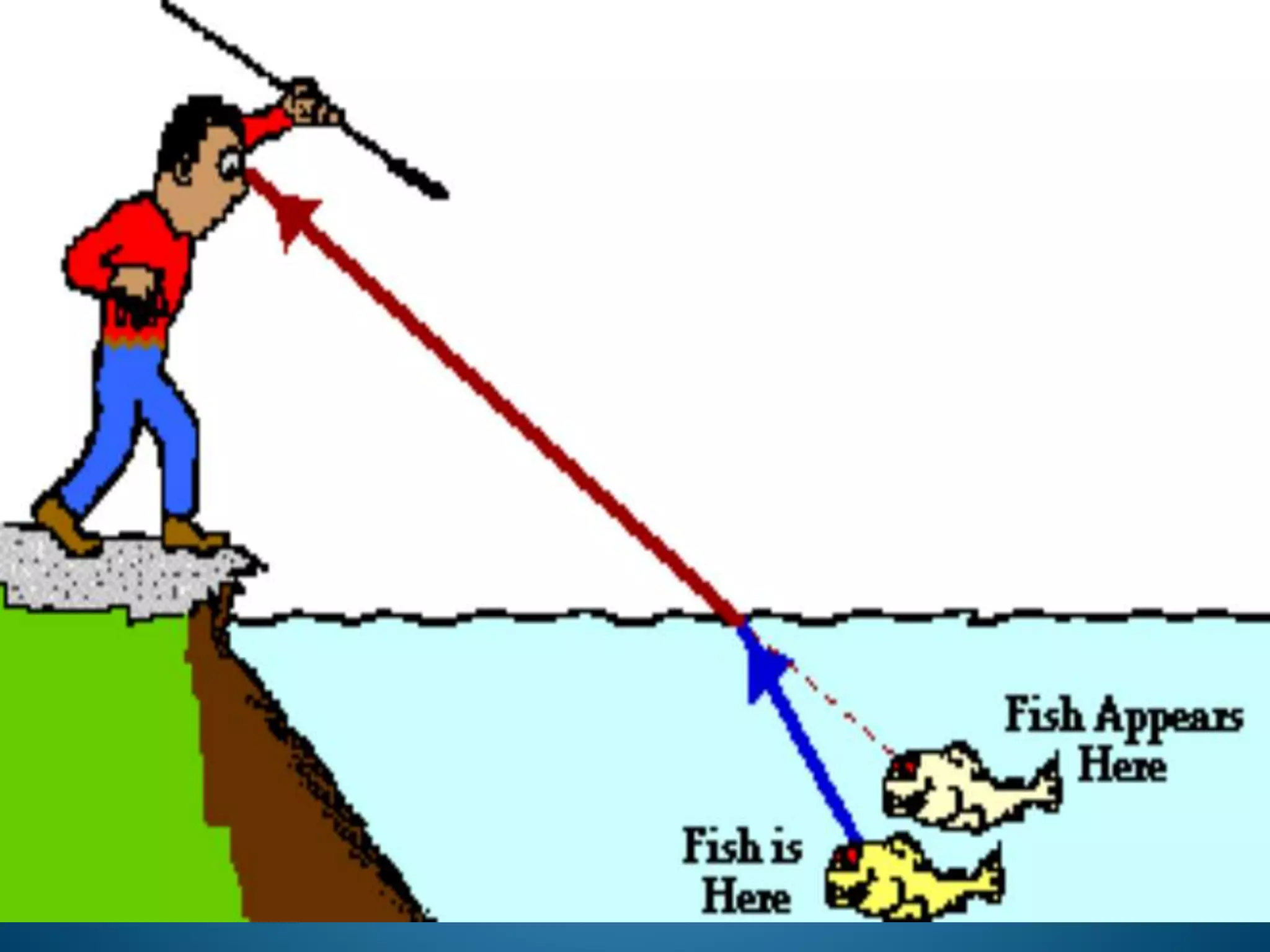
Snell’s law:
 Snell’s law states that:
 A light travels from a first medium to a second
medium, the ratio of the sine of the angle of
incidence to the sine of the angle of refraction is a
constant called the refractive index.
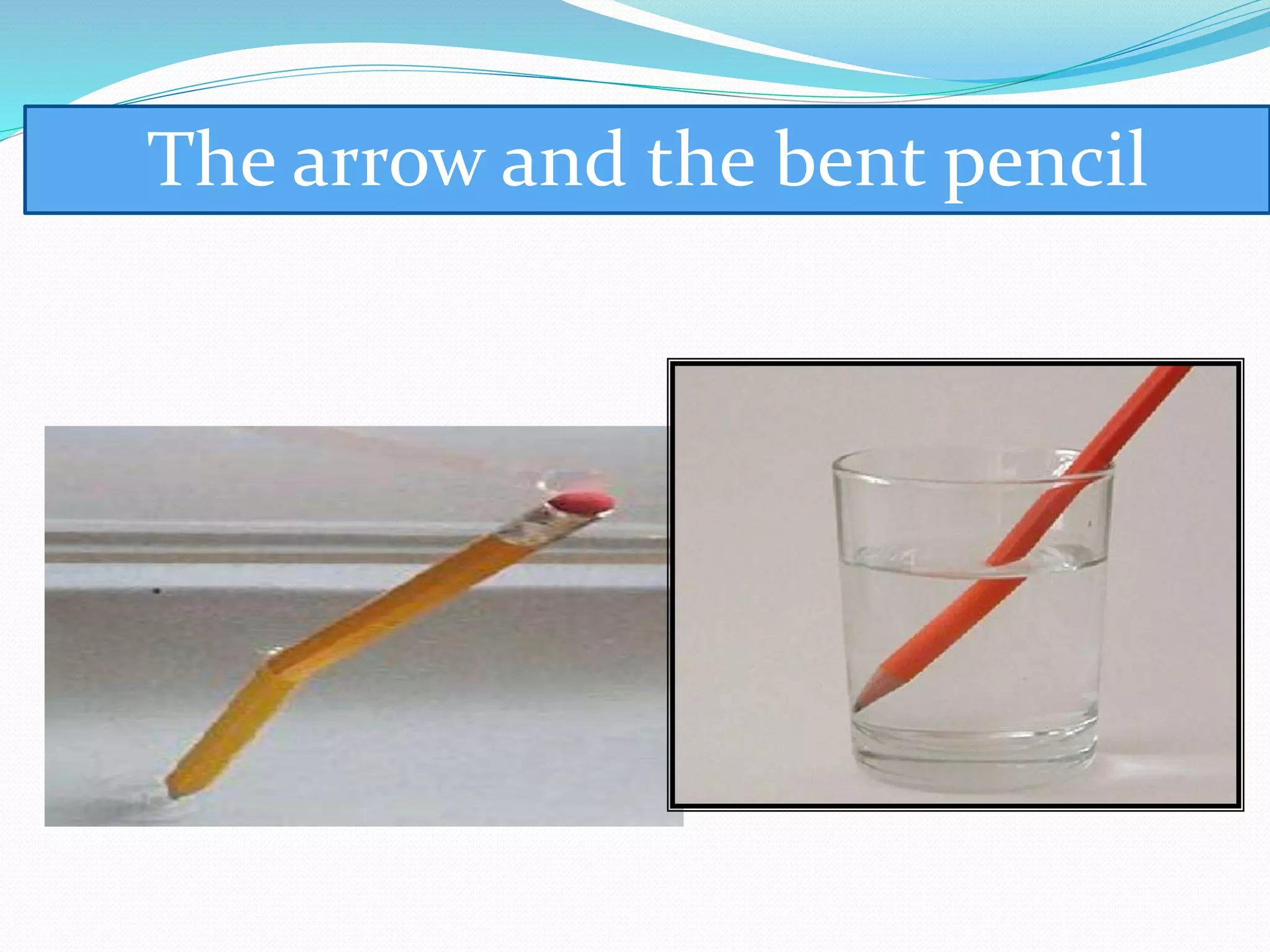
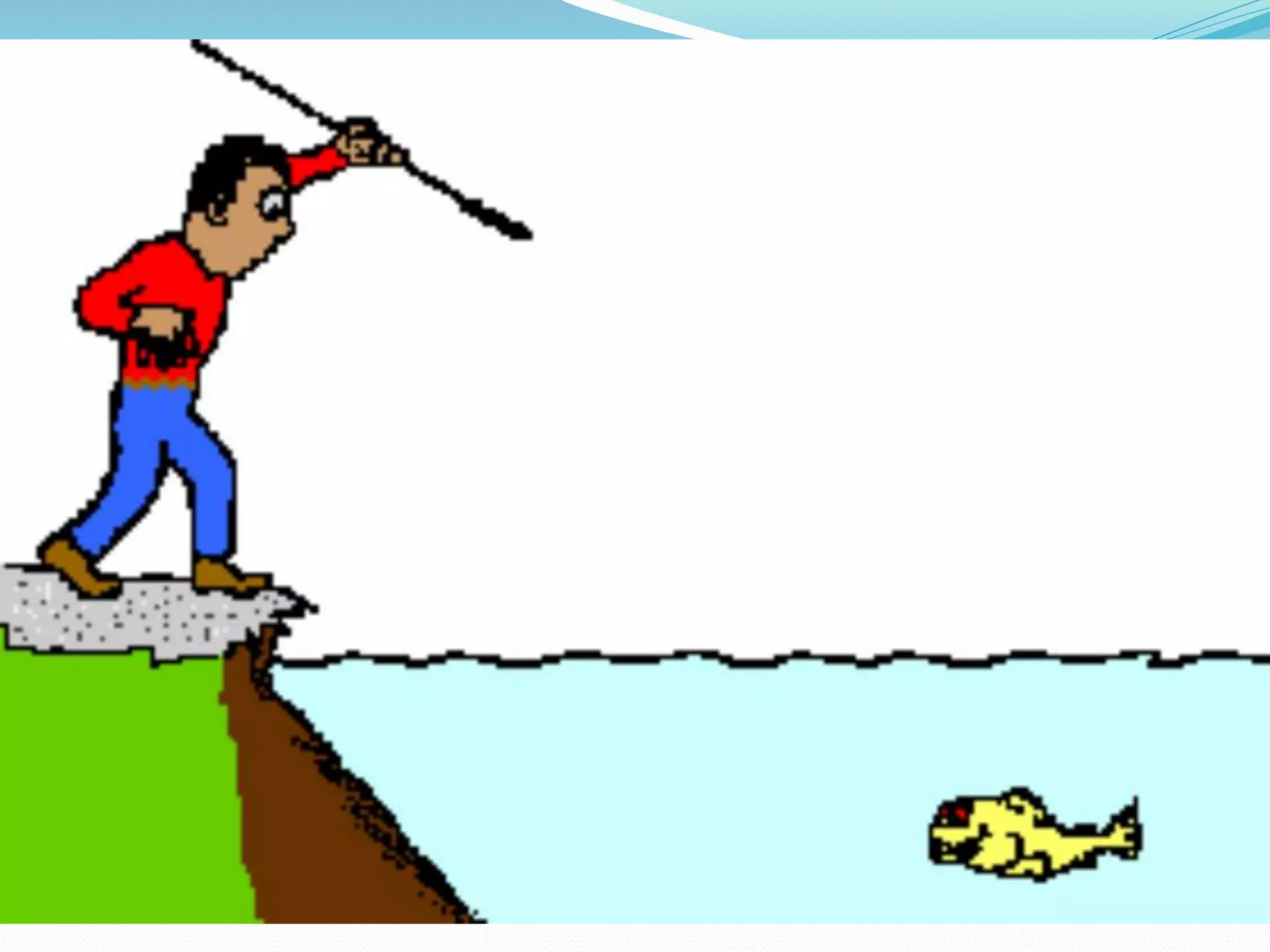
The arrow and the bent pencil
Factors that affect on refractive index
 Temperature
at high temperature we have a smaller value for the
R.I
At Low Temperature We Have A Higher Value For R.I
Because dense with temperature have an inversily
proportional
Factors that affect on refractive index
 Wavelength of light
The refractive index varies with wavelength linearly
because different wavelengths interfere to different
extents with the atoms of the medium
Uses of the refractive index
 it is used to measure the concentration of a solute in
an aqueous solution.
 For a solution of sugar, the refractive index can be used
to determine the sugar content
Uses of the refractive index
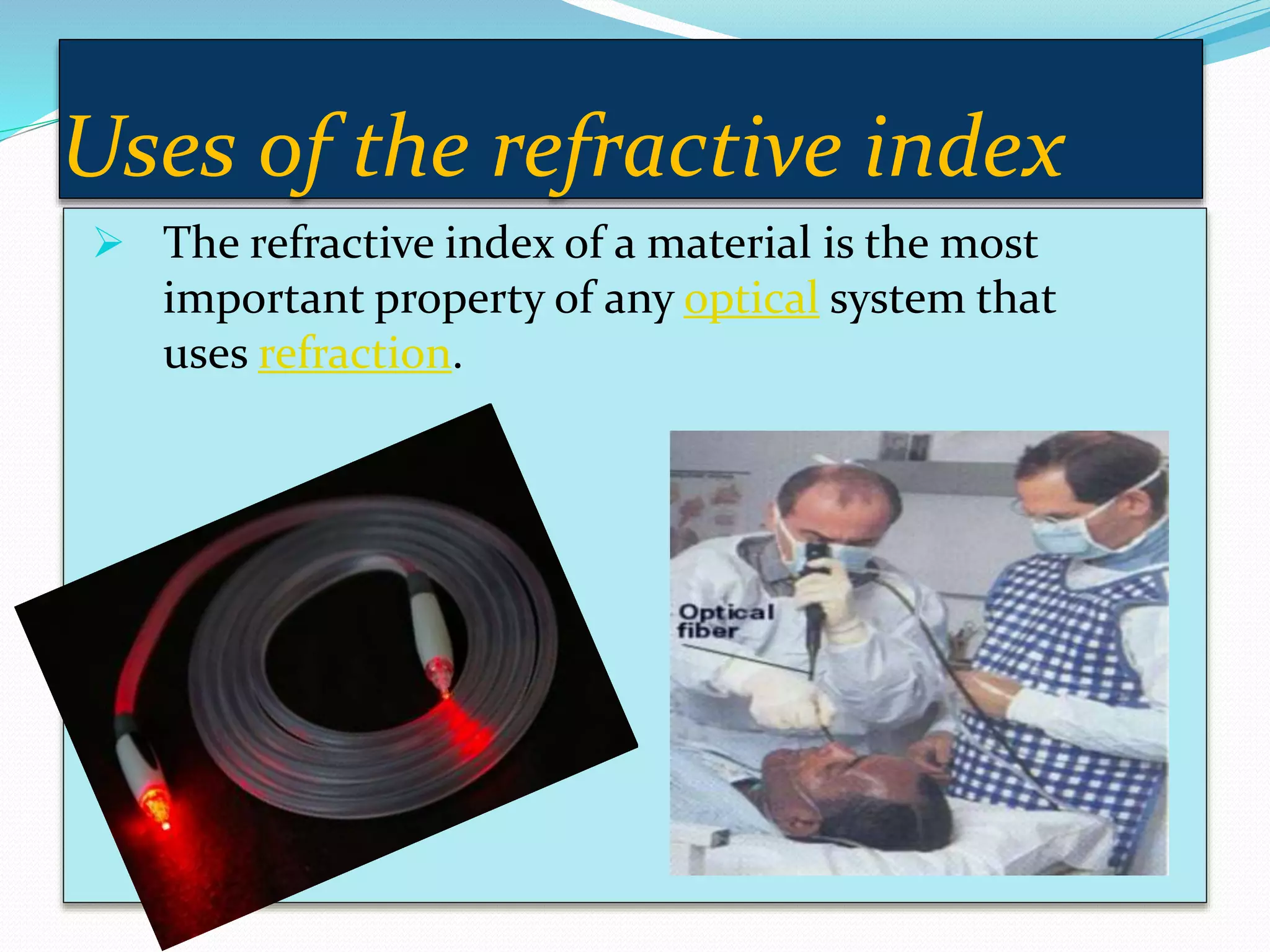
 The refractive index of a material is the most
important property of any optical system that
uses refraction.
Uses
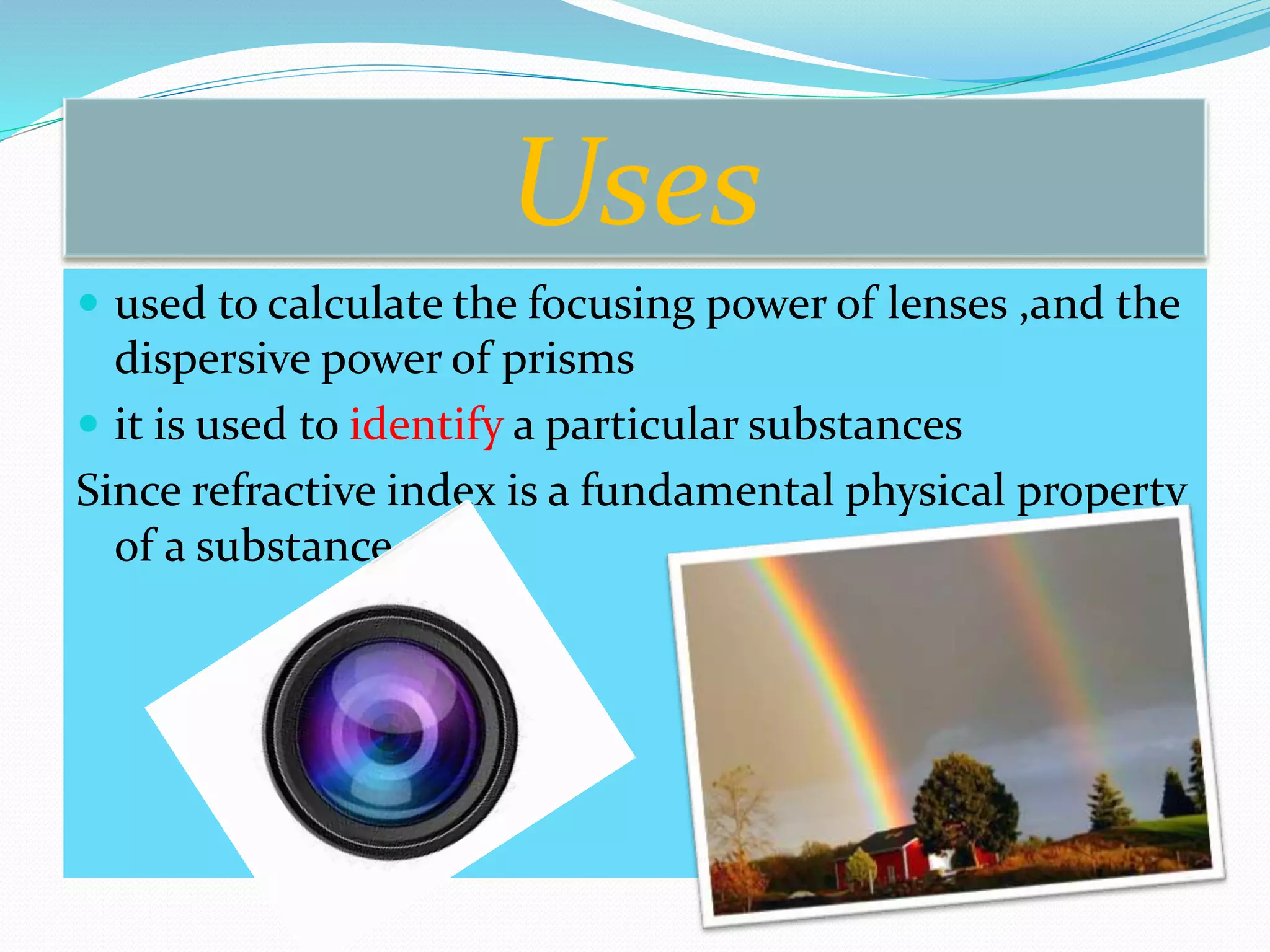
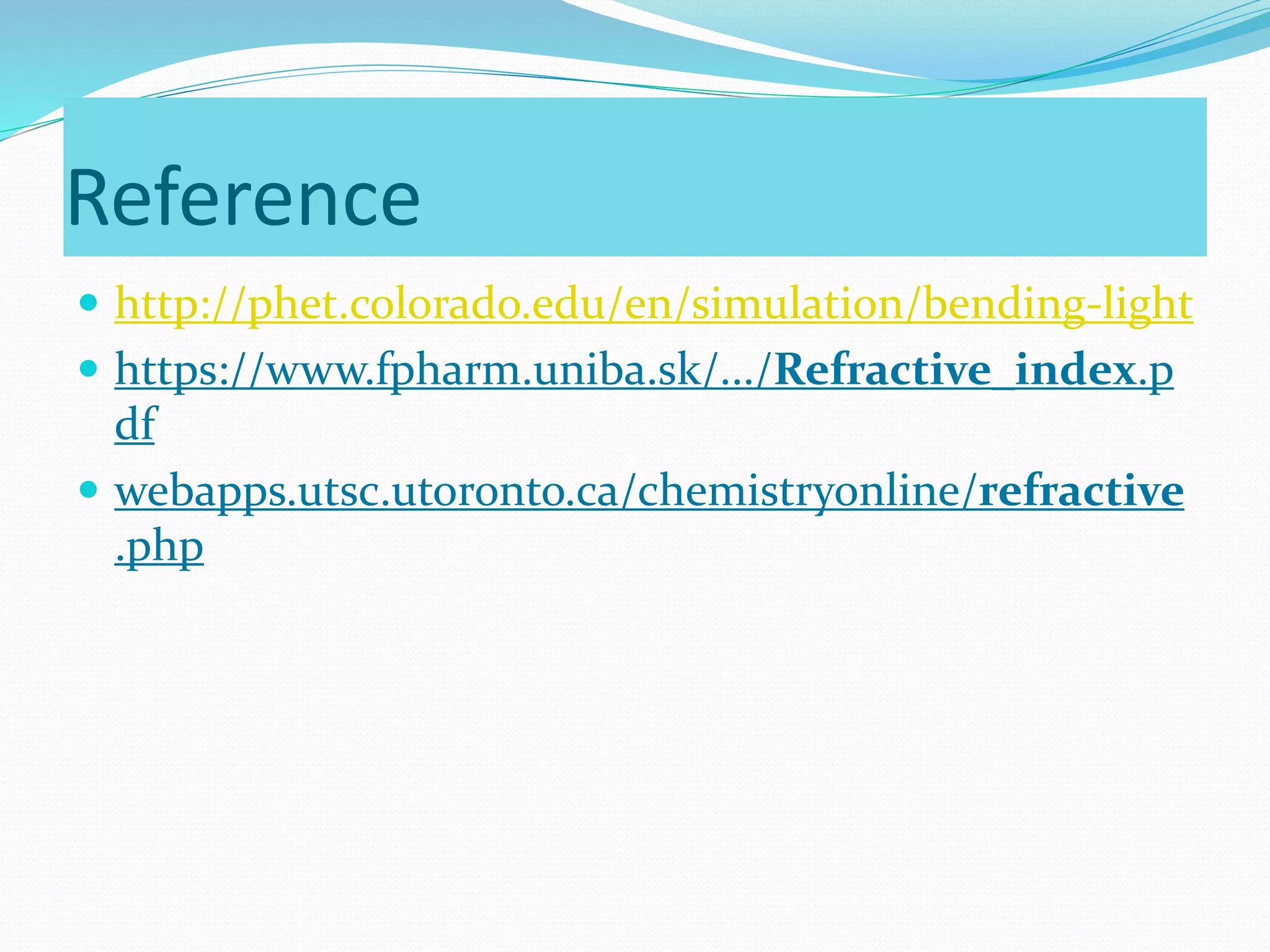
 used to calculate the focusing power of lenses ,and the
dispersive power of prisms
 it is used to identify a particular substances
Since refractive index is a fundamental physical property
of a substance
Reference
 http://phet.colorado.edu/en/simulation/bending-light
 https://www.fpharm.uniba.sk/.../Refractive_index.p
df
 webapps.utsc.utoronto.ca/chemistryonline/refractive
.php
Thanks for listening

refractive index

  • 1.
    Refractive index Prepared by: Aras Jabar , Shaxawan Rahim Tishko mhamad
  • 2.
    content  Introduction  Refractiveindex  Snell”s law  Factors have effect on R.I  Applications
  • 4.
    Refractive index Refractive Index: Is defined as the ratio of velocity of light in vacuum to the velocity of light in a substance at same wave length.
  • 5.
    Refractive Index Refractive index:is dependent on the color of light travelling through the medium. Also depending on the density of the medium. White light is made up of light of different colors.
  • 7.
    Snell’s law:  Snell’slaw states that:  A light travels from a first medium to a second medium, the ratio of the sine of the angle of incidence to the sine of the angle of refraction is a constant called the refractive index.
  • 10.
    The arrow andthe bent pencil
  • 15.
    Factors that affecton refractive index  Temperature at high temperature we have a smaller value for the R.I At Low Temperature We Have A Higher Value For R.I Because dense with temperature have an inversily proportional
  • 16.
    Factors that affecton refractive index  Wavelength of light The refractive index varies with wavelength linearly because different wavelengths interfere to different extents with the atoms of the medium
  • 17.
    Uses of therefractive index  it is used to measure the concentration of a solute in an aqueous solution.  For a solution of sugar, the refractive index can be used to determine the sugar content
  • 18.
    Uses of therefractive index  The refractive index of a material is the most important property of any optical system that uses refraction.
  • 19.
    Uses  used tocalculate the focusing power of lenses ,and the dispersive power of prisms  it is used to identify a particular substances Since refractive index is a fundamental physical property of a substance
  • 20.
  • 21.