Reflective lesson planning involves critically analyzing teaching practices to identify areas for improvement and promote continuous learning. It has several benefits:
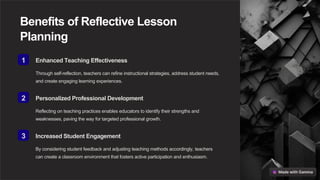
1. It enhances teaching effectiveness by allowing teachers to refine strategies and address student needs.
2. It enables personalized professional development as teachers identify strengths and weaknesses.
3. It increases student engagement by considering student feedback and adjusting teaching methods.
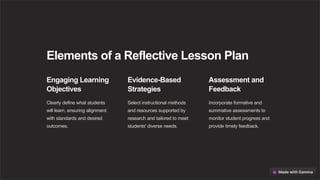
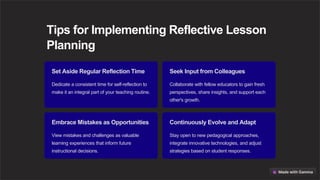
Elements of reflective lesson plans include clearly defining learning objectives, selecting evidence-based teaching strategies, and incorporating formative and summative assessments to monitor progress. Tips for implementation include setting aside regular reflection time, seeking colleague input, embracing mistakes as learning opportunities, and continuously evolving approaches.





![Reflective [autosaved] (1) copy](https://cdn.slidesharecdn.com/ss_thumbnails/reflectiveautosaved1copy-180620091045-thumbnail.jpg?width=640&height=640&fit=bounds)


