The Power of
Red Blood Cells
CONTENTS
I. Red Blood Cells
II. Structure and Function
III. Production and Destruction
IV. Types of Anemia
V. Blood Tests
VI. Conclusion
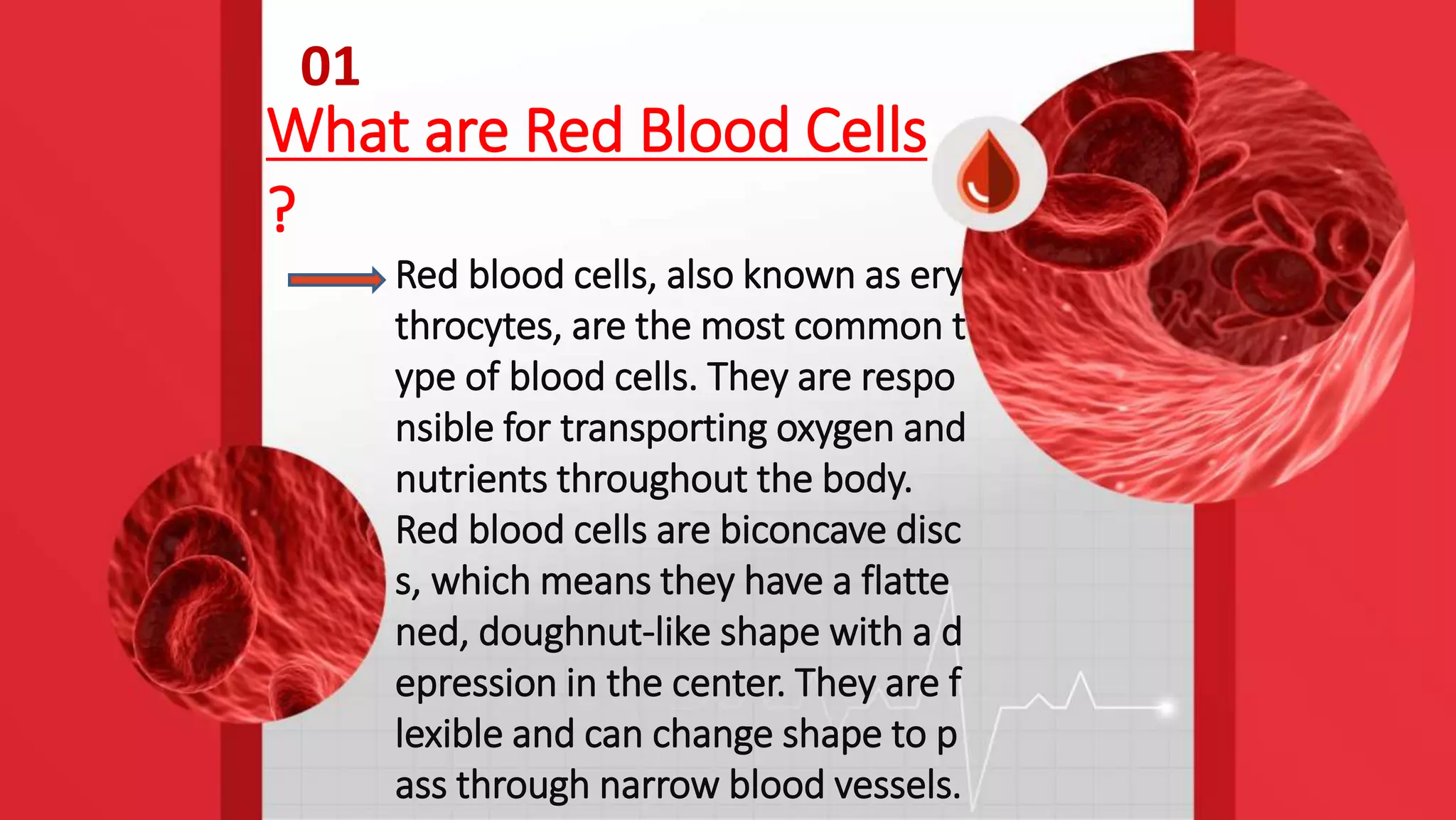
Red blood cells, also known as ery
throcytes, are the most common t
ype of blood cells. They are respo
nsible for transporting oxygen and
nutrients throughout the body.
Red blood cells are biconcave disc
s, which means they have a flatte
ned, doughnut-like shape with a d
epression in the center. They are f
lexible and can change shape to p
ass through narrow blood vessels.
What are Red Blood Cells
?
01
Red blood cells are made up of two parts:
the cell membrane -----
which is a thin layer
that surrounds the cell,
and the cytoplasm,----
which is a jelly-like substance
that contains the cell's genetic
material. Red blood cells are
responsible for carrying oxygen
and nutrients to the body's cells,
and for transporting carbon
dioxide and other waste products back to
the lungs, kidneys, and other organs for
removal.
Structure and Function
Production and Destruction
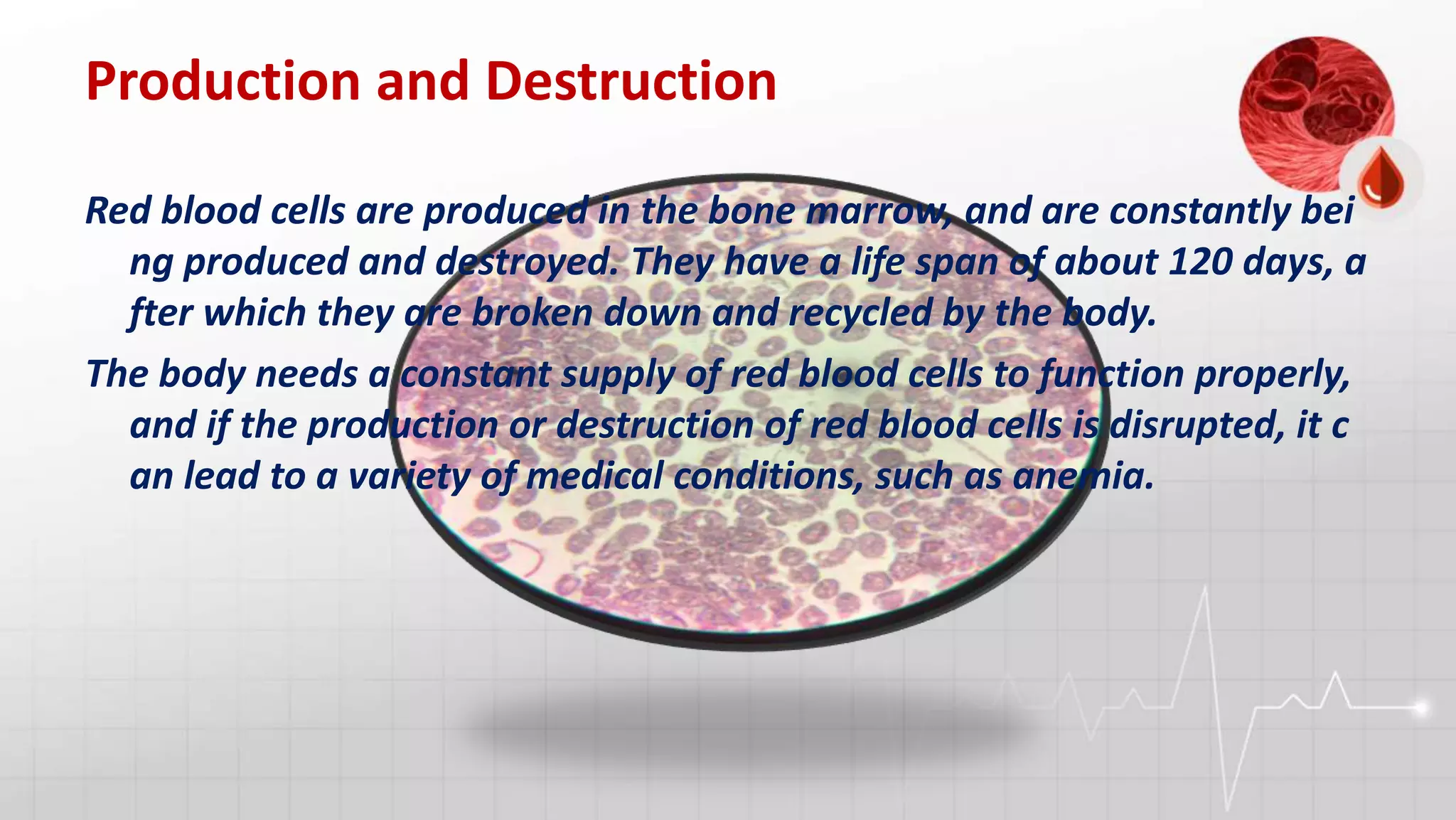
Red blood cells are produced in the bone marrow, and are constantly bei
ng produced and destroyed. They have a life span of about 120 days, a
fter which they are broken down and recycled by the body.
The body needs a constant supply of red blood cells to function properly,
and if the production or destruction of red blood cells is disrupted, it c
an lead to a variety of medical conditions, such as anemia.
Introduction to Diseases of Red Blood Cells
Red blood cells, or erythrocytes, are the most common type of blood cell in the human body. They are res
ponsible for carrying oxygen to the tissues and organs of the body, and are essential for life. Unfortun
ately, there are several diseases that can affect the production and function of red blood cells.
These diseases can be caused by a variety of factors, including genetic mutations, environmental factors,
and infections. Depending on the cause, they can range from mild to life-threatening. In this presenta
tion, we will explore some of the most common diseases of red blood cells.
Sickle anemia
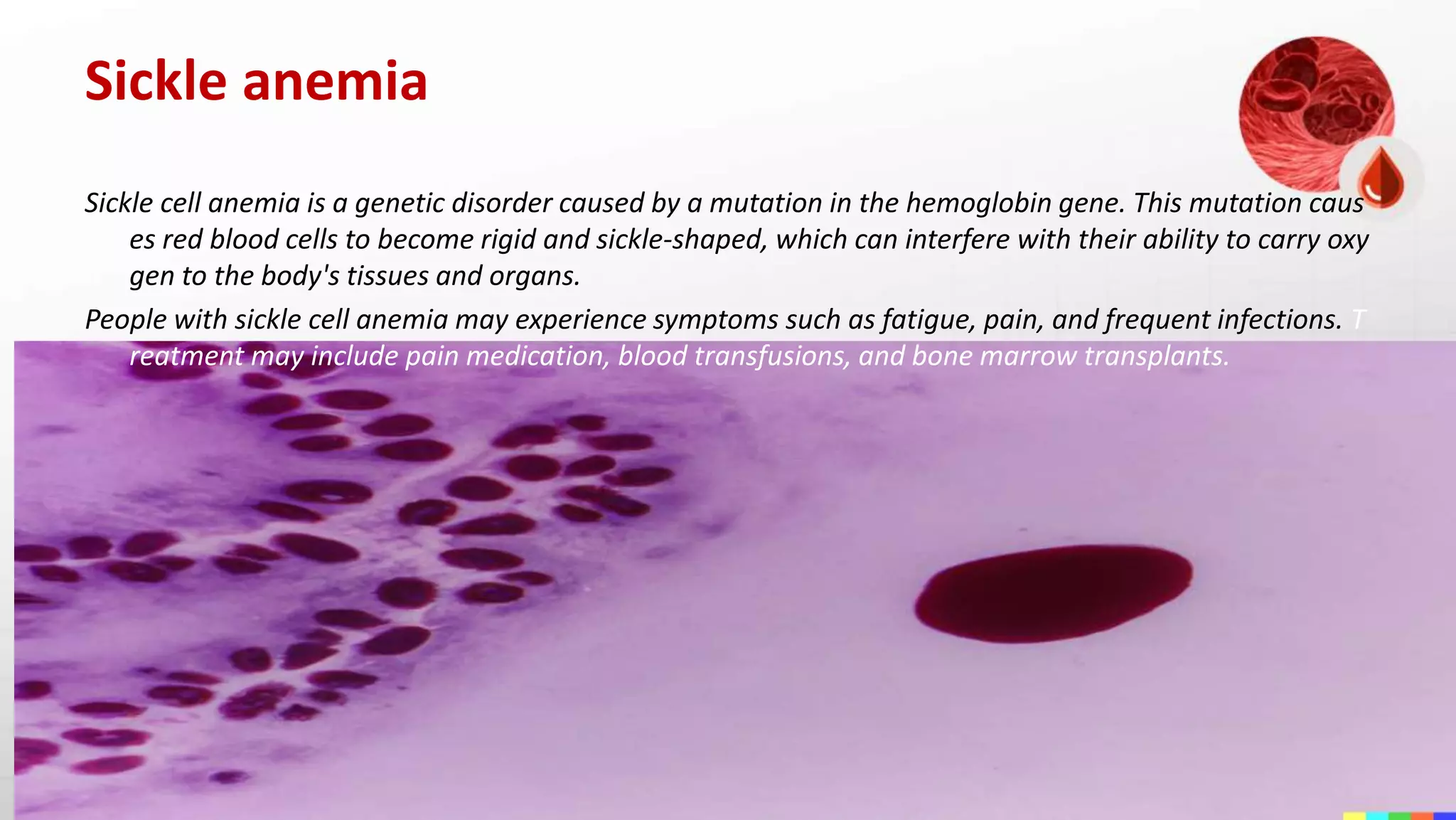
Sickle cell anemia is a genetic disorder caused by a mutation in the hemoglobin gene. This mutation caus
es red blood cells to become rigid and sickle-shaped, which can interfere with their ability to carry oxy
gen to the body's tissues and organs.
People with sickle cell anemia may experience symptoms such as fatigue, pain, and frequent infections. T
reatment may include pain medication, blood transfusions, and bone marrow transplants.
Thalassemia
Thalassemia is another genetic disorder that affects red blood cells. It is caused by a mutation in the gen
es that control the production of hemoglobin. This mutation leads to a decrease in the production of
hemoglobin, which can lead to anemia.
Symptoms of thalassemia may include fatigue, pale skin, and dark urine. Treatment may include blood tr
ansfusions, iron supplements, and bone marrow transplants.
Aplastic Anemia
Aplastic anemia is a condition in which the body's bone marrow fails to produce enough new red blood c
ells. This can be caused by a variety of factors, including infections, medications, and radiation expos
ure.
Symptoms of aplastic anemia may include fatigue, shortness of breath, and easy bruising. Treatment ma
y include medications, blood transfusions, and bone marrow transplants.
Hemolytic Anemia
Hemolytic anemia is a condition in which red blood cells are destroyed faster than they can be replaced.
This can be caused by a variety of factors, including infections, medications, and autoimmune disease
s.
Symptoms of hemolytic anemia may include fatigue, shortness of breath, and jaundice. Treatment may i
nclude medications, blood transfusions, and plasmapheresis.
Blood Tests
A blood test can be used to measure the number of red blood cells in the body, as well as their size and sh
ape. This information can be used to diagnose a variety of conditions, such as anemia, and to monito
r the effectiveness of treatments.
A blood test can also be used to measure the amount of hemoglobin in the blood, which can help to diag
nose and monitor a variety of other conditions, such as kidney disease and liver disease.
Conclusion
Red blood cells are essential for life, and are responsible for carrying oxygen and nutrients to the body's c
ells, as well as transporting carbon dioxide and other waste products back to the lungs, kidneys, and
other organs for removal.
Blood tests can be used to measure the number of red blood cells in the body, as well as their size and sh
ape, and to measure the amount of hemoglobin in the blood. This information can be used to diagnos
e and monitor a variety of conditions.
THANK YOU

Red blood cells

  • 1.
    The Power of RedBlood Cells
  • 2.
    CONTENTS I. Red BloodCells II. Structure and Function III. Production and Destruction IV. Types of Anemia V. Blood Tests VI. Conclusion
  • 3.
    Red blood cells,also known as ery throcytes, are the most common t ype of blood cells. They are respo nsible for transporting oxygen and nutrients throughout the body. Red blood cells are biconcave disc s, which means they have a flatte ned, doughnut-like shape with a d epression in the center. They are f lexible and can change shape to p ass through narrow blood vessels. What are Red Blood Cells ? 01
  • 4.
    Red blood cellsare made up of two parts: the cell membrane ----- which is a thin layer that surrounds the cell, and the cytoplasm,---- which is a jelly-like substance that contains the cell's genetic material. Red blood cells are responsible for carrying oxygen and nutrients to the body's cells, and for transporting carbon dioxide and other waste products back to the lungs, kidneys, and other organs for removal. Structure and Function
  • 5.
    Production and Destruction Redblood cells are produced in the bone marrow, and are constantly bei ng produced and destroyed. They have a life span of about 120 days, a fter which they are broken down and recycled by the body. The body needs a constant supply of red blood cells to function properly, and if the production or destruction of red blood cells is disrupted, it c an lead to a variety of medical conditions, such as anemia.
  • 6.
    Introduction to Diseasesof Red Blood Cells Red blood cells, or erythrocytes, are the most common type of blood cell in the human body. They are res ponsible for carrying oxygen to the tissues and organs of the body, and are essential for life. Unfortun ately, there are several diseases that can affect the production and function of red blood cells. These diseases can be caused by a variety of factors, including genetic mutations, environmental factors, and infections. Depending on the cause, they can range from mild to life-threatening. In this presenta tion, we will explore some of the most common diseases of red blood cells.
  • 7.
    Sickle anemia Sickle cellanemia is a genetic disorder caused by a mutation in the hemoglobin gene. This mutation caus es red blood cells to become rigid and sickle-shaped, which can interfere with their ability to carry oxy gen to the body's tissues and organs. People with sickle cell anemia may experience symptoms such as fatigue, pain, and frequent infections. T reatment may include pain medication, blood transfusions, and bone marrow transplants.
  • 8.
    Thalassemia Thalassemia is anothergenetic disorder that affects red blood cells. It is caused by a mutation in the gen es that control the production of hemoglobin. This mutation leads to a decrease in the production of hemoglobin, which can lead to anemia. Symptoms of thalassemia may include fatigue, pale skin, and dark urine. Treatment may include blood tr ansfusions, iron supplements, and bone marrow transplants.
  • 9.
    Aplastic Anemia Aplastic anemiais a condition in which the body's bone marrow fails to produce enough new red blood c ells. This can be caused by a variety of factors, including infections, medications, and radiation expos ure. Symptoms of aplastic anemia may include fatigue, shortness of breath, and easy bruising. Treatment ma y include medications, blood transfusions, and bone marrow transplants.
  • 10.
    Hemolytic Anemia Hemolytic anemiais a condition in which red blood cells are destroyed faster than they can be replaced. This can be caused by a variety of factors, including infections, medications, and autoimmune disease s. Symptoms of hemolytic anemia may include fatigue, shortness of breath, and jaundice. Treatment may i nclude medications, blood transfusions, and plasmapheresis.
  • 11.
    Blood Tests A bloodtest can be used to measure the number of red blood cells in the body, as well as their size and sh ape. This information can be used to diagnose a variety of conditions, such as anemia, and to monito r the effectiveness of treatments. A blood test can also be used to measure the amount of hemoglobin in the blood, which can help to diag nose and monitor a variety of other conditions, such as kidney disease and liver disease.
  • 12.
    Conclusion Red blood cellsare essential for life, and are responsible for carrying oxygen and nutrients to the body's c ells, as well as transporting carbon dioxide and other waste products back to the lungs, kidneys, and other organs for removal. Blood tests can be used to measure the number of red blood cells in the body, as well as their size and sh ape, and to measure the amount of hemoglobin in the blood. This information can be used to diagnos e and monitor a variety of conditions.
  • 13.