Anemia
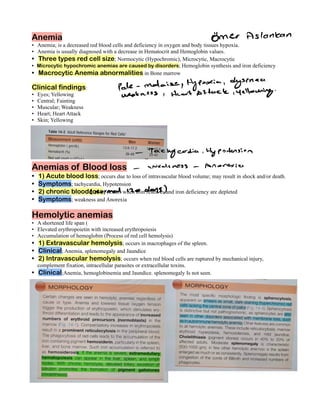
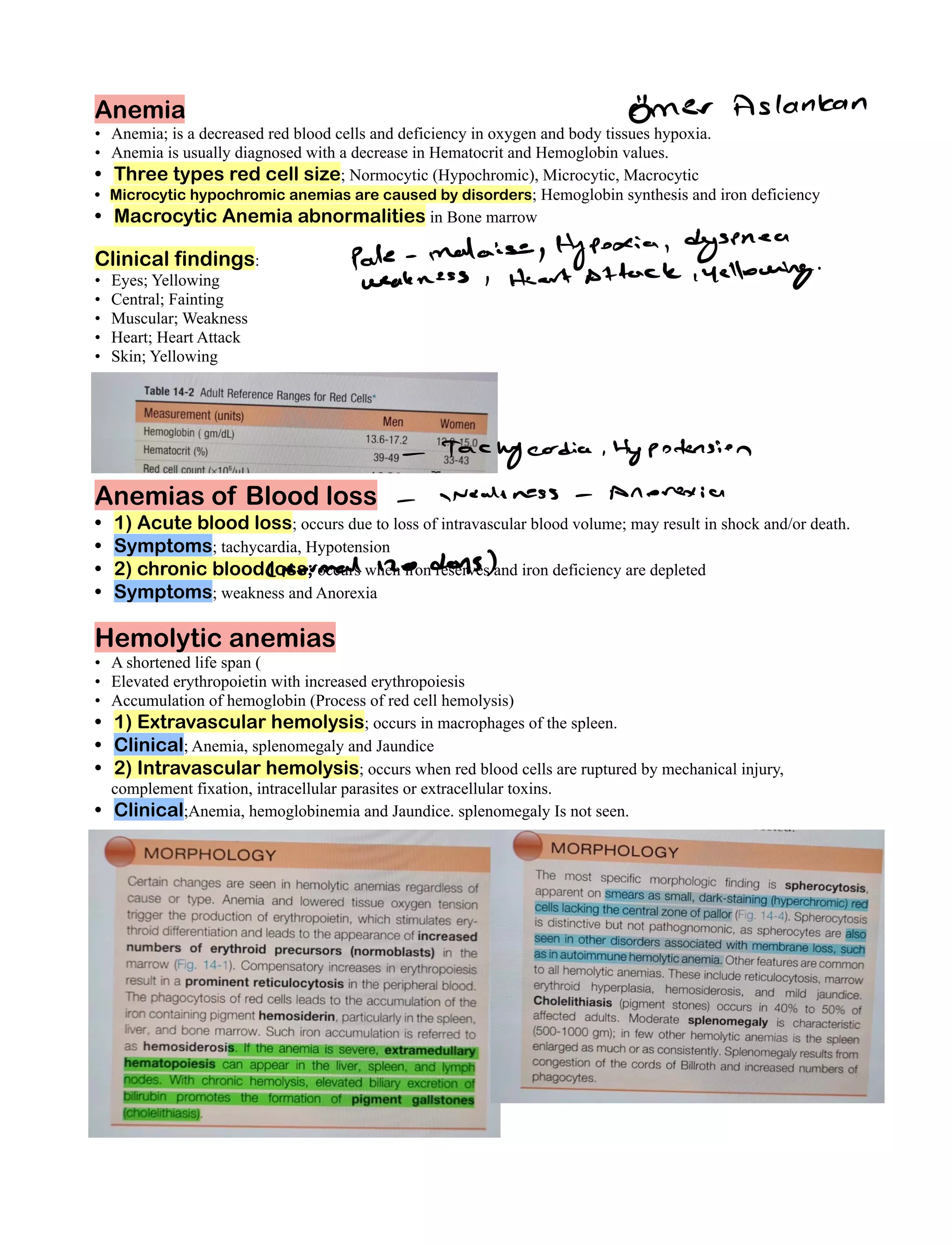
Anemia; is a decreased red blood cells and deficiency in oxygen and body tissues hypoxia.
•
Anemia is usually diagnosed with a decrease in Hematocrit and Hemoglobin values.
•
Three types red cell size; Normocytic (Hypochromic), Microcytic, Macrocytic
•
Microcytic hypochromic anemias are caused by disorders; Hemoglobin synthesis and iron deficiency
•
Macrocytic Anemia abnormalities in Bone marrow
•
Clinical findings:
Eyes; Yellowing
•
Central; Fainting
•
Muscular; Weakness
•
Heart; Heart Attack
•
Skin; Yellowing
•
Anemias of Blood loss
1) Acute blood loss; occurs due to loss of intravascular blood volume; may result in shock and/or death.
•
Symptoms; tachycardia, Hypotension
•
2) chronic blood loss; occurs when iron reserves and iron deficiency are depleted
•
Symptoms; weakness and Anorexia
•
Hemolytic anemias
A shortened life span (
•
Elevated erythropoietin with increased erythropoiesis
•
Accumulation of hemoglobin (Process of red cell hemolysis)
•
1) Extravascular hemolysis; occurs in macrophages of the spleen.
•
Clinical; Anemia, splenomegaly and Jaundice
•
2) Intravascular hemolysis; occurs when red blood cells are ruptured by mechanical injury,
•
complement fixation, intracellular parasites or extracellular toxins.
Clinical;Anemia, hemoglobinemia and Jaundice. splenomegaly Is not seen.
•
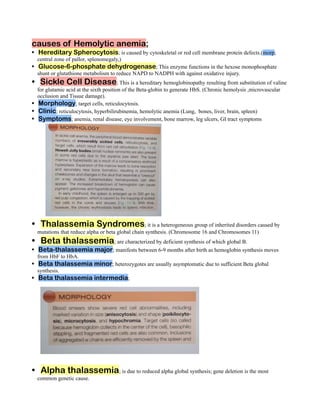
causes of Hemolytic anemia;
Hereditary Spherocytosis; is caused by cytoskeletal or red cell membrane protein defects.(morp;
•
central zone of pallor, splenomegaly,)
Glucose-6-phosphate dehydrogenase; This enzyme functions in the hexose monophosphate
•
shunt or glutathione metabolism to reduce NAPD to NADPH with against oxidative injury.
Sickle Cell Disease; This is a hereditary hemoglobinopathy resulting from substitution of valine
•
for glutamic acid at the sixth position of the Beta-globin to generate HbS. (Chronic hemolysis ,microvascular
occlusion and Tissue damage).
Morphology; target cells, reticulocytosis.
•
Clinic; reticulocytosis, hyperbilirubinemia, hemolytic anemia (Lung, bones, liver, brain, spleen)
•
Symptoms; anemia, renal disease, eye involvement, bone marrow, leg ulcers, GI tract symptoms
•
Thalassemia Syndromes; it is a heterogeneous group of inherited disorders caused by
•
mutations that reduce alpha or beta global chain synthesis. (Chromosome 16 and Chromosomes 11)
Beta thalassemia; are characterized by deficient synthesis of which global B.
•
Beta-thalassemia major; manifests between 6-9 months after birth as hemoglobin synthesis moves
•
from HbF to HbA.
Beta thalassemia minor; heterozygotes are usually asymptomatic due to sufficient Beta global
•
synthesis.
Beta thalassemia intermedia;
•
Alpha thalassemia; is due to reduced alpha global synthesis; gene deletion is the most
•
common genetic cause.
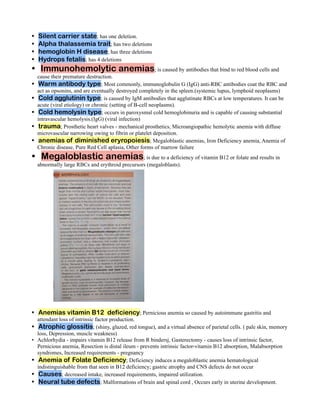
Silent carrier state; has one deletion.
•
Alpha thalassemia trait; has two deletions
•
hemoglobin H disease; has three deletions
•
Hydrops fetalis; has 4 deletions
•
Immunohemolytic anemias; is caused by antibodies that bind to red blood cells and
•
cause their premature destruction.
Warm antibody type; Most commonly, immunoglobulin G (IgG) anti-RBC antibodies coat the RBC and
•
act as opsonins, and are eventually destroyed completely in the spleen.(systemic lupus, lymphoid neoplasms)
Cold agglutinin type; is caused by IgM antibodies that agglutinate RBCs at low temperatures. It can be
•
acute (viral etiology) or chronic (setting of B-cell neoplasms).
Cold hemolysin type; occurs in paroxysmal cold hemoglobinuria and is capable of causing substantial
•
intravascular hemolysis.(IgG) (viral infection)
trauma; Prosthetic heart valves - mechanical prosthetics, Microangiopathic hemolytic anemia with diffuse
•
microvascular narrowing owing to fibrin or platelet deposition.
anemias of diminished eryropoiesis; Megaloblastic anemias, Iron Deficiency anemia, Anemia of
•
Chronic disease, Pure Red Cell aplasia, Other forms of marrow failure
Megaloblastic anemias; is due to a deficiency of vitamin B12 or folate and results in
•
abnormally large RBCs and erythroid precursors (megaloblasts).
Anemias vitamin B12 deficiency; Pernicious anemia so caused by autoimmune gastritis and
•
attendant loss of intrinsic factor production.
Atrophic glossitis; (shiny, glazed, red tongue), and a virtual absence of parietal cells. ( pale skin, memory
•
loss, Depression, muscle weakness)
Achlorhydia - impairs vitamin B12 release from R bindersj, Gasterectomy - causes loss of intrinsic factor,
•
Pernicious anemia, Resection is distal ileum - prevents intrinsic factor-vitamin B12 absorption, Malabsorption
syndromes, Increased requirements - pregnancy
Anemia of Folate Deficiency; Deficiency induces a megaloblastic anemia hematological
•
indistinguishable from that seen in B12 deficiency; gastric atrophy and CNS defects do not occur
Causes; decreased intake, increased requirements, impaired utilization.
•
Neural tube defects; Malformations of brain and spinal cord , Occurs early in uterine development.
•
Causes; Genetic and environmental components and Folic acid.
•
Types; Encephalocele, Anencephaly, Spina Bifida)
•
Red Blood cell and Bleeding Disorders.pdf

Red Blood cell and Bleeding Disorders.pdf

  • 1.
    Anemia Anemia; is adecreased red blood cells and deficiency in oxygen and body tissues hypoxia. • Anemia is usually diagnosed with a decrease in Hematocrit and Hemoglobin values. • Three types red cell size; Normocytic (Hypochromic), Microcytic, Macrocytic • Microcytic hypochromic anemias are caused by disorders; Hemoglobin synthesis and iron deficiency • Macrocytic Anemia abnormalities in Bone marrow • Clinical findings: Eyes; Yellowing • Central; Fainting • Muscular; Weakness • Heart; Heart Attack • Skin; Yellowing • Anemias of Blood loss 1) Acute blood loss; occurs due to loss of intravascular blood volume; may result in shock and/or death. • Symptoms; tachycardia, Hypotension • 2) chronic blood loss; occurs when iron reserves and iron deficiency are depleted • Symptoms; weakness and Anorexia • Hemolytic anemias A shortened life span ( • Elevated erythropoietin with increased erythropoiesis • Accumulation of hemoglobin (Process of red cell hemolysis) • 1) Extravascular hemolysis; occurs in macrophages of the spleen. • Clinical; Anemia, splenomegaly and Jaundice • 2) Intravascular hemolysis; occurs when red blood cells are ruptured by mechanical injury, • complement fixation, intracellular parasites or extracellular toxins. Clinical;Anemia, hemoglobinemia and Jaundice. splenomegaly Is not seen. •
  • 2.
    causes of Hemolyticanemia; Hereditary Spherocytosis; is caused by cytoskeletal or red cell membrane protein defects.(morp; • central zone of pallor, splenomegaly,) Glucose-6-phosphate dehydrogenase; This enzyme functions in the hexose monophosphate • shunt or glutathione metabolism to reduce NAPD to NADPH with against oxidative injury. Sickle Cell Disease; This is a hereditary hemoglobinopathy resulting from substitution of valine • for glutamic acid at the sixth position of the Beta-globin to generate HbS. (Chronic hemolysis ,microvascular occlusion and Tissue damage). Morphology; target cells, reticulocytosis. • Clinic; reticulocytosis, hyperbilirubinemia, hemolytic anemia (Lung, bones, liver, brain, spleen) • Symptoms; anemia, renal disease, eye involvement, bone marrow, leg ulcers, GI tract symptoms • Thalassemia Syndromes; it is a heterogeneous group of inherited disorders caused by • mutations that reduce alpha or beta global chain synthesis. (Chromosome 16 and Chromosomes 11) Beta thalassemia; are characterized by deficient synthesis of which global B. • Beta-thalassemia major; manifests between 6-9 months after birth as hemoglobin synthesis moves • from HbF to HbA. Beta thalassemia minor; heterozygotes are usually asymptomatic due to sufficient Beta global • synthesis. Beta thalassemia intermedia; • Alpha thalassemia; is due to reduced alpha global synthesis; gene deletion is the most • common genetic cause.
  • 3.
    Silent carrier state;has one deletion. • Alpha thalassemia trait; has two deletions • hemoglobin H disease; has three deletions • Hydrops fetalis; has 4 deletions • Immunohemolytic anemias; is caused by antibodies that bind to red blood cells and • cause their premature destruction. Warm antibody type; Most commonly, immunoglobulin G (IgG) anti-RBC antibodies coat the RBC and • act as opsonins, and are eventually destroyed completely in the spleen.(systemic lupus, lymphoid neoplasms) Cold agglutinin type; is caused by IgM antibodies that agglutinate RBCs at low temperatures. It can be • acute (viral etiology) or chronic (setting of B-cell neoplasms). Cold hemolysin type; occurs in paroxysmal cold hemoglobinuria and is capable of causing substantial • intravascular hemolysis.(IgG) (viral infection) trauma; Prosthetic heart valves - mechanical prosthetics, Microangiopathic hemolytic anemia with diffuse • microvascular narrowing owing to fibrin or platelet deposition. anemias of diminished eryropoiesis; Megaloblastic anemias, Iron Deficiency anemia, Anemia of • Chronic disease, Pure Red Cell aplasia, Other forms of marrow failure Megaloblastic anemias; is due to a deficiency of vitamin B12 or folate and results in • abnormally large RBCs and erythroid precursors (megaloblasts). Anemias vitamin B12 deficiency; Pernicious anemia so caused by autoimmune gastritis and • attendant loss of intrinsic factor production. Atrophic glossitis; (shiny, glazed, red tongue), and a virtual absence of parietal cells. ( pale skin, memory • loss, Depression, muscle weakness) Achlorhydia - impairs vitamin B12 release from R bindersj, Gasterectomy - causes loss of intrinsic factor, • Pernicious anemia, Resection is distal ileum - prevents intrinsic factor-vitamin B12 absorption, Malabsorption syndromes, Increased requirements - pregnancy Anemia of Folate Deficiency; Deficiency induces a megaloblastic anemia hematological • indistinguishable from that seen in B12 deficiency; gastric atrophy and CNS defects do not occur Causes; decreased intake, increased requirements, impaired utilization. • Neural tube defects; Malformations of brain and spinal cord , Occurs early in uterine development. •
  • 4.
    Causes; Genetic andenvironmental components and Folic acid. • Types; Encephalocele, Anencephaly, Spina Bifida) •