Recycling Spinning
Waste
Assignments
Of
Submitted To Submitted By
Sumi Akter
Department of KMT
BUFT
171-018-0-135
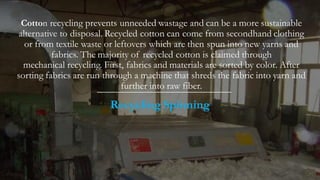
Cotton recycling prevents unneeded wastage and can be a more sustainable
alternative to disposal. Recycled cotton can come from secondhand clothing
or from textile waste or leftovers which are then spun into new yarns and
fabrics. The majority of recycled cotton is claimed through
mechanical recycling. First, fabrics and materials are sorted by color. After
sorting fabrics are run through a machine that shreds the fabric into yarn and
further into raw fiber.
Recycling Spinning
Waste types
Wastes have further two
types: Trash: Impurities
from plant body except
the fibers. Garbage:
Impurities other than
from the plant
Further types: Naps
,Dust , Fly, Fluff , Motes ,
Strips &Noil
Wastage Recycling Process
• As a consequence of the spinning, weaving and knitting
of the cotton and short-staple fiber being carded,
combed or open-end spun, working of regenerated fiber
has sprung up where regenerated fiber is intended as
knitting waste, sub-products derived from the spinning
cycle.
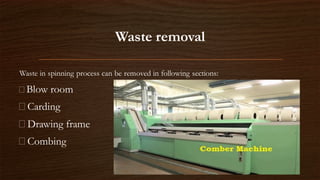
Waste removal
Waste in spinning process can be removed in following sections:
Blow room
Carding
Drawing frame
Combing
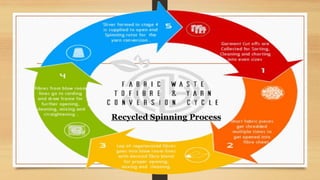
Recycled Spinning Process
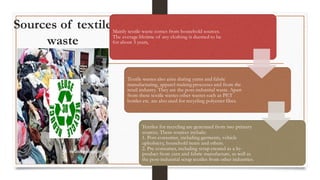
Sources of textile
waste
Mainly textile waste comes from household sources.
The average lifetime of any clothing is deemed to be
for about 3 years,
Textile wastes also arise during yarns and fabric
manufacturing, apparel-making processes and from the
retail industry. They are the post-industrial waste. Apart
from these textile wastes other wastes such as PET
bottles etc. are also used for recycling polyester fiber.
Textiles for recycling are generated from two primary
sources. These sources include:
1. Post-consumer, including garments, vehicle
upholstery, household items and others.
2. Pre-consumer, including scrap created as a by-
product from yarn and fabric manufacture, as well as
the post-industrial scrap textiles from other industries.
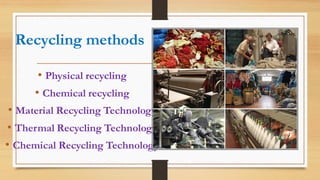
Recycling methods
• Physical recycling
• Chemical recycling
• Material Recycling Technology
• Thermal Recycling Technology
• Chemical Recycling Technology
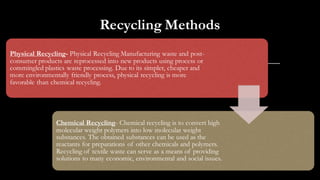
Recycling Methods
Physical Recycling- Physical Recycling Manufacturing waste and post-
consumer products are reprocessed into new products using process or
commingled plastics waste processing. Due to its simpler, cheaper and
more environmentally friendly process, physical recycling is more
favorable than chemical recycling.
Chemical Recycling- Chemical recycling is to convert high
molecular weight polymers into low molecular weight
substances. The obtained substances can be used as the
reactants for preparations of other chemicals and polymers.
Recycling of textile waste can serve as a means of providing
solutions to many economic, environmental and social issues.
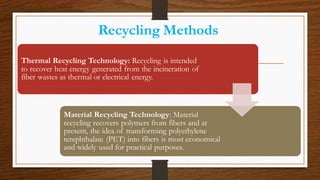
Recycling Methods
Thermal Recycling Technology: Recycling is intended
to recover heat energy generated from the incineration of
fiber wastes as thermal or electrical energy.
Material Recycling Technology: Material
recycling recovers polymers from fibers and at
present, the idea of transforming polyethylene
terephthalate (PET) into fibers is most economical
and widely used for practical purposes.
Chemical Recycling
Technology
Chemical recycling technology:
Chemical recycling recovers monomers
from waste fibers by polymer
decomposition. Impurities can be easily
removed from recovered monomers, so
their quality will be made exactly equal
to virgin monomers.
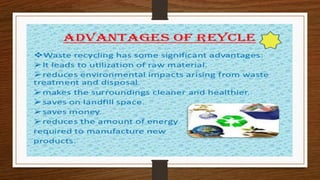
Benefits of Textile Recycling
•Reduces the amount of waste sent to landfills and incinerators
•Conserves natural resources such as timber, water and minerals
•Increases economic security by tapping a domestic source of materials
•Prevents pollution by reducing the need to collect new raw materials
•Saves energy
•Supports American manufacturing and conserves valuable resources
•Helps create jobs in the recycling and manufacturing industries in the United States.
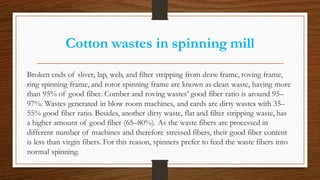
Cotton wastes in spinning mill
Broken ends of sliver, lap, web, and filter stripping from draw frame, roving frame,
ring spinning frame, and rotor spinning frame are known as clean waste, having more
than 95% of good fiber. Comber and roving wastes’ good fiber ratio is around 95–
97%. Wastes generated in blow room machines, and cards are dirty wastes with 35–
55% good fiber ratio. Besides, another dirty waste, flat and filter stripping waste, has
a higher amount of good fiber (65–80%). As the waste fibers are processed in
different number of machines and therefore stressed fibers, their good fiber content
is less than virgin fibers. For this reason, spinners prefer to feed the waste fibers into
normal spinning.
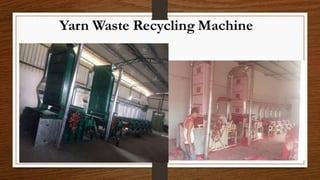
Yarn Waste Recycling Machine
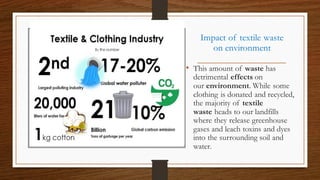
Impact of textile waste
on environment
• This amount of waste has
detrimental effects on
our environment. While some
clothing is donated and recycled,
the majority of textile
waste heads to our landfills
where they release greenhouse
gases and leach toxins and dyes
into the surrounding soil and
water.
End of the slide
Thank you

Recycle Spinning Waste

  • 1.
    Recycling Spinning Waste Assignments Of Submitted ToSubmitted By Sumi Akter Department of KMT BUFT 171-018-0-135
  • 2.
    Cotton recycling preventsunneeded wastage and can be a more sustainable alternative to disposal. Recycled cotton can come from secondhand clothing or from textile waste or leftovers which are then spun into new yarns and fabrics. The majority of recycled cotton is claimed through mechanical recycling. First, fabrics and materials are sorted by color. After sorting fabrics are run through a machine that shreds the fabric into yarn and further into raw fiber. Recycling Spinning
  • 3.
    Waste types Wastes havefurther two types: Trash: Impurities from plant body except the fibers. Garbage: Impurities other than from the plant Further types: Naps ,Dust , Fly, Fluff , Motes , Strips &Noil
  • 4.
    Wastage Recycling Process •As a consequence of the spinning, weaving and knitting of the cotton and short-staple fiber being carded, combed or open-end spun, working of regenerated fiber has sprung up where regenerated fiber is intended as knitting waste, sub-products derived from the spinning cycle.
  • 5.
    Waste removal Waste inspinning process can be removed in following sections: Blow room Carding Drawing frame Combing
  • 6.
  • 7.
    Sources of textile waste Mainlytextile waste comes from household sources. The average lifetime of any clothing is deemed to be for about 3 years, Textile wastes also arise during yarns and fabric manufacturing, apparel-making processes and from the retail industry. They are the post-industrial waste. Apart from these textile wastes other wastes such as PET bottles etc. are also used for recycling polyester fiber. Textiles for recycling are generated from two primary sources. These sources include: 1. Post-consumer, including garments, vehicle upholstery, household items and others. 2. Pre-consumer, including scrap created as a by- product from yarn and fabric manufacture, as well as the post-industrial scrap textiles from other industries.
  • 8.
    Recycling methods • Physicalrecycling • Chemical recycling • Material Recycling Technology • Thermal Recycling Technology • Chemical Recycling Technology
  • 9.
    Recycling Methods Physical Recycling-Physical Recycling Manufacturing waste and post- consumer products are reprocessed into new products using process or commingled plastics waste processing. Due to its simpler, cheaper and more environmentally friendly process, physical recycling is more favorable than chemical recycling. Chemical Recycling- Chemical recycling is to convert high molecular weight polymers into low molecular weight substances. The obtained substances can be used as the reactants for preparations of other chemicals and polymers. Recycling of textile waste can serve as a means of providing solutions to many economic, environmental and social issues.
  • 10.
    Recycling Methods Thermal RecyclingTechnology: Recycling is intended to recover heat energy generated from the incineration of fiber wastes as thermal or electrical energy. Material Recycling Technology: Material recycling recovers polymers from fibers and at present, the idea of transforming polyethylene terephthalate (PET) into fibers is most economical and widely used for practical purposes.
  • 11.
    Chemical Recycling Technology Chemical recyclingtechnology: Chemical recycling recovers monomers from waste fibers by polymer decomposition. Impurities can be easily removed from recovered monomers, so their quality will be made exactly equal to virgin monomers.
  • 12.
    Benefits of TextileRecycling •Reduces the amount of waste sent to landfills and incinerators •Conserves natural resources such as timber, water and minerals •Increases economic security by tapping a domestic source of materials •Prevents pollution by reducing the need to collect new raw materials •Saves energy •Supports American manufacturing and conserves valuable resources •Helps create jobs in the recycling and manufacturing industries in the United States.
  • 13.
    Cotton wastes inspinning mill Broken ends of sliver, lap, web, and filter stripping from draw frame, roving frame, ring spinning frame, and rotor spinning frame are known as clean waste, having more than 95% of good fiber. Comber and roving wastes’ good fiber ratio is around 95– 97%. Wastes generated in blow room machines, and cards are dirty wastes with 35– 55% good fiber ratio. Besides, another dirty waste, flat and filter stripping waste, has a higher amount of good fiber (65–80%). As the waste fibers are processed in different number of machines and therefore stressed fibers, their good fiber content is less than virgin fibers. For this reason, spinners prefer to feed the waste fibers into normal spinning.
  • 14.
  • 17.
    Impact of textilewaste on environment • This amount of waste has detrimental effects on our environment. While some clothing is donated and recycled, the majority of textile waste heads to our landfills where they release greenhouse gases and leach toxins and dyes into the surrounding soil and water.
  • 18.
    End of theslide Thank you