Chapter 3 Recruitment and Selection Procedures   Supervision in the Hospitality Industry Fourth Edition (250T or 250)
Competencies for Recruitment and Selection Procedures Describe how supervisors work with the human resources department to recruit new employees. Explain how supervisors can make open positions easier to fill. Identify the advantages and disadvantages of internal recruiting. (continued)
Competencies for Recruitment and Selection Procedures Identify the benefits and drawbacks of external recruiting. Describe what supervisors should do before, during, and after interviewing applicants. Explain how supervisors can contribute to human resources planning. (continued)
Line Departments—provide services or products directly to guests: Front Office Food and Beverage Staff Departments—provide services or products to line departments. Human Resources Accounting Line and Staff Departments
Recruit applicants Screen applicants Establish employee’s record Help develop the orientation/training program Duties of Human Resources Staff
Recruitment Tools Job Description: For a specific job, a written summary of: Duties Responsibilities Working conditions Activities  Job Descriptions/Job Specifications (continued)
Job Specification: To adequately perform a specific job a summary of critical: Knowledge Skills Abilities Experience Job Descriptions/Job Specifications (continued)
Flex-time—allowing employees to vary their times of arrival and departure Job Sharing—allowing two or more part-time employees to assume responsibilities of one full-time job  Compressed Scheduling—allowing employees to work the equivalent of a standard workweek in less than the usual five days Alternative Schedules
Improves morale of promoted employee Improves morale of other staff members Managers can better assess the abilities of internal recruits Successions help reinforce a company’s internal career ladder Lower costs than external recruiting Reduces training costs  Internal Recruiting—Advantages
Promotes inbreeding Lower morale for those skipped over for promotions Skipped over staff may feel favoritism exists Filling a gap in one department may create a more critical gap in another Internal Recruiting—Disadvantages
Develop a career ladder Inventory employees’ skills Cross train employees Post job openings Implementing Internal Recruiting
Brings new talent, new ideas into a company Enables recruiter to find out about competing companies Reinforces positive aspects of a company Avoids “politics” of internal recruiting Serves as a form of advertising External Recruiting—Advantages
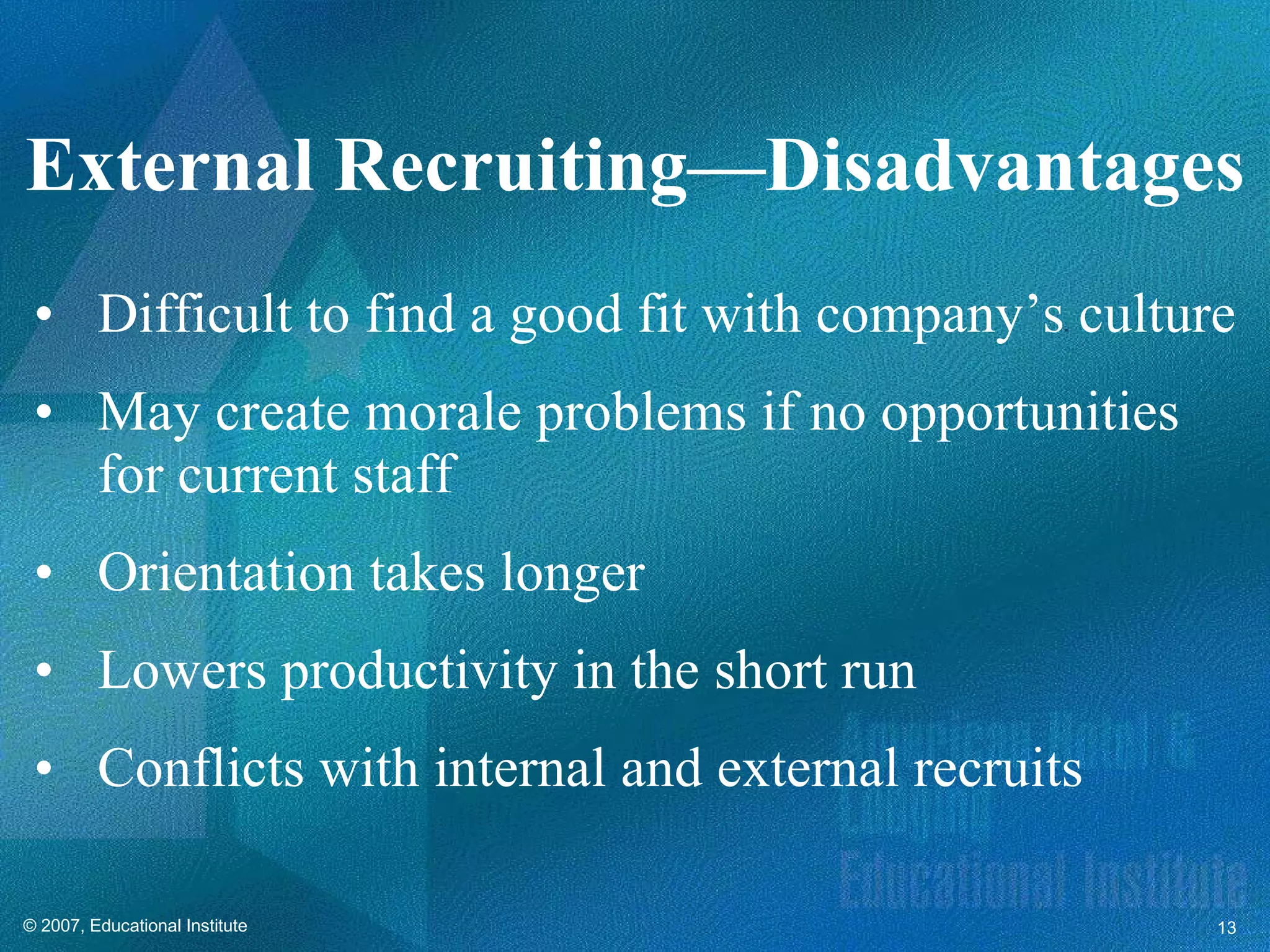
Difficult to find a good fit with company’s culture May create morale problems if no opportunities for current staff  Orientation takes longer Lowers productivity in the short run Conflicts with internal and external recruits External Recruiting—Disadvantages
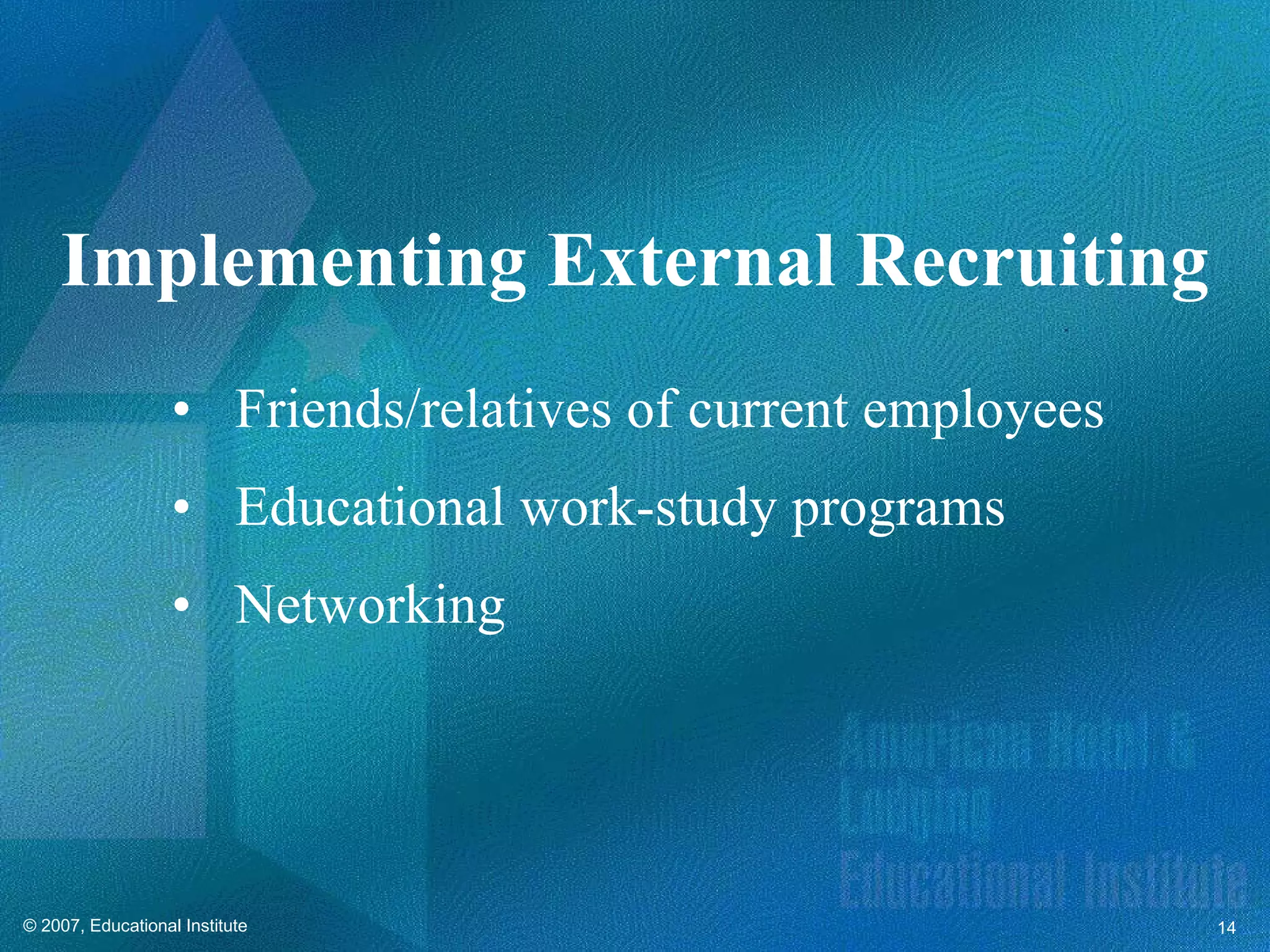
Friends/relatives of current employees Educational work-study programs Networking Implementing External Recruiting
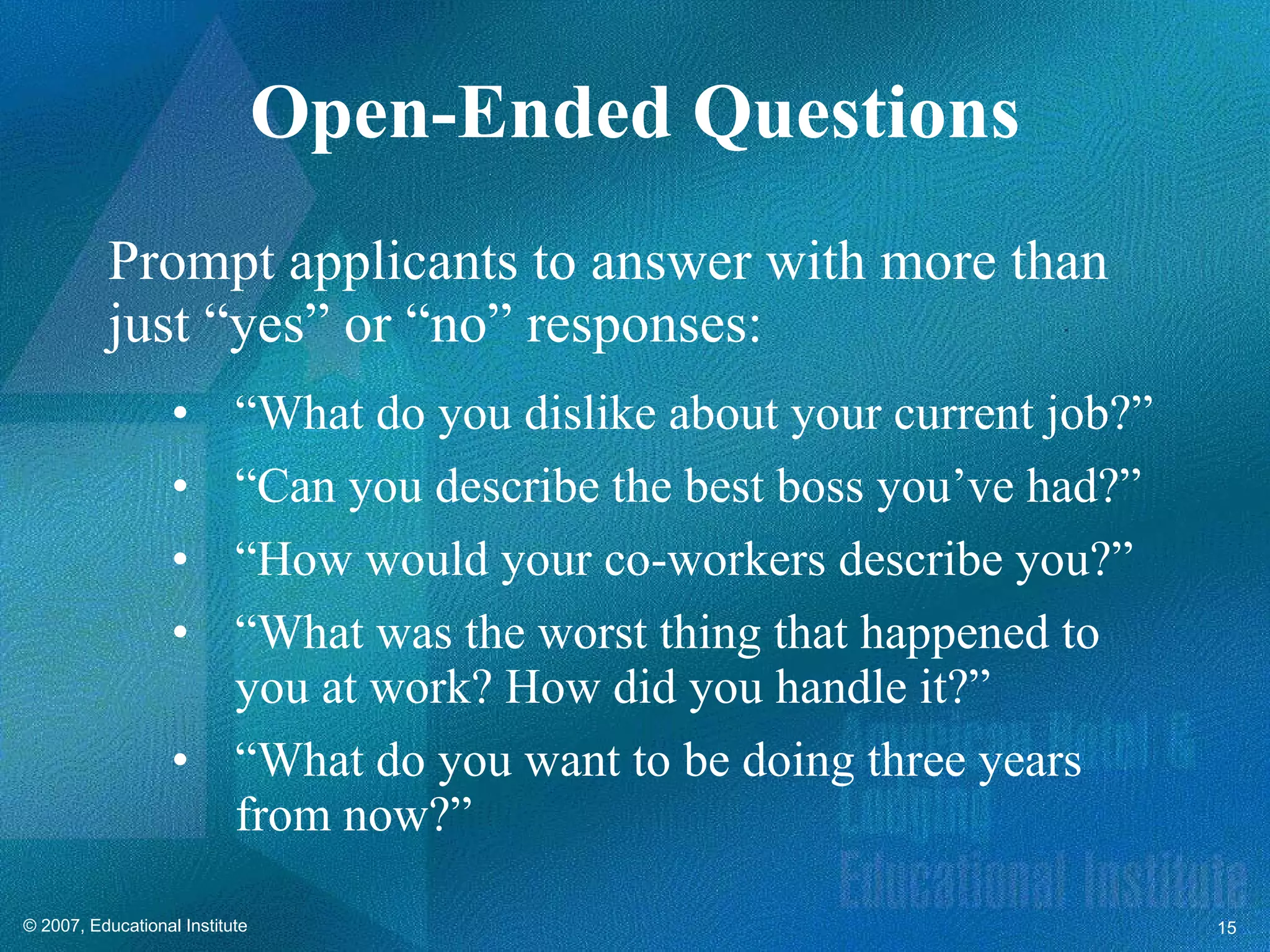
Prompt applicants to answer with more than just “yes” or “no” responses: “ What do you dislike about your current job?” “ Can you describe the best boss you’ve had?” “ How would your co-workers describe you?” “ What was the worst thing that happened to you at work? How did you handle it?” “ What do you want to be doing three years from now?” Open-Ended Questions
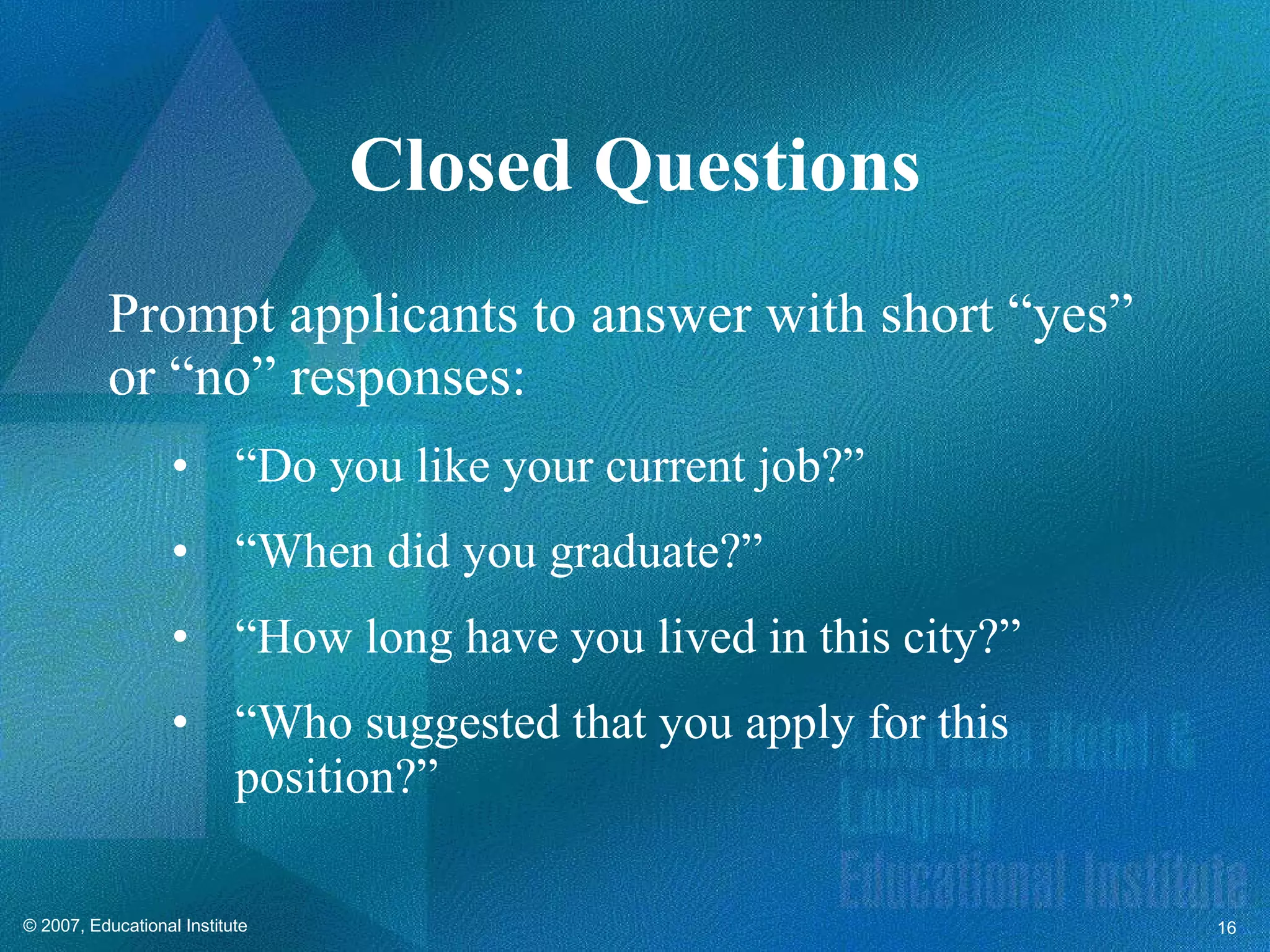
Prompt applicants to answer with short “yes” or “no” responses: “ Do you like your current job?” “ When did you graduate?” “ How long have you lived in this city?” “ Who suggested that you apply for this position?” Closed Questions
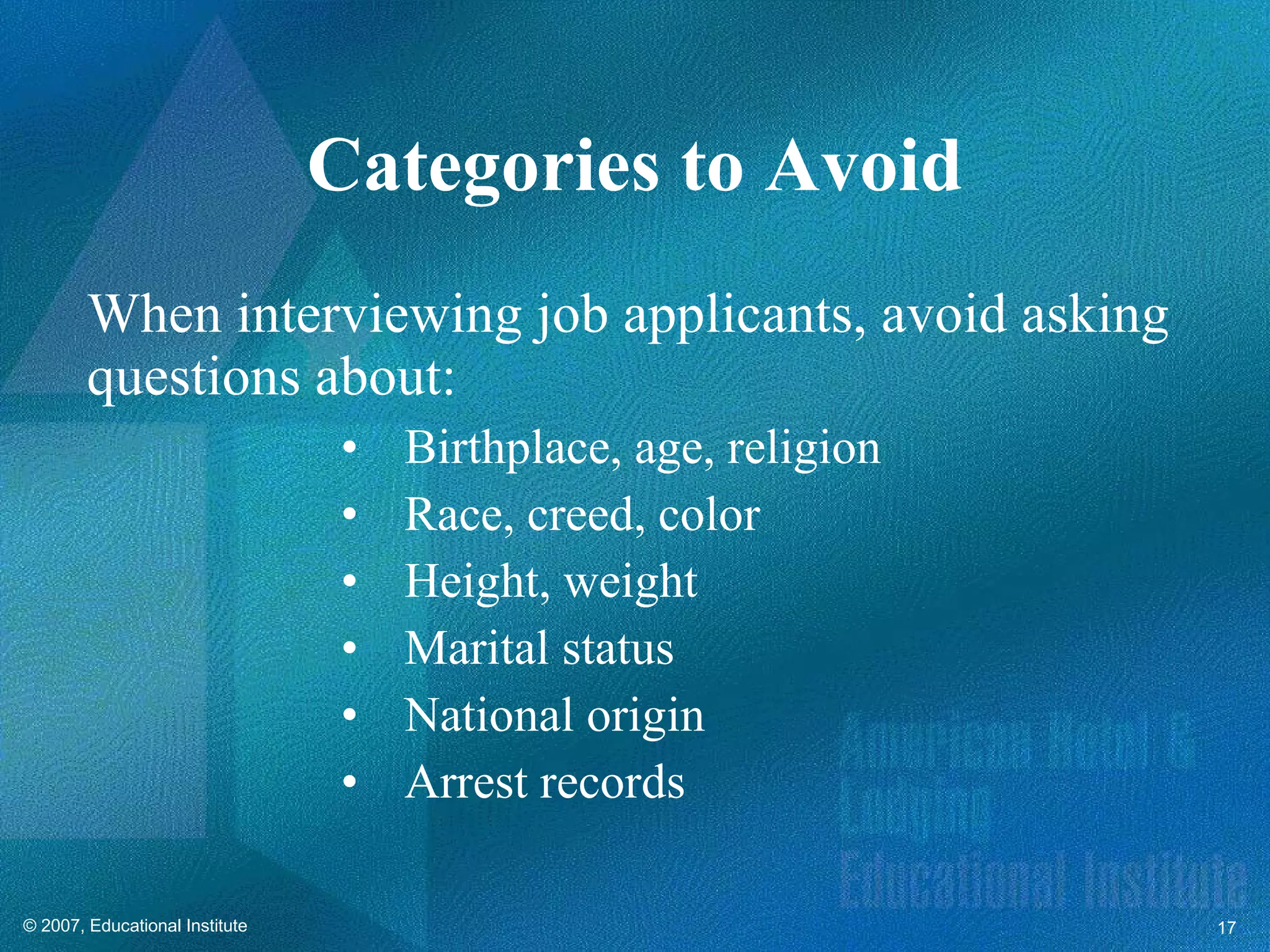
Categories to Avoid When interviewing job applicants, avoid asking questions about: Birthplace, age, religion Race, creed, color Height, weight Marital status National origin Arrest records

Recruitment and selection

  • 1.
    Chapter 3 Recruitmentand Selection Procedures Supervision in the Hospitality Industry Fourth Edition (250T or 250)
  • 2.
    Competencies for Recruitmentand Selection Procedures Describe how supervisors work with the human resources department to recruit new employees. Explain how supervisors can make open positions easier to fill. Identify the advantages and disadvantages of internal recruiting. (continued)
  • 3.
    Competencies for Recruitmentand Selection Procedures Identify the benefits and drawbacks of external recruiting. Describe what supervisors should do before, during, and after interviewing applicants. Explain how supervisors can contribute to human resources planning. (continued)
  • 4.
    Line Departments—provide servicesor products directly to guests: Front Office Food and Beverage Staff Departments—provide services or products to line departments. Human Resources Accounting Line and Staff Departments
  • 5.
    Recruit applicants Screenapplicants Establish employee’s record Help develop the orientation/training program Duties of Human Resources Staff
  • 6.
    Recruitment Tools JobDescription: For a specific job, a written summary of: Duties Responsibilities Working conditions Activities Job Descriptions/Job Specifications (continued)
  • 7.
    Job Specification: Toadequately perform a specific job a summary of critical: Knowledge Skills Abilities Experience Job Descriptions/Job Specifications (continued)
  • 8.
    Flex-time—allowing employees tovary their times of arrival and departure Job Sharing—allowing two or more part-time employees to assume responsibilities of one full-time job Compressed Scheduling—allowing employees to work the equivalent of a standard workweek in less than the usual five days Alternative Schedules
  • 9.
    Improves morale ofpromoted employee Improves morale of other staff members Managers can better assess the abilities of internal recruits Successions help reinforce a company’s internal career ladder Lower costs than external recruiting Reduces training costs Internal Recruiting—Advantages
  • 10.
    Promotes inbreeding Lowermorale for those skipped over for promotions Skipped over staff may feel favoritism exists Filling a gap in one department may create a more critical gap in another Internal Recruiting—Disadvantages
  • 11.
    Develop a careerladder Inventory employees’ skills Cross train employees Post job openings Implementing Internal Recruiting
  • 12.
    Brings new talent,new ideas into a company Enables recruiter to find out about competing companies Reinforces positive aspects of a company Avoids “politics” of internal recruiting Serves as a form of advertising External Recruiting—Advantages
  • 13.
    Difficult to finda good fit with company’s culture May create morale problems if no opportunities for current staff Orientation takes longer Lowers productivity in the short run Conflicts with internal and external recruits External Recruiting—Disadvantages
  • 14.
    Friends/relatives of currentemployees Educational work-study programs Networking Implementing External Recruiting
  • 15.
    Prompt applicants toanswer with more than just “yes” or “no” responses: “ What do you dislike about your current job?” “ Can you describe the best boss you’ve had?” “ How would your co-workers describe you?” “ What was the worst thing that happened to you at work? How did you handle it?” “ What do you want to be doing three years from now?” Open-Ended Questions
  • 16.
    Prompt applicants toanswer with short “yes” or “no” responses: “ Do you like your current job?” “ When did you graduate?” “ How long have you lived in this city?” “ Who suggested that you apply for this position?” Closed Questions
  • 17.
    Categories to AvoidWhen interviewing job applicants, avoid asking questions about: Birthplace, age, religion Race, creed, color Height, weight Marital status National origin Arrest records