Objectives
Define Reactive Airway Disease
Identify the Causes
Enlist Clinical Manifestations
Explain the Medical diagnose
Illustrate the Treatment
Reactive Airway Disease
Definition
Reactive airway disease is a group of conditions that
include reversible airway narrowing due to an external
stimulation
Cont…
o The term reactive airway disease may be used in pediatrics to
describe an asthma-like syndrome in infants too young for
diagnostic testing such as the bronchial challenge test
o Sometimes the terms "reactive airway disease" and "asthma"
are used interchangeably, but they are not the same thing.
Often, the term "reactive airway disease" is used when asthma
is suspected, but not yet confirmed
Clinical Manifestations
Coughing
Wheezing
Shortness of breath
Breathing difficulties
Mucus in the airways
Swelling of the airway lining
Hypersensitive airways
Cont…
Fever
Tachycardia
Flushing, cyanosis
Tachypnea, dyspnea
Poor feeding
Causes
o Reactive airway disease, like asthma, occurs most often after
you’ve had an infection. It’s caused by some irritant that triggers
the airways to overreact and swell or narrow. Some causes or
irritants may include:
• Pet hair or dander
• Dust
• Pollen
• Smoke
• Mold or mildew
• Exercise
Cont…
• Stress
• Perfume or other strong odors
• Changes in the weather
Diagnosis
• Blood tests or cultures to detect inflammation or infection
• Lung biopsy to help evaluate suspicious tissue growths
• Skin prick and RAST (radioallergosorbent test) blood tests to
identify allergy triggers
• Antinuclear antibody (ANA) blood tests to help diagnose
autoimmune disease
• CF gene mutation panel to diagnose cystic fibrosis
• Pulmonary function tests like spirometry, diffusion studies, and
body plethysmography to diagnose COPD
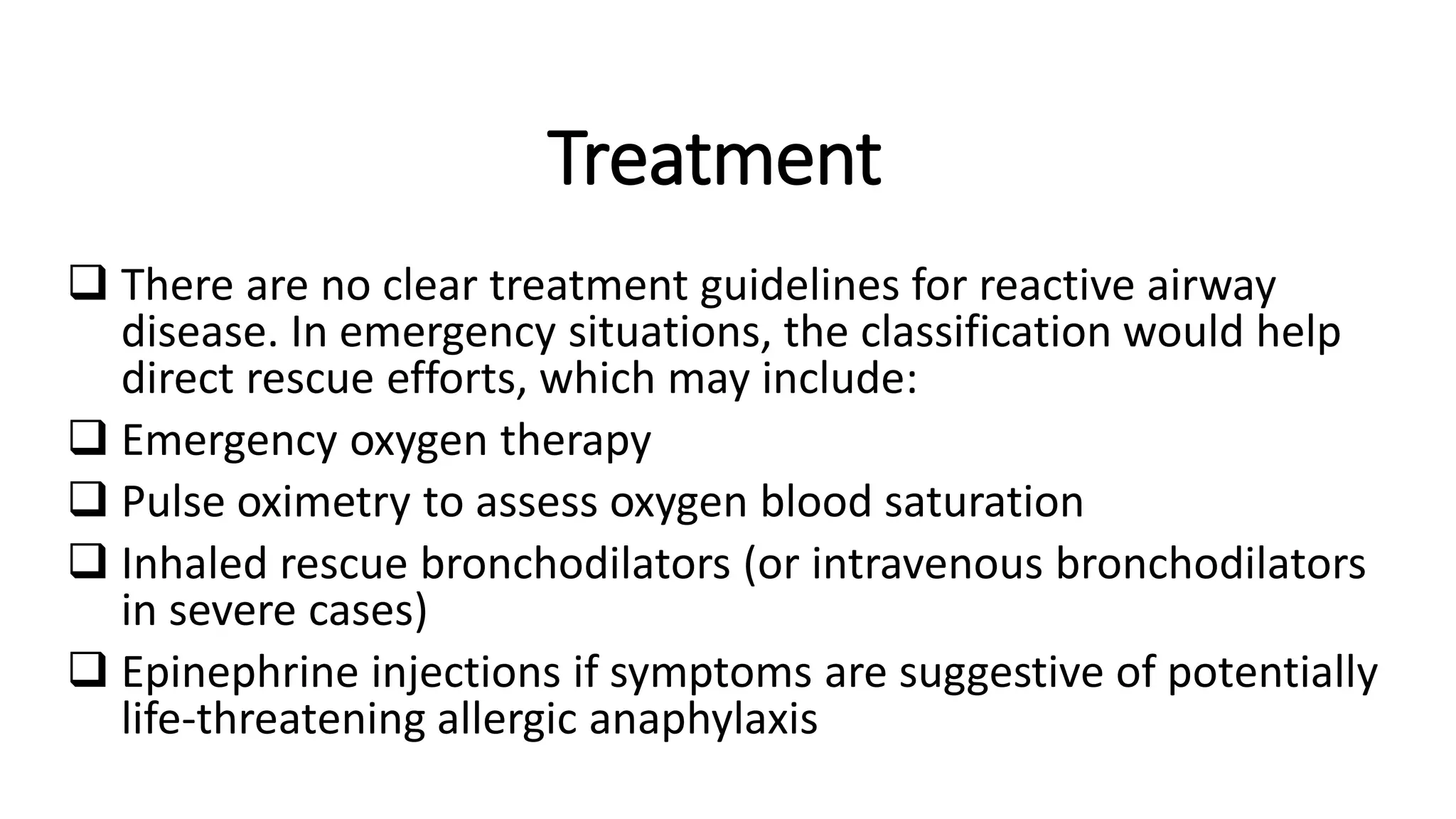
Treatment
There are no clear treatment guidelines for reactive airway
disease. In emergency situations, the classification would help
direct rescue efforts, which may include:
Emergency oxygen therapy
Pulse oximetry to assess oxygen blood saturation
Inhaled rescue bronchodilators (or intravenous bronchodilators
in severe cases)
Epinephrine injections if symptoms are suggestive of potentially
life-threatening allergic anaphylaxis
Cont…
using breathing and relaxation exercises (if your trigger is stress)
treating an infection or virus
using a rescue inhaler (effective for symptoms that are exercise-
induced)
Cont…
If a person has reactive airway disease but the underlying cause
is unknown, the best way to reduce symptoms is to avoid the
irritant. Allergy medication, such as antihistamines, may also
help
Reactive airway disease

Reactive airway disease

  • 2.
    Objectives Define Reactive AirwayDisease Identify the Causes Enlist Clinical Manifestations Explain the Medical diagnose Illustrate the Treatment
  • 3.
  • 4.
    Definition Reactive airway diseaseis a group of conditions that include reversible airway narrowing due to an external stimulation
  • 5.
    Cont… o The termreactive airway disease may be used in pediatrics to describe an asthma-like syndrome in infants too young for diagnostic testing such as the bronchial challenge test o Sometimes the terms "reactive airway disease" and "asthma" are used interchangeably, but they are not the same thing. Often, the term "reactive airway disease" is used when asthma is suspected, but not yet confirmed
  • 6.
    Clinical Manifestations Coughing Wheezing Shortness ofbreath Breathing difficulties Mucus in the airways Swelling of the airway lining Hypersensitive airways
  • 7.
  • 8.
    Causes o Reactive airwaydisease, like asthma, occurs most often after you’ve had an infection. It’s caused by some irritant that triggers the airways to overreact and swell or narrow. Some causes or irritants may include: • Pet hair or dander • Dust • Pollen • Smoke • Mold or mildew • Exercise
  • 9.
    Cont… • Stress • Perfumeor other strong odors • Changes in the weather
  • 10.
    Diagnosis • Blood testsor cultures to detect inflammation or infection • Lung biopsy to help evaluate suspicious tissue growths • Skin prick and RAST (radioallergosorbent test) blood tests to identify allergy triggers • Antinuclear antibody (ANA) blood tests to help diagnose autoimmune disease • CF gene mutation panel to diagnose cystic fibrosis • Pulmonary function tests like spirometry, diffusion studies, and body plethysmography to diagnose COPD
  • 11.
    Treatment There are noclear treatment guidelines for reactive airway disease. In emergency situations, the classification would help direct rescue efforts, which may include: Emergency oxygen therapy Pulse oximetry to assess oxygen blood saturation Inhaled rescue bronchodilators (or intravenous bronchodilators in severe cases) Epinephrine injections if symptoms are suggestive of potentially life-threatening allergic anaphylaxis
  • 12.
    Cont… using breathing andrelaxation exercises (if your trigger is stress) treating an infection or virus using a rescue inhaler (effective for symptoms that are exercise- induced)
  • 13.
    Cont… If a personhas reactive airway disease but the underlying cause is unknown, the best way to reduce symptoms is to avoid the irritant. Allergy medication, such as antihistamines, may also help