Respiratory system disorders
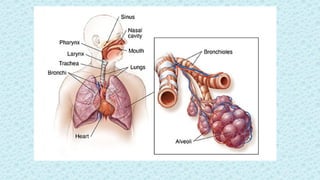
Breathingor respiration is the process of movement of air in and out of the lungs to
facilitate gases exchange with the internal environment.
During this process oxygen from atmosphere is exchanged with carbon dioxide
produced within the body.
Type
1. Infectious
2. Chronic
3.
ASTHMA
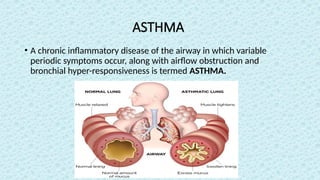
• A chronicinflammatory disease of the airway in which variable
periodic symptoms occur, along with airflow obstruction and
bronchial hyper-responsiveness is termed ASTHMA.
4.
Types
• Extrinsic :
thistype is initiated by a type I hypersensitivity (Atopic)
response to an extrinsic antigen.
• Intrinsic :
This type is initiated by the nonimmune mechanism such as
respiratory tract infection, exercise, aspirin, emotional upset and
exposure to the bronchial irritants (cigarettes).
5.
This classification ofasthma is clinically non-beneficial since the
asthmatic patient experiences the symptoms of both intrinsic and
extrinsic asthma
1. Atopic Asthma
2. Non-atopic Asthma
3. Drug induced Asthma
4. Occupational Asthma
6.
1. Atopic Asthma
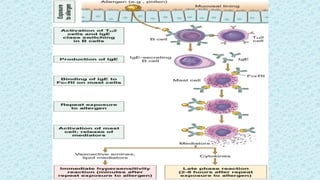
•This is type I IgE mediated hypersensitivity reaction.
• Very common in childhood beginning
• Its due to dust, pollen, animal danger, food, infection
• Diagnosis involved in serum Radioallergosorbent test (RASTs) to
determine the presence of IgE which recognized specific allergens.
8.
2. Non atopicasthma
• Asthmatic patient do not show allergen sensitisation and the skin test
for diagnosis are negative
• It is caused by viral respiratory infection like rhinovirus and para
influenza virus and inhaled air pollutant like a sulphur dioxide, ozone,
nitrogen dioxide
9.
3. Drug inducedasthma
• It is caused by certain pharmacological agents like aspirin
• Aspirin sensitive patients shows periodic rhinitis, nasal polyps,
bronchospasm.
4. Occupational Asthma
• Caused by a fumes (epoxy resins and plastics).
• Organic and chemical dust like wood cotton and platinum, in gases
toluene
10.
Etiology
1. Indoor allergens( house dust, mites in bedding, carpets)
2. Outdoor allergens ( pollens and moulds )
3. Tabacco smokes
4. Chemical irritants in the workplace
5. Air pollution.
11.
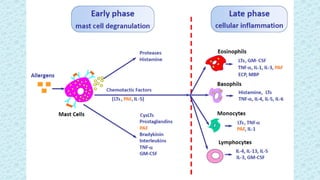
Pathogenesis
Two type ofreaction are produced by these mast cell derived
mediators.
• Early Phase or intermediate Reaction:
• Late Phase Reaction
12.
Early phase orintermediated reaction
• Bronchoconstriction, increase mucus production, and vasodilation are
the chief characteristics of this reaction.
• Mast cell derived mediators (histamine, prostaglandin D2 and
leukotrienes) and reflex neural pathway cause bronchoconstriction.
13.
Late Phase Reaction
•This rection is inflammation and the mediators stimulate production
of chemokines (such as eotaxin, a potent chemo attractant, and
eosinophils activator) by the epithelial cells.
• Chemokines allows the involvement of TH2 cells, eosinophils and
other leukocytes, which strengthen the inflammatory reaction
initiated by the local immune cells.
15.
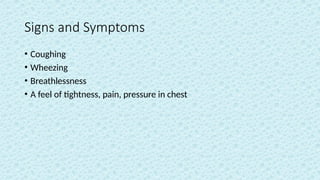
Signs and Symptoms
•Coughing
• Wheezing
• Breathlessness
• A feel of tightness, pain, pressure in chest
16.
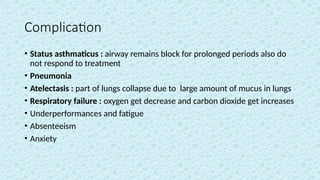
Complication
• Status asthmaticus: airway remains block for prolonged periods also do
not respond to treatment
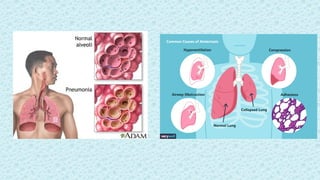
• Pneumonia
• Atelectasis : part of lungs collapse due to large amount of mucus in lungs
• Respiratory failure : oxygen get decrease and carbon dioxide get increases
• Underperformances and fatigue
• Absenteeism
• Anxiety
18.
Diagnosis
• Personal andmedical history
• Physical Examination
• Lung function
1. Spirometry : patient is asked to take a deep breath and then
exhaled forcefully into a mouthpiece connected to a spirometer
2. Peak airflow : small handheld device measures the rate at which
patient forces air out of the lungs
3. Trigger tests
19.
Plan of treatment
Medication
1.Long term asthma control medication
• Inhaled corticosteroids : fluticasone
• Leukotriene modifiers : montelukast, zafirlukast
• Long acting B Agonist : salmeterol, formoterol
• Combination inhaled : fluticasone-salmeterol
• Theophylline : bronchodilator
20.
2. Quick Relief(Rescue) Medications
• Short Acting B Agonists
• Ipratropium
3. Allergy Medication
• Allergy Shots (immunotherapy)
• Omalizumab