By:
Daniel Ramos
 Definitions of literature


 Poetry elements
   Provide examples
 Read to the punctuation and not end of the line
 because sometimes ideas in the poem are spread out
 over many lines and we only know when to pause, stop
 or are switching ideas by the punctuation or clues the
 writer gives us.

 Student volunteer read out loud
 Students grab a white board and marker from the teacher
  and circle, bracket, asterisk or question mark anything that
  caught their attention. (Teacher encourage students a lot at
  this point--telling them to mark whatever is popping out to
  them.)
 After the poem is marked up on the board, the teachers
  goes from the beginning of the poem to the end asking
  each student who marked up the poem why they did--and
  they talk about their answers as they go. The teachers then
  invites the class to make additional comments or
  suggestions and its a great way for the class if they struggle
  to understand the poem together.
 The teachers makes sure to use appropriate literature
  or poetry elements vocabulary so students hear it in
  action and discussion and they get used to and know
  that the teacher expects them to use/understand it.
 If the poetry elements don't come up, the teacher hits
  them herself. For example, the teacher might take the
  first image the writer suggests and ask the students
  something like: "in the first two lines, what picture is
  the writer trying to create in your mind?”
 Poem class discussion continues
   Format of the poem
      So the class can see what kind it might be and/or if there is
       anything unusual about it

   Content of the poem
      Like what it seems to be about
 Now that the class has talked about vocabulary and
    broken down a poem as a class, next the teacher will
    put them in pairs and give them a poem to work
    with, asking them to do what we did in class:
    1. Read the poem
    2. Mark what caught their attention
    3. Discuss it with their partner
    4. Come to some conclusions about the poem
    Two different pair will have the same poem. After
     they are done a period of time the two groups get
     together and compare what they found.
 Student need to do the same thing they did in pairs
 but to make it more interesting and to share with the
 class.

  1.   Students must select a poem
          Must analyze the poem the way they did in class/groups.

  2.   Post their answers to a class Wiki

  1.   Use Storybird to interpret the poem
          Incorporate the poetry elements
          Also post the link in their class Wiki
 Student need to do the same thing they did in pairs
 but to make it more interesting and to share with the
 class.

  1.   Use Wordle
          The words that had the most power of the poem will be
           placed in Wordle and post them to your class Wiki as well.

  2.   Students must leave comments in at least two other
       classmates by the end of the week.
    Students must look at two or three more poem by
     their selected writer, read some biographical
     information and then try to write an original poem of
     their own in the style of their poet.

    1.   Then they could read into Wimba and post or do as a
         PowerPoint with images or post to class Wiki or
         discussion board.
 Student readiness level
   The lesson starts basic by defining vocabulary and
      providing examples of elements of poetry for students to
      understand. The students with different abilities will
      understand as any regular student and nothing is
      adjusted.

 Learning styles
     Collaborative learning
     Active learning
     Discovery learning
     Self-directed learning
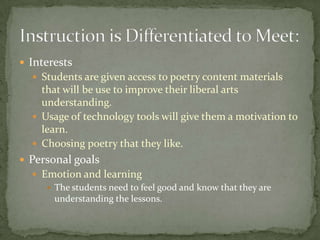
 Interests
   Students are given access to poetry content materials
    that will be use to improve their liberal arts
    understanding.
   Usage of technology tools will give them a motivation to
    learn.
   Choosing poetry that they like.
 Personal goals
   Emotion and learning
      The students need to feel good and know that they are
       understanding the lessons.

Reaching all students scenario

  • 1.
  • 2.
     Definitions ofliterature  Poetry elements  Provide examples
  • 3.
     Read tothe punctuation and not end of the line because sometimes ideas in the poem are spread out over many lines and we only know when to pause, stop or are switching ideas by the punctuation or clues the writer gives us.  Student volunteer read out loud
  • 4.
     Students graba white board and marker from the teacher and circle, bracket, asterisk or question mark anything that caught their attention. (Teacher encourage students a lot at this point--telling them to mark whatever is popping out to them.)  After the poem is marked up on the board, the teachers goes from the beginning of the poem to the end asking each student who marked up the poem why they did--and they talk about their answers as they go. The teachers then invites the class to make additional comments or suggestions and its a great way for the class if they struggle to understand the poem together.
  • 5.
     The teachersmakes sure to use appropriate literature or poetry elements vocabulary so students hear it in action and discussion and they get used to and know that the teacher expects them to use/understand it.  If the poetry elements don't come up, the teacher hits them herself. For example, the teacher might take the first image the writer suggests and ask the students something like: "in the first two lines, what picture is the writer trying to create in your mind?”
  • 6.
     Poem classdiscussion continues  Format of the poem  So the class can see what kind it might be and/or if there is anything unusual about it  Content of the poem  Like what it seems to be about
  • 7.
     Now thatthe class has talked about vocabulary and broken down a poem as a class, next the teacher will put them in pairs and give them a poem to work with, asking them to do what we did in class: 1. Read the poem 2. Mark what caught their attention 3. Discuss it with their partner 4. Come to some conclusions about the poem  Two different pair will have the same poem. After they are done a period of time the two groups get together and compare what they found.
  • 8.
     Student needto do the same thing they did in pairs but to make it more interesting and to share with the class. 1. Students must select a poem  Must analyze the poem the way they did in class/groups. 2. Post their answers to a class Wiki 1. Use Storybird to interpret the poem  Incorporate the poetry elements  Also post the link in their class Wiki
  • 9.
     Student needto do the same thing they did in pairs but to make it more interesting and to share with the class. 1. Use Wordle  The words that had the most power of the poem will be placed in Wordle and post them to your class Wiki as well. 2. Students must leave comments in at least two other classmates by the end of the week.
  • 10.
    Students must look at two or three more poem by their selected writer, read some biographical information and then try to write an original poem of their own in the style of their poet. 1. Then they could read into Wimba and post or do as a PowerPoint with images or post to class Wiki or discussion board.
  • 11.
     Student readinesslevel  The lesson starts basic by defining vocabulary and providing examples of elements of poetry for students to understand. The students with different abilities will understand as any regular student and nothing is adjusted.  Learning styles  Collaborative learning  Active learning  Discovery learning  Self-directed learning
  • 12.
     Interests  Students are given access to poetry content materials that will be use to improve their liberal arts understanding.  Usage of technology tools will give them a motivation to learn.  Choosing poetry that they like.  Personal goals  Emotion and learning  The students need to feel good and know that they are understanding the lessons.