Download as PDF, PPTX
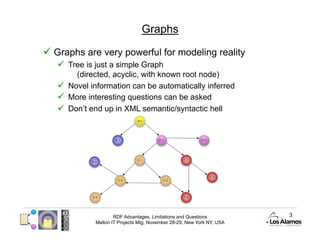
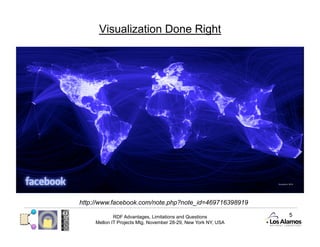
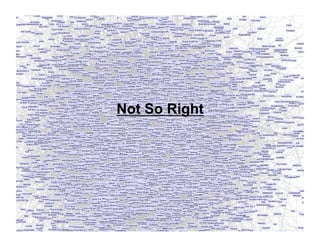
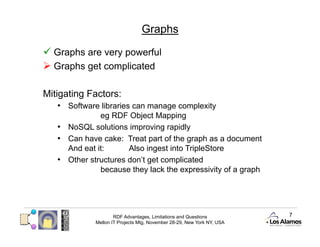
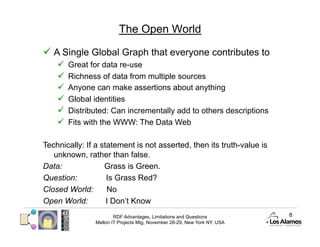
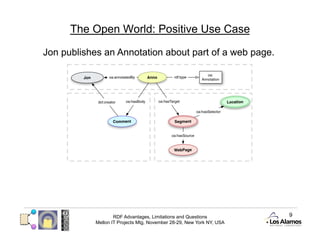
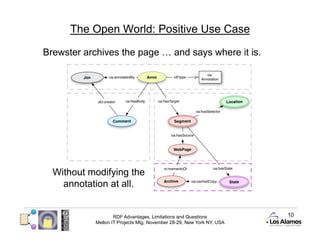
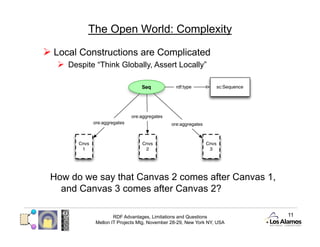
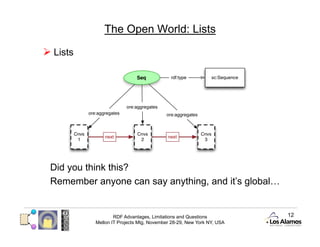
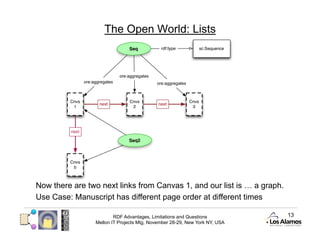
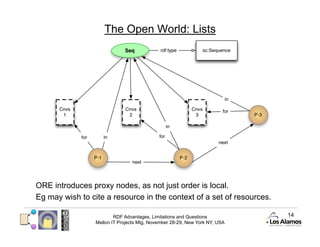
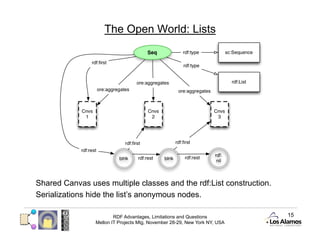
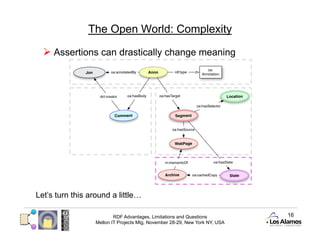
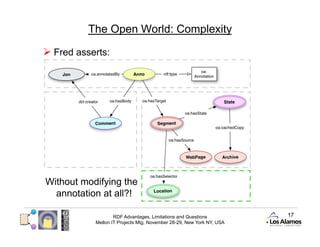
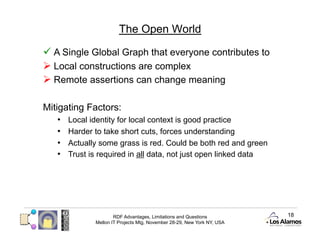
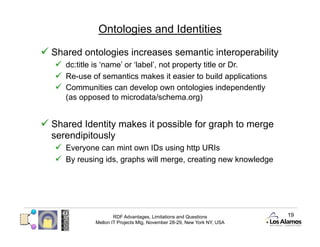
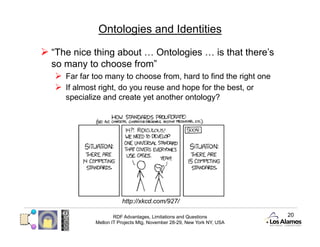
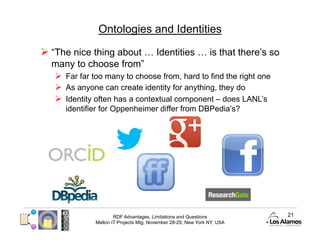
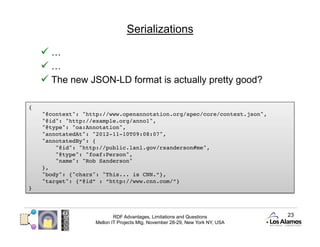
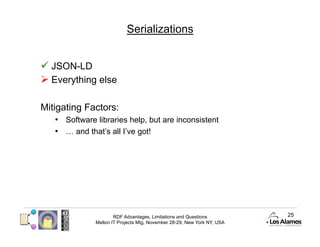
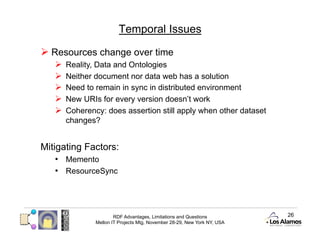
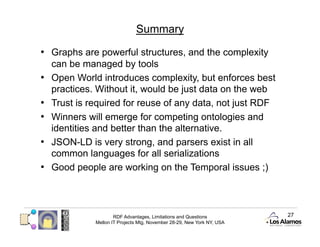

RDF has several advantages as a data modeling technique including its ability to represent complex relationships as graphs and enable novel inferences. However, graphs also introduce complexity in querying, storage, and visualization. Additional challenges include the open world assumption, managing ontologies and identities, multiple serialization formats, and addressing temporal issues as data changes over time. Overall, proponents argue that the benefits outweigh the limitations, which can be mitigated through tools and standards, and RDF enables a more powerful representation of data on the web compared to alternatives.


![5G Explained! A High Level Overview [Introduction]](https://cdn.slidesharecdn.com/ss_thumbnails/5gexplainedahighleveloverview-260119165306-cc137a3e-thumbnail.jpg?width=640&height=640&fit=bounds)


