
RATIONAL EMOTIVE BEHAVIOR
THERAPY
Albert Ellis
Rachelle Rona
Hello!
I am Rachelle
Rona
_The Presenter
2
“
What is Rational Emotive Behavior
Therapy (REBT)? Why should we care?
...
3
“
Got angry often?
4
“
Arguing and fighting a lot?
5
“
Worried or stressed?
...
6
“
Why does this happen?
7
Can we control
Our reactions and feelings?
...
8
Rebt says
We can!!!
9
Thoughts lead to feeling & action!!!
CHANGE THOUGHT,
CHANGE REACTION!
...
10
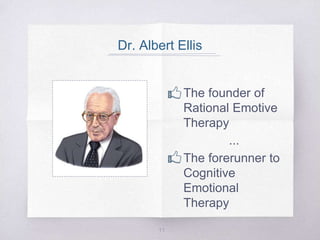
Dr. Albert Ellis
The founder of
Rational Emotive
Therapy
...
The forerunner to
Cognitive
Emotional
Therapy
11
““Men are disturbed, not by things,
but by the principles and notions
which they form concerning
things.”
Epictetus
12
“
Ellis says, aggression & feelings of
being hurt operating according to
an...
13
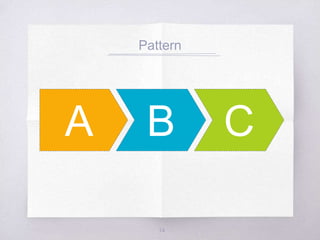
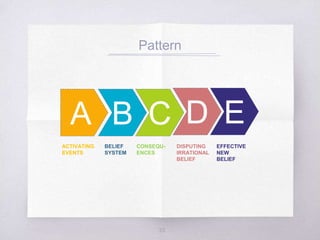
Pattern
A B C
14
B
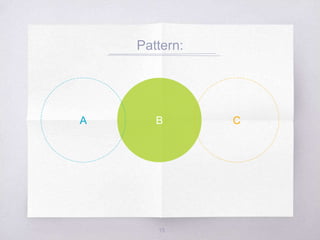
Pattern:
A C
15
Example I
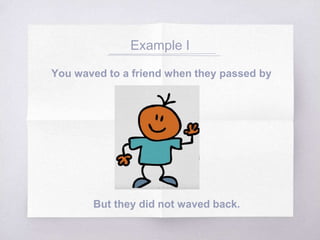
You waved to a friend when they passed by
But they did not waved back.
Example I
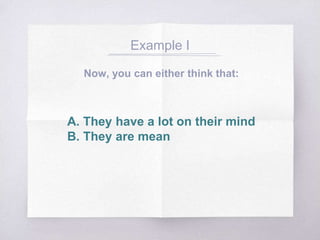
Now, you can either think that:
A. They have a lot on their mind
B. They are mean
Example I
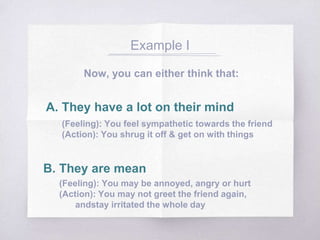
Now, you can either think that:
A. They have a lot on their mind
(Feeling): You feel sympathetic towards the friend
(Action): You shrug it off & get on with things
B. They are mean
(Feeling): You may be annoyed, angry or hurt
(Action): You may not greet the friend again,
andstay irritated the whole day
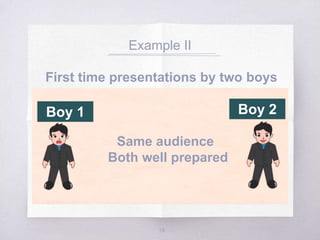
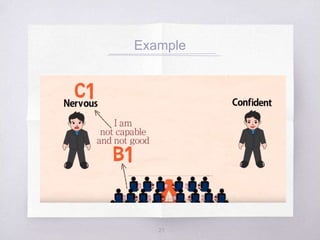
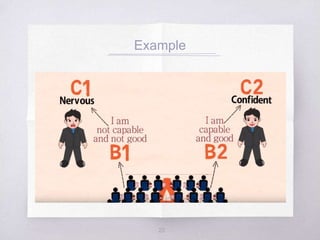
Example II
19
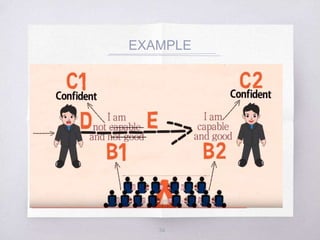
First time presentations by two boys
Same audience
Both well prepared
Boy 1 Boy 2
Example
20
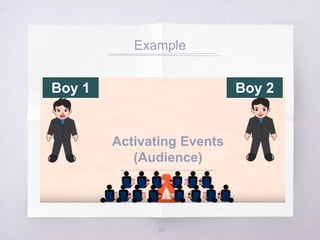
Boy 1 Boy 2
Activating Events
(Audience)
Example
21
Example
22
“So, if I’m the one that has upset
myself; then I can be the one that
cures myself.
All I have to do is change my
THOUGTHS.
23
“
Helping people who needlessly
suffer as victims to no longer suffer
by changing their thoughts about
what happen to them.
24
REBT
Is focused on living a rational life
while discovering and breaking
down the irrational beliefs that hold
us back and keep us trapped.
25
VIEW OF HUMAN NATURE
▧ We have the biological & cultural
tendency to think crookedly.
▧ We also have the capacity to
change our cognitive, emotive and
behavioral processes
▧ We are born with a potential for
both rational and irrational thinking.
26
The Albert Ellis 12 typical irrational
beliefs and disputing statements
27
▧ 1. The idea that it is a
dire necessity for adults
to be loved by significant
others for almost
everything they do…
▧ 2. The idea that certain
acts are awful or wicked,
and that people who
perform such acts should
be severely damned…
▧ … instead of their
concentrating on their own
self-respect, on winning
approval for practical
purposes, and on loving
rather than on being loved.
▧ … instead of the idea that
certain acts are self-
defeating or antisocial, and
that people who perform
such acts are behaving
stupidly, ignorantly, or
neurotically, and would be
better helped to
change. People’s poor
behaviors do not make them
rotten individuals.
The Albert Ellis 12 typical irrational
beliefs and disputing statements
28
▧ … instead of the idea that it
is too bad, that we had better
try to change or control bad
conditions so that they
become more satisfactory,
and, if that is not possible,
we had better temporarily
accept and gracefully lump
their existence.
▧ … instead of the idea that
neurosis is largely caused by
the view that we take of
unfortunate conditions.
▧ 3. The idea that it is
horrible when things are
not the way we like them
to be…
▧ 4. The idea that human
misery is invariably
externally caused and is
forced on us by outside
people and events…
The Albert Ellis 12 typical irrational
beliefs and disputing statements
29
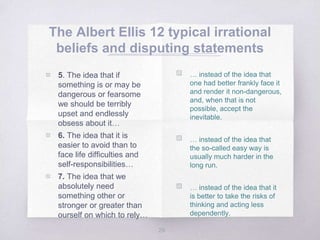
▧ … instead of the idea that
one had better frankly face it
and render it non-dangerous,
and, when that is not
possible, accept the
inevitable.
▧ … instead of the idea that
the so-called easy way is
usually much harder in the
long run.
▧ … instead of the idea that it
is better to take the risks of
thinking and acting less
dependently.
▧ 5. The idea that if
something is or may be
dangerous or fearsome
we should be terribly
upset and endlessly
obsess about it…
▧ 6. The idea that it is
easier to avoid than to
face life difficulties and
self-responsibilities…
▧ 7. The idea that we
absolutely need
something other or
stronger or greater than
ourself on which to rely…
The Albert Ellis 12 typical irrational
beliefs and disputing statements
30
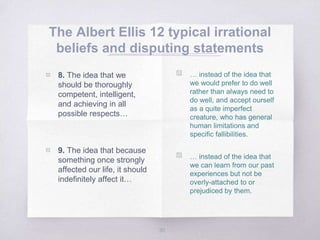
▧ … instead of the idea that
we would prefer to do well
rather than always need to
do well, and accept ourself
as a quite imperfect
creature, who has general
human limitations and
specific fallibilities.
▧ … instead of the idea that
we can learn from our past
experiences but not be
overly-attached to or
prejudiced by them.
▧ 8. The idea that we
should be thoroughly
competent, intelligent,
and achieving in all
possible respects…
▧ 9. The idea that because
something once strongly
affected our life, it should
indefinitely affect it…
The Albert Ellis 12 typical irrational
beliefs and disputing statements
31
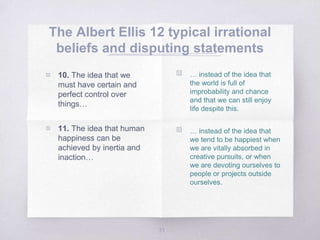
▧ … instead of the idea that
the world is full of
improbability and chance
and that we can still enjoy
life despite this.
▧ … instead of the idea that
we tend to be happiest when
we are vitally absorbed in
creative pursuits, or when
we are devoting ourselves to
people or projects outside
ourselves.
▧ 10. The idea that we
must have certain and
perfect control over
things…
▧ 11. The idea that human
happiness can be
achieved by inertia and
inaction…
The Albert Ellis 12 typical irrational
beliefs and disputing statements
32
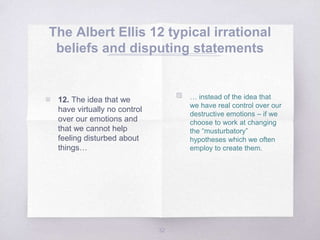
▧ … instead of the idea that
we have real control over our
destructive emotions – if we
choose to work at changing
the “musturbatory”
hypotheses which we often
employ to create them.
▧ 12. The idea that we
have virtually no control
over our emotions and
that we cannot help
feeling disturbed about
things…
Pattern
A B C
33
D E
DISPUTING
IRRATIONAL
BELIEF
EFFECTIVE
NEW
BELIEF
ACTIVATING
EVENTS
BELIEF
SYSTEM
CONSEQU-
ENCES
EXAMPLE
34
Do you suffer
from musterbation?
35
“Is it always ‘must‘ and ‘should‘
and ‘ought‘ with you?
36
Musty thinking
a classic recipe for general anxiety
and unhappiness
37
The Ellis idea is that we have
distorted thinking about:
▧ How *I* am: e.g. I MUST do well and be
treated with respect, or it is AWFUL and I can’t
bear it.
▧ How *you* are: e.g. You MUST be kind and
respectful and considerate toward me, or you
are an AWFUL person and I can’t stand it and I
have to give out to you and punish you.
▧ How *the world* is: e.g. Things MUST be
comfortable and as I want them to be, or else
it’s AWFUL and it’s not fair and I can’t cope.
38
“
UNCONDITIONAL ACCEPTANCE
39
Thanks!
Any questions?
40

Rational Emotive Behavior Therapy

  • 1.
  • 2.
  • 3.
    “ What is RationalEmotive Behavior Therapy (REBT)? Why should we care? ... 3
  • 4.
  • 5.
  • 6.
  • 7.
  • 8.
    Can we control Ourreactions and feelings? ... 8
  • 9.
  • 10.
    Thoughts lead tofeeling & action!!! CHANGE THOUGHT, CHANGE REACTION! ... 10
  • 11.
    Dr. Albert Ellis Thefounder of Rational Emotive Therapy ... The forerunner to Cognitive Emotional Therapy 11
  • 12.
    ““Men are disturbed,not by things, but by the principles and notions which they form concerning things.” Epictetus 12
  • 13.
    “ Ellis says, aggression& feelings of being hurt operating according to an... 13
  • 14.
  • 15.
  • 16.
    Example I You wavedto a friend when they passed by But they did not waved back.
  • 17.
    Example I Now, youcan either think that: A. They have a lot on their mind B. They are mean
  • 18.
    Example I Now, youcan either think that: A. They have a lot on their mind (Feeling): You feel sympathetic towards the friend (Action): You shrug it off & get on with things B. They are mean (Feeling): You may be annoyed, angry or hurt (Action): You may not greet the friend again, andstay irritated the whole day
  • 19.
    Example II 19 First timepresentations by two boys Same audience Both well prepared Boy 1 Boy 2
  • 20.
    Example 20 Boy 1 Boy2 Activating Events (Audience)
  • 21.
  • 22.
  • 23.
    “So, if I’mthe one that has upset myself; then I can be the one that cures myself. All I have to do is change my THOUGTHS. 23
  • 24.
    “ Helping people whoneedlessly suffer as victims to no longer suffer by changing their thoughts about what happen to them. 24
  • 25.
    REBT Is focused onliving a rational life while discovering and breaking down the irrational beliefs that hold us back and keep us trapped. 25
  • 26.
    VIEW OF HUMANNATURE ▧ We have the biological & cultural tendency to think crookedly. ▧ We also have the capacity to change our cognitive, emotive and behavioral processes ▧ We are born with a potential for both rational and irrational thinking. 26
  • 27.
    The Albert Ellis12 typical irrational beliefs and disputing statements 27 ▧ 1. The idea that it is a dire necessity for adults to be loved by significant others for almost everything they do… ▧ 2. The idea that certain acts are awful or wicked, and that people who perform such acts should be severely damned… ▧ … instead of their concentrating on their own self-respect, on winning approval for practical purposes, and on loving rather than on being loved. ▧ … instead of the idea that certain acts are self- defeating or antisocial, and that people who perform such acts are behaving stupidly, ignorantly, or neurotically, and would be better helped to change. People’s poor behaviors do not make them rotten individuals.
  • 28.
    The Albert Ellis12 typical irrational beliefs and disputing statements 28 ▧ … instead of the idea that it is too bad, that we had better try to change or control bad conditions so that they become more satisfactory, and, if that is not possible, we had better temporarily accept and gracefully lump their existence. ▧ … instead of the idea that neurosis is largely caused by the view that we take of unfortunate conditions. ▧ 3. The idea that it is horrible when things are not the way we like them to be… ▧ 4. The idea that human misery is invariably externally caused and is forced on us by outside people and events…
  • 29.
    The Albert Ellis12 typical irrational beliefs and disputing statements 29 ▧ … instead of the idea that one had better frankly face it and render it non-dangerous, and, when that is not possible, accept the inevitable. ▧ … instead of the idea that the so-called easy way is usually much harder in the long run. ▧ … instead of the idea that it is better to take the risks of thinking and acting less dependently. ▧ 5. The idea that if something is or may be dangerous or fearsome we should be terribly upset and endlessly obsess about it… ▧ 6. The idea that it is easier to avoid than to face life difficulties and self-responsibilities… ▧ 7. The idea that we absolutely need something other or stronger or greater than ourself on which to rely…
  • 30.
    The Albert Ellis12 typical irrational beliefs and disputing statements 30 ▧ … instead of the idea that we would prefer to do well rather than always need to do well, and accept ourself as a quite imperfect creature, who has general human limitations and specific fallibilities. ▧ … instead of the idea that we can learn from our past experiences but not be overly-attached to or prejudiced by them. ▧ 8. The idea that we should be thoroughly competent, intelligent, and achieving in all possible respects… ▧ 9. The idea that because something once strongly affected our life, it should indefinitely affect it…
  • 31.
    The Albert Ellis12 typical irrational beliefs and disputing statements 31 ▧ … instead of the idea that the world is full of improbability and chance and that we can still enjoy life despite this. ▧ … instead of the idea that we tend to be happiest when we are vitally absorbed in creative pursuits, or when we are devoting ourselves to people or projects outside ourselves. ▧ 10. The idea that we must have certain and perfect control over things… ▧ 11. The idea that human happiness can be achieved by inertia and inaction…
  • 32.
    The Albert Ellis12 typical irrational beliefs and disputing statements 32 ▧ … instead of the idea that we have real control over our destructive emotions – if we choose to work at changing the “musturbatory” hypotheses which we often employ to create them. ▧ 12. The idea that we have virtually no control over our emotions and that we cannot help feeling disturbed about things…
  • 33.
    Pattern A B C 33 DE DISPUTING IRRATIONAL BELIEF EFFECTIVE NEW BELIEF ACTIVATING EVENTS BELIEF SYSTEM CONSEQU- ENCES
  • 34.
  • 35.
    Do you suffer frommusterbation? 35
  • 36.
    “Is it always‘must‘ and ‘should‘ and ‘ought‘ with you? 36
  • 37.
    Musty thinking a classicrecipe for general anxiety and unhappiness 37
  • 38.
    The Ellis ideais that we have distorted thinking about: ▧ How *I* am: e.g. I MUST do well and be treated with respect, or it is AWFUL and I can’t bear it. ▧ How *you* are: e.g. You MUST be kind and respectful and considerate toward me, or you are an AWFUL person and I can’t stand it and I have to give out to you and punish you. ▧ How *the world* is: e.g. Things MUST be comfortable and as I want them to be, or else it’s AWFUL and it’s not fair and I can’t cope. 38
  • 39.
  • 40.

Editor's Notes

  • #4 So, the questions here.... ... First, let us have a survery... Who among you, ...
  • #5 Or...
  • #6 With their loved ones, partners, collegues, wife, family members or the authorities?
  • #7 Who among you are...
  • #8 So,...
  • #9 Well, the good news???
  • #11 Its basic premise is that... .... Okay, so, let’s quickly check about it’s proponent first.. Dr. Albert Ellis!
  • #12 He developed the framework back 1950’s and originally called it Rational Therapy, & over time he changed its name first to Rational Emotive Therapy & then in the 1980’s to Rational Emotive Behavior Therapy. Ellis was a philosopher at heart and studied many of the great Greek philosophers in order to gain an understanding of their teachings and he brought much of this into his work on REBT REBT’s basis can be summed up by the Greek stoic philosopher Epictetus, who said,..
  • #15 A- there’s Agression or Activating Event. It is the antecedent or something that happens to us. It could be situation, another person, our thoughts | C – The consequence. The emotion that we feel or behavior that we do. Most of the time, there’s a Negative Consequence, upsetness, feeling of being hurt or anger...
  • #16 But in between A & C is a B | We don’t think about the B | The B stands for a Belief System, a belief in what they say or what they do. & So, a counselor’s job when YOU come to them saying, “My feelings are hurt”; “I’m miserable”, “ I’ve got this enemy in my life, they’re really driving me crazy, hurting my feelings”, the counselor’s job is to help you identify your belief sytem about what their saying or doing. Because if you can identify your broken belief patterns, (that you are giving their words too much power, you’re looking for their approval, you’re living for their affection towards you. You insist that they respect you. When they don’t, your feelings are hurt.) If you can change your belief system, no matter what they say, they cannot hurt your feelings. Because those people say the same things to others and others don’t even care. Why? Because they don’t believe that their words have any power. But because you believe that person is important and you believe that their words or actions are scandalous, terrible and horrific, you have such a negative consequence that you’ve got disturbed. But it’s not them that disturbed you, It’s you and your belief system that has disturb yourself. Let‘s give an example:
  • #17 First time presentations by two boys Same audience Both well prepared
  • #20 First time presentations by two boys Same audience Both well prepared
  • #21 First time presentations by two boys Same audience Both well prepared
  • #22 First time presentations by two boys Same audience Both well prepared
  • #23 First time presentations by two boys Same audience Both well prepared
  • #24 There’s where social science has been for over 60 years....
  • #27 We have the biological & cultural tendency to think crookedly - - - - To needlessly disturb ourselves Humans are self-talking, self-evaluating & self-sustaining We develop emotional & behavioral problems when we mistake simple preferences (love, approval) for dire needs But our attitudes, our belief, our thougths – the way we think about events and the meanings we give to them --- will directly affect how we feel and behave.
  • #28 During his time as a therapist, he identified 12 irrational beliefs that many people have. Ellis’ definition of an irrational belief is that: It distorts reality It is illogical It prevents you from reaching your goals It leads to unhealthy emotions It leads to self-defeating behavior
  • #33 Musterbatory Hypothesis Ellis by the way, was a colorful character and he coined the term musterbate, awful-ising, terrible-ising, absolutistic and I-cant-stand-it-itis... These are some of his concept..
  • #38 In psychotherapy it is also known as inflexible ‘DEMAND THINKING’, and ‘RULES FOR LIVING
  • #39 Why all the absolute inflexible MUST demands of yourself and others and the world? Is that realistic?  Are we a special being that unusual universal laws apply to? Are we somebody who has the supreme power to control people, situations and events? Is it written in stone or in the stars that things must be as you demand them to be? The solution is to quite build awareness of when we attempt to control our environments with our musterbation, and to consciously and deliberately thought stop and replace our inflexible demands with realistic ‘PREFERENCES’ instead  – to restructure our negative automatic thoughts with healthy rational alternative thinking – over and over and over again, until we have new hardwired thinking that respects and has UNCONDITIONAL ACCEPTANCE of ourselves and others and the world. 
  • #40 Big job, but it can be done, it’s been proven to alleviate stress and anxiety and to curb self-sabotaging behaviours (aggression, avoidance, procrastination etc). And the good news is that the brain (literally!) rewires when your new responses give better outcomes, and makes the healthier attitudes and thinking and behaviours your new automatic defaults. Apply apply apply… Change your life.