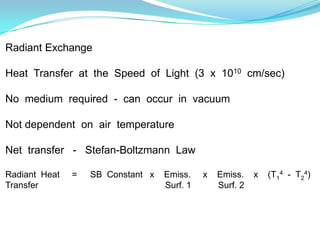
Radiant Exchange

Heat Transfer at the Speed of Light (3 x 1010 cm/sec)

No medium required - can occur in vacuum

Not dependent on air temperature

Net transfer - Stefan-Boltzmann Law

Radiant Heat   =   SB Constant x   Emiss.    x   Emiss.    x   (T14 - T24)
Transfer                           Surf. 1       Surf. 2
Significance of this transfer

Man - shorts - sitting quietly
  ~ 50 - 70% heat loss (30 W/m2) - via radiant exchange

Animal - bright sun - solar radiation (intercepted) =

                                    much larger than MR
Total radiant power - received outside earth’s atmosphere
-on a plane - right angle to sun’s rays = 1360 W/m2

Atmosphere scatters light

Blue (shorter wavelength) more than red (longer wavelength)
                                              >> blue sky

Sun - orange or red because blues & violets have been
scattered out + at sunset & sunrise - greater amount
atmosphere for light to pass through.

UV radiation diminished by:
1. Ozone absorption - stratosphere
   2. scattering
Solar radiation - received by earth’s surface dependent on:

1. Sun’s elevation above horizon

2. Light scattering by atmosphere (including effects -
                 water droplets & ice particles - clouds

3. Absorbance - atmospheric gases (water vapor, CO2,
               O3, etc....) - absorbs infrared radiation
Infrared radiation (sun) - almost entirely absorbed by
 atmosphere

Visible & near-infrared (sun) pass through >> earth’s surface
    - then trapped - reradiated as infrared from surface - but
                                    cannot entirely leave

This = GREENHOUSE EFFECT by atmosphere >>
moderating effect on daily temperature swings of earth’s
surface.

Clear, dry atmosphere - night - rapid radiant cooling

Clear sky - night - serves as radiant heat sink
Low-temperature infrared radiation does not penetrate
water or tissues with water.

+ There is no effect on heat transfer within body

Color affects visible radiation absorption

Black absorbs more radiation - visible spectrum

White reflects more radiation visible spectrum
      1/2 solar radiation reaching earth - in visible region
Would expect animals with dark coats or skin - to have
heat stress problems.
  + animals with light coats or skin to have few heat-
                                         related problems.

NOT ALWAYS TRUE -         polar animals

Fur or plumage coats - absorption site = coat surface
Smooth or even surface exposed to solar radiation -
            heat absorbed dependent on color.

Irregular coat - light color - beam reflected into
                               coat and absorbed near skin.

  Dark color >> little reflectance - less penetration
Combine this with the effect of windspeed.

Temperature of superficial layers of insulation much
                                   higher for dark plumage.

BUT - high wind speeds - heat absorbed - dark plumage -
           much less - due - dissipation via convection.

Light plumage - less effect - wind speed - due to greater
                                              penetration.
Coat density - important -
Sheep example

Awassi sheep - loose coat -
  Deep penetration >> high skin temperature
  Also - affected by wind speed

Merino sheep - dense coat little penetration
   Skin temperature not as high
   BUT - fleece temperature - very high
      Large infrared heat loss
Large reduction - heat flow with increased fleece length

Ogaden sheep (Persian) - smooth white coats
Decreased heat load due to high reflectance of
solar radiation.
EMISSIVITY

Measurement of an objects ability to emit radiation at a
given temperature
Blackbody Emissivity = 1.0

Also an ideal absorber

•     Emissivity + Reflectivity + Transmittance = 1.0

Reflectivity = measurement of an object's ability to reflect
                                               radiation
Transmittance = measurement of an object's ability to
                                  pass or transmit radiation
• Ideal surface for infrared measurements is a perfect
                           radiator with an emissivity = 1
Most objects are not perfect radiators

Many instruments - compensate for different emissivities

Higher emissivity >> better chance getting accurate
Low emissivity objects = polished, shiny surfaces

• Most organic substances have emissivity = 0.95

Transmission - not an important consideration - except
in case of plastics and glass
BLACK GLOBE THERMOMETER

1) Practical / Inexpensive means - isolating mean radiant
temperature from other factors in - thermal
Environment

2) Indication of combined effects of radiant energy, air
temperature, and air velocity
______________________________________________
MEAN RADIANT TEMPERATURE

Temperature of a uniform "black" enclosure in which an
object would exchange same amount of energy as in
actual environment.

MRT = 100 {[Tg / 100]4 + 1.028 x sq. root [V(tg - ta)]}.25-460

Tg = tg + 460              tg = globe temperature (°F)
V = air velocity (fpm)           ta = air temperature (°F)
RADIANT HEAT LOAD

Total radiation received by an object from all surroundings
RHL = S x Ts4
Ts = MRT + 460
S = Stefan-Boltsman Constant = 0.173 x 10⁻⁸

Radiation

  • 1.
    Radiant Exchange Heat Transferat the Speed of Light (3 x 1010 cm/sec) No medium required - can occur in vacuum Not dependent on air temperature Net transfer - Stefan-Boltzmann Law Radiant Heat = SB Constant x Emiss. x Emiss. x (T14 - T24) Transfer Surf. 1 Surf. 2
  • 2.
    Significance of thistransfer Man - shorts - sitting quietly ~ 50 - 70% heat loss (30 W/m2) - via radiant exchange Animal - bright sun - solar radiation (intercepted) = much larger than MR
  • 3.
    Total radiant power- received outside earth’s atmosphere -on a plane - right angle to sun’s rays = 1360 W/m2 Atmosphere scatters light Blue (shorter wavelength) more than red (longer wavelength) >> blue sky Sun - orange or red because blues & violets have been scattered out + at sunset & sunrise - greater amount atmosphere for light to pass through. UV radiation diminished by: 1. Ozone absorption - stratosphere 2. scattering
  • 4.
    Solar radiation -received by earth’s surface dependent on: 1. Sun’s elevation above horizon 2. Light scattering by atmosphere (including effects - water droplets & ice particles - clouds 3. Absorbance - atmospheric gases (water vapor, CO2, O3, etc....) - absorbs infrared radiation
  • 5.
    Infrared radiation (sun)- almost entirely absorbed by atmosphere Visible & near-infrared (sun) pass through >> earth’s surface - then trapped - reradiated as infrared from surface - but cannot entirely leave This = GREENHOUSE EFFECT by atmosphere >> moderating effect on daily temperature swings of earth’s surface. Clear, dry atmosphere - night - rapid radiant cooling Clear sky - night - serves as radiant heat sink
  • 6.
    Low-temperature infrared radiationdoes not penetrate water or tissues with water. + There is no effect on heat transfer within body Color affects visible radiation absorption Black absorbs more radiation - visible spectrum White reflects more radiation visible spectrum 1/2 solar radiation reaching earth - in visible region
  • 7.
    Would expect animalswith dark coats or skin - to have heat stress problems. + animals with light coats or skin to have few heat- related problems. NOT ALWAYS TRUE - polar animals Fur or plumage coats - absorption site = coat surface Smooth or even surface exposed to solar radiation - heat absorbed dependent on color. Irregular coat - light color - beam reflected into coat and absorbed near skin. Dark color >> little reflectance - less penetration
  • 8.
    Combine this withthe effect of windspeed. Temperature of superficial layers of insulation much higher for dark plumage. BUT - high wind speeds - heat absorbed - dark plumage - much less - due - dissipation via convection. Light plumage - less effect - wind speed - due to greater penetration.
  • 9.
    Coat density -important - Sheep example Awassi sheep - loose coat - Deep penetration >> high skin temperature Also - affected by wind speed Merino sheep - dense coat little penetration Skin temperature not as high BUT - fleece temperature - very high Large infrared heat loss Large reduction - heat flow with increased fleece length Ogaden sheep (Persian) - smooth white coats Decreased heat load due to high reflectance of solar radiation.
  • 10.
    EMISSIVITY Measurement of anobjects ability to emit radiation at a given temperature Blackbody Emissivity = 1.0 Also an ideal absorber • Emissivity + Reflectivity + Transmittance = 1.0 Reflectivity = measurement of an object's ability to reflect radiation Transmittance = measurement of an object's ability to pass or transmit radiation • Ideal surface for infrared measurements is a perfect radiator with an emissivity = 1
  • 11.
    Most objects arenot perfect radiators Many instruments - compensate for different emissivities Higher emissivity >> better chance getting accurate Low emissivity objects = polished, shiny surfaces • Most organic substances have emissivity = 0.95 Transmission - not an important consideration - except in case of plastics and glass
  • 12.
    BLACK GLOBE THERMOMETER 1)Practical / Inexpensive means - isolating mean radiant temperature from other factors in - thermal Environment 2) Indication of combined effects of radiant energy, air temperature, and air velocity ______________________________________________
  • 13.
    MEAN RADIANT TEMPERATURE Temperatureof a uniform "black" enclosure in which an object would exchange same amount of energy as in actual environment. MRT = 100 {[Tg / 100]4 + 1.028 x sq. root [V(tg - ta)]}.25-460 Tg = tg + 460 tg = globe temperature (°F) V = air velocity (fpm) ta = air temperature (°F)
  • 14.
    RADIANT HEAT LOAD Totalradiation received by an object from all surroundings RHL = S x Ts4 Ts = MRT + 460 S = Stefan-Boltsman Constant = 0.173 x 10⁻⁸