RABIES
Dr.Muhammad Umair
Pharm.D, M.Phil. Clinical Pharmacy
Lecturer
Lahore Pharmacy College Of
Lahore Medical & Dental College (Pakistan)
Rabies
• Zoonotic viral infectious diseases; almost invariably fatal
• Virus attacks on the nerves system and later excreted in saliva
• A person can become victim in following ways;
• Bites of diseasedanimals
• Non-bites exposure
• Human to Human Transmission
Virology
• Rabies virus belongs to Lyssavirus genus of Rhabdoviridae
family
• Virus is enveloped and has a single stranded RNA genome
• All rahbdoviruses have two major structural components;
• Helical ribonucleoprotein core (RNP)
• Surrounding envelops
Epidemiology
• Asia
• Most of the developing countries in Asia are the victims
• Over 30,000 people die every year due to rabies in Asia
• 15% are likely to be the children under 15 years
• India, Srilanka, Bangladesh, Pakistan, Nepal are high risk areas
• Africa
• More than 24,000 deaths per year in Africa
• Majority of them are from poor rural communities or children
• Angola, Namibia, Mozambique, Zimbabwe are high risk areas
• Europe and united states
• On verge of disappearance from many
countries
• Policy of animalvaccination
Rabies free zones
Pathogenesis
• Transmission
• Bite of a rabid animal (Dogs, Bats, Racoons, Foxes,Skunks)
• Contamination of scratch wounds by virus infected saliva
• Incubation
• Replication in the striated or connective tissue at the site of
inoculation
• Enters the peripheral nerves through the neuromuscular junction
Clinical manifestation
• Initial symptoms (Prodrome)
• nonspecific
• Neuropathic pain at site of bite pruritus tingling
• Fever, anxiety, and malaise
• The initial symptoms of rabies are often vague and it can be easy to mistake them for other,
less serious, types of infection. Theyinclude:
• Fever
• Headache
• Feeling generally unwell
• Feeling scared or anxious
• After 2–10 days neurological signs appear
• Encephalitic and Paralytic forms
• Encephalitic manifestations
• May appear in episodes
• cerebral dysfunction and autonomic dysfunction
• Agitation, confusion, hydrophobia,aerophobia,
• hyperventilation, hyper-salivation, priapism, and convulsions
• Paralytic manifestations
• Peripheral nerves accompanied byfever
• Within 2–12 days, coma and cardiorespiratory failure starts
• Advanced symptoms
• After 10-14 days of prodromal phase, more severe symptoms start todevelop.
• Aggressive behaviour, hallucinations, agitation and producing lots of saliva
• Paralysis, and eventually death
Clinical forms of rabies
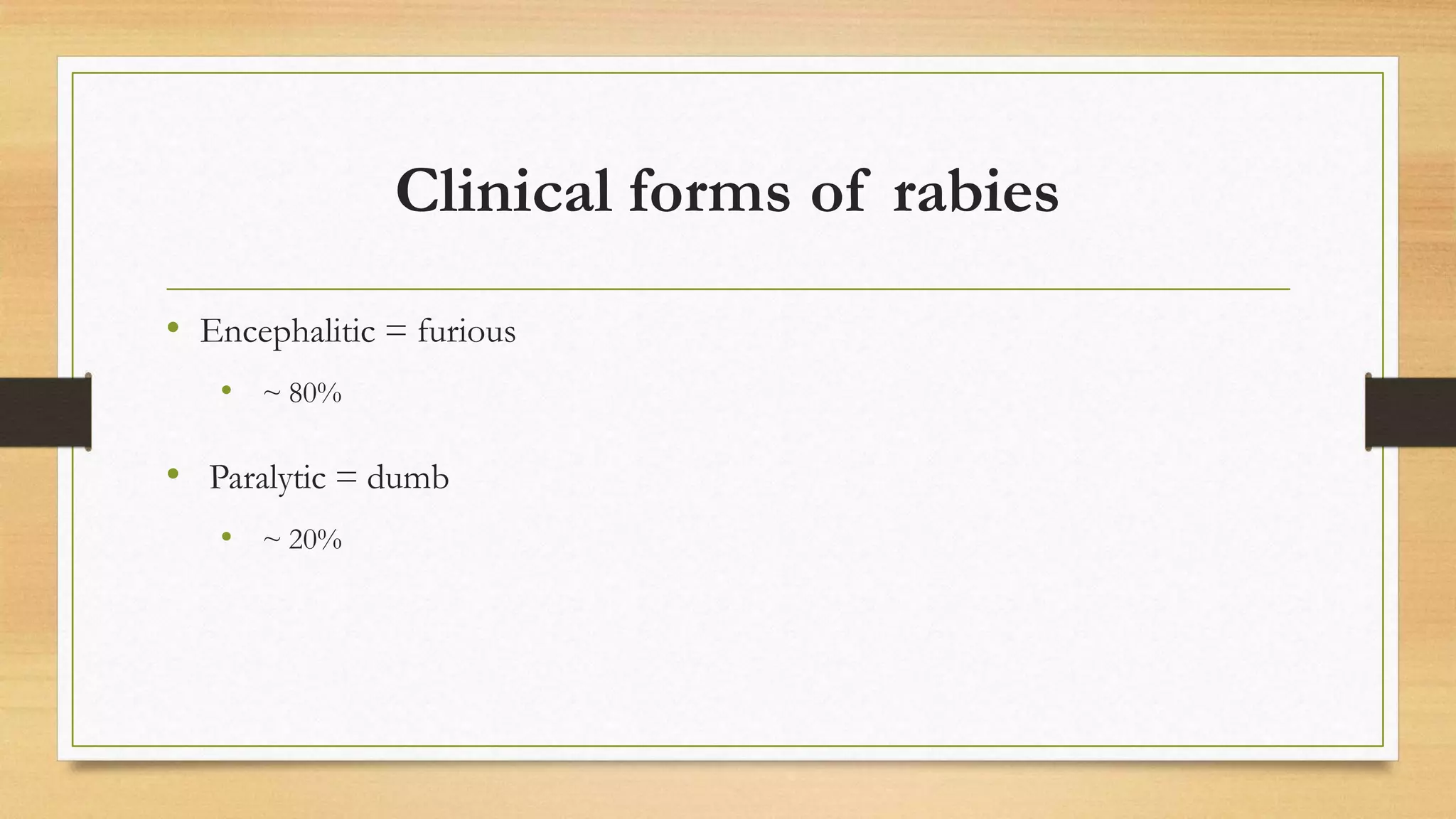
• Encephalitic = furious
• ~ 80%
• Paralytic = dumb
• ~ 20%
Encephalitic rabies
• Prodromal symptoms
• Paresthesia, Pain, Pruritus at site of bite
• Episodes of generalized arousal or hyper-excitability separated by lucid
periods
• Autonomic dysfunction
• Hydrophobia
Paralytic rabies
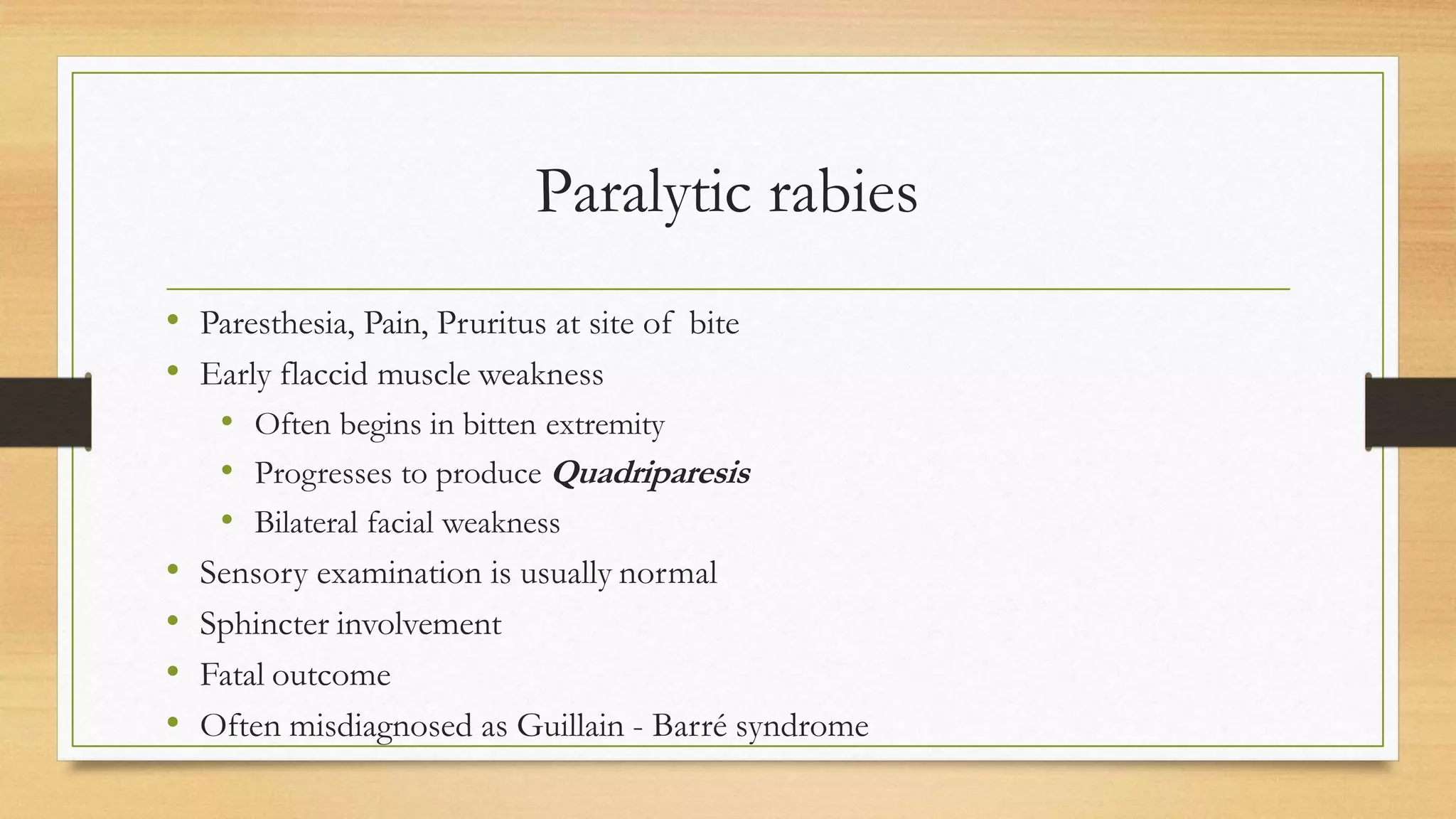
• Paresthesia, Pain, Pruritus at site of bite
• Early flaccid muscle weakness
• Often begins in bitten extremity
• Progresses to produce Quadriparesis
• Bilateral facial weakness
• Sensory examination is usually normal
• Sphincter involvement
• Fatal outcome
• Often misdiagnosed as Guillain - Barré syndrome
Diagnosis
• Tests are also performed on the samples of saliva, serum, and skin biopsies
of hair follicles at the nape of the neck
Human rabies prevention
• Pre-exposure prophylaxis
• Post-exposure management
Post-exposure immunization individuals
not previously vaccinated
• Wound site(s)
• Immediate thorough cleansing of all wounds with soap and water.
• Tetanus prophylaxis; antibiotics
• Human Rabies Immune Globulin (RIG)
• 20 IU/kg body weight
• As much of the RIG as possible should be infiltrated in wound(s)
• The remainder should be given IM at a site distant from vaccine
• Rabies Vaccine
• IM (1 mL) in the deltoid area on days 0, 3, 7, 14, and 28
Pre-exposure prophylaxis
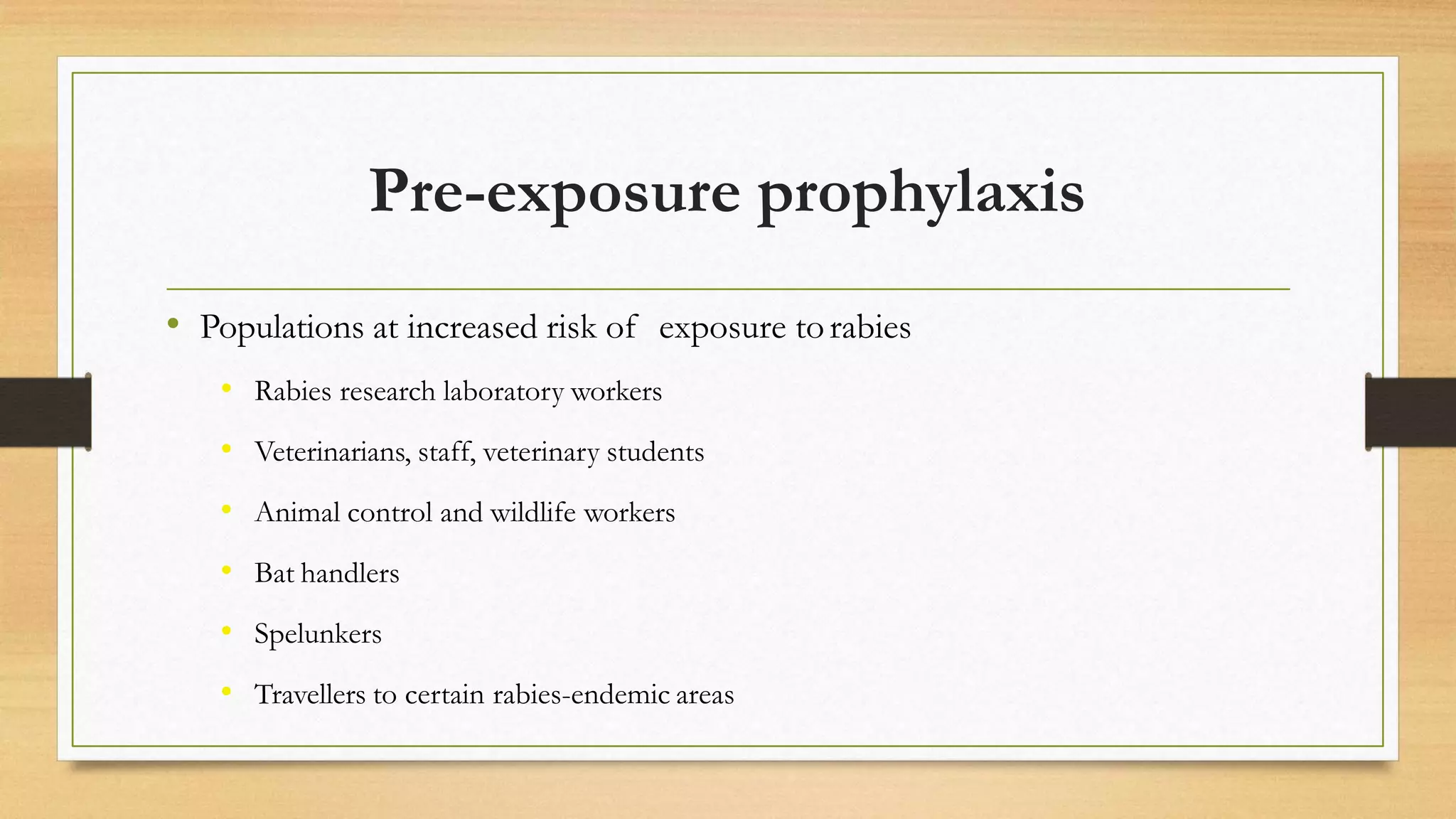
• Populations at increased risk of exposure torabies
• Rabies research laboratory workers
• Veterinarians, staff, veterinary students
• Animal control and wildlife workers
• Bat handlers
• Spelunkers
• Travellers to certain rabies-endemic areas
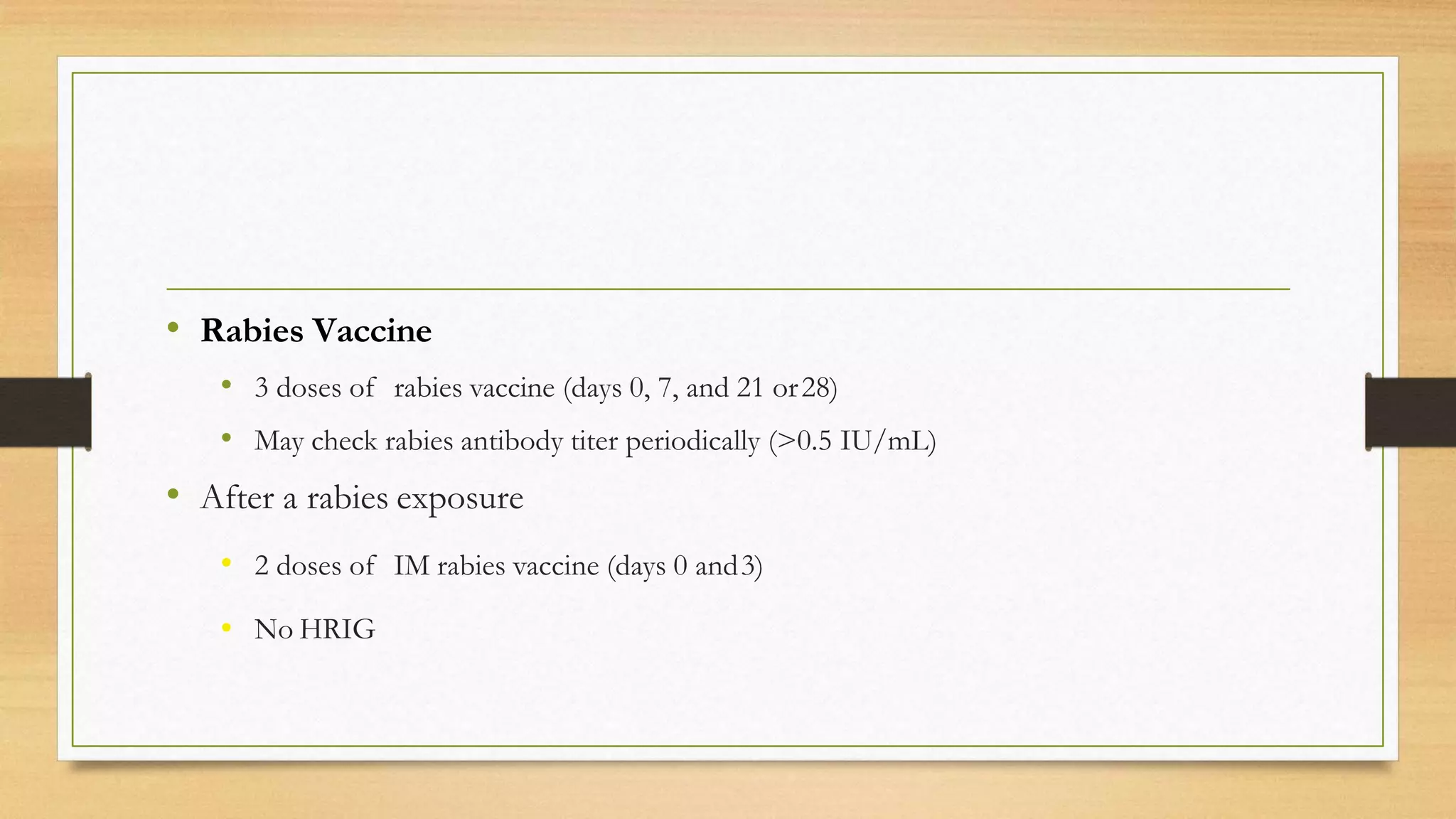
• Rabies Vaccine
• 3 doses of rabies vaccine (days 0, 7, and 21 or28)
• May check rabies antibody titer periodically (>0.5 IU/mL)
• After a rabies exposure
• 2 doses of IM rabies vaccine (days 0 and3)
• No HRIG

Rabies Lecture (infection)

  • 1.
    RABIES Dr.Muhammad Umair Pharm.D, M.Phil.Clinical Pharmacy Lecturer Lahore Pharmacy College Of Lahore Medical & Dental College (Pakistan)
  • 2.
    Rabies • Zoonotic viralinfectious diseases; almost invariably fatal • Virus attacks on the nerves system and later excreted in saliva • A person can become victim in following ways; • Bites of diseasedanimals • Non-bites exposure • Human to Human Transmission
  • 3.
    Virology • Rabies virusbelongs to Lyssavirus genus of Rhabdoviridae family • Virus is enveloped and has a single stranded RNA genome • All rahbdoviruses have two major structural components; • Helical ribonucleoprotein core (RNP) • Surrounding envelops
  • 5.
    Epidemiology • Asia • Mostof the developing countries in Asia are the victims • Over 30,000 people die every year due to rabies in Asia • 15% are likely to be the children under 15 years • India, Srilanka, Bangladesh, Pakistan, Nepal are high risk areas • Africa • More than 24,000 deaths per year in Africa • Majority of them are from poor rural communities or children • Angola, Namibia, Mozambique, Zimbabwe are high risk areas
  • 6.
    • Europe andunited states • On verge of disappearance from many countries • Policy of animalvaccination
  • 7.
  • 8.
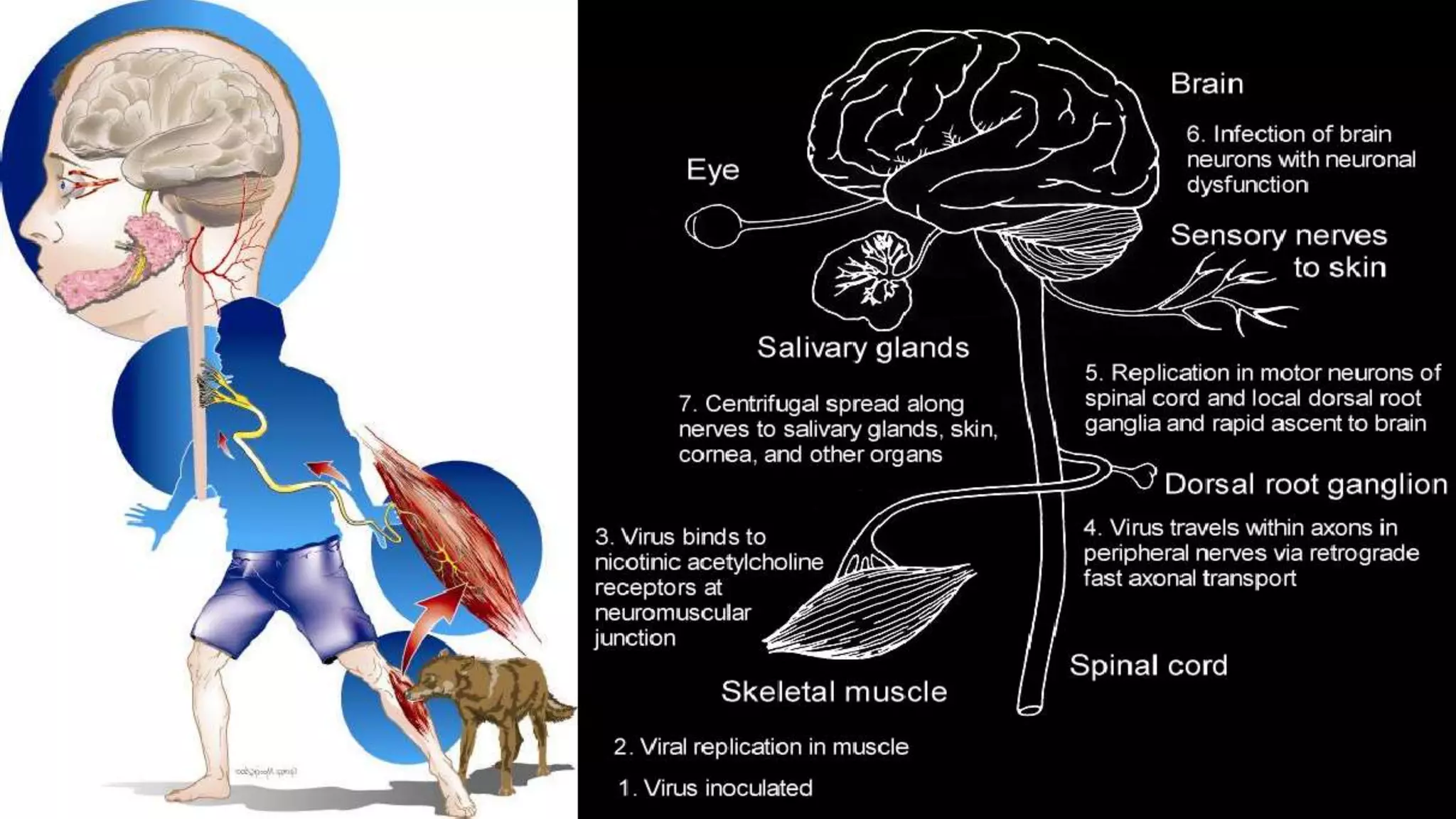
    Pathogenesis • Transmission • Biteof a rabid animal (Dogs, Bats, Racoons, Foxes,Skunks) • Contamination of scratch wounds by virus infected saliva • Incubation • Replication in the striated or connective tissue at the site of inoculation • Enters the peripheral nerves through the neuromuscular junction
  • 10.
    Clinical manifestation • Initialsymptoms (Prodrome) • nonspecific • Neuropathic pain at site of bite pruritus tingling • Fever, anxiety, and malaise • The initial symptoms of rabies are often vague and it can be easy to mistake them for other, less serious, types of infection. Theyinclude: • Fever • Headache • Feeling generally unwell • Feeling scared or anxious
  • 11.
    • After 2–10days neurological signs appear • Encephalitic and Paralytic forms • Encephalitic manifestations • May appear in episodes • cerebral dysfunction and autonomic dysfunction • Agitation, confusion, hydrophobia,aerophobia, • hyperventilation, hyper-salivation, priapism, and convulsions • Paralytic manifestations • Peripheral nerves accompanied byfever • Within 2–12 days, coma and cardiorespiratory failure starts
  • 12.
    • Advanced symptoms •After 10-14 days of prodromal phase, more severe symptoms start todevelop. • Aggressive behaviour, hallucinations, agitation and producing lots of saliva • Paralysis, and eventually death
  • 14.
    Clinical forms ofrabies • Encephalitic = furious • ~ 80% • Paralytic = dumb • ~ 20%
  • 15.
    Encephalitic rabies • Prodromalsymptoms • Paresthesia, Pain, Pruritus at site of bite • Episodes of generalized arousal or hyper-excitability separated by lucid periods • Autonomic dysfunction • Hydrophobia
  • 16.
    Paralytic rabies • Paresthesia,Pain, Pruritus at site of bite • Early flaccid muscle weakness • Often begins in bitten extremity • Progresses to produce Quadriparesis • Bilateral facial weakness • Sensory examination is usually normal • Sphincter involvement • Fatal outcome • Often misdiagnosed as Guillain - Barré syndrome
  • 17.
    Diagnosis • Tests arealso performed on the samples of saliva, serum, and skin biopsies of hair follicles at the nape of the neck
  • 18.
    Human rabies prevention •Pre-exposure prophylaxis • Post-exposure management
  • 19.
    Post-exposure immunization individuals notpreviously vaccinated • Wound site(s) • Immediate thorough cleansing of all wounds with soap and water. • Tetanus prophylaxis; antibiotics • Human Rabies Immune Globulin (RIG) • 20 IU/kg body weight • As much of the RIG as possible should be infiltrated in wound(s) • The remainder should be given IM at a site distant from vaccine • Rabies Vaccine • IM (1 mL) in the deltoid area on days 0, 3, 7, 14, and 28
  • 20.
    Pre-exposure prophylaxis • Populationsat increased risk of exposure torabies • Rabies research laboratory workers • Veterinarians, staff, veterinary students • Animal control and wildlife workers • Bat handlers • Spelunkers • Travellers to certain rabies-endemic areas
  • 21.
    • Rabies Vaccine •3 doses of rabies vaccine (days 0, 7, and 21 or28) • May check rabies antibody titer periodically (>0.5 IU/mL) • After a rabies exposure • 2 doses of IM rabies vaccine (days 0 and3) • No HRIG